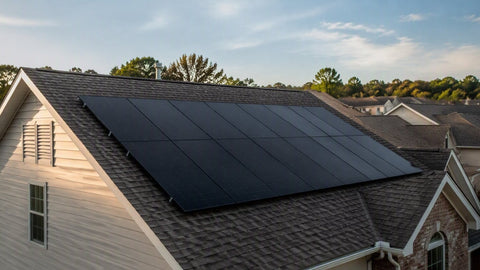
If you've specced residential or light-commercial solar in the last five years, you've had the REC conversation. A homeowner's neighbor just paid cash for Alpha Pure-R panels, the roofer swears by them, and now your customer wants to know why the REC quote is $0.15/W over the value line. We've sold and supported REC product through multiple panel generations at Portlandia Electric Supply, and the honest answer hasn't changed: REC sells you the tightest power-tolerance and warranty stack in the premium tier, and the Alpha series is the reason. This guide is the same briefing we give new dealer accounts — product lines, HJT technology, certifications, warranty mechanics, and the specs that actually matter on a cut sheet.
One disclosure up front: we are an authorized REC distributor, so read our enthusiasm with that in mind. The numbers below come from REC's published datasheets and warranty documents, and where a figure is a range, it's because REC publishes it as a range across the sub-models.
1. Company Overview
REC Group was founded in Norway in 1996 and is now headquartered in Singapore, where it also runs its primary module manufacturing. The company has been part of the Reliance Industries group since 2021, which gave it the balance sheet to expand HJT (heterojunction) cell production when most competitors were still ramping TOPCon. REC is consistently listed as a BloombergNEF Tier 1 module manufacturer — a bankability label, not a quality score, but it matters when your customer's lender or lease provider has an approved-vendor list.
What separates REC from the volume manufacturers is deliberate narrowness. They don't chase the utility-scale 700W+ segment. The entire consumer-facing lineup is built around the Alpha HJT platform in residential and small-commercial formats, which means their R&D dollar lands on one product family instead of six. In our warehouse that shows up as consistency — we rarely see the batch-to-batch nameplate drift that plagues budget brands.
2. Current Product Lines
As of the 2025–2026 model year, the REC consumer portfolio is the Alpha family in three trims, plus legacy Alpha stock still moving through the channel:
| Model | Watts | Cell Tech | Efficiency | Dimensions | Warranty | Price Range |
|---|---|---|---|---|---|---|
| REC Alpha Pure | 400–410 W | HJT | 21.0–22.0% | 1721 × 1016 × 30 mm | 20-yr product / 25-yr power (92%) | $0.45–$0.55/W |
| REC Alpha Pure-R | 400–430 W | HJT | 21.8–22.3% | 1720 × 1118 × 30 mm | 20-yr product / 25-yr power (92%) | $0.48–$0.58/W |
| REC Alpha Pure-RX (REC450/460/470) | 450–470 W | HJT | 22.0–22.6% | 1730 × 1118 × 30 mm | 20-yr product / 25-yr power (92%) | $0.50–$0.62/W |
| REC Alpha (legacy 380Wp) | 360–380 W | HJT | 20.0–21.0% | 1721 × 1016 × 30 mm | 20-yr product / 25-yr power (86%) | $0.42–$0.52/W |
A few field notes on reading that table. The Pure-RX is the panel we quote when roof area is the constraint — 450–470W in a footprint barely larger than the legacy 380 means roughly 20% more nameplate watts per racking bay. The base Alpha Pure still makes sense for budget-sensitive jobs where the customer wants HJT temperature behavior without the RX premium. And that legacy 360–380W line with the weaker 86% year-25 guarantee is a reminder to always check which warranty schedule ships with your pallet — same brand, meaningfully different paper.
3. HJT Technology: What It Actually Buys You
Heterojunction cells sandwich a crystalline silicon wafer between ultra-thin amorphous silicon layers. You don't need to explain the band-gap physics to a customer. What you do need to explain is the two numbers that translate to their roof: temperature coefficient and degradation.
HJT cells run a power temperature coefficient around −0.24%/°C, against roughly −0.29 to −0.35%/°C for mainstream PERC and about −0.29%/°C for typical TOPCon. On an August afternoon in Phoenix or Bakersfield, with cell temperatures 25–35°C over the 25°C test condition, that gap is worth 1.5–3% of real output, every hot day, for 25 years. On a 10 kW array that's a few hundred kWh a year — not life-changing, but it compounds, and it's the difference between hitting and missing the production estimate you put in the proposal.
Degradation is the other lever. REC guarantees 92% of nameplate at year 25 on the current Alpha trims — first-year degradation around 1%, then roughly 0.3%/year. Standard industry paper is more like 84–87% at year 25. Over the life of a system, that 5–8 point gap is real money.
| Parameter | REC Alpha (HJT) | Mainstream TOPCon | Legacy PERC |
|---|---|---|---|
| Peak module efficiency | 22.0–22.6% | 21.5–23.1% | 20.0–21.3% |
| Power temp coefficient | ≈ −0.24%/°C | ≈ −0.29%/°C | −0.34 to −0.35%/°C |
| Year-1 degradation | ≈ 1% | 1–2% | 2–3% |
| Annual degradation after yr 1 | ≈ 0.3%/yr | 0.40–0.55%/yr | 0.55–0.70%/yr |
| Guaranteed output, year 25 | 92% | 87–89% | 80–84% |
For a deeper technology shootout, our TOPCon vs HJT comparison and the 2026 TOPCon / HJT / tandem efficiency and ROI breakdown walk the same math with competitor panels. If your customer is cross-shopping specific brands, send them the head-to-heads: REC vs Qcells, REC vs Silfab, REC vs VSUN, REC vs Canadian Solar, and REC vs Panasonic.
4. Recent Releases (2025–2026)
The headline act is the Alpha Pure-RX line at 450–470W, which pushed REC's residential flagship past 22.5% efficiency while keeping the 30 mm frame profile installers already know. That frame matters more than it sounds — existing racking layouts, clamps, and rail spacing from Pure-R jobs carry over, so upgrade designs don't need a fresh structural review in most jurisdictions.
We've also watched REC tighten the power sorting. Positive-only tolerance on Alpha bins means a 460W panel measures at or above 460W at STC. Budget modules with ±5W tolerances sound harmless until you realize half your string lands under nameplate. When we commission systems, REC arrays consistently flash-test at or slightly over the sum of nameplates — that is not true of every brand we sell.
5. Certifications & Listings
Every REC Alpha module we ship carries the standard North American compliance stack: UL 61730-1/-2 listing (which satisfies NEC 690 module listing requirements), IEC 61215/61730 for international design qualification and safety, and IEC 62716 ammonia resistance plus IEC 61701 salt-mist certification for agricultural and coastal installs. Fire class ratings are published per model on the datasheet — check the specific cut sheet when your AHJ asks, because Type 1 vs Type 2 changes where the panel can sit relative to roof setbacks.
On the paperwork side, REC panels are not Buy America Act domestic-content products — the cells and modules are made in Singapore. If your project is a federal job or chasing the ITC domestic-content bonus, say that out loud at bid time, not at submittal. We've seen more than one EPC eat a panel swap because someone assumed a premium price implied US manufacturing.
6. Warranty Terms — The Part Customers Actually Read
The standard Alpha warranty is 20 years product / 25 years linear power with the 92% year-25 guarantee. Through REC's ProTrust program, installations by REC-certified installers qualify for extended product coverage up to 25 years plus a labor allowance on valid claims — per REC's published warranty terms, and worth confirming on the current warranty document before you promise it in a proposal. That labor line is the sleeper benefit: anybody who's priced a truck roll to pull and replace one panel under warranty knows the panel was never the expensive part.
Our advice to dealers is mechanical: register every install, keep the serial list in the project file, and photograph the nameplate stickers before the modules go on the roof. The one time you need a warranty claim to move fast, that folder is the whole game.
7. String Sizing With Alpha Modules (NEC Math, Worked Example)
Because HJT modules carry slightly different electrical characteristics than the PERC fleet most designers cut their teeth on, here's the sizing math we run on every Alpha design. Use your actual datasheet values; the example below uses representative Alpha Pure-RX class numbers (Voc ≈ 49 V, Isc ≈ 11 A) for illustration.
Step one, NEC 690.7 cold-weather Voc correction. At a −10°C design minimum with a Voc temperature coefficient near −0.24%/°C, the correction factor is 1 + (35 × 0.0024) ≈ 1.084. Corrected Voc ≈ 49 × 1.084 ≈ 53.1 V. A 1500 V commercial string has headroom for days; on a 600 V residential inverter input you're looking at a max string of 11 modules (11 × 53.1 ≈ 584 V) — and we'd stop at 10 for margin.
Step two, conductor and overcurrent sizing per NEC 690.8: Isc × 1.25 (continuous) × 1.25 (Irradiance/safety) = 11 × 1.5625 ≈ 17.2 A minimum ampacity. A 12 AWG THWN-2 copper conductor at 30A (90°C column, NEC 310.16, before derating) covers a single string comfortably; parallel strings change the math — see our NEC wire sizing and ampacity guide and the wire ampacity chart for the derating tables.
| Sizing Step | NEC Reference | Formula | Worked Example (Alpha-class module) |
|---|---|---|---|
| Max string voltage (cold) | 690.7 | Voc × [1 + (25 − Tmin) × β/100] × N ≤ Vmax | 49 × 1.084 × 11 = 584 V ≤ 600 V → max 11 modules |
| Min conductor ampacity | 690.8(B) | Isc × 1.25 × 1.25 | 11 A × 1.5625 = 17.2 A → 12 AWG Cu OK |
| OCPD (if required) | 690.9 / 240.6 | ≥ Isc × 1.56, next standard size | 17.2 A → 20 A fuse/breaker |
| Rooftop disconnect & labeling | 690.13 / 690.56 | Rapid shutdown per 690.12 | Module-level shutdown or listed MLPE per AHJ |
Grounding and bonding on HJT frames is standard aluminum-frame practice — lay-in lugs or listed bonding washers per NEC 250 and 690.43. Our solar grounding and bonding guide covers the hardware. For disconnects and OCPD selection, the NEC 690 disconnect guide is the reference we hand new installers.
8. Technical Comparison: REC vs the Field
Here's the honest scorecard we use internally when a customer asks why Alpha costs more:
| Brand | Flagship Tech | Peak Efficiency | Product Warranty | Year-25 Output | Price Position |
|---|---|---|---|---|---|
| REC | HJT (Alpha) | 22.6% | 20 yr | 92% | Premium |
| JA Solar | N-type TOPCon | 24.8% (5.0) | 25 yr | ~87% | Mid-range (value) |
| LONGi | HPBC 2.0 BC | 24.8% | 15–25 yr | ~87% | Mid-range |
| Canadian Solar | HJT (HiHero) | 23.9% | 12 yr | ~87% | Mid-range |
Read that table carefully and you'll notice the twist: on peak lab efficiency, REC is no longer the top number — the TOPCon leaders and back-contact designs have caught and passed it. What REC still wins is the combination of hot-climate behavior, degradation paper, and positive power sorting. If the job is a cool-climate, budget-driven roof, quote the value tier without shame. If it's a heat-soaked roof in Texas or Arizona where the customer plans to own the house 20 years, Alpha's math usually closes the price gap by year 10–12.
9. Installation Notes From the Field
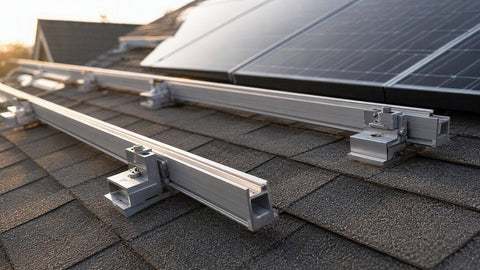
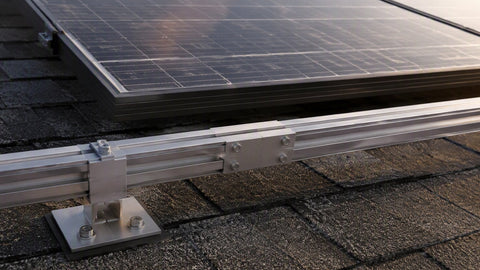
We've racked thousands of Alpha modules. Three notes worth your time. First, the 30 mm frame sits lower than older 35–40 mm frames — confirm your mid-clamp and end-clamp ranges before the crew shows up, because a clamp spec'd for 40 mm won't bite a 30 mm frame. Second, HJT cells are more sensitive to point-load handling than PERC; no knee-on-glass, no leaning panels face-down on the rails. We replaced exactly one Pure-R for microcrack damage before instituting that rule, and it was our own fault. Third, torque the clamps to the racking manufacturer's spec (typically 10–15 N·m, check your rail brand's sheet) — the frame is stout, but HJT glass-glass-adjacent construction doesn't forgive crushed corners.
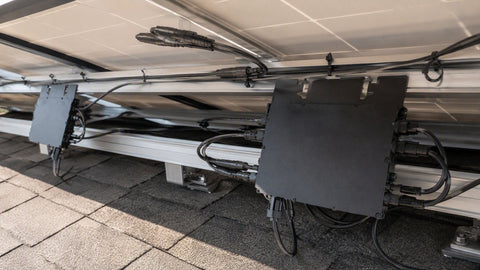
Wire management under the array matters for inspection: keep the PV whips off the roof membrane, and if you're running EMT or PVC to the inverter, the conduit fill chart keeps you inside NEC Chapter 9. For cable selection between PV wire, USE-2, and THHN, see the solar wire and cable guide.
10. Buying REC Through an Authorized Dealer
PES Supply stocks and drop-ships REC product nationally. Current popular SKUs from the REC collection include the REC400AA Alpha Pure, REC405AA, REC410AA, and the REC370TP2S-M72 TwinPeak for budget commercial work. Dealer accounts get pallet pricing, freight consolidation, and warranty registration support. If you're weighing REC against the rest of the premium shelf, our best solar panels of 2026 roundup and the REC vs Qcells page are good next reads, and the full range sits under solar panels, HJT panels, and N-type panels. ¿Prefieres leer en español? Lee la versión en español de esta guía REC.
Hot-Climate Math: What the Temperature Coefficient Is Worth in Dollars
Run the number once and you'll never quote a temperature coefficient as a footnote again. Take a 10 kWdc Alpha Pure-RX array in a hot market. On a summer afternoon with cell temperature at 60°C — 35°C over the 25°C rating point — an HJT panel at −0.24%/°C loses about 8.4% of nameplate power; a mainstream PERC panel at −0.35%/°C loses about 12.3%. That four-point gap on a 10 kW array is roughly 400W of real output during the hours when production is highest. Across a cooling season, that's a few hundred kWh; across 25 years with slower degradation compounding underneath it, the premium panel's lifetime-energy advantage over a value module typically lands in the 8–14% range depending on climate. In cool, cloudy markets the gap narrows to almost nothing — which is why we quote REC hard in Texas and Arizona and quote value TOPCon without hesitation in the Pacific Northwest. Geography is a spec.
Dealer Economics: Why the Premium Closes
Dealers ask us how to sell a panel that costs $0.10–$0.20/W more on the line item. The answer is that the panel is about a quarter of a residential job's cost. On a $3.00/W turnkey install, a $0.15/W panel premium moves the total price 5% — while the warranty paper (92% at year 25), the positive power sorting, and the brand recognition do real work in the kitchen-table close. Customers who cross-shop three bids know the REC name from their own research; that familiarity shortens the sales cycle. And on the back end, REC's claim process through the ProTrust channel — with labor coverage on valid claims per the published warranty terms — is the least painful warranty workflow we've dealt with among premium brands. Margin isn't only in the markup; it's in the callbacks you don't take.
Worked Example: Designing an 8 kW Residential System on Alpha Pure-RX
Take a real-shaped residential job: 8 kWdc target on a south-facing composite roof, 400A service, shade-free after 10 AM. On 460W Pure-RX modules: 8,000 ÷ 460 ≈ 17.4 → 18 panels for 8.28 kWdc. String plan on a 600V-class residential inverter: two strings of 9. Cold-weather check per NEC 690.7 with Voc ≈ 49V and coefficient −0.24%/°C at a −10°C design minimum: 49 × 1.084 × 9 ≈ 478V per string — comfortable margin. String ampacity per NEC 690.8 with Isc ≈ 11A: 11 × 1.5625 ≈ 17.2A, so 12 AWG copper PV wire per string with 20A OCPD where the AHJ requires it, landed in a listed combiner or the inverter's integrated inputs. Rooftop hardware: rail-mounted with 30 mm clamps torqued to the rail manufacturer's spec, module-level rapid-shutdown devices per NEC 690.12, and a rooftop junction layout that keeps whips off the membrane. That bill of materials — panels, racking, MLPE, inverter, wire — is exactly what our dealer team quotes as a single line, and it's the kind of job where the Pure-RX's 470W ceiling lets you hit the customer's offset target with two fewer panels than the 400W-class alternative, which is two fewer clamps, two fewer stanchions, and an hour back on the roof.
The Service and RMA Process, Step by Step
Nobody reads the warranty process until a panel fails, so here's the map. One: document the failure — photos of the module, the nameplate label, and the array, plus monitoring data showing the production anomaly. Two: pull the serial from the project file you made at install (you did make it). Three: open the claim through your distributor — for our customers, that's us, and we run the paperwork with REC. Four: REC's technical team reviews, and on valid claims authorizes replacement; with ProTrust-registered installs, the labor allowance applies per the published terms. Five: swap the module, document the new serial in the project file. End to end on legitimate claims we've seen this run three to six weeks, which is fast for this industry. The slow claims are always the ones missing serials and photos — the paperwork discipline at install is what makes the year-14 claim painless.
Frequently Asked Questions
What is heterojunction (HJT) technology?
HJT combines a crystalline silicon wafer with thin amorphous silicon layers at the junction. The practical results are a lower temperature coefficient (about −0.24%/°C on Alpha modules), lower annual degradation, and strong low-light behavior — which is why REC guarantees 92% output at year 25 while most of the industry guarantees 84–87%.
What is the difference between REC Alpha Pure-R and Pure-RX?
Pure-R runs 400–430W at up to 22.3% efficiency in a 1720 × 1118 mm frame. Pure-RX stretches to 450–470W at up to 22.6% efficiency in a 1730 × 1118 mm frame — roughly 10% more watts per panel for jobs where roof area is the binding constraint.
Why does REC guarantee 92% power at year 25?
Because HJT cells degrade slower than PERC or standard TOPCon — REC's published schedule is about 1% in year one and roughly 0.3% per year after. That compounds to 92% at year 25, and REC can put it in writing because their field data supports it.
Are REC panels Buy America-compliant?
No. REC manufactures cells and modules in Singapore. For federal projects or ITC domestic-content bonus bids, treat REC as an imported product and verify current Treasury guidance before specifying.
What is the lead time from PES Supply?
Stocked Alpha SKUs typically ship in 3–7 business days; pallet and container quantities are quoted per order with freight consolidated to your site or warehouse. Ask your dealer rep for live inventory before you promise a customer an install date.
Do REC Alpha panels work with my existing racking?
In most cases, yes — the 30 mm Alpha frame is compatible with all major rail systems, but confirm clamp range (30 mm vs older 35/40 mm frames) and torque to the racking manufacturer's spec, typically 10–15 N·m.
Sources & Standards
REC Group published Alpha series datasheets and limited warranty documents; UL 61730-1/-2; IEC 61215/61730/62716/61701; NFPA 70 (NEC) Articles 690, 250, 310, and Chapter 9; BloombergNEF Tier 1 module manufacturer listings. Specifications are per manufacturer publications and may change between production runs — always design from the datasheet shipped with your pallet.