Brand Guide · String Inverters
SMA Solar Technology: Sunny Boy, Tripower & Commercial Inverter Guide
The installer's guide to SMA — Sunny Boy and Tripower X inverters, ShadeFix vs. optimizers, DC/AC sizing math, NEC output circuits, and 40 years of German inverter engineering.
SMA Solar Technology is the company that taught the world what a solar inverter should be. Founded in 1981 in Niestetal, Germany, SMA shipped the world's first mass-market PV inverters, and for two decades "Sunny Boy" was practically a generic term — the same way people say Kleenex for tissue. The company rode the German feed-in-tariff boom to global dominance, survived the Asian price onslaught that killed most European inverter makers, and emerged leaner with a focused lineup: residential Sunny Boys, commercial Tripowers, and the ennexOS energy-management platform tying them together.
What survived the shakeout is an engineering culture that treats inverters as 25-year infrastructure. We've pulled SMA SB 5000TL units off roofs after 15 years of daily service that were still making rated power — sun-baked, faded, and utterly reliable. That track record is why SMA holds the installer-loyalty crown in surveys year after year: the boxes don't come back, and neither do the warranty nightmares.
SMA's strategic bet in the current market is ShadeFix — the argument that a smart string inverter beats module-level electronics on cost, reliability, and serviceability for the majority of roofs. Whether that bet wins on your job depends on the roof, and we'll give you the honest decision framework below.
A word on the bankruptcy rumors that circulated years back: SMA restructured through the industry shakeout, shed the utility-scale central-inverter business to focus on string technology, and came out the other side profitable and focused. The SMA of 2026 is not trying to be everything to everyone — it is trying to be the best string-inverter company on earth, and on the evidence of the hardware crossing our dock, it is succeeding.
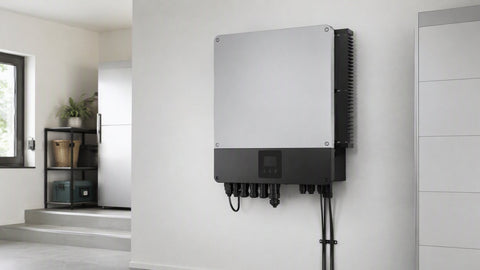
The residential anchor is the Sunny Boy -US line: 6.0 and 7.7 kW single-phase string inverters with 2 MPPTs, 97.5% CEC efficiency, integrated SunSpec rapid-shutdown transmitter, and Smart Connected monitoring. The commercial workhorse is the Sunny Tripower X series — 20, 25, and 30 kW three-phase units with 3 MPPTs, 98.2% peak efficiency, 1000 V system voltage, and integrated AFCI. Full current lineup:
| Model | Type | Power | MPPT | Efficiency | Key Features | Price Range |
|---|---|---|---|---|---|---|
| SMA Sunny Boy 7.7-US | Residential string | 7.7 kW | 2 | 97.5% CEC | ShadeFix, integrated DC disconnect, Smart Connected | $1,400-$1,900 |
| SMA Sunny Tripower X 20-US | Commercial string | 20 kW | 3 | 98.2% peak | ShadeFix, SunSpec rapid shutdown, AFCI, ennexOS | $4,500-$6,000 |
| SMA Sunny Tripower X 30-US | Commercial string | 30 kW | 3 | 98.2% peak | 45 kWp max array, 1000V system voltage | $6,000-$8,000 |
| SMA Sunny Boy 6.0-US | Residential string | 6.0 kW | 2 | 97.5% CEC | Compact residential, ShadeFix, Smart Connected | $1,200-$1,600 |
| SMA Sunny Tripower X 25-US | Commercial string | 25 kW | 3 | 98.2% peak | 37.5 kWp max array, integrated System Manager | $5,200-$6,800 |
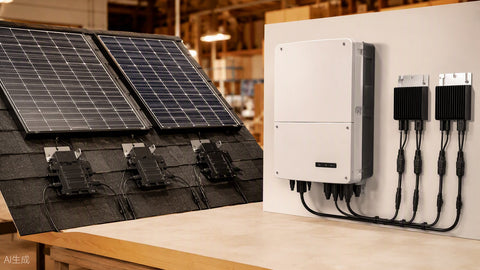
The through-line across the range: no display screens (commissioning and monitoring run through the app or web interface), field-replaceable components instead of whole-unit swaps, and the ShadeFix shade-management algorithm baked into every MPPT. Pair them with modules from our solar panel catalog and storage from batteries and energy storage.
SMA's 2025–2026 cycle pushed the Tripower X line harder into the US commercial segment, with expanded ennexOS functions for demand-charge management and fleet-level monitoring that competes with the module-level platforms on data depth. Firmware across the Sunny Boy line added grid-support refinements for the latest IEEE 1547-2018 ride-through requirements — the Rule 21 and HECO markets got their certified configurations without hardware changes, which is the benefit of a software-defined inverter.
The Smart Connected service program — automatic failure detection, proactive replacement dispatch — expanded its coverage and shortened its response targets. For installers, that program quietly eliminates the most expensive sentence in the service business: "we'll come out and diagnose it." SMA often knows the unit failed before the customer notices the monitoring gap.
The -US line carries UL 1741 SB, IEEE 1547-2018, UL 1699B arc-fault protection, and integrated SunSpec-certified rapid shutdown — the transmitter is in the box, so rooftop receivers at the modules complete the NEC 690.12 requirement without a separate shutdown box on the wall. California Rule 21 and Hawaii HECO certifications are current. The permit package writes itself; we've never had an AHJ question an SMA submittal, and the integrated RSD eliminates the most common inspection failure point on string systems.
SMA's standard warranty is 10 years, extendable to 15 or 20 at registration for a modest fee. The Smart Connected program effectively upgrades the service experience: the inverter phones home, SMA's system detects failures automatically, and replacement units ship proactively — often before the installer knows there's a problem. That last part matters more than the duration number on the datasheet. A 10-year warranty with automatic detection and fast RMA beats a 25-year warranty that requires the customer to notice a production drop, call you, and wait for a diagnosis.
Warranty process detail worth knowing: register the unit at commissioning. Registered Sunny Boys get the Smart Connected monitoring that drives proactive service, and the registration timestamps the start of coverage cleanly. We photograph the serial label, complete registration before we leave the driveway, and file both in the job record — the whole ritual takes five minutes and has saved us real money on the two failures we've handled in the last several hundred installs.
SMA inverters mount on a simple bracket with a lift-and-latch motion — one tech can hang a Sunny Boy, two for the Tripower. The DC connections are the highlight: genuine spring-cage terminals that grip PV wire without the fiddly screw-torque dance, and we've never seen a SMA DC terminal loosen in service. Commissioning runs through the built-in Wi-Fi access point and a phone browser — no app store account, no proprietary dongle. Ten minutes, start to finish, on a good day.
Grounding note for the plan review crowd: the -US inverters are transformerless, so the PV array floats and the DC grounding scheme differs from the old transformer-coupled boxes — follow the manual's grounding diagram exactly, and bond per NEC 250 with the details in our solar grounding and bonding guide. The most common rough-in mistake we see is crews pulling a DC ground-fault conductor sized for the old world; the new boxes want the array bonding done right and the GFP handled internally.
Two field lessons. First: the Sunny Boy's fan is audible up close in quiet settings — mount it in the garage or on a wall away from bedroom windows, and nobody will ever mention it. Second: on Tripower commercial installs, the DC combiner internal to the unit means your string fusing strategy changes — read the manual's string-configuration section before you order homeruns, because the MPPT allocation across three trackers drives wire-pull planning. We've watched crews pull twelve homeruns for a system whose optimal string layout needed nine.
Wire sizing for the PV runs follows the standard NEC 690.8 derates; our PV wire vs. USE-2 vs. THHN guide covers the conductor types, and the NEC ampacity chart has the tables for the AC side.
Here's the framework we actually use on quotes. Choose the Sunny Boy with ShadeFix when the roof is one or two clean faces, shading is absent or occasional (a distant tree in winter mornings), the customer values a 10-year serviceable box over rooftop electronics, and budget discipline matters — string systems run $0.10–$0.20/W cheaper than optimizer systems. Choose module-level (Enphase micros or SolarEdge optimizers) when the roof is chopped into multiple faces, shade is chronic and moving, the customer demands per-module monitoring data, or NEC 690.12 module-level shutdown is required by the AHJ's reading.
The dirty secret of the MLPE-vs-string debate: most roofs in America are fine with either, and the installer's labor economics often decide the recommendation more than the physics do. We sell both — SolarEdge, Enphase, and SMA — and the honest answer is that a clean roof with a Sunny Boy will out-produce a shaded roof with micros every single day. Pick the topology for the roof, not the brochure. And whichever way the decision goes, document the shading survey photos in the job file — the customer who signs off on a string inverter for a clean roof today will call you in five years when the neighbor's oak grows in, and the photo record settles that conversation before it starts.
String inverter sizing is a DC/AC ratio game. Modern practice oversizes the array 1.2–1.4× the inverter's AC rating: the array rarely makes nameplate (heat, soiling, angle), the inverter harvests more energy in the morning and afternoon shoulders, and brief midday clipping costs less energy than an oversized inverter's higher price and worse low-light efficiency. The math on the Sunny Boy 7.7:
| Array Size (kW DC) | Inverter | DC/AC Ratio | Peak Clipping (clear-sky noon, spring) | Annual Energy Lost to Clipping* |
|---|---|---|---|---|
| 7.7 kW | Sunny Boy 7.7-US | 1.00 | None | 0% |
| 10.0 kW | Sunny Boy 7.7-US | 1.30 | ~2.3 kW brief midday | ~1.5–2.5% |
| 11.6 kW | Sunny Boy 7.7-US | 1.50 | ~3.9 kW brief midday | ~3–5% |
| 26.0 kW | Tripower X 20-US | 1.30 | ~6 kW brief midday | ~1.5–2.5% |
| 39.0 kW | Tripower X 30-US | 1.30 | ~9 kW brief midday | ~1.5–2.5% |
Above a 1.5 ratio, clipping starts eating real energy and the math turns. Between 1.2 and 1.35 is the sweet spot for most US sites — run your site through PVWatts with the actual inverter model before finalizing. Our system size calculator handles the first pass. For array layout questions on bigger roofs, how big is a 25 kW array puts the footprint in perspective.
Inverter output circuits are continuous loads — NEC 705.28 requires 125% sizing on the conductors and overcurrent device, and the breaker lands per NEC 240.6(A) standard ratings. The Sunny Boy 7.7's 32-amp max continuous output wants a 40-amp breaker and 8 AWG copper; the Tripower X 30 at 480 V three-phase lands on a 50-amp three-pole. The full table:
| Inverter | Max Continuous AC Current | 125% Sizing | Breaker (NEC 240.6) | Copper Conductor (75°C, 310.16) |
|---|---|---|---|---|
| Sunny Boy 6.0-US @ 240V | 25 A | 31.3 A | 35 A (2-pole) | 10 AWG (35 A) |
| Sunny Boy 7.7-US @ 240V | 32 A | 40 A | 40 A (2-pole) | 8 AWG (50 A) |
| Tripower X 20-US @ 480V 3φ | 24.1 A | 30.1 A | 35 A (3-pole) | 10 AWG (35 A) |
| Tripower X 25-US @ 480V 3φ | 30.1 A | 37.6 A | 40 A (3-pole) | 8 AWG (50 A) |
| Tripower X 30-US @ 480V 3φ | 36.1 A | 45.1 A | 50 A (3-pole) | 8 AWG (50 A) |
Watch the panel-capacity side: NEC 705.12 load-side interconnection limits (the 120% rule) frequently constrain where a 7.7 kW inverter can land on a 200 A residential panel. If the busbar math doesn't work, a line-side tap or a main-breaker derate solves it — our bus bar guide explains the geometry, and the NEC 690 disconnect guide covers the OCPD placement.
SMA against the two brands every US installer cross-shops:
| Feature | SMA | SolarEdge | Fronius |
|---|---|---|---|
| Optimization | ShadeFix (string-level) | Module-level (optimizer) | String-level (Dynamic Peak Manager) |
| Peak efficiency | 98.2% | 99% CEC | 98.2% |
| Rapid shutdown | SunSpec PLC (integrated) | Built into optimizers | Requires external |
| Standard warranty | 10 years | 12 years | 5 years |
| Monitoring platform | ennexOS / Sunny Portal | SolarEdge monitoring | Solar.web |
| Cost per watt | $0.15-$0.25 | $0.25-$0.35 | $0.15-$0.25 |
| Serviceability | Excellent (replaceable parts) | Module replacement | Excellent (PCB swap) |
Our read after installing all three at scale: SMA wins on total cost of ownership for clean roofs, on serviceability (the fan, surge board, and display module swap in the field — no whole-unit RMA), and on the integrated SunSpec rapid shutdown that simplifies the rooftop BOM. SolarEdge wins where shade or multi-face roofs justify optimizers. Fronius splits the difference with excellent serviceability and the SnapINverter mounting system we genuinely enjoy installing. For hybrid battery-integrated work, the Sol-Ark line plays a different game entirely.
Residential systems report to Sunny Portal; commercial systems to ennexOS-based views. Both give production history, fault alerts, and fleet dashboards for installers. Smart Connected adds the automatic-failure-detection layer that triggers proactive RMAs. The customer-facing app is functional rather than flashy — production curves, alerts, yield reports — and it works without subscriptions, which matters when you're explaining lifetime cost to a homeowner comparing against platforms that charge for premium monitoring tiers.
Installer-side, the fleet dashboard earns its keep on service triage: production anomalies, string-level imbalances on Tripower units, and grid-event logs are all visible without rolling a truck. We review the fleet view weekly across our monitored installs, and the pattern recognition it enables — spotting a soiling issue from a gradual yield slope, or a failed string from a step change — turns reactive service calls into scheduled maintenance. That's margin, and it's one of the quieter reasons the SMA ecosystem holds installer loyalty.
Buy SMA when the roof is clean, the customer wants a serviceable box with a 10-year warranty and a company that will exist to honor it, and the quote needs to come in under the MLPE competition. Don't buy SMA when the roof is a multi-face architectural puzzle, when per-module monitoring is a contractual requirement, or when the AHJ enforces module-level rapid shutdown without accepting the SunSpec transmitter path. For those jobs, the optimizer and microinverter brands earn their premium.
We stock the SMA -US line — Sunny Boy 6.0 and 7.7, Tripower X 20/25/30 — plus rapid-shutdown receivers, commissioning accessories, and the modules and racking to build complete systems from our inverter catalog. Comparing brands? The solar inverter top picks and the solar inverter fundamentals guides frame the field. Contractor quotes: request pricing.
Specifications from SMA Solar Technology published datasheets (Sunny Boy -US, Sunny Tripower X -US) and warranty documents current as of mid-2026. Electrical sizing per NFPA 70 (NEC) 2023 Articles 240.6(A), 310.16, 690, and 705. Clipping estimates are directional — run PVWatts or equivalent modeling with your site data before final design. Pricing reflects typical US street pricing and varies by volume.
How does SMA ShadeFix compare to power optimizers?
ShadeFix is SMA's string-level shade management: instead of hardware on every module, the inverter's MPPT algorithm tracks the true maximum power point of a partially shaded string rather than locking onto the wrong voltage peak. On open-roof arrays it performs identically to module-level electronics. Under real shade — chimneys, vent stacks, a tree to the southwest — module-level optimizers or microinverters still recover more energy, typically 5–15% on genuinely shaded strings. Our rule: uniform arrays get ShadeFix and save the optimizer money; arrays with chronic shade get module-level electronics. See the head-to-head in our microinverter vs. string inverter breakdown.
Can SMA inverters work without internet?
Yes. Sunny Boy and Tripower inverters run fully autonomously without a network connection — production, grid functions, and rapid shutdown all work offline. You lose remote monitoring and Smart Connected warranty auto-detection until the unit reconnects. Local commissioning runs over the inverter's built-in Wi-Fi access point, and data logs internally until it can upload. On rural sites with sketchy connectivity we set them up offline and let the customer add monitoring later; the inverter doesn't care.
What is ennexOS?
ennexOS is SMA's energy-management platform — the software layer that coordinates solar production, battery storage, EV charging, and controllable loads across residential and commercial sites. On a simple Sunny Boy install you'll mostly meet it through the Sunny Portal monitoring views. On commercial jobs with storage and demand management, ennexOS is the traffic cop that decides when to charge, discharge, and curtail. It's genuinely powerful on complex sites and mostly invisible on simple ones, which is exactly how platform software should behave.
Can I retrofit a battery to a Sunny Boy system?
Yes, two ways. AC-coupled: add an AC battery system (or a hybrid like the Sol-Ark with AC coupling) downstream — the Sunny Boy doesn't need to know it's there. Or replace/augment with SMA's own storage path. The Sunny Boy's SunSpec rapid shutdown and standard grid functions make it one of the easier inverters to retrofit storage behind. Plan the critical-loads panel and interconnection method before ordering; the hybrid inverter guide maps the architecture choices.
Is SMA still made in Germany?
SMA is headquartered in Niestetal, Germany, and remains a German engineering company — but like every global inverter maker, manufacturing is distributed. The -US models are built for the North American market with the grid codes, voltage standards, and certifications (UL 1741 SB, IEEE 1547) the US requires. Warranty service runs through SMA America's US organization, and replacement-part logistics are domestic. In our experience SMA's US service turnaround runs faster than several of the import brands despite the German badge.
How long does delivery take from PES Supply?
Sunny Boy residential units ship from stock in 1–3 business days by parcel or LTL freight depending on quantity. Tripower commercial units move by freight and typically deliver inside two weeks — order early on commercial jobs, because a 30 kW inverter sitting in a warehouse for a week costs nothing, while a crew waiting on one costs a fortune. Every SMA unit we ship leaves with the serial recorded and the warranty registration path confirmed, because the five minutes of paperwork at commissioning is what makes the ten-year promise real. Contractor volume pricing through our quote desk is same-day.
Shop SMA Solar at PES Supply
Sunny Boy residential and Tripower X commercial inverters — in stock, contractor pricing, fast freight.
Browse SMA Inverters