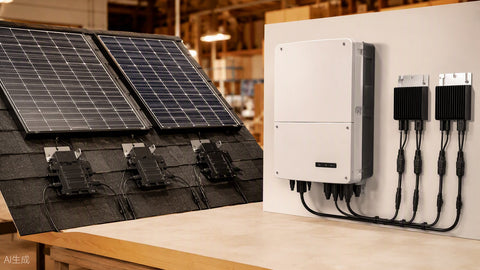
Brand Guide · Hybrid Inverters
Sol-Ark: Hybrid & Off-Grid Inverter Brand Guide
The installer's guide to Sol-Ark — 15K-2P all-in-one hybrids, 45 kW surge math, battery-agnostic architecture, generator integration, and honest comparisons to Schneider and SolarEdge.
Sol-Ark is the Texas company that redrew the hybrid inverter market by ignoring its rules. While the legacy brands split systems into separate inverters, charge controllers, and transfer switches, Sol-Ark's founders — defense-industry engineers with electromagnetic-pulse hardening backgrounds — asked why one box couldn't do all of it. The answer became the Sol-Ark line: all-in-one hybrid inverters with built-in MPPTs, 200-amp whole-home pass-through, generator inputs, and battery-agnostic architecture, at a price per watt that made the old multi-box approach look like a museum exhibit.
The market noticed. Sol-Ark went from upstart to one of the top-selling residential hybrid platforms in North America in a few years, carried almost entirely by installer word-of-mouth. There's a reason for that: the 15K eliminated the two complaints that killed hybrid-inverter sales for a decade — "it can't start my AC" and "I have to buy their battery." Sol-Ark fixed both, then wrapped it in an EMP-hardening story that resonates with the preparedness market nobody else serves seriously.
We've commissioned Sol-Ark systems in grid-tied suburban backup installs and on off-grid homesteads that haven't seen a utility bill in a decade, and the same box handles both without a firmware personality transplant. That flexibility is the brand in one sentence: one platform, every architecture, your choice of battery.
The residential ladder runs 8K-2P (8 kW, cabin and small-home duty) through the 12K-2P and the flagship 15K-2P (15 kW continuous, 45 kW surge, 6 MPPTs) up to the 18K-2P Limitless (18 kW, 3 MPPTs, the newest certifications). Commercial duty falls to the 30K and 60K-3P-480V three-phase units. Every model shares the same DNA: all-in-one hybrid, battery-agnostic 48 V, 200 A pass-through on residential units, 0ms transfer, stackable. The lineup:
| Model | Type | Power | MPPT | Efficiency | Key Features | Price Range |
|---|---|---|---|---|---|---|
| Sol-Ark 15K-2P | All-in-one hybrid | 15,000W | 6 | 97.5% CEC | 45kW surge, 0ms transfer, whole-home backup | $5,000-$6,000 |
| Sol-Ark 12K-2P | All-in-one hybrid | 12,000W | 2 | 96.0% | 24kW surge, stackable to 8 units, pre-wired | $4,000-$4,800 |
| Sol-Ark 18K-2P | All-in-one hybrid | 18,000W | 3 | 97.6% | 36kW surge, UL 1741 3rd SB, HECO SRD V2.0 | $5,500-$6,500 |
| Sol-Ark 8K-2P | All-in-one hybrid | 8,000W | 2 | 96.0% | Cabin/small home, EMP hardened variant available | $4,500-$5,200 |
| Sol-Ark Limitless 12K-2P-LL | All-in-one hybrid | 12,000W | 3 | 96.5% | 19.2kW PV input, 100A passthrough, Stevie Award | $3,800-$4,500 |
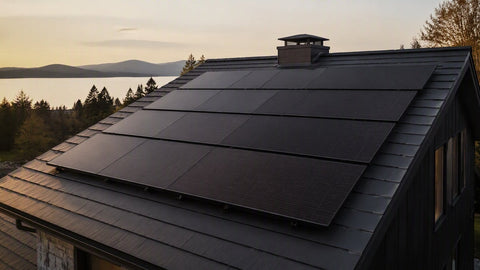
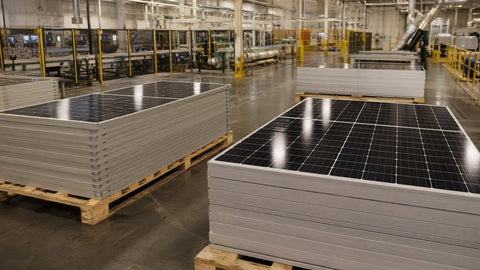
Pair them with 48 V banks from our battery catalog and arrays from the solar panel inventory. The 15K's six MPPTs swallow multi-face residential roofs without an optimizer in sight — string them per face and let each tracker do its job.
The 18K-2P Limitless is the headline: 18 kW continuous with the current UL 1741 SB (3rd edition) and HECO SRD V2.0 certifications that keep the platform sellable in the strictest interconnection markets. Firmware across the 2P generation expanded the closed-loop battery library, refined the time-of-use arbitrage logic for the new utility rate structures rolling out across California and the Northeast, and improved generator support for the inverter generators customers increasingly bring to off-grid installs.
The commercial 30K/60K line gained traction in agricultural and light-industrial backup — irrigation pumps, cold storage, small manufacturing — where the combination of three-phase output, big surge, and generator integration replaces what used to require a custom switchgear lineup.
The current 2P line carries UL 1741 SB, IEEE 1547-2018, UL 1741 SA/SB grid functions, CSA C22.2 for Canada, and the 18K adds HECO SRD V2.0 for Hawaii and the latest Rule 21 requirements for California. NEC 690.12 rapid shutdown is handled via the standard transmitter/receiver architecture at the array. The EMP-hardened variants carry military-standard test documentation. Permit packages with Sol-Ark listings sail through AHJ review — the certification file is current, complete, and boring in exactly the way inspectors like.
Sol-Ark warranties the residential line for 10 years standard. The company's support organization is US-based and installer-accessible — real humans answer the tech line, and they know the product at the wiring level rather than the script level. Our service history on the platform: firmware quirks early in new firmware branches (fixed remotely), occasional fan replacements on dusty shop installs, and essentially zero power-stage failures. Register units at commissioning; the serial-plus-registration record is what makes the warranty frictionless.
One warranty-adjacent point that belongs in every sales conversation: the 10-year coverage applies to the inverter, not the battery behind it — the bank carries its own manufacturer's warranty, which is exactly why the battery-agnostic architecture cuts both ways. You can pair the 15K with a value rack battery and its 10-year coverage, or a premium bank with 15, and the inverter doesn't care. Match the bank's warranty to the customer's hold period and the financing term, not to the lowest line on the quote.
Service reality from our own ticket history: the platform's modular power-stage design means the rare hardware failure is usually a board swap rather than a whole-unit freight event, and Sol-Ark's tech support will walk a licensed electrician through the replacement on the phone. Keep the unit's firmware current but not bleeding-edge — we run one release behind the newest on customer sites and let the early adopters find the bugs. That policy has saved us exactly one midnight rollback, which was exactly enough to justify it.
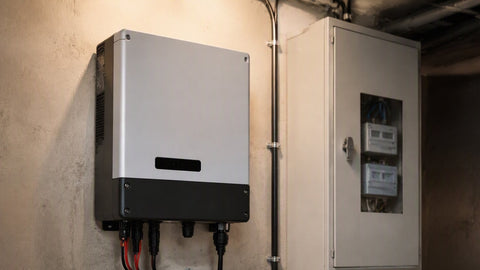
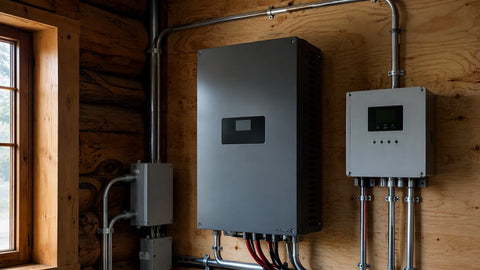
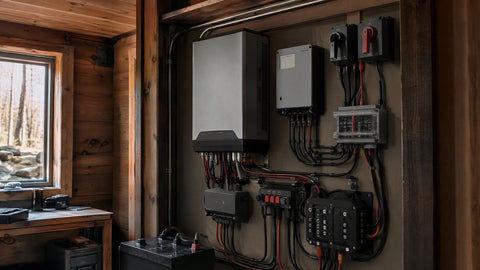
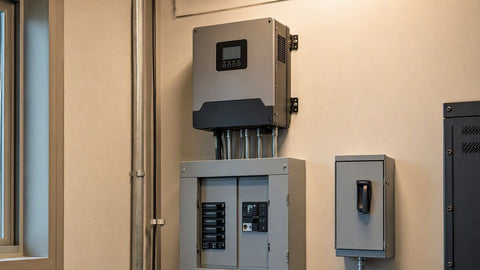
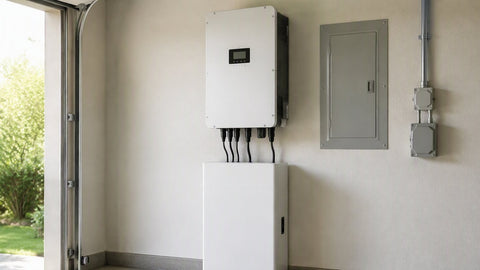
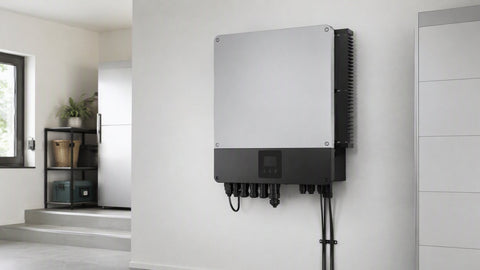
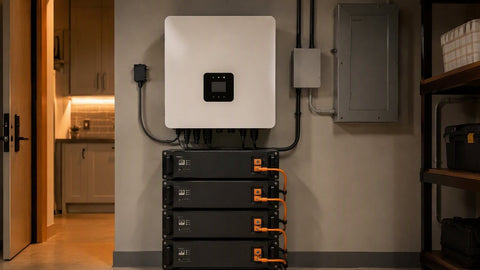
The 15K is a 172-pound wall-mount with a built-in wireway, and the install rhythm matters. Hang the mounting bracket first — it's separate from the chassis — get it dead level and lagged to structure, then lift the unit on with two people and a third steadying the bottom. The DC and AC terminals live behind a dead-front with real working room, which sounds minor until you've wired a competitor's box with your hands crossed. Torque specs are printed on the label; follow them with a calibrated wrench, especially on the 200 A load lugs.
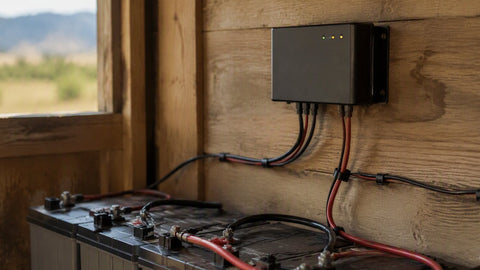
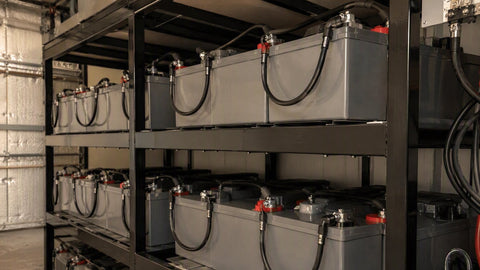
Battery cable discipline: the 15K can pull over 300 amps DC at full output, so 4/0 copper or busbar, Class T fusing at the battery, and cable runs kept short and equal. We've seen a beautifully installed 15K throttle itself because the installer ran the battery bank through 25 feet of 2/0 with a cheap fuse block — voltage sag under surge loads looked like a battery fault and took half a day to diagnose. Fat wire, short runs, Class T. Every time.
Generator input gotcha: the gen port wants clean-ish power, and small conventional generators with sloppy voltage regulation will hunt against the inverter's charge acceptance. Set the gen input breaker size and charge limit in the menu to match the genset's real output, not its nameplate fantasy. Inverter generators behave beautifully; old contractor-grade screamers need their charge current capped at half. For generator pairing math, our generator sizing guide covers the fundamentals.
Last one, and it saves a callback every season: label the CTs. The 15K uses current transformers for grid and load sensing, and a reversed CT makes the monitoring show solar feeding the grid while the house imports from the battery — the system works fine, but the app lies, and the customer notices the lie before they notice the system works. Five seconds with a label maker at commissioning beats an hour of head-scratching later. We photograph the CT orientations before closing the panel and drop the photos in the job file — the next tech who opens that panel, years from now, will thank you by name.
The spec everyone asks about: 45,000 watts of surge for 10 seconds on the 15K. Here's what that translates to on real loads, with typical locked-rotor multiples:
| Load | Running Watts | Locked-Rotor Starting Surge | Sol-Ark 15K Handles It? |
|---|---|---|---|
| 3-ton central AC (17 SEER) | ~3,500 W | ~10,500 W (3×) | Yes — with 40 kW+ surge headroom |
| 5-ton central AC | ~5,800 W | ~17,000 W (3×) | Yes — inside the 45 kW surge rating |
| 1.5 HP well pump | ~1,700 W | ~8,500 W (5×) | Yes — high multiples handled |
| Side-by-side refrigerator | ~700 W | ~2,100 W (3×) | Easily |
| 1 HP table saw / shop motor | ~1,400 W | ~7,000 W (5×) | Yes |
| EV Level 2 charger (48 A) | 11,500 W continuous | None (resistive) | Yes — but it's a continuous-load planning problem, not a surge problem |
The honest limits: a 15K will not start a 5-ton AC and a well pump simultaneously at the same instant with a small battery bank behind it, and no inverter will run central air all night off batteries alone — that's an energy problem (kWh), not a power problem (kW). Design backup systems around critical-loads panels unless the customer is buying 30+ kWh of storage, and be straight about it in the sales conversation. Our runtime calculator makes that math concrete for customers.
Sol-Ark's published guidance ties battery capacity to PV array size — the bank needs to absorb what the array produces and deliver what the inverter can pull. The working table:
| PV Array | Recommended Battery (Sol-Ark guidance) | Bank Example | Overnight Autonomy @ 1 kW Critical Loads* |
|---|---|---|---|
| 5 kW | ≥ 10 kWh usable | 2 × 5.12 kWh rack batteries | ~8–9 hrs |
| 8 kW | ≥ 15 kWh usable | 3 × 5.12 kWh rack batteries | ~13–14 hrs |
| 12 kW | ≥ 20 kWh usable | 4 × 5.12 kWh or 20 kWh stack | ~17–18 hrs |
| 15 kW+ | ≥ 25–30 kWh usable | 6 × 5.12 kWh or 2 × 15 kWh | ~22–27 hrs |
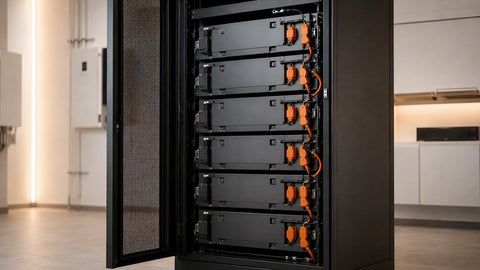
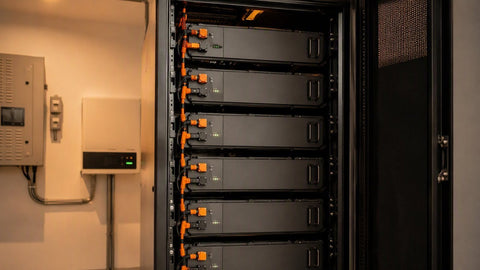
Below the minimums, the inverter clips its own charge and discharge rates to protect the bank, and you've paid for a 15 kW inverter that behaves like an 8 kW. Above them, you're buying autonomy — which is the right reason. Bank candidates with closed-loop Sol-Ark support: EG4 racks for value, Fortress for premium, BYD Battery-Box for modular commercial. Sizing method: battery bank sizing guide.
Six independent MPPT trackers on the 15K sound like a spec-sheet bullet until you price the alternative. A typical American roof with panels on south, west, and east faces forces string-inverter designs into compromises — either separate inverter capacity per face or optimizers across the shaded strings. The 15K takes three faces on three trackers and still has inputs left for the garage roof, the ground-mount addition in year three, and the expansion the customer swears they'll never want and always does. Each tracker accepts its own string voltage and current window, so mismatched string lengths across faces simply don't matter.
Run the string math before rough-in: max input voltage per MPPT, cold-temperature Voc correction for your design temperature, and current limits per tracker. The MPPT fundamentals guide covers the tracker physics, and our panel wiring guide handles the series-parallel layout decisions. Get the string plan right on paper and the rooftop day goes fast; get it wrong and you're re-pulling homeruns.
On grid-tied installs, the 15K's value stack keeps growing: self-consumption mode for net-billing utilities, time-of-use mode that charges off-peak and discharges into peak rates, peak-shaving for demand-charge commercial accounts, and grid-services participation where programs exist. Under California's NEM 3.0 math, the arbitrage spreads are wide enough that battery dispatch strategy often matters more than panel count — the inverter's scheduling intelligence is doing financial work, not just electrical work. Set the rate schedule correctly at commissioning; a wrong TOU window is a silent money leak the customer blames on the equipment.
The controls are deep enough to need discipline: export limits, charge windows, reserve percentages for backup, and gen-start thresholds all interact. We commission with a written settings sheet signed by the customer — what the reserve floor is, what the gen will do, what happens in a storm watch — because the phone call six months later always starts with somebody changed a setting and nobody remembers which one.
The three-way every hybrid quote turns into — Sol-Ark vs. Schneider vs. SolarEdge:
| Feature | Sol-Ark 15K | Schneider XW Pro | SolarEdge Energy Hub |
|---|---|---|---|
| Continuous output | 15,000W | 6,800-7,600W | Up to 11.4 kW |
| Surge power | 45,000W | Moderate | Limited |
| Topology | All-in-one hybrid | Hybrid/charger | DC-coupled hybrid |
| Battery compatibility | Any 48V (LFP, lead-acid) | CAN bus lithium | SolarEdge Home Battery only |
| Transfer time | 0ms | ~20ms | ~20ms |
| CEC efficiency | 97.5% | ~96% | 99% |
| Standard warranty | 10 years | 10 years | 12 years |
| Cost per watt | $0.35-$0.45 | $0.40-$0.55 | $0.25-$0.35 |
Our read: for whole-home backup where the customer wants maximum watts, battery freedom, and one box on the wall, the 15K wins the value argument outright. The Schneider XW Pro wins on transformer-based surge character, 3-phase stacking, and 25-year serviceability. SolarEdge wins on grid-tied efficiency and module-level optimization for customers staying inside one ecosystem. We install all three; the roof, the loads, and the battery conversation decide. For budget-first hybrid bids, cross-shop the GoodWe line and read the hybrid inverter fundamentals before deciding — the cheapest box that starts the customer's AC is the right box, and sometimes that isn't the cheapest box on the quote.
Sol-Ark systems report through the manufacturer's cloud platform with installer fleet views, per-MPPT production data, battery telemetry, and configurable alerts. The customer app shows the flows diagram everyone loves — solar to house to battery to grid, animated — and the data behind it is genuinely useful for service: grid-event logs, gen runtime, and charge-source history. Local commissioning runs through the color touchscreen on the unit itself, which remains one of the best on-device interfaces in the business for jobsite setup without a laptop.
Fleet-management practice that pays: set alert thresholds tighter than the defaults on new installs for the first 90 days — battery voltage excursions, grid-fault counts, and gen-start events — then loosen them once the system proves itself. The first quarter catches the install errors (loose CT clamps, wrong CT direction, mis-set rate schedules) while they're still free to fix. After 90 days of clean data, the system earns its quiet.
We stock the Sol-Ark residential line — 8K, 12K, 15K, and 18K Limitless — with commercial units on quote, plus the batteries, PV, and balance-of-system to build complete systems. Browse 10–12 kW hybrids and 13–18 kW hybrids for cross-brand comparison, and see the Sol-Ark vs. EG4 head-to-head for the budget-hybrid question. Contractor pricing via quote request.
Specifications from Sol-Ark published datasheets (8K/12K/15K/18K-2P, 30K/60K-3P-480V) and warranty documents current as of mid-2026. Motor starting multiples reflect typical LRA values — verify against equipment nameplates. Battery sizing per Sol-Ark published guidance. Certifications per UL 1741 SB, IEEE 1547-2018, CSA C22.2. Pricing reflects typical US street pricing as of mid-2026 and varies by configuration and volume.
Can Sol-Ark operate completely off-grid?
Yes — and it's arguably the best-selling point. The 15K-2P runs grid-tied, grid-tied with backup, off-grid, or off-grid with generator support, switched by configuration rather than hardware. Off-grid, the built-in MPPTs keep the array charging, the 200-amp pass-through and gen input manage a backup generator, and the 0ms transfer means the house never sees the transitions. We've commissioned Sol-Ark systems on properties where the nearest utility pole is a $90,000 line-extension quote away, and the box carries the whole homestead without drama.
What batteries work with Sol-Ark?
Any 48 V battery, open-loop or closed-loop. That's the architectural difference from the walled-garden brands: Sol-Ark publishes communication profiles for the major LFP platforms — EG4, Pylontech, SimpliPhi, Fortress, BYD, and more — and the inverter will also run lead-acid or a dumb lithium bank on manual voltage setpoints. Closed-loop CAN is worth using when the battery supports it; the BMS throttles charge current by cell temperature automatically. See our EG4, SimpliPhi, and Pylontech guides for bank options.
Can I stack multiple Sol-Ark units?
Yes — up to eight units in parallel for 120 kW of continuous output on the 15K platform. Stacking is parallel AC with communications sync, and each unit keeps its own PV inputs, so a 3-unit stack is also a 18-MPPT monster of an array interface. Stacked systems need the battery bank to scale too: plan on the parallel bank supporting the combined charge/discharge current, and use the battery manufacturer's maximum parallel-unit guidance.
Does the 15K really start a central AC compressor?
Yes, with honest caveats. The 45 kW surge rating (10 seconds) starts a 3-ton and most 5-ton conventional compressors — we've watched a 15K start a 5-ton with a well pump already running. The caveat: older single-stage compressors with brutal LRA numbers and weak battery banks can still sag. A soft-starter on the AC condenser is cheap insurance on borderline jobs, and the battery bank must be sized to deliver the surge — the inverter can't pull 40 kW out of a 10 kWh battery no matter what the spec sheet says.
What's the EMP-hardened option about?
Sol-Ark offers EMP-hardened variants tested to military electromagnetic-pulse standards — the same units with additional hardening of the control electronics. It's a niche buy for preparedness-focused customers, and Sol-Ark is one of the only manufacturers offering it as a factory option with real test documentation rather than marketing copy. Functionally the units are identical to the standard line.
How long does delivery take from PES Supply?
Sol-Ark units ship from stock in 1–3 business days by freight — the 15K is a 172-lb palletized shipment, so plan for a liftgate and a couple of strong backs on site. Stacked multi-unit orders and the commercial 30K/60K line quote on current lead times. Contractor volume pricing through our quote desk is same-day; bundle the batteries and PV on one PO and the freight math improves considerably.
Shop Sol-Ark at PES Supply
8K through 18K Limitless all-in-one hybrids — in stock, EMP-hardened options, contractor pricing.
Browse Sol-Ark Inverters