Five years ago, a 5kWh lithium battery cost what a used pickup costs. Then EG4 showed up with server-rack LFP modules at a price that made our purchasing manager call the supplier twice to confirm the quote was not a typo. We have been selling, installing, and warranty-administering EG4 gear since the early LifePower4 days, and this guide is the honest version: what the lineup actually is, where it excels, where the limits are, and the sizing math we run before we let a customer buy sixteen batteries.
1. Company Overview
EG4 Electronics is the house brand of Signature Solar, headquartered in Sulphur Springs, Texas. That origin story matters for two reasons. First, EG4 products are designed for the North American market from day one — split-phase 120/240V output, US code compliance, English documentation that was actually written in English. Second, the parent company is a distributor, so the brand's entire posture is price-disruptive: spec-competitive hardware at direct-market pricing. The trade-off is a younger support organization than the legacy brands — something we will get to honestly in the warranty section — but the hardware itself has earned its install base. EG4 gear now powers everything from weekend cabins to whole-home ESS installs on our truck schedule.
2. Current Product Lines: Batteries
The battery lineup is where EG4 made its name, and it now spans three physical formats. Here is the working comparison we use at the counter (confirm current datasheets for the exact SKU — EG4 revises quickly):
| Format | Representative Line | Nominal Energy | Voltage | Form Factor | Best Use |
|---|---|---|---|---|---|
| Server rack | LifePower4 / LL series | ~5.12kWh (100Ah @ 51.2V) | 48V nominal | 19-inch rack module | Scalable banks 5–80kWh, garage/rack installs |
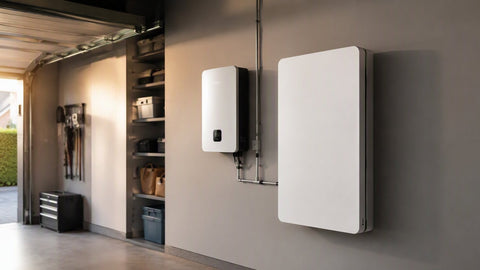
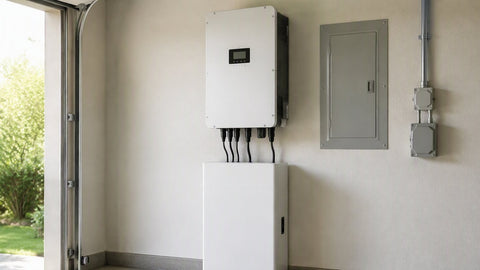
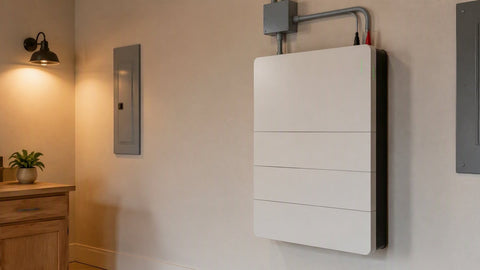
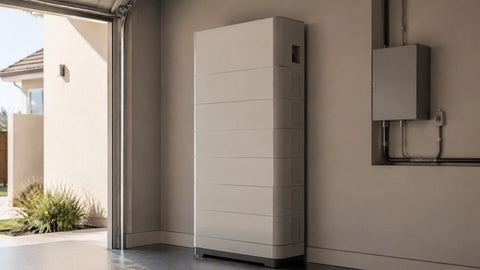
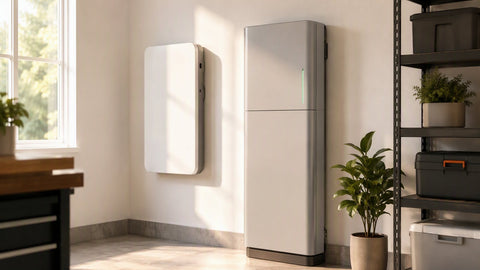
| Wall mount, indoor | WallMount Indoor (280Ah class) | ~14.3kWh | 48V nominal | Wall-hung cabinet | Whole-home backup, tight mechanical rooms |
| Wall mount, outdoor | PowerPro / AllWeather class | ~14.3kWh | 48V nominal | NEMA-rated outdoor enclosure | Exterior installs, no indoor wall space |
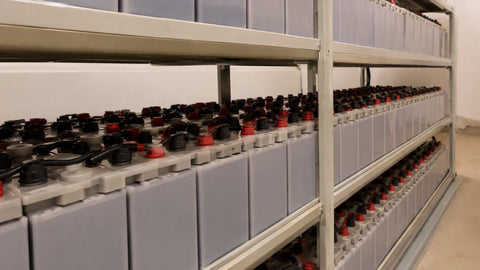
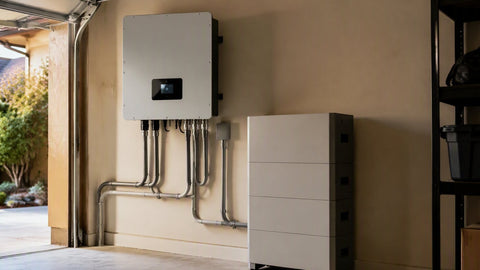
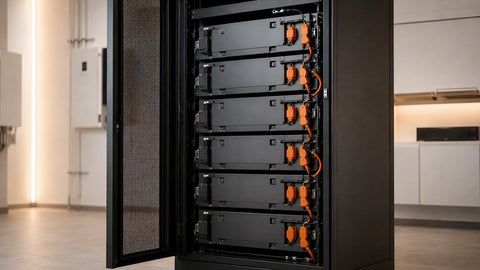
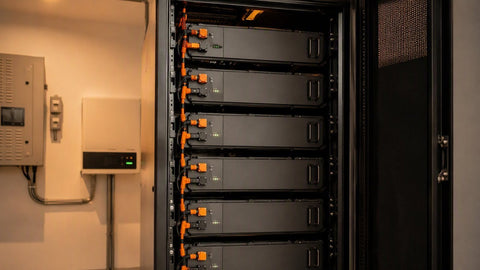
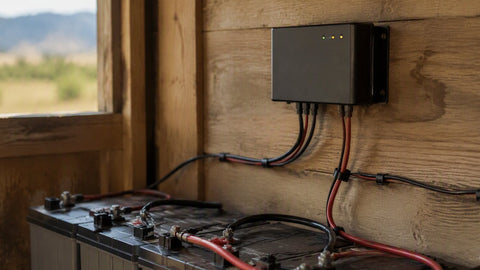
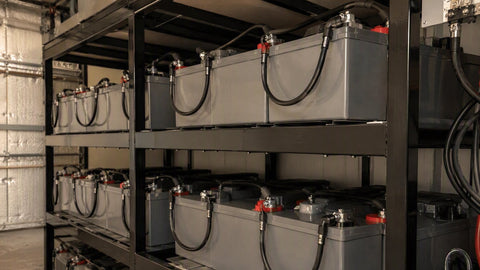
The server-rack modules are the value engine: roughly five kilowatt-hours of LFP in a 3U chassis with an internal BMS, rack ears, and DIP-addressable parallel addressing for up to sixteen units. The LL variant adds internal heating — the feature that matters in unheated spaces, because LFP chemistry cannot accept charge below freezing and a heated battery manages itself instead of demanding a conditioned room. The wall-mount 280Ah-class units triple the energy per footprint and clean up the install aesthetic; the outdoor-rated PowerPro-class enclosures free you from finding indoor wall space entirely.
Every current EG4 battery speaks CAN and RS485, and closed-loop communication with EG4's own inverters is where the system earns its keep — real state-of-charge, BMS-driven charge limits, and alarm propagation instead of voltage-guesswork. Shop the range in our EG4 batteries and EG4 Electronics collections, with capacity-grouped views across the 10kWh and 15kWh ranges.
3. Current Product Lines: Inverters
EG4's inverter line grew from budget off-grid units into a legitimate hybrid ecosystem. The working map:
| Class | Representative Models | AC Output | PV Input | Topology | Role |
|---|---|---|---|---|---|
| Off-grid split-phase | 6000XP, 6500EX, 12000XP class | 6–12kW, 120/240V | Dual MPPT | Low-frequency, transformer | Cabins, off-grid homes, battery-first systems |
| Hybrid whole-home | 18kPV class | ~12kW AC continuous | 18kW-class array capacity | Hybrid, grid-interactive + battery | Whole-home ESS, grid-tie with backup |
| System integration | FlexBOSS / GridBOSS class | — | — | AC coupling & smart distribution | Multi-inverter, generator, and load management glue |
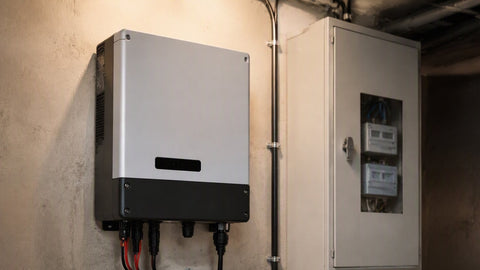
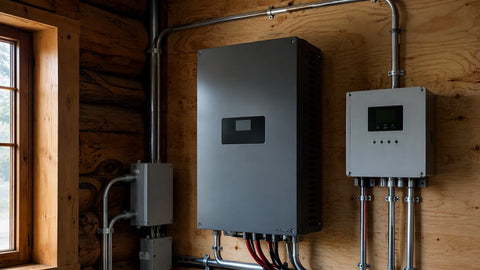
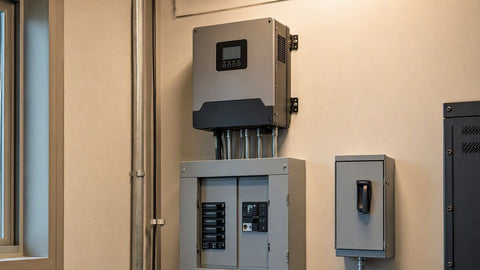
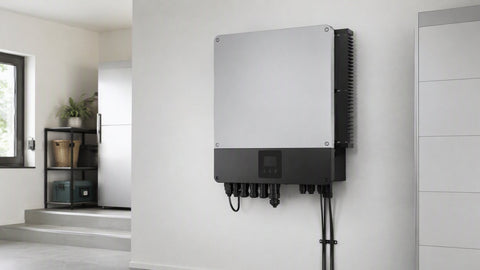
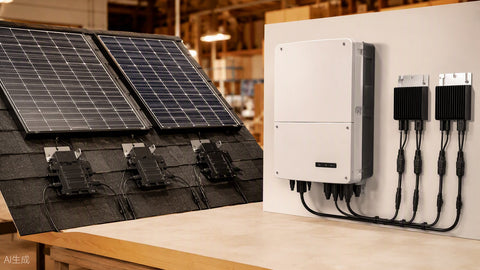
The 6000XP is the cabin hero — 6kW of split-phase 120/240V from a 48V bank, two MPPTs, generator input, in a box that costs less than some charge controllers. The 18kPV is the whole-home answer: hybrid operation, grid sell-back where permitted, battery backup when the grid drops, and closed-loop battery comms. The FlexBOSS/GridBOSS layer handles the larger residential trick — AC-coupling existing solar, managing a generator input, and shedding loads intelligently so the inverter budget stays honest. Browse them in our hybrid inverters collection.
4. Recent Releases (2025–2026)
EG4 ships firmware like a software company, and the 2025–2026 cycle has been about hardening: refined BMS charge algorithms on the LL and wall-mount lines, expanded closed-loop compatibility matrices with third-party inverters, and monitoring improvements through the EG4 app and web portal. The outdoor-rated wall-mount units received enclosure and thermal-management revisions aimed at hot-climate installs — a direct response to early field feedback, which is the pattern with this brand: fast iteration, real listening, occasional rough edges on first-production runs. Our standing advice: buy current-production hardware, register it day one, and keep firmware on the stable release track rather than beta.
5. Certifications & Listings
| Listing | Scope | Applies To | Inspection Impact |
|---|---|---|---|
| UL 1973 | Stationary battery safety | Battery lines (verify per-SKU) | Baseline for permitted ESS |
| UL 9540 / 9540A | ESS listing / thermal runaway data | Battery + inverter pairings (verify the matrix) | What your AHJ checks for residential lithium |
| UL 1741 SB / IEEE 1547 | Grid-interactive inverter certification | Hybrid inverters (18kPV class) | Required for utility interconnection agreements |
| CEC listing | California Energy Commission equipment list | Applicable inverters/batteries | Required for CA incentive programs |
The one verification habit that saves jobs: pull the UL 9540 pairing list for your exact battery-plus-inverter combination before rough-in. A listed battery and a listed inverter are not automatically a listed system, and the pairing matrix — not the marketing page — is the document the inspector trusts.
6. Warranty & Degradation Math
EG4 batteries carry long-form warranties — the flagship lines are sold with ten-year coverage, throughput-limited on the larger modules. As always, the warranty paper matters less than the degradation curve underneath it. LFP chemistry in a residential duty cycle (one cycle per day, 70–90% DoD, 15–30°C operating temp) typically degrades 2–3% in the first year, then roughly 1% per year after — meaning a ten-year-old bank still delivers 80%+ of nameplate. Here is the math we show customers:
| Year | Estimated Capacity Retention (daily cycling, 80% DoD) | Usable kWh from a 30kWh Bank |
|---|---|---|
| 1 | ~97–98% | ~23–24kWh |
| 3 | ~95% | ~22.8kWh |
| 5 | ~92–93% | ~22kWh |
| 8 | ~88–90% | ~21kWh |
| 10 (warranty horizon) | ~85%+ | ~20kWh |
The honest service note: EG4's warranty administration runs through its distributor channel, and it has scaled faster than the support org at times. Our customers get a real human at our counter who handles the RMA logistics — that is the actual reason to buy through a stocking dealer instead of a cart on the internet. The 20/80 battery rule explains the cycling discipline that keeps you off the degradation fast lane.
7. Sizing an EG4 System: The Math
Worked examples from real quotes — daily load, autonomy target, battery count, inverter match:
| Daily Load | Target | Battery Build | Inverter Match | Notes |
|---|---|---|---|---|
| 3kWh (cabin) | 1 day autonomy | 1× 5.12kWh rack module | 6000XP | ~85% DoD on worst day — tight but serviceable; 2 modules if winter loads grow |
| 8kWh (efficient home) | 1 night + morning | 2× 5.12kWh or 1× 14.3kWh wall-mount | 18kPV | Surge check: well pump + microwave simultaneously |
| 15kWh (typical US home, no AC) | Overnight | 3× 5.12kWh (15.4kWh) or 1× 14.3kWh | 18kPV or 12000XP ×2 | AC belongs on the load-shed list, not the battery budget |
| 25kWh (all-electric home) | Overnight + cloudy morning | 2× 14.3kWh (28.6kWh) | 18kPV with GridBOSS load management | Design to 80% DoD ceiling for longevity |
The rule that never lies: size the battery to the night, the inverter to the surge, and the array to the winter. Our battery sizing guide, the home battery bank sizing guide, and the runtime calculator run this arithmetic step by step and the system size calculator handles the array side.
8. BMS, Monitoring & Communications
EG4's BMS does the expected duty — cell balancing, over/under-voltage, over-current, temperature cutoffs — plus the two features that separate current gear from first-generation lithium: low-temperature charge inhibit (standard) and internal heating on the LL line (optional but worth it north of the Mason-Dixon line). Monitoring runs through the EG4 app and web portal over Wi-Fi or LAN dongles, with per-module visibility when batteries are addressed correctly. Set the DIP addresses before you bolt the rack doors closed; we have disassembled exactly one finished rack to fix addressing, and once was enough. Third-party monitoring and comms accessories live in our monitoring & communications collection.
9. Installation Notes from the Field
Rack batteries are heavy and get heavier every row — a 5.12kWh module is in the hundred-pound class, and six of them are a two-person, lift-gate, plan-the-route job. Bolt the rack to the floor in seismic country; a six-module tower is a serious object. Keep the clearances the manual demands around the inverter heat sinks — the 6000XP class moves real air and will cook itself in a cabinet. Torque battery lugs to spec with a calibrated wrench, verify polarity twice on every parallel cable (a reversed module on a live bus is a very expensive sound), and commission closed-loop comms before first charge: if the inverter cannot see the BMS, charge limits default to conservative guesses and you have paid for capacity the system will not use.
Whole-home hybrid installs belong behind a proper critical-loads strategy. The 18kPV-class units will pass grid power through their rated amps, but battery-backup mode is finite — big resistive loads (water heater, range, dryer) go on the non-backed-up side or behind load management, and central AC goes through a soft starter or the shed list. The hybrid solar inverter overview covers topology choices, and our inverter picks roundup puts EG4 in context against the field.
10. Popular Products at PES Supply
- EG4 LifePower4 / LL 5.12kWh server-rack batteries — the modular workhorse of the lineup.
- EG4 wall-mount 14.3kWh-class batteries — indoor and outdoor-rated, for whole-home ESS.
- 6000XP / 12000XP off-grid inverters — cabin and off-grid duty, split-phase 120/240V from a 48V bank.
- 18kPV hybrid inverter — whole-home grid-interactive ESS.
- Pre-configured backup bundles — matched inverter-battery kits in battery backup kits.
11. Technical Comparison: EG4 vs. the Premium LFP Field
Customers cross-shop EG4 against SimpliPhi, Fortress Power, and Pylontech constantly, so here is the honest matrix for a 15kWh-class build:
| Attribute | EG4 (3× 5.12kWh rack) | Premium US-assembled LFP | Value import rack brands |
|---|---|---|---|
| Installed cost per kWh (battery only) | Lowest of the three classes | Highest — often 2–3× EG4 | Comparable to EG4, thinner support |
| Certifications | UL 1973 / 9540A on core lines | Full UL stack, long history | Varies — verify per SKU |
| Support model | Distributor-direct, young but responsive | Mature dealer/service networks | Often email-only |
| Best fit | Cost-driven whole-home ESS, off-grid, DIY-adjacent pros | Inspection-heavy, mission-critical, conservative buyers | Experienced DIY only |
Our counter answer: EG4 wins the spreadsheet and holds up in the field; the premium brands win on paperwork depth and decade-long service records. For a permitted whole-home install where the AHJ is strict and the budget flexes, premium still has an argument. For the other 90% of residential ESS, EG4 is where the value math lands in 2026 — which is why it is on our trucks weekly.
12. System Architecture: DC-Coupled, AC-Coupled, or Hybrid
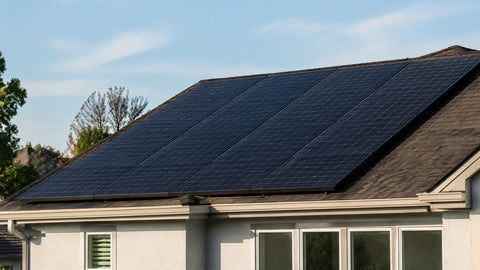
EG4 plays in all three solar-plus-storage topologies, and picking the right one upfront avoids the most expensive redesign in this business. DC-coupled (array into the hybrid inverter's MPPTs, battery on the same DC bus) is the efficiency king for new builds — one conversion stage from panel to battery, and the 18kPV-class hardware does it natively. AC-coupled (existing grid-tie string inverter plus a battery inverter) is the retrofit answer: if a customer already owns a working grid-tie array, a FlexBOSS/GridBOSS-class integration lets them keep it and add storage without touching the roof. Off-grid pure DC with generator backup is the cabin topology — the 6000XP-class unit, a rack bank, and a generator on the AC input for the dark weeks of December. Draw the one-line diagram before you buy anything; the system components guide and solar inverter overview map the pieces.
13. Generator Pairing & Dark-Week Strategy
Every off-grid EG4 system we design assumes a generator exists, because November exists. The hybrid and off-grid inverters accept generator AC input, charge the bank at configurable current, and pass loads through — the configuration details that matter: set charge current to roughly 0.3C of the bank (a 15.4kWh rack bank takes ~50A at 48V comfortably), enable the generator's exercise cycle even in summer, and size the generator for the charger load plus the largest house load that might coincide with it. A 6–8kW generator feeding a 6000XP-class charger covers a cabin's dark-week duty on a few gallons a day; our generator sizing guide scales the math. The operational win with LFP: the bank accepts the generator's full output without complaint, so runtime per gallon is roughly half what a flooded bank demands — LFP simply wastes less of every gallon as heat.
14. Sizing Errors We Fix on Service Calls
After hundreds of EG4-adjacent installs and rescues, the failure patterns are remarkably consistent. First: inverter surge capacity bought to running watts. A 6kW inverter runs a house until the well pump and the refrigerator compressor collide at the same second — then it faults, and the customer concludes the brand is junk. Spec surge honestly, soft-start the big motors, or step up an inverter class. Second: single-string arrays on dual-MPPT inverters, wasting half the harvest potential the hardware already includes. Split the array by orientation or shade pattern and use both trackers. Third: battery banks sized for average days instead of design days — the January load with the furnace blower and the space heater in the shop is the design day, not the April average. Fourth: firmware left at whatever shipped. EG4's update cadence is a feature; schedule firmware review at commissioning and annually after. None of these are exotic — they are the difference between a system that disappears into the background of a customer's life and one that generates phone calls. The two expectation-setting pieces we hand out at design review cover whole-house feasibility and battery-count reality for a 4,000W-class system — both live in our news library and both save everyone a painful phone call in February.
15. Permitting an EG4 ESS in 2026
Residential ESS permitting has matured: most AHJs now have a standard ESS checklist, and EG4's UL paperwork satisfies it when the pairing is on the matrix. The submittal package that sails through review includes the one-line diagram, the battery and inverter cut sheets with UL marks visible, the UL 9540 pairing reference, the NEC 706.15 listing documentation, the rapid-shutdown method for the array (NEC 690.12), and the working-space layout showing 706.16 clearances. Wall-mount outdoor units simplify interior space questions but add weather-exposure notes; rack banks in garages need bollard or barrier protection from vehicle impact under local amendments in many jurisdictions. Budget two weeks for a clean jurisdiction, six for a cautious one, and involve the inspector early on anything unusual — a five-minute pre-submittal call has saved us more resubmittals than any other single habit.
17. The Ownership Experience, Year One
What surprises new EG4 owners is not the technology — it is the silence. No generator drone, no fuel runs, no quarterly hydrometer ritual. The bank charges from the array all day, carries the house all night, and the app shows a green circle. The habits that keep it boring: glance at the app weekly (thirty seconds), keep firmware on stable releases, keep the mechanical room below 35°C in summer, and resist the urge to cycle the bank to empty "to test it." LFP does not need exercise; it needs moderation. Customers coming from flooded lead sometimes struggle with the trust — the battery requires nothing, and that feels wrong after years of maintenance debt. It is not wrong. That is the whole point of the chemistry, and it is why we keep the rack modules stocked two deep on the warehouse shelves.
18. Frequently Asked Questions
Are EG4 batteries UL listed for a permitted install? The core lines carry UL 1973 and UL 9540A data, and many battery-plus-inverter pairings hold UL 9540 system listings. Verify the exact SKU and pairing on the current certification documents before your permit submittal — the matrix changes as new combinations are tested.
How many EG4 server-rack batteries can I parallel? Up to sixteen modules per bank with correct DIP addressing on current hardware — roughly 80kWh. Past two or three modules, rack spacing, cable length matching, and busbar ampacity become the real limits, not the BMS.
Can EG4 batteries talk to non-EG4 inverters? Yes — CAN/RS485 protocols cover the major third-party hybrid inverters, and the compatibility list grows every firmware cycle. Closed-loop beats voltage-based charging wherever it is supported; check the current protocol document for your inverter model.
Will EG4 batteries work in an unheated garage? The BMS blocks charging below freezing, which protects the cells but can leave you without solar harvest on cold sunny mornings. The heated LL line or an indoor/insulated location solves it — in genuinely cold climates we specify the heated units without apology.
What is the real lifespan? LFP at daily residential cycling with 80% DoD discipline should deliver ten-plus years and thousands of cycles with 80%+ capacity remaining. Heat is the accelerator — keep the install under 35°C ambient and the chemistry will outlive the warranty paper.
Is EG4 "too cheap to trust"? The pricing reflects direct-market distribution and LFP cell commoditization, not mystery meat — the cells, BMS architecture, and listings are documented and inspectable. What the price does not include is a hundred-year service org; buy through a dealer who answers the phone and handles RMAs. That is us.
Sources & Standards
- EG4 Electronics / Signature Solar published datasheets, firmware notes, and compatibility documents
- UL 1973, UL 9540/9540A, UL 1741 SB, IEEE 1547; California Energy Commission equipment lists
- NFPA 70 (NEC) Articles 706 and 480 for ESS installation
- PES Supply install base and warranty administration records, 2021–2026
12. Shop EG4 at PES Supply
We stock EG4 batteries and inverters with real inventory, firmware-current hardware, and a counter that has commissioned these systems in the field. Start at the EG4 collection, compare chemistry options across the catalog, and sanity-check the design with our sizing guides before the freight truck shows up. Design review on a multi-module build? Send the loads list — we will check the math with you.