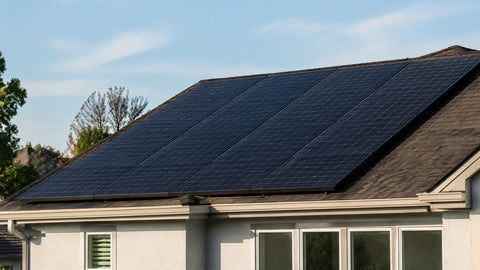
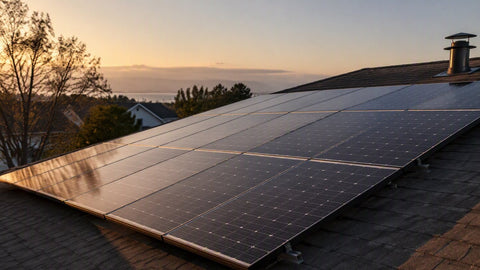
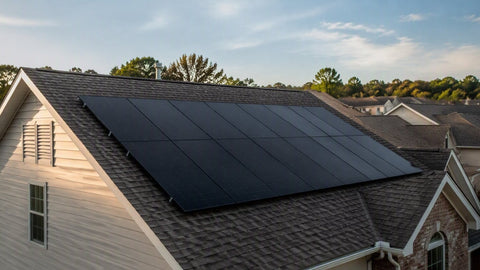
Trina Solar is the brand your customer has never heard of that is probably already on their neighbor's roof. It's one of the largest module manufacturers on the planet by cumulative shipments, a fixture on the BloombergNEF Tier 1 list, and the company that dragged the whole industry onto 210mm large-format wafers. We move Trina product through Portlandia Electric Supply for residential, C&I, and utility buyers, and this guide is the dealer briefing we wish someone had handed us years ago: the Vertex lineup, what 210mm actually changes on a job site, certifications, warranty paper, and where Trina wins and loses against the brands it gets cross-shopped against.
1. Company Overview
Trina Solar was founded in 1997 in Changzhou, China, and has shipped hundreds of gigawatts of modules over its life — putting it in the top tier of global manufacturers by cumulative volume. It runs vertically integrated production from ingot and wafer through cell and module assembly, with manufacturing across China and Southeast Asia, and it consistently holds BloombergNEF Tier 1 status, which is the bankability filter most lenders and lease providers apply first.
Trina's identity in the market is value-at-scale with real R&D behind it. They were early to PERC, early to bifacial, and first to bet the product line on 210mm wafers when the rest of the industry was still arguing about 182 vs 210. That bet is the Vertex series, and it's the reason commercial buyers end up here.
2. Current Product Lines: The Vertex Family
The Vertex lineup splits cleanly by cell format and job size. Residential and small commercial get the Vertex S/S+ on the rectangular 210R wafer; large commercial and utility get the full-size 210mm Vertex N bifacial glass-glass modules. Current dealer-facing lineup with the ranges Trina publishes across sub-models:
| Model | Watts | Cell Tech | Efficiency | Dimensions | Warranty | Price Range |
|---|---|---|---|---|---|---|
| Vertex S+ (NEG9R.28) | 430–455 W | N-type TOPCon (210R) | 21.5–22.5% | 1762 × 1134 × 30 mm | 25-yr product / 30-yr power | $0.30–$0.36/W |
| Vertex S+ (NEG9RH.28) | 440–470 W | N-type TOPCon (210R) | 22.0–23.1% | 1762 × 1134 × 30 mm | 25-yr product / 30-yr power | $0.31–$0.37/W |
| Vertex N (210mm bifacial) | 580–595 W | N-type TOPCon (210) | 22.0–23.0% | 2384 × 1134 × 30 mm | 15-yr product / 30-yr power | $0.27–$0.34/W |
| Vertex utility (670W) | 650–670 W | N-type TOPCon (210) | 22.5–23.1% | 2384 × 1303 × 33 mm | 15-yr product / 30-yr power | $0.26–$0.32/W |
Field translation: the Vertex S+ at 440–470W is the residential workhorse — one person can still rack it, it fits standard residential rail spacing, and the 25-year product warranty is unusually strong paper at this price point. The 580–670W big-format modules are two-person, commercial-roof or ground-mount product. Do not let a residential crew talk themselves into 670W modules on a pitched shingle roof; we've watched that movie and it ends with a workers' comp claim.
3. Why 210mm Cells Matter on a Job Site
The 210mm wafer is simply a larger slice of silicon — 210mm across versus the older 166mm (M6) and 182mm (M10) standards. More silicon per cell means more watts per module, and more watts per module cascades through the whole bill of materials: fewer modules per kW, fewer clamps, fewer feet of rail, fewer string-terminations, fewer homeruns. On a 500 kW commercial roof, stepping from 400W-class to 600W-class modules cuts the module count by a third, and we've seen that shave real days off large installs.
The trade-off is current. Big-format modules push string currents up — many Vertex N modules run Isc in the 14–18 A range depending on model — which changes conductor sizing and, on some designs, forces you to check inverter MPPT input current limits before you fall in love with a layout. The math, per NEC 690.8, with a representative 15 A Isc: 15 × 1.25 × 1.25 = 23.4 A minimum conductor ampacity. That's 10 AWG copper minimum per string (30A at 90°C per NEC 310.16 before derating), not the 12 AWG that residential muscle memory reaches for.
| Design Item | NEC Reference | Formula | Worked Example (Vertex N, Isc ≈ 15 A) |
|---|---|---|---|
| Min conductor ampacity | 690.8(B) | Isc × 1.25 × 1.25 | 15 × 1.5625 = 23.4 A → 10 AWG Cu |
| OCPD where required | 690.9 / 240.6 | ≥ 23.4 A, next standard size | 25 A fuse per string |
| Combiner output circuit | 690.8 | Σ Isc × 1.56 (4 strings) | 4 × 15 × 1.5625 = 93.8 A → 3 AWG Cu, 100 A OCPD |
| Cold-weather string voltage | 690.7 | Voc × temp correction × N ≤ inverter max | Verify against the datasheet Voc and local design temp |
Run the full conductor and conduit math with our NEC wire sizing and ampacity guide, the wire ampacity chart, and the conduit fill chart — the 210mm modules punish sloppy electrical BOS habits that 300W-era designs let you get away with.
4. Recent Releases (2025–2026)
The NEG9R.28 and NEG9RH.28 Vertex S+ refreshes pushed the residential line to 470W with n-type TOPCon cells on the 210R rectangular wafer — the rectangle exists to squeeze maximum silicon into a residential-sized glass rectangle. On the utility side, 670W-class Vertex N modules with 30-year linear power warranties have become the default quote for ground-mount and tracker projects we see bid.
Trina has also been shipping dual-glass bifacial as the default on the big formats, which changes handling: glass-glass modules are heavier per unit area, and clamp zones are defined in the install manual — clamp outside the zone and you void the mechanical-load warranty. Read the manual. We know nobody reads the manual. Read this one.
5. Certifications & Listings
Trina modules in our channel carry UL 61730-1/-2 for North America (satisfying NEC 690 listing requirements), IEC 61215 and 61730 design and safety qualification, plus the usual extended-stress certifications — IEC 62716 ammonia, IEC 61701 salt mist, and PID resistance testing. Fire classification varies by model and mount configuration, so pull the specific datasheet when the AHJ or the insurance carrier asks. On origin: Trina is a Chinese-headquartered manufacturer with significant Southeast Asian production. These are not Buy America domestic-content products, and tariff exposure has shifted more than once — for large projects, lock price and delivery terms in writing and confirm which factory your allocation ships from.
6. Warranty Terms
The warranty split by product line is worth memorizing because it surprises people: Vertex S+ residential modules carry 25-year product / 30-year linear power warranties, while the big commercial and utility Vertex N modules carry 15-year product / 30-year power coverage. That 15-year product term on the big glass is standard for the class across the industry, but customers assume the bigger, more expensive panel has the longer warranty. Set the expectation in the proposal and nobody gets surprised at year 16.
7. Technical Comparison: Trina vs the Value Tier
| Brand | Flagship Tech | Peak Efficiency | Product Warranty | Price Position |
|---|---|---|---|---|
| Trina | N-type TOPCon (210mm) | ~23.1% | 12–25 yr | Mid-range |
| JA Solar | N-type TOPCon | 24.8% (5.0) | 25 yr | Mid-range (value) |
| Jinko | N-type TOPCon | 24.8% (3.0) | 25 yr | Mid-range (value) |
| Canadian Solar | HJT / TOPCon | 23.9% | 12–30 yr | Mid-range |
Trina's edge in this crowd is the 210mm ecosystem — module sizes the competition matches only with parallel product lines — plus sheer supply depth. When a 2 MW project needs a single production batch for uniform flash data, Trina can actually do it. The counterpoint: on pure peak efficiency the JA Solar and Jinko flagships publish higher numbers, and on hot-climate temperature coefficient, HJT products like REC's Alpha still lead. For the head-to-heads, see Canadian Solar vs Trina and Trina vs Jinko. For the technology context, the N-type vs TOPCon vs HJT explainer and TOPCon vs HJT comparison cover the cell physics.
8. Installation Notes From Our Loading Dock
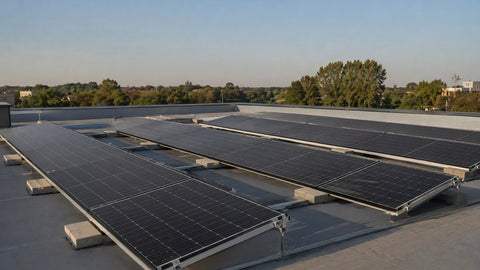
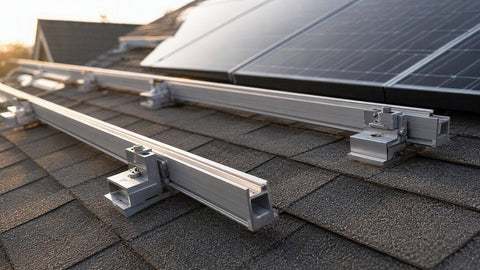
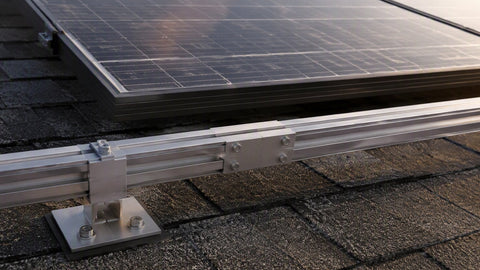
Practical notes from moving thousands of these: the Vertex S+ 30 mm frames play fine with all major residential rail brands — confirm clamp range and torque to the racking spec, typically 10–15 N·m. The big 2384 mm Vertex N modules need a two-person carry and suction handlers on roofs; stage them flat, never leaned against a parapet in wind. Bifacial glass-glass has no backsheet to hide wire sins — sloppy PV wire tails show through and inspectors notice. And on grounding: standard listed bonding hardware per NEC 250/690.43, no exotic requirements. Our grounding and bonding guide and solar wire and cable guide cover the details.
9. Buying Trina Through PES Supply
Popular Trina SKUs in our channel include the TSM-410DEG15MC.20(II) commercial bifacial, residential-format 410W, 420W, and 425W Vertex S-class panels, the Vertex S 395W, and legacy 385W/390W DE09C.07 stock for repair and array-matching jobs. Browse the full Trina Solar collection and Trina panels, or compare across all solar panels and N-type panels. Dealer accounts get pallet pricing and freight consolidation. ¿Prefieres español? Lee la versión en español de esta guía Trina. Also see our best solar panels of 2026 rankings.
Supply Chain, Tariffs, and the Paperwork Nobody Enjoys
Trina's manufacturing footprint spans China and Southeast Asia, and which factory your modules ship from has swung landed cost by double digits more than once in the last four years as US trade actions evolved — AD/CVD cases, UFLPA detention reviews, and Section 201/301 layers. Our standing advice to project buyers: first, get the factory origin stated on the pro forma, not assumed. Second, for anything over a container, lock pricing with a tariff-change clause defining who eats a duty change between order and delivery. Third, keep the full traceability packet — Trina publishes supply-chain documentation for UFLPA compliance, and detentions at port are resolved with paperwork, not phone calls. None of this is unique to Trina; it's the cost of buying any imported tier-1 module at scale in 2026. It's simply bigger dollars at Trina's project sizes, so take it seriously.
Field Failure Modes and the Warranty Claim Reality
What actually fails on Trina arrays in our experience, in order: shipping and handling damage discovered at uncrating (photograph pallets before the banding comes off — freight claims live and die on that photo), junction-box and connector issues on early production runs long since corrected, and the usual industry-wide PID and snail-trail cosmetics on hot, humid utility sites. Catastrophic failure rates have been low; Trina's warranty claim process runs through the distributor with serial numbers, flash-test data, and photos, and resolution on legitimate claims has been measured in weeks, not quarters. Register the project at install and keep the serial map — every manufacturer says this, and every claim that goes smoothly has it.
Worked Design: 100 kW Commercial Roof on Vertex S+
Put the numbers together on a real-shaped problem. Target: 100 kWac behind a 480V service using a string inverter, 1.25 DC/AC ratio → 125 kWdc of modules. On Vertex S+ 470W panels: 125,000 ÷ 470 ≈ 266 modules — call it 266 panels across 19 strings of 14. String Voc check per NEC 690.7 with a representative Voc of ~41.5V and −0.24%/°C coefficient at a −5°C design minimum: correction 1 + 30 × 0.0024 = 1.072; 41.5 × 1.072 × 14 ≈ 623V — over a 600V residential-class input but comfortably inside a 1000V commercial string inverter; verify against your chosen unit. String current with Isc ~13A: 13 × 1.5625 = 20.3A minimum ampacity → 12 AWG copper per string (25A at 90°C before derating per NEC 310.16), 10 AWG where conduit fill or roof temperature pushes derating. That design exercise is exactly what our team does free for dealer accounts on commercial quotes — send the roof plan, get back a string map and BOM.
Hot-Climate Behavior: Where TOPCon Sits Against HJT
Trina's n-type TOPCon cells post power temperature coefficients around −0.29 to −0.30%/°C on current Vertex datasheets — a solid improvement over PERC's −0.34 to −0.35%/°C, and a tick behind HJT's ~−0.24%/°C. Translated to a 100 kW commercial roof on a 60°C-cell-temperature afternoon: TOPCon gives up roughly 10.2% to heat, HJT about 8.4%, legacy PERC about 12%. The 2-point TOPCon-to-HJT gap is real but modest; whether it's worth HJT's price premium depends on your climate, your rate tariff, and how long the customer holds the building. We model it both ways on commercial quotes and let the NPV decide — in Phoenix the answer is often HJT, in Cleveland it almost never is.
| Cell Technology | Typical Temp Coefficient | Power at 60°C Cell Temp (relative) | Representative Flagship |
|---|---|---|---|
| N-type TOPCon (Trina Vertex) | ≈ −0.29 to −0.30%/°C | ~89.8% | Vertex S+ 470W |
| HJT (REC Alpha class) | ≈ −0.24%/°C | ~91.6% | Alpha Pure-RX 470W |
| Legacy PERC | ≈ −0.34 to −0.35%/°C | ~88.0% | Prior-generation 400W modules |
The Commercial Procurement Timeline
Commercial buyers consistently underestimate the calendar, so here's the realistic sequence for a Trina-based C&I project. Weeks 1–3: design, module selection, and the tariff/origin clause negotiation. Weeks 3–6: production allocation confirmed, pro forma and deposit, traceability documentation requested. Weeks 6–14: manufacturing and ocean freight — trans-Pacific transit plus port time runs five to eight weeks on its own. Week 14+: delivery, uncrating inspection (photograph the pallets before the banding comes off), and install. The failure mode we see is a buyer signing a construction contract with a hard start date before the module allocation is confirmed — then paying crane remobilization when the container slides two weeks. Lock the panels first, schedule the crew second.
Residential Install Notes Specific to Vertex S+
A few more roof-level habits worth the space. The Vertex S+ dual-glass construction is heavier per panel than mono-facial equivalents — around 21–24 kg depending on watt class — so plan two-person sets on steep pitches even though the footprint is residential-standard. The 30 mm frame mates cleanly with current rail systems, but because the glass-glass laminate has no backsheet "give," clamp torque matters more than usual: set the torque wrench to the rail manufacturer's mid-range spec and use calibrated tools, not impact guns. On wire management, glass-glass transparency means every cable loop shows from the street side on some rakes; dress the whips tight. And on string layout, the S+ family's voltage window suits strings of 8–14 on residential 600V inverters — run the NEC 690.7 cold check against your design minimum before finalizing, since rectangular-cell variants publish slightly different Voc values per sub-model. None of this is exotic; it's the difference between an install that photographs well at year ten and one that doesn't.
Dealer Program and After-Sale Support
For installers weighing Trina as a primary line, the practical questions are distribution depth and claim support rather than datasheet minutiae. Trina moves through multi-tier distribution in North America, which means stock visibility varies by distributor — ask your supplier (us, if you're buying through PES) for live allocation before quoting delivery dates to customers, especially on the 210R-format Vertex S+ where residential demand spikes seasonally. On after-sale support, warranty claims route through the distributor with the serial map and photos, and Trina's technical response on legitimate claims has been solid in our experience. Register every project, keep flash reports with the job file, and the support system works the way it's supposed to.
The Bottom Line on Trina in 2026
Trina's proposition hasn't changed: bankable scale, honest TOPCon performance, and pricing that keeps commercial projects penciling. The 210mm bet aged well — the format is now an industry standard rather than a Trina eccentricity, which means racking, handling gear, and installer familiarity have all caught up. Where we'd nudge a buyer elsewhere: hot-climate premium residential where HJT's temperature coefficient earns its price, and domestic-content-driven federal work where origin rules the spec. Everywhere else — value residential, C&I rooftops, utility blocks — Vertex belongs on the bid list. That's not enthusiasm talking; it's five years of warranty claims, freight invoices, and production data.
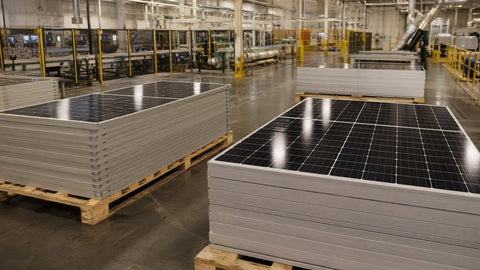
One practical note we give every dealer on their first Trina pallet: the Vertex N big-format modules ship in tall vertical packaging that requires a dock or a forklift with decent mast height — plan the receiving before the truck arrives, not while the driver waits. Small thing, but the dealers who plan it keep their freight relationships friendly.
Dealer margin note: because Vertex sits in the value-premium band, it pairs naturally with attachment-rate items — optimizers, monitoring, extended labor warranties — where the margin actually lives. Quote the panel sharp; build the margin on the balance of system.
Final tip from our order desk: Vertex S+ residential SKUs move fastest in spring, so dealers booking summer installs should reserve allocation by early Q2 — the pattern has held three years running.
Frequently Asked Questions
What is the Vertex series?
Vertex is Trina's flagship module family built on 210mm-class wafers: Vertex S/S+ (210R rectangular cells, 430–470W) for residential and small commercial, and Vertex N (full 210mm, 580–670W, mostly bifacial glass-glass) for large commercial and utility work.
Why 210mm cells?
Larger wafers mean more watts per module, which means fewer modules, clamps, rails, and terminations per kW installed. On commercial jobs the BOS and labor savings are real; the trade-off is higher string current, which changes conductor and OCPD sizing per NEC 690.8.
Are Trina panels Tier 1?
Yes — Trina consistently appears on the BloombergNEF Tier 1 module manufacturer list, which measures bankability (use in financed projects), not lab quality. It's the first filter most lenders apply.
Are Trina panels Buy America-compliant?
No. Trina manufactures in China and Southeast Asia. For federal procurement or ITC domestic-content bids, treat Trina as imported and confirm tariff status at order time.
What warranty do Trina Vertex panels carry?
Vertex S+ residential modules: 25-year product / 30-year linear power. Large-format Vertex N commercial and utility modules: 15-year product / 30-year linear power. Always confirm the warranty document that ships with your batch.
What is the lead time from PES Supply?
Stocked SKUs typically ship in 3–7 business days. Pallet and container quantities are quoted per order; for utility volumes, lock allocation, factory origin, and delivery terms in writing.
Sources & Standards
Trina Solar published Vertex datasheets and limited warranty documents; UL 61730-1/-2; IEC 61215/61730/62716/61701; NFPA 70 (NEC) Articles 690, 250, 310 and Chapter 9; BloombergNEF Tier 1 listings. Specs are per manufacturer publications and change between production runs — design from the datasheet that ships with your pallet.