When a customer walks into our shop wanting "the battery that will still be under warranty when my mortgage has ten years left," the conversation usually lands on Fortress Power. They are not the cheapest LFP on our shelves and they do not pretend to be — the pitch is premium cells, conservative engineering, US-based support, and cycle-life numbers that survive scrutiny. We have installed Fortress banks in off-grid compounds, suburban whole-home backups, and one memorable brewery that needed its walk-in coolers to survive ice storms. This guide covers the lineup, the math, and the field reality.
1. Company Overview
Fortress Power is a US energy storage company — Pennsylvania-rooted — that has built its catalog entirely around lithium iron phosphate chemistry since its founding in the mid-2010s. That single-chemistry focus is a deliberate engineering stance: LFP trades energy density for thermal stability and cycle life, and Fortress bet the stationary-storage market would take that trade. The bet aged well. The company designs its systems in the US, supports them from the US, and maintains compatibility partnerships with the major inverter brands rather than forcing a walled garden. For installers, that last point is the practical differentiator — a Fortress battery plays nicely with the hybrid and off-grid inverters already on the truck.
2. Current Product Lines
The catalog organizes into three tiers — modular rack batteries, large-format wall/floor units, and integrated all-in-one systems. Confirm exact model numbers and capacities against current datasheets, as the line revises steadily:
| Tier | Representative Line | Nominal Energy | Voltage | Format | Best Use |
|---|---|---|---|---|---|
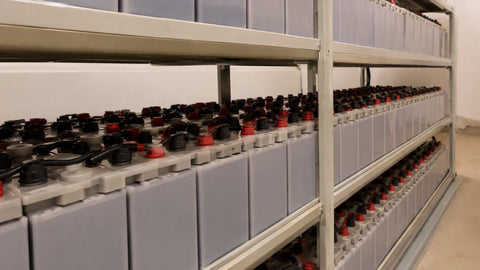
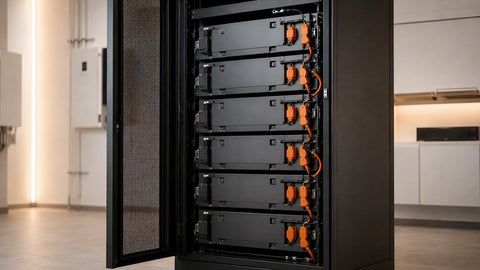
| Modular rack | eFlex series (5.4kWh class) | ~5.4kWh (105Ah @ 51.2V) | 48V nominal | 19-inch rack module | Scalable banks, off-grid, telecom-grade duty |
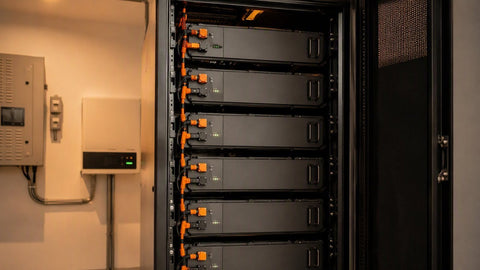
| Large format | eVault / eVault Max (18.5kWh class) | ~18.5kWh | 48V nominal | Floor/wall cabinet on wheels | Whole-home ESS, minimal wiring, fast installs |
| Integrated ESS | Avalon / eForce stackable class | Stackable ~10–40kWh+ | 48V / HV variants | All-in-one or stackable tower | Turnkey whole-home backup |
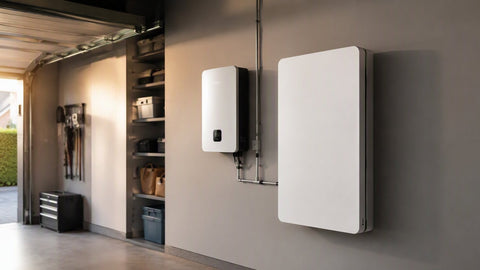
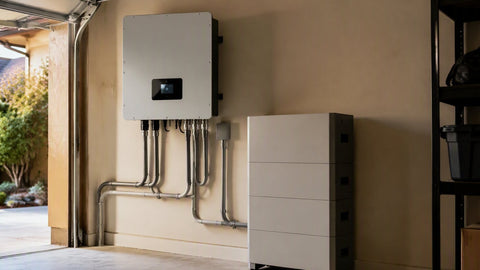
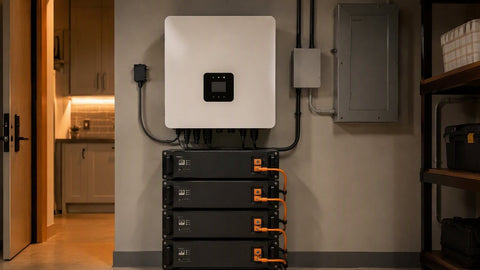
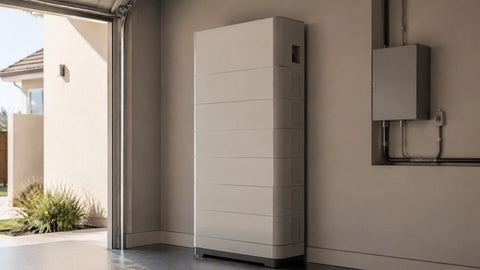
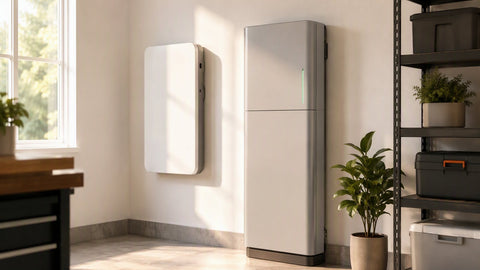
The eVault 18.5 is the unit that changed our install economics: nearly twenty kilowatt-hours in a single wheeled cabinet means a whole-home bank is two boxes and an afternoon, not a sixteen-module rack marathon. The eFlex 5.4 remains the modular answer for telecom-style duty and tight spaces, and the stackable tower formats serve the homeowner who wants the battery to look like an appliance rather than a server farm. All of it lives in our Fortress Power collection, cross-shoppable against the wider lithium battery catalog.
3. Recent Releases (2025–2026)
Fortress's recent development work has concentrated on the stackable and integrated end of the line — higher-energy towers, refined inverter pairing, and monitoring polish through their app and portal platforms. Closed-loop CAN communication has expanded across more third-party inverters, which matters more than any single spec: a battery that reports true state-of-charge and accepts BMS-driven charge limits from the inverter charges faster, lasts longer, and faults less. The 2025–2026 firmware cycle also tightened cold-weather behavior — charge inhibition logic and, on applicable models, thermal management — reflecting how much of the US install base lives somewhere that freezes.
4. Certifications & Listings
Fortress has consistently invested in the certification stack, which is a real cost in this category and a real signal about how seriously a manufacturer takes the permitted-install market:
| Listing | Scope | Field Impact |
|---|---|---|
| UL 1973 | Stationary battery safety | Baseline listing for permitted ESS |
| UL 9540 / UL 9540A | System listing / thermal runaway propagation data | AHJ sign-off; pairing matrix governs which inverters qualify |
| CEC listing | California Energy Commission approved equipment | Required for California incentive programs |
| NEC 706 / 480 compliance path | ESS installation rules | Install-side: disconnects, working space, location limits |
The habit that keeps installs out of trouble: verify the battery-plus-inverter pairing on the current UL 9540 documentation before rough-in. A listed battery and a listed inverter are not automatically a listed system — the pairing is the document. Fortress maintains broad inverter compatibility, which is precisely why the matrix check takes minutes instead of weeks.
5. Warranty & Cycle Life
Fortress publishes aggressive cycle-life figures — the flagship lines carry long-form warranties in the ten-year class with cycle ratings in the multi-thousand range at 80% depth of discharge, throughput-limited on the larger units. Confirm current terms per SKU at purchase. The engineering beneath the paper is what we actually sell: LFP cells conservatively driven, a BMS that enforces sane limits, and thermal design that keeps cells in the comfort zone where degradation crawls instead of runs.
| Scenario | Duty Cycle | Expected Service Reality |
|---|---|---|
| Daily cycling, 80% DoD, conditioned space | ~365 cycles/yr | 10-year warranty horizon reached with capacity to spare; 15-year service life plausible |
| Backup-only, occasional outages | <50 cycles/yr | Calendar aging dominates; the battery will likely outlive the inverter |
| Off-grid daily + generator-top-up winters | ~400+ cycles/yr equiv. | Throughput limits arrive first; size the bank so DoD stays ≤80% |
| Hot install (unconditioned, >35°C ambient) | Any | Degradation accelerates meaningfully — ventilation or relocation pays for itself |
The 20/80 battery rule and our battery longevity guide cover the operating discipline that makes those table rows come true.
6. Sizing a Fortress Bank: The Math
Worked examples from real quotes, using the eVault 18.5 and eFlex 5.4 classes as building blocks at 80% usable DoD:
| Daily Load | Overnight Need | Recommended Build | Usable kWh @ 80% DoD | Margin Note |
|---|---|---|---|---|
| 8kWh (efficient home) | ~5kWh | 2× eFlex 5.4 | ~8.6kWh | Comfortable; room for a cloudy morning |
| 15kWh (typical home, gas heat) | ~9kWh | 1× eVault 18.5 | ~14.8kWh | Single-cabinet simplicity; expand later if needed |
| 25kWh (all-electric) | ~15kWh | 2× eVault 18.5 | ~29.6kWh | Covers night + next morning; AC stays on load management |
| 40kWh (estate / light commercial) | ~24kWh | 2× eVault + stackable expansion or 3× eVault | ~44kWh+ | Design review with our team — this is where engineering earns its fee |
The sizing discipline never changes: battery for the night, inverter for the surge, array for the winter. Our battery sizing guide, home battery bank sizing guide, and runtime calculator walk the full worksheet.
7. Inverter Compatibility & System Pairing
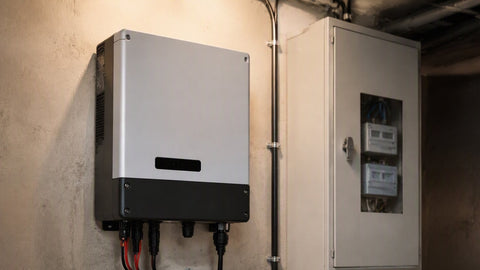
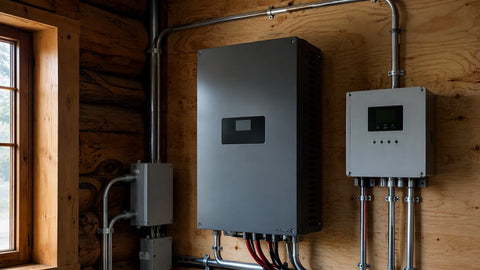
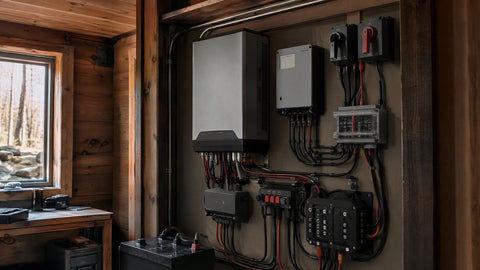
Fortress's open-compatibility stance is the installer's friend. The 48V lines communicate over CAN with the major hybrid and off-grid inverters — the Sol-Ark-class hybrids, Schneider XW lineage, Victron ecosystems, and others on the current compatibility list — and run voltage-based where comms are not configured. Our strong recommendation: always configure closed-loop. Voltage-charged lithium is lithium being babysat by estimate; CAN-connected lithium reports SOC, accepts dynamic charge limits, and logs its own warranty evidence. Pairings we install most: Fortress banks behind hybrid inverters from our hybrid inverter collection for whole-home ESS, and behind the off-grid inverter class for cabins and remote sites. The hybrid inverter overview explains the topology if you are choosing between grid-interactive and off-grid paths.
8. Popular Products at PES Supply
- Fortress eFlex 5.4kWh rack modules — the scalable building block, in Fortress Power.
- Fortress eVault 18.5kWh — the whole-home single-cabinet answer, alongside our 15kWh-class battery inventory.
- Stackable / integrated ESS towers — turnkey formats for appliance-clean installs.
- Matched backup bundles — inverter-plus-battery kits in battery backup kits.
9. Installation Notes from the Field
The eVault's wheels are not a gimmick — an 18.5kWh cabinet is a several-hundred-pound object, and the ability to roll it into position instead of carrying it is the difference between a two-person install and a four-person one. Level the cabinet, lock the casters, and respect the clearances in the manual; LFP cabinets breathe. On rack builds, the discipline is the same as any 48V system: identical cable lengths to a common busbar, calibrated torque on every lug, polarity verified twice per cable, DIP/addressing set before the rack doors close. We commission every Fortress bank the same way: firmware current, comms verified closed-loop, charge/discharge limits confirmed against the inverter pairing document, then a witnessed discharge test at a known load. The commissioning sheet goes in the job file because it is the warranty file's best friend later.
Location decisions matter more with lithium than with lead: keep the bank conditioned or at least insulated from temperature extremes, off the floor where flooding is conceivable, and out of direct sun on exterior-adjacent walls. The how many batteries walkthrough helps customers sanity-check capacity before the truck arrives.
11. Technical Comparison: Fortress vs. EG4 vs. SimpliPhi
The three LFP brands we sell most each own a distinct lane, and pretending otherwise wastes everyone's afternoon:
| Attribute | Fortress Power | EG4-class value LFP | SimpliPhi-class premium LFP |
|---|---|---|---|
| Cost per kWh (battery) | Mid-premium | Lowest | Highest |
| Engineering posture | Conservative limits, broad compatibility | Fast iteration, aggressive pricing | Aerospace-grade ruggedization heritage |
| Support model | US-based, dealer-friendly, responsive | Distributor-direct, young org | Mature, deep documentation |
| Certification depth | Full UL stack on core lines | Core lines listed — verify per SKU | Deepest listing history in class |
| Best fit | Permitted whole-home ESS, premium off-grid | Cost-driven builds, DIY-adjacent pros | Mission-critical, harsh environments, conservative AHJs |
Our honest routing: if the customer's first question is price, they are an EG4 conversation. If the first question is "what would you put in your own house," that is the Fortress conversation. If the site is a mountaintop repeater station or a hospital outbuilding, that is when the premium ruggedized brands earn their number. Most residential buyers land in the middle lane — which is exactly where Fortress aims.
12. Degradation Math: What Ten Years Actually Looks Like
Customers deserve the degradation picture in numbers, not adjectives. Using conservative LFP aging assumptions for a daily-cycled 18.5kWh eVault-class bank at 80% DoD in conditioned space:
| Year | Estimated Retention | Usable kWh @ 80% DoD | What It Feels Like |
|---|---|---|---|
| 1 | ~97–98% | ~14.4kWh | Indistinguishable from new |
| 3 | ~95% | ~14.1kWh | Still invisible in daily use |
| 5 | ~92–93% | ~13.7kWh | The app notices before you do |
| 8 | ~88–90% | ~13.1kWh | A cloudy-morning margin is thinner, nothing more |
| 10 | ~85%+ | ~12.6kWh | Warranty horizon reached with a working system, not a corpse |
Two forces move those rows: heat accelerates everything (keep the bank under 35°C ambient and the table holds), and depth of discharge sets the slope (cycle at 60% instead of 80% and the years stretch). The chemistry forgives a lot — it does not forgive a hot garage in August or a design that cycles to empty nightly because the bank was sized to the average instead of the design day.
13. Generator Pairing & the Dark-Week Strategy
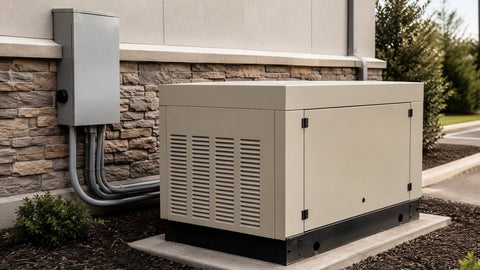
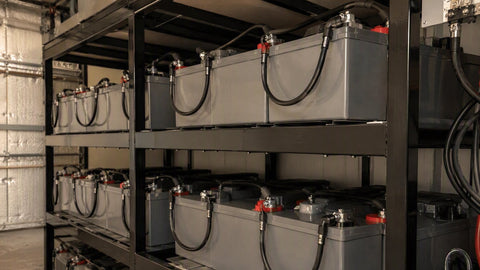
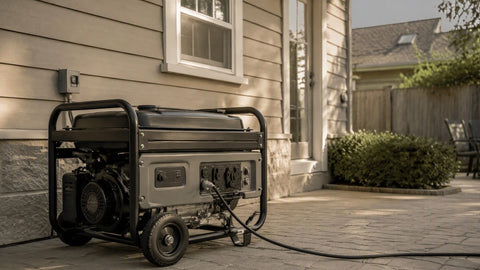
Off-grid Fortress banks pair beautifully with generators because LFP accepts charge fast: a bank that can take 0.3–0.5C turns a December dark week into two short generator runs a day instead of an all-day drone. Configure the inverter's generator input for the charger load the bank can actually accept, exercise the generator monthly year-round, and let the BMS close the loop so the charger follows the battery's current limits rather than a static guess. The generator sizing guide scales the machine to the charger plus coincident loads, and our generator backup power collection covers the pairing hardware. Customers moving off flooded lead notice the fuel savings in the first winter — the same kilowatt-hours land in the bank in half the runtime because LFP wastes so much less as heat and tail-current.
14. Ownership, Monitoring & the Quiet Decade
The day-to-day of owning a Fortress bank is deliberately uneventful: the app shows state of charge, the BMS handles the discipline, and the maintenance schedule is a yearly glance at torque marks and firmware status. We tell new owners to build exactly two habits — check the app weekly for thirty seconds, and call us when an alarm appears rather than after a week of alarms. The customers who follow that rule are the ones whose banks make the fifteen-year row of the degradation table. The ones who treat alarms as decoration are how we learned to put that sentence in the handoff folder.
15. Permitting an ESS in 2026: The Paperwork That Passes
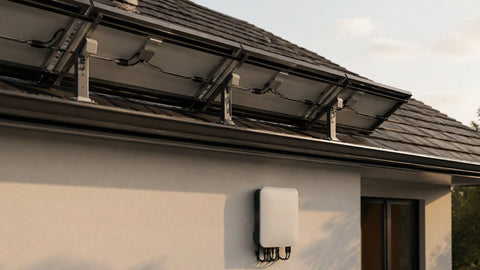
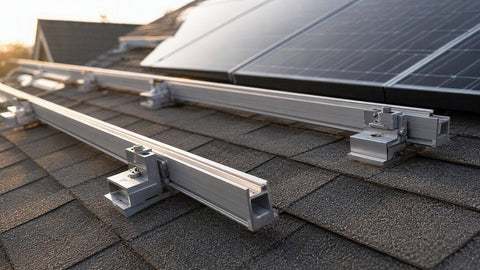
Residential energy storage permitting has standardized enough that a complete package sails and an incomplete one dies on the desk. The submittal set that works across our jurisdictions: a one-line diagram showing inverter, battery, disconnects, and interconnection method; cut sheets with the UL marks visible; the UL 9540 pairing reference for the exact battery-inverter combination; the NEC 706.15 listing documentation; a site plan showing location, working clearances, and — for garage installs — vehicle-impact protection where the local amendment requires bollards or barriers; and the rapid-shutdown method for the array under NEC 690.12. Exterior cabinets simplify interior-space questions but add weather-exposure notes to the plan set. Budget two weeks for a jurisdiction that has seen ESS before, six for one that has not, and make the five-minute pre-submittal call to the plans examiner on anything non-standard — it has saved us more resubmittals than any other single habit in the company.
16. AC-Coupled vs. DC-Coupled: Where Fortress Fits
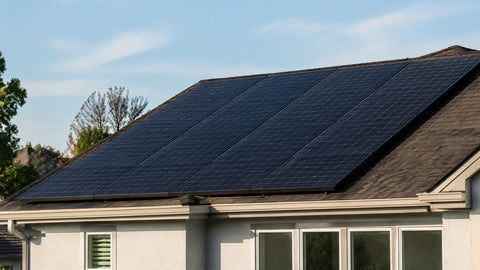
Fortress banks work on both sides of the coupling decision, and choosing correctly upfront is the cheapest engineering you will ever buy. DC-coupled — array into a hybrid inverter's MPPTs, battery on the shared DC bus — is the new-build answer: one conversion stage from panel to battery, the best round-trip efficiency, and the cleanest wiring. AC-coupled is the retrofit answer: a customer with a working grid-tie string inverter keeps the array untouched while a battery inverter-charger and the Fortress bank add storage at the panel. Both topologies are routine for the 48V Fortress lines; the wrong answer is mixing philosophies mid-project because a component was on sale. Draw the one-line first, price both paths honestly, and remember that the system components guide maps every box on the diagram to a real SKU.
17. What a Fortress Install Costs, Honestly
Customers deserve the real budget shape, so here it is in ranges rather than false precision. Battery hardware for a whole-home 18–30kWh Fortress build lands in the mid-four-to-low-five-figure range depending on line and capacity; the inverter, if not already present, adds a similar class of money; installation, permitting, and balance-of-system typically run 30–50% on top of hardware depending on site complexity. The levers that move the number: single-cabinet eVault-class builds cut labor versus multi-module racks; existing compatible inverters cut the biggest hardware line; and straightforward garage or exterior placements avoid the carpentry. Federal and state incentives apply to storage broadly in 2026 — verify current program rules with your tax professional, because those percentages move the payback math more than any hardware choice. What we will not do is quote storage sized to average bills: bring us twelve months of interval data or a real loads list, and the number we give you will hold.
18. Cold-Climate Playbook
Half our install territory freezes hard from November to March, so the cold-weather plan is standard practice rather than an edge case. LFP cells cannot accept charge below freezing — the BMS inhibits charge to protect them, which means a bank in an unheated space can sit locked out on the coldest, sunniest mornings, exactly when harvest is precious. The fixes, in order of preference: locate the bank in conditioned or semi-conditioned space (a basement corner beats a garage wall); insulate the enclosure and let the battery's own standby heat help; or use models and configurations with managed heating where the site truly cannot be tempered. What not to do: defeat the inhibit, wrap the battery in a heat tape on a dumb thermostat, or assume "it worked last winter" is a design. Cold-weather installs also shift the generator strategy — the genset runs to charge during the locked-out hours, which is another reason the pairing section above is not optional reading north of the freeze line.
20. Frequently Asked Questions
Before the questions, one final word on expectations: a well-designed Fortress ESS disappears into the house. The lights do not flicker at transfer, the app stays green, and the only reminder that the grid failed is the neighbor's dark windows. Every design decision in this guide — the sizing math, the pairing discipline, the cold-weather plan, the commissioning checklist — exists to protect that boredom.
Fortress vs. the budget rack brands — what does the premium buy? Conservative cell selection and BMS limits, deep US-based support, broad certified inverter pairings, and warranty administration that answers the phone. If the install is permitted, inspected, and expected to run fifteen years, the premium is the cheap option.
How long will a Fortress bank last? On residential daily cycling at ≤80% DoD in conditioned space, expect the ten-year warranty horizon with margin and a plausible fifteen-year service life. Backup-only duty ages on the calendar, not the cycle counter — often longer.
Which inverters work with Fortress batteries? The current compatibility list covers the major 48V hybrid and off-grid brands via CAN closed-loop, plus voltage-based operation where comms are unavailable. Check the current matrix for your exact inverter SKU before purchase — and always prefer closed-loop.
Can I expand a Fortress bank later? Yes, within the line's parallel limits — matching models and firmware, per the manufacturer's expansion rules. Adding capacity in year three to a bank installed in year one is routine; mixing across product generations is where you call us first.
Do Fortress batteries work off-grid? They are one of our default off-grid recommendations — LFP's charge acceptance halves generator runtime in the dark months, and the BMS's low-temperature charge inhibit protects the cells. In freezing installs, plan the battery location or heating strategy deliberately.
Are Fortress batteries UL 9540 listed for permitted installs? The core lines carry the UL 1973/9540 stack — verify the exact battery-plus-inverter pairing on the current listing documentation for your permit packet, and involve the AHJ early on anything unusual.
Sources & Standards
- Fortress Power published datasheets, warranty documents, and inverter-compatibility matrices
- UL 1973, UL 9540/9540A; California Energy Commission equipment lists
- NFPA 70 (NEC) Articles 706 and 480 — energy storage installation rules
- PES Supply install and warranty records, Fortress fleet, 2020–2026
11. Shop Fortress Power at PES Supply
We stock Fortress Power batteries and bundles with design support from people who have commissioned these systems. Start in the Fortress Power collection, compare across battery storage, and pair with the right inverter from hybrid inverters. Send us your loads list and autonomy target — the sizing consult is the free part.