In March 2018, Enphase Energy began shipping the IQ7 — the seventh generation of the microinverter platform that effectively invented module-level power electronics for residential solar. We remember the launch well: our install crews had been fighting the M250's quirks for years, the S280 had smoothed most of them, and the IQ6 had proven the new polymer-enclosure architecture. The IQ7 promised the same architecture with real power under it. Eight years on, with the IQ7 family long since superseded by the grid-forming IQ8, this is the retrospective-plus-field-guide: what the IQ7 actually was, what it shipped with, how it performed on real roofs, and what owners of the millions of installed units should know today.
1. What Shipped in March 2018
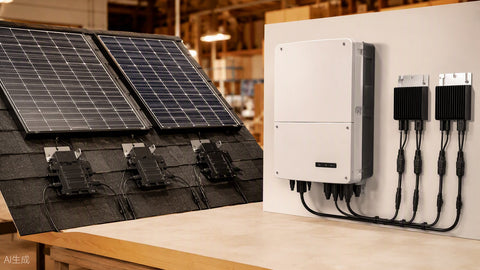
Enphase announced the IQ7 family as a three-model line aimed at covering the full residential panel spectrum of its era. The IQ7 targeted standard 60-cell modules, the IQ7+ covered higher-power 60- and 72-cell modules, and the IQ7X handled the 96-cell formats that SunPower and Panasonic were shipping at the time. The architecture carried over from the IQ6: a rugged polymer enclosure, a two-wire (no neutral) trunk cable, powerline communication to the Envoy gateway, and the "semiconductor as a system" design philosophy — one custom ASIC doing the power conversion, which Enphase credited for the family's projected reliability numbers.
The strategic context mattered as much as the silicon. Enphase was coming off a painful restructuring, SolarEdge owned the optimizer narrative, and string inverters with module-level shutdown were eating the low end. The IQ7 was the bet that a lighter, cheaper-to-install, higher-power microinverter could defend the residential premium segment. It largely worked: IQ7 and its successors became the default module-level choice for US residential installs through the end of the decade.
2. The IQ7 Lineup at Launch
The launch specifications, from Enphase's published datasheets of the era (verify against the specific unit's data plate for any service work — revisions exist):
| Model | Peak Output Power | Target Module Class | CEC-Weighted Efficiency | Notes |
|---|---|---|---|---|
| IQ7 | 250VA | 60-cell modules up to ~350W | ~97.0% | The volume seller; matched the mainstream 300W-class panels of 2018 |
| IQ7+ | 295VA class | 60/72-cell modules up to ~440W | ~97.0% | The workhorse that carried the family through the 400W-panel transition |
| IQ7X | 320VA class | 96-cell modules up to ~460W | ~97%+ | High-voltage input for 96-cell formats |
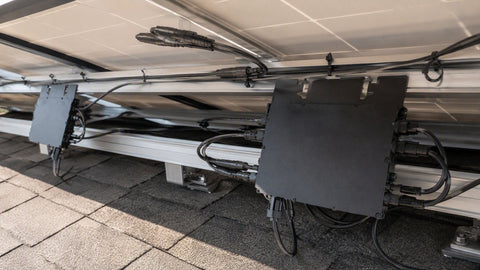
Three design decisions defined the platform. First, the polymer enclosure — a genuine weight and sealing improvement over the metal M215/M250 generation, and the reason a modern microinverter install is a one-hand operation. Second, the two-wire Engage cable: eliminating the neutral conductor cut trunk-cable cost and simplified rooftop wiring. Third, powerline communications — the microinverters report production data over the same conductors that carry their power, which means no rooftop radios and no communication wiring, at the cost of occasional comm issues in electrically noisy houses. Crews learn to install the Envoy's CT clamps correctly and to keep it on a clean circuit; ninety percent of "communication problems" we have chased were CT orientation or a noise-making variable-speed appliance, not the microinverters.
3. How the IQ7 Fit the 2018 Market
The competitive frame in 2018 was simple: string inverters were cheaper per watt, optimizers gave module-level monitoring without full MLPE cost, and microinverters were the premium, shade-tolerant, expandable option. The IQ7's pitch was that the premium had shrunk. Faster installs (no DC string design, no roof-penetrating DC runs into the attic), a 25-year warranty that matched the panels instead of expiring at year ten like string units, and per-module monitoring that turned warranty claims into evidence instead of argument.
The math we ran for customers then still holds: on a simple, unshaded, south-facing roof with a single plane, a string inverter wins on first cost and there is no honest counter-argument. The moment the roof gets complicated — multiple planes, vent pipes, a chimney, afternoon shade from a neighbor's oak, or a homeowner who will add panels later — module-level economics take over. The IQ7+ paired with the 300–350W panels of its era routinely out-harvested string systems by 5–15% on compromised roofs, and the hybrid inverter overview walks through when each architecture wins.
4. System Architecture: Envoy, Enlighten, and the Two-Wire Trunk
An IQ7 system is three components: the microinverters, the Envoy communications gateway, and the Enlighten cloud platform. The Envoy — rebranded and rebuilt over the years into today's IQ Gateway — collects production data over powerline communication, measures consumption through CT clamps on the service conductors, and pushes everything to Enlighten, where per-panel production curves live. For installers, Enlighten's fleet view is the operational gold: we can see a dead microinverter on a customer's roof before the customer notices the bill difference, and the platform's per-module comparisons make shading and soiling problems visible from the office. Monitoring accessories and gateways live in our monitoring & communications collection.
The trunk cable deserves its own paragraph because it is where install quality lives or dies. Engage cable drops are spaced for portrait or landscape layouts — order the right drop spacing for the panel orientation or you will be splicing on a roof, and roof splices in 2018 were exactly as fun as they sound. Branch circuits max out at 16 IQ7 or 13 IQ7+/IQ7X units per 20A breaker per the installation manual (always confirm against the manual for your exact model and voltage), and the trunk terminates in a junction box with the sealing cap installed on the dead end. We have opened systems where the cap was left in the truck; the corrosion find five years later is not subtle.
5. What Came After: The IQ8 Pivot
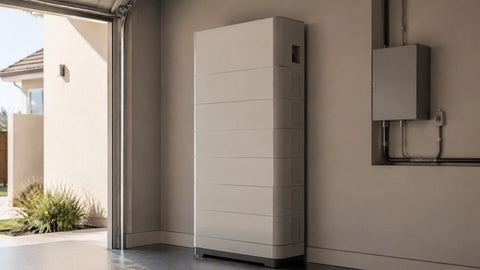
The IQ7's one architectural limit defined its successor: it is a grid-following inverter. When the grid drops, IQ7 systems shut down like any grid-tied unit — no power, even in sunshine, unless paired with a storage system. The IQ8 family, launched starting in 2021, went grid-forming: sunlight-backup capable, battery-optional, and the foundation of the current Enphase Energy System with IQ Battery storage and the IQ System Controller. For IQ7 owners, the practical implications: the platform is fully supported with a 25-year warranty runway, Enlighten monitoring continues, and expansion or storage retrofit paths exist — but a storage retrofit on an IQ7 array means AC-coupling batteries rather than swapping to sunlight-backup IQ8s, which changes the project math. Our Enphase collection carries the current-generation hardware for both new builds and retrofits.
6. Warranty, Reliability & What Eight Years of Data Shows
Enphase shipped the IQ7 with a 25-year limited warranty — the industry-leading term that forced the whole microinverter category upward. Eight years of fleet data later, the architecture's reliability claims have largely held up: microinverter failure rates in our service records run well under one percent annually, and the failures that do occur are individual-module events that Enlighten flags automatically, not system-down events like a failed string inverter. That asymmetry is the real warranty story: a string inverter failure is a truck roll and a dead system; a microinverter failure is a scheduling line item and a 1/24th production haircut until the swap.
| Attribute | IQ7 Family | Typical String Inverter (2018 era) |
|---|---|---|
| Standard warranty | 25 years | 10 years (extendable for fee) |
| Failure impact | One module offline; system keeps producing | Entire system offline until swap |
| Failure visibility | Automatic per-module flagging in Enlighten | Often invisible until the bill arrives |
| RMA logistics | Unit swap on the roof, ~30 min with proper access | Wall-unit swap, recommissioning, sometimes string rework |
| Design life | 25+ year target (fanless, solid-state) | Capacitor-limited; expect one replacement over panel life |
7. Rapid Shutdown, NEC 690.12, and Why MLPE Won the Code War
The 2017 NEC's module-level rapid shutdown requirement (690.12) arrived just before the IQ7 and effectively nationalized the microinverter value proposition. A microinverter system satisfies module-level shutdown inherently — kill the AC, and every module stops producing at the terminals. String systems needed added module-level electronics (optimizers or shutdown boxes) to comply, erasing much of their cost advantage. Every crew that installs both architectures knows the inspection difference: an IQ7 system's rapid-shutdown conversation with the AHJ is a checkbox; a string system's is a subassembly, a parts list, and a wiring diagram. Pair that with NEC 690's arc-fault and ground-fault requirements handled in the Enphase ecosystem, and the compliance story is why many inspectors visibly relax when they see the Enphase logo on the permit packet.
8. Sizing & Pairing: IQ7 With Modern Panels
The question we get weekly in 2026: can I pair an IQ7+ with a modern 450W+ panel? The documented answer is nuance. The IQ7+ accepts module inputs well beyond its 295VA output rating — clipping is normal and harmless within the datasheet's module-compatibility limits — but panel current matters: modern large-format panels with high Imp can exceed older microinverters' input current limits. Enphase publishes a module-compatibility tool; use it for the exact panel SKU before ordering. As a field rule, the IQ7+ pairs comfortably with 60/72-cell-format panels in its rated window, and the oversized modern 132-half-cut-format residential panels belong on IQ8-generation hardware. For new designs, pair panel class to inverter class from our microinverters and residential solar panels collections, and the 400–459W panel range matches current-generation microinverter input specs.
On the AC side, the branch-circuit math from the install manual governs: 20A breaker, maximum unit counts per model, and voltage-rise management on long trunk runs. Keep trunk runs reasonable, land them on breakers sized per the manual, and respect the panel busbar's 120% rule under NEC 705.12 — a 24-module IQ7+ system backfeeds roughly 29A and needs either a 225A-bus panel with a 200A main or a supply-side connection. The solar system size calculator helps frame the array size before the electrical details.
9. Installation Notes from the Field (Then and Now)
We installed IQ7 systems the month they shipped and we service them still, so this section is lived experience. Torque the trunk-cable drop connectors by feel and the tool — the positive-engagement click matters, and a half-seated drop is a ground-fault troubleshooting session two winters later. Map every microinverter's serial number to its array position in Enlighten at commissioning, not "later"; later never comes, and an unmapped system turns every service call into a guessing game. Install the Envoy on a dedicated clean circuit away from variable-speed pool pumps and EV chargers, verify CT orientation with a known load before leaving, and set up the homeowner's Enlighten account on site — a customer who can see per-panel production is a customer who calls us before small problems grow teeth.
For the wiring fundamentals behind all of this, our solar panel wiring basics covers series/parallel and conductor selection, and the system components guide maps where the microinverter sits in the full bill of materials. Broader inverter shopping context lives in our inverter picks roundup and the solar inverters collection.
10. Installing an IQ7-Generation System: The Sequence
For crews inheriting these systems or homeowners planning a like-for-like expansion, the documented install sequence at a glance:
- Design the array and verify module-microinverter compatibility against the current Enphase compatibility list.
- Size and lay out Engage trunk cable branch circuits (respect per-branch unit limits and the 20A breaker).
- Mount microinverters to the racking with the supplied hardware before setting panels.
- Land trunk runs in the junction box; terminate and seal every dead end.
- Set panels, connect DC leads, torque and dress all connections.
- Install the Envoy/gateway with consumption CTs oriented per the manual.
- Energize, map serials to positions in the commissioning app, verify per-module production.
- Hand over monitoring access and document the as-built for the permit file.
11. IQ6 vs. IQ7 vs. IQ8: The Generational Scorecard
For anyone speccing repairs, expansions, or retrofits, the three-generation comparison is the useful map:
| Attribute | IQ6 (2016) | IQ7 Family (2018) | IQ8 Family (2021+) |
|---|---|---|---|
| Architecture | Grid-following MLPE, polymer enclosure | Grid-following MLPE, higher power, refined ASIC | Grid-forming MLPE — sunlight backup, storage-native |
| Peak output (top model) | ~230VA class | 250–320VA class | 240–384VA class across variants |
| Off-grid capability | None | None (AC-coupled storage retrofit only) | Native — forms the microgrid with or without batteries |
| Trunk/comms | Two-wire Engage, PLC | Two-wire Engage, PLC | Two-wire Engage, PLC (faster gateway stack) |
| Warranty | 25 years | 25 years | 25 years (limited-term on some grid-forming features per program) |
| 2026 status | Fully supported, mature | Fully supported, mature | Current production platform |
The through-line is continuity: same mounting, same trunk cable, same monitoring philosophy, which is why a 2018 IQ7 roof and a 2026 IQ8 roof look near-identical from the ladder. The break is functional, not physical — grid-forming is a genuinely different capability, and no firmware update turns a grid-following unit into a grid-forming one. Plan retrofits accordingly.
12. Production Economics: What Module-Level Harvest Is Worth
The 5–15% harvest advantage on compromised roofs is not marketing abstraction — it prices out. Run the arithmetic on a typical 7kW residential array at $0.16/kWh retail:
| Roof Condition | Module-Level Harvest Gain | Annual kWh Delta (7kW array, ~9,800 kWh base) | Annual Dollar Delta @ $0.16/kWh | 25-Year Delta (undiscounted) |
|---|---|---|---|---|
| Perfect single-plane south roof | 0–2% | ~0–200 | ~$0–32 | ~$0–800 |
| Two planes, minor vent shading | 5–8% | ~490–780 | ~$78–125 | ~$1,950–3,130 |
| Complex roof, afternoon tree shade | 10–15% | ~980–1,470 | ~$157–235 | ~$3,920–5,880 |
Against the historical price premium of microinverter systems over string-plus-shutdown-device systems — a gap that narrowed steadily through the IQ7 era — the compromised-roof math favored module-level by year three to five in most markets, before counting the warranty asymmetry and the single-point-of-failure risk of the string unit. On the perfect roof, the string still won the spreadsheet. Good designers ran both quotes and showed the customer the table; that practice is still the right one.
13. Service & Troubleshooting Playbook for Aging IQ7 Fleets
Eight years in, the IQ7 service playbook is well-worn and mostly boring, which is the compliment. The recurring items, in frequency order: Envoy/gateway connectivity losses after homeowner router changes (the gateway is on 2.4GHz Wi-Fi or powerline-bridge in older installs — a mesh-network swap orphans it); consumption CT drift or misread after panel work by electricians who did not know the clamps were there; ground-fault faults traced to trunk-cable connector moisture where sealing was sloppy at install; and genuine microinverter failures, which remain rare and almost always present as a single dark module in Enlighten rather than a system event.
The diagnostic discipline that saves hours: trust Enlighten's per-module view first, verify with a clamp meter at the junction box second, and get on the roof third. A microinverter that reports but underproduces is usually a panel problem — soiling, shading growth, or a bypass diode — not an inverter problem. One more habit worth stealing from commercial O&M: photograph the roof map at every visit. Array positions migrate in nobody's memory faster than in any database.
15. What the 2018 Launch Actually Changed
With eight years of distance, the IQ7 launch reads as the moment module-level power electronics stopped being the exotic premium and became a default option. Three structural shifts trace to that product cycle. First, install labor: the two-wire trunk, polymer enclosure, and integrated grounding cut rooftop hours meaningfully, and labor — not hardware — was already the residential cost driver. Second, warranty expectations: 25 years on the inverter forced every competitor's hand, and the ten-year string warranty started looking like an admission. Third, monitoring as infrastructure: Enlighten's per-module visibility trained a generation of homeowners to expect their roof to report in, which quietly professionalized residential O&M. The shipping announcement in March 2018 was a product launch; the thing that actually shipped was a new cost-and-accountability baseline for the industry.
It is also worth saying plainly what the IQ7 did not change: it did not solve backup power, and buyers in 2018 who assumed "premium solar" meant "works in an outage" were disappointed. Grid-following is grid-following. The industry fixed that with grid-forming hardware and storage integration in the next generation — but the lesson for buyers in any era is to ask the outage question explicitly before signing, because the answer is an architecture, not an accessory.
16. Consumption Monitoring: The Feature Owners Underuse
The Envoy/IQ Gateway's consumption CTs turn a production monitor into an energy management system, and most owners never look past the production tab. With consumption metering live, Enlighten shows net import/export by interval — which tariff you should be on, whether the EV is charging at peak, whether the "always-on" load crept from 180W to 400W because a dehumidifier grew old and thirsty. We coach customers through one exercise: find the overnight baseline, subtract the known always-on devices, and hunt the remainder. It routinely finds $20–40 a month in phantom load. For IQ7-era systems being evaluated for storage retrofits, twelve months of interval consumption data is also the difference between a battery sized on evidence and one sized on vibes — pull the data before you let anyone quote you a battery.
17. Buying Used & Inheriting Systems: The IQ7 Secondary Market
A side effect of the IQ7's installed base is a real secondary market — home sales with existing arrays, refurbished units, take-off pallets from roof replacements. The diligence checklist we run for buyers inheriting an IQ7 system: confirm the warranty transfer status through Enphase (the 25-year coverage follows the equipment with a documented transfer process — do not assume it is automatic), pull at least twelve months of Enlighten history looking for chronic underperformers, verify the monitoring gateway is current-generation or budget for an upgrade, and physically inspect trunk connections and junction boxes for the sealing sins of the original install. A well-kept 2018 IQ7 array has seventeen-plus warranty years on the inverters and is genuinely worth money; a neglected one is a troubleshooting annuity. The difference is visible in an hour of inspection — pay for the hour.
For roof replacements over existing arrays, the remove-and-reinstall math favors doing it once and doing it right: replace any suspect drops while the panels are off, refresh every seal and cap, remap serials after re-commissioning, and treat the R&R as a free mid-life service for the system. Crews that skip the remap leave the next technician — possibly us — a puzzle nobody should have to solve twice.
18. Frequently Asked Questions
Is the IQ7 still supported in 2026? Yes — the 25-year warranty runs from install date, monitoring continues through Enlighten, and replacement-unit paths exist through the installer channel. The platform is mature, not abandoned.
My IQ7 system shows a dead microinverter — how urgent is it? Not an emergency: the rest of the array keeps producing. Schedule the swap within the quarter; production loss is roughly one module's share. Do confirm the failure in Enlighten before rolling a truck — comm dropouts masquerade as dead units.
Can I add batteries to an IQ7 system? Yes, via AC-coupled storage — Enphase's own IQ Battery with a System Controller, or third-party AC-coupled solutions. The IQ7s stay grid-following; the storage system forms the microgrid when the utility drops.
Can I expand an IQ7 array with newer IQ8 microinverters? Mixing generations on one system is not supported as a single logical array; expansions typically run as a separate branch/system under their own gateway or via current Enphase guidance. Design the expansion as its own subsystem and keep the paperwork clean.
Why did Enphase microinverters beat string inverters on shaded roofs? Each module converts independently at its own maximum power point. A shaded module in a string drags the whole string down; on microinverters it just produces less by itself. On compromised roofs, that independence is worth 5–15% of annual harvest.
What does the 25-year warranty actually cover? The microinverter hardware against defects — replacement unit plus defined labor terms under the program in force at claim time. It does not cover the roof work around it, monitoring subscriptions, or production guarantees. Keep your installer relationship alive; RMA logistics run through the channel.
Sources & Standards
- Enphase Energy IQ7 launch announcement and published IQ7/IQ7+/IQ7X datasheets (2018) and current compatibility documentation
- NFPA 70 (NEC) Articles 690 and 705 — including 690.12 module-level rapid shutdown and 705.12 interconnection
- UL 1741 / IEEE 1547 grid-interconnection standards applicable to the platform
- PES Supply installer-channel service records for IQ7-generation systems, 2018–2026
12. Shop Enphase at PES Supply
Whether you are maintaining an IQ7-generation array, planning an AC-coupled storage retrofit, or designing fresh on current-generation hardware, we stock the ecosystem: Enphase microinverters and accessories, matched inverter options across brands, and the panel kit buyer's guide for full-system builds. Bring us the array layout and the panel spec — we will confirm compatibility before anything ships.