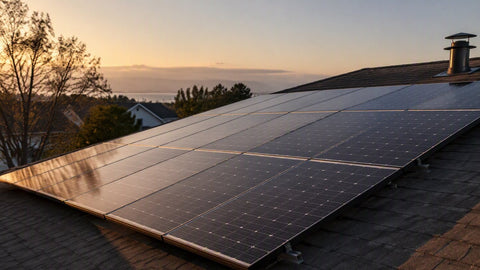
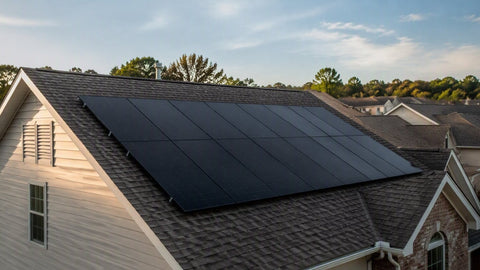
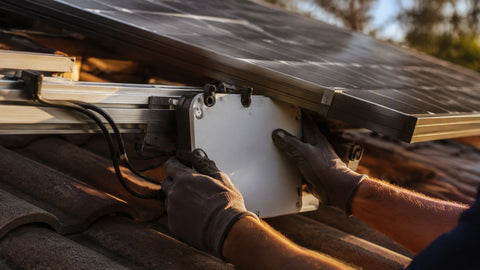
We sell racking from half a dozen manufacturers, and SnapNrack is the one whose reps show up on actual roofs with actual installers. The company was founded by installers in 2007, and it shows in the details: one 1/2-inch socket drives the entire system, mounts come out of the box preassembled with clamps already on the rail, and the engineering letters don't require a week of back-and-forth. This guide covers the current SnapNrack lineup — Ultra Rail, TopSpeed railless, SkirtRail, and the attachment family — with the spec details and install math contractors ask us for before they switch brands.
Company Overview
SnapNrack designs and manufactures solar racking in the United States, with its "USA Line" products carrying domestic-content documentation that matters for IRA/BABA procurement on public and tax-credit-driven projects. The product philosophy is blunt: reduce parts count, reduce tools, reduce minutes per module. Where IronRidge leads with engineering software and Unirac leads with certification breadth, SnapNrack leads with install speed — and prices accordingly in the mid-premium band of the residential racking market.
Current Product Lines
Ultra Rail System
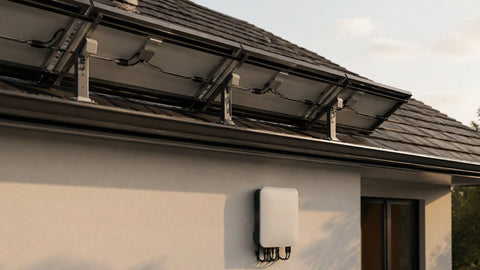
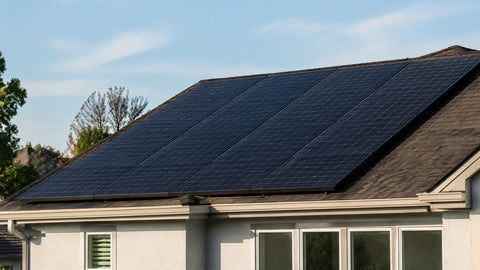
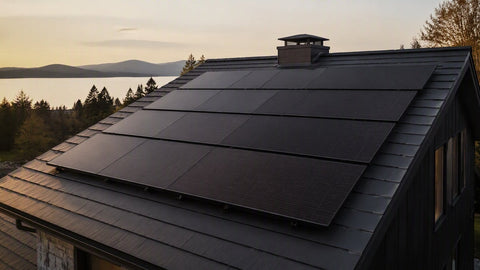
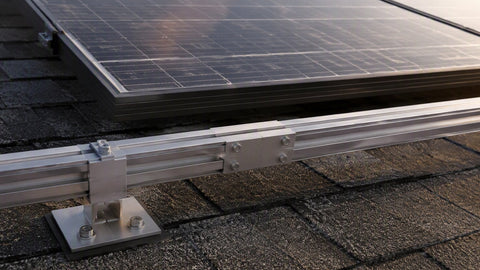
Ultra Rail is the flagship flush-mount platform and the product most contractors mean when they say "SnapNrack." The rail profile is a deep aluminum channel, UL 2703 listed for both mechanical bonding and grounding — mid and end clamps bond the module frame to the rail, and rail splices bond rail to rail, so the entire array becomes a single grounded structure with one lay-in lug per row instead of a hardware store's worth of WEEBs and jumpers. Everything on the roof drives with a single 1/2-inch socket: attachments, clamps, splices, standoffs. I've watched a two-person crew set a 20-module Ultra Rail array in under four hours on a straightforward comp shingle roof, and most of that time was layout and flashing work, not the racking itself.
TopSpeed Railless System
TopSpeed eliminates the rail entirely. A shared mid-clamp/attachment unit mounts directly to the roof structure and grips two adjacent modules, cutting material weight, freight cube, and the most annoying part of racking logistics — getting 14-foot rails onto a residential roof without creasing them. TopSpeed shines on simple rectangular arrays on comp shingle with regular rafter layout. It struggles where rails shine: irregular rafter spacing, tile, heavy cantilever requirements, or roofs where the module layout doesn't align with structural members. We quote both on every compatible job and let the roof plan pick the winner.
SkirtRail
The Universal Landscape SkirtRail is an aesthetic front skirt — black anodized aluminum, USA-made, UL 2703 listed — that hides the gap under the array's front edge and the exposed rail ends on landscape-orientation arrays. It snaps into the same clamp ecosystem. On street-facing arrays, the skirt is the difference between "solar installation" and "appliance on the roof" in a customer's eyes, and at its price point it's the cheapest customer-satisfaction upgrade in the industry.
Roof Attachments
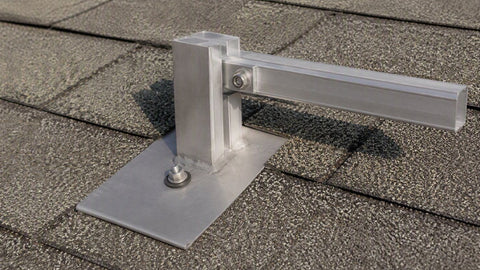
The attachment family covers the common residential deck types: the AnchorFoot with a butyl strip seal and DeckAnchor screws for comp shingle and low-slope applications, standoff options in multiple heights for tile and uneven decks, and the Universal OmniBase that accepts different sealing methods on one footprint. All attachments use the same 1/2-inch drive and integrate with the Ultra Rail channel without adapters.
Conduit Mounts & Accessories
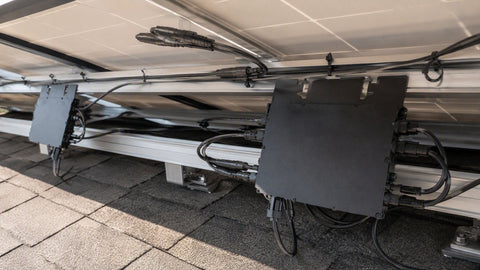
SnapNrack's conduit mounts clamp directly to the rail channel — no strut, no extra roof penetrations for the homerun. Combined with the wire-management clips that tuck PV wire into the rail channel, the system keeps conductors off the roof surface, which is both a NEC 690.31/338 housekeeping win and a rodent-damage reduction we take seriously. Chewed PV wire is the single most common service call we hear about from installers, and most of it traces back to wire left lying on shingles.
Popular Products at PES Supply
| Model | Category | Key Specs | Application |
|---|---|---|---|
| UR-40 Rail (168") | Flush-mount rail | Aluminum, UL 2703 listed, 1/2" socket system | Residential pitched roof, standard loads |
| UR-60 Rail (172") | Heavy-duty rail | Aluminum, UL 2703 listed, high-load capacity | Residential/commercial, heavy snow/wind |
| AnchorFoot | Roof attachment | Butyl strip seal, DeckAnchor screws, rafter or deck mount | Composition shingle, low-slope roofs |
| Ultra Rail Flush-Mount Kit (7") | Preassembled kit | OmniBase + Leveling Clamp, 7" standoff, 20 per box | Residential, fast installation |
| Universal Landscape SkirtRail (70", Black, USA) | Aesthetic skirt | Black anodized aluminum, USA-made, UL 2703 | Landscape arrays, TopSpeed railless systems |
Technical Comparison: SnapNrack vs. IronRidge vs. Unirac
| Feature | SnapNrack | IronRidge | Unirac |
|---|---|---|---|
| Design Philosophy | By installers, for installers | Engineering-driven | Certification-driven |
| Flagship Rail | Ultra Rail UR-40/UR-60 | XR100/XR1000 | SolarMount Light/Standard |
| Railless Option | Yes (TopSpeed) | No | No |
| Preassembled Mounts | Yes (Clamp Mounts, rail-ready) | No | No |
| Single Tool System | Yes (1/2" socket throughout) | 5/16" socket | 5/16" socket |
| UL 2703 | Yes | Yes | Yes |
| UL 3741 | Limited | Select systems | Full portfolio |
| Warranty | 25 years (One Tool. One Warranty.) | 25 years | 25 years |
The honest read: all three are quality systems that pass inspection and survive decades. SnapNrack wins on install speed and parts count. IronRidge wins on design software depth (their certification tool is the industry default). Unirac wins on UL 3741 PV hazard-control breadth, which matters more each code cycle as AHJs adopt NEC 2020/2023 rapid-shutdown enforcement paths that lean on 3741 listings. If your AHJ is pushing UL 3741 compliance for module-level shutdown equivalency, check the current listings before you commit a fleet to one brand.
The Math of Attachment Count: A Worked Example
Racking cost per watt is mostly attachment count. Here's the arithmetic we walk contractors through when they ask why the BOM looks the way it does. Assume a 10-module portrait row of 41-inch-wide modules: row length = 10 × 41" + end overhangs ≈ 420".
| Design Parameter | Value | Resulting Count |
|---|---|---|
| Row length (10 × 41" modules + overhang) | 420 inches | — |
| Max rail span at site's wind/snow load | 48 inches (typical UR-40 residential condition) | — |
| Spans per rail run | 420 ÷ 48 = 8.75 → 9 spans | — |
| Attachments per rail (spans + 1) | 9 + 1 | 10 attachments |
| Rails per row | 2 | 20 attachments per 10-module row |
| 24-module array (2 rows + 4-module stub row) | — | ≈ 46–48 attachments |
Stretch the allowable span to 6 feet — which UR-60 or lighter load conditions may permit per the engineering span tables — and the same row drops to 8 attachments per rail, a 20% cut in penetrations, flashing work, and labor minutes. This is why the load-letter math matters before purchasing: the right rail class for the site's actual design pressures can pay for itself in attachment count alone. And the reverse is true — cheap out on rail class in a 50-psf snow zone and the engineering letter will force 32-inch spans that double your attachment count and eat the savings twice.
Design Pressure Basics: What the Engineering Letter Is Calculating
Every racking span table traces back to ASCE 7 velocity pressure. The base formula is q = 0.00256 × V², where V is the basic wind speed in mph and q is in psf, before exposure, elevation, and importance factors:
| Basic Wind Speed (ASCE 7) | Base Velocity Pressure q | Typical U.S. Region | Racking Consequence |
|---|---|---|---|
| 90 mph | 0.00256 × 90² = 20.7 psf | Interior Southeast, Midwest | Longest allowable spans, fewest attachments |
| 115 mph | 0.00256 × 115² = 33.9 psf | Most of the central U.S. | Standard span tables apply |
| 140 mph | 0.00256 × 140² = 50.2 psf | Gulf Coast fringe | Reduced spans; UR-60 class rail often required |
| 160 mph | 0.00256 × 160² = 65.5 psf | Florida coast, hurricane zones | Short spans, high attachment count, possible setback restrictions |
| 180 mph+ | 82.9 psf+ | HVHZ (Miami-Dade, Broward) | Product-approval NOA required; engineered systems only |
Those are base pressures before the adjustment factors that usually push design values higher. The point isn't to do your own structural engineering — pull the manufacturer's span tool or get a stamped letter — it's to understand why the same rail spans 6 feet in Kansas and 3 feet in Broward County. Snow is simpler but harsher: ground snow loads above ~50 psf start forcing heavy rail and tight spans regardless of wind. One more site variable worth five minutes: exposure category. An open-field Exposure C site can carry 20–30% higher effective pressures than the sheltered Exposure B subdivision a mile away, and the span table cares about the difference even when the map wind speed is identical.
Certifications & Listings
The listing that matters on every SnapNrack BOM is UL 2703, the racking standard that covers mechanical strength, bonding, and grounding as a system. UL 2703 is what lets the rail itself carry the equipment grounding path — splice bars bond rail sections, clamps bond modules, and a single lug per continuous rail run lands the EGC. That saves copper, saves lugs, and passes inspection without the inspector asking where your module-level bonding went. Size that conductor with the wire ampacity chart, and for grounding methodology on the rest of the system, our solar grounding and bonding guide covers NEC 690.43 and 250 in field terms.
The USA Line additionally carries domestic-content documentation for projects chasing the ITC domestic content adder or Buy American provisions — one of the few racking lines where the paperwork is actually ready when the EPC asks for it.
Warranty Terms
SnapNrack's "One Tool. One Warranty." program covers the full system — rail, clamps, attachments, skirts — for 25 years when installed per the published manuals. It transfers with the property. Two practical notes from the claims side: keep the install photos (flashed penetrations, torque verification), and register the project. The warranty is real, but like every manufacturer warranty in this industry, the claim moves at the speed of your documentation.
Installation Notes
Roof Type Compatibility
Composition shingle is the home turf — AnchorFoot with butyl seal, into rafters or engineered deck attachment per the letter. Tile requires the standoff family with tile hooks or replacements; budget the extra labor honestly, because tile work runs 1.5–2× the comp-shingle install time in our customers' reporting. Metal roofs: standing seam takes clamp-on attachments with zero penetrations (the best racking scenario that exists), while exposed-fastener corrugated needs gasketed standoffs. Low-slope membranes move you toward ballasted systems — a different product category entirely, which our solar ballast guide covers.
Tools Required
The full Ultra Rail tool list: a 1/2-inch socket and torque wrench (the only drive size on the system), a chalk line, a stud finder that actually works, a rafter-tail layout plan, a drill for pilot holes, and a string line for rail straightness. The single-socket system sounds like marketing until you're the one not hauling a socket roll-up around a roof. Crew leads tell us it saves 15–30 minutes per array in tool shuffling alone.
Field Torque and Verification
Torque every fastener to the value in the current install manual — the manual rev wins any argument with memory, and SnapNrack revises values when hardware changes. Under-torqued clamps walk under thermal cycling; over-torqued attachment screws strip rafters and void the uplift capacity the engineering letter promised. A $40 beam-style torque wrench and a paint-pen witness mark on each fastener is the cheapest quality program in solar.
Labor Time: Where the Hours Actually Go
Contractors switching racking brands usually ask one question — "how much faster is it really?" Honest numbers, aggregated from installer feedback and our own kit-packing observations for a 24-module comp-shingle residential job:
| Install Phase | Railed System (Ultra Rail) | Railless (TopSpeed) | Notes |
|---|---|---|---|
| Layout & rafter locate | 45–60 min | 60–75 min | Railless is less forgiving of layout drift |
| Attachments & flashing | 90–120 min | 90–110 min | Similar counts; butyl AnchorFoot is fast |
| Rail set / n/a | 30–45 min | 0 min | The railless advantage in one row |
| Module set & clamp | 60–80 min | 70–90 min | Railless modules need more shimming on uneven decks |
| Wire management & skirt | 30–40 min | 25–35 min | In-channel wire clips on both |
| Two-person crew total | ≈ 4.5–5.5 hr | ≈ 4–5 hr | Straightforward roofs; tile doubles both |
TopSpeed's honest edge is about half an hour of crew time plus freight and rail handling — meaningful on a five-truck residential operation, less so on a weekend warrior job. Where Ultra Rail earns its material cost back is tolerance: the rail bridges uneven decks, out-of-plane rafters, and layout drift that force shimming gymnastics with railless. We recommend TopSpeed for new construction and re-roofs with fresh decking, Ultra Rail for the existing-housing stock where nothing is straight.
Rapid Shutdown, UL 3741, and the AHJ Conversation
Racking doesn't perform rapid shutdown — that's the inverter or module-level electronics — but the racking listing interacts with the compliance path. Under NEC 690.12, most residential systems comply via module-level power electronics (microinverters, optimizers, or MLPE rapid-shutdown devices). UL 3741-listed arrays offer an alternative hazard-control path that some AHJs prefer for certain configurations, and racking is part of that listing. SnapNrack's UL 3741 coverage is more limited than Unirac's full portfolio, so if your jurisdiction is driving designs toward 3741, verify the current listing combination — racking plus modules plus MLPE — before submittal. Our NEC 690 disconnect guide walks the rest of the shutdown hardware the inspector will ask about.
Procurement Notes: Domestic Content and Lead Times
Two buying realities for 2026. First, domestic content: projects chasing the 10-point ITC adder need manufacturer certification letters, and SnapNrack's USA Line paperwork is among the cleanest in racking — request it at quote time, not at commissioning. Second, rail freight: 14-foot rails are the most damage-prone item in a solar BOM. Order 5–10% attic stock on rails, inspect freight before the driver leaves, and reject creased sections on the spot — a creased rail that makes it to the roof costs a crew hour, not a $40 part.
Frequently Asked Questions
What is the advantage of SnapNrack's preassembled Clamp Mounts?
Clamps arrive already installed on the mount or rail, so the crew sets hardware and torques it — no sorting loose mid-clamps, end clamps, and bolts on a sloped roof. Combined with the single 1/2-inch drive size across the entire system, preassembly typically saves 15–30 minutes per residential array and eliminates the most common dropped-fastener delays.
What is the TopSpeed railless system and when should I use it?
TopSpeed replaces rails with shared mid-clamp attachments that grip adjacent modules directly at the roof structure. Use it on simple rectangular arrays on composition shingle with regular rafter spacing — it cuts material, freight, and rail handling. Avoid it on tile, irregular structure, or layouts needing cantilevers; that's Ultra Rail territory.
Can SnapNrack rails be used with other brands' roof mounts?
Physically, some third-party attachments fit the channel; from a warranty and UL 2703 system-listing standpoint, mixing components breaks the system certification and can void both warranties. Keep the BOM single-brand from attachment to clamp. If a mixed condition already exists on a service call, document it and replace toward one listing.
What makes the Universal OmniBase different from other mounts?
One base footprint accepts multiple sealing and standoff configurations, so distributors and installers stock one attachment body instead of four. For a crew doing comp shingle on Monday and low-slope on Wednesday, that halves the attachment SKUs on the truck and the odds of a wrong-part callback.
What warranty does SnapNrack offer and is it transferable?
25 years across the full system under "One Tool. One Warranty.," and yes, it transfers with property ownership. Register the project and keep installation photos — claims move at the speed of documentation.
Is SnapNrack racking UL 2703 listed for grounding?
Yes. Ultra Rail carries UL 2703 for both mechanical and electrical: clamps bond modules, splices bond rails, and one lay-in lug per continuous rail run lands the equipment grounding conductor. That eliminates per-module bonding hardware on standard installs.
Does SnapNrack qualify for domestic content requirements?
The SnapNrack USA Line is U.S.-manufactured with documentation for the IRA domestic content adder and Buy American Act procurement. Confirm the specific SKUs carry the USA designation before claiming the adder — not every SnapNrack part is USA Line.
Shop SnapNrack at PES Supply
We stock the SnapNrack line — Ultra Rail, TopSpeed, attachments, skirts, and the conduit mounts — alongside the rest of our racking and mount systems and rooftop accessories. Pair it with panels from our module inventory and we'll kit the whole roof: rail cut plan, attachment count from your design pressures, wire management, and a BOM with no orphans. For the electrical side of the install, the conduit selection guide and conduit fill chart will keep the AHJ happy. Volume pricing kicks in fast on racking — send the plan set and we'll quote the attachment count two ways so you can see what the span math buys you.