1. Company Overview
Briggs & Stratton is the name your grandfather's lawnmower wore — a Milwaukee-born engine company founded in 1908 that spent a century as the largest producer of small gasoline engines on the planet. After a 2020 Chapter 11 restructuring, the company emerged under new ownership (KPS Capital Partners) with the standby generator business intact and, frankly, re-energized. The lawn-and-garden legacy matters less to buyers than what the company does today in residential standby power: the Fortress and PowerProtect lines compete head-on with Generac's Guardian series, and they do it at prices that routinely undercut the market leader.
Here's our counter-level read after selling and servicing the line: Briggs & Stratton standby generators are the value alternative that isn't a compromise. The engines are proven, the enclosures (aluminum on the Fortress line) outlast painted steel in real weather, and the Symphony power management system is genuinely clever engineering. Where the brand gives ground is dealer network density — Generac's service footprint is simply bigger — so in rural areas, confirm who services the unit before you buy. We stock the line in our Briggs & Stratton collection precisely because the product earns it.
Sizing Scenarios: Matching the Line to the House
Every standby quote we write starts with the same discipline: list the loads, count the surges, keep continuous demand under 80% of rating. These scenarios come from our actual quote desk and show where the Briggs & Stratton lines land:
| Home Profile | Critical Loads | Typical Need | Recommended Tier |
|---|---|---|---|
| 1,500 sq ft, gas heat, no well | Furnace blower, fridge, lights, sump | ~8kW managed | 13kW air-cooled PowerProtect |
| 2,500 sq ft, one 3-ton AC | Above + AC with soft-start | ~12kW managed | 17–20kW air-cooled, Symphony ATS |
| 3,500 sq ft, two ACs, well pump | Full comfort load, managed | ~18kW managed | 22–26kW air-cooled top tier |
| Estate / small commercial | Multiple ACs, refrigeration, outbuildings | 24kW+ continuous | 30kW liquid-cooled Fortress |
| Off-grid / daily duty | Prime power | Continuous rating | Not standby class — see commercial line |
The last row deserves emphasis: standby generators are engineered for intermittent emergency duty, not daily prime power. Off-grid buyers need a different conversation — inverter-based systems with battery storage, covered in our off-grid battery sizing guide — or a prime-rated commercial machine.
Fuel Consumption and Runtime Planning
Standby fuel planning follows the same physics across the class. Natural gas delivers unlimited runtime while utility pressure holds; propane trades runtime for independence. Air-cooled units in the 20kW class typically burn in the neighborhood of 200–300 cubic feet of natural gas per hour at half to full load, and propane consumption runs roughly two to three gallons per hour across the load range — confirm exact figures on the model's published fuel data sheet, because engine displacement and cooling class move the numbers meaningfully. For propane installs, size the tank for the worst realistic outage, not the average one: a 500-gallon tank (400 usable gallons) feeding a 20kW machine at 75% load lasts on the order of five days, and cold-weather vaporization limits can throttle output before the tank reads empty.
Field practice: we photograph the gas meter rating plate on every quote visit and confirm delivered pressure with the utility before we commit to a gas-fired machine. The single most common day-one failure on standby installs isn't the generator — it's a gas service that can't feed it at full throttle while the furnace is also running.
Recent Direction (2025–2026)
Since the 2020 restructuring, Briggs & Stratton has concentrated investment exactly where the market is growing: residential standby and small commercial. The PowerProtect refresh pushed monitoring and load management further down the price ladder, the Fortress line extended the aluminum-enclosure, liquid-cooled tier that used to be premium-brand territory, and the commercial range keeps filling in above 30kW. The through-line for buyers is convergence — the features that separated premium brands five years ago (remote monitoring, aggressive load management, corrosion-proof enclosures) are now standard on the value challenger. Verify current model-year specs on the exact SKU you're quoting, because this catalog is moving and last year's spec sheet is a poor substitute.
Enclosures, Noise, and Neighbors
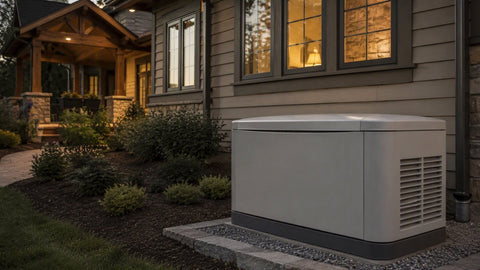
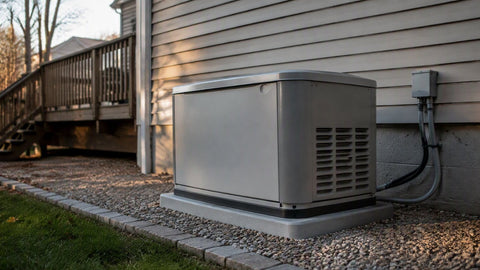
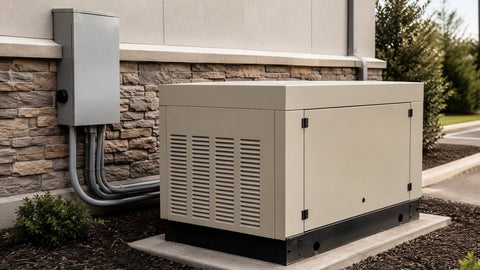
The Fortress line's aluminum enclosure is not a cosmetic upgrade. In coastal salt air and snow-belt road-salt territory, painted steel enclosures show rust streaks in three winters and structural rust in seven; aluminum simply doesn't. On resale, a clean enclosure signals a maintained machine, and appraisers of backup systems notice. Noise is the other neighbor-facing spec: standby units at exercise speed run in the 60-something decibel range at typical property-line distances, which is conversation-plus level — audible but not hostile. Site the machine with the exhaust away from bedroom windows, respect the manufacturer's setback minimums, and set the weekly exercise for mid-morning on a weekday. We've never had a noise complaint survive those three choices.
2. Current Product Lines
| Line | Output Class | Cooling | Fuel | Best For |
|---|---|---|---|---|
| PowerProtect DX | 13–26kW class | Air-cooled | NG / LP | Mainstream whole-home standby |
| Fortress | 20–30kW class | Liquid-cooled options | NG / LP | Large homes, harsh climates, extended outages |
| Commercial standby | 35kW and up | Liquid-cooled | NG / LP / diesel | Small business, agriculture, light commercial |
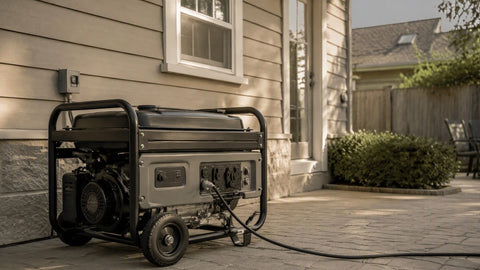
| Portable generators | various | Air-cooled | Gasoline | Job site, recreational, occasional backup |
| Pressure washers, engines, snow equipment | various | — | Gasoline | Property maintenance |
Air-cooled versus liquid-cooled is the real dividing line in this catalog. Air-cooled machines are the right answer for most suburban outages measured in hours. If your outages are measured in days — rural, storm corridor, elderly occupants, medical loads — the liquid-cooled Fortress tier earns its premium with 1,800 RPM longevity and better hot-weather stamina.
3. Symphony Power Management: The Feature That Changes Sizing
Every standby buyer faces the same fork: buy a generator big enough for everything at once, or manage loads and buy smaller. Briggs & Stratton's Symphony system is the most aggressive load-management implementation in the value tier. Symphony-equipped transfer switches monitor generator output in real time and shed or re-sequence managed circuits — central AC, water heater, range, dryer — so the machine never sees a surge stack it can't start.
The practical result we've installed repeatedly: a household with two AC condensers and a well pump that would demand a 26kW unmanaged machine runs comfortably on a smaller Symphony-managed unit. That's thousands of dollars saved on equipment, gas plumbing, and feeder size, and the occupants never notice the management happening. The trade to understand: managed loads cycle briefly under heavy demand, so Symphony is brilliant for comfort loads and wrong for anything life-critical. Medical equipment goes on unmanaged circuits, always.
4. Certifications & Listings
Briggs & Stratton standby units carry the listings required for permanent residential installation in the US and Canada, and the engines carry EPA certification with CARB-compliant configurations available where required. Certification on the machine is only half the compliance story — the installation itself must satisfy NEC Article 702 for optional standby systems, and the transfer equipment listing must match the application in every jurisdiction we've ever pulled a permit in. Our NEC compliance guide and the disconnect and overcurrent protection guide cover the electrical-side requirements that apply to any standby install.
5. Warranty Terms
| Coverage Element | Typical Terms | Buyer Note |
|---|---|---|
| Air-cooled standby (residential) | Multi-year limited parts and labor | Confirm year-by-year labor coverage in writing |
| Fortress / liquid-cooled | Extended limited warranty tier | Best coverage in the catalog; still read the exclusions |
| Consumables (battery, oil, filters) | Excluded | Owner maintenance items on every brand |
| Registration | Required within the deadline | Register at commissioning; we've seen claims denied over late cards |
Warranty comparisons across brands look similar on the brochure and differ in the labor fine print. Ask one question before purchase: how many years of labor, and who performs it locally? A five-year parts warranty with one year of labor and no local tech is a coupon, not coverage.
6. Popular Briggs & Stratton Products at PES Supply
Our movers: the air-cooled PowerProtect units for standard suburban whole-home jobs, and the 30kW liquid-cooled Fortress (model 076880) for estates and small commercial — a machine we reviewed in depth in our 30kW generator review, including its InfoHub wireless monitoring and Symphony compatibility. Pair any of them with a service-rated automatic transfer switch; for whole-building service-entrance installs, the 200–225A ATS range covers the standard residential configuration.
7. Technical Comparison: Briggs & Stratton vs. Competitors
| Dimension | Briggs & Stratton | Generac | Kohler | Champion (value tier) |
|---|---|---|---|---|
| Standby price position | Value-aggressive | Mid-market leader | Premium | Entry |
| Load management | Symphony (excellent) | Smart Management Modules | Load control options | Varies |
| Enclosure (cold/coastal) | Aluminum on Fortress | Aluminum options | Composite/aluminum | Steel typical |
| Dealer network | Growing, thinner rural | Largest | Deep | Retail + online |
| Monitoring | InfoHub wireless | Mobile Link | OnCue Plus | Varies |
| Best fit | Value whole-home, harsh weather | Network coverage priority | Premium commercial-grade | Portable / budget standby |
For the premium-tier head-to-head, our Generac vs. Kohler comparison goes deeper; Briggs & Stratton's position is that it delivers ninety percent of the premium experience at a visibly lower ticket, and for most residential buyers that trade wins. We also cover sizing across brands in the whole-home generator sizing guide.
8. The Install: What a Briggs & Stratton Standby Job Actually Involves
I've set more standby units than I can count, and the Briggs jobs go the same as any honest install. Pad first: poured concrete or a rated composite pad on compacted base, level within a quarter inch, clearances per the manual with three feet on the service sides. Gas next — and this is where jobs stall. An air-cooled 22kW-class unit at full load wants on the order of 300+ cubic feet of natural gas per hour; the existing meter and half-inch branch line often can't deliver it, so budget for a gas service evaluation before install day, not during it.
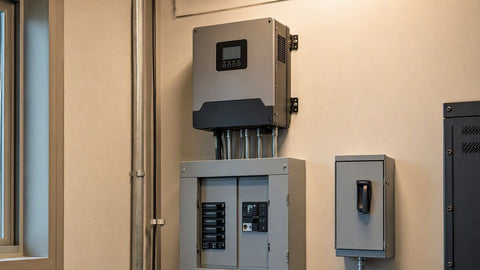
Electrically: the ATS lands between meter and panel on service-entrance configurations, or feeds a selected-circuits sub-panel on partial-backup jobs. Conductors size from NEC 310.16 at the 75°C column with the 125% continuous factor — the NEC wire sizing guide has the ampacity charts, and the wire ampacity chart covers the quick lookup. Grounding follows NEC 250: two electrodes unless one tests at 25 ohms or less, per the grounding and bonding guide. Commission with a load test, log the numbers, register the warranty, and set the exercise clock for a day and time the neighbors won't hate.
9. Ownership Reality: Maintenance and Service
The maintenance calendar that keeps these machines alive: weekly automatic exercise (the unit does this itself), monthly walk-around, oil and filter annually or per run-hour limit, air filter and spark plugs on schedule, battery test every year with replacement around year three or four, and valve lash checks on the schedule the manual specifies — the item owners skip and technicians find. Remote monitoring through InfoHub earns its keep by catching battery and exercise faults between visits.
Field note: the single most common no-start we respond to across every standby brand is a dead starting battery, and the second is a tripped or failed exercise timer after a power flicker reset the controller clock. Both are ten-minute fixes that a monitored machine reports before the outage, which is the entire argument for paying attention to the monitoring subscription.
Budget honestly for upkeep. An annual service visit — oil, filters, plugs on schedule, battery test, firmware check, and a controlled transfer test — runs a few hundred dollars in most markets, and it is the difference between a machine that starts on day six of an ice storm and one that doesn't. Keep a folder with the commissioning sheet, every service invoice, and the warranty registration. When a board fails in year six, that folder is what turns a warranty conversation into a warranty approval instead of an argument about maintenance records nobody can find.
10. Who Should Buy Briggs & Stratton — and Who Shouldn't
Buy it if: you want whole-home automatic backup at a value price, your climate punishes enclosures (aluminum wins), your load profile benefits from aggressive power management, and you have a qualified service option within reasonable distance. Look elsewhere if: your only service option is a two-hour drive (buy the brand your local tech stocks parts for), you need 35kW+ commercial diesel territory done by a commercial dealer, or you simply want the largest possible service network and will pay the premium for it. Both are defensible answers; the wrong answer is buying on brochure alone.
Common Mistakes We See on Standby Jobs
The patterns repeat across every brand, and Briggs installs are no exception. First, gas service assumptions: buyers assume the existing meter feeds a 22kW machine plus furnace plus range, and day one proves otherwise. Second, pad placement by convenience instead of code — too close to windows, doors, or fresh-air intakes, which violates clearance rules and creates a carbon-monoxide path into the house. Third, skipped load management wiring: Symphony only manages circuits that are actually wired through managed modules, and we still find installs where the second AC was left unmanaged because nobody wanted to pull one more cable. Fourth, unregistered warranties — five minutes at commissioning saves a denied claim in year four.
The fifth mistake is psychological: buyers who treat the install as the finish line. A standby generator is a machine that sits idle most of its life, and idle machinery fails quietly. The owners with flawless outage performance are the ones who glance at the monitoring app monthly, keep the battery on the replacement schedule, and let the service tech do the annual visit without rescheduling it three times.
Dealer Network and Parts Reality
Generac's dealer network is the industry benchmark, and pretending otherwise doesn't help buyers. What we've found in practice: Briggs & Stratton coverage is strong in metro and suburban markets, thinner in deep rural territory, and the parts pipeline itself is reliable once a technician is engaged. Common service parts — controllers, batteries, voltage regulators, starters — move through normal distribution without drama. Before purchase, make one phone call to the nearest service provider and ask two questions: do you stock parts for this line, and what's your storm-season response time? The answers settle the brand decision faster than any spec sheet comparison, including this one.
11. Frequently Asked Questions
Is Briggs & Stratton still in business?
Yes. The company restructured under Chapter 11 in 2020 and emerged under KPS Capital Partners ownership. The standby generator lines — PowerProtect and Fortress — are active, shipping, and supported with parts and warranty service.
How does Briggs & Stratton compare to Generac?
Comparable hardware and load-management capability at a lower typical ticket, against a smaller dealer network. In metro areas with good Briggs coverage, the value case usually wins; in thin rural territory, buy whichever brand your local technician services.
What size Briggs & Stratton standby do I need?
Run an honest load calculation: simultaneous running watts plus the largest starting surge, under 80% of rating. Most 2,000–3,500 sq ft homes with Symphony management land in the 13–20kW air-cooled class; larger homes and small commercial step into the liquid-cooled Fortress tier. Our sizing guide walks the full method.
What is Symphony power management?
A load-management system in the transfer equipment that monitors generator output and sheds or re-sequences managed circuits so a smaller generator can carry a larger effective load. Comfort loads only — life-safety circuits stay unmanaged.
Can I install a Briggs & Stratton standby myself?
No. Gas plumbing at standby BTU rates, NEC 702 transfer equipment, permits, and warranty registration all require licensed trades, and DIY installs typically void the warranty.
How long will a Briggs & Stratton standby last?
Air-cooled units with annual maintenance routinely deliver 10–15 years of intermittent standby service; liquid-cooled Fortress units run longer. The machines that die early die of skipped maintenance — oil, battery, and exercise — not of design flaws.
12. Shop Briggs & Stratton at PES Supply
Browse the Briggs & Stratton collection, compare against Generac and the wider standby generator lineup, or request a quote and we'll size the system against your measured loads, gas service, and local service reality — the three things brochures never ask about. We stock the line because our service log says it earns the shelf space: clean installs, manageable parts flow, and customers who stop worrying about the forecast. That's the whole product, really. The generator is hardware; what you're buying is the Tuesday night the ice storm rolls through and your house stays warm, lit, and dry while you sleep through it.