Brand Guide · All-in-One Storage
sonnen: All-in-One LFP Battery Systems Brand Guide
The installer's guide to sonnen — sonnenCore+ all-in-one storage, 10,000-cycle LFP economics, VPP grid services, retrofit AC coupling, and honest comparisons to Powerwall and component banks.
sonnen is the company that proved home batteries could be a grid, not just a backup box. Founded in 2010 in Wildpoldsried, Germany — a village that produces several times its own energy demand — sonnen built Europe's leading residential storage brand on two ideas the American market initially dismissed: lithium iron phosphate chemistry in an all-in-one appliance, and thousands of networked home batteries operating as a virtual power plant. By the time the US market caught up, sonnen had a decade of fleet operation and tens of thousands of installed systems behind the pitch. Shell acquired the company in 2019, giving it the balance sheet to survive the storage industry's inevitable consolidation.
The US operation runs from Atlanta with domestic assembly for the North American market — a detail that matters for lead times, for parts logistics, and for the domestic-content paperwork that incentive-driven projects increasingly require. The German engineering lineage shows in the cabinet build quality; the American operation shows in the support hours and the freight times. Both halves matter when you're the contractor standing between the customer and the equipment.
The product philosophy is unapologetically integrated. Where most storage brands sell you a battery and leave the inverter, transfer equipment, and software as your problem, sonnen sells an appliance: open the cabinet, land the conductors, commission the software, done. That approach costs more per kWh than a rack of value batteries and a hybrid inverter — and it delivers a permitted, listed, warranted system in a fraction of the labor, with one warranty relationship instead of three.
We've commissioned sonnen systems in wildfire country where the PSPS shutoffs run for days, and the pattern is consistent: the customers who buy sonnen aren't optimizing dollars per kWh. They're buying the certainty that when the grid drops, the house doesn't notice — and that someone answers the phone in year seven.
That customer profile shapes the whole sales motion. The sonnen buyer has usually already experienced an outage that cost them something real — a freezer, a workweek, a medical device scare — and the conversation is about reliability architecture, not payback spreadsheets. Quote accordingly: lead with the runtime math and the transfer behavior, put the VPP revenue in the bonus column, and let the 10-year Shell-backed warranty close the risk objection. The contractors who lose sonnen bids are the ones who open with dollars per kWh against a rack-battery quote — different product, different buyer, different job.
The US residential line centers on the sonnenCore+ (10 kWh, AC-coupled, integrated inverter and transfer gear, stackable to 60 kWh), the sonnen Battery 11 platform, the value-positioned sonnenBatterie Evo, and the hybrid 9.53 for DC-coupled new-construction applications. All run LFP chemistry with 10,000-cycle ratings and 10-year warranties. The lineup:
| Model | Capacity | Voltage | Chemistry | Cycle Life | Price Range |
|---|---|---|---|---|---|
| sonnenCore+ (SCORE-P10) | 10 kWh | AC-coupled | LFP | 10,000 cycles | $12,000–$16,000 |
| sonnen Battery 11 (10 kWh) | 10 kWh | AC-coupled | LFP | 10,000+ cycles | $12,000–$16,000 |
| sonnenBatterie Evo | 10 kWh | AC-coupled | LFP | 10,000 cycles | $9,000–$12,000 |
| sonnenBatterie hybrid 9.53 | 9.53 kWh | DC-coupled | LFP | 10,000 cycles | $8,000–$11,000 |
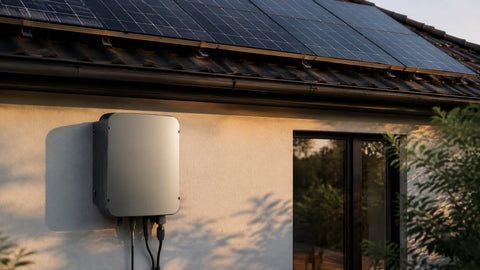
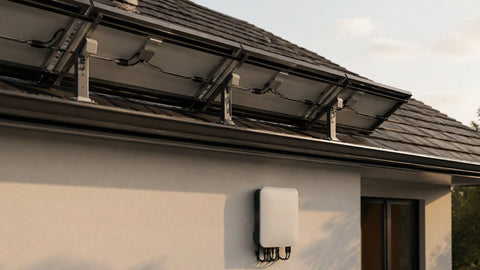
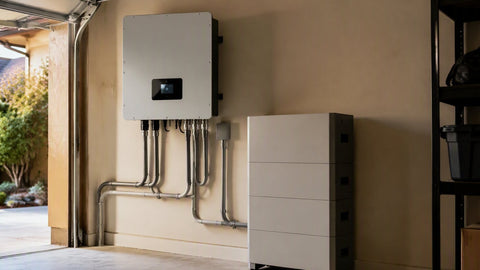
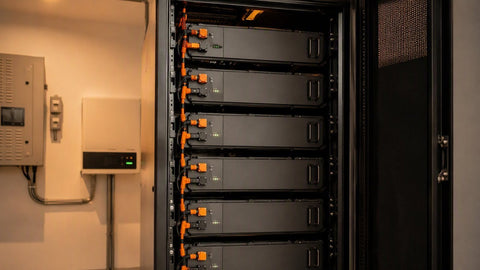
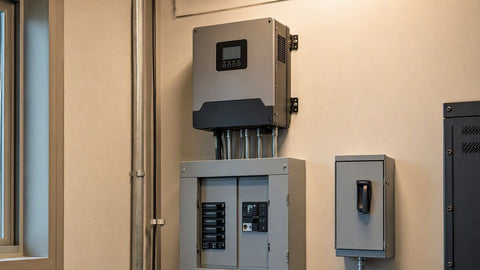
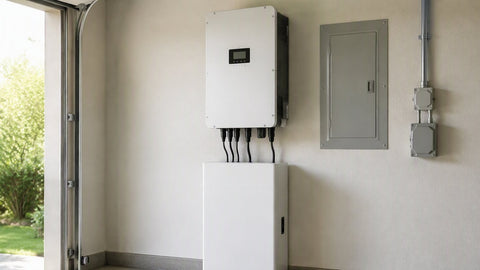
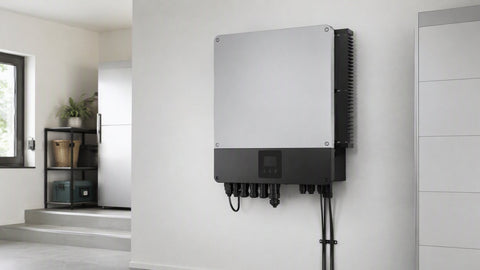
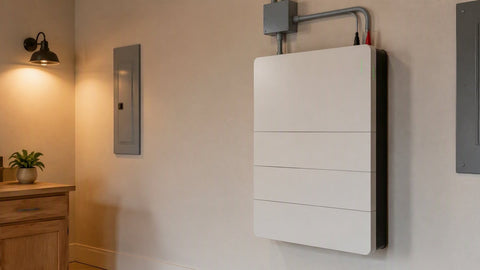
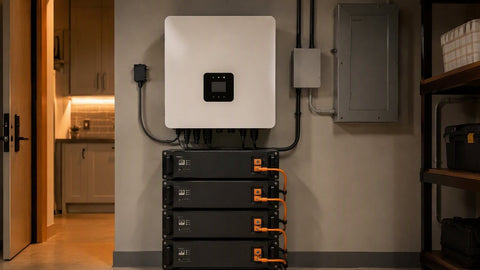
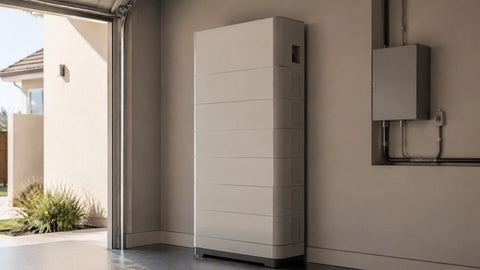
All-in-one means exactly that: battery modules, inverter/charger, automatic transfer switching, energy management, and monitoring in a single listed enclosure. The interconnection lands at the main panel or a protected-loads subpanel — no rooftop work, no PV rewiring, no DC string design. Pair with arrays from our solar panel catalog or retrofit behind existing systems; the battery inventory covers the component-system alternatives.
The sonnenCore+ platform has been the focus: expanded stackability toward the 60 kWh ceiling, refined backup-loads management for larger homes, and continued buildout of the US VPP programs that distinguish sonnen from every other battery on the quote sheet. The software stack absorbed the lessons of the Texas and California grid events — storm-watch-style pre-charging ahead of forecast outages, smarter peak-shaving under the new time-of-use rate structures, and cleaner integration with the utility programs that actually cut checks to battery owners.
On the hardware side, manufacturing for the North American market localized further under the domestic-content incentive regime — confirm the current documentation at quote time if the project is chasing the ITC domestic-content adder, because eligibility rides on manufactured-content thresholds that shift with the supply chain.
The residential line carries UL 9540 system-level listing with UL 9540A thermal-runaway test data and UL 1973 cell-and-pack certification — the full paperwork stack that residential energy-storage codes and insurers demand. LFP chemistry keeps the 9540A results benign: no propagation, no off-gassing drama, no fire-code negotiations in most jurisdictions. The integrated system listing is the quiet killer feature for permitting: one UL 9540 file covers battery, inverter, and transfer equipment as a unit, which collapses the plan-review conversation from three devices to one appliance.
sonnen warranties the residential line for 10 years with a 10,000-cycle rating and 80% retained capacity at the warranty horizon — among the strongest throughput guarantees in residential storage. Converted to energy, a 10 kWh unit at 80% depth of discharge is rated for roughly 80,000 kWh of lifetime throughput: twenty-seven years of daily full cycling, which means the calendar, not the cycle counter, is the practical life limit. The comparison that ends most price debates:
| Metric | sonnen LFP (10,000-cycle rating) | Typical value LFP (6,000 cycles) | Lead-acid AGM (500–800 cycles @ 50% DoD) |
|---|---|---|---|
| Lifetime throughput (10 kWh unit @ 80% DoD) | 80,000 kWh | 48,000 kWh | 25,000–40,000 kWh |
| Daily cycling lifespan | ~27 years | ~16 years | 1.4–2.2 years (calendar-limited in practice) |
| Year-10 retained capacity | 80% (warranted) | 60–70% typical | Effectively end-of-life |
| Replacements over 25 years | 0–1 | 1–2 | 3–5 |
The warranty is backed by Shell's balance sheet — which, love or hate the parent company, is a categorically different credit risk than a venture-funded battery startup. Keep the commissioning record and registration confirmation in the job file; warranty claims run on serials and timestamps.
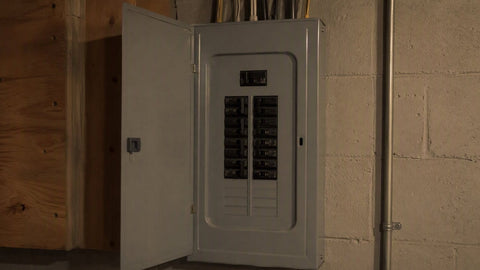
The sonnenCore+ install is the closest storage comes to appliance work. Two techs, a dolly, a level pad or wall mount, and a 2-pole breaker position in the main or subpanel. The unit is heavy — plan the path from the truck before you cut the banding — but the electrical scope is genuinely simple: land L1/L2/neutral/ground, mount the CTs on the service conductors with the arrows pointing the documented direction, torque to the label spec, and commission through the app.
Three field lessons. First: CT direction and placement cause nearly every commissioning fault we've seen — a reversed CT makes the system charge when it should discharge, and the symptom looks like a software bug until someone checks the arrows. Photograph CT orientation before closing the panel. Second: set the backup reserve with the customer present and write it on the settings sheet; the customer who agreed to a 20% reserve in July will call in January demanding to know why the battery won't run the dryer. Third: the integrated transfer gear has a defined pass-through rating — respect it, and land whole-home loads accordingly rather than assuming the appliance will carry everything the panel can feed it.
Wire and breaker sizing for the interconnection follows the standard continuous-load rules; our NEC ampacity chart and wire sizing guide have the tables, and the disconnect guide covers the OCPD placement.
Storage sizing is load times hours, and the honest conversation starts with what the customer actually needs to run. A critical-loads profile — refrigerator, furnace blower, lighting, internet, a few outlets — draws 400–800 W in a disciplined household. Add a well pump or a window AC and you're at 1–2 kW. The runtime table for the 10 kWh building block:
| System | Usable Capacity | @ 500 W Critical Loads | @ 1,000 W Loads | @ 2,000 W Loads |
|---|---|---|---|---|
| 1 × sonnenCore+ (10 kWh) | ~10 kWh | ~18 hrs | ~9 hrs | ~4.5 hrs |
| 2 × sonnenCore+ (20 kWh) | ~20 kWh | ~37 hrs | ~18 hrs | ~9 hrs |
| 3 × sonnenCore+ (30 kWh) | ~30 kWh | ~55 hrs | ~27 hrs | ~13 hrs |
| 4 × sonnenCore+ (40 kWh) | ~40 kWh | ~74 hrs | ~37 hrs | ~18 hrs |
Read the table with judgment: central air conditioning is the line item that breaks battery math, and a 3,500 W running load turns 30 kWh into an eight-hour battery. Most successful backup designs put the AC on a soft-starter, shed it during outages, or accept it as generator territory. Our backup runtime calculator lets customers run their own numbers, and the battery bank sizing guide walks the full load-audit method. For extended-outage resilience, pair storage with a generator — the generator sizing guide covers that half of the system.
Every home battery can back up a house. sonnen's differentiator is what the fleet does the other 360 days a year: aggregate into a virtual power plant and sell grid services. The company has run VPP programs in Europe for over a decade — real frequency regulation and peak capacity delivered by thousands of home batteries, with homeowners paid for participation — and the US programs have grown through the recent grid-stress years. The customer-facing pitch writes itself: your battery backs you up during outages and earns revenue the rest of the year.
The contractor-facing reality needs honesty: VPP eligibility is territory-dependent, program terms change, and the revenue is meaningful but not mortgage-payment money. Sell it as a bonus that improves payback, never as the justification. What doesn't vary by territory is the software — self-consumption optimization, time-of-use arbitrage, and storm forecasting run everywhere, and under NEM 3.0-style net-billing rates, smart dispatch routinely matters more to the payback than the hardware choice does.
sonnen against the systems customers cross-shop most:
| Metric | Sonnen Core+ | Tesla Powerwall 3 | BYD HVM 11.0 | Fortress eVault |
|---|---|---|---|---|
| Usable capacity | 10 kWh | 13.5 kWh | 11.04 kWh | 18.5 kWh |
| Built-in inverter | Yes (4.8 kVA) | Yes (~11 kW) | No | No |
| Cycle life | 10,000 | Unlimited (time-based) | 6,000+ | 6,000+ |
| Year-10 retention | 80% | 70% | 60% | 70% |
| VPP / grid services | Yes (12+) | Yes | Depends on inverter | Yes (Guardian) |
| Max system | 60 kWh | ~54 kWh | 66.2 kWh | Modular |
Our read: for retrofit whole-home backup where the customer wants one appliance, one app, one warranty, and VPP eligibility, sonnen earns its premium. The Tesla Powerwall comparison has evolved since 2018 but the core trade remains — Tesla wins on cost per kWh and brand gravity, sonnen wins on cycle life, LFP depth of engineering, and grid-services maturity. For component-system economics, BYD, Fortress, and SimpliPhi build banks that undercut the all-in-one price while adding design freedom and integration labor in roughly equal measure.
sonnen's software is the product's center of gravity: cell-level battery management inside the cabinet, and a cloud platform that handles dispatch optimization, grid-services coordination, and customer visibility. The homeowner app shows state of charge, backup status, and energy flows without requiring an engineering degree; the installer portal adds fleet health, alert triage, and commissioning records. The system operates fully without internet — backup and local dispatch don't depend on the cloud — but monitoring, VPP participation, and remote firmware updates do, so a solid network connection (or the cellular option) belongs on every install.
Commissioning discipline that pays: complete the platform registration before leaving the site, verify the CT-driven production and consumption traces look sane against a known load (run the dryer for five minutes and watch the graph), and screenshot the final settings into the job file. The first 90 days of fleet data tell you whether the install was right — CT reversals, reserve misconfigurations, and rate-schedule errors all surface in the curves long before the customer articulates the complaint.
Buy sonnen when the job is grid-connected backup on an existing or new solar system, the customer values integration over component freedom, the AHJ is strict about listed systems, and the VPP or TOU-arbitrage revenue improves the deal. Skip it for true off-grid properties with no utility reference — the platform's center of gravity is grid-interactive — and skip it when the budget demands maximum kWh per dollar, where component rack batteries and a hybrid inverter win on price at the cost of integration labor. Match the product to the job; sonnen's appliance philosophy is either exactly right or exactly wrong, and the deciding factors are the grid connection and the customer's appetite for system complexity.
We stock the sonnen residential line — sonnenCore+ systems and expansion configurations — with project pricing for multi-unit and commercial installations. Cross-shop the alternatives in our battery catalog, and frame the storage decision with the battery sizing guide and 20–80 charging rule. Contractor quotes: request pricing.
Specifications from sonnen published datasheets (sonnenCore+, sonnen Battery 11, sonnenBatterie Evo, hybrid 9.53) and warranty documents current as of mid-2026. Runtime math computed from nameplate usable capacity less system losses; cycle-life figures per manufacturer ratings. Certifications per UL 9540/9540A and UL 1973. VPP program availability varies by utility territory — confirm current programs before quoting revenue. Pricing reflects typical US street pricing and varies by configuration and volume.
Is sonnen worth the premium over a DIY battery bank?
It depends on the job, and we tell customers that plainly. A sonnenCore+ is an integrated, listed, warranted appliance: battery, inverter, transfer gear, and energy management in one cabinet, commissioned in a day, backed by a 10-year warranty and a VPP-ready software stack. A DIY rack-battery bank with a separate hybrid inverter costs 30–40% less per kWh and gives you component freedom, but you own the integration, the listing paperwork, and three warranty relationships instead of one. For a straightforward whole-home backup customer who wants it done and done right, sonnen's premium buys simplicity. For the budget-maximizing or off-grid-custom crowd, component systems win. We sell both and lose no sleep either way.
Can sonnen systems work off-grid?
Partially — this is the honest limitation. sonnen's residential systems are designed primarily for grid-connected backup and energy management, and the ecosystem assumes a grid or generator reference for extended autonomy. For true off-grid homesteads with no utility connection at all, battery-based inverter platforms from Schneider, Sol-Ark, or Victron are the correct tools. sonnen shines where the grid exists but fails: storm country, PSPS territory, and anywhere reliability has a dollar value.
What is a VPP and why does sonnen keep talking about it?
A virtual power plant aggregates thousands of home batteries into a grid resource: the utility or grid operator dispatches small amounts of stored energy from participating homes during peak events, and the homeowners get paid. sonnen runs one of the most established VPP programs in the market, with over a decade of grid-services operation in Europe and growing US programs. For customers in eligible territories, VPP revenue meaningfully improves the storage payback math. For customers outside them, the same software still runs time-of-use arbitrage and self-consumption optimization — the VPP is a bonus, not the whole value.
How does sonnen handle the 48 V vs. high-voltage battery question?
sonnen's current residential line is AC-coupled at the system level — the battery and its inverter are one appliance that connects to your main panel like a generator would. That sidesteps the DC-voltage architecture debate entirely: no matching battery strings to hybrid inverter inputs, no closed-loop communication wrangling. The trade is round-trip efficiency (AC coupling adds a conversion stage) and less design freedom than a component system. For retrofit backup on existing solar, AC coupling is usually the faster, cleaner install.
Can I add sonnen to my existing solar system?
Yes — AC coupling makes sonnen one of the friendliest retrofit storage options. The battery system interconnects at the main panel or a subpanel, a CT or meter watches the solar production, and the existing array keeps its inverter untouched. No rooftop work, no string redesign, no re-permitting the PV. We've added sonnen systems to decade-old string-inverter arrays and to new builds alike; the retrofit path is genuinely the cleanest in the category. Scope the interconnection against the panel's busbar capacity first — our bus bar guide covers the 120% rule.
What happens to a sonnen system if the company changes ownership?
sonnen has been owned by Shell since 2019, which cuts both ways: the backing of a major energy company stabilized the platform through the storage-market shakeout that killed smaller competitors, and the VPP/grid-services roadmap has corporate staying power. The practical protections for owners are the ones we'd recommend for any storage purchase: the system operates fully without cloud connectivity (monitoring degrades, backup doesn't), the 10-year warranty is backed by a substantial parent, and the hardware uses standard LFP cells that remain serviceable. Buy the product and the warranty file, keep your commissioning documentation, and the ownership column in the annual report matters a lot less.
How long does delivery take from PES Supply?
sonnen systems quote on current availability — these are palletized freight shipments of integrated cabinets, not parcel items, so typical delivery runs one to three weeks depending on configuration and destination. Plan the install date around the freight window, confirm liftgate service for residential sites, and schedule the electrician after the unit is on the ground. Request a quote with your panel details and we'll confirm lead time and freight specifics same-day.
Shop sonnen at PES Supply
All-in-one LFP storage from 10 kWh to 60 kWh stacks — VPP-ready, UL 9540 listed, contractor pricing.
Browse sonnen Systems