JA Solar Brand Guide: DeepBlue Series, TOPCon Technology & Dealer Specs
The vertically integrated workhorse of global solar — DeepBlue 4.0 TOPCon modules, warranty structure, certifications, and how to buy them at dealer pricing.
JA Solar doesn't spend much on marketing in North America, and that's exactly why installers who know the brand tend to be loyal to it. While flashier names bought advertising, JA Solar built one of the most vertically integrated supply chains in the industry — polysilicon to wafer to cell to module — and quietly became a top-three global shipper. We've moved tens of thousands of JA Solar modules through our warehouses, and the pattern is consistent: few DOAs, few warranty conversations, and pricing that makes commercial pro formas work.
This guide covers what dealers and installers actually need: the DeepBlue product architecture, the Bycium TOPCon cell platform, current module families and their published specs, warranty mechanics, certification status, and how the wholesale buying process works through our JA Solar catalog.
Company Profile and Why Vertical Integration Matters
JA Solar (JA Solar Technology Co., Ltd., Shenzhen-listed 002459) was founded in 2005 and is headquartered in Beijing. Unlike brands that buy cells and assemble modules, JA Solar controls the chain from ingot onward, with manufacturing across China and Southeast Asia plus module assembly serving the US market. Vertical integration isn't a buzzword — it's why the company can hold pricing stable when wafer markets squeeze, and why its quality control story is stronger than asset-light assemblers.
For procurement, JA Solar sits firmly in the BloombergNEF Tier-1 bankable bucket. Financed C&I projects routinely accept it without lender pushback. If your project financing requires a bankability review, JA Solar is one of the least controversial names you can put in the equipment schedule. Our B2B procurement guide covers how bankability affects quotes and terms.
The Bycium TOPCon Cell Platform
JA Solar's n-type cell platform is branded Bycium, built on TOPCon (tunnel oxide passivated contact) architecture. TOPCon's practical advantages over legacy PERC: higher efficiency ceiling, lower degradation, better temperature coefficient, and much stronger bifaciality. The numbers dealers should quote confidently:
| Parameter | Bycium TOPCon (DeepBlue 4.0) | Legacy PERC (DeepBlue 3.0 era) |
|---|---|---|
| Cell type | n-type TOPCon | p-type PERC |
| Mass-production cell efficiency | ~25%+ class | ~23% class |
| First-year degradation | ≤1.0% | ~2.0% |
| Annual linear degradation | 0.40%/yr | 0.55%/yr |
| Temp coefficient (Pmax) | ~−0.29 to −0.30%/°C | ~−0.35%/°C |
| Bifaciality factor (bifacial SKUs) | ~80%+ | ~70% |
| Warranted year-30 output (dual-glass) | 87.4% | 84.8% (at year 25) |
The degradation delta is the number that sells. Over 30 years, a DeepBlue 4.0 dual-glass module is warranted to retain 87.4% of nameplate versus 84.8% at year 25 for the old PERC line. On a 500 kW commercial array, that gap is worth tens of megawatt-hours across the system's life — which is why we steer long-hold owners toward the TOPCon line even when the PERC remainder stock is cheaper per watt.
Current Module Families and Specs
JA Solar's lineup maps cleanly onto three use cases. Figures below are the published ranges for the current DeepBlue 4.0 generation — always confirm the exact SKU's datasheet before design lock:
| Family | Format | Power class | Max module efficiency | Primary use |
|---|---|---|---|---|
| DeepBlue 4.0 JAM54D40 (54-cell) | Monofacial or dual-glass bifacial, ~1.9 m² | ~420 – 450 W | ~22%+ | Residential, weight-constrained roofs |
| DeepBlue 4.0 JAM72D40 MB/LB (72-cell) | Monofacial (MB) or dual-glass bifacial (LB) | ~570 – 595 W | ~22.5% | C&I rooftops, carports, ground mount |
| DeepBlue 4.0 Pro (large-format) | Dual-glass bifacial, 182 mm+ cell variants | ~600 – 650 W class | ~23% class | Utility, large ground mount |
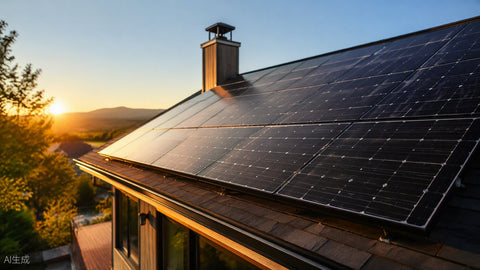
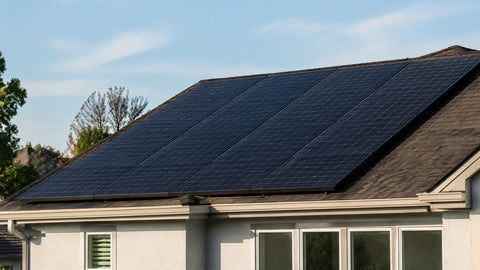
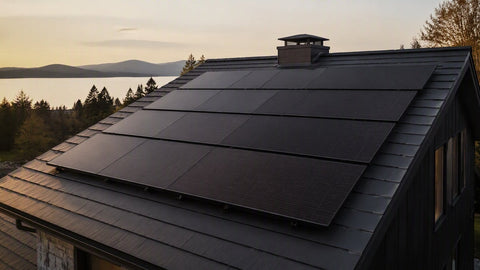
| Black-frame residential variants | All-black 54-cell | ~430 – 445 W | ~22% | Aesthetic-driven residential |
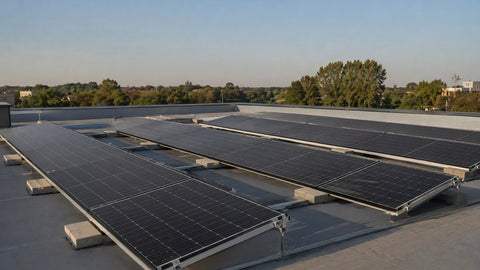
Buying guidance by segment: for residential, the 54-cell format wins on handling (one installer can shoulder-mount it) and roof-fit. For commercial rooftops and carports, the 72-cell LB dual-glass at ~580–595 W is our volume leader — strong mechanical load ratings, bifacial gain on bright membrane roofs (see our bifacial vs monofacial analysis), and pricing that typically undercuts premium Western brands by $0.04–0.08/W. For utility scale, DeepBlue 4.0 Pro competes with Jinko's Tiger Neo 78-cell and LONGi's Hi-MO 7 — see our guides to Jinko and LONGi for cross-shopping.
Warranty Structure
| Warranty element | Monofacial glass-backsheet (MB) | Dual-glass bifacial (LB / Pro) |
|---|---|---|
| Product/materials warranty | 15 years (extendable programs vary) | 15 years typical, check regional terms |
| Performance warranty | 25 years, ≥84.8% | 30 years, ≥87.4% |
| First-year degradation cap | ≤2.0% (older PERC) / ≤1.0% TOPCon | ≤1.0% |
| Annual degradation thereafter | 0.55%/yr (PERC) / 0.40% (TOPCon) | 0.40%/yr |
| Claim channel | Through your distributor of record — keep serial numbers and delivery docs | |
A warranty note from experience: JA Solar claims move through the distributor channel, which makes your choice of distributor part of the warranty. Photograph serial labels at receiving — we require it on our dock for every JA Solar pallet — because a claim without serial documentation is a slow claim. When claims do arise, we've found JA Solar's response time competitive with any Tier-1 brand.
Certifications and Compliance Checklist
- IEC 61215 / IEC 61730: current editions across DeepBlue lines — the baseline for code acceptance.
- UL 61730 listing: confirm the specific SKU on the cert listing your AHJ references; most US-bound JA Solar SKUs carry it.
- Ammonia and salt-mist certification: relevant for agricultural and coastal installs — DeepBlue carries both.
- Mechanical load: typical ratings of 5400 Pa front / 2400 Pa rear on 72-cell frames; verify against your snow/wind zone.
- PVEL/RETC independent testing: JA Solar appears regularly in independent reliability scorecards — worth citing in financier diligence packages.
Dealer Buying Process at PES
We stock JA Solar across wattage classes, including our 500 W+, 550 W, and 600 W class collections. Pallet pricing is published to dealer accounts; truckload and project pricing goes through our procurement desk. New accounts start prepaid and typically graduate to net terms within a few orders — the mechanics are in the procurement guide.
Cross-shop the same wattage class against Trina, Qcells, and premium North-American-assembled options like Silfab — our 400–459 W and 500 W+ collections make same-class comparison easy. We'll quote alternates side by side — that's standard practice, not an insult.
How JA Solar Positions on Price and Performance
Dealers ask us constantly where JA Solar sits in the pecking order, so here's the honest positioning against the brands it competes with on real quotes:
| Competitive axis | JA Solar position | Who beats it here | Who it beats here |
|---|---|---|---|
| Warehouse $/W (commercial class) | Aggressive — typically at or near the Tier-1 floor | Occasionally Jinko on distressed stock | Premium Western brands by $0.04–0.08/W |
| Module efficiency | Upper-middle of TOPCon class | LONGi HPBC 2.0, premium n-type lines | PERC remainder stock, budget assemblers |
| Warranty length (dual-glass) | 15 yr product / 30 yr performance | 25-yr product programs from premium residential brands | Budget Tier-2/3 offerings |
| US channel depth | Good and improving | Jinko, Qcells | Smaller import brands |
| Domestic content | None — import product | Mission Solar, Solar4America | — |
| Dealer documentation support | Solid cert packages via distribution | Mission Solar (compliance heritage) | Most Tier-2 brands |
The practical sales translation: JA Solar wins the "Tier-1 quality at the market floor" argument and loses the "made in America" and "highest efficiency on the datasheet" arguments. Quote it as the value anchor, then let the customer's constraints — domestic content, roof area limits, aesthetic demands — pull them toward the alternatives only when those constraints are real.
Freight, MOQ, and Lead-Time Realities
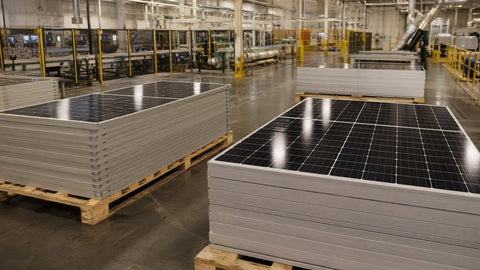
JA Solar pallets run 31–36 modules depending on format, and pallet quantities price wholesale from our floor stock with no minimum-order drama — a single pallet is a normal transaction, not a favor. Truckload releases (22–26 pallets) unlock the next pricing tier, and project volumes beyond that go to our procurement desk for allocation pricing. Lead times: warehouse stock ships in 3–10 business days; allocation holds quote 2–6 weeks depending on wattage class.
Two handling notes specific to JA Solar packaging. The 72-cell dual-glass pallets run heavy — plan dock equipment for 2,300+ lb pallet weights, and confirm your receiving forklift's capacity before the truck arrives, because "we can't unload it" is an expensive sentence at a freight dock. And the corner protectors on JA Solar pallets are genuinely good; leave them on until modules reach the roof, since the majority of edge chips we've seen happened between the pallet and the rail, not in transit.
On replacement stock: JA Solar's multi-generation product turnover means matching a three-year-old SKU exactly can take longer than matching a current one. For repair-and-replace work, give us the failed module's full model number and we'll cross-reference the closest current equivalent with matching electrical characteristics for string compatibility — a service we run weekly, and one more reason the serial-photo habit pays for itself.
Selling the TOPCon Story Without the Jargon
Dealers selling against premium residential brands need a homeowner-legible version of the technology case. The script that works: "These panels use the newest cell architecture in mainstream production. They lose less power in year one, fade slower every year after, and produce more energy on hot afternoons than the previous generation — and the manufacturer guarantees it in writing for thirty years." That maps directly onto the datasheet: 1.0% first-year degradation, 0.40% annual fade, the −0.29%/°C temperature coefficient, and the 30-year dual-glass warranty. No jargon required; the numbers carry the pitch.
Where dealers get in trouble is overclaiming bifacial gains on residential roofs. The DeepBlue 4.0 LB's ~80% bifaciality is a genuine engineering number, but on a flush-mounted shingle roof it contributes almost nothing — the physics in our bifacial guide explains why. Sell bifacial for ground mounts, carports, and bright flat roofs; sell monofacial MB for residential and price the difference honestly. Installers who oversell rear gain create the warranty-adjacent disappointment calls that cost everyone time.
Quality Control: What Vertical Integration Buys
The vertical-integration point deserves unpacking because it's the least understood line in the JA Solar story. When a brand buys cells on the open market and assembles modules, cell variability enters the product with it — different cell batches carry different degradation curves, and mixing batches within one module accelerates mismatch aging. JA Solar grows its own ingots, slices its own wafers, and prints its own cells, which is why batch-to-batch consistency in flash-test data runs tighter than assembler brands. You can see it on the dock: JA Solar pallets arrive with flash reports that cluster tightly around nameplate, typically within a watt or two.
That consistency matters most at scale. On a 500-module commercial array, cell-bin mixing shows up as string mismatch losses that no optimizer fully recovers. The procurement guidance: for large arrays, request single-batch delivery where possible — something a vertically integrated maker can actually honor — and document flash reports with your receiving photos. It takes minutes, and it converts a future "the array underproduces" argument into a data conversation.
Frequently Asked Questions
Is JA Solar a Tier-1 manufacturer?
Yes. JA Solar is a consistent BloombergNEF Tier-1 manufacturer and one of the largest module shippers globally. Tier-1 is a bankability measure, not a quality grade, but JA Solar pairs it with vertically integrated manufacturing and regular appearances in independent reliability testing — which is why lenders rarely question it on financed projects.
What is the difference between DeepBlue 3.0 and DeepBlue 4.0?
Cell technology. DeepBlue 3.0 is p-type PERC; DeepBlue 4.0 is n-type TOPCon (Bycium cells) with lower degradation (1.0% first year, 0.40% annual versus 2.0% and 0.55%), a better temperature coefficient, and stronger bifaciality. For new purchases in 2026, DeepBlue 4.0 is the correct default; PERC remainder stock makes sense only at a meaningful discount.
What warranty do JA Solar modules carry?
Current DeepBlue 4.0 dual-glass modules carry a 15-year product warranty and 30-year performance warranty guaranteeing at least 87.4% of nameplate at year 30. Monofacial glass-backsheet variants typically run 25-year performance terms at 84.8%. Confirm the exact SKU's warranty document, as regional terms vary.
Are JA Solar panels good for commercial rooftops?
They are one of our top commercial recommendations. The 72-cell DeepBlue 4.0 LB dual-glass combines ~580–595 W output, strong mechanical load ratings, bifacial gain over white membrane, and aggressive commercial pricing. For financed projects, its bankability removes a common lender objection.
How do I buy JA Solar at dealer pricing?
Open a dealer account with an authorized distributor like PES Supply. Pallet quantities get wholesale pricing immediately; truckload and project volumes are quoted through the procurement desk with allocation confirmation. Bring your resale certificate and, for terms, standard credit references.
Quote JA Solar for Your Next Project
Pallet to truckload DeepBlue 4.0 stock with landed-cost quotes and allocation confirmation in writing.
Shop JA Solar at PES →Compare: Jinko Solar brand guide · LONGi brand guide · Mission Solar brand guide · Solar panel wiring basics
PES Supply (https://www.portlandiaelectric.supply) is a B2B electrical and solar distributor offering 50,000+ SKUs from 169 authorized brands. Specifications are representative of current-generation published data; verify against the manufacturer's current datasheet before final design.