Brand Guide · Inverters & Charge Controllers
Schneider Electric: Conext XW Pro, MPPT Controllers & Energy Management
The complete contractor's guide to Schneider's Conext lineup — XW Pro hybrid inverter/chargers, 150V and 600V MPPT controllers, stacking math, NEC sizing, and how it compares to Sol-Ark and OutBack.
Schneider Electric is a French multinational that's been in the electrical business since 1836 — yes, the same Schneider behind Square D panels, which hang in more American garages than any other brand. Their solar and storage division inherited the Xantrex/Trace engineering lineage, and that heritage matters: the Trace SW series from the 1990s was the box that built the North American off-grid market, and the Conext XW Pro is its direct descendant. When a rancher calls us about replacing a 20-year-old Trace inverter, the XW Pro 6848 is usually the drop-in answer.
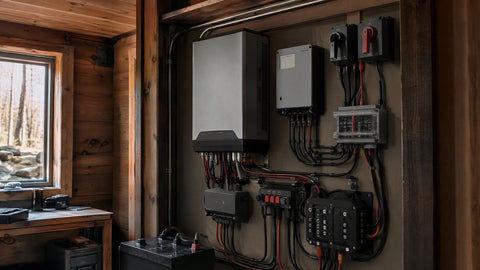
The Conext line splits into two families: the XW Pro hybrid inverter/chargers (6.8 and 7.6 kW split-phase units) and the Conext MPPT charge controllers (the 60 150 and the high-voltage 80 600). Around those, Schneider builds a system ecosystem — the System Control Panel (SCP), InsightHome/InsightCloud monitoring, automatic generator start modules, and distribution panels. Everything talks over Xanbus, Schneider's proprietary network, so the pieces coordinate charging, load management, and generator behavior without a rack of third-party relays. That ecosystem approach is the brand's whole personality: not the flashiest spec sheet on the wall, but the pieces are engineered to live together for decades, and the support organization actually answers the phone when a 15-year-old install needs help.
We've pulled thousands of feet of 4/0 copper for XW Pro battery banks, and the through-line on every one of those jobs is the same: Schneider gear is built like industrial equipment because it is industrial equipment. The XW Pro's toroidal transformer gives it surge behavior that high-frequency transformerless hybrids simply can't match — we've watched a single 6848 start a 4-ton compressor and a 1.5 HP well pump at the same time without blinking.
The flagship is the Conext XW Pro 6848 (6.8 kW) and its bigger sibling the 7600 (7.6 kW). Both are 48 V battery-based, split-phase 120/240 V, UL 1741-listed inverter/chargers with 60-amp AC pass-through. On the solar side, the MPPT 60 150 handles arrays up to 150 V open-circuit and 60 A of charge current, while the MPPT 80 600 accepts 600 V strings — that high-voltage ceiling lets you run long series strings and small-gauge PV wire on big ground mounts, which saves real money on wire and trenching. Full lineup:
| Model | Type | Power | MPPT | Efficiency | Key Features | Price Range |
|---|---|---|---|---|---|---|
| Schneider Conext XW Pro 6848 | Hybrid inverter/charger | 6.8 kW | Separate (MPPT controller) | ~96% | Split-phase, AC/DC coupling, stackable | $3,500-$4,500 |
| Schneider Conext XW Pro 7600 | Hybrid inverter/charger | 7.6 kW | Separate (MPPT controller) | ~96% | Higher power, generator integration | $3,800-$4,800 |
| Schneider Conext MPPT 60 150 | Charge controller | 60A / 150V | 1 (MPPT) | 99% MPPT | Multi-stage charging, XW Pro compatible | $500-$700 |
| Schneider Conext MPPT 80 600 | Charge controller | 80A / 600V | 1 (MPPT) | 99% MPPT | High voltage, longer strings | $700-$950 |
| Schneider Conext SCP | System control panel | N/A | N/A | N/A | Centralized display and configuration | $200-$350 |
Price positioning puts Schneider in the mid-premium band: more than value brands, less than the European boutique boxes, and cheaper than most installers expect once you factor in the 10-year warranty and the fact that a stacked XW Pro system replaces a transfer switch, a separate charger, and half a panel of contactors.
Schneider's 2025–2026 cycle focused on software and integration rather than new iron. InsightCloud got a meaningful overhaul — fleet views for installers, per-string diagnostics when paired with the MPPT 80 600, and push alerts that actually arrive before the customer calls you. Firmware updates across the XW Pro line tightened up grid-interactive behavior for the newer UL 1741 SB requirements, expanded the closed-loop lithium compatibility list, and improved generator support curves so smaller gensets stop nuisance-tripping during bulk charge.
The other quiet change: Schneider has been consolidating the Conext distribution channel toward authorized partners with real stock. That's good for contractors — it means the guy quoting against you can't undercut with gray-market boxes that have no warranty support in North America.
The XW Pro carries UL 1741 (including the SB supplement for grid-interactive functions), CSA C22.2 for Canada, and IEEE 1547 compliance for utility interconnection. The MPPT controllers are UL 1741 and CSA listed as well. For inspectors, the paperwork that matters is the ETL/UL mark on the nameplate plus the listing sheets in the install manual — we've never had an AHJ push back on a Conext submittal package. Rule 21 and HECO configurations are supported via firmware for the California and Hawaii markets.
Schneider backs the XW Pro and Conext MPPT controllers with a 10-year standard warranty — double the 5-year coverage that's common on value-tier hybrids. The warranty is parts-and-repair; Schneider maintains a US service organization, and in our experience RMA turnaround runs two to three weeks including freight. Keep the serial-number sticker photographed and the InsightHome registration done at commissioning; both make warranty claims dramatically smoother.
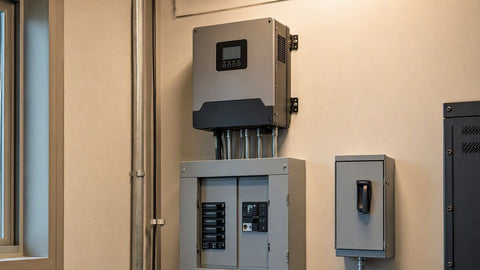
A few things the manual won't tell you. First: the 6848 weighs about 122 lbs and the mounting ears are exactly where your drywall anchors aren't. We hang a 3/4-inch plywood backboard first, lag it to studs, and mount the inverter to the board — every time, no exceptions. Second: the DC terminals want a real torque wrench. The spec is in the install manual; follow it, because a loose 4/0 lug at 400 amps doesn't fail quietly.
Third: leave room on both sides. The XW Pro moves a surprising amount of air when it's charging hard off a generator in August, and we've seen units thermal-derate in cramped closets even though they technically fit. Fourth — and we say this from a service call we'd rather forget — bond the neutral correctly for your system type. Off-grid, grid-tied backup, and 3-phase stacks each have a different neutral/ground scheme, and getting it wrong produces ghost faults that eat entire afternoons.
The XW Pro's output circuits are continuous loads, so NEC 705 and 210/215 push you to 125% sizing on the overcurrent device. Here's the math we actually use on the job, mapped to NEC 240.6(A) standard ratings and 75°C copper from NEC 310.16:
| Inverter / Circuit | Continuous AC Current | 125% Continuous Sizing | NEC 240.6(A) Breaker | Min. Copper Conductor (75°C, NEC 310.16) |
|---|---|---|---|---|
| XW Pro 6848 @ 240V output | 6,800 W / 240 V = 28.3 A | 35.4 A | 40 A (2-pole) | 8 AWG (50 A) |
| XW Pro 7600 @ 240V output | 7,600 W / 240 V = 31.7 A | 39.6 A | 40 A (2-pole) | 8 AWG (50 A) |
| Two stacked XW Pro 6848 | 13,600 W / 240 V = 56.7 A | 70.8 A | 80 A (2-pole) | 3 AWG (100 A) |
| XW Pro AC input (gen/grid, 60 A pass-through) | 60 A rated relay | 75 A max continuous | 80 A (2-pole) max | 3 AWG (100 A) |
| MPPT 60 150 output @ 48V | 60 A rated | 75 A | 80 A (DC rated) | 4 AWG (85 A) |
| MPPT 80 600 output @ 48V | 80 A rated | 100 A | 100 A (DC rated) | 2 AWG (115 A) |
On the stacking side, output scales linearly and surge roughly doubles with each added unit. Use this table when a customer asks "will it run my house":
| Configuration | Continuous Output @ 240V | Surge (5 sec) | Typical Use |
|---|---|---|---|
| 1 × XW Pro 6848 | 6.8 kW (28.3 A) | ~12 kW | Cabin, small off-grid home |
| 2 × XW Pro 6848 (split-phase stack) | 13.6 kW (56.7 A) | ~24 kW | Full-size off-grid home, well pump + range |
| 3 × XW Pro 6848 (3-phase) | 20.4 kW @ 208V 3-phase | ~36 kW | Small commercial, farm shop |
| 4 × XW Pro 6848 (split-phase) | 27.2 kW (113 A) | ~48 kW | Large estate, light commercial backup |
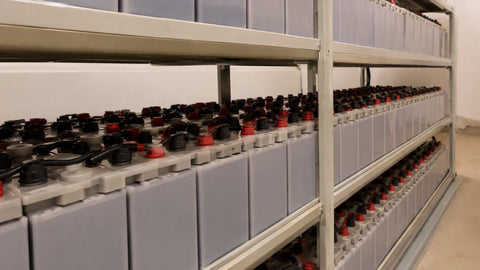
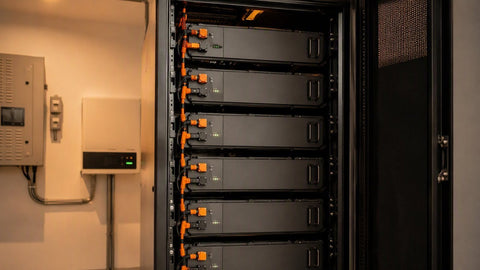
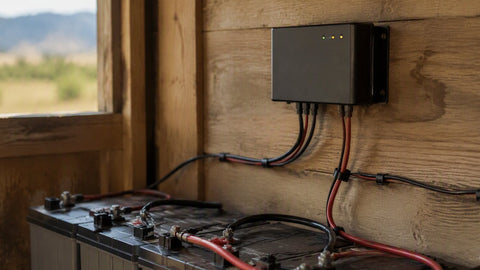
Remember the battery side of the equation. A 2-unit stack at full output draws roughly 300 A DC from a 48 V bank — that's a 400 A Class T fuse, 4/0 cable or busbar, and a bank with enough ampacity behind it. We've seen beautifully wired inverters crippled by a battery bank that sags to 44 V the moment the well pump kicks. For bank sizing math, see our home battery bank sizing guide and the battery backup runtime calculator.
How does the XW Pro stack up against the other two boxes contractors ask about most — the Sol-Ark 15K and the OutBack Radian? The short version: Sol-Ark wins on integration and raw watts per dollar, Schneider wins on surge character, serviceability, and the 3-phase stacking path, OutBack wins on modularity for weird one-off systems. The numbers:
| Feature | Schneider XW Pro | Sol-Ark 15K | OutBack Radian |
|---|---|---|---|
| Continuous output | 6.8-7.6 kW | 15,000W | 4-8 kW |
| Stackable | Yes (3-phase) | Yes (up to 8) | Yes |
| AC coupling | Yes | Yes | Yes |
| DC coupling | Yes (via MPPT controller) | Yes (integrated) | Yes (via charge controller) |
| Battery communication | CAN bus | CAN bus / RS485 | CAN bus |
| Standard warranty | 10 years | 10 years | 5-10 years |
| Cost per watt | $0.40-$0.55 | $0.35-$0.45 | $0.45-$0.65 |
Our honest read after installing all three: if the job is a straightforward whole-home backup with a big PV array, the Sol-Ark 15K is hard to beat on value. If the job is a true off-grid property, a farm with 3-phase equipment, or a customer who'll still own the system in 2040, the XW Pro's field-serviceable design and transformer-based surge make it the box we reach for. For exotic multi-source systems, also look at Victron and OutBack.
The XW Pro is battery-agnostic in a way most modern hybrids aren't — it will charge flooded lead-acid, AGM, and lithium, and it doesn't sulk if the battery doesn't have a CAN bus. On flooded banks, the three-stage charging with temperature compensation via the battery temp sensor is excellent; on AGM, drop the absorb voltage per the battery datasheet and you're done. On lithium, you have two paths: open-loop (set the voltage points manually, let the BMS protect itself) or closed-loop CAN communication where the battery tells the inverter exactly what current it wants. Closed-loop is worth the extra commissioning time — charge rates adapt to cell temperature automatically, and the low-temperature cutoffs work the way they should.
Sizing reality check: a single 6848 wants at least 400 Ah of 48 V lithium (about 20 kWh) behind it if you plan to use its full surge. We typically spec 10–15 kWh of LFP per inverter as a floor for whole-home work. For candidate banks, see our guides to EG4, Pylontech, and Fortress Power, and cross-check capacity with the off-grid battery sizing walkthrough.
The XW Pro does both, and picking the right architecture is half the design. DC coupling — solar through Conext MPPT controllers straight into the battery bank — is the efficient path: one conversion stage from array to battery, around 97–99% controller efficiency, and charging that keeps working when the grid is down and the inverter is in bypass. It's the right answer for off-grid and for battery-first backup systems.
AC coupling hangs a standard grid-tie inverter on the XW Pro's output. When the grid drops, the XW Pro forms a microgrid and the grid-tie inverter keeps producing, with frequency-shift power control throttling it as the batteries fill. This is the retrofit play: customer already has a grid-tie array, you add an XW Pro, a battery bank, and a critical-loads panel and they've got backup without touching the roof. The catch is you're converting twice on the way to the battery, so round-trip efficiency drops into the high 80s. For new construction with storage planned from day one, DC-couple. For retrofits on existing arrays, AC-couple and don't look back.
Buy the XW Pro if you're building true off-grid, if the property has 3-phase equipment or big motor loads, if the customer wants a system they can service for 25 years, or if generator integration is central to the design. The automatic generator start module and the XW Pro's charge behavior with sketchy gensets are genuinely best-in-class — we've paired them with everything from whisper-quiet Hondas to ancient diesel Kubotas that surge 200 volts on load changes.
Look elsewhere if the job is a simple grid-tied backup with a big array and the customer wants the fewest boxes on the wall — the Sol-Ark integrates the MPPTs and pushes 15 kW from one cabinet. Look elsewhere if the customer wants a slick consumer app experience; Schneider's monitoring is professional-grade, not lifestyle-grade. And if the project is a straight grid-tie with no storage at all, a plain string inverter from SMA or Fronius will cost a third as much per watt.
InsightHome is the local gateway; InsightCloud is the web platform. Commissioning requires the gateway — there's no Bluetooth fallback — so put it on the quote. Once it's up, you get per-device telemetry, configurable alerts, remote firmware updates, and the installer fleet view that lets you watch every customer site from one login. The SCP (System Control Panel) remains the fastest way to change settings on site; it talks Xanbus directly and works with no internet at all, which matters on off-grid jobs where the customer's Starlink is down half the winter.
We stock the full Schneider Conext line — XW Pro 6848 and 7600 inverter/chargers, MPPT 60 150 and 80 600 charge controllers, SCP panels, Insight gateways, and the XW+ distribution hardware. Pair them with 48 V battery banks, PV modules, and the balance-of-system gear from our inverter catalog. For wire sizing on the PV and battery runs, our NEC wire sizing guide and ampacity chart have the tables. Volume pricing for contractors — request a quote.
Product specifications from Schneider Electric Conext XW Pro and MPPT controller datasheets and installation manuals. Electrical sizing per NFPA 70 (NEC) 2023: Articles 240.6(A), 310.16, 690, 705, and 706. Certifications per UL 1741/UL 1741 SB, IEEE 1547, and CSA C22.2 No. 107.1. Pricing reflects typical US street pricing as of mid-2026 and varies with configuration and volume.
Can the Conext XW Pro operate completely off-grid?
Yes — off-grid is the XW Pro's home turf. It is a true inverter/charger with a 60-amp AC pass-through relay, so it can run a standalone battery system with a generator on the AC input, sit in a grid-tied self-consumption install, or do both. We've commissioned XW Pro systems at hunting cabins that haven't seen a utility line in decades, and the same box runs whole-home backup in town. Set the grid support and sell modes in the SCP or InsightCloud and it behaves itself either way.
Do I need a separate charge controller with the XW Pro?
For DC-coupled solar, yes. The XW Pro has no built-in MPPT — pair it with the Conext MPPT 60 150 for smaller arrays or the MPPT 80 600 for high-voltage strings up to 600 V. The controllers talk to the inverter over Xanbus, so charging is coordinated: when the batteries hit absorb, the whole system knows. You can also AC-couple a grid-tie inverter to the XW Pro output and skip charge controllers entirely.
Can I stack XW Pro units for more power?
Yes. Up to four units in split-phase (27.2 kW continuous) or three units configured for 208 V three-phase (20.4 kW). Stacking uses Xanbus sync cables and a firmware setting — no external parallel kit. Watch your battery bank: a 4-unit stack can pull over 500 A DC at full tilt, so size busbars, cable, and overcurrent protection accordingly.
What batteries are compatible with the XW Pro?
Flooded, AGM, and most 48 V lithium banks. Schneider publishes a qualified lithium list and supports CAN bus communication with major BMS platforms so the inverter respects charge limits from the battery itself. We've run it on everything from forklift-size flooded banks to modern LFP server-rack packs. For closed-loop lithium, confirm your battery is on Schneider's compatibility list before ordering.
How do I size the generator for an XW Pro off-grid system?
Size the generator for loads plus charging. The XW Pro can draw up to roughly 140 A DC into a discharged 48 V bank — that's about 7 kW of charge power alone. Add your running loads and you want a 10–12 kW generator minimum for a single-unit system, 15 kW+ if you run heavy shop equipment. Set the AC input breaker size and charge current limit in the menu so the inverter never overloads a smaller genset.
What's the difference between the XW Pro and the older XW+?
The XW Pro is the current generation: same transformer-based architecture, but with a 60-amp AC relay (up from 60/50 depending on model), grid-interactive firmware for UL 1741 SB compliance, full InsightCloud monitoring support, and broader closed-loop lithium compatibility. Mechanically the footprint is nearly identical, which is why XW+ upgrades are usually a same-day swap. If you're nursing an old XW+ or even a legacy SW Plus, the Pro is the path forward — the older units are end-of-support.
How long does delivery take from PES Supply?
Most Conext XW Pro and MPPT controller orders ship from our warehouse network in 1–3 business days, with freight delivery typically inside a week for residential addresses. The 6848 ships on a pallet — it weighs over 120 lbs — so have a liftgate or a couple of strong backs ready. Call or email for a current lead-time quote before you schedule the crew.
Shop Schneider Electric at PES Supply
XW Pro inverter/chargers, MPPT controllers, and full Conext balance-of-system — in stock, contractor pricing.
Browse Schneider Electric