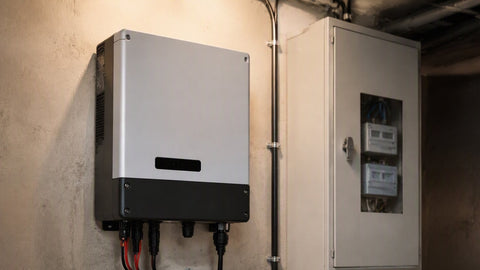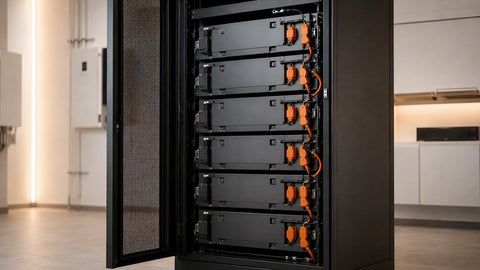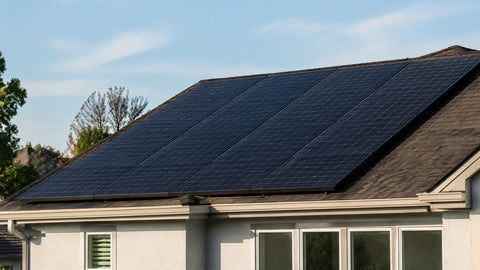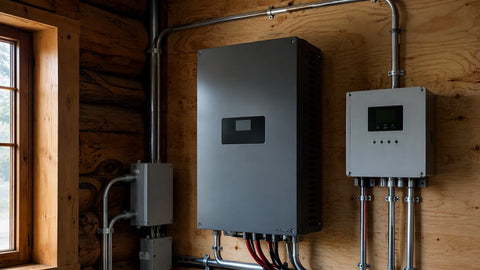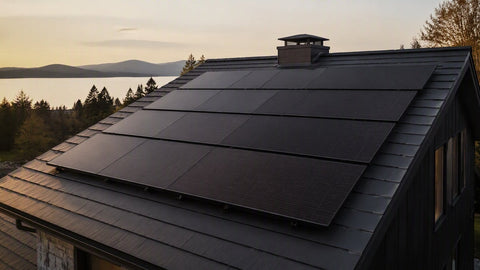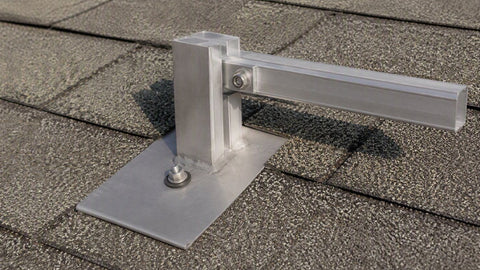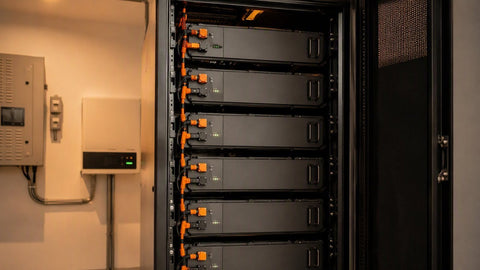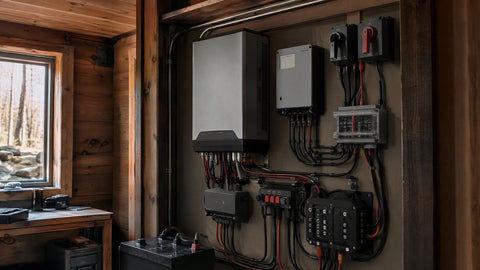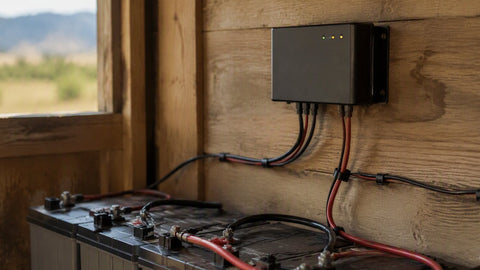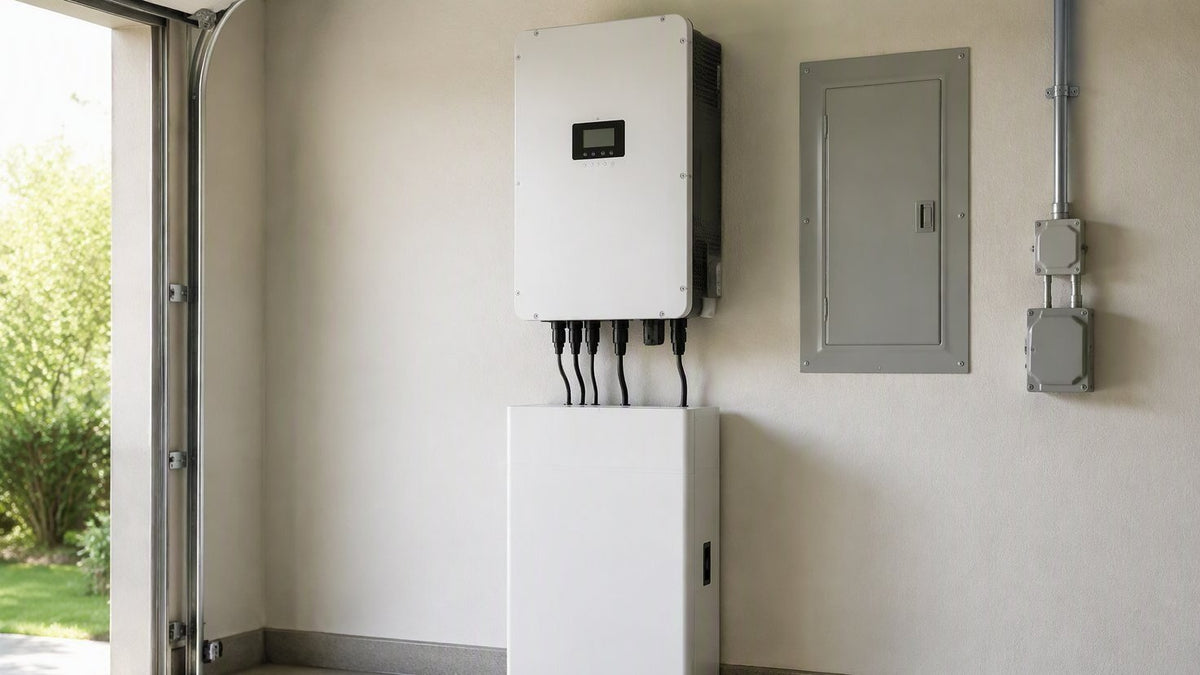
GoodWe is the brand that made us take Chinese hybrid inverters seriously. A decade ago the default assumption was that grid-interactive battery hardware came from Germany or California; then the ET-series hybrids started landing on roofs at a price that made the legacy brands blink, with SEMS monitoring that actually worked. We have been selling and commissioning GoodWe systems through multiple product generations now, and this guide is the practitioner's version: the hybrid line, the ESA all-in-one, the SEMS+ platform, and the design details that decide whether a GoodWe install is a showcase or a service ticket.
1. Company Overview
GoodWe was founded in 2010 in Suzhou, China, and grew into one of the world's largest residential inverter manufacturers by shipments — a publicly traded company with R&D depth that smaller value brands cannot match. The North American operation supports the market with region-specific models carrying the UL certification stack, English documentation, and a US-based technical support channel. The product philosophy is distinctive: GoodWe bet early on hybrid and storage-integrated architecture rather than pure string inverters, so the catalog reads like an energy-management company that also makes inverters — which, by 2026, is exactly what it is.
For our customers, the practical profile is this: competitive pricing against the premium European brands, a genuinely broad hybrid lineup, aggressive feature velocity, and a support organization that has matured considerably from its early days. We stock the range in our GoodWe collection.
2. Current Product Lines
The US-relevant catalog organizes into residential hybrids, all-in-one ESS, batteries, commercial strings, and the monitoring platform. Confirm exact model numbers and ratings against current datasheets — GoodWe revises frequently:
| Family | Class | Output Range | Battery Interface | Role |
|---|---|---|---|---|
| ES / EM / EH series | Residential single-phase hybrid | ~3.6–6kW class | Low-voltage (48V) battery | Entry hybrid, retrofit-friendly |
| ET series | Residential/small-commercial three-phase hybrid | ~5–10kW class | High-voltage battery | Whole-home hybrid, larger homes |
| ESA | All-in-one ESS | ~5kW-class inverter + stackable LFP tower | Integrated (modular ~5kWh blocks, scalable) | Appliance-clean whole-home backup |
| Lynx Home battery | Modular LFP storage | — | HV and LV variants | Paired storage for the hybrid line |
| DT / SMT / HT series | Commercial three-phase string | ~8kW to 100kW+ class | — | Commercial rooftops and ground mounts |
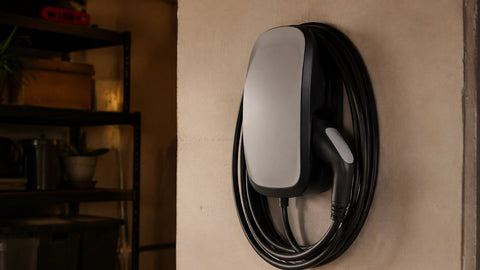
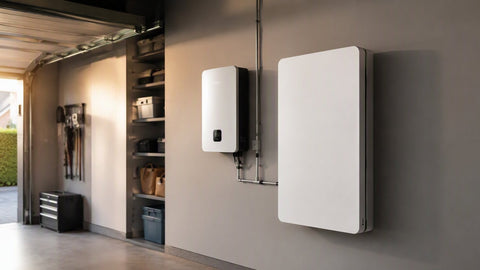
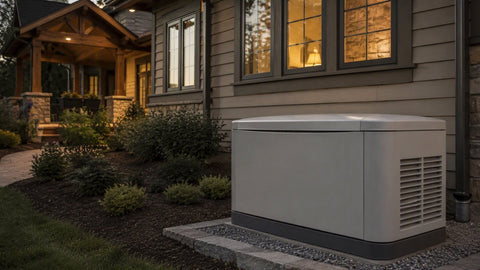
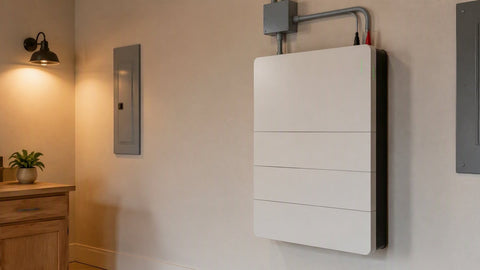
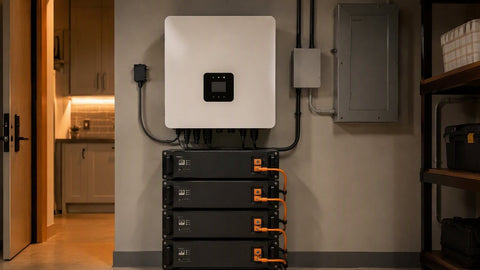
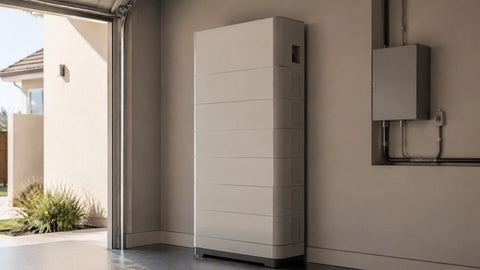
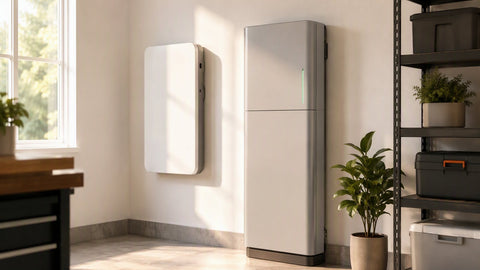
The ESA deserves special attention because it answers the most common homeowner objection to batteries: "I do not want a science project on my wall." The ESA packages a hybrid inverter and a stackable LFP tower into one appliance-looking column — expand capacity by adding modules, commission one system instead of integrating two, and put it somewhere visible without apologizing. For garage-adjacent installs where aesthetics killed the sale, the ESA format has closed deals that rack batteries never could.
3. Recent Releases (2025–2026)
GoodWe's current development cycle runs on three tracks. First, the hybrid line's grid-interactive maturity: UL 1741 SB function sets, refined backup-switching times, and expanded battery compatibility lists — including third-party LFP pairings beyond the Lynx family. Second, the ESA and Lynx storage platforms: higher-density modules, improved thermal management, and capacity expansion paths that let a system grow with the household. Third, SEMS+: the monitoring platform has evolved from a production dashboard into an energy-management layer with consumption analytics, battery dispatch scheduling, and fleet views for installers. The pattern across all three tracks is the same — GoodWe ships fast and iterates in public, which rewards buyers who keep firmware current and punishes those who treat commissioning as the finish line.
4. Certifications & Listings
| Standard | Scope | Field Impact |
|---|---|---|
| UL 1741 SB / IEEE 1547 | Grid-interactive certification with grid-support functions | Utility interconnection approval |
| UL 9540 / 9540A pairing | ESS listing with paired batteries | AHJ sign-off — verify the exact battery-inverter combination |
| CEC listing | California Energy Commission equipment approval | Incentive eligibility in California programs |
| NEC 705.12 / 706 compliance path | Interconnection & ESS installation rules | Busbar math, disconnects, working clearances — install-side duties |
The standing rule for storage hybrids applies in full: a listed inverter and a listed battery are not a listed system until the pairing is on the UL 9540 documentation. GoodWe maintains published compatibility lists; pull the current one at design, attach it to the permit packet, and re-verify if the project slides a quarter — lists update.
5. Warranty & Support Reality
GoodWe's US warranty terms run in the multi-year class typical for the segment — commonly a decade-range term on residential inverters with variations by product line, and ten-year-class coverage on batteries; confirm the current warranty statement per SKU at purchase. The support experience has genuinely improved: the US technical channel answers, firmware escalation paths exist, and RMA logistics through distributors like us run in days rather than the container-schedule timelines of the early era. Our field record across the fleet: failure events concentrate in comms hardware and installation defects rather than power stages — which is the signature of mature power electronics and the reason we insist on the commissioning checklist in section 9.
6. SEMS+ Monitoring: The Platform That Sells the Second System
SEMS+ started as a production monitor and became an energy-management platform. The features our service desk and our sales desk both use: per-string production visibility that surfaces soiling and failures in days, consumption metering that shows the household its own load shape (the number that turns a solar customer into a battery customer), battery dispatch scheduling for time-of-use arbitrage — charge cheap, discharge into the peak — and installer fleet dashboards that let us watch every commissioned system from one screen. Configuring consumption metering correctly at commissioning is the difference between a monitoring platform and a random-number generator: CT orientation, phase mapping, and meter placement get verified against a known load before we leave. Monitoring accessories live in our monitoring & communications collection.
7. Sizing a GoodWe Hybrid System: The Math
Hybrid sizing has three independent constraints — array, inverter, battery — and the discipline is sizing each to its own master. Array to the winter, inverter to the surge, battery to the night:
| Household Profile | Array | Inverter Class | Battery | Design Notes |
|---|---|---|---|---|
| Efficient 1,800 sq ft, gas heat, TOU arbitrage goal | 6–7kW | ES/EH-class 5kW hybrid | 10kWh (LV) | Battery sized to evening peak window, not overnight survival |
| 2,800 sq ft, some electric appliances, backup goal | 9–11kW | ET-class 8–10kW hybrid | 15–20kWh (HV) | Critical-loads panel design decides the backup experience |
| All-electric, EV, whole-home ambitions | 13kW+ | ET top class / parallel ESA strategy | 25–40kWh | Load management mandatory; design review with our team |
| Commercial rooftop 50–100kW | Per roof | DT/SMT/HT-class three-phase | Optional | 208V vs 480V service confirmed before quote |
Two GoodWe-specific notes. High-voltage battery systems (ET class) convert more efficiently than 48V systems at the same power — the stack runs the inverter's DC bus directly instead of stepping up from 48V — and that is why whole-home designs lean HV. And backup switching on hybrid inverters is fast but not UPS-fast; genuinely intolerant loads (servers, medical devices) still belong behind a true UPS. The battery sizing guide, bank sizing guide, and runtime calculator cover the storage arithmetic; the system size calculator handles the array.
8. Popular Products at PES Supply
- ET-series hybrid inverters — the whole-home workhorse, in GoodWe and hybrid inverters.
- ESA all-in-one ESS — the appliance-clean integrated system.
- Lynx Home batteries — modular HV and LV storage, cross-shoppable in lithium batteries.
- Commercial DT/SMT/HT strings — alongside our commercial inverter range.
- Matched bundles — inverter-plus-battery kits in battery backup kits.
9. Installation Notes from the Field
GoodWe hardware installs cleanly when the fundamentals are respected, and the failure modes we fix on takeovers are the universal ones: CTs mirrored so export reads as import, backup panels fed through wiring that never met the manual, and firmware left at whatever version shipped eighteen months ago. The commissioning sequence we run: firmware current first, then meter verification against a known load, then a witnessed backup-transfer test with real loads running (the refrigerator does not care what the spec sheet says about switching time), then SEMS+ handover with the customer's account live. Battery comms on HV systems get verified closed-loop before first full charge — the BMS and the inverter need to be having a conversation, not a shouting match.
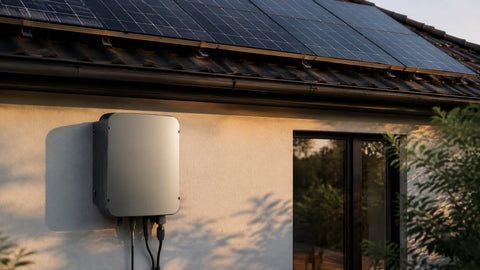
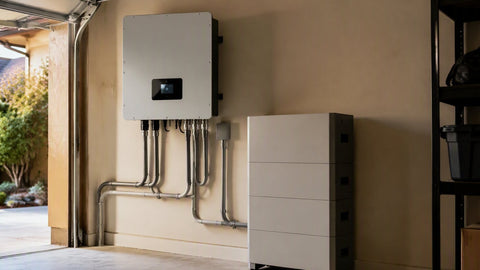
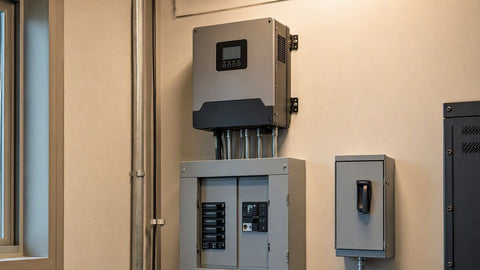
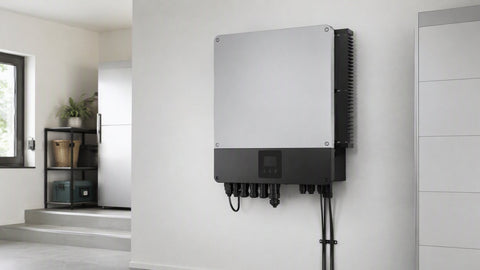
Physical install notes: hybrid inverters with battery stacks are heavy systems planning heavy things — wall-mount the inverter to structure, respect the clearances (these units move air), and plan the battery tower location for service access, not just aesthetics. On ESA installs, the integrated column simplifies wiring but concentrates weight — level floor, confirmed anchoring, and a honest conversation about garage clearance before the truck arrives. The hybrid inverter overview and system components guide cover the upstream design fundamentals.
10. Technical Comparison: GoodWe vs. Sol-Ark vs. EG4
The hybrid-inverter cross-shop we run most often, laid out honestly:
| Attribute | GoodWe (ET / ESA) | Sol-Ark-class US hybrid | EG4-class value hybrid |
|---|---|---|---|
| Price position | Value-premium | Premium | Value |
| Battery strategy | HV stacks + LV + ESA integrated; third-party list | 48V open, broad compatibility | 48V closed-loop, own ecosystem first |
| Backup topology | Hybrid with critical-loads or whole-home configs | Whole-home pass-through specialty | Whole-home via system-controller layer |
| Monitoring | SEMS+ platform, TOU dispatch | Mature portal + third-party integrations | App/portal, fast-improving |
| Support model | US channel, matured considerably | Deepest US installer mindshare | Distributor-direct |
| Best fit | Value-rational whole-home hybrid, aesthetic-sensitive installs (ESA) | Off-grid-leaning whole-home, installer familiarity premium | Cost-driven builds, price-led buyers |
Our routing at the counter: whole-home pass-through purists and off-grid-leaning designs still drift Sol-Ark. Price-led buyers land on EG4. The customer who wants a permitted, polished, monitored hybrid system without paying the familiarity premium — and especially the customer who wants the battery to look like an appliance — is the GoodWe conversation. That lane is bigger every quarter.
11. Time-of-Use Arbitrage: The Math That Sells Storage
In TOU territories, the battery earns its keep without a single outage. The arithmetic on a 15kWh bank shifting 10kWh per day from peak to off-peak:
| Peak/Off-Peak Spread | Daily Savings (10kWh shifted) | Annual Savings | Simple Payback Contribution |
|---|---|---|---|
| $0.10/kWh | $1.00 | ~$365 | Modest — outage protection carries the case |
| $0.25/kWh | $2.50 | ~$910 | Meaningful — battery pays a real dividend |
| $0.45/kWh (CA-style peaks) | $4.50 | ~$1,640 | Strong — arbitrage alone justifies the hardware class |
SEMS+ dispatch scheduling is what turns this table from theory into deposits: set the charge window into off-peak or solar surplus, set the discharge window into the peak, and the system runs the strategy daily without anyone thinking about it. Verify the customer's actual tariff before quoting the savings — spreads vary wildly by utility and season, and an honest table beats an optimistic promise every time.
12. Generator Pairing & Dark-Week Operations
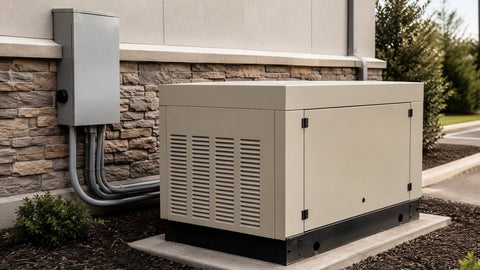
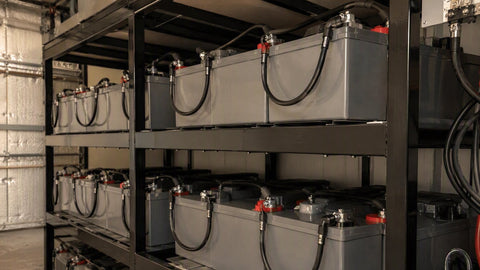
GoodWe hybrids accept generator input on the backup side, and the pairing discipline mirrors every storage system we design: set charge current to what the battery accepts comfortably (0.3C is the sane default), let the BMS close the loop so limits follow the battery rather than a static guess, and exercise the generator monthly year-round — dark weeks are a when, not an if. LFP's charge acceptance is the operational win: the same kilowatt-hours land in roughly half the generator runtime a flooded bank demands, which is fuel, noise, and engine hours saved every cloudy stretch. Size the generator to charger load plus coincident house loads using the generator sizing guide, and keep the pairing hardware honest.
13. Permitting & the Paperwork That Passes
The ESS permit package that sails through review, GoodWe edition: one-line diagram showing inverter, battery, disconnects, and interconnection method; cut sheets with UL marks visible; the UL 9540 pairing reference for the exact ET/ESA-plus-battery combination; NEC 706.15 listing documentation; site plan with location, working clearances, and vehicle-impact protection where garage amendments require it; and the rapid-shutdown method under NEC 690.12. ESA installs earn a smile from plans examiners — one listed system instead of an integrated pair simplifies the checklist. Budget two weeks for an experienced jurisdiction, six for a cautious one, and make the pre-submittal call on anything unusual. The whole-home backup sizing guide is the companion read for customers weighing generator-versus-battery backup budgets.
14. The Ownership Year: What GoodWe Owners Actually Experience
Twelve months into a GoodWe hybrid install, the pattern across our fleet is consistent: the system becomes background infrastructure. SEMS+ shows green, the battery cycles into the evening peak, and the customer's relationship with the utility bill quietly inverts — from dread to curiosity. The habits that separate the showcase systems from the service tickets: firmware on the current stable track (we schedule this at the annual check), consumption CTs verified after any electrician touches the panel, and a customer who knows that the app showing an alarm means "call us this week," not "watch it for a month." One genuine quirk worth knowing: hybrid systems with aggressive backup configurations can surprise owners with how much the battery covers — the 2 a.m. outage that nobody noticed until the neighbor texted is a real and repeatable event on a well-sized ET-plus-Lynx build. That story, told by a neighbor, sells more storage than any table in this guide.
15. Design Pitfalls We Fix on Takeovers
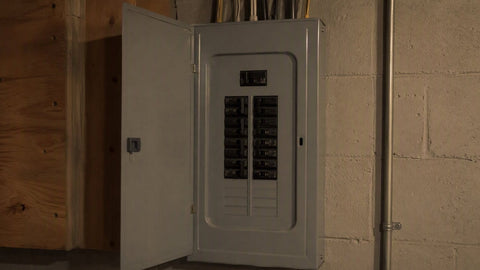
The GoodWe-adjacent rescue calls follow the industry pattern with a few brand-specific flavors. Undersized backup panels top the list: a hybrid's backed-up side is finite, and a critical-loads panel that quietly includes the dryer is a transfer-time fault waiting for its first outage. Mirrored consumption CTs turn SEMS+ into fiction — export reads as import, dispatch logic chases phantom flows, and the battery charges at noon into a full sun window while the peak window discharges nothing. HV battery comms left voltage-based instead of closed-loop waste the entire BMS investment. And firmware frozen at ship-version misses years of battery-compatibility and grid-function improvements — GoodWe's update cadence is a feature, and ignoring it is a choice with consequences. Every one of these is a one-visit fix; every one is cheaper to prevent at commissioning than to diagnose at year two.
16. High-Voltage vs. 48V: Picking the Battery Architecture
GoodWe sells both philosophies, so the choice deserves a paragraph of its own. Low-voltage (48V-class) battery systems are the retrofit-friendly path: they pair with the widest range of hybrid and off-grid inverters, tolerate mixed-expansion strategies, and carry decades of installer familiarity. High-voltage stacks — the ET-class pairings — convert more efficiently at whole-home power levels because the battery feeds the inverter's DC bus directly instead of stepping up from 48V through a conversion stage, and they push serious charge and discharge power through smaller conductors. The routing rule we use: new whole-home builds with a defined battery partner go HV; retrofits, phased expansions, and off-grid-leaning designs stay 48V. Both are right; mixing the philosophies mid-project because something was on sale is the only wrong answer on the board.
17. The Commercial Lane: DT to HT
Above the residential hybrids, GoodWe's commercial string line covers the 8kW-to-100kW+ rooftop and ground-mount band with three-phase 208V and 480V variants, multiple MPPTs per unit, and the UL 1741 SB grid-function set that utility interconnection studies demand. The commercial sales motion differs from residential in one way that matters: the buyer is a spreadsheet. Degradation curves, derating behavior on hot rooftops, fleet monitoring through SEMS+, and warranty logistics carry the conversation, and GoodWe's published documentation supports all four. For EPCs bidding repeat commercial work, the value position — competitive hardware cost against the European incumbents with a complete certification stack — is the close. Our design desk will run the string sizing and voltage-rise checks on any commercial GoodWe bill of materials before it ships; the forty-five minutes is free, and the redesign after commissioning is not.
18. Frequently Asked Questions
One framing note first: everything below assumes a permitted, inspected, professionally commissioned system on current firmware. The shortcuts all rhyme — unverified pairing, mirrored CTs, stale firmware — and each one collects its fee eventually, usually at the worst possible hour.
How does GoodWe compare to the premium European hybrids? Feature-for-feature, GoodWe's current hybrids compete directly — grid functions, battery integration, monitoring depth — at a friendlier price. The premium brands counter with longer US track records and deeper service networks. For most residential hybrid projects in 2026, GoodWe is the value-rational choice.
Can GoodWe hybrids run third-party batteries? The compatibility lists include pairings beyond the Lynx family and grow with firmware cycles. Verify the exact battery SKU on the current list — closed-loop communication is the requirement, not the logo.
Is the backup switchover seamless? Fast — the household rarely notices — but not UPS-class. Computers and fridges ride through fine; servers and medical devices still deserve a true UPS downstream.
What is the ESA, in one sentence? A hybrid inverter and stackable LFP battery tower integrated into one appliance-format column — expandable capacity, one commissioning, no rack.
How long is the warranty? Residential inverters and batteries carry multi-year-to-decade-class terms varying by line — confirm the current warranty statement for your exact SKU at purchase, and register at commissioning.
Does SEMS+ cost extra? The residential monitoring tier has historically been included with the hardware; advanced and fleet features run on installer/commercial tiers. Verify current terms — but basic visibility has not been a subscription trap in our experience.
Sources & Standards
- GoodWe published datasheets, install manuals, warranty documents, and battery-compatibility lists
- UL 1741 SB, IEEE 1547, UL 9540/9540A; CEC equipment lists
- NFPA 70 (NEC) Articles 690, 705, 706
- PES Supply install and service records, GoodWe fleet, 2021–2026
11. Shop GoodWe at PES Supply
We stock GoodWe hybrids, the ESA, and Lynx storage with commissioning experience behind the counter. Start in the GoodWe collection, compare across the hybrid inverters range from every brand we stock, and size the storage with the bank sizing guide before a single module ships. If the project involves a generator, sub-panel work, or a service upgrade, our counter coordinates the whole package so the trades do not collide on install day. Bring the loads list, the roof plan, and the utility tariff sheet — hybrid design is a conversation we enjoy, and it is measurably better with real interval data on the table. A GoodWe system sized on evidence outperforms a premium system sized on vibes, every single time.