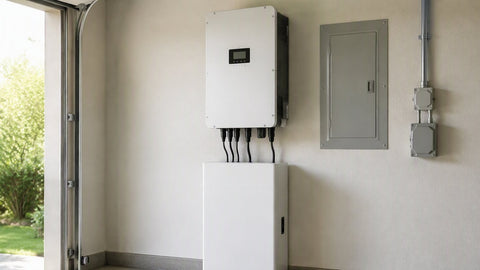
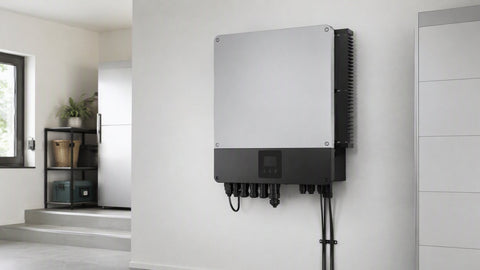
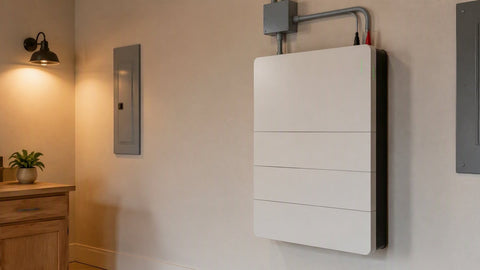
Victron Energy is the brand off-grid people argue about at boat docks and cabin builds for a reason: the Dutch company has spent five decades building power electronics that talk to each other, and the ecosystem — SmartSolar charge controllers, MultiPlus inverter-chargers, Cerbo GX monitoring, VRM cloud — is the closest thing this industry has to a unified nervous system. I've commissioned MultiPlus units on fishing boats where the nearest tech was a hundred miles of bad road away, and the reason you spec Victron in places like that is simple: it works, it logs everything, and when something does go sideways, the data tells you what happened. This guide covers the current lineup with real specs, sizing math, and the field notes that don't fit in datasheets. For head-to-heads, see Victron MultiPlus vs. Sol-Ark, Victron vs. Morningstar, and Victron vs. OutBack.
Company Overview
Victron Energy B.V. is headquartered in Almere, Netherlands, and has been building chargers and inverters since 1975 — first for marine, then for off-grid and mobile, and now for the grid-interactive storage market. They sell through distributors and dealers rather than big-box retail, which keeps the support channel knowledgeable: the person answering Victron questions at a real distributor has usually configured the gear. The product philosophy is modular — discrete charge controllers, inverter-chargers, monitors, and a communication hub — instead of the all-in-one box approach. Modularity costs you more wiring labor up front and pays you back forever in serviceability: when a component dies, you replace a component, not the system. It also means every piece can be sized to its actual job instead of compromised into a shared chassis, which is why Victron builds age so gracefully — the array grows, the controller grows, and the rest of the system never notices.
Current Product Lines
SmartSolar MPPT Charge Controllers
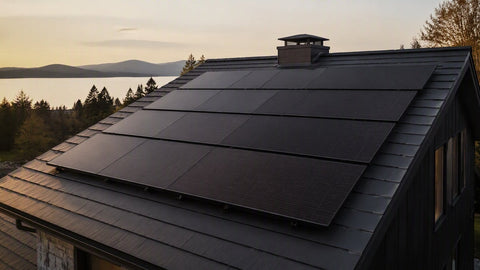
SmartSolar is the Bluetooth-equipped MPPT family: built-in VictronConnect access, VE.Direct for wired networking, 98%+ peak efficiency, and fanless passive cooling across most of the range. The naming convention tells you the two numbers that matter — max PV input voltage and max charge current — so a 100/50 accepts strings up to 100V and pushes 50A to the battery.
| Model | Max Current | Max Voc | Bluetooth |
|---|---|---|---|
| SmartSolar MPPT 75/15 | 15A | 75V | Yes |
| SmartSolar MPPT 100/20 | 20A | 100V | Yes |
| SmartSolar MPPT 100/30 | 30A | 100V | Yes |
| SmartSolar MPPT 100/50 | 50A | 100V | Yes |
| SmartSolar MPPT 150/70 | 70A | 150V | Yes |
| SmartSolar MPPT 250/100 | 100A | 250V | Yes |
BlueSolar MPPT Charge Controllers
BlueSolar is the same MPPT core without Bluetooth — you add a VE.Direct Bluetooth dongle if you want phone access. For a permanently networked system with a Cerbo GX watching everything anyway, BlueSolar saves a few dollars per controller and loses nothing in performance.
MultiPlus Inverter/Chargers
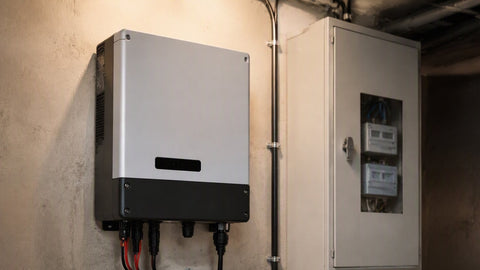
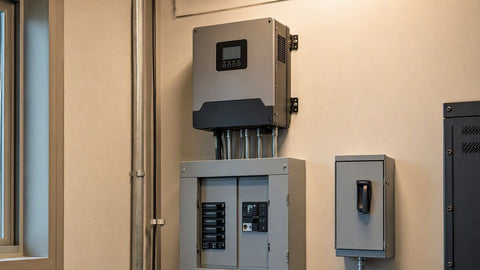
The MultiPlus is the product that built Victron's reputation: a true sine inverter combined with a serious multi-stage charger and a 50A or 100A transfer switch in one box. The signature feature is PowerAssist — when shore power or the generator hits its limit, the inverter adds power from the battery instead of tripping the source. On a 30A boat pedestal or a tired campground feeder, PowerAssist is the difference between running the air conditioner and not. The 12/3000/120 (12V, 3,000VA, 120A charger) is the volume seller; 24V and 48V variants scale the same architecture.
MultiPlus-II Inverter/Chargers
MultiPlus-II adds grid-interactive certification — the ESS (Energy Storage System) firmware, anti-islanding, and the AC-coupling behavior needed for code-compliant grid-tied storage. If the system will ever sell to or parallel with the grid legally, the -II is the right box.
Quattro Inverter/Chargers
Quattro doubles the AC inputs — two sources (say, grid plus generator) with automatic transfer — and scales to 48/15000/200 territory. Three Quattros configure into three-phase systems; stacked pairs split-phase. This is the box for serious off-grid homes, commercial marine, and mobile command centers.
Cerbo GX & GX Devices
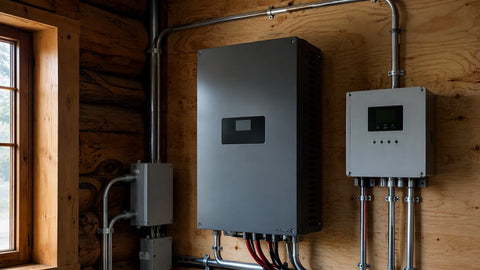
The Cerbo GX is the communication hub: it aggregates every VE.Direct, VE.Can, and VE.Bus device, runs local logging, and pushes everything to VRM. One Cerbo turns a pile of components into a system you can troubleshoot from your phone at 30,000 feet. I don't commission a Victron build without one — the day a customer calls saying "the batteries died," the VRM graphs answer whether the batteries, the charging, or the loads actually did it.
VRM Portal
Victron Remote Management is free — no subscription, no tier unlocks — and it logs at minute resolution with years of history. In an industry where competitors monetize monitoring, free VRM is a genuine economic argument, not a feature checkbox.
BMV Battery Monitors
The BMV-712 is a shunt-based monitor: 500A/50mV shunt on the negative, Bluetooth to your phone, VE.Direct to the Cerbo, amp-hour counting with Peukert-corrected state of charge. The SmartShunt does the same job without the display for less money. Either way, a Victron system without a shunt is a system flying blind — voltage alone cannot tell you state of charge on lithium and barely can on lead.
Additional Products
The catalog fills out with Orion DC-DC chargers (the standard answer for alternator charging of house banks), Lynx busbar/distribution gear, SmartSolar MPPT RS trackers for big arrays, isolation transformers for marine, and the Ekrano GX for larger systems. It's a full ecosystem — which is the point.
| Model | Category | Key Specs | Application |
|---|---|---|---|
| SmartSolar MPPT 100/50 | MPPT charge controller | 50A, 100V, Bluetooth, 98%+ efficiency, no fan | Residential off-grid, RV, marine |
| SmartSolar MPPT 100/30 | MPPT charge controller | 30A, 100V, Bluetooth, VE.Direct | Small off-grid, cabin, mobile |
| BlueSolar MPPT 100/30 | MPPT charge controller | 30A, 100V, no Bluetooth, VE.Direct | Cost-conscious off-grid systems |
| MultiPlus 12/3000/120 | Inverter/charger | 3000VA, 12V, 120A charger, PowerAssist | Off-grid and hybrid residential |
| MultiPlus-II 48/5000/70 | Grid-interactive inverter/charger | 5,000VA, 48V, ESS firmware, anti-islanding | Grid-tied storage, code-compliant ESS |
| Quattro 48/15000/200 | Dual-input inverter/charger | 15,000VA, 200A charger, dual AC inputs | Large off-grid, three-phase stacks, marine |
| Cerbo GX | Communication hub | Wi-Fi, Ethernet, CAN bus, VRM portal | System monitoring and control |
Recent Releases (2025–2026)
Recent development has concentrated on the GX device family (more CAN-bus ports, faster processors, better tank and NMEA 2000 integration), expanded ESS assistant features for grid-interactive MultiPlus-II installs, and steady SmartSolar firmware work — the advanced multi-peak MPPT tracking keeps getting better on partially shaded arrays. Victron's release cadence is evolutionary rather than flashy, which suits the product: nobody wants their inverter-charger to be exciting.
Certifications & Listings
MultiPlus-II and Quattro models carry UL 1741 / IEEE 1547 listings for grid-interactive operation in North American configurations, with UL 9540 ESS listings available at the system level through paired battery partners. SmartSolar controllers carry the expected CE and relevant safety listings. For permitted grid-tied ESS work, confirm the exact North American model suffix — Victron's global catalog includes models that aren't listed for US grid connection, and your AHJ will check.
Warranty Terms
Five years standard across the power electronics line — the strongest standard warranty among the brands in this class, matching MidNite and beating most value imports. Victron honors it through the dealer channel, which is another argument for buying through a real distributor: a warranty claim with a distributor who knows you moves differently than one filed into a faceless portal.
Sizing a SmartSolar Controller: The Actual Math
Controller sizing is arithmetic, not vibes. Charge current equals array watts divided by battery voltage, then multiplied by the NEC 690.8 continuous-duty factor of 125%. Voltage headroom uses NEC 690.7 cold-temperature correction on string Voc. Here's the math worked for common builds:
| Array | Battery Bank | Raw Charge Amps (W ÷ V) | × 1.25 Continuous | Minimum Controller |
|---|---|---|---|---|
| 800W | 12V | 66.7A | 83.3A | 100/50 pair or step to 150/85 class |
| 800W | 24V | 33.3A | 41.7A | SmartSolar 100/50 |
| 1,600W | 24V | 66.7A | 83.3A | SmartSolar 150/70 + headroom, or split arrays |
| 2,400W | 48V | 50A | 62.5A | SmartSolar 150/70 |
| 4,800W | 48V | 100A | 125A | SmartSolar 250/100 + second controller |
Notice what the table teaches: battery voltage is the cheapest charge-current capacity you can buy. The same 1,600W array that maxes a 70A controller at 24V runs comfortably on a 50A unit at 48V. That's why we steer anything above ~1,200W of array toward 48V banks — fewer controllers, smaller wire, cooler connections. The charge controller sizing guide and MPPT vs. PWM explainer cover the general framework; the Victron-specific trick is that multiple SmartSolar units on one VE.Can/VE.Direct network share charge stages cleanly, so splitting a big array across two smaller controllers is a legitimate design, not a hack.
Wire Sizing & Overcurrent Protection
Big inverter-chargers move serious DC current — a 12/3000 MultiPlus at full tilt pulls 250A+ from the bank. Undersized cable is the most common Victron install defect we troubleshoot. NEC 310.16 copper THHN 75°C ampacities for the runs we see most:
| Load | DC Current | Min Copper (75°C) | Overcurrent Device (NEC 240.6) | Field Note |
|---|---|---|---|---|
| SmartSolar 100/50 output | 50A × 1.25 = 62.5A | 6 AWG (65A) | 70A | Short runs; 4 AWG buys voltage-drop margin |
| MultiPlus 12/3000 DC input | ~300A surge class | 4/0 (230A cont. + surge) | 300–350A Class T | Keep runs under 10 ft round trip on 12V |
| MultiPlus-II 48/5000 DC input | ~130A class | 1/0 (150A) | 175A | 48V halves the copper pain — the reason we spec it |
| Quattro 48/10000 DC input | ~260A class | 4/0 per pole or busbar | 300A Class T | Lynx Distributor fusing simplifies this tier |
Voltage drop, not ampacity, is usually the binding constraint on 12V systems — 3% drop on a 10-foot round trip at 250A demands fat copper, which is why Victron's own manuals push 24V and 48V so hard. Torque your DC lugs to spec and re-check them after the first heavy cycle; I've found warm lugs on more "defective inverters" than I've found defective inverters.
Popular Products at PES Supply
The Victron SKUs that move fastest through our warehouse: SmartSolar 100/30 and 100/50 controllers for RV and cabin builds, the MultiPlus 12/3000/120 for vans and small off-grid, MultiPlus-II 48/5000 units for permitted grid-interactive storage, Cerbo GX hubs (we rarely sell one without the other), and BMV-712 and SmartShunt monitors for basically everything. We also stock the unglamorous parts that stall builds — VE.Direct and VE.Can cabling, Lynx Distributor fused busbars, Orion DC-DC chargers, and correct Class T fuse blocks — because a system waiting three days on a $40 cable is a system that should have been ordered complete. Send us a load list and we'll return a full BOM with the wire and protection included, which is how these systems should always be quoted.
Technical Comparison: Victron vs. Competitors
| Feature | Victron (SmartSolar 100/50) | MidNite Solar (Classic 150) | Morningstar (TriStar MPPT 60) |
|---|---|---|---|
| Max Output Current | 50A | 96A | 60A |
| Max Input Voltage | 100V | 150V (HyperVOC) | 150V (600V on 600V model) |
| Battery Voltages | 12/24/48V auto-detect | 12–72V | 12–48V |
| Peak Efficiency | 98%+ | ~97% | 99% |
| Built-in Bluetooth | Yes (SmartSolar) | No (optional) | No |
| Cooling Fan | No (fan-less) | No | No |
| Partial Shading Detection | Yes (advanced MPP detection) | Standard MPPT | TrakStar |
| Ecosystem Integration | VRM portal, Cerbo GX, MultiPlus | E-Panel, My MidNite | MSView, MeterHub |
| Free Remote Monitoring | VRM portal (cloud-based) | My MidNite (web-based) | MSView (local software) |
| Warranty | 5 years | 5 years (extendable) | 5 years |
Where Victron wins: ecosystem integration, monitoring, marine/mobile depth, and the inverter-charger lineup. Where competitors win: MidNite's Classic takes higher-voltage strings on a single controller and is proudly American-made — see the MidNite brand guide and MidNite vs. Victron controller comparison. Morningstar's TriStar is the bulletproof choice for unattended industrial sites, per our Morningstar guide. OutBack's FLEXpower pre-wired panels save labor on standard off-grid builds — the OutBack guide details that. Battle Born customers cross-shop batteries against the Victron ecosystem in Battle Born vs. Victron. The short version: if you want one dashboard watching everything and components that cooperate, Victron. If you want a single big controller with 150V+ strings and American steel, MidNite. If you want a sealed box on a pole for twenty years, Morningstar.
Installation Notes
System Sizing
Start from the loads, not the components. Run the load audit, size the battery bank with our solar battery sizing guide, then match inverter continuous and surge ratings to the worst-case simultaneous load. A MultiPlus at 70% continuous loading runs warm and ages fast; at 40–60% it runs forever. Oversize the inverter one step on builds with motors — well pumps and compressors don't care what the brochure's surge rating says.
Environmental Ratings
SmartSolar controllers are passively cooled and happy in ventilated enclosures; the inverter-chargers want clean, dry, cool mounting with the specified clearances — a MultiPlus in a sealed battery box in a Texas shed will thermal-derate every August afternoon. Marine installs need the drip loops and conformal-coating discipline the manuals specify. None of this is exotic; all of it is skipped constantly.
VRM Portal Setup
Commissioning order that works: firmware-update every device first, network the Cerbo, confirm each device reports, then push VRM live and set the alarm rules (low SOC, high battery temp, charge-source failure) before you leave the site. Twenty minutes of alarm configuration is what turns a monitoring portal from a toy into a service business. For the broader off-grid architecture questions — AC coupling, generator integration, stacked inverters — our hybrid vs. off-grid inverter guide and off-grid system guide are the next reads.
Battery Synchronization
Victron plays nicely with third-party smart batteries over CAN — the Cerbo reads SOC, charge limits, and alarms directly from the BMS on supported LFP banks, which means the inverter-charger and controllers obey the battery instead of guessing at it. On dumb lead banks, synchronization runs the other way: the BMV shunt is the source of truth, and you configure the controllers and inverter to share its voltage and current sense over the network so every device sees the same battery. Skipping shunt sharing is how you end up with the controller floating while the inverter is still absorbing — two devices, two opinions, one confused bank. Set the network up once, correctly, and the whole system ages gracefully.
The Ecosystem Argument: When Victron Costs More and When It Doesn't
Line-item by line-item, Victron rarely wins a price shootout against value imports — a SmartSolar 100/50 costs more than a generic 60A MPPT, and a MultiPlus costs more than an all-in-one hybrid box of similar watts. The math flips at the system level. First, monitoring: free VRM plus a Cerbo replaces the subscription dashboards competitors charge for, and over ten years that subscription delta closes much of the hardware gap. Second, service: when a five-year-old value all-in-one dies, you replace the whole unit and rewire; when a component in a Victron system dies, you replace that component and the rest of the system doesn't notice. Third, expansion: adding a second controller or a bigger inverter to a networked Victron system is an afternoon; the same growth on a closed box is a forklift upgrade. Where Victron genuinely isn't the answer: tight-budget grid-tied homes where a listed hybrid all-in-one passes inspection in one box, and simple shed-solar projects where a $150 PWM controller is honestly all the job needs. We sell the whole spectrum — the goal is matching the architecture to the actual duty, not to the logo.
Frequently Asked Questions
1. What is the difference between SmartSolar and BlueSolar?
Same MPPT core and efficiency; SmartSolar adds built-in Bluetooth for phone configuration via VictronConnect, while BlueSolar requires a VE.Direct dongle or a GX device for smart access. On a system with a Cerbo GX already networked, BlueSolar saves money without losing capability. On a standalone RV or boat controller, SmartSolar's built-in Bluetooth is worth the small premium.
2. How does Victron's PowerAssist feature work?
PowerAssist lets a MultiPlus or Quattro supplement a limited AC source with inverter power. Set the input current limit to match your shore connection — say 30A — and when loads exceed it, the inverter draws from the battery to carry the difference instead of overloading the pedestal or generator. When loads drop, the charger refills the battery. It's the feature that makes a 3,000VA inverter behave like a much bigger one on constrained hookups.
3. Can Victron charge controllers handle partial shading?
Yes — SmartSolar MPPTs run an advanced multi-peak tracking algorithm that periodically sweeps the full I-V curve to find the global maximum rather than locking onto a local peak created by shade. It won't manufacture watts from a shaded panel, but it harvests meaningfully more than basic algorithms on arrays with chimneys, masts, or tree shade.
4. Is the VRM portal really free with no subscription?
Yes. VRM remote monitoring, historical logging, and alarm rules are free with any GX device — no subscription tier, no feature unlocks. Given that several competitors charge monthly for equivalent monitoring, free VRM is a real lifetime-cost argument for the ecosystem.
5. Can I build a three-phase system with Victron products?
Yes — MultiPlus and Quattro units configure in parallel, split-phase, or true three-phase stacks of up to three units per phase on larger systems. Configuration happens through VE.Bus software tools; it's well-documented but not a beginner project. We help design and commission stacked systems through the shop for customers who'd rather not learn VEConfigure on a deadline.
6. What size battery monitor shunt do I need?
The standard 500A/50mV shunt (BMV-712, SmartShunt 500A) covers most systems up to a MultiPlus 12/3000 class. Larger inverter banks step to the 1,000A or 2,000A SmartShunt variants. One rule that saves grief: the shunt goes on the battery negative with every load and source on the system side — anything bypassing the shunt is invisible to your state-of-charge math.
Sources & Standards
Specifications from Victron Energy published datasheets and installation manuals; NEC 690.7 and 690.8 for PV circuit sizing, NEC 310.16 for conductor ampacity, NEC 240.6 for standard overcurrent ratings, UL 1741 / IEEE 1547 for grid-interactive listings. Field observations reflect systems we've supplied and commissioned across marine, RV, and off-grid residential builds.
Shop Victron Energy at PES Supply
We stock SmartSolar controllers, MultiPlus and Quattro inverter-chargers, Cerbo GX hubs, shunts, and the cabling and Lynx distribution gear to build complete systems. Bring us your load list and array size and we'll spec the components — including the wire and overcurrent devices the other quotes always leave off.