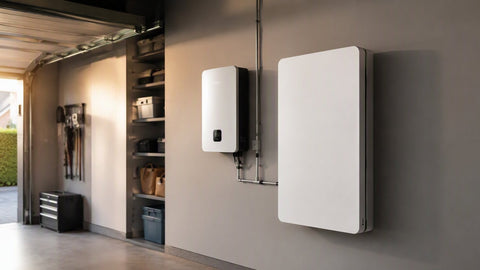
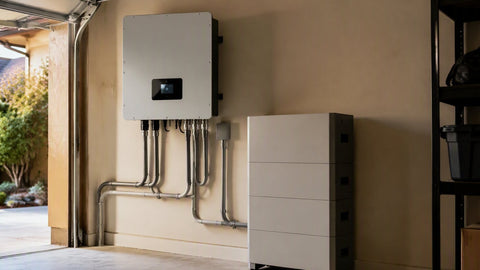
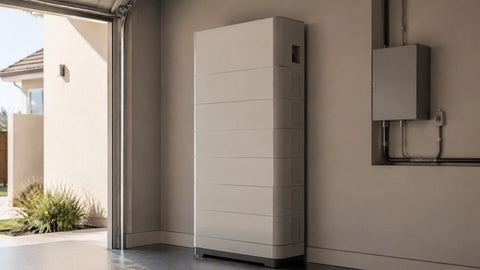
2018 was the year home batteries stopped being a curiosity. Tesla shipped Powerwall 2s in volume, sonnen brought its German-engineered eco line to American kitchens, and for the first time homeowners compared storage products the way they compared appliances — on specs, price, and warranty. We stocked and supported both ecosystems then, and we've watched everything that's happened since: the Powerwall 2's retirement in favor of the Powerwall 3, sonnen's continued niche in premium energy management, and the flood of LFP competitors that both products invited into the market. This guide preserves the original head-to-head — the specs, the pricing, the philosophies — and adds the hindsight that eight years of field data bought us. If you're researching older articles about either product, you're probably shopping storage now, so we've threaded the modern equivalents throughout: every spec that mattered in 2018 has a 2026 descendant worth knowing about.
Why 2018 Mattered: The Context
Before 2018, home energy storage was a bespoke craft: off-grid cabins, custom battery rooms, installers who knew their way around a forklift full of flooded lead-acid. Two products changed the category by making it a box you hang on a wall. Tesla brought consumer-brand gravity and a price point nobody else could touch — the Powerwall 2 undercut incumbents by half on a per-kWh basis. Sonnen brought something subtler: a decade of German residential storage experience, a modular architecture, and a software-first philosophy that treated the battery as the manager of the whole home's energy, not just a backup box.
The two companies weren't really selling the same product, which is what made the comparison interesting then and instructive now. Tesla asked "how cheaply can we put backup power on every wall?" while sonnen asked "how intelligently can a home manage its own energy?" Every storage product since has been some blend of those two questions, and the blend point moved steadily toward "both" as costs fell.
Tesla Powerwall 2: The Spec Sheet
| Specification | Value |
|---|---|
| Usable capacity | 13.5 kWh (14 kWh total) |
| Continuous power output | 5 kW |
| Peak power output (10 sec) | 7 kW |
| Battery chemistry | Lithium Nickel Manganese Cobalt (NMC) |
| Inverter | Built-in, AC-coupled |
| Round-trip efficiency | 89% (AC to AC) |
| Warranty | 10 years, unlimited cycles, 70% capacity retention |
| Mounting | Wall or floor, indoor/outdoor |
| Dimensions | 45.3" × 29.6" × 5.75" |
| Weight | ~251 lbs (114 kg) |
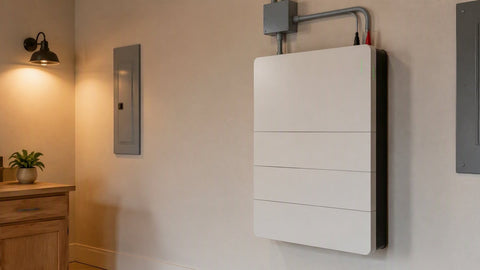
The Powerwall 2's genius was integration: battery, inverter, and thermal management in a single UL-listed enclosure that one installer could commission in an afternoon. At launch pricing around $5,500 for the unit, it worked out to roughly $407–$481 per usable kWh installed-hardware-only — a number the rest of the industry spent years chasing. The NMC chemistry delivered the energy density that made the slim wall-mount form factor possible.
sonnen eco: The Spec Sheet
| Specification | Value |
|---|---|
| Capacity range | 4 kWh to 16 kWh (modular, 2 kWh increments) |
| Battery chemistry | Lithium Iron Phosphate (LiFePO4) — cobalt-free |
| Continuous power output | 3 kW to 8 kW (size-dependent) |
| Inverter | Built-in, AC-coupled |
| Round-trip efficiency | ~89% (size-dependent) |
| Warranty | 10 years / 10,000 cycles, 70% capacity retention |
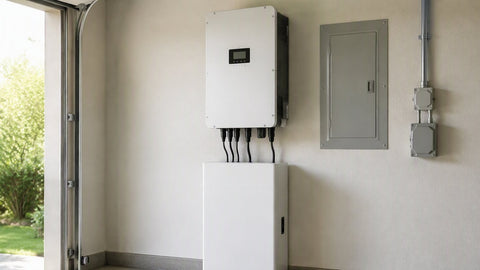
| Mounting | Floor-standing indoor cabinet |
| Design life | 10,000+ cycles (LFP) |
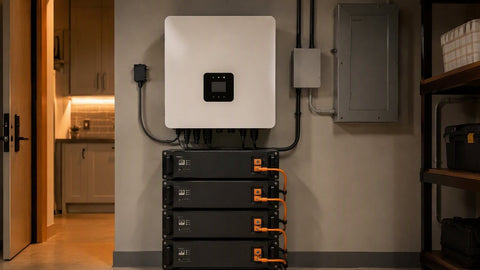
Sonnen's bet ran the opposite direction from Tesla's: lithium iron phosphate chemistry with double the cycle life, modular capacity you could size to the actual load instead of a fixed 13.5 kWh brick, and the ecoLinx-era software that integrated with home automation to manage loads intelligently. The cost of that bet was cost itself — sonnen systems carried a substantial per-kWh premium, especially at smaller capacities where fixed inverter and installation costs spread thin.
Head-to-Head: The Comparison That Mattered
| Dimension | Tesla Powerwall 2 | sonnen eco |
|---|---|---|
| Usable capacity | 13.5 kWh (fixed) | 4–16 kWh (modular) |
| Unit cost per kWh (hardware) | ~$407–$481/kWh | ~$621–$2,488/kWh (size-dependent) |
| Continuous power | 5 kW | 3–8 kW |
| Chemistry | NMC — higher density, ~2,000–3,000 effective cycles | LFP — lower density, 10,000-cycle rating, superior thermal stability |
| Cycling tolerance | Unlimited-cycle warranty, but NMC favors moderate daily cycling | Designed for multiple deep cycles daily |
| Installation | Wall/floor, indoor/outdoor, single-unit simplicity | Indoor floor cabinet; modular sizing flexibility |
| Software philosophy | Backup + self-consumption + grid services via Tesla fleet | Whole-home energy management, automation integration, community energy sharing (sonnenCommunity) |
| Best fit | Whole-home backup at breakthrough price | Daily-cycling bill optimization, premium automation homes |
The Chemistry Argument: NMC vs. LFP
This was the real fight under the hood. NMC packs more watt-hours per pound, which is why the Powerwall 2 could hang on a wall and why Tesla's EV heritage pointed there. LFP trades density for durability: it tolerates deep daily discharge for a decade-plus, runs cooler, and doesn't carry thermal-runaway risk anywhere near NMC's level. In 2018, the industry treated this as a philosophical split — density versus durability, car thinking versus stationary thinking. Hindsight rendered a verdict: by 2022–2023, essentially the entire residential storage industry — Tesla included, with the Powerwall 3 — migrated to LFP. A stationary battery doesn't care about fifty extra pounds; it cares deeply about ten thousand cycles and a cool, stable thermal profile bolted to someone's garage wall. Sonnen was early and right on the chemistry question, and the 10,000-cycle rating on an eco cabinet still looks good against anything sold today. If you own one, its remaining cycle life is likely its least-worried-about attribute.
What Each System Did Best in Practice
From the installs and support tickets of the era, the patterns were clear. Powerwall 2 excelled as an outage machine: 5 kW continuous (7 kW peak) ran most essential loads, the automatic transfer was fast enough that homeowners often learned of outages from the app notification rather than the house, and stacking two or three units scaled whole-home backup straightforwardly. Its weak points were power, not energy — a 4-ton air conditioner start could overwhelm a single unit — and early firmware quirks around generator integration that took several updates to settle.
The sonnen eco excelled at daily work: time-of-use arbitrage, solar self-consumption, and gracefully managing which loads ran on battery. The modular sizing meant a 6 kWh system fit a small efficient home without overspend. Its weak point was the inverse of Tesla's — premium pricing put it out of reach for buyers who wanted raw backup kWh per dollar, and the indoor floor-cabinet format constrained placement. Sonnen buyers knew what they were buying, though: the customer satisfaction reports from that installed base stayed consistently strong even as the company's US market share slipped.
The Installation Experience, Compared Honestly
Installers developed strong opinions about both units, and they weren't the opinions the brochures predicted. The Powerwall 2's 251-pound wall-mount form factor looked elegant in renders and demanded real planning on site: structural wall or a floor stand, two strong backs minimum, and careful consideration of the clearances. Commissioning through Tesla's app was slick when the network cooperated and maddening in rural installs with marginal signal — we learned to commission early in the day and to verify gateway firmware before leaving. The Gateway (Tesla's transfer and management panel) did its job competently, though its load-management options were blunt compared to what came later.
The sonnen eco was the opposite trade: a heavy indoor floor cabinet that rolled into place like a refrigerator, with modularity that complicated ordering (capacity increments, inverter sizing) but simplified the physical work. Sonnen's commissioning assumed a level of installer training that Tesla's didn't, and the payoff was deeper configurability — charge windows, reserve floors, automation triggers. The honest summary our crews landed on: Tesla made the easy installs easier, sonnen made the sophisticated installs possible. Picking between them on a given job was a design conversation, not a brand argument.
Grid Services and the Virtual Power Plant Seed
Buried in both 2018 launches was a concept that's since become infrastructure: the aggregated home battery fleet. Tesla's early grid-services pilots and sonnen's sonnenCommunity — a German program letting members share stored energy across households — both argued that thousands of small batteries, orchestrated, could act like a power plant. Skeptics (including some in our shop) noted the economics were thin. Eight years later, virtual power plants dispatch tens of thousands of home batteries during grid emergencies, utilities pay real money for enrollments, and the feature is a line item in storage purchase decisions in California, Texas, and the Northeast. Both companies saw it early. The lesson that stuck with us: when a storage product's software roadmap sounds like science fiction, check again in five years before laughing.
Field Outcomes: What Eight Years of Data Showed
Both products aged, and their aging validated and embarrassed different predictions. Powerwall 2 fleets delivered solid reliability at scale — the unlimited-cycle 10-year warranty proved genuine, with Tesla honoring capacity claims through a large installed base — but the NMC cells showed the expected faster fade under heavy daily cycling, and the 5 kW continuous ceiling became the product's most-cited limitation as homeowners added heat pumps and EVs. The eco's LFP packs delivered on their cycle-life promise in the premium homes that bought them; sonnen's US struggles were commercial, not technical — the per-kWh price couldn't follow the market down, and premium energy management turned out to be a niche, not a mass market. Meanwhile, the flood both products invited arrived: Enphase productized the microinverter approach to storage, Generac bought its way in, FranklinWH merged the best ideas of both originals (LFP, AC coupling, real power, aggressive warranty), and value LFP brands collapsed the price floor. The 2018 comparison looks, in hindsight, like the first inning.
The Warranty Fine Print That Mattered
One more era detail: both companies' support organizations were young in 2018, and hold times were a genuine purchase consideration. The market has since professionalized — mostly.
Both warranties promised 10 years and 70% capacity retention, and the details diverged from there in ways that taught the industry how to read storage warranties. Tesla's unlimited-cycle warranty was genuinely unusual in 2018 — most competitors capped throughput — and it signaled confidence that NMC calendar aging, not cycling, would set the pace for typical households. Sonnen countered with 10,000 cycles, a number so large it functioned as an LFP chemistry proof-point more than a usage limit; no residential load profile comes close. The retention floors deserve the most attention in any era: 70% at year 10 means the manufacturer expects up to 30% capacity loss as normal, and the slope between day one and year ten matters more than the endpoints. Also worth noting then and now: both warranties required network connectivity for firmware and monitoring — let the gateway go offline for extended periods and you were technically complicating your own coverage. The modern generation continued the pattern with 10–15 year terms and similar retention floors, which tells you the 70%-at-ten-years line was actuarially sound rather than conservative.
Two Sizing Stories From the Era
Story one, the Tesla-leaning job: a 2,800-square-foot all-electric home in wildfire country, essential loads plus a well pump, PG&E shutoffs twice a season. Two Powerwall 2s — 27 kWh, 10 kW — carried the house through multi-day events with a modest solar array refilling by day. The product fit the problem: maximum backup kWh per dollar, simple architecture, fast transfer. Story two, the sonnen-leaning job: a high-efficiency new build in a time-of-use market with brutal 4–9 p.m. rates, home automation throughout, and an owner who wanted the house to think. An 8 kWh eco, cycling twice daily against the rate schedule, paid its premium back through bill arbitrage while the automation integration handled water heater and EV scheduling without the owner touching an app. Same year, same technology category, opposite correct answers. That pair of jobs is why our quoting process to this day starts with the load profile and the tariff rather than the product catalog — the battery is the answer to a question most sales processes never ask precisely enough.
The Full Installed-Cost Picture, Then and Now
Hardware price was only ever part of the invoice. The 2018 installed-cost breakdown for a single Powerwall 2 ran roughly: $5,500 unit, $700–$1,100 Gateway, $2,000–$4,000 installation and electrical work — landing $8,500–$10,500 all-in before incentives. A comparable sonnen eco 10 kWh install ran $12,000–$16,000. Both numbers look almost quaint against the modern market, where competition compressed install labor and value brands collapsed hardware pricing:
| Cost Element | 2018 Reality | 2026 Reality | Driver of Change |
|---|---|---|---|
| Battery hardware (per usable kWh) | $400–$2,400/kWh depending on product and size | $250–$800/kWh across value-to-premium range | LFP commoditization, cell cost collapse, manufacturing scale |
| Balance of system (gateway/transfer) | $700–$1,500 | Often integrated into the battery ecosystem; $500–$2,500 for smart panels | Integration and competition |
| Installation labor | $2,000–$4,000 | $1,500–$4,000 (less volatile) | Installer experience curve offset by labor rates |
| Federal incentive | 30% ITC only when charged by solar | 30% ITC standalone, ≥3 kWh systems | 2022 policy expansion |
| Typical whole-home system (installed, post-credit) | ~$7,000–$11,000 for 13.5 kWh | ~$9,000–$14,000 for 15 kWh premium; less for value LFP | Specs rose faster than prices fell |
The last row surprises people: premium installed prices didn't collapse, because the product got better faster than it got cheaper — more power, more warranty, more software. What collapsed is the price of a given capability. The 2018 Powerwall 2's capability set is available today for far less; the 2026 premium system's capability simply didn't exist in 2018 at any price. Understanding which of those you need — backup adequacy versus capability ceiling — is the entire storage purchase decision in one sentence.
The 2026 View: What Happened Next
| Then (2018) | Now (2026 Equivalent) | What Changed |
|---|---|---|
| Powerwall 2: 13.5 kWh, 5 kW, NMC | Powerwall 3: 13.5 kWh, 11.5 kW, LFP, integrated solar inverter | More than double the power, LFP chemistry, hybrid architecture |
| sonnen eco: 4–16 kWh modular LFP | sonnen continues in premium energy-management niche | US market consolidated around backup-first products |
| ~$500+/kWh installed was competitive | LFP value brands (EG4-class rack batteries) pushed hardware under $300/kWh | Massive cost compression across the category |
| Backup OR bill optimization | Both, plus generator integration (FranklinWH aPower) and 12–15 yr warranties | Feature convergence at higher specs |
| Storage needed solar attached for federal credit | Standalone storage qualifies for the 30% ITC | Retrofit economics transformed |
The verdict history delivered: Tesla's price-and-scale approach won the market, and sonnen's chemistry and software philosophy won the argument. Every mainstream home battery sold in 2026 is LFP, software-managed, and expected to cycle daily — the sonnen thesis — while being sold on backup capability and price per kWh — the Tesla thesis. The Powerwall 2 vs. eco comparison is thus a fossil record of the moment both futures were visible. If you're shopping storage today, the modern equivalents in our catalog are the Tesla Powerwall 3, FranklinWH's aPower 2 (15 kWh, 10 kW, LFP, 12-year warranty — the current spec leader for retrofit AC-coupled jobs), Enphase's IQ Battery line for microinverter homes, and value LFP options in our battery storage collection. Our battery sizing guide and battery bank sizing walkthrough translate any of these nameplates into real household backup hours, and the backup runtime calculator does the arithmetic for your specific load list. Ready for numbers on your house? Request a quote.
Buying Advice That Survives Any Model Year
Strip away the specific products and the 2018 comparison taught lessons that still structure every storage purchase. Power and energy are different specs — kW decides what you can run, kWh decides how long, and undersizing power is the most common regret. Chemistry sets the cycling personality — daily deep cycling wants LFP's cycle life, and the industry's full migration to LFP confirmed it. The warranty's retention floor (70% at year 10) and throughput terms matter more than the headline years. Software is the product — the battery that manages your loads beats the battery that merely stores your electrons. And installed cost per usable kWh remains the great normalizer across every brand's marketing. Those five filters evaluated the Powerwall 2 against the eco in 2018, and they evaluate everything on our shelves in 2026.
One more habit worth importing from the era: check what a product category looks like right before you buy, because storage moves faster than most home improvement decisions. The homeowner who bought a lead-acid battery room in 2019 learned this the hard way. Whatever you're comparing today — Powerwall 3, aPower 2, IQ Battery, value LFP racks — get current spec sheets, current installed pricing, and current warranty documents, and run the five filters fresh. We'll help: the comparison is genuinely easier now than it was in 2018, because the industry converged on good answers and the remaining differences are about fit, not survival.