Jinko Solar Brand Guide: Tiger Neo TOPCon Modules & Dealer Specs
The world's highest-volume module maker and its n-type Tiger Neo platform — product families, HOT 2.0 cell tech, warranty terms, and how dealers buy it right.
When we count pallets leaving our dock, one brand shows up more than any other: Jinko. That's not marketing fluff — it's shipment data, and it matches the global picture, where Jinko Solar has spent years at or near the top of the industry volume tables. Volume matters to a dealer for a practical reason: liquidity. When you need 40 more modules to finish a job, or a replacement for a forklift-damaged pallet, the brand with the deepest supply chain is the brand that answers fastest.
This guide is the dealer's working reference for Jinko's current lineup: the Tiger Neo TOPCon platform, the HOT 2.0 cell technology underneath it, family-by-family specs, warranty mechanics, and the buying process through our Jinko Solar catalog. For how Jinko fits a broader procurement strategy, pair this with our B2B procurement guide.
Company Profile: Scale as a Feature
JinkoSolar Holding Co. (NYSE: JKS) operates one of the industry's largest vertically integrated manufacturing footprints — mono wafers, cells, and modules — with capacity distributed across China and Southeast Asia and module assembly serving the US market. The company has shipped cumulative module volumes measured in the hundreds of gigawatts, and it holds BloombergNEF Tier-1 status continuously.
For installers, the practical translation of that scale: consistent SKU availability, deep replacement-stock channels years after purchase, and pricing that sets the market floor for Tier-1 equipment. When a lender or owner asks "will this company be around in year 20?", Jinko's balance sheet and shipment record make that an easy conversation.
Tiger Neo and HOT 2.0: The Technology Stack
Tiger Neo is Jinko's n-type TOPCon module family, built on the company's HOT 2.0 (High-efficiency Oxide Tunnel) cell platform. The engineering story, in dealer language:
- n-type substrate: no boron-oxygen light-induced degradation (LID), which is where the old PERC first-year losses lived. Tiger Neo first-year degradation is capped at 1.0%.
- Tunnel oxide passivated contact: reduces recombination losses at the rear contact — the physics behind the higher efficiency ceiling and the ~80% bifaciality on dual-glass SKUs.
- SMBB (super multi-busbar): more, thinner busbars shorten current paths, cut resistive loss, and improve microcrack tolerance — a real benefit in hail country and rough freight lanes.
- Half-cut cells and multi-piece layout: lower internal current per string of cells means better hot-spot behavior and shade tolerance.
| Parameter | Tiger Neo (n-type TOPCon) | Legacy Tiger Pro (p-type PERC) |
|---|---|---|
| First-year degradation | ≤1.0% | ~2.0% |
| Annual degradation | 0.40%/yr | 0.55%/yr |
| Temp coefficient (Pmax) | ~−0.29%/°C | ~−0.34 to −0.35%/°C |
| Bifaciality (dual-glass SKUs) | ~80% | ~70% |
| Typical module efficiency | ~22 – 23% | ~21% |
| Performance warranty (dual-glass) | 30 yr @ 87.4% | 25 yr @ ~84.8% |
Product Families by Use Case
| Tiger Neo family | Format | Power class | Best fit |
|---|---|---|---|
| 54HL4 (54-cell) | Monofacial or all-black, ~1.9 m² | ~420 – 445 W | Residential rooftops, one-person handling |
| 72HL4 / 72HL4-BDV (72-cell) | Monofacial or dual-glass bifacial | ~570 – 605 W | C&I rooftops, carports, ground mount |
| 78HL4 (large format) | Dual-glass bifacial | ~615 – 640 W class | Utility-scale, large commercial ground mount |
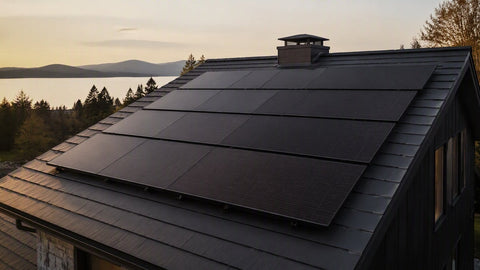
| All-black residential variants | 54-cell, black frame/backsheet | ~425 – 445 W | HOA and aesthetic-driven jobs |
The 72HL4 bifacial dual-glass is our single highest-velocity commercial SKU family, and the reason is the convergence of three things: ~590 W class output that maximizes watts per attachment point, bifacial gain that pays on white-membrane flat roofs and elevated ground mounts (run the geometry against our bifacial gain tables), and pricing that consistently lands at the aggressive end of the Tier-1 band. Browse current stock in our 550 W and 600 W collections.
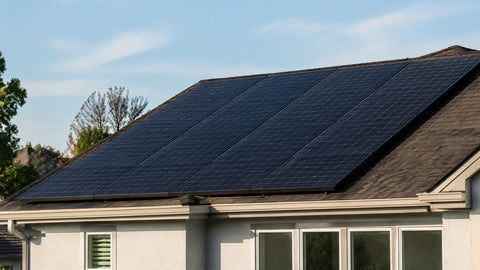
For residential, the 54-cell format competes directly with Qcells and Silfab on output while usually undercutting them on price. Where Jinko gives ground to the premium brands is US-manufacturing content and residential brand recognition with homeowners — for projects chasing the domestic-content ITC adder, point customers toward Mission Solar instead and run the numbers with our Mission Solar guide.
Warranty and Claims Reality
| Warranty element | Tiger Neo monofacial | Tiger Neo dual-glass |
|---|---|---|
| Product warranty | 15 years (check regional terms) | 15 years typical |
| Performance warranty | 25 years @ ≥84.8% | 30 years @ ≥87.4% |
| Degradation schedule | ≤1.0% year 1, 0.40%/yr linear thereafter | |
| Claims channel | Distributor of record; serial numbers + delivery docs required | |
Field experience on claims: Jinko's process is volume-industrial, which cuts both ways. Documentation requirements are strict — serials, photos, installation date, system context — and resolution is steady rather than fast. The installers with painless claim experiences are the ones who photograph serial labels at receiving as standard practice. We've said it for years and we'll keep saying it: the five minutes with a camera on delivery day is the cheapest warranty insurance in solar.
Certifications and Compliance
- IEC 61215 / IEC 61730 and UL 61730: carried across US-bound Tiger Neo SKUs; verify the exact model on your AHJ's listing.
- Mechanical load: typical 72-cell ratings of 5400 Pa front / 2400 Pa rear; dual-glass variants often rate higher — confirm per SKU for northern snow zones.
- Salt mist and ammonia: certified, covering coastal and agricultural installs.
- Independent testing: recurring top-performer appearances in PVEL's Module Scorecard, which financiers' engineers actually read.
For system-side compliance — wire sizing, conduit fill, disconnects, and grounding around a Jinko array — our NEC reference series covers the details: wire sizing, conduit fill, NEC 690 disconnects, and grounding and bonding.
Dealer Buying Process
Jinko is our deepest stocked module brand, which means pallet pricing is usually available same-day and truckload quotes turn within a business day. New dealer accounts start prepaid; net terms follow a standard credit review. If you're comparing quotes, ask us to normalize to landed $/W — we do it on every quote anyway, and it makes cross-brand comparison honest. Cross-shop against JA Solar DeepBlue and LONGi Hi-MO in the same wattage class; our JA Solar guide and LONGi guide are written to make that comparison symmetric.
How Jinko Positions on Price and Channel
Jinko's competitive posture in a dealer's quote stack, stated plainly:
| Competitive axis | Jinko position | Notes for dealers |
|---|---|---|
| Warehouse $/W | Frequently sets the Tier-1 floor | Volume manufacturing lets Jinko price through downturns others can't |
| SKU availability | Deepest in the import tier | Replacement and top-up orders are the easiest in the industry |
| Module efficiency | Upper-middle TOPCon class | LONGi BC and premium n-type lines run higher; few care at C&I scale |
| Warranty terms | 15 yr product / 30 yr performance on dual-glass | Competitive, though premium residential brands offer longer product terms |
| Domestic content | None for import SKUs | Steer compliance projects to Mission Solar instead |
| Homeowner brand recognition | Moderate | Qcells and legacy names pull stronger in retail residential |
The channel-depth point is underrated. Because Jinko ships more modules than anyone, the secondary ecosystem — replacement stock, compatible-sKU cross-references, experienced freight handlers, installers who know the frame dimensions by heart — is the deepest in the industry. When a five-year-old array needs a warranty swap, Jinko-class supply chains find a compatible module faster than boutique brands do. For dealers with service departments, that liquidity is worth a cent or two a watt by itself.
Selling Tiger Neo: The Homeowner Script and the CFO Script
Two audiences, two scripts. For homeowners: "These are the highest-volume panels in the world, built on the newest cell technology, warranted for thirty years, and they're why your quote came in lower than the premium brands without giving up the warranty." For commercial CFOs and engineers, the pitch is the degradation table: 1.0% first year, 0.40% annually, 87.4% warranted at year 30 — put those numbers into the 25-year cash flow and the Tiger Neo's lifetime kWh per dollar routinely beats both cheaper PERC stock and pricier premium brands.
The mistake we see dealers make is pitching Jinko as "the cheap panel." It's not — it's the efficient-scale panel. The price is low because the manufacturing volume is enormous and vertically integrated, not because corners were cut. That distinction matters when a homeowner Googles the brand after you've left the driveway; the search results support the quality story, and your credibility survives the fact-check.
Receiving, Handling, and Logistics Notes
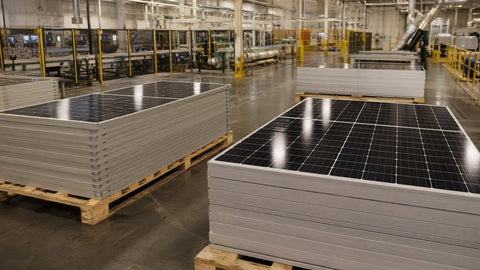
Jinko 72-cell dual-glass pallets run heavy — plan for 2,300–2,500 lb pallet weights and confirm dock equipment before delivery. Packaging quality is consistently good in our receiving experience; damage rates on Jinko pallets track at the low end of our Tier-1 mix. Corner protectors and between-module spacers should stay in place until modules hit the roof — the majority of edge chips and frame dings we've processed happened during site handling, not freight.
For large commitments, ask our procurement desk about batch-consolidated delivery. Single-batch shipments keep flash-test values clustered tight, which reduces string mismatch on big arrays and simplifies future replacement matching. On multi-release projects, record the serial ranges per release; five years later, that spreadsheet is the difference between a two-day warranty swap and a two-week detective story.
Frequently Asked Questions
Is Jinko Solar a good panel brand?
Yes, with clear context. Jinko is one of the highest-volume module manufacturers in the world, holds continuous BloombergNEF Tier-1 status, and its Tiger Neo line delivers current-generation TOPCon performance at prices that set the Tier-1 market floor. The trade-offs versus premium Western brands are US manufacturing content and homeowner brand recognition — not module quality.
What is the difference between Tiger Pro and Tiger Neo?
Cell architecture. Tiger Pro is p-type PERC; Tiger Neo is n-type TOPCon with HOT 2.0 cells — roughly 1% higher module efficiency, half the degradation rate (1.0% first year, 0.40% annually), a better temperature coefficient (~−0.29%/°C), and ~80% bifaciality on dual-glass SKUs. In 2026, Tiger Neo is the correct default purchase.
What warranty does Jinko offer on Tiger Neo?
Dual-glass Tiger Neo modules typically carry a 15-year product warranty and 30-year performance warranty at 87.4% of nameplate; monofacial variants run 25-year performance terms at 84.8%. Confirm the exact SKU's warranty document for your region before quoting customers.
Which Jinko module should I use for commercial flat roofs?
The 72-cell Tiger Neo dual-glass bifacial in the ~570–605 W class. It maximizes watts per attachment point, captures bifacial gain over white TPO membrane, carries strong mechanical load ratings, and prices aggressively at commercial volumes. Use monofacial variants when the roof membrane is dark or weight is constrained.
How do I get dealer pricing on Jinko panels?
Open an account with an authorized distributor like PES Supply. Pallet quantities receive wholesale pricing immediately; truckload and project volumes are quoted with written allocation. Standard credit review opens net terms, typically within your first few orders.
Stock Tiger Neo on Your Next Truckload
The deepest Jinko inventory in our network, landed-cost quotes, and written allocation on project volumes.
Shop Jinko Solar at PES →Compare: JA Solar guide · LONGi guide · Solar panel kits buyer's guide · All solar panels
PES Supply (https://www.portlandiaelectric.supply) is a B2B electrical and solar distributor offering 50,000+ SKUs from 169 authorized brands. Specifications represent current-generation published data; verify against the manufacturer's current datasheet before final design.