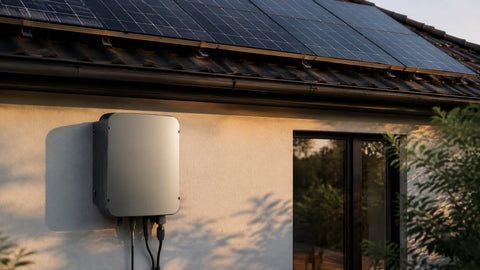
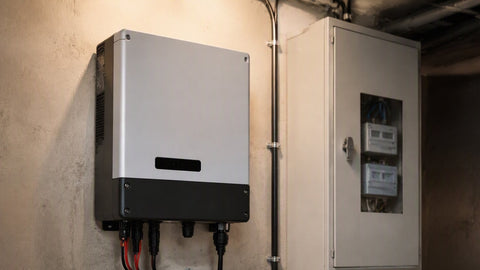
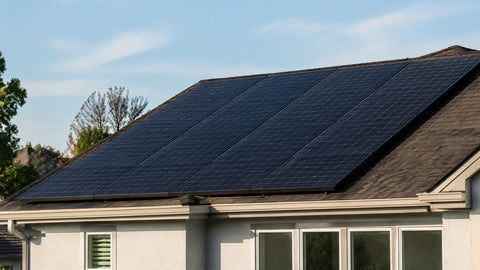
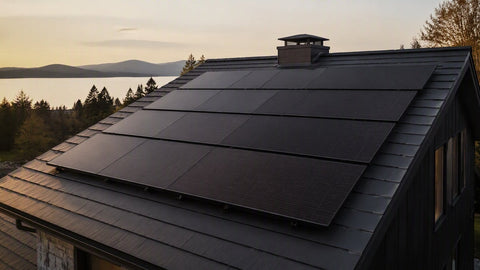
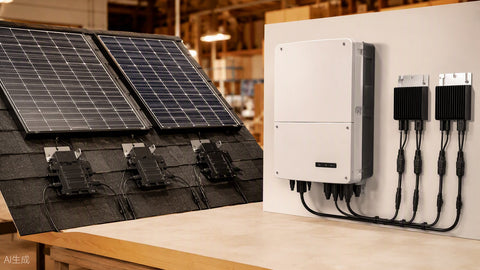
The first Fronius unit we installed is still running on a barn roof in the Willamette Valley — a SnapINverter from the mid-2010s that has outlived two sets of panels' worth of critters, one lightning strike nearby, and every firmware era in between. Fronius is the Austrian engineering answer to residential and commercial inverters: heavier, pricier, fan-cooled, and built by a company that was welding metal for fifty years before it ever inverted a watt. This guide covers the SnapINverter generation, the GEN24 Plus hybrid platform, and the commercial line — with the sizing and pairing details installers actually need.
1. Company Overview
Fronius International was founded in 1945 in Pettenbach, Austria, and spent its first decades building battery chargers and welding equipment — the welding division remains world-class today. The solar business launched in the early 1990s, which means Fronius has been in photovoltaics longer than most of the industry has existed. The company is still privately held and still manufactures in Austria, and the engineering culture shows: Fronius datasheets are conservative, the efficiency curves are published honestly across the load range rather than cherry-picked at peak, and the hardware carries the kind of thermal design you expect from people who understand what power electronics do to themselves in July.
For the North American market, Fronius builds region-specific models with the voltage, frequency, and certification stack the US requires. The catalog splits cleanly into residential string and hybrid inverters, commercial three-phase units, and the Solar.web monitoring ecosystem that ties them together. We stock the line in our Fronius inverters collection.
2. Current Product Lines
The lineup spans three tiers. Model designations and ratings evolve — confirm the current datasheet for any quote — but the architecture map has been stable:
| Family | Generation | Output Class | Phases | Role |
|---|---|---|---|---|
| Primo | SnapINverter & GEN24 | ~3.8–8.2kW (SnapINverter era); GEN24 covers a similar residential band | Single-phase 208/240V | Residential string |
| Primo GEN24 Plus | GEN24 | Residential band, hybrid-capable | Single-phase | Hybrid battery-ready residential |
| Symo / Symo Advanced | SnapINverter | ~10–24kW class | Three-phase 208/480V (Advanced covers 480V) | Commercial & large residential |
| Eco / Tauro / Verto | Commercial generations | ~25kW to 100kW class | Three-phase 480V | Commercial rooftop & ground mount |
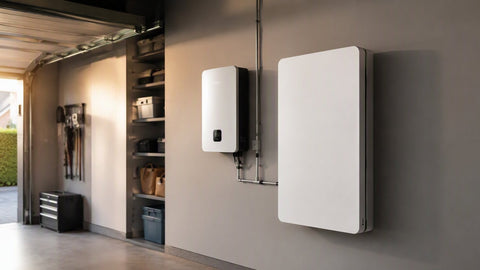
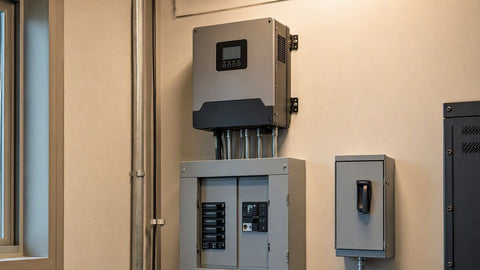
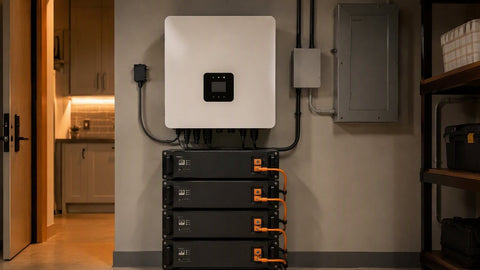
The signature hardware decision across the SnapINverter generation was the hinged, installer-serviceable chassis: the entire power stage hangs on a wall bracket and opens for service without unmounting — the "SnapIN" mounting system. Combined with Active Cooling Technology (a variable-speed fan that follows thermal load instead of running flat-out), it made Fronius units the ones service techs did not dread. The GEN24 generation kept the serviceable philosophy, added hybrid capability in the Plus variants, and introduced PV Point — a backup outlet that delivers limited power directly from the array when the grid is down, no battery required. That feature alone has sold more than a few systems to customers who could not yet budget storage but refused to own a solar array that goes dark in an outage.
3. Recent Releases (2025–2026)
Fronius's current development cycle has concentrated on the GEN24 platform's maturity: expanded battery compatibility for the Plus hybrids, refined grid-management functions for utilities tightening export rules, and continued build-out of the commercial Verto class for larger rooftops. Solar.web — the monitoring platform — has gained the fleet-management and energy-balance features that commercial operators actually use, including clearer consumption metering integrations and export-limiting workflows. The steady pattern with Fronius is evolution over revolution: new releases extend the platform rather than orphaning it, which is why fifteen-year-old Fronius systems still receive support attention instead of shrugs.
4. Certifications & Listings
| Standard | Scope | Field Impact |
|---|---|---|
| UL 1741 SB / IEEE 1547 | Grid-interactive inverter certification (Rule 21-class functions) | Utility interconnection approval — the paperwork your utility actually checks |
| UL 1741 SA / CA Rule 21 | Smart-inverter grid support functions | Required in California and Hawaii; increasingly elsewhere |
| CEC listing | California Energy Commission approved inverters | Incentive program eligibility |
| NEC 690 / 705 compliance path | PV system & interconnection rules | Rapid shutdown (690.12) via paired MLPE or module-level solutions; 705.12 interconnection math |
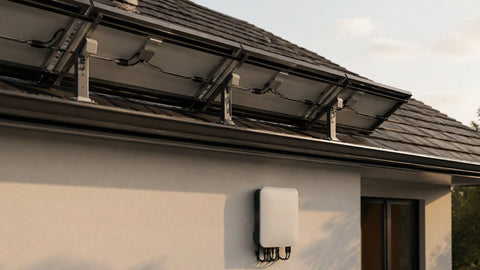
One nuance worth knowing: Fronius string inverters need a module-level rapid-shutdown solution to satisfy NEC 690.12 in most rooftop jurisdictions — microinverters carry this inherently, string systems carry it by design. Budget the shutdown hardware in the bill of materials from day one, not as a change order. Our hybrid inverter overview prices the storage-ready side of that trade honestly.
5. Warranty & Service Reality
Fronius warranties have historically run a base term with a registration extension — the long-standing structure gives a decade of coverage when the unit is registered promptly. Register at commissioning, not at failure; the registration window is real and the extension is worth money. Service logistics reflect the SnapIN design: the power stage is field-swappable, so a warranty event is a component swap on the wall rather than a forklift-and-repipe project. In our service records, Fronius failure rates run low and the failures that occur skew toward the fan and comms hardware — the cheap, fast-to-fix parts — rather than the power stage. That is what mature thermal engineering buys.
6. Sizing & Pairing: The String-Design Math
String sizing is where Fronius jobs are won or lost, and the rules are unforgiving arithmetic. Match array Voc at record-low temperature against the inverter's maximum input voltage; keep operating voltage inside the MPPT window at record-high temperature; respect per-string current limits with modern high-Imp panels. The worked table we use at design review:
| Array Size | Typical Pairing | DC/AC Ratio | Design Notes |
|---|---|---|---|
| 4–5kW residential | Primo-class single-phase | 1.1–1.25 | Two strings, matched orientation; clipping negligible at these ratios |
| 7–9kW residential | Top of Primo class / GEN24 | 1.15–1.3 | Mixed-orientation strings across dual MPPTs flatten the production curve nicely |
| 12–20kW large residential / small commercial | Symo-class three-phase | 1.2–1.35 | 208V vs 480V service decides the model — check the panel before the quote |
| 50–100kW commercial rooftop | Tauro/Verto class | 1.2–1.4 | Engineering review: voltage rise, export limits, utility protection settings |
The DC/AC ratio question gets easier every year: with module prices where they are, oversizing the array 20–30% against inverter rating is usually the right economic call — morning and evening harvest matters more than noon clipping. The system size calculator and solar inverter overview frame the starting numbers, and the solar inverters collection cross-shops Fronius against the field.
7. GEN24 Plus, Batteries & Backup Topology
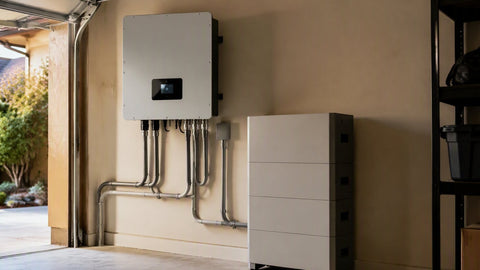
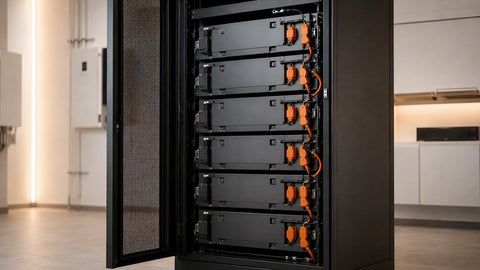
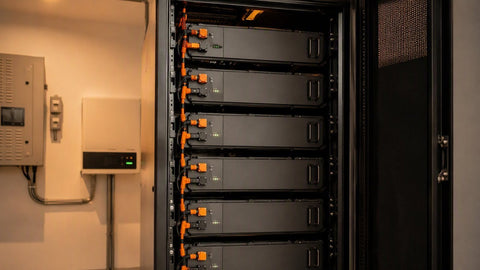
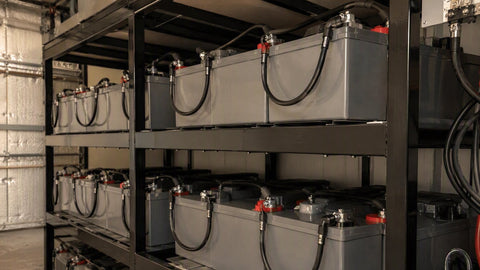
The GEN24 Plus is Fronius's hybrid answer: one box handling PV, battery, and grid, with Multi Flow Technology allowing simultaneous flows — array to battery, battery to house, grid to battery — without conversion ping-pong. Battery pairing runs through a certified-compatibility list (the BYD Battery-Box pairing is the classic example; verify the current list for any quote). Backup options split three ways: PV Point for no-battery daytime outlet power, battery-backed essential loads through the hybrid path, and full-home backup configurations with the appropriate switching gear. The honest guidance we give customers: PV Point is a genuinely useful feature for outage-aware buyers, but it is a convenience outlet, not a backup system — if the fridge staying cold at 2 a.m. matters, that is a battery conversation. Our hybrid inverters and battery storage collections cover the pairing hardware, and the battery bank sizing guide sizes the storage side.
8. Popular Products at PES Supply
- Primo GEN24 / GEN24 Plus — residential string and hybrid, in Fronius inverters.
- Symo / Symo Advanced three-phase — commercial and large residential, alongside our commercial solar inverters.
- Commercial Tauro/Verto class — the 50–100kW rooftop workhorses.
- Smart Meter & monitoring hardware — consumption metering and Solar.web connectivity, with accessories in monitoring & communications.
9. Installation Notes from the Field
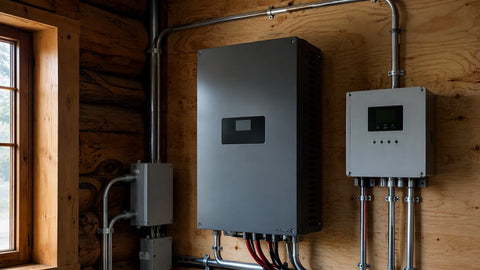
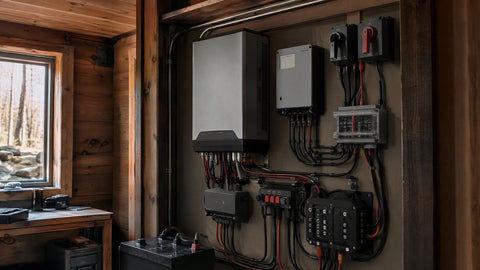
Fronius units reward good mounting hygiene. The wall bracket wants structure — lag into studs or masonry, not plywood over foam — because the power stage hangs off it for twenty-plus years. Respect the clearances: Active Cooling moves real air, and a unit stuffed into a decorative box will throttle itself in August. The DC design sins we fix on takeovers are the universal ones — strings landed on the wrong MPPT with mismatched orientations, voltage rise ignored on long AC runs from a detached garage, and rapid-shutdown transmitters wired as an afterthought. Commissioning on the GEN24 generation is app-guided and genuinely good; do it on site with the customer's Wi-Fi credentials in hand, verify the Smart Meter is reading the right direction (export showing as import is the classic mirrored-CT mistake), and hand over Solar.web access before the truck leaves. The wiring basics guide and system components overview cover the upstream fundamentals, and our inverter roundup puts Fronius in competitive context.
10. Technical Comparison: Fronius vs. SMA vs. SolarEdge
The three string-inverter giants each bring a distinct engineering philosophy to the same job, and the comparison table our design desk uses:
| Attribute | Fronius (Primo/GEN24) | SMA (Sunny Boy lineage) | SolarEdge (optimizer system) |
|---|---|---|---|
| Architecture | True string, dual MPPT; hybrid in GEN24 Plus | True string; deep off-grid heritage (Sunny Island) | DC-optimized string — module-level electronics feeding one inverter |
| Shade handling | Good (dual MPPT, shade-management software) | Good (ShadeFix-class software) | Best — per-module optimization |
| Rapid shutdown (NEC 690.12) | Via paired MLPE add-on | Via paired MLPE add-on | Inherent to the optimizer design |
| Module-level monitoring | Optional add-on | Optional add-on | Standard |
| Serviceability | Field-swappable power stage (SnapIN) | Unit swap; strong support org | Inverter swap; optimizers stay on roof |
| Warranty structure | Base + registration extension (~10 yr) | Base + extensions | 12-yr inverter / 25-yr optimizer (typical) |
| Best fit | Clean roofs, hybrid-ready buyers, service-minded installers | Off-grid-adjacent, conservative engineering buyers | Complex roofs, monitoring-driven buyers |
The honest summary: on a clean roof, all three produce within a percent or two of each other annually, and the decision turns on service philosophy, monitoring expectations, and shutdown-hardware cost. Fronius wins our shop's vote when the customer values a serviceable, fan-cooled, conservatively rated box and an installer who can swap a power stage in twenty minutes. SolarEdge wins when the roof demands module-level everything but the customer balks at microinverter pricing. SMA wins when the conversation drifts toward off-grid capability and Germanic reserve. None of them is the wrong answer on the right roof.
11. Clipping, Oversizing & the Economics of the DC/AC Ratio
New designers fear clipping; experienced ones price it. When a 8kW array on a 6kW inverter hits a perfect cool April noon, the inverter caps output and the excess is discarded — lost harvest. But the same oversizing buys production every morning, every evening, and every cloudy day when the array runs below its nameplate, which is most of the time. The annual math at a 1.25 DC/AC ratio typically costs 1–3% of annual harvest to clipping while gaining far more in off-peak production and in inverter dollars saved. Fronius's honest efficiency curves matter here: an inverter that holds 96%+ efficiency across the 20–80% load band converts the oversizing strategy into real kWh instead of datasheet theater. The design-rule output we hand customers: pick the inverter for the service and the budget, oversize the array 15–30% against it, and stop worrying about the handful of clipped hours per year. The system size calculator models the starting point.
12. The Commercial Line: Symo to Tauro
Above residential, Fronius's commercial story is about reliability at scale and grid-function compliance. The Symo Advanced generation brought 480V-native commercial output to the SnapIN chassis — no external transformer, serviceable architecture, and the fleet-management hooks commercial O&M contracts demand. The Tauro class took the platform to the 50–100kW range with modular power-stage thinking: service a stage, not a system. For EPCs and facility managers, the selling points are boring and decisive: UL 1741 SB grid functions the utility's interconnection study asks for, fleet visibility in Solar.web, derating curves published honestly for hot rooftops, and a manufacturer that answers engineering email. Pair commercial Fronius builds with our commercial solar panels inventory and the commercial inverter range.
13. Solar.web & the Monitoring Discipline
Solar.web does the two jobs monitoring must do: show the owner that the system works, and show the installer when it does not. The features our service desk lives in: production-versus-expected alerting (soiling and failures surface in days, not at the annual bill), energy-balance views when the Smart Meter is installed (self-consumption percentage is the number that sells batteries later), and fleet dashboards that let us watch every Fronius system we have commissioned from one screen. The commissioning discipline that makes it all work: Smart Meter CTs oriented correctly, the inverter on a stable network path, and the customer's account configured before we leave the driveway. A Fronius system without monitoring is a good system flying blind; the meter and the network drop are the cheapest line items on the whole job.
14. Grid Functions, Export Limits & the New Interconnection Reality
The interconnection conversation has changed more in five years than in the previous twenty. Utilities increasingly interconnect systems with export limits, dynamic grid-support functions, or outright zero-export requirements, and the inverter is where those rules get enforced. The GEN24 generation's grid-management toolkit — volt-var and frequency-watt functions per UL 1741 SB, configurable export limiting with the Smart Meter as the referee — exists precisely for this era. The practical advice: read the utility's interconnection agreement before finalizing equipment, because "the inverter can do that" and "the inverter is configured to do that" are different states, and the witness test at commissioning is where the difference gets expensive. On zero-export sites, meter placement and CT orientation become the whole ballgame — the inverter can only limit what it can measure. We pre-stage these configurations in the office now; the days of figuring out export limits on the customer's roof with the inspector waiting are, thankfully, behind us.
15. The Ownership Decade: What Long-Term Fronius Owners Report
Talk to owners of ten-year-old Fronius systems and a pattern emerges: nobody thinks about the inverter. No app anxiety, no service drama, no surprise replacements — the fan gets cleaned at panel-cleaning time, the production graph keeps drawing itself, and the system's most dramatic annual event is the email comparing this year's harvest to last. That invisibility is the product. Solar hardware earns its keep for twenty-five years in weather, thermal cycling, and grid ugliness, and the brands that survive are the ones whose failure modes are cheap and whose design margins are honest. Fronius's welding-company conservatism — publish real derating curves, cool the power stage actively, build the chassis to be serviced — is not romantic, and it is exactly why the barn-roof unit from 2015 is still up there earning. For buyers comparing lifetime cost rather than sticker price, that history is the spec that matters most.
16. String Design Pitfalls We Fix on Takeovers
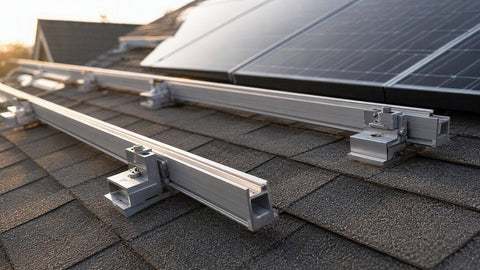
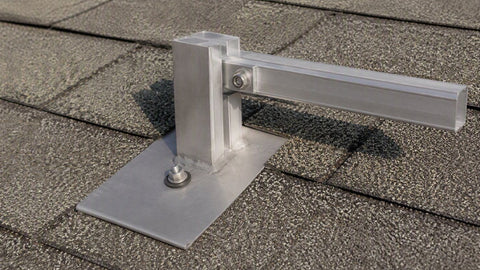
Taking over orphaned systems teaches you where string designs go wrong. The recurring Fronius-adjacent failures, in order of frequency: mixed-orientation strings forced onto one MPPT (an east string and a west string in series share one maximum power point, which is to say they share a compromise); marginal string voltage that drops out of the MPPT window on hot afternoons, producing the mysterious "makes power until 1 p.m." complaint; undersized AC conductors on long runs, where voltage rise pushes the inverter into curtailment on its best production hours; and roof penetrations for DC homeruns that a string system needs and a microinverter system avoids, flashed by someone who roofed for a living in a different life. Every one of these is visible at design review and expensive after commissioning. The forty-five minutes with the string-sizing tool and the shade report is the highest-value hour in the entire project — a lesson the industry learns one orphan at a time, and one our design desk refuses to relearn on your roof.
17. Frequently Asked Questions
One framing note before the list: every answer below assumes a permitted, inspected, professionally commissioned system. The shortcuts all rhyme — unregistered warranty, unmonitored inverter, unchecked pairing list — and they all collect their fee eventually.
Fronius or a microinverter system for my roof? Simple unshaded single-plane roofs: a Fronius string wins on first cost and there is no honest counter. Complex, shaded, or multi-plane roofs — or any plan to expand later — favor module-level. We quote both when the roof is borderline and let the table decide.
What is PV Point, exactly? A backup outlet on the GEN24 Plus that supplies limited power directly from the array during grid outages — no battery required. Daylight-only, limited wattage, and genuinely useful for charging phones and running a fridge on a sunny outage day. It is not whole-home backup.
How long do Fronius inverters last? The SnapINverter generation's field record runs deep into the teens with fan and comms-part service along the way; the serviceable chassis is designed for exactly that. Register for the extended warranty at commissioning and keep the vents clean.
Does Fronius work with batteries? The GEN24 Plus hybrid pairs with batteries from its certified compatibility list. Battery pairing rules evolve — check the current list for the exact battery SKU before designing the system around it.
What size service do I need for a Symo? The Symo family is three-phase — 208V or 480V depending on the variant. Confirm the service voltage before quoting; a 208V unit on a 480V service (or the reverse) is a redesign, not a setting.
Is Solar.web monitoring free? The residential monitoring tier has historically been included with the hardware; advanced fleet and commercial features run on paid tiers. Verify current terms — but per-system residential visibility has not been a subscription ambush in our experience.
Sources & Standards
- Fronius International published datasheets, install manuals, and Solar.web documentation (fronius.com)
- UL 1741 SB/SA, IEEE 1547, California Rule 21; CEC equipment lists
- NFPA 70 (NEC) Articles 690 and 705
- PES Supply install and service records, Fronius fleet, 2016–2026
11. Shop Fronius at PES Supply
We stock Fronius residential and commercial inverters with design support behind them. Browse the Fronius collection, compare across the full solar inverters catalog from string to micro to hybrid, and bring us the roof plan — string design is where we earn the phone call.