Kohler Energy (Rehlko): Brand Guide for Premium Standby Power
RES air-cooled standby generators, KD industrial diesels, OnCue Plus monitoring, sizing math per NEC 702, and how Kohler stacks up against Generac, Cummins, and Briggs.
Kohler has been building generators since 1920 — longer than most of today's competitors have existed as companies — and the energy business now operates under the Rehlko name after Kohler Energy's 2024 spinout, with the Kohler brand retained on the products themselves. For buyers, nothing about the hardware changed: same engines, same enclosures, same dealer network. What you get with Kohler is the premium end of the air-cooled standby market and a genuine industrial line behind it, which matters if you're a homeowner who wants the residential unit backed by a company that also powers hospitals.
We sell Kohler alongside Generac and Cummins, and we steer customers to Kohler in specific situations: coastal corrosion exposure (the aluminum enclosure is the best in class), buyers who want the strongest standard warranty in the segment, and anyone who's had a bad experience with the value-tier brands and is done experimenting. This guide covers the lineup, the sizing math, and the honest competitive picture. Cross-shop with our Cummins brand guide and Briggs & Stratton guide.
Kohler Co. entered power generation in 1920 with a 1500-watt lighting plant for rural farms — before most of rural America had utility power to back up. A century later, the energy division spans residential air-cooled units, gaseous commercial sets, and industrial diesels up to 4 megawatts, sold through a dealer network of more than 10,000 locations worldwide. In 2024, Kohler Energy became an independent company under Platinum Equity ownership and rebranded as Rehlko; the products continue under the Kohler name with unchanged engineering, manufacturing in Wisconsin and Mississippi, and warranty backing.
From the counter, the practical effect of the Rehlko transition has been nil — parts flow, warranty processing, and dealer support have continued without a hiccup through 2026. We mention it only because customers see the Rehlko name on documentation and ask. It's the same company making the same machines.
Kohler's engineering culture skews conservative and vertically integrated: the RES line runs Kohler's own OHVI engines (purpose-built for standby duty, not adapted lawn-equipment blocks), the alternators are Kohler-wound, and the enclosures, controllers, and transfer switches come from the same family. When we troubleshoot a Kohler unit, we're calling one company, not arbitrating between an engine maker and a generator assembler. That single-throat-to-choke structure is worth something at 2 a.m. during an ice storm.
RES Air-Cooled Standby (14–26 kW)
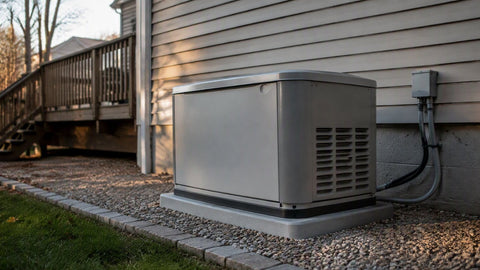
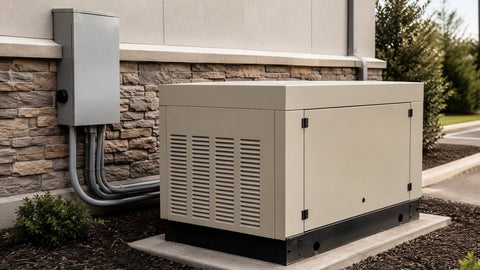
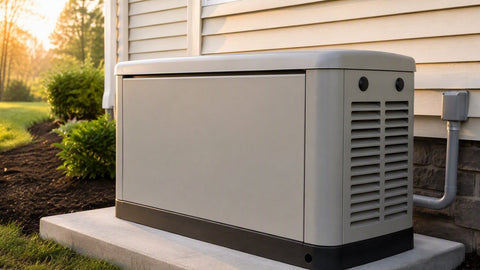
The RES series is the residential core: air-cooled, natural gas or LP, aluminum enclosure, with OnCue Plus remote monitoring standard. The 14RES covers essential-loads installations; the 20RESCL is the volume seller for whole-home coverage in average-size houses; the 26RES tops out the air-cooled class and will carry a large home including a 4–5 ton air conditioner with load management. All three run Kohler OHVI V-twin engines at the slower, quieter end of the air-cooled spectrum — the 20RESCL and 26RES operate at reduced RPM in low-load conditions, which is a real noise and fuel-economy advantage during long outages.
Field note from our service partners: the aluminum enclosure is not marketing garnish. On coastal installs within a mile of salt water, powder-coated steel enclosures from any brand show rust creep at fastener points in three to five years. The Kohler aluminum housings don't. If you're near the coast, this alone justifies the brand choice.
KD Series Industrial Diesel (20 kW–4 MW)
Above the residential line, Kohler's KD series covers mission-critical commercial: hospitals, data centers, water treatment, and industrial standby where diesel's energy density and on-site fuel independence are non-negotiable. These are engineered-to-order sets with sound-attenuated enclosures, sub-base tanks, and NFPA 110 compliance options for life-safety loads. We quote KD-series work through our commercial desk; the commercial generator overview covers the decision framework before you call.
PRO5.2 Portable Inverter
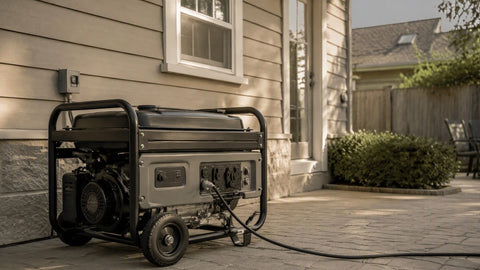
The PRO5.2 is Kohler's contractor-grade portable: 5.2 kVA, gasoline, enclosed frame, with a 3-year warranty that includes a loaner unit if a repair runs over 24 hours. That loaner clause is unique in the segment and tells you how Kohler thinks about the professional customer. For jobsite and emergency portable use, compare it against the value-tier options in our Champion brand guide.
| Model | Power | Fuel | Enclosure | Key Feature |
|---|---|---|---|---|
| 20RESCL | 20 kW | NG / LP | Aluminum | Premium residential standby; OnCue Plus standard |
| 26RES | 26 kW | NG / LP | Aluminum | Top air-cooled output; large-home capacity |
| 14RES | 14 kW | NG / LP | Aluminum/Composite | Entry-level whole-home standby |
| KD Series (Industrial) | 20 kW–4 MW | Diesel | Sound-attenuated | Mission-critical commercial/healthcare |
| PRO5.2 Inverter (Portable) | 5.2 kVA | Gasoline | Enclosed | 3-yr warranty; loaner for 24+ hr repairs |
Generator sizing is NEC 702 territory: optional standby systems must carry the load they're assigned, and the honest way to size is a load calculation, not a guess based on square footage. Here's the workflow we run with customers, using a real 2,800 sq ft all-electric home as the example.
| Load | Typical Draw | Starting Surge | In Example Home? |
|---|---|---|---|
| Central A/C, 4 ton (with soft start) | 4,000–5,500W running | 12,000–18,000W without soft start; ~6,000W with | Yes — managed |
| Electric range | 3,000–8,000W (demand-factored) | — | Yes — shed under generator operation |
| Electric water heater | 4,500W | — | Yes — load-managed |
| Well pump, 1.5 HP | ~1,900W running | ~5,700W starting | Yes |
| Refrigerator + freezer | 700–1,200W each | ~2,200W each starting | Yes |
| Lighting + receptacles + network/furnace blower | 1,500–3,000W | — | Yes |
| Managed total on generator | ~12–16 kW peak coincident | Surge covered by motor-starting kVA | 20 kW unit with load management |
Two rules of thumb that survive contact with reality. First: motor starting dominates. A 4-ton compressor without a soft starter can demand 15+ kVA for a few hundred milliseconds; air-cooled standby units have solid motor-starting capability, but pairing the A/C with a soft-start module is the cheapest way to keep a 20 kW unit on a large home. Second: load management is the multiplier. Kohler's load-control accessories shed the water heater and range during generator operation, which is how a 20RESCL covers a house that would otherwise want a 26RES or a liquid-cooled unit.
Fuel supply is the other half of sizing, and it's where we see the most install failures. The numbers below are why a gas-pipe upsizing is often part of the quote.
| Unit | NG Consumption (full load) | LP Consumption (full load) | Install Implication |
|---|---|---|---|
| 14RES | ~180 ft³/hr | ~2.1 gal/hr | Usually fine on existing 3/4" residential gas service |
| 20RESCL | ~280–300 ft³/hr | ~3.1 gal/hr | Verify meter capacity; long runs need 1" pipe |
| 26RES | ~350–380 ft³/hr | ~3.8 gal/hr | Utility meter upgrade is common; LP tanks need vaporization capacity — 250 gal minimum, 500 gal preferred |
| KD diesel (per 100 kW) | — | — | ~7–8 gal/hr diesel per 100 kW at full load; sub-base tank sizing per runtime target |
An LP install that vaporizes fuel faster than the tank can supply it will stumble exactly when the house needs it most — cold weather, full load, tank below a third. We spec 500-gallon tanks for 20 kW+ LP installs as a matter of policy. The plumbing details are in our transfer switch wiring guide's companion notes and the transfer switch explainer.
| Criteria | Kohler RES | Generac Guardian | Cummins QuietConnect | Briggs PowerProtect |
|---|---|---|---|---|
| Top air-cooled kW | 26 kW | 28 kW | 20 kW | 26 kW |
| Standard warranty | 5 yr (parts+labor+travel) | 5 yr | 5 yr / 2,000 hr | 10 yr |
| Engine | Kohler OHVI (purpose-built) | G-Force / EFIC | Cummins-designed | Vanguard |
| Life-expectancy testing | 20-year design validation | Standard | Standard | Standard |
| Remote monitoring | OnCue Plus | Mobile Link | Connect Cloud | EnergyTrak |
| Dealer network | 10,000+ | 7,000+ | 500+ | Extensive |
| Enclosure | Aluminum (corrosion-proof) | Steel (composite on some) | Aluminum | Steel |
The honest summary: Generac wins on unit volume, price, and the 28 kW top end; Kohler wins on enclosure durability, engine pedigree, and dealer depth; Briggs counters with the 10-year warranty at a lower price point; Cummins owns the premium-quiet niche with a smaller residential dealer footprint. We sell all four. When a customer is within sight of salt water, planning to keep the house 15+ years, or simply wants the machine their grandchildren will inherit, we quote the Kohler. For whole-home strategy beyond the generator itself — battery hybrid approaches, critical-loads panels — see battery backup vs generator and our whole-house generator overview.
Kohler's standard residential warranty is 5 years covering parts, labor, and travel — the travel clause matters in rural counties where the nearest dealer is 90 minutes out. The design-validation program behind the RES line tests engines to a 20-year residential duty cycle: start-stop cycling, load banks, and extended-run endurance that mimics decades of outage duty. Most competitors test to a "standard" cycle they don't publish.
Service intervals are conventional: oil and filter at 150 hours or annually, valve adjustment on schedule, battery every three to four years. The units exercise weekly by default (we recommend a 12-minute no-load exercise, mid-week, mid-day — neighbors remember generators that exercise at 7 a.m. Sundays). Every Kohler we sell leaves with the maintenance schedule taped inside the transfer switch door, because the number-one killer of standby generators isn't manufacturing defects — it's neglected oil and dead starting batteries.
What our installer partners check on every Kohler RES job
- Gas pipe sizing first, generator placement second. Confirm meter capacity and pipe diameter at the furthest-appliance total before the pad is poured. A 26RES fed by an undersized line is a very expensive lawn ornament.
- Setbacks: 5 ft from openings, 18 inches from the structure (per manual), and check local code — some AHJs are stricter. The aluminum enclosure runs cooler on the sides than steel competitors, but the exhaust rules are non-negotiable.
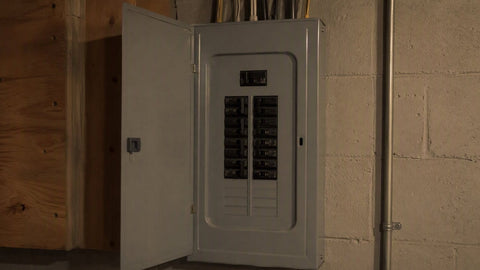
- The transfer switch location drives wire cost. A 200A service-rated ATS next to the main panel beats a long feeder to a subpanel every time. Our transfer switch wiring guide covers the service-entrance versus subpanel decision.
- Commission with a full-load test, not a no-load start. Pull the main, let the unit carry the real house for 15 minutes, and verify gas pressure under load. Static pressure tests lie.
- Register the warranty and set up OnCue Plus before leaving. Monitoring catches the exercise failures and low-battery alerts that become no-start calls during the actual outage.
For wire sizing between the generator, ATS, and panel, the ampacity tables in our NEC wire sizing guide apply directly — a 20 kW unit at 240V is an 83A continuous-class source, and the conductors and breaker need to be sized to the generator's nameplate and NEC 445/702, not to the load calc alone.
Quote transparency is rare in this trade, so here's the real breakdown we give customers for a 20RESCL turnkey install in our market. Prices move with gas-line length and panel condition, but the proportions hold:
| Line Item | Typical Range | Notes |
|---|---|---|
| 20RESCL generator | $5,200–$5,800 | Unit, composite pad, battery included |
| 200A service-rated ATS | $1,100–$1,500 | Kohler RXT-class switch; load-shed modules extra |
| Electrical labor + materials | $1,800–$2,800 | Service-entrance rewire is the variable; long conduit runs add cost |
| Gas plumbing | $600–$2,000 | Pipe upsizing and meter work dominate; LP adds regulator + tank work |
| Permits & inspection | $200–$500 | Electrical + plumbing/mechanical, jurisdiction-dependent |
| Turnkey total | $9,500–$13,500 | 26RES and liquid-cooled units scale up from here |
Where quotes blow past this range: meter upgrades the utility schedules on their own calendar, panels that need replacement before the ATS can land, and LP conversions where a new 500-gallon tank gets set. Get the gas path and the panel condition assessed before signing anything — those two items account for nearly every cost overrun we've watched customers endure with other installers.
Standby generators fail from neglect, not engineering. The schedule we tape inside every transfer switch: weekly 12-minute no-load exercise (automatic), oil and filter at 150 run-hours or annually, air filter and spark plugs annually, battery test every six months with replacement at year three to four, valve clearance per the OHVI service schedule, and an annual full-load test where the unit carries the real house for thirty minutes while someone watches gas pressure and output voltage. OnCue Plus monitoring catches missed exercises and low-battery conditions between service visits — it's the cheapest insurance in the whole system.
The failure modes are remarkably consistent across brands, and nearly all of them are install-side, not machine-side. Undersized gas piping tops the list — a generator that can't get fuel at full load is a decoration. Second is placement: units jammed against the structure or under soffit vents to save conduit money, creating exhaust and service-clearance problems the inspector will catch if the CO doesn't. Third is skipping the load calculation entirely and selling whatever kW tier the homeowner's neighbor bought. Fourth — and this one costs people the most grief — is commissioning without a full-load test, so the first real outage is also the first real test. Finally: no maintenance plan. A $12,000 machine with a dead starting battery fails exactly like a $4,000 machine with a dead battery. Sell the maintenance agreement or teach the customer the schedule; one of the two has to happen.
One more that deserves its own paragraph: customers who size the generator to survive the last outage instead of the next one. The last outage was eight hours in mild weather; the next one is a three-day ice storm with the furnace running flat out. Design for the severe case at the site's actual design temperature, because an air-cooled engine's output and an LP tank's vaporization both sag exactly when the load peaks. The load calc in Section 3 with a cold-weather margin is cheap insurance against the expensive version of this lesson.
And a boundary worth stating plainly: if the home's backup need is four hours of fridge-and-lights a couple of times a year, a standby generator is overkill — a battery system or a quality portable is the honest recommendation, and we make it. Standby units earn their keep when outages run long, loads run heavy (well pumps, medical equipment, whole-home HVAC), or nobody is home to wheel out a portable and run extension cords. Right-sizing the solution to the actual risk profile is the whole job.
Did Kohler generators become Rehlko? What changed?
Kohler Energy was spun out as an independent company in 2024 and rebranded as Rehlko. The generators continue to be engineered, built, and warranted under the Kohler brand with unchanged product lines, engines, and dealer support. Documentation may show the Rehlko corporate name; the machines and warranty backing are the same.
What size Kohler generator does my home need?
Run a load calculation, not a square-footage guess. A typical 2,500–3,000 sq ft home with one 4-ton A/C, electric water heater, and well pump lands at 12–16 kW of managed coincident load, which a 20 kW unit covers with load management. Larger homes with two A/C systems or all-electric cooking usually want the 26RES. A soft-start on the compressor and Kohler's load-control modules are what make the smaller unit work.
Natural gas or propane — which is better for a standby generator?
Natural gas wins wherever it's available: unlimited runtime, no refueling, lower fuel cost. LP is the answer where gas service doesn't exist, but it requires vaporization capacity — we spec a 500-gallon minimum tank for 20 kW+ units because a small tank in cold weather can't vaporize fuel fast enough at full load. Diesel is for commercial and mission-critical work where on-site fuel independence is the point.
How does the Kohler warranty compare to Generac's?
Both are 5-year standard warranties on residential air-cooled units. Kohler's explicitly includes travel charges for dealer service calls, which matters in rural areas. Briggs & Stratton counters both with a 10-year warranty on its PowerProtect line at a lower price point. Extended warranties are available from all three.
How loud is a Kohler RES unit?
Air-cooled standby units in this class run roughly 63–70 dBA at 23 feet during exercise, and the RES line's variable-speed operation drops noise substantially at partial load. It's comparable to a central air conditioner. Liquid-cooled and industrial units with sound-attenuated enclosures run quieter but are a different price class entirely.
Can a standby generator run my whole house, or do I need a critical-loads panel?
Either, and the choice is economic. A service-rated transfer switch with load management covers the whole house on a properly sized unit — the standard approach for 20–26 kW installs. A critical-loads subpanel (fridge, furnace, lights, well, selected receptacles) lets a smaller generator cover a larger house at lower total cost. We design both; the deciding factors are the load calc and how much the customer wants to spend on the generator versus the switch gear.
- Kohler Energy (Rehlko) published specifications: 14RES, 20RESCL, 26RES, KD series, PRO5.2 (2025–2026 revisions)
- NEC 2023 Articles 702 (optional standby systems), 445 (generators), 250 (grounding for separately derived systems)
- NFPA 110 — emergency and standby power systems (KD series life-safety applications)
- PES Supply internal sizing worksheets and installer-partner field reports, 2022–2026
Shop Standby Generators at PES Supply
Kohler RES units, transfer switches, and load-management accessories — with sizing help from people who've run the load calcs.
Browse Generators