Quick Mount PV Brand Guide: QBase, Flashing Systems, and Waterproof Roof Attachments
QBase composition, tile, and low-slope mounts, Classic Comp retrofit attachments, the QBlock elevated seal, structural ratings, and how Quick Mount compares to IronRidge and Unirac flashings.
QBase Mount System
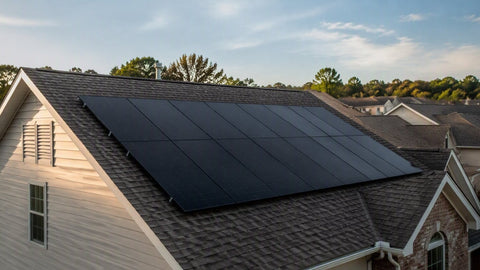
Quick Mount PV does one thing and has done it since 2006: roof attachments that don't leak. While the full-line racking companies split their engineering attention across rails, clamps, ground mounts, and carports, Quick Mount put two decades into the three square feet where the array meets the weather. The result is the attachment system our installer customers request by name for composition shingle and tile work — and the flashing that, in our warranty records, has the lowest leak-callback rate of anything we sell. This guide covers the QBase family, the seal technology, the structural math, and the honest comparison against IronRidge and Unirac. For the full-rack context, pair this with the IronRidge brand guide and our pitched-roof mounting guide.
Quick Mount PV was founded in 2006 in northern California by roofing-industry veterans who looked at early solar attachments — essentially standoffs bedded in sealant — and saw the roofing failures coming years before they arrived. The company's founding insight is that a roof penetration is a roofing problem first and a structural problem second, and that the solar industry was solving the wrong one. Every Quick Mount product treats the flashing as the primary component and the mount as the thing attached to it, which is exactly backwards from how most racking companies design.
That roofing-first DNA is why the brand earns loyalty from the installers who own the long-term leak liability. I've stood on a roof in Salem with a roofer-turned-solar-installer who pulled a fifteen-year-old comp mount during a re-roof, cut the flashing open, and showed me the still-elastic seal around the post — "this is why I don't use anything else." We stock Quick Mount in depth precisely because of customers like him; browse the range in our Quick Mount collection and the broader racking and mounting inventory.
QBase Composition Mount (QMNC-A-12)
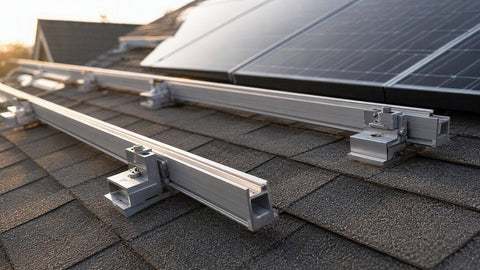
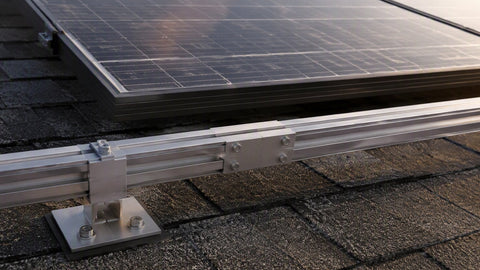
The QBase Comp Mount is the flagship: a 12" × 12" spun-aluminum cone flashing — seamless, because seams leak — with a 3.25" cast post rising from the center. The cone sheds water exactly like the plumbing vent flashings roofers have trusted for a century, because that's the design lineage. Tested pullout in Douglas fir runs 3,031 lbs, and the system carries approvals for Florida's high-velocity hurricane requirements and the City of Los Angeles — two of the strictest review regimes in the country. Two or four lag screws depending on substrate and load; new construction and re-roof friendly since the flashing integrates with the shingle courses like any other roof penetration.
Classic Comp Mount (Retrofit)
The Classic Comp is the retrofit specialist for existing shingle roofs: a single-bolt install with the QBlock elevated seal, designed to slide into an existing shingle course without the full flashing replacement the new-construction QBase invites. When we're quoting an array on a ten-year-old roof that isn't being replaced, this is the attachment. The elevated seal keeps the water path below the seal plane even if the sealant ages — the same roofing-first logic as the cone flashings.
QBase Universal Tile Mount
Tile roofs punish improvised attachments, and the Universal Tile Mount is Quick Mount's answer: a tile-replacement flashing with a cast-aluminum base that transfers the mount load to the structure below, so the tile carries nothing. It covers concrete and clay tile in the common profiles. The labor reality of tile work stands — it's slower than comp shingle no matter whose hardware you use — but the leak risk drops to composition-roof levels when the tile never bears the mount.
QBase Low Slope Mount
For flat and low-slope membranes — TPO, PVC, EPDM, built-up asphalt — the Low Slope Mount anchors to wood, concrete, or steel substrates with included 3" lag bolts and integrates with the membrane per the roofer's detailing. Penetrating a membrane roof is a decision to make deliberately; compare against ballasted approaches in our flat-roof ballasted vs penetrating guide before committing.
| Model | Category | Key Specs | Application |
|---|---|---|---|
| QBase Composition Mount (QMNC-A-12) | Roof attachment | 12" × 12" cone flashing, 3.25" post, 3,031 lbs pullout | Composition shingle, new construction / re-roof |
| QBase Low Slope Mount | Low-slope attachment | Wood/concrete/steel substrate, 3" lag bolts included | TPO, PVC, EPDM, built-up asphalt flat roofs |
| QBase Universal Tile Mount | Tile roof attachment | Tile replacement flashing, cast aluminum base | Concrete and clay tile roofs |
| Classic Comp Mount | Retrofit attachment | QBlock elevated seal, single-bolt install | Existing composition shingle roofs |
| QBase Post (various heights) | Standoff post | 8 heights from 3.25" to 17.5", A360.1 cast aluminum | Custom height requirements across QBase systems |
Most solar attachment seals sit at the water plane — the surface where water flows. The QBlock seal sits above it. The mount's post rises through a raised collar, and the seal lives at the top of that collar, elevated above the flashing's drainage surface. Water flowing down the roof would have to climb uphill and over the collar to reach the penetration, which is not what water does. Even if the sealant compound degrades in year eighteen, the geometry still protects the penetration. This is the roofing-first design philosophy made physical, and it's why these attachments carry their leak record.
The spun-aluminum cone flashing on the QBase comp mount takes the same logic further: no seams, no welds, no joints in the water path at all. Compare that to flat-plate flashings with raised collars — the dominant alternative design — where the collar-to-plate joint is a theoretical leak path forever. In practice both designs work when installed per manual; the difference shows up in decade-two, when sealants are tired and geometry is all that's left.
Attachment layout is structural engineering, and the inputs are site wind speed (ASCE 7), roof zone, snow load, and the rail system's span rating — the attachment count falls out of the rail spans. The worked example below mirrors a real layout from our design desk.
| Design Step | Rule / Formula | Worked Example (24-module comp shingle job, 120 mph, Exposure B) |
|---|---|---|
| Rail span (from rail span table) | Per racking manufacturer's certified table | 6.5 ft span (XR100-class rail, interior zone) |
| Attachments per rail run | Rail length ÷ span + 1 | 28 ft run ÷ 6.5 ft → 5–6 per run × 4 runs = ~22; tightened edge zones → 24 total |
| Uplift demand per attachment | Net wind uplift pressure × tributary area | ~30 psf edge zone × ~45 ft² tributary ≈ 1,350 lbs demand (design-level; verify with PE) |
| Capacity check | Tested pullout ÷ safety factor | 3,031 lbs tested in Doug fir → adequate margin vs. demand at interior zones; edge zones checked individually |
| Edge/corner zone adjustment | ASCE 7 zone pressures (edge > interior) | Span reduced to ~4–5 ft in perimeter zones — more attachments where uplift peaks |
| Rafter engagement | Lag into structural member, min. embedment per manual | 5/16" lag, 2.5"+ embedment into rafter; pilot 7/32" |
Two points we make to every customer. First: the 3,031-lb pullout number is tested capacity in solid Douglas fir rafters — deck-only attachment is a fraction of that and is not an approved load path. Find the rafters. Second: edge and corner zones govern the layout. ASCE 7 wind pressures at roof perimeters run roughly double the interior field, so the attachment spacing tightens at edges even when the middle of the array could span wider. The racking components guide covers how attachments integrate with rails and clamps downstream.
| Feature | Quick Mount PV | IronRidge (FlashFoot2) | Unirac (Flashloc DUO) |
|---|---|---|---|
| Primary focus | Flashed attachments only | Full racking + attachments | Full racking + attachments |
| Seal technology | QBlock elevated water seal (patented) | Elevated encapsulated seal | Triple seal (EPDM) |
| Flashing type | Spun aluminum cone (no seams) | Flat plate with raised collar | Diecast aluminum base |
| Structural capacity | 3,031 lbs pullout (Doug fir) | Varies by attachment model | 495 lbs uplift (rafter), 135 lbs (OSB) |
| Fastener options | 2 or 4 lag screws, multiple substrates | Single lag bolt | 6 wood screws (deck) or 2 (rafter) |
| Florida / LA approval | Yes (both) | Varies | Varies |
| Warranty | 25 yr structural / 5 yr finish | 25 years | 25 years |
The positioning is complementary more than adversarial: Quick Mount attachments pair with most major rail systems (IronRidge and Unirac rails included), so the common pro move is a Quick Mount attachment layer under whichever rail the job's engineering favors. Where IronRidge FlashFoot2 and Unirac Flashloc Duo are excellent choices inside their own ecosystems, Quick Mount is the attachment specialist — the option when the roof is the hard part: brittle thirty-year-old comp, S-tile in the Southwest, membrane roofs, hurricane country. See the Unirac brand guide and SnapNrack guide for the full-system alternatives.
What our crews do on every flashed-attachment job
- Locate rafters with a stud finder and confirm with a pilot. Mark every rafter across the attachment rows before lifting a single flashing. Layout follows structure, never the shingle courses.
- Pilot holes: 7/32" for a 5/16" lag in Doug fir. Full-diameter driving splits rafters and crushes the connection's withdrawal strength; the pilot is not optional.
- Drive lags with an impact and stop at seat. The lag head seats against the mount — not buried into the flashing seat, not proud. Overdriving cracks the seal collar; underdriving leaves the mount rocking on the post.
- Course the flashing like a roofer. Upslope edge under the next course, sides shedding over the downslope course, per the manual. A flashing laid on top of the upslope shingle is a funnel, not a flashing.
- Photograph every attachment before rails go on. This is the leak-warranty documentation set, and it settles disputes years later in about one email.
On tile jobs specifically: order 5–10% spare tiles before starting, stage broken-tile replacement as part of the install day, and never let the crew walk the valleys. Tile breakage is a certainty; planning for it is the difference between a clean job and a callback. The rooftop installation walkthrough covers the full sequence from layout to commissioning, and our racking systems overview gives the category-level picture.
Quick Mount's warranty splits the way roofing warranties should: 25 years on the structure, 5 years on the finish. The approval portfolio is the real paperwork asset — Florida product approval including high-velocity hurricane zone requirements, City of Los Angeles approval, and UL 2703 system listings — and the company publishes the test reports behind the pullout numbers, which plan reviewers notice. Our permit packets include the approval numbers on the cut sheets; it turns the structural review of the attachment layer into a checkbox rather than a conversation.
| Documentation Item | What It Covers | Where It's Used |
|---|---|---|
| Florida Product Approval | Wind-uplift compliance incl. HVHZ | Florida permits, hurricane-exposed coastal work |
| City of Los Angeles approval | Structural attachment acceptance | LA jurisdictional permits |
| UL 2703 listing | Mechanical load + bonding path with rail systems | Electrical/structural review nationwide |
| Pullout test reports | 3,031 lbs in Doug fir; substrate-specific values | Engineering verification, span-table inputs |
Keep the install photos and the approval documents with the homeowner's records. When the house sells or the roof gets replaced in year twelve, that folder is the difference between a smooth transaction and a forensic argument about who penetrated what, where, and with whose hardware.
The leak callbacks we've diagnosed over the years trace to a short list, and none of them are the flashing's fault. Flashings coursed over the upslope shingle instead of under it — a funnel built at the factory of haste. Lags driven without pilots, splitting the rafter and halving withdrawal capacity while looking perfect from the roof. Attachments landed in deck because the layout followed the array geometry instead of the rafter map. Sealant smeared on as a substitute for geometry rather than a supplement to it — goop is not a flashing strategy. And on tile, crews walking the valleys and leaving a trail of cracked tiles the homeowner discovers at the first rain. Every one of these is a training issue, not a product issue, and every one is covered in the install manual that comes in the box.
One last note on sequencing, because it saves crews real hours: lay out and install all attachments on day one, rails and modules on day two. Attachments are the slow, careful, structural part; rails and modules are fast. Splitting the job that way puts the roof-penetration work behind you early, keeps the roof open for the minimum time, and gives the flashing seals a night to settle before the array's weight and wind loads arrive. It's a small scheduling decision that has consistently separated our clean installs from our callbacks.
It's also worth saying who this brand is for at the purchasing level. Homeowners buying a full solar kit don't need to specify attachment hardware — that's the installer's call. But installers and owner-builders choosing components should understand that the attachment layer is where 25-year roof risk concentrates, and the delta between a specialist attachment and a generic one is a few dollars per penetration against a potential four-figure leak repair. On a 24-attachment job, the upgrade cost is a rounding error on the project. We've never had a customer regret spending it; we've talked to plenty who regretted not spending it.
What makes Quick Mount PV different from the racking brands?
Specialization. Quick Mount makes only roof attachments and flashings, designed roofing-first: the flashing is the primary component and the mount attaches to it. The QBlock elevated seal sits above the water plane, and the QBase cone flashing is spun seamless aluminum with no joints in the water path. The attachments pair with most major rail systems, so you can combine them with whichever racking the engineering favors.
QBase Comp Mount or Classic Comp — which for my roof?
New construction or a re-roof: QBase Composition Mount, whose 12" × 12" cone flashing integrates with fresh shingle courses like a plumbing vent. Existing roof staying in place: Classic Comp Mount, a single-bolt retrofit with the QBlock elevated seal that slides into the existing course. Both carry the same roofing-first seal geometry.
Will Quick Mount attachments work with my rails?
Yes — QBase posts accept standard L-feet and rail adapters for the major flush-mount rail systems, including IronRidge XR and Unirac SolarMount. Mixing a Quick Mount attachment layer with another brand's rail is common professional practice, particularly on difficult roofs where the attachment is the critical component.
How much weight can a QBase mount hold?
The QBase Composition Mount tests at 3,031 lbs pullout in Douglas fir rafters — far above the per-attachment uplift demand on a properly engineered residential layout. That rating assumes structural-member engagement; deck-only attachment is a small fraction of it and is not an approved load path. Edge and corner roof zones carry higher ASCE 7 uplift and get tighter spacing in the layout.
Do Quick Mount products meet Florida hurricane requirements?
Yes — QBase systems carry Florida product approvals (including high-velocity hurricane zone requirements) and City of Los Angeles approval, two of the strictest structural review regimes in the US. Approval documentation is available for permit packets; verify the specific SKU against the current approval listing.
How do I avoid leaks on a tile roof install?
Use a tile-replacement flashing system like the QBase Universal Tile Mount so the tile never carries the mount load; the cast base transfers load to the structure below. Order 5–10% spare tiles before starting, replace broken tiles during install rather than after, and keep foot traffic off the valleys. Done this way, tile-roof leak risk drops to composition-roof levels.
- Quick Mount PV published specifications and test reports: QBase Composition Mount, Classic Comp, Universal Tile, Low Slope (2025–2026)
- ASCE 7 — design wind/snow loads and roof-zone pressure provisions; UL 2703 (racking and attachment listings)
- Florida Product Approval and City of Los Angeles approval listings for QBase systems
- PES Supply internal install records and leak-callback warranty data, 2019–2026
Shop Quick Mount PV at PES Supply
QBase mounts, flashings, and posts in stock for comp, tile, and low-slope roofs — with attachment-layout help on every kit.
Browse Quick Mount PV