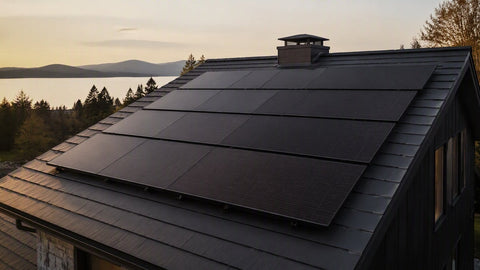
Enphase didn't just invent the microinverter category — it spent fifteen years being the category, surviving a near-death financial crisis in 2017–2018, and emerging with the IQ8 architecture that finally made module-level electronics grid-forming. I've installed Enphase gear since the M-series days, carried a backpack full of IQ6s up more ladders than I care to count, and watched the platform go from "interesting but pricey" to the default residential architecture in most of the markets we serve. This guide is the version I wish existed when I was learning the ecosystem: the full IQ7/IQ8 lineup with real specs and real pricing, the IQ Battery platform, the System Controllers that make backup actually work, and the BOM-building math — plus honest guidance on the IQ7 end-of-life transition that's quietly reshaping how we spec jobs in 2026.

The Enphase Ecosystem at a Glance
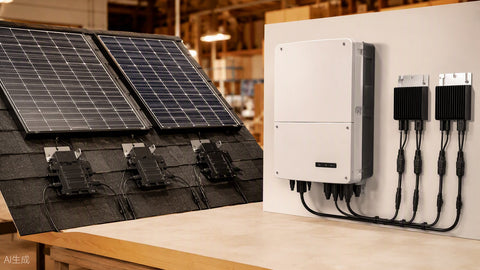
Enphase's pitch has never been "we make a good microinverter." It's "we make a closed, fully-integrated energy system where every component speaks the same protocol." A complete modern Enphase system includes: microinverters (one per module), the IQ Gateway (monitoring and communications hub, formerly Envoy), IQ Combiner or System Controller (the panel that aggregates branch circuits and manages grid/backup transitions), IQ Batteries (AC-coupled storage on the same bus), and the Enlighten/IQ Cloud monitoring layer that ties it all together. The strength of this approach is commissioning simplicity and per-module visibility; the cost is vendor lock-in — once you're on the Enphase bus, you're on it. For most residential installs, that's a feature. For some commercial and DIY scenarios, it's a reason to look at string architectures from our solar inverter catalog instead. We covered the architectural trade-offs in depth in our IQ7 vs SolarEdge HD-Wave showdown, and the battery side in our IQ Battery vs Powerwall comparison.
IQ7 Series Deep Dive: The Workhorse in Its Sunset
The IQ7 family carried Enphase from 2018 through the early 2020s — millions of units, a 25-year warranty, CEC efficiency around 96.5%, and a reputation for surviving roofs that killed lesser electronics. The lineup as we still stock and support it:
| Product | SKU | Price | Peak Output | Cell Config |
|---|---|---|---|---|
| IQ7-60-2-US | PES-SPS-SIV-0459 | $166.99 | 250W | 60-cell |
| IQ7PLUS-72-2-US | PES-SPS-SIV-0455 | $169.85 | 295W | 72-cell |
| IQ7PLUS-72-M-US | PES-SPS-SIV-0456 | $182.60 | 295W | 72-cell, MC4 |
| IQ7X-96-2-US | PES-SPS-SIV-0453 | $130.65 | 320W | 96-cell |
| IQ7A-72-2-US | PES-SPS-SIV-0568 | $172.00 | 366VA | 60/72-cell |
| IQ7A-72-M-US | PES-SPS-SIV-0143 | $191.04 | 366VA | MC4 |
| IQ7PLUS-72-2-INT | PES-SPS-SIV-0486 | $147.20 | 295W | 72-cell, INT |
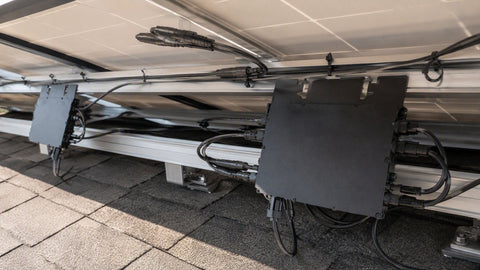
Reading the lineup: the base IQ7 at 250W pairs with legacy 60-cell modules in the 250–350W class — think replacement work on 2015-era arrays. IQ7+ at 295W was the volume king for 330–400W modules. IQ7X addressed the oddball 96-cell format (Panasonic/SunPower legacy panels). IQ7A at 366VA was the answer to the first wave of 400W+ residential modules. The "-2-" SKUs use Enphase's proprietary Q-cable connectors for new arrays; "-M-" SKUs ship with MC4 leads for mix-and-match or retrofit situations. That distinction matters on a roof: Q-cable requires the matching trunk cable and Q-clip hardware, while MC4 variants plug into standard leads — I've bailed out more than one crew that ordered the wrong suffix and spent a morning on a roof with incompatible connectors.
IQ8 Series Deep Dive: Grid-Forming Changes Everything
IQ8, launched in late 2021, rebuilt the microinverter around a custom ASIC with enough compute to do grid-forming control — the ability to create a stable microgrid from sunlight alone, without any battery, when paired with the IQ System Controller. Enphase calls it Sunlight Backup. Response time dropped from the IQ7's 20-millisecond class to 20-nanosecond-class control loops, CEC efficiency ticked up to 97.0%, and the platform became the foundation for everything Enphase has shipped since, including native battery integration.
| Product | SKU | Price | Peak Output | Cell Config | Key Feature |
|---|---|---|---|---|---|
| IQ8-60-2-US | PES-SPS-SIV-0460 | $202.00 | 245W | 60-cell | Sunlight Backup ready |
| IQ8PLUS-72-2-US | PES-SPS-SIV-0487 | $182.83 | 300W | 72-cell | Sunlight Backup ready |
| IQ8M-72-2-US | PES-SPS-SIV-0458 | $197.94 | 330W | 72-cell | Sunlight Backup ready |
| IQ8A-72-2-US | PES-SPS-SIV-0457 | $236.52 | 366W | 72-cell | Sunlight Backup ready |
| IQ8A-72-M-US | PES-SPS-SIV-0140 | $238.52 | 366W | MC4 | Sunlight Backup ready |
| IQ8H-240-72-2-US | PES-SPS-SIV-0452 | $244.65 | 384W | 72-cell | High-power, Sunlight Backup |
The IQ8 ladder maps cleanly to the modern module market: IQ8PLUS (300W) for mainstream 400–430W residential panels, IQ8M (330W) as the sweet spot for 440–470W modules, IQ8A (366W) for 470–540W class, and IQ8H (384W, 240V) for the biggest residential and light-commercial modules — 540W and beyond, where clipping control matters more than a few dollars of micro cost. When pairing, I size against the module's realistic operating output, not its STC nameplate: a 470W module on an IQ8M runs a DC:AC ratio around 1.42, which clips a little on perfect cold-sunny noons and buys you meaningfully better production the other 95% of daylight hours. Enphase's own pairing guidance supports ratios in that band, and in a decade of watching production data, the under-sized-micro fear is consistently overblown compared to the over-spent budget.
A Brief, Honest History of Enphase
You can't spec the platform wisely without knowing where it came from. Enphase shipped the first commercially successful microinverter (the M175) in 2008 and spent a decade proving that module-level power electronics could survive roofs at scale. Then came 2017–2018: a price war, bloated costs, a stock price that flirted with delisting, and a genuine question about whether the company would survive to honor its warranties. The turnaround under CEO Badri Kothandaraman is now taught as a case study — costs cut brutally, the IQ architecture rebuilt from scratch around in-house ASICs, and the 2021 IQ8 launch that made microinverters grid-forming for the first time. Why this matters to a buyer in 2026: the warranty you're buying is only as good as the company behind it, and Enphase's balance sheet today is unrecognizable from the 2018 version. The 25-year microinverter warranty reads very differently backed by a profitable company with billions in the bank than it did when we were all holding our breath. We covered the 2018-era competitive picture in our IQ7 vs HD-Wave retrospective, which is worth reading for how much has changed.
Enphase vs the Field in 2026
The microinverter market is no longer a one-horse race, and honesty about the competition is part of a useful brand guide. Hoymiles and APsystems undercut Enphase on price meaningfully — 20–30% per watt of inverter is common at the distribution level — and their hardware has matured to the point where "cheap knockoff" is no longer a fair description. What they still lack is the ecosystem depth: no equivalent to the System Controller's integrated backup story, thinner US service infrastructure, and monitoring platforms that feel a generation behind Enlighten. Tesla competes on the storage side with Powerwall 3's integrated inverter, which is a legitimately different architecture — DC-coupled, fewer boxes, aggressive pricing — but gives up per-module electronics on the roof. SolarEdge remains the string-plus-optimizer incumbent for installers who prefer DC architectures and central points of failure they can swap in one truck roll. And conventional string inverters from our inverter catalog still win on pure economics for simple unshaded roofs. Enphase's answer to all of it is the same as it's been for a decade: the integrated system, the 25-year micro warranty, and the service data. Whether that premium is worth it is a job-by-job question — for complex roofs, shade, backup requirements, and homeowners who value the app experience, it usually is. For a south-facing barn roof with no shade and no backup, I'll quote a string inverter with a clear conscience.
Residential, Commercial, and DIY: Where Each Enphase Configuration Fits
Residential grid-tied without backup is the volume play: IQ8PLUS or IQ8M micros, IQ Combiner with the gateway inside, done. This is the configuration I'd put on my own house if the roof were simple — boring, bulletproof, and serviceable by anyone in the ecosystem. Residential with backup adds the System Controller and 5P batteries, and this is where the platform's integration premium earns out: the whole thing — solar, storage, transfer, load control — commissions as one system from one app, and the homeowner gets one throat to choke if anything misbehaves. Light commercial works with IQ8H and three-phase variants up to a few hundred kW, though above that scale the per-watt micro premium starts losing arguments to commercial string inverters in any honest bid comparison. DIY and off-grid is a real niche for us: Enphase is not officially a DIY brand, but the AC-coupled battery architecture makes it the friendliest of the majors for owner-builders doing permitted work — and our DIY solar kits and the panel and bus bar fundamentals guide cover the surrounding electrical work. For true off-grid builds, honestly, look at the EG4 FlexBoss21 or Sol-Ark SA-8K hybrid inverters instead — Enphase's grid-forming is backup-grade, not off-grid-primary.
The IQ Gateway and Enlighten: What the Monitoring Actually Does
Every Enphase system reports through the IQ Gateway (you'll still hear installers call it the Envoy — same lineage), which polls each microinverter over the power line itself — no separate communication wiring on the roof, one of the architecture's genuine elegance points. Data lands in the Enlighten cloud, and from there three audiences get three views. Homeowners get the app: production, consumption (with CTs), battery state of charge, and the grid-status page that turns into the most-watched screen in the house during an outage. Installers get the fleet dashboard: per-site and per-module drill-down, automated fault alerts, and the serial-position array map that makes remote diagnosis possible. And utilities and VPP aggregators get the grid-services interface that's quietly becoming a revenue feature in the territories that support it. Two practical notes. First, powerline communication degrades across certain panel-board topologies — if a site has micros that intermittently drop comms but keep producing, the fix is usually a Gateway relocation or a powerline bridge, not a hardware failure; check comms health at commissioning while the crew is still there. Second, the cellular modem accessory exists for a reason: rural sites with sketchy internet should get it in the original BOM, because monitoring gaps create warranty-service friction later that costs more than the modem ever did.
NEC Compliance with Enphase Systems: The Inspector's View
Microinverter architecture is the cleanest rapid-shutdown story in the code. NEC 690.12's module-level shutdown requirement is satisfied inherently — when AC drops, every micro de-energizes its module within the code timeline, no rooftop transmitters or keep-alive circuits required. Where installs still fail inspection is the surrounding work. Branch circuit sizing per 690.8 (125% continuous on micro output circuits), the 705.12 interconnection math at the panel (the 120% rule on busbar rating, or a supply-side tap when the solar breaker outgrows it — see our bus bar guide for the panel-side fundamentals), grounding continuity through the rail system with listed bonding hardware like the T-bolt bonding kits, and labeling — the placard package for an Enphase system with batteries and a System Controller is genuinely long, and inspectors increasingly read every line. Battery jobs add Article 706 considerations: spacing clearances, working space at the wall, and the listing requirements that make garage installs a tape-measure exercise before the units ship. Do the paperwork with the same care as the roof work and Enphase inspections are boring — which is the highest compliment an inspection can earn.
The 25-Year Cost Picture: Is the Premium Real?
Run the arithmetic the way I do when a customer challenges the Enphase price. On a typical 8 kW residential system, an all-Enphase BOM (micros, combiner, gateway) carries a hardware premium over a string-inverter BOM on the order of $1,500–$2,500 at current pricing — call it 15–25 cents per watt. Against that: no string inverter replacement at year 10–15 (the string warranty is typically 10–12 years; the micro warranty is 25, and a mid-life string swap is a $2,000–$4,000 event with labor), per-module shade tolerance that recovers real energy on any imperfect roof, inherent 690.12 compliance with zero rooftop transmitter hardware, and the monitoring-driven service model that turns failures into scheduled one-hour swaps instead of troubleshooting days. Add the backup-readiness — an Enphase solar-only system can add batteries later without rewiring the array, while retrofitting storage onto a string system usually means new inverter hardware entirely — and the premium mostly evaporates across the asset life for any homeowner who stays in the house. For the flippers, landlords, and five-year horizons, the string math wins. Know which customer you're quoting.
Who Should Not Buy Enphase
A brand guide that only praises is marketing, so here's the honest exclusion list. Skip Enphase for simple, unshaded, budget-driven roofs where a quality string inverter saves real money and gives up nothing the homeowner will ever notice. Skip it for true off-grid primary power — the grid-forming capability is backup-grade, and purpose-built hybrids like the Sol-Ark or EG4 lines carry off-grid loads better and cheaper. Skip it when the customer's existing infrastructure is a healthy string system that just needs storage — a DC-coupled battery or an AC-coupled third-party unit from the storage catalog may integrate more cheaply than an ecosystem switch. And skip it for price-led commercial work above a few hundred kW, where per-watt micro economics lose to commercial string every honest time. Enphase is the best answer for its core market — residential and light commercial customers who value integration, monitoring, and backup. The discipline is knowing where the core market ends.
IQ7 vs IQ8: Which to Spec in 2026?
The honest comparison, with the caveat that this is increasingly a transition question rather than a technology question:
| Feature | IQ7 Series | IQ8 Series | Winner |
|---|---|---|---|
| Grid-forming capability | No | Yes | IQ8 |
| Sunlight Backup | No | Yes (with System Controller) | IQ8 |
| Processing response | 20 milliseconds | 20 nanoseconds | IQ8 |
| Max panel wattage | ~440W (IQ7A) | 540W+ (IQ8H) | IQ8 |
| Price per unit | $130–191 | $183–245 | IQ7 |
| Warranty | 25 years | 25 years | Tie |
| CEC efficiency | ~96.5% | 97.0% | IQ8 |
| Battery integration | Compatible | Native seamless | IQ8 |
| Future-proofing | EOL transition | Active platform | IQ8 |
| Best for replacement jobs | Yes | Overkill | IQ7 |
My spec rule in 2026: every new install gets IQ8, full stop. The price delta over IQ7 is $30–70 per micro — on a 20-panel job, that's under $1,400 for grid-forming capability, the active support platform, and compatibility with the module wattages people actually buy now. IQ7 remains the right answer for exactly one scenario: warranty replacements and array expansions on existing IQ7 systems, where mixing generations on the same trunk cable creates commissioning headaches that no datasheet warns you about. Keep the generations segregated per branch and you'll stay sane.
IQ Battery Platform: AC-Coupled, All the Way Down
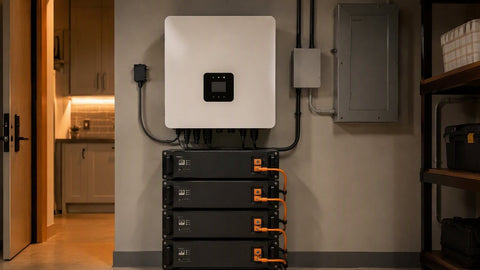
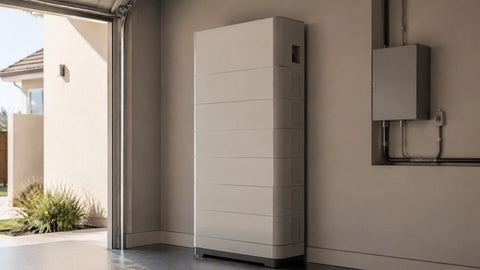
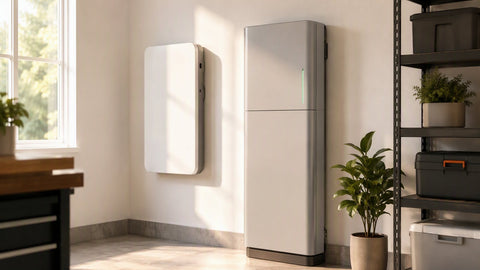
Enphase storage is philosophically different from DC-coupled competitors: batteries connect on the AC bus through their own integrated microinverters, so storage retrofits onto any existing Enphase system without touching the array wiring. The lineup we stock:
| Product | SKU | Price | Capacity | Output |
|---|---|---|---|---|
| ENCHARGE-3-1P-NA | PES-ESS-BTS-0013 | $2,942.62 | 3.4 kWh / 1.3 kW | AC-coupled |
| ENCHARGE-3T-1P-NA | PES-ESS-BTS-0171 | $2,917.68 | 3.4 kWh / 1.3 kW | AC-coupled |
| ENCHARGE-10-1P-NA | PES-ESS-BTS-0177 | $2,593.80 | 10.5 kWh class / 3.8 kW | AC-coupled |
| ENCHARGE-10T-1P-NA | PES-ESS-BTS-0175 | $9,975.00 | 10.5 kWh / 3.8 kW | AC-coupled |
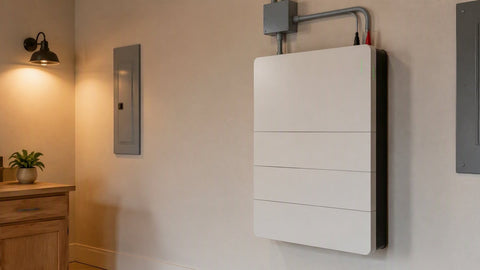
| IQBATTERY-5P-1P-NA | PES-PA-ELC-0377 | $4,389.00 | 5 kWh / 3.84 kW cont. | IQ Battery 5P Kit |
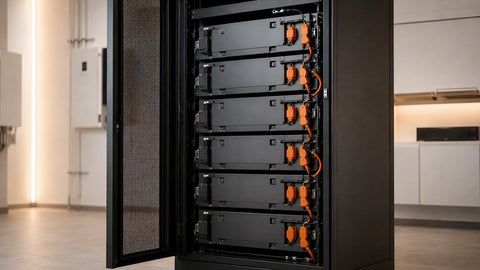
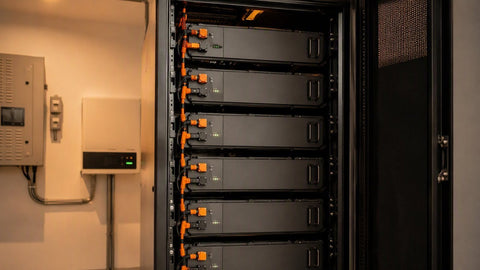
The IQ Battery 5P is the current-generation unit and the one we spec for new storage: 5 kWh LFP chemistry with 3.84 kW continuous / 7.68 kW peak output per unit — the power density jump over the older Encharge units is the story, since two 5Ps can start loads (well pumps, small AC compressors) that used to demand three Encharge-10s. The older Encharge line remains relevant for expansions on existing storage systems and for price-sensitive builds — note the ENCHARGE-10-1P at $2,593.80, which prices its 10.5 kWh class capacity aggressively against anything on the market per stored kWh. For sizing methodology, our battery sizing guide walks the load-audit math, and the battery life maintenance guide covers keeping whatever you buy healthy for its full cycle life. Cross-shop the full storage catalog — Enphase is the right answer for Enphase homes, not for every home.
System Controllers and Monitoring: The Brains of Backup
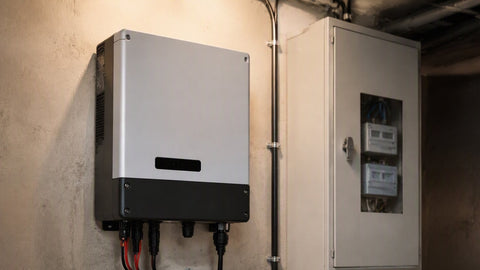
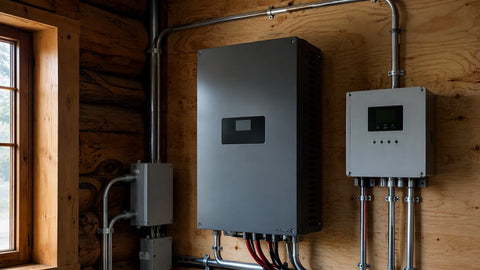
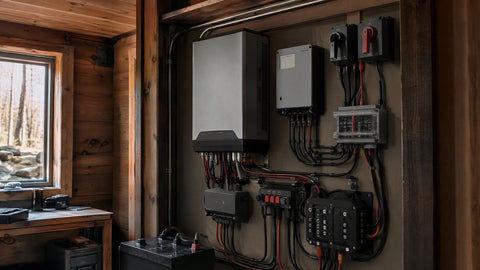
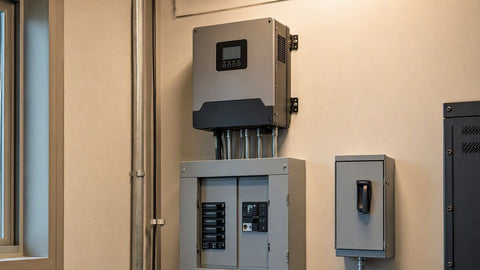
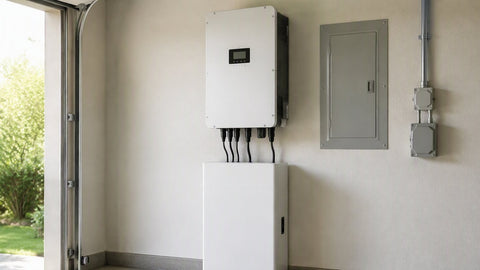
Grid-forming micros and batteries are useless without the switchgear that isolates the house from the grid during an outage. Enphase's answer is the IQ System Controller family — the SC200D for whole-home backup (200A service-rated, generator input supported) — which combines the automatic transfer switch, the microgrid interconnection device, and the IQ Gateway communications hub in one wall-mounted unit. For load management, the IQ Load Controllers shed non-essential circuits automatically when battery state-of-charge drops — the difference between a backup system that dies at midnight trying to run the water heater and one that's still making coffee on day three. Commissioning and monitoring run through the IQ Gateway and Enlighten cloud: per-module production, per-circuit consumption with CTs installed, and the installer-facing fleet view that makes remote diagnosis possible. I've diagnosed a failed micro from my truck at a supply house counter — the homeowner never knew there was a problem until the replacement arrived. That's the monitoring layer earning its keep.
Balance of System: The Parts Nobody Photographs
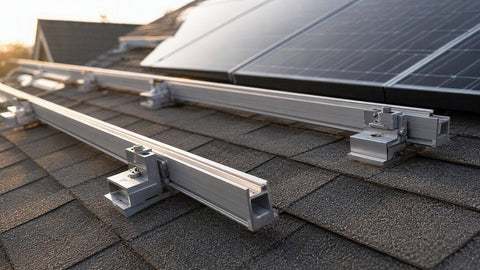
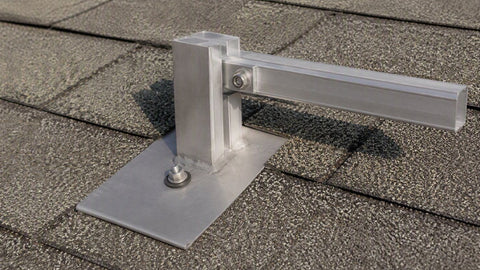
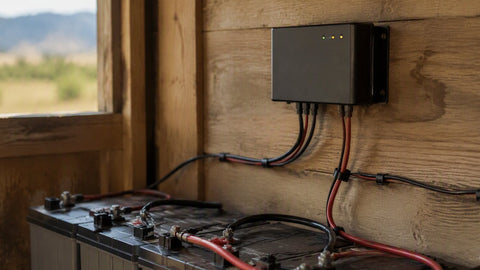
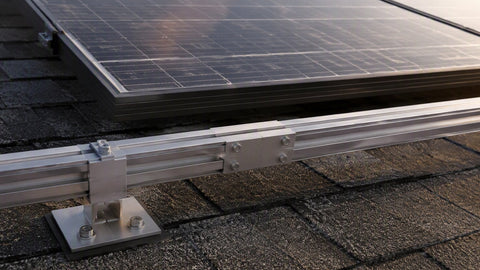
Enphase BOS is its own mini-catalog, and ordering it wrong is the most common rookie error. The trunk-cable architecture needs: Q-cable matched to your module count and orientation (portrait and landscape runs differ), Q-clips for cable management, terminator caps for cable ends, the IQ Combiner accessories for branch aggregation, and the EP200G-SC2-RSD rapid shutdown kit where the AHJ's NEC 690.12 interpretation requires it. For mounting, the microinverter bonding hardware kits handle the WEEB-style grounding through the rail — no separate ground wire per micro when installed per the manual, which is one of the small mercies of the Enphase rail interface. All of it lives in our Enphase collection, and the generic-but-essential cousins (PV wire, conduit, disconnects) live in cables and accessories and electrical supplies.
The Installer Program and Buying Channels
Enphase's go-to-market runs through its installer network, and the network tiers are worth understanding whether you're a contractor or a homeowner trying to decode quotes. Installers earn tier status through certified training and install volume, and the tiers unlock real program benefits — extended labor reimbursements on warranty work, marketing support, and priority allocation when hardware gets scarce. For contractors, the training is genuinely good: the Enlighten commissioning workflows, storage sizing, and generator-integration modules compress years of field lessons into a weekend. For homeowners, the practical translation is simple: a high-tier Enphase installer can do things with your warranty and your monitoring that a one-off installer cannot, and on a 25-year system that relationship is part of what you're buying. On the procurement side, Enphase distributes through wholesale channels rather than direct-to-consumer — which is where we come in. Our Enphase collection stocks the micros, batteries, controllers, and BOS with live pricing, and for contractor accounts we quote volume pricing on full-system BOMs: micros by the case, trunk cable cut to the job, and the small parts (terminators, Q-clips, disconnect tools) that stall a truck when they're missing. One honest caution on the gray market: Enphase hardware bought outside authorized channels can carry commissioning and warranty friction — serial registration and warranty start dates track the authorized chain, and a too-good-to-be-true pallet price on a marketplace is usually exactly that. Buy through the channel, register at commissioning, and the platform takes care of you for the next quarter-century.
Building an Enphase BOM: A Worked 24-Panel Job
Theory is cheap; here's the actual math for a real quote — a 24-panel residential job with modern 470W modules and partial-home backup. This is the checklist I run line by line:
| BOM Line | Selection & Math | Est. Cost Basis |
|---|---|---|
| Microinverters | 24 × IQ8M-72-2-US (330W) — 470W module ÷ 330W = 1.42 DC:AC ratio | 24 × $197.94 = $4,750.56 |
| Q-cable | Portrait layout, 24 drops + service loops ≈ 25-drop equivalent cable | ~$300–400 depending on runs |
| Cable management | 1 × 100-pc Q-clip bag per ~2 rows | ~$50 |
| Combiner / controller | SC200D System Controller for backup + consumption CTs | Quoted per project |
| Storage | 2 × IQ Battery 5P = 10 kWh / 7.68 kW continuous — covers fridge, furnace blower, lights, networking | 2 × $4,389.00 = $8,778.00 |
| Array AC | 24 × 330W = 7.92 kW AC ÷ 240V = 33A → two 20A 2-pole breakers, NEC 690.8 125% continuous sizing | Standard panel work |
| Grounding/BOS | Bonding hardware per micro; PV wire homeruns in EMT | ~$150–250 |
That NEC line deserves expansion because it's where inspections fail. Each 20A breaker supports at most 16A continuous (80% rule), i.e., 3,840W at 240V — so roughly 11 IQ8M micros per 20A breaker, not the 13–16 you might squeeze by nameplate dreaming. Enphase publishes maximum-micros-per-branch tables per micro model; print the current revision and tape it inside the combiner. The other NEC hot spots: rapid shutdown per 690.12 is inherent to the microinverter architecture (modules de-energize when AC drops — the cleanest compliance story in the industry), and the interconnection breaker math under 705.12 — on a 200A/200A-bus panel, a 40A solar breaker fits under the 120% rule; beyond that, plan a supply-side tap or derate the main.
IQ7 EOL Transition Guidance
Enphase has been progressively sunsetting the IQ7 line as IQ8 absorbs its roles — the IQ7PLUS-72-2-INT at $147.20 in our stock is effectively a closeout price, and availability across the family gets spottier every quarter. Practical guidance for contractors: for service and warranty work, like-for-like IQ7 replacements remain the path of least resistance, and Enphase's warranty pipeline still honors the 25-year coverage with current-generation equivalents when exact matches run out. For expansions on IQ7-era arrays, quote a separate IQ8 branch on its own trunk cable and combiner position rather than mixing generations on one run — mixed-generation strings commission fine electrically but complicate monitoring profiles and future service. For new construction, spec IQ8 exclusively and note it in your contracts, because a customer who reads a two-year-old blog post and demands "the cheaper IQ7 system" is a scope argument you don't need. The era ended gracefully; let it end.
Installer Notes: Twenty Years of Small Lessons
A few things the manuals don't emphasize. Torque the micro mounting bolts to the rail spec — under-torqued bonding hardware is the number-one cause of ground-fault nuisance trips I've chased, and it presents six months later, on humid mornings, on someone else's service call. Keep Q-cable drip loops honest at every micro; water tracks along the cable jacket and finds the connector seal eventually. On the commissioning side, build the Enlighten site profile before the crew leaves the roof, with every serial scanned into its array position — the hour it takes is repaid the first time you diagnose a dead unit remotely instead of rolling a truck to play twenty questions on a 12:12 pitch. And on battery jobs, load-test the system controller transition before the inspector arrives: kill the service disconnect with the house live and watch the transfer. Sub-20-millisecond transfer keeps the computers and the LED drivers alive; if something reboots, find out on your schedule, not the customer's.
Troubleshooting and Service Reality
The service experience is where the Enphase premium quietly pays its dividend. With per-module monitoring, the failure modes announce themselves: a micro that stops reporting, a module whose production sags against its row-mates (soiling, shading, or a developing bypass-diode issue), a branch breaker with a thermal signature that drifts. The workflow is remote diagnosis, then a targeted truck roll with the exact replacement part — contrast that with a string-inverter failure, where the whole array goes dark and the diagnosis starts on-site. The failure rates themselves are low: modern IQ-series field failure rates run in the fractions of a percent per year by most published fleet analyses, which across a 24-micro array still means you'll likely see one failure in the system's life. Plan for it: keep one spare of your most-deployed micro on the shelf, teach your service techs the Enlighten fleet view, and build the RMA workflow into your closeout documentation. Enphase's RMA process, for what it's worth, is the smoothest in the industry — pre-paid shipping labels, cross-shipment options, and replacements that arrive as current-generation equivalents with the warranty clock intact.
The Roadmap: What's Coming and How to Spec Around It
Enphase's public direction points three ways, and each has a spec implication for jobs you're selling now. First, higher-power micros tracking module wattage growth — the IQ8H at 384W won't be the ceiling, so design trunk cable and branch circuits with headroom rather than at the ragged edge. Second, deeper battery integration: the 5P's architecture is built for bidirectional EV charging and more aggressive grid-services programs, which argues for installing consumption CTs and load controllers even on solar-only jobs — the retrofit cost later dwarfs the incremental cost now. Third, software: grid-services revenue (virtual power plant programs) is becoming real money in several territories, and Enphase's installed base is the industry's largest VPP-ready fleet. None of this changes what you bolt to the roof this month. All of it argues for staying inside the ecosystem once you're in, because the compounding value of the platform lives in exactly these upgrades.
Warranty and RMA in Practice
Twenty-five years on a microinverter is a remarkable document, but read it the way a contractor should: the warranty covers the hardware replacement, and labor coverage depends on the installer tier and program participation. Enphase's installer network tiers (and the associated labor reimbursements) are worth pursuing if you install the brand regularly — the difference between an authorized installer and an unaffiliated one shows up precisely when a warranty truck roll needs paying for. For homeowners, the practical warranty advice is simpler: buy through a contractor or supplier who will still answer the phone in year nine. We handle warranty logistics for customers who bought through us, and the difference between a supported claim and a DIY claim against any manufacturer is measured in weeks.
Frequently Asked Questions
Is the Enphase IQ7 being discontinued?
IQ7 is in a progressive end-of-life transition as IQ8 absorbs its roles across every module wattage class. Stock remains available for warranty and service work, and the 25-year warranty is fully honored — but new installs should spec IQ8 for platform longevity, grid-forming capability, and compatibility with 450W+ modules.
What size microinverter do I need for a 470W solar panel?
The IQ8M (330W) or IQ8A (366W) both pair cleanly. A 470W module on an IQ8M runs a ~1.42 DC:AC ratio — light clipping on perfect cold noons, better harvest the rest of the time. For maximum harvest on unshaded high-irradiance sites, step up to the IQ8A or IQ8H.
Can Enphase microinverters work during a blackout without batteries?
IQ8 can, via Sunlight Backup with the IQ System Controller — the micros form a stable microgrid from sunlight alone and throttle output to match live household loads. IQ7 cannot; it's grid-following only and drops offline with the grid.
How many Enphase microinverters can go on one 20-amp breaker?
At 240V with the NEC 80% continuous-load rule, a 20A breaker supports 16A continuous ≈ 3,840W — about 11 IQ8M (330W) units. Enphase publishes per-model branch limits; follow the current table and derate for temperature where the AHJ requires.
Is the Enphase IQ Battery 5P worth it over the older Encharge units?
For new installations, usually yes: 3.84 kW continuous per 5 kWh unit is roughly triple the power density of the legacy Encharge line, which means starting motors and pumps with fewer units. For expanding existing Encharge systems or price-driven builds, the legacy line — especially the ENCHARGE-10 — still prices aggressively per kWh.
Does Enphase require internet for monitoring?
The IQ Gateway reports to Enlighten cloud over the homeowner's internet (or cellular modem accessory). Local production continues regardless — internet loss only pauses reporting, not generation. For service diagnostics and warranty workflows, connected systems are dramatically easier to support.
What warranty do Enphase microinverters carry?
25 years on IQ7 and IQ8 microinverters — the longest standard coverage in the inverter business, matched by few and beaten by none. IQ Batteries carry 15-year (5P) class coverage with cycle-throughput terms; read the current warranty document per SKU before quoting.
The ecosystem verdict: Enphase in 2026 is a mature, premium, fully-integrated platform — you pay more per watt than string architectures and you get per-module visibility, inherent rapid-shutdown compliance, grid-forming backup, and a 25-year warranty spine in return. Spec IQ8 for everything new, keep IQ7 for the service bench, pair batteries to loads rather than nameplates, and commission with the serials scanned. Do those four things and the system will still be boring — beautifully, profitably boring — in 2050.
If you're building one of these systems, the fastest path is a conversation, not a cart. Send us the module spec, the roof layout, and whether backup is in scope, and we'll return a complete BOM — micros matched to the modules, trunk cable counted to the drop, controller and batteries sized to the actual loads, and the small parts included the first time. That's how we've kitted thousands of Enphase jobs across the country, and it's the part of this trade we like best: the system works for twenty-five years because someone got the spreadsheet right on day one.