OutBack Power Brand Guide: FLEXmax Controllers, FlexPower Panels, and Radian Inverters
FLEXmax 60/80 MPPT controllers, Radian GS-series inverter/chargers, pre-wired FlexPower systems, MATE3s and OPTICS RE, and how OutBack compares to MidNite, Victron, and Schneider.
OutBack Power built the modern off-grid power center. The FLEXmax 80 was the first high-voltage MPPT controller most installers ever touched, the FlexPower panels turned inverter installation from an electrician's art project into an afternoon of mounting and terminating, and the Radian series brought true split-phase 120/240V hybrid operation to battery-based systems that needed to grid-sell and island in the same box. Two decades later, OutBack remains the default stack for serious off-grid and grid-interactive battery systems in North America. This guide covers the current lineup, the sizing math, and where OutBack wins and loses against the competition in 2026. Cross-shop with Victron vs OutBack and OutBack vs Schneider.
OutBack Power was founded in 2001 in Arlington, Washington — yes, the same town as MidNite, and for the same reason: the diaspora of Trace Engineering's off-grid engineering talent seeded both companies. Where MidNite focused on controllers and balance-of-system, OutBack built complete power systems: the FX inverter series, the MX60 (the first mass-market MPPT controller), then the FLEXmax line, the Radian hybrid platform, and the FlexPower pre-wired panels that tie it all together. The company now operates within the Enersys family alongside Alpha Technologies, which has meant continued engineering investment and stable supply through the component shortages that broke smaller brands.
Our counter experience: OutBack is the brand veteran off-grid installers spec by reflex, and the reflex is earned. I've serviced FX inverters that ran a remote cabin for fifteen years on the original boards. The FLEXmax 80s we installed in 2010-era systems are mostly still in service — we've replaced more of them for capacity upgrades than for failures. When a customer wants a system that outlives the mortgage, this is the short list.
The FLEXmax 60 and 80 remain the reference MPPT controllers for battery-based systems: 150V maximum input, 12–60V battery support, and thermal specs rated at a full 40°C ambient — a number competitors often bury. The FM80's 80A output at 40°C means what it says; on a hot power-room wall in August, the rating holds.
| Model | Max Output Current | Max PV Voc | Battery Voltages | Peak Efficiency |
|---|---|---|---|---|
| FLEXmax 80 (FM80-150VDC) | 80A @ 40°C | 150VDC (145V operating) | 12, 24, 36, 48, 60V | 97.5% (98.44% peak) |
| FLEXmax 60 (FM60-150VDC) | 60A @ 40°C | 150VDC (145V operating) | 12, 24, 36, 48, 60V | 98.1% (98.31% peak) |
Note the operating-versus-absolute input distinction: 150VDC is the never-exceed ceiling; 145V is the operating maximum. Design your strings to sit under 145V at record-low temperature per NEC 690.7 — the same cold-weather Voc math detailed in our MidNite guide's sizing section applies verbatim here. Both FLEXmax units carry the 80-character backlit display that makes field configuration possible without a laptop — a small thing until you're on a ladder in a pumphouse without cell service.
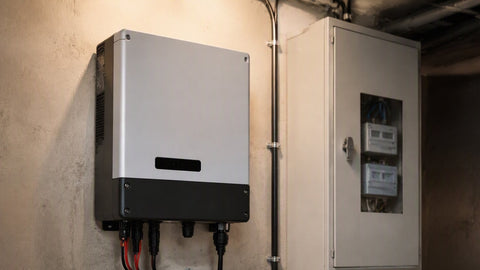
The Radian GS series is OutBack's split-phase hybrid platform: 120/240VAC output from a single 48V unit, seven operating modes including GridZero (which prioritizes battery and solar while keeping the grid as pure backup) and full grid-interactive sell-back. The GS8048A delivers 8,000VA continuous; stack two for 16 kW. This is the hardware that runs serious off-grid homes and grid-tied battery-backup systems where the customer wants one box doing inversion, charging, transfer, and grid interaction.
| Model | Continuous Power | AC Output | DC Input | Efficiency |
|---|---|---|---|---|
| GS8048A | 8,000VA | 120/240VAC, 60Hz | 48VDC (40–64V) | 92.5% (CEC weighted) |
| GS4048A | 4,000VA | 120/240VAC, 60Hz | 48VDC (40–64V) | 92.5% (CEC weighted) |
| GS7048E | 7,000VA | 230VAC, 50Hz | 48VDC (40–64V) | 92% |
| GS3548E | 3,500VA | 230VAC, 50Hz | 48VDC (40–64V) | 92% |
GridZero mode deserves explanation because it answers the question we hear weekly: "can I run on battery and solar first, and only touch the grid when I have to?" Yes — the Radian islands the loads, keeps the grid connection as a pass-through reserve, and never sells back. For customers in no-export utility territories or with unfavorable net metering, GridZero plus a properly sized LFP bank is the architecture. The battery sizing guide covers how big that bank needs to be.
MATE3s System Display
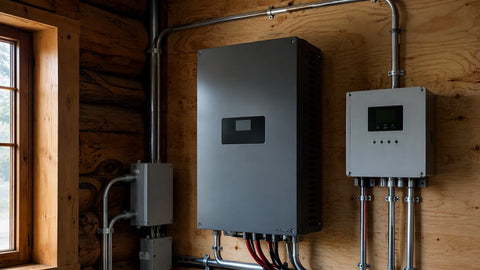
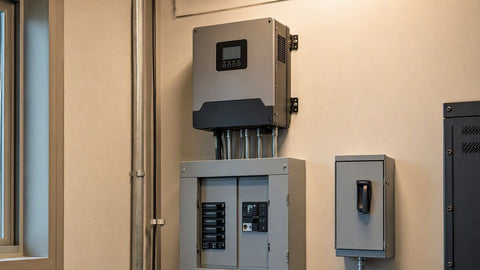
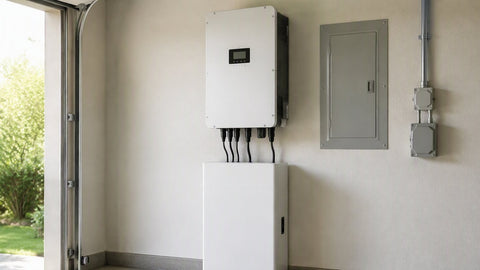
FlexPower panels are OutBack's force multiplier: factory pre-wired power centers integrating the Radian or FX inverter, FLEXmax controllers, DC and AC disconnects, the MATE3s system display, FLEXnet DC battery monitoring, and HUB communications manager on a single powder-coated backplane. The FPR-8048A is the flagship: a complete 8 kW hybrid system that mounts on the wall and terminates in an afternoon.
| Model | Category | Key Specs | Application |
|---|---|---|---|
| FLEXmax 80 (FM80-150VDC) | MPPT charge controller | 80A, 150V, 12–60V battery, 97.5% efficiency | Off-grid and battery-based PV systems |
| FLEXmax 60 (FM60-150VDC) | MPPT charge controller | 60A, 150V, 12–60V battery, 98.1% efficiency | Mid-size off-grid systems |
| Radian GS8048A | Grid/hybrid inverter/charger | 8,000VA, 120/240VAC, 48V, 7 operating modes | Grid-interactive and off-grid residential/commercial |
| FLEXpower Radian FPR-8048A | Pre-wired system panel | 8kW, FM80, MATE3s, FLEXnet DC, HUB 10.3 | Complete off-grid/hybrid system |
| MATE3s | System display/controller | LCD, Ethernet, OPTICS RE, stacking management | System monitoring and control |
The economics favor pre-wired more than most customers expect. A FlexPower panel costs more than the sum of its components on paper — and less than the components plus a day of electrician labor, a custom enclosure, and the inspection risk of field-built DC wiring. Every internal connection is factory torqued, labeled, and documented, which is exactly what a plan reviewer wants to see on DC circuits carrying 100+ amps. We've installed both ways; the pre-wired panels commission faster and come back cleaner.
Here's the design math for a real configuration we quote constantly: an off-grid home with a 6 kW array, 48V LFP bank, and a Radian-based power panel.
| Design Step | Rule / Formula | Worked Example |
|---|---|---|
| Daily load | Summed Wh/day from load audit | 12 kWh/day (efficient 1,800 sq ft home) |
| Battery capacity | Daily load × autonomy days ÷ usable DoD | 12 kWh × 2 days ÷ 0.8 = 30 kWh bank (e.g., 6 × 5 kWh LFP) |
| Array size | Daily load ÷ (peak sun hours × system efficiency) | 12 kWh ÷ (4.5 PSH × 0.8) ≈ 3.3 kW minimum; 6 kW chosen for winter margin |
| Charge controller count | Array watts ÷ (controller amps × bank charge volts) | 6,000W ÷ (80A × 54V) = 1.39 → 2 × FM80 |
| Inverter | Peak coincident load + motor-start surge | GS8048A: 8 kVA continuous, handles well pump + mini-split + general loads |
| Controller breaker (NEC 690.8) | Rated output × 125% | 80A × 1.25 = 100A per controller, 2 AWG Cu minimum |
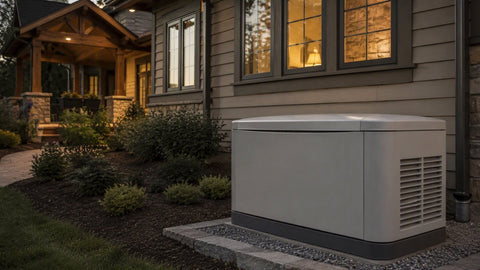
| Generator integration | AC input via Radian gen port | 8–12 kW standby generator; see our 10–15 kW generator range |
The two-controllers-for-6kW row is the one people try to cheat. An 80A controller into a 48V bank maxes around 4.3 kW of array; a 6 kW array on one FM80 means chronic clipping at solar noon, which is wasted hardware. Two FM80s on separate array segments also give you redundancy — one controller down leaves half the array charging while you wait for parts. For panel-side hardware, our solar panel inventory and the off-grid battery roundup cover the rest of the BOM.
| Feature | OutBack (FM80) | MidNite (Classic 150) | Victron (SmartSolar 150/70) |
|---|---|---|---|
| Max output current | 80A | 96A | 70A |
| Max input voltage | 150V | 150V (HyperVOC) | 150V |
| Battery voltages | 12–60V | 12–72V | 12–48V |
| Peak efficiency | 97.5% | ~97% | 98%+ |
| Data logging | 128 days | 380 days | Cloud (VRM) |
| Built-in display | Yes (80-char LCD) | Yes (graphical) | No (Bluetooth app) |
| Built-in AFCI | FM100 only | Yes (all Classics) | No |
| Pre-wired system | FlexPower panels | E-Panel | No (DIY assembly) |
| Grid/hybrid inverter | Radian (7 modes, GridZero) | Rosie (7,000W) | MultiPlus-II (ESS) |
| Remote monitoring | OPTICS RE (paid) | My MidNite (free) | VRM portal (free) |
| Warranty | 5 years (10-year optional) | 5 years (extendable) | 5 years |
The honest summary: OutBack's moat is the complete integrated stack — controller, hybrid inverter, pre-wired panel, and system controller designed together, with two decades of field history. MidNite wins on controller features and free monitoring. Victron wins on efficiency, app ecosystem, and price at the component level, but you assemble and wire the system yourself. For customers who want one vendor's engineering behind the whole power room, OutBack is the answer; the Victron brand guide covers the strongest alternative.
What our crews do on every OutBack install
- Hang the FlexPower panel on solid structure. A loaded FPR-8048A is heavy — lag into studs or masonry per the manual, never into bare drywall or ply over foam.
- Program the MATE3s before connecting PV. Battery chemistry, absorb/float setpoints, and grid mode get configured with the array breakers open; energize PV only after the charge profile matches the battery manufacturer's sheet.
- Verify FLEXnet DC shunt orientation. The battery monitor reads backwards if the shunt is reversed; check at commissioning with a known load, not during the first cloudy week.
- Size the battery cables for the inverter, not the average load. A GS8048A at full output pulls ~175A continuous from the 48V bank with surge well beyond; 4/0 copper on short runs is the norm. Our NEC ampacity guide has the tables.
- Exercise the generator auto-start monthly. AGS settings drift, generators sit, and the first real test should not be an ice storm. We've made too many January service calls that a monthly exercise would have prevented.
A word for the thousands of sites still running FX-series inverters: the FX line (FX/VFX/GVFX, 2–3.6 kW sealed and vented units) built OutBack's reputation and remains in widespread service — we still support them weekly. The Radian is not a drop-in replacement (different footprint, different AC architecture), but it is the correct upgrade when an FX site grows past its capacity or needs hybrid grid-interactive modes the FX never had. The FLEXmax controllers and MATE-family system components carry forward, so an FX-to-Radian upgrade usually keeps the charge control and monitoring layers intact. If you're sitting on a fifteen-year-old FX system that still works — and many are — the move is capacity-driven, not failure-driven.
OutBack hardware carries a 5-year standard warranty with a 10-year option on the Radian line — worth buying on inverter/chargers that anchor a system, less critical on controllers. Battery compatibility spans FLA, AGM, and LFP, with the Radian and FLEXmax charge parameters fully programmable per chemistry; for LFP banks with CAN communication, confirm your battery brand's OutBack integration notes, since some pairs run voltage-based rather than full closed-loop communication. Generator integration through the Radian's AC input supports auto-start via the AGS function on the MATE3s, which is how off-grid sites pair the system with a standby unit from our generator inventory for the dark weeks of December.
After two decades of OutBack installs across our customer base, the failure patterns are stable. Battery cables sized for average load instead of inverter peak — a GS8048A pulling full output wants 4/0 and short runs, and we've seen 2/0 installs run hot enough to discolor lugs. FLEXnet DC shunts installed backwards, producing mirror-image SOC readings that send owners chasing phantom battery problems. MATE3s profiles programmed for the wrong battery chemistry after a bank upgrade, so a new LFP bank gets FLA absorb voltages. And generator AGS settings configured once, never tested, discovered broken during the first real storm of winter. None of these are product flaws; all of them are prevented at commissioning with a checklist and an hour of load testing.
Honesty about the boundaries: for a straightforward grid-tied battery-backup install on a standard suburban home, an all-in-one hybrid (Sol-Ark, EG4 18KPV) is usually cheaper and faster than a Radian-based FlexPower build, and we say so at the counter. For app-first homeowners who want polished phone monitoring without a subscription, Victron's VRM wins. OutBack's sweet spot is the serious battery-based system: off-grid homes, grid-interactive sites that need GridZero-style control, expandable homestead builds, and any installation where pre-wired, factory-documented DC wiring is worth a premium — which, on inspected jobs carrying 100+ amp DC circuits, it almost always is.
One more scenario where the brand shines that's easy to overlook: expansion jobs on existing OutBack sites. Thousands of cabins and homesteads run FX or early Radian systems with FLEXmax controllers and MATE displays, and the cleanest upgrade keeps everything in the family — add a second FM80, stack a second Radian, extend the HUB network. Mixing brands on a legacy OutBack site means two monitoring platforms and two configuration philosophies fighting over one battery bank. When the existing infrastructure is OutBack, the inertia argument is technical, not sentimental.
And a note on the used market, because customers ask: twenty-year-old OutBack FX inverters and MX60 controllers trade actively on the secondary market, and many still work. We don't install used power electronics — no warranty, unknown thermal history, unknown surge exposure — but the existence of a healthy used market tells you something real about the platform's longevity. Gear becomes a used market only when it survives long enough to be worth reselling. The disposable end of this industry has no secondary market at all.
5. What warranty options does OutBack Power offer?
Is OutBack Power still in business and supported?
Yes. OutBack operates within the Enersys/Alpha Technologies family, with continued product manufacturing, firmware support, and warranty service. Supply through the 2020s component shortages remained stable — one of the reasons we continue to stock the line in depth.
FLEXmax 60 or FLEXmax 80 — which do I need?
2. What is the difference between the FM80 and FM60 charge controllers?
Match controller current to array size and battery voltage: array watts ÷ battery charge voltage gives required amps. A 3 kW array on a 48V bank needs ~55A — an FM60 fits. A 4–4.3 kW array maxes the FM80. Above that, use two controllers on separate array segments rather than clipping one. The FM60 is slightly more efficient; the FM80 buys headroom.
What is GridZero mode on the Radian?
GridZero prioritizes solar and battery for your loads while keeping the grid connection as pure backup — no sell-back, no grid draw until the battery hits your reserve floor. It's the right mode for no-export utility territories, unfavorable net metering, or customers who simply want the grid as a last resort.
Can a FlexPower panel really be installed in one day?
Mounting and terminating, yes — the panel arrives with inverter, controller, breakers, shunt, and display factory-wired and torqued. The remaining work is structure, battery cables, PV homeruns, AC in/out, and commissioning. Budget a full day for a competent two-person crew plus inspection; a ground-up custom build of the same system takes three to four times the labor.
Does OutBack monitoring cost money?
OPTICS RE, the cloud platform, carries a subscription for full remote monitoring and control. Local monitoring via the MATE3s display and FLEXnet DC is included with the hardware. If free cloud monitoring is a priority, compare MidNite's My MidNite and Victron's VRM, both subscription-free.
Can the Radian run my whole off-grid house?
A single GS8048A delivers 8 kVA continuous at 120/240V with strong surge capability — enough for a well-pump-and-mini-split household with ordinary loads managed sensibly. Heavy coincident loads (electric range + dryer + large A/C) push past it; stack two units for 16 kW or manage the big loads. Run the load audit first — the arithmetic in Section 5 is the honest version.
- OutBack Power published specifications: FLEXmax 60/80, Radian GS series, FlexPower panels, MATE3s (2025–2026 revisions)
- NEC 2023 Articles 690.7/690.8 (PV circuit sizing), 705 (interconnected power sources), 480 (storage batteries)
- UL 1741 (inverters and controllers), CEC weighted efficiency listings
- PES Supply internal off-grid system designs and installer field reports, 2019–2026
Shop OutBack Power at PES Supply
FLEXmax controllers, Radian inverters, and FlexPower pre-wired systems in stock — with full system design help from people who've commissioned these panels.
Browse Inverters & Power Systems