Pylontech Brand Guide: Modular LFP Batteries (US Series & Force)
US2000C, US3000C, US5000, and Force H2/L2 modular lithium batteries, cycle-life and degradation math, inverter compatibility, and how Pylontech compares to EG4, BYD, and SimpliPhi.
Pylontech is the quiet giant of modular lithium storage. The Shanghai-based company has shipped more residential and light-commercial battery modules than almost anyone — over a million units by most counts — and the US2000/3000/5000 rack-format modules have become the de facto standard 48V building block that half the inverter industry designs around. If you've looked inside a European or Australian hybrid install in the last five years, you've probably seen Pylontech modules in the rack. This guide covers the current lineup, the cycle-life math that determines what these batteries actually cost per delivered kWh, and the compatibility details that make or break an install. Cross-shop with EG4 vs Pylontech and Pylontech vs BYD.
Pylontech (Pylon Technologies) was founded in 2009 and went public on the Shanghai STAR Market in 2020, riding the residential-storage wave to become one of the largest dedicated battery-energy-storage manufacturers in the world. The company's strategy is deliberately unsexy: no consumer brand campaigns, no proprietary walled-garden ecosystem — just well-built LFP modules with an open CAN/RS485 communication protocol that inverter manufacturers integrate natively. That openness is the product. Victron, SMA, Solis, Deye, GoodWe, Growatt, and dozens of others ship with Pylontech protocol support baked in.
From the wholesale side, we've watched battery brands arrive with fanfare and vanish inside three years, stranding customers with orphan BMS firmware. Pylontech's scale and its position inside the supply chains of the major inverter brands make it the closest thing to a safe bet in modular storage. The independent test record helps too: Australia's ITP Renewables battery test centre has run Pylontech modules through accelerated cycling for over a decade, publishing real degradation curves rather than datasheet promises — the modules have held up among the best in class. When we recommend a rack battery for a system that needs to run 15 years, this track record is the reason.
US Series (48V Rack Modules)
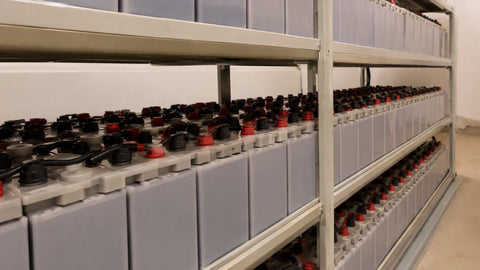
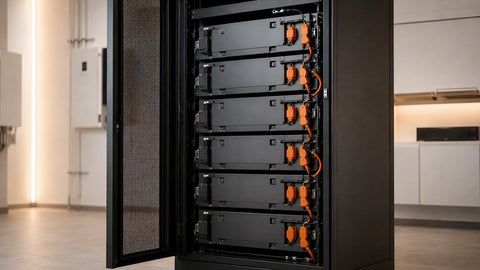
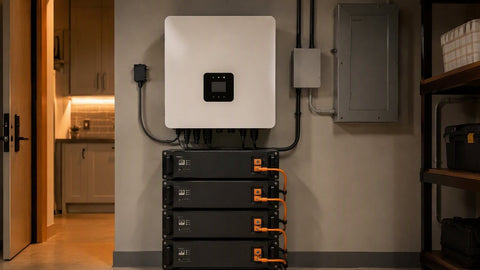
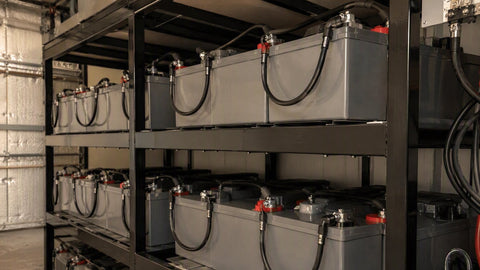
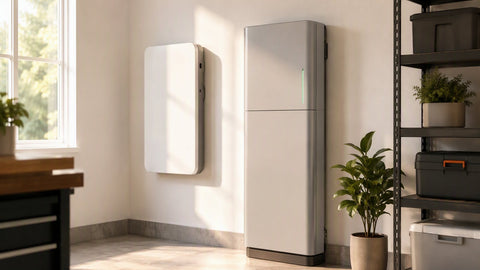
The US series is the standard 19-inch rack-format 48V module family: US2000C (2.4 kWh), US3000C (3.5 kWh), and US5000 (4.8 kWh at 51.2V nominal). Modules parallel with simple DC busbar and communication daisy-chaining; the master module's BMS manages the stack and talks to the inverter over CAN or RS485. The US5000 is the volume seller — four modules make a 19.2 kWh bank that fits a single rack and runs a typical efficient home overnight. These are the modules we stock deepest in our server rack battery inventory.
Force Series (Stacked Systems)
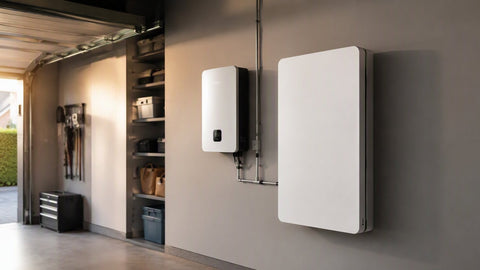
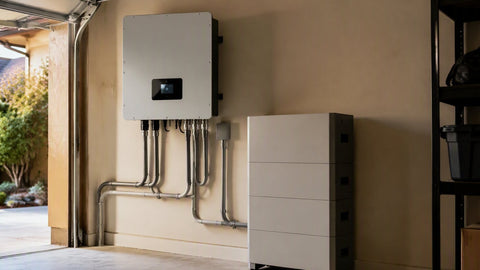
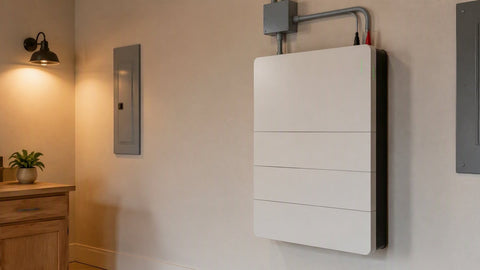
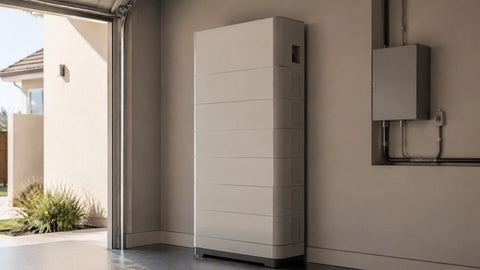
The Force line packages the same LFP cells into floor-stacked tower systems. Force H2 is the high-voltage variant (7.1–17.76 kWh per tower, scaling to multiple towers) designed for hybrid inverters with HV battery inputs — higher voltage means lower current, smaller cable, and better round-trip efficiency. Force L2 is the 48V tower for low-voltage inverter ecosystems. For residential hybrid installs where a wall-mounted battery won't scale and a rack won't fit the aesthetic, the Force towers are the middle path.
| Model | Capacity | Voltage | Chemistry | Cycle Life | Price Range |
|---|---|---|---|---|---|
| Pylontech US2000C | 2.4 kWh | 48V | LFP | 6,000 @ 80% DoD | $900–$1,200 |
| Pylontech US3000C | 3.5 kWh | 48V | LFP | 6,000 @ 80% DoD | $1,400–$1,800 |
| Pylontech US5000 | 4.8 kWh | 51.2V | LFP | 6,000 @ 80% DoD | $1,900–$2,500 |
| Pylontech Force H2 | 7.1–17.76 kWh | High Voltage | LFP | 6,000 @ 80% DoD | $4,500–$8,500 |
| Pylontech Force L2 | 5.12 kWh+ | 48V | LFP | 6,000 @ 80% DoD | $2,500–$3,500 |
Battery economics are lifetime-throughput economics. The sticker price divided by nameplate capacity is the lazy number; the honest number is purchase price divided by the total kWh the battery will deliver over its rated life, adjusted for depth of discharge. Here's the math we run for customers comparing battery options — the same arithmetic behind our runtime calculator.
| Parameter | Formula | US5000 Worked Example |
|---|---|---|
| Usable energy per cycle (80% DoD) | Capacity × DoD | 4.8 kWh × 0.8 = 3.84 kWh/cycle |
| Lifetime throughput (rated) | Usable per cycle × rated cycles | 3.84 × 6,000 = 23,040 kWh |
| Cost per delivered kWh | Module price ÷ lifetime throughput | $2,200 ÷ 23,040 ≈ $0.095/kWh |
| Calendar life at 1 cycle/day | Rated cycles ÷ 365 | 6,000 ÷ 365 ≈ 16.4 years |
| Capacity retention at end of rating | Manufacturer spec | ~60–70% after 6,000 cycles (battery still usable, not dead) |
| Daily cycling at 90% DoD instead | Reduced cycle life (typ. ~4,500–5,000) | Deeper cycling trades cycle count for per-cycle energy — model both before sizing |
Two takeaways. First, under ten cents per delivered kWh is why LFP rack batteries killed the economics of every alternative chemistry for stationary storage — lead-acid at 500–1,200 cycles can't get close, and the lithium vs lead-acid guide runs that comparison in full. Second, "6,000 cycles" is not a death date: end-of-rating means the module holds roughly 60–70% of original capacity and keeps working. Real-world ITP Renewables testing shows Pylontech modules degrading gracefully along published curves, which is exactly what you want from a 15-year asset.
| Design Step | Rule / Formula | Worked Example (off-grid cabin) |
|---|---|---|
| Nightly load | Summed Wh from 5 p.m. to sunrise | 7.5 kWh |
| Autonomy target | Days of no-sun coverage | 1.5 days |
| Required usable energy | Nightly load × autonomy | 11.25 kWh usable |
| Nameplate capacity at 80% DoD | Usable ÷ 0.8 | 14.1 kWh nameplate |
| Module count (US5000) | Nameplate ÷ 4.8 kWh, round up | 3 × US5000 = 14.4 kWh |
| Discharge current check | Peak inverter draw ÷ bank voltage vs. module rating (US5000: ~100A cont. per module typical) | 5 kW inverter ÷ 48V ≈ 104A → 3 modules × ~100A share = comfortable headroom |
The discharge-current row is the sizing error we see most: a single 4.8 kWh module cannot feed a 6 kW inverter at full tilt. Per-module continuous discharge ratings (roughly 100A on the US5000) mean small banks bottleneck big inverters regardless of kWh capacity. Three modules is our practical minimum for a 5–6 kW inverter; four for 8 kW. The full sizing workflow lives in the battery sizing guide.
| Metric | Pylontech US5000 | EG4 LifePower4 V2 | BYD LVS 4.0 | SimpliPhi PHI 3.8 |
|---|---|---|---|---|
| Capacity | 4.8 kWh | 5.12 kWh | 4.0 kWh | 3.8 kWh |
| $/kWh (street) | ~$260–$320 | ~$235–$285 | ~$450–$625 | ~$590–$660 |
| Cycle life (80% DoD) | 6,000 | 6,000+ | 6,000+ | 10,000+ |
| Max parallel | 8 (typical), 40 w/ LV Hub | 64 | 16 towers | Scalable |
| BMS comms | Dual BMS, RS485/CAN | 100A, RS485/CAN | Built-in, CAN/RS485 | Integrated, CAT5 |
| Independent testing | ITP Renewables (12+ yr) | — | — | — |
The honest read: EG4 wins on raw price per kWh and US-market support, and we sell a lot of it — see the EG4 brand guide and EG4 vs BYD. Pylontech counters with the deepest inverter-compatibility list in the industry and the only long-run independent degradation test record in this table. SimpliPhi is the premium ruggedized option for extreme environments (SimpliPhi guide), and BYD's LVS/HVS lines dominate certain international channels (BYD guide). For a Victron, Solis, Deye, or SMA-based system, Pylontech's native protocol support is often the deciding factor — plug in the CAN cable and the inverter sees state-of-charge, voltage windows, and alarms without middleware.
What our installers check on every Pylontech bank
- Charge every module to full before stacking. Paralleling modules at wildly different states of charge hammers the BMS contactors and can trip protection on first connection. We pre-charge each module individually — it takes an afternoon and prevents a week of phantom faults.
- Set the CAN protocol explicitly. The inverter's battery profile must match the Pylontech protocol version; "auto-detect" fails more often than the marketing suggests. Verify the inverter reports correct SOC before leaving the site.
- Keep the bank within its thermal window. LFP charging below 0°C is restricted by the BMS for good reason — lithium plating is permanent damage. Unconditioned-space installs in cold climates need the bank indoors or in an insulated, heated enclosure. Our battery life extension guide covers thermal management.
- Torque and witness-mark every busbar connection. At 100+ amps per module, a loose M8 lug is a heater. Torque to the manual's spec, paint-pen the mark, and re-check after the first week of thermal cycling.
- Update BMS firmware when the inverter maker publishes a compatibility note. The inverter-battery handshake improves over time; check both vendors' firmware bulletins at commissioning.
For the rest of the system around the battery — hybrid inverter selection, wiring, and disconnects — our BMS explainer, panel-to-battery wiring guide, and whole-home backup cost breakdown cover the adjacent decisions.
Pylontech modules carry a 10-year warranty (regional terms vary; verify the current document for your market) alongside the 6,000-cycle performance rating, and the line is certified to UL 1973 for stationary batteries, UN 38.3 for transport, and carries UL 9540/9540A data at the system level for permitted residential storage. On permitted installs, the certification package matters as much as the hardware: AHJs reviewing battery systems want the UL 9540 listing and the 9540A thermal-runaway test data, and Pylontech's documentation package is complete enough that our customers' permit packets rarely bounce on the battery section.
Support runs through the distributor and the inverter ecosystem rather than a direct consumer channel — which is fine for installer-led installs and worth knowing if you're a DIYer. The failure mode we see most isn't cell failure at all; it's communication faults after inverter firmware updates, resolved by re-selecting the battery profile or updating BMS firmware. Keep both vendors' firmware current and the stack is boring in the best way.
| Real Configuration | Modules | Capacity | Typical Application |
|---|---|---|---|
| Weekend cabin | 2 × US2000C | 4.8 kWh | LED lighting, refrigeration, device charging, small inverter |
| Grid-tied self-consumption | 3 × US5000 | 14.4 kWh | Overnight loads on a hybrid inverter, TOU arbitrage |
| Full off-grid home | 6 × US5000 | 28.8 kWh | Two autonomy days for an efficient household |
| Light commercial | 2 × Force H2 towers | ~35 kWh HV | Peak shaving and backup on a three-phase hybrid |
Across Pylontech and its competitors alike, the same bank-level errors recur. Paralleling modules at mismatched states of charge — the highest-stress event a BMS contactor ever sees — because the installer skipped individual pre-charging. Inverter battery profiles left on a generic lithium preset instead of the Pylontech-specific protocol, so the inverter guesses at SOC and drifts into premature cutoff or chronic undercharging. Banks expanded a year after commissioning with new modules mixed into old ones at different wear levels, which works electrically but muddies the BMS's SOC math for weeks. And cold-garage installs where December charging gets BMS-limited every morning because nobody read the thermal window on the datasheet. Every one of these is an afternoon of prevention versus a week of diagnosis.
A word on system pairing we give every customer: the battery is only as smart as its conversation with the inverter. Pylontech's closed-loop CAN communication lets the inverter see real SOC, real-time voltage windows, and fault states, which is categorically better than voltage-based guessing — but only when the cable is connected, the protocol is selected, and both firmware versions are current. We commission every Pylontech bank with a live SOC verification: charge to full, watch the inverter report 100%, then discharge a known load and confirm the reported SOC tracks. Ten minutes at commissioning, zero mysteries for the next decade.
On physical installation, two practices separate clean banks from problem banks. First, rack the modules with airflow front-to-back and don't stack other heat-generating equipment directly beneath the bank — LFP is tolerant, but sustained operation at the top of the thermal window measurably accelerates the degradation curve, and the ITP data shows it. Second, dress the DC and comms cabling so a module can slide out for service without unlacing the whole rack. The first time you swap a single module in a six-module stack in twenty minutes instead of half a day, that cable discipline pays for itself. These are the habits we build into every bank that leaves our shop, and they're the reason our installed Pylontech base generates so few service calls.
One more math block, because it decides system economics and rarely gets run: LFP rack batteries deliver roughly 90–95% round-trip efficiency on the DC side, but the full AC-coupled path — PV to inverter to battery to inverter to loads — stacks conversion losses. A realistic full-path figure for a well-matched hybrid system is 85–90%. At the US5000's ~$0.095/kWh storage cost from Section 3, add the lost harvest (10–15% of each stored kWh) and you land near $0.11/kWh for stored energy — still comfortably under every grid rate in our service regions, which is the entire economic case for self-consumption storage. Run your own numbers with your utility's rate structure; the runtime calculator handles the load side.
How long will a Pylontech battery actually last?
The rating is 6,000 cycles at 80% depth of discharge — about 16 years of daily cycling — to roughly 60–70% capacity retention, after which the battery keeps working at reduced capacity. Independent ITP Renewables testing has tracked Pylontech modules for over a decade and shows degradation following the published curves. Realistic service life with normal use is 15+ years.
Which inverters work with Pylontech batteries?
Pylontech's CAN/RS485 protocol is natively integrated by Victron, SMA, Solis, Deye, GoodWe, Growatt, and most major hybrid inverter brands — it's the broadest compatibility list in modular storage. Set the matching battery profile in the inverter, connect the CAN cable, and the inverter reads SOC and charge windows directly from the BMS.
How many US5000 modules can I connect together?
Up to 16 modules per stack in typical configurations (8 in some inverter-paired setups), and up to 40 with the LV Hub for large banks — roughly 76–192 kWh of 48V storage. Beyond module count, watch per-module discharge ratings: small banks bottleneck large inverters on current, not capacity.
Pylontech or EG4 — which should I buy?
EG4 wins on price per kWh (~$235–$285 vs ~$260–$320) and US-market support. Pylontech counters with the industry's deepest inverter-protocol compatibility and a 12+ year independent degradation test record. For Victron, SMA, or international-brand inverters, Pylontech's native integration often decides it; for EG4 or Sol-Ark ecosystems, EG4 batteries are the natural pair.
What's the difference between Force H2 and the US series?
US series modules are 48V rack-format building blocks for low-voltage inverter ecosystems. Force H2 is a high-voltage stacked tower (7.1–17.76 kWh per tower) for hybrid inverters with HV battery inputs — higher voltage means lower current, smaller cable, and better round-trip efficiency. Force L2 is the 48V tower version. Match the battery family to the inverter's battery-input voltage class.
Can Pylontech batteries be installed outside or in a cold garage?
The modules are indoor-rated (IP20-class enclosures); outdoor installs need a weatherproof, thermally managed enclosure. Below 0°C the BMS restricts charging to prevent lithium plating, so cold-climate installs need the bank indoors or in an insulated, heated cabinet. High heat accelerates degradation — keep the bank in its rated thermal window for the full 6,000-cycle life.
- Pylontech published specifications: US2000C, US3000C, US5000, Force H2/L2 (2025–2026 revisions)
- ITP Renewables Lithium Ion Battery Test Centre public reports (Pylontech modules, long-run cycling)
- UL 1973 (stationary batteries), UL 9540/9540A (energy storage systems), UN 38.3 (transport)
- PES Supply internal storage-system designs and installer field reports, 2021–2026
Shop Pylontech at PES Supply
US-series rack modules and Force towers in stock — with bank-sizing and inverter-compatibility checks before you order.
Browse Lithium Batteries