Brand Guide · LFP Batteries
SimpliPhi Power: Ruggedized LFP Batteries Brand Guide
The installer's guide to SimpliPhi — PHI 3.8, AmpliPHI, and 6.6 kWh batteries, 10,000-cycle LFP chemistry, autonomy and throughput math, and how they compare to EG4, Pylontech, and Fortress.
SimpliPhi Power built its reputation the hard way: putting lithium batteries in places that destroy batteries. The California-based company cut its teeth on military, film-production, and mobile power applications — film sets running silent generators out of Pelican-style cases, forward operating bases, expedition vehicles — then brought that ruggedized discipline to the residential and off-grid solar market. The result is the PHI (pronounced "fee," from the Greek letter) battery line: lithium iron phosphate cells in enclosures engineered for abuse, with a BMS designed by people who've watched cheaper batteries fail in the field.
The chemistry choice matters. SimpliPhi went all-in on lithium iron phosphate (LFP) years before the rest of the residential market abandoned NMC. LFP brings thermal stability — no thermal runaway events, no cobalt, no fire-code drama in most jurisdictions — plus the cycle life that makes the economics work. SimpliPhi's bet looked expensive in 2015 and prescient by 2022, when fire codes and insurance underwriters started punishing NMC chemistry in residential installs.
We've hauled PHI batteries up snowy access roads in the back of a pickup, and that sentence tells you who this brand is for. The boxes are heavy for their capacity because the enclosure is metal, the BMS is serious, and the terminals are built for 4/0 lugs and real torque. Nobody at SimpliPhi optimized for a glossy unboxing video. They optimized for the install that still works in 2040.
Three families anchor the catalog. The PHI 3.8 (48 V, 3.8 kWh) is the original building block — drop-in replacement for a 4×GC2 lead-acid string, 10,000+ cycles at 80% DoD, stackable to serious capacity. The AmpliPHI 3.8 adds the advanced BMS with expanded communications. The SimpliPHI 6.6 doubles capacity per box in an IP65-rated metal enclosure for outdoor-rated installs, and the pre-built 20 kWh stacks bundle multiple units with racking and busbar for one-part-number whole-home banks. The lineup:
| Model | Capacity | Voltage | Chemistry | Cycle Life | Price Range |
|---|---|---|---|---|---|
| SimpliPhi PHI 3.8 (48V) | 3.8 kWh | 48V | LFP | 10,000+ @ 80% DoD | $2,240–$3,500 |
| SimpliPhi AmpliPHI 3.8 (48V) | 3.8 kWh | 48V | LFP | 10,000+ @ 80% DoD | $2,590–$3,800 |
| SimpliPhi SimpliPHI 6.6 | 6.65 kWh | 48V | LFP | 6,000+ @ 80% DoD | $2,462–$3,500 |
| SimpliPhi 20 kWh Stack | 19.95 kWh | 51.2V | LFP | 6,000+ @ 80% DoD | $7,000–$9,000 |
All of them speak the same integration language: 48 V nominal, CAN bus where your inverter supports it, voltage-setpoint operation where it doesn't. Pair them with hybrid inverters from our hybrid inverter lineup, and see the inverter-side pairing details in the Sol-Ark and Schneider Conext brand guides.
Market position, plainly stated: SimpliPhi is the premium domestic option in a market flooded with imported value LFP. They are not trying to win the price war, and contractors who lead with SimpliPhi on a price-sensitive bid will lose to the rack-battery quote every time. Where SimpliPhi wins is the second conversation — the one about warranty service, cycle life, enclosure ratings, and what happens in year nine when the cheap battery's vendor has changed names twice. Lead with the lifetime-throughput math, not the sticker.
The 6.6 kWh platform has been the focus — expanded communication profiles for the newest hybrid inverters, refined low-temperature charge logic, and a streamlining of the stack configurations so pre-built 13.3 and 20 kWh assemblies ship as single SKUs instead of kit-built jobs. SimpliPhi also widened its published inverter-compatibility matrix across 2025, adding closed-loop profiles for the platforms installers actually pair PHI banks with. Monitoring integration through the major inverter apps got tighter, which matters: customers want to see battery state-of-charge in the same app as their solar production, not a second login.
The PHI line carries UL 1973 (stationary battery safety) and UL 9540 listings with UL 9540A thermal-runaway test data on file — the paperwork trio that AHJs and insurers ask for. LFP chemistry plus these listings keeps SimpliPhi on the approved side of the strictest residential energy-storage codes, including jurisdictions that have effectively banned unlisted batteries. The 6.6's IP65 enclosure adds outdoor-install flexibility that rack batteries can't touch. Keep the listing sheets with the permit package; we've never had a SimpliPhi submittal bounce.
SimpliPhi warrants the PHI line for 10 years standard, extendable to 15 on qualifying registrations, with the 10,000-cycle rating at 80% depth of discharge doing the heavy lifting. Read that number again: 10,000 cycles is 27 years of daily cycling, which means the calendar — not the cycle count — is the practical life limit for residential use. That warranty-plus-cycle-life combination is why PHI banks anchor so many of the off-grid systems we still service a decade later.
| Model | Usable per Cycle @ 80% DoD | Rated Cycle Life | Lifetime Throughput | Daily Cycling Lifespan |
|---|---|---|---|---|
| PHI 3.8 | 3.04 kWh | 10,000 cycles | 30,400 kWh | ~27 years |
| AmpliPHI 3.8 | 3.04 kWh | 10,000 cycles | 30,400 kWh | ~27 years |
| SimpliPHI 6.6 | 5.32 kWh | 6,000 cycles | 31,920 kWh | ~16 years |
| 20 kWh Stack | 15.96 kWh | 6,000 cycles | 95,760 kWh | ~16 years |
Compare that throughput column to lead-acid: a quality AGM bank at 50% DoD delivers roughly 500–800 cycles before capacity falls off the table — call it 3–4 MWh of lifetime throughput per 10 kWh of nameplate, against 30+ MWh for a PHI 3.8 bank of the same size. The lead-acid bank costs a third as much on day one and gets replaced three times over the PHI's first warranty period. Add the labor, the freight, the disposal fees, and the fact that lead-acid capacity fades from day one while LFP holds flat for years, and the so-called expensive lithium bank is the cheap one by year six. We show customers this math on every quote now, and it ends more arguments than any sales pitch we've ever used.
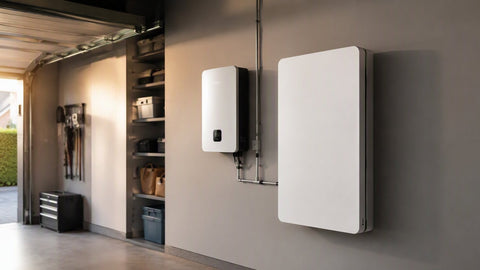
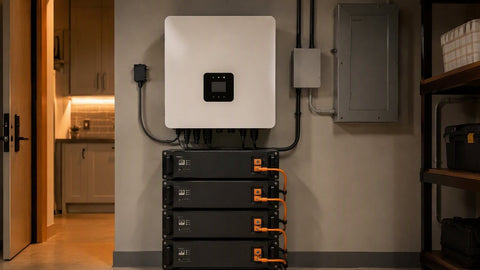
The PHI 3.8 mounts on a wall bracket or stacks on a shelf — we've done both, and the bracket is worth the money because it puts the terminals at working height. Torque the DC lugs to spec with a calibrated wrench; the terminals are robust but the BMS sense wiring is not, and a hot joint on the main lugs telegraphs into nuisance BMS faults that take hours to chase.
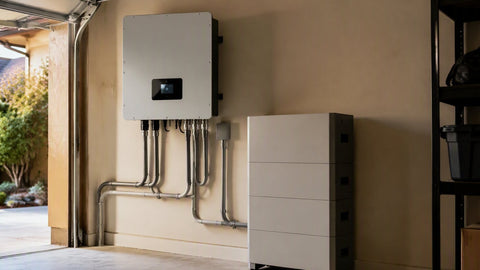
Parallel banks want equal-length cable runs. We cut all the positive jumpers to one length, all the negatives to another, and land them on a common busbar when the bank goes past three units. It's the same discipline as paralleling lead-acid, and the banks that get lazy wiring are the banks that drift out of balance in year three. One more: label every unit with its serial and install date on the enclosure face. Future-you, on a service call at 7 PM in a dark garage, will be grateful.
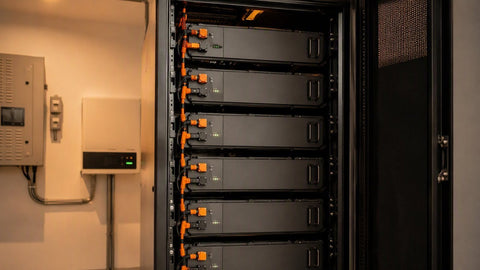
Compared with a server-rack install — see our EG4 brand guide for that world — PHI banks take more wall space per kWh but give back outdoor ratings, field serviceability, and the kind of enclosure you don't worry about when the garage freezer leaks.
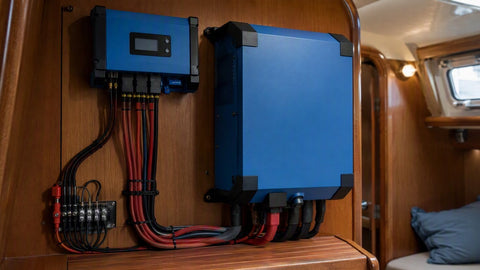
This is the market segment where SimpliPhi's heritage pays for itself. Film-production trailers, expedition vehicles, sailboats, disaster-response units, cell-tower backup — the PHI line was built for these jobs before residential storage was a market at all. The metal enclosures shrug off vibration and the occasional dropped wrench; the BMS tolerates the partial-state-of-charge abuse that mobile duty cycles deliver; and LFP's thermal stability keeps insurance underwriters calm about batteries in occupied vehicles and vessels.
On boats specifically: we've repowered lead-acid house banks with PHI 3.8s and the owners report the same pattern — half the weight, triple the usable capacity per day of anchorage, and no more equalization weekends. Marine installs still need proper ABYC-compliant fusing and battery switches, and the flat LFP voltage curve means you need a shunt-based monitor because voltage alone won't tell you state of charge. Budget for the shunt; it's not optional equipment on lithium.
Battery sizing starts with the loads you actually intend to run and the hours you intend to run them. Here's the PHI line converted into hours of backup at the load levels we see on real critical-loads panels:
| Bank (48 V) | Usable @ 80% DoD | @ 500 W Critical Loads | @ 1,000 W Loads | @ 2,000 W Loads |
|---|---|---|---|---|
| 1 × PHI 3.8 (3.8 kWh) | 3.04 kWh | 6.1 hrs | 3.0 hrs | 1.5 hrs |
| 2 × PHI 3.8 (7.6 kWh) | 6.08 kWh | 12.2 hrs | 6.1 hrs | 3.0 hrs |
| 4 × PHI 3.8 (15.2 kWh) | 12.2 kWh | 24.3 hrs | 12.2 hrs | 6.1 hrs |
| 1 × 20 kWh Stack (19.95 kWh) | 15.96 kWh | 31.9 hrs | 16.0 hrs | 8.0 hrs |
| 2 × 20 kWh Stack (39.9 kWh) | 31.9 kWh | 63.8 hrs | 31.9 hrs | 16.0 hrs |
Notice what the table doesn't say: running a 5-ton AC unit. Air conditioning eats battery banks alive — a 3,500 W running load with compressor starts every ten minutes turns a 20 kWh stack into a four-hour battery. Honest backup design separates "critical loads" from "comfort loads" on the subpanel, and our battery bank sizing guide walks the load-audit process. If the design includes solar recharging during outages, remember the bank only needs to bridge the night and the clouds — a properly sized PV array effectively multiplies autonomy, and our system size calculator plus the 4,000-watt system battery math help close that loop. For generator hybridization on long outages, the generator sizing guide covers the pairing math.
How do the PHI batteries stack up against the value LFP racks and the other premium options? The numbers contractors quote against:
| Metric | SimpliPhi PHI 3.8 | EG4 LifePower4 V2 | Pylontech US5000 | Fortress eFlex MAX |
|---|---|---|---|---|
| Capacity | 3.8 kWh | 5.12 kWh | 4.8 kWh | 5.4 kWh |
| $/kWh (street) | ~$590–$660 | ~$235–$285 | ~$260–$320 | ~$350–$420 |
| Cycle life (80% DoD) | 10,000+ | 6,000+ | 6,000 | 6,000+ |
| Warranty | 10–15 years | 10 years | 10 years | 10–30 years |
| Enclosure | Metal, IP65 (6.6) | IP20 (rack) | Indoor | Sealed |
| BMS | Integrated, advanced | 100A, RS485/CAN | Dual BMS | Built-in |
The honest summary: on raw dollars per kWh, the value racks from EG4 and Pylontech win and we sell plenty of them. On lifetime throughput per warranted kWh, outdoor ratings, and surviving hostile installs, SimpliPhi justifies its premium. Fortress Power splits the difference. For flooded/AGM budgets, Trojan and Crown still make sense at a quarter of the upfront cost if the customer accepts the maintenance and cycle-life tradeoffs.
SimpliPhi maintains its support organization in the US, and the difference shows at the worst possible moment — when a system is down. Our service log on PHI installs runs to a handful of BMS communication quirks and one shipping-damaged unit across years of deployments, and every case was handled with a phone call, an RMA number, and a replacement or firmware fix inside two weeks. Compare that to the ticket-queue reality of the value brands, where a warranty question can burn a week of email ping-pong before a human reads it.
Spares strategy for remote off-grid customers: we recommend stocking one spare unit per eight in the bank. LFP failure rates are low, but on a mountaintop in January, the spare on the shelf is the difference between a two-hour fix and a two-week outage. SimpliPhi supports this model — the modular architecture means a single failed unit drops out of the bank without taking the rest with it, and the replacement integrates without the capacity-matching dance lead-acid strings demand.
SimpliPhi's BMS is the product inside the product. Cell-level monitoring, active balancing, temperature-managed charge acceptance, and — on the AmpliPHI and 6.6 lines — deep communication with inverter platforms so state-of-charge and fault data surface in the customer's normal monitoring app. In open-loop installs the BMS protects the pack autonomously; in closed-loop installs it negotiates charge current with the inverter in real time. Either way, the batteries don't need babysitting, which is the whole point of paying for a premium BMS in a remote install. Practical commissioning tip: after the bank is wired and before you close up, run one full charge-to-absorb cycle while watching the BMS data. Cell groups that lag the pack by more than a few hundred millivolts on the first cycle are telling you something — usually a connection, occasionally a unit that needs a firmware nudge. Catch it on day one and it's a ten-minute fix; catch it in year two and it's a service call.
We stock the SimpliPhi PHI line — 3.8s, 6.6s, and the pre-built stacks — alongside the inverters, charge controllers, and balance-of-system to build complete banks from our battery catalog. Wire and overcurrent protection per our NEC ampacity chart. Extending battery life after install: battery maintenance best practices and the 20–80 charging rule. Contractor pricing via quote request.
Specifications from SimpliPhi Power published datasheets (PHI 3.8, AmpliPHI 3.8, SimpliPHI 6.6, 20 kWh stacks) and warranty documents current as of mid-2026. Cycle-life and retention figures per manufacturer ratings; autonomy math computed from nameplate capacity at 80% DoD. Certifications per UL 1973, UL 9540/9540A. Pricing reflects typical US street pricing as of mid-2026 and varies by configuration and volume.
Why does SimpliPhi cost more per kWh than server-rack batteries?
You're buying a different product. The PHI line is a ruggedized, field-serviceable battery with an advanced BMS, metal enclosure options, a 10,000-cycle rating at 80% depth of discharge, and a 10–15 year warranty backed by a US company that answers the phone. Street price runs $590–$660 per kWh versus $235–$285 for value LFP rack batteries — but the PHI delivers roughly two-thirds more lifetime throughput per warranted kWh and survives installs (mobile, marine, military, off-grid) that kill consumer-grade packs. Cost per delivered kWh over the warranty life is much closer than sticker price suggests.
Can SimpliPhi batteries be used off-grid in cold climates?
Yes — this is one of SimpliPhi's signature strengths. LFP chemistry already handles temperature swings better than NMC lithium, and SimpliPhi's BMS manages low-temperature charge protection without the parasitic heating loads some competitors need. We've commissioned PHI banks in unheated Montana outbuildings that cycle through -20°F winters; the BMS simply refuses charge below freezing and accepts it again when the cells warm. Mount them out of direct weather, insulate the battery box in extreme climates, and they'll outwork any lead-acid bank in the same conditions. One caution we hand every cold-climate customer: LFP will discharge happily at -4°F but will not accept charge below freezing without cell heating, so the bank needs to live where daytime temperatures recover above 32°F during charging hours, or in an insulated enclosure sized to hold its own operating heat.
Are SimpliPhi batteries compatible with my inverter?
Almost certainly. SimpliPhi publishes integration guides for Schneider Conext, Sol-Ark, OutBack, Victron, Magnum, SMA, and most other 48 V platforms — closed-loop CAN communication where supported, open-loop voltage settings everywhere else. The PHI 3.8's BMS handles the protection either way. Check the integration guide for your specific inverter before commissioning; the voltage setpoints differ meaningfully between open-loop and closed-loop configurations.
What's the difference between PHI 3.8, AmpliPHI 3.8, and SimpliPHI 6.6?
The PHI 3.8 is the classic: 3.8 kWh, 48 V, 10,000+ cycles, the drop-in building block for stacked banks. The AmpliPHI 3.8 adds an advanced BMS with more communication options and monitoring depth — same capacity and chemistry, smarter brain. The SimpliPHI 6.6 is the newer high-capacity unit: 6.65 kWh in an IP65-rated metal enclosure with 6,000+ cycle life, aimed at installations that want fewer boxes and outdoor-rated hardware. All three stack and parallel within their families.
How many PHI batteries do I need for whole-home backup?
Start from the load, not the battery. A typical critical-loads panel (fridge, lights, furnace blower, well pump intermittently, internet) draws 400–800 W continuous — a 2-unit PHI 3.8 bank carries that overnight. True whole-home backup with cooking, laundry, and AC needs 15–30 kWh depending on climate and discipline: four to eight PHI 3.8s or one to two 20 kWh stacks. Run your numbers through our backup runtime calculator and the off-grid sizing guide before you commit to a bank size.
Can I mix old and new SimpliPhi batteries in one bank?
Yes within the same model family — LFP's flat voltage curve makes capacity mismatches far less destructive than mixing aged lead-acid strings. Keep the firmware current across the bank, confirm the BMS versions communicate cleanly, and expect the oldest units to set the effective capacity ceiling. We still recommend adding new units within the first half of the bank's life rather than bolting fresh batteries onto a decade-old bank at the end.
How long does delivery take from PES Supply?
PHI 3.8 and 6.6 units ship from stock in 1–3 business days; the 20 kWh stacks move by freight and typically deliver inside two weeks. These are heavy boxes — the 6.6 runs about 130 lbs — so plan for a liftgate and two sets of hands. Contractor volume pricing and bundle quotes with inverters are same-day through our quote desk. For off-grid jobs with seasonal access windows, tell us the site deadline when you order — we've rearranged freight routing more than once to beat a snow gate closing.
Shop SimpliPhi Power at PES Supply
Ruggedized LFP batteries from 3.8 kWh building blocks to 20 kWh stacks — in stock, contractor pricing.
Browse SimpliPhi Batteries