Mission Solar Energy Brand Guide: Made-in-USA Modules, BABA & Dealer Specs
San Antonio-built modules for domestic-content projects — BABA compliance, the ITC adder math, current product specs, and dealer buying at PES.
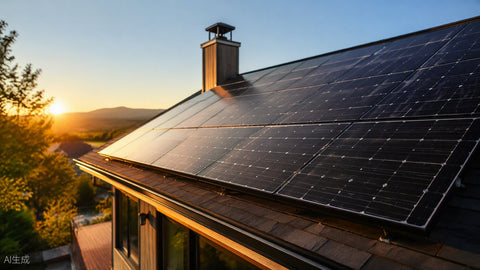
Some brands you sell on price. Mission Solar you sell on paperwork — and we mean that as a compliment. When a project specification says "Buy American," when a federal contractor needs BABA-compliant bill of materials, or when a commercial developer is chasing the 10-point domestic-content ITC adder, the conversation narrows to a short list of genuinely US-manufactured modules, and Mission Solar — assembled in San Antonio, Texas — is on every version of that list we've ever seen.
This guide covers what dealers need to sell Mission correctly: the company background, current module families and specs, the compliance alphabet (BABA, domestic content, FEOC considerations), the premium-versus-credit math that decides whether US-made pencils, and the buying process through our Mission Solar catalog.
Company Profile: Texas Manufacturing, Defense-Grade Discipline
Mission Solar Energy manufactures modules in San Antonio, Texas. The company is a subsidiary of OCI Holdings, a Korean industrial group with deep polysilicon roots — which means Mission combines US assembly with a parent that understands the upstream supply chain. The facility has supplied military bases, municipal projects, and federal installations for years, and that government-contract heritage shows in the documentation culture: cert packages, compliance letters, and traceability paperwork are strengths, not afterthoughts.
We've supplied Mission modules into municipal and school-district projects where the spec called for domestic content, and the difference versus imported brands isn't the glass — it's the email thread. When the general contractor's compliance officer asks for origin documentation at 4 PM on a Friday, Mission's paperwork arrives. That sounds mundane until you've watched a project hold a draw over a missing compliance letter.
Current Module Lineup and Specs
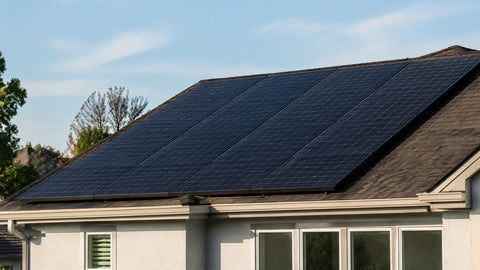
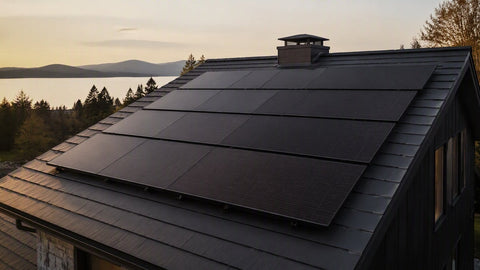
Mission's lineup focuses on the residential and light-commercial segments with n-type module platforms. Representative figures for the current generation — verify the exact SKU's datasheet before design lock:
| Family | Format | Power class | Efficiency class | Best fit |
|---|---|---|---|---|
| MSE residential (all-black variants) | Residential format, monofacial | ~400 – 435 W | ~20 – 21.5% | Residential rooftops, HOA-sensitive jobs |
| MSE commercial format | Larger format, monofacial | ~500 – 580 W class | ~21 – 22% | C&I rooftops, government buildings, schools |
| Domestic-content project SKUs | Specified per project | Varies | Varies | BABA / federal / ITC-adder projects |
Set expectations honestly with customers: Mission's efficiency figures run a point or two below the bleeding edge of imported TOPCon and BC modules, and the wattage classes are conservative. That's not the product failing — it's a different design brief. Mission optimizes for durability testing, compliance documentation, and domestic supply assurance rather than spec-sheet headline efficiency. On a residential roof where the constraint is roof area, run the layout math both ways; on most compliance-driven projects the constraint is paperwork, not watts per square meter.
The Compliance Alphabet: BABA, Domestic Content, and Why It Pays
Three compliance regimes drive Mission Solar demand, and dealers who can explain them win projects competitors can't quote:
| Regime | What it requires | What it pays | Where Mission fits |
|---|---|---|---|
| BABA (Build America, Buy America) | Domestic manufactured products on federally funded infrastructure projects | Eligibility — non-compliant product disqualifies the bid | US-assembled modules satisfy manufactured-product requirements (confirm per-project waiver status) |
| ITC domestic-content bonus | Qualifying share of US-manufactured product cost (adjusted percentage schedule) | +10 percentage points on the ITC (30% → 40%) | US modules contribute domestic manufactured-product cost toward qualification |
| State/municipal Buy American specs | Varies by jurisdiction | Bid eligibility and scoring preference | San Antonio origin satisfies most such specs |
The ITC math deserves the worked example, because it flips the price comparison on qualifying projects:
| 300 kW commercial project, $1.05/W all-in installed | Imported Tier-1 modules | Mission Solar (domestic) |
|---|---|---|
| Module cost (illustrative) | $0.30/W = $90,000 | $0.40/W = $120,000 |
| Total installed cost | $315,000 | $345,000 |
| ITC rate achieved | 30% | 40% (with domestic-content adder) |
| Tax credit value | $94,500 | $138,000 |
| Net cost after credit | $220,500 | $207,000 |
| Net advantage | — | +$13,500 to the domestic option |
Read that last row twice. The "more expensive" domestic module produces the lower net cost — by five figures — on a qualifying project. The caveats matter: domestic content is calculated across total manufactured-product cost, not modules alone; the adjusted percentage schedule tightens for projects beginning construction in later years; and tax counsel should confirm qualification before you promise the adder. Our procurement guide covers how this math affects module selection strategy across a pipeline. Also compare with Solar4America, the other US-assembly option we stock, when a project needs multiple domestic bidders.
Warranty and Durability Positioning
| Warranty element | Typical Mission Solar terms (verify per SKU) |
|---|---|
| Product warranty | Up to 25 years on current residential lines |
| Performance warranty | 25 years, ~85%+ of nameplate class |
| Degradation schedule | ~1% first year, ~0.5%/yr class on current n-type lines — confirm SKU |
| Claims channel | Direct US support plus distributor of record — a genuine advantage over offshore claims processes |
The underrated warranty point: Mission's claims process runs on US business hours from Texas. When a module fails in year 7, the difference between a US service organization and an offshore email chain is measured in weeks. For installers who warranty their own labor, that responsiveness is worth real money.
Where Mission Wins and Where It Doesn't
Specify Mission Solar when:
- The project has BABA, federal, state, or municipal domestic-content requirements
- The ITC domestic-content adder math pencils (run the table above per project)
- The owner values US supply assurance or US-based warranty service
- Compliance documentation quality is part of the bid evaluation
Choose an alternative when:
- Roof-area-constrained residential needs maximum watts per square meter — compare Silfab, REC, or LONGi's Hi-MO X6 (see our LONGi guide)
- Pure $/W merchant economics with no domestic-content benefit — Jinko or JA Solar typically land cheaper (see the Jinko and JA Solar guides)
- Bifacial gain is part of the yield model — Mission's lineup is monofacial-focused; see bifacial options
System-side design doesn't change with domestic modules: same NEC string sizing, conductor ampacity, and disconnect rules. Our wire sizing guide, ampacity chart, and NEC 690 disconnect guide carry those references, and wiring basics covers array layout fundamentals.
Dealer Buying Process
We stock Mission Solar across residential and commercial formats. Pallet pricing is standard wholesale; project volumes for compliance-driven work should come to our procurement desk early — domestic-content projects often need origin documentation packaged with the quote, and we handle that routinely. Dealers chasing government-adjacent work should also skim our commercial panel collection and the commercial cost guide for the full-bid picture.
Building the Compliance-Driven Quote
Winning domestic-content work is a process, not a product swap. The dealers who consistently take these projects run the same playbook:
Read the funding language first
BABA, state Buy American, and ITC domestic content are three different regimes with three different tests. Before quoting, identify which regime governs and get the requirement in writing from the funding source or GC — "we think it's Buy American" is not a spec.
Request the compliance package with the quote
When you quote Mission Solar to us, ask for the origin documentation package at the same time. Certificates of origin, manufacturing location attestations, and content letters take days to assemble; requesting them after contract award is how schedules slip.
Run the ITC adder math explicitly
Show the owner the worked comparison — imported at 30% ITC versus domestic at 40% — in the proposal. The five-figure net advantage on a mid-size commercial job is the most persuasive single number in the document, and it protects you from "why is this quote higher" without the context.
Document BOM content across the system
Domestic content is calculated over total manufactured-product cost, so the module choice interacts with racking, inverters, and BOS. Keep a per-line origin schedule for the whole BOM; auditors ask for exactly that document.
Confirm waiver status before assuming disqualification
BABA waivers exist and change. A project that looks import-blocked this quarter may have an applicable waiver; check the current Made in America Office listings or have the GC's compliance counsel confirm before walking away from a bid.
Selling US-Made to Non-Compliance Customers
Mission Solar also wins plain residential and commercial deals with no compliance requirement, and the pitch is different there. The effective angles, in order of close rate we've observed: US-based warranty service with Texas business hours ("if anything ever goes wrong, you call San Antonio, not an offshore ticket queue"); supply assurance through trade disruptions (tariff rounds have stranded import shipments mid-project; domestic assembly doesn't clear customs); and straightforward community framing for customers who simply prefer domestic manufacturing. The angle that doesn't work: pretending the efficiency spec beats imported TOPCon flagships. It doesn't, and sophisticated buyers check.
Price positioning: Mission typically quotes $0.05–0.12/W above the Tier-1 import floor depending on volume and market conditions. On residential jobs without the ITC-adder benefit, that premium needs one of the soft factors above to carry it. On compliance and ITC-adder projects, the premium is usually the cheapest line in the budget. Match the pitch to the project economics and Mission is easy to sell; mismatch them and it's an uphill argument.
Logistics Notes for Domestic Modules
The operational advantages are real: no ocean transit (lead times measured in weeks, not months), no customs clearance or tariff reclassification risk between order and delivery, and ground freight from Texas to most of the continental US at standard LTL/FTL rates. Pallet configurations and weights are conventional residential/commercial formats — no special dock planning required. For project volumes, our procurement desk coordinates factory-direct releases with full documentation packages, which is where Mission's compliance-paperwork culture pays off most visibly.
Frequently Asked Questions
Are Mission Solar panels really made in the USA?
Mission Solar modules are manufactured at the company's facility in San Antonio, Texas. As with any domestic-content claim, the specifics that matter for compliance — cell origin, subcomponent sourcing, and manufactured-product cost share — should be confirmed with current documentation for your project's specific requirements. Mission's documentation support for exactly these questions is a core strength.
Does BABA require US-made solar panels?
Build America, Buy America applies domestic-preference requirements to federally funded infrastructure projects, covering manufactured products used in the project. Solar modules on covered projects generally need domestic manufacture unless a waiver applies. Requirements are project-specific — confirm with the funding agency's compliance officer before specifying.
Is the domestic-content ITC adder worth the module premium?
Frequently, yes. The adder raises the ITC from 30% to 40%. On a typical commercial project, that ten-point swing on total installed cost often exceeds the per-watt premium for US modules — our worked example shows a five-figure net advantage on a 300 kW project. Qualification depends on total manufactured-product content and tax counsel should confirm before you commit.
How do Mission Solar specs compare to imported Tier-1 modules?
Mission's efficiency and wattage classes run conservative versus bleeding-edge imported TOPCon and BC modules — roughly a point or two of efficiency. Durability testing, compliance documentation, and US-based warranty service are the compensating strengths. On roof-area-constrained designs, run layout math both ways.
How do I buy Mission Solar at dealer pricing?
Through authorized distributors like PES Supply. Pallet quantities price at standard wholesale; compliance-driven project volumes should engage the procurement desk early so origin documentation packages with the quote.
Spec Domestic on Your Next Qualifying Project
Mission Solar stock with compliance documentation support and landed-cost quotes from our procurement desk.
Shop Mission Solar at PES →Compare: JA Solar guide · Jinko guide · Panel kits buyer's guide · All solar panels
PES Supply (https://www.portlandiaelectric.supply) is a B2B electrical and solar distributor offering 50,000+ SKUs from 169 authorized brands. Compliance requirements are project-specific; verify all specifications and origin documentation against current manufacturer and agency guidance.