Brand Guide · Optimizers & Inverters
SolarEdge: Power Optimizer & Inverter Brand Guide
The installer's guide to SolarEdge — Home Hub inverters, S440/S500 optimizers, Home Battery storage, sizing math, NEC interconnection, and honest comparisons to Enphase and SMA.
SolarEdge Technologies invented the power-optimizer architecture and built a market around it. Founded in Israel in 2006, the company asked a deceptively simple question: what if the maximum-power-point tracking lived at the module, but the expensive DC-to-AC conversion stayed in one central box? The answer — the optimizer-plus-inverter system — carved out the space between dumb string inverters and full microinverters, and SolarEdge rode it to become one of the two dominant residential inverter platforms in North America. At peak, one in three American residential solar systems wore SolarEdge hardware.
The company's recent years tell a more complicated story — an inventory glut after the European market cooled, margin compression, and a bruising stock-price round trip that made headlines. What matters for contractors isn't the ticker; it's that the product line kept shipping, the warranty organization kept paying claims, and the 2025–2026 restructuring refocused the company on its core inverter-plus-optimizer business with US manufacturing expansion under the current incentive regime. We've watched suppliers wobble before. The question that matters is whether parts, firmware, and warranty service keep flowing — and they have.
The ecosystem pitch remains the draw: one vendor for inverter, optimizers, battery, EV charging, and monitoring, with 25-year warranties on the rooftop electronics. For installers who want one throat to choke and one app to teach customers, that integration is worth real money.
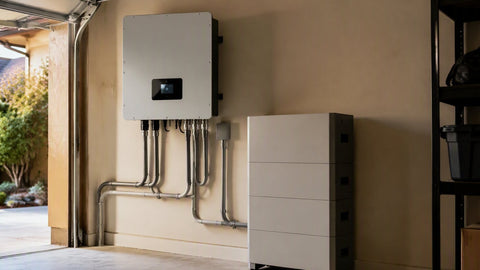
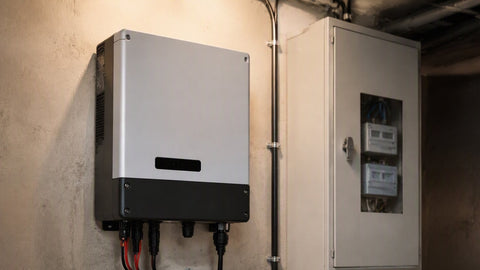
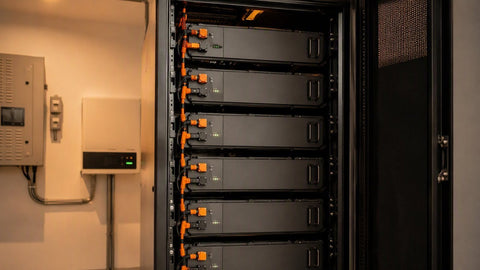
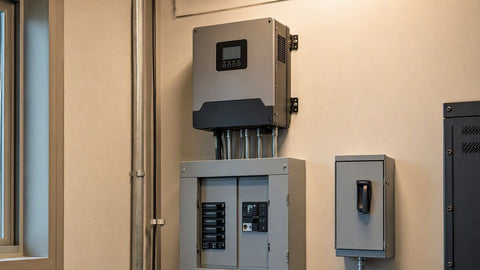
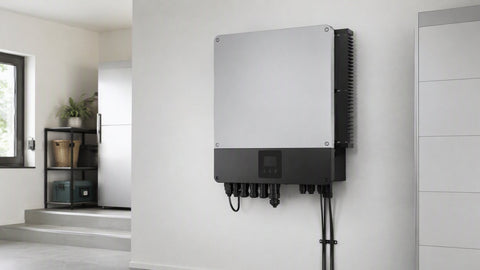
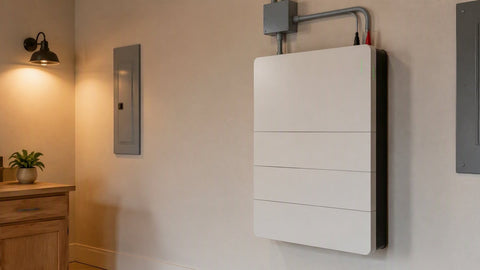
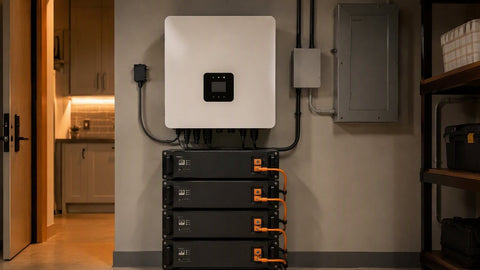
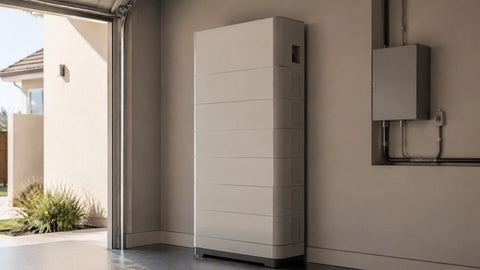
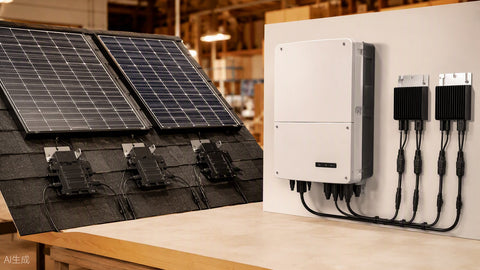
The residential stack is the Home Hub inverter line (SE7600H-US at 7.6 kW, SE10000H-US at 10 kW — 99% CEC efficiency, battery-ready, EV-charger-ready) paired with S-series optimizers (S440 for standard modules, S500 for high-wattage residential modules) one per panel. Storage comes from the SolarEdge Home Battery 48V, DC-coupled at 97% round-trip efficiency, and the Home Network ties in EV charging and smart-load devices. The current lineup:
| Model | Type | Power | MPPT | Efficiency | Key Features | Price Range |
|---|---|---|---|---|---|---|
| SolarEdge SE7600H-US | Home Hub inverter | 7.6 kW | Fixed DC voltage | 99% CEC | Battery-ready, EV charger compatible, integrated monitoring | $2,000-$2,600 |
| SolarEdge SE10000H-US | Home Hub inverter | 10.0 kW | Fixed DC voltage | 99% CEC | Whole-home power, backup capable with Home Battery | $2,400-$3,100 |
| SolarEdge S440 optimizer | Power optimizer | 440 Wp | Per-module MPPT | 99.5% | MC4, module-level monitoring, 25-yr warranty | $45-$65 each |
| SolarEdge S500 optimizer | Power optimizer | 500 Wp | Per-module MPPT | 99.5% | High-wattage module support, rapid shutdown built-in | $55-$75 each |
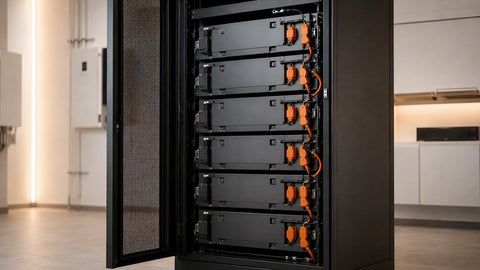
| SolarEdge Home Battery 48V | DC-coupled battery | 5 kWh/ | N/A | 97% round-trip | Seamless backup, TOU optimization, scalable | $4,000-$5,500 (per 5 kWh) |
The commercial family scales the same optimizer architecture into three-phase territory with synergy-unit designs for large roofs. Browse the components in our inverter catalog and pair with modules from the solar panel inventory.
The Home Hub platform matured into its role as the center of the residential line: battery-ready as standard, integrated EV-charger support, and the ONE controller for whole-home energy orchestration. The S-series optimizers consolidated around the S440/S500 pair with improved thermal behavior — early optimizer generations ran hot in desert rooftop conditions, and the current units' thermal derating curves are noticeably gentler. On the software side, the monitoring platform's fleet tools for installers got the attention they needed, with better alert triage and portfolio-level reporting.
US manufacturing expansion under the domestic-content incentives progressed through the period — worth confirming at quote time which SKUs carry domestic-content documentation if your project is chasing the ITC adder. The rules reward manufactured content with US assembly, and SolarEdge's US production footprint makes some configurations eligible where imports aren't.
The Home Hub line carries UL 1741 SB, IEEE 1547-2018, and UL 1699B arc-fault protection. Rapid shutdown per NEC 690.12 is inherent to the architecture — the optimizers are the shutdown device, dropping module output to SafeDC levels (1 V per module) when the inverter or grid drops. That last part deserves emphasis: SolarEdge systems were module-level-shutdown compliant before NEC 690.12 existed, and the AHJ conversation on that topic is the shortest one in the business. The listing file is complete, current, and permit-package-ready — attach the datasheet, the listing sheet, and the string design from Designer, and residential plan review is routinely a one-pass approval.
Grounding and bonding on optimizer systems follow the standard NEC 250/690 rules with one architecture-specific nuance: the optimizer frames and module rails bond as normal, but the DC conductors between optimizers are part of a listed assembly — don't improvise extensions or field splices outside what the installation manual permits. Our grounding and bonding guide covers the general framework inspectors apply.
The split warranty is the architecture in miniature: 12 years on the inverter (extendable to 20 or 25 at registration), 25 years on the optimizers. The logic is sound — the central box has fans, capacitors, and a service life; the rooftop pods are potted solid-state with essentially nothing to wear out. Registration matters: it locks in the coverage window and enables the monitoring features that make warranty events visible early. We register every unit at commissioning and file the confirmation; it's five minutes that pays for itself the first time a claim needs a start date.
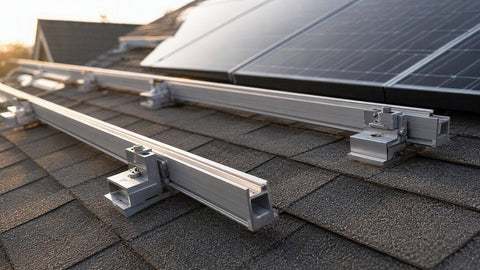
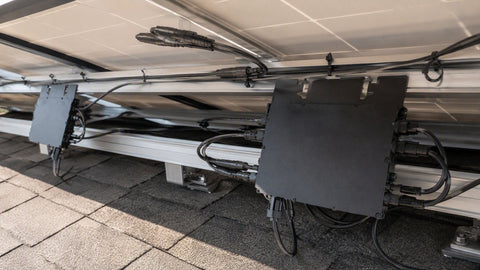
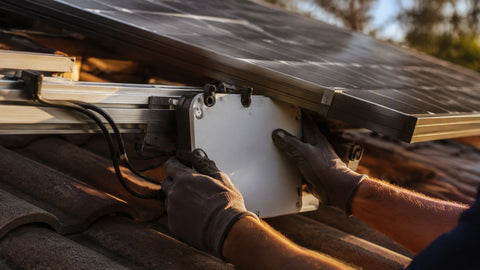
The install rhythm differs from string work in one crucial way: the rooftop day includes optimizer mounting. Our crews clip optimizers to the rail at each module position before the modules land — not after, when you're leaning over installed glass. Map the optimizer serials to module positions on the layout sheet as you go; the monitoring platform can auto-detect placement, but the physical map saves the service call where a pod dies and nobody remembers which of the thirty identical rectangles it was.
String sizing has hard rules — minimum and maximum optimizer counts per string, maximum string power per inverter — and they live in the SolarEdge Designer tool, not in anyone's memory. Design in the tool, export the string plan, hand it to the crew. The failure mode we see from crews freelancing string counts: under-length strings that won't start the inverter in low light, and the callback is a redesign, not a repair.
Commissioning is app-driven and fast: scan, pair, verify per-module reporting, done. The one step that bites people is the grid profile — set the correct country/grid code before the unit sees the grid, because an interconnection with the wrong profile trips instantly and the error message won't tell you why. We've trained the habit: grid code first, then breaker. In that order, every time.
Every module gets an optimizer, so the count is the module count — the sizing question is which inverter class the array justifies and how much DC oversizing to run. SolarEdge supports aggressive DC/AC ratios (up to 2.0 on the Home Hub line), which makes the platform friendly to future expansion: install the array the roof fits today, add modules later without touching the inverter. The working math on current 420 W-class modules:
| Array | Modules | Optimizers (S440/S500, 1:1) | Inverter Class | DC/AC Ratio |
|---|---|---|---|---|
| Small residential | 12 × 420 W (5.04 kW) | 12 | SE7600H-US | 0.66 (room to grow) |
| Typical residential | 20 × 420 W (8.4 kW) | 20 | SE7600H-US | 1.11 |
| Large residential | 30 × 420 W (12.6 kW) | 30 | SE10000H-US | 1.26 |
| Maxed residential | 36 × 420 W (15.1 kW) | 36 | SE10000H-US | 1.51 |
Run every design through SolarEdge Designer before ordering — the tool enforces string minimums and maximums that vary by optimizer model and inverter firmware, and it catches the layout mistakes that paper math misses. For the roof-side layout math, our system size calculator and the panel wiring guide cover the basics.
The Home Hub outputs are continuous loads — 125% sizing per NEC 705.28, breakers per 240.6(A), conductors from the 75°C column of 310.16:
| Inverter | Rated AC Output | Max Continuous Current | 125% Sizing | Breaker (NEC 240.6) | Copper (75°C, 310.16) |
|---|---|---|---|---|---|
| SE7600H-US Home Hub | 7.6 kW @ 240V | 32 A | 40 A | 40 A (2-pole) | 8 AWG (50 A) |
| SE10000H-US Home Hub | 10.0 kW @ 240V | 41.7 A | 52.1 A | 60 A (2-pole) | 6 AWG (65 A) |
| SE11400H-US (where listed) | 11.4 kW @ 240V | 47.5 A | 59.4 A | 60 A (2-pole) | 6 AWG (65 A) |
The usual residential constraint is NEC 705.12 busbar math: a 200 A panel with a 200 A main gives you 40 A of solar under the 120% rule — exactly one SE7600H, no more. A SE10000H on that panel needs a main-breaker derate, a line-side tap, or a panel upgrade. Our bus bar guide explains the geometry and the NEC 690 disconnect guide covers the OCPD side. Sort the interconnection method before the sale closes, not after the permit bounces.
SolarEdge against the two architectures it competes with on every quote:
| Feature | SolarEdge | Enphase (microinverter) | SMA (string) |
|---|---|---|---|
| Optimization level | Module-level (optimizer) | Module-level (microinverter) | String-level (ShadeFix) |
| Peak efficiency | 99% CEC (inverter) | 97% CEC | 97.5-98% CEC |
| Rapid shutdown | Built into optimizers | Built into microinverters | Requires SunSpec PLC |
| Module-level monitoring | Yes (included) | Yes (included) | No (string-level only) |
| Battery integration | DC-coupled (Home Battery) | AC-coupled (IQ Battery) | AC-coupled |
| Standard warranty | 12 years (inverter) | 25 years | 10 years |
| Cost per watt | $0.25-$0.35 | $0.30-$0.45 | $0.15-$0.25 |
Our read after years of installing all three: SolarEdge is the middle path that wins on roofs with shade or multiple faces where the customer wants one vendor and one app. Enphase wins on redundancy and warranty length; SMA string wins on price for clean roofs. For off-grid or heavy-backup work, none of the three is the right tool — that's Sol-Ark or Schneider territory. The microinverter vs. string page frames the topology decision.
Module-level electronics cost roughly $0.10–$0.15 per watt over a string system — call it $800–$1,200 on a typical 8 kW residential job. What does that buy? On a shaded or multi-face roof, independent MPPT per module recovers the production a string inverter loses to its weakest module — typically 5–15% on genuinely shaded arrays, which over 25 years dwarfs the upfront delta. On a clean single-face roof, the recovery rounds to zero and the purchase is really about monitoring granularity and the built-in rapid shutdown.
The failure-mode math cuts both ways, and honesty requires saying so. Thirty optimizers means thirty electronic devices baking on a roof; the 25-year warranty covers the part, but not the labor to stand on the roof and swap it. String inverters concentrate all failure risk in one serviceable box at ground level. Neither answer is wrong — but the right answer for a customer with a two-story steep-pitch roof and chronic shade is different from the right answer for a ranch with a clean south face, and the quote should say which one they're getting and why.
SolarEdge's strategic endgame is the whole-home energy stack: solar production, Home Battery storage, EV charging, and smart load control orchestrated by one platform. For the customer, the practical benefit is a single app and a single commissioning relationship. For the installer, it's attach-rate economics — the inverter sale opens the battery, EVSE, and smart-panel conversations, and DC-coupled storage at 97% round-trip efficiency beats AC-coupled alternatives on the math customers actually feel in their bills.
The ecosystem bet has a real cost worth naming: vendor lock-in. A SolarEdge Home Battery wants a SolarEdge inverter; the optimizers want their inverter; the EV charger wants the platform. Customers who buy in should buy in with eyes open — the integration is the value, and the integration is the commitment. For customers who want open architecture and battery freedom, steer to the hybrid brands and say so plainly.
The monitoring platform is the product's quiet centerpiece: per-module production, automatic fault flagging, and fleet-level installer dashboards, all included without subscription tiers on the core features. For service operations, per-module telemetry changes the economics — the truck rolls to a known module with a known failure, not a fishing expedition. Customer-facing, the app shows the per-panel layout that makes the technology tangible: homeowners watch their chimney shade crawl across the array map and finally understand what they paid for.
One operational note: the platform's health depends on the inverter's network connection, and the Home Hub's built-in cellular options exist precisely because customer Wi-Fi is the least reliable component in any solar system. On flaky-network sites, spec the cellular plan at the sale and stop owning the customer's router problems forever.
Installer workflow tip that scales: build a standard commissioning checklist in the platform — site name convention, optimizer map confirmation, grid profile screenshot, firmware version photo — and require it on every closeout. The data discipline is invisible until the first warranty claim or truck roll, at which point it is the difference between a ten-minute remote diagnosis and an afternoon of guessing. We learned that one the expensive way, once, and never again.
Buy SolarEdge when the roof has shade or faces in three directions, when per-module monitoring and rapid shutdown are requirements rather than features, when storage is on the roadmap and DC-coupled efficiency matters, and when the customer values a single-vendor ecosystem with one warranty conversation. Skip it when the roof is a single clean face and the budget is tight — a string inverter does that job for less — and skip it when the install is off-grid or backup-first, where the hybrid platforms own the category. Match the architecture to the roof and the loads; the brand loyalty debates are noise next to that one discipline.
We stock the SolarEdge residential line — Home Hub inverters, S-series optimizers, Home Battery components — plus the modules and racking for complete systems. Cross-shop the inverter top picks and browse microinverters for the Enphase alternative. Contractor quotes with volume pricing: request pricing.
Specifications from SolarEdge published datasheets (Home Hub inverters, S-series optimizers, Home Battery 48V) and warranty documents current as of mid-2026. Electrical sizing per NFPA 70 (NEC) 2023 Articles 240.6(A), 310.16, 690, and 705. Confirm string rules in the current SolarEdge Designer tool before ordering — string minimums and maximums change with firmware and optimizer generation, and last year's design assumptions are not this year's compliance. Pricing reflects typical US street pricing and varies by configuration, volume, and domestic-content status.
Do I need a power optimizer on every panel?
Yes — that's the architecture. SolarEdge inverters don't do maximum-power-point tracking at the string level; the optimizers do it per module and present the inverter a fixed, regulated DC voltage. Every module gets one optimizer (the S440/S500 class units are one-to-one with modules). Skip one and the string doesn't work as designed. The trade: you pay ~$50–$70 per module extra, and in exchange you get module-level MPPT, module-level monitoring, built-in rapid shutdown, and SafeDC voltage shutdown at the module when the inverter drops.
Can I use SolarEdge without the Home Battery?
Absolutely — most SolarEdge installs are straight grid-tied with no storage, and the system is complete without a battery. The Home Hub inverter is battery-ready, which means adding DC-coupled storage later is an add-on rather than a rewire. If storage is on the roadmap within a few years, the Home Hub platform is the right buy now; if it isn't, it costs you nothing extra. Our battery sizing guide helps scope that future addition.
What happens if one optimizer fails?
That module stops producing and the monitoring platform flags it — per-module telemetry is the whole point of the architecture, so you know exactly which module and can see it from your desk. The rest of the string keeps producing normally; unlike a failed bypass diode in a conventional string, a dead optimizer doesn't drag its neighbors down. The optimizer carries a 25-year warranty, replacement is a single-module rooftop visit, and the failure rate in our service history is low — but it is not zero, and rooftop service calls cost real money, which is the honest counterweight to the module-level value proposition.
Does SolarEdge support three-phase commercial?
Yes — SolarEdge's commercial line scales from small three-phase units up through large commercial inverters, with optimizers across the range. The residential Home Hub line covered here is single-phase 240 V; commercial jobs step to the three-phase family with its own synergy-unit architecture for large arrays. For commercial cost context, see our commercial solar installation costs breakdown.
How does SolarEdge compare to Enphase microinverters?
Same job, different topology. SolarEdge moves the MPPT to the module but keeps the DC-to-AC conversion central in one inverter; Enphase puts a complete microinverter at each module. SolarEdge wins on panel-level cost and central-inverter serviceability; Enphase wins on no-single-point-of-failure redundancy and the 25-year microinverter warranty. The full head-to-head lives in our Enphase vs. SolarEdge comparison and the installer showdown article. Shaded or multi-face roof: either beats a string inverter. Clean single-face roof: a string inverter beats both on price.
How long does delivery take from PES Supply?
Home Hub inverters and optimizers ship from stock in 1–3 business days — optimizers by parcel, inverters by freight. Multi-pallet commercial orders quote on current lead times. Order optimizers with a 5% attic stock on every job: a failed optimizer in year seven shouldn't wait on freight, and the spare kit has saved our customers a service delay more than once. Contractor volume pricing through the quote desk is same-day.
Shop SolarEdge at PES Supply
Home Hub inverters, S-series optimizers, and Home Battery components — in stock, contractor pricing.
Browse SolarEdge