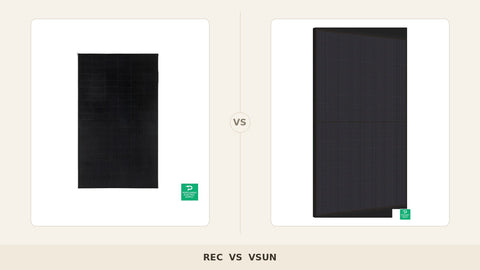
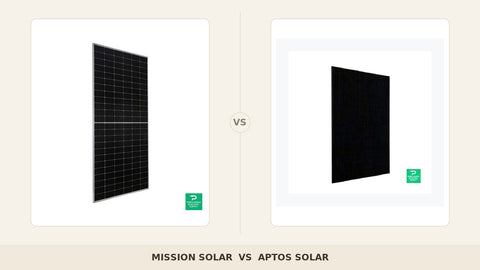
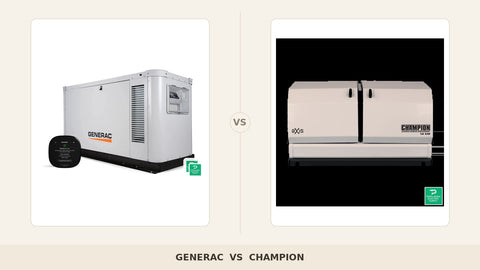
This is the matchup for buyers who narrowed the field to "something really good" and then hit a fork: pay up for REC's Singapore-built HJT flagship, or buy Silfab's North American-made craftsmanship for meaningfully less per watt. We've stocked both for years. The REC Alpha Pure-RX is the best-engineered residential panel we sell. Silfab's Elite line is the panel our own crew members put on their own houses. Both statements are true, and the space between them is where this comparison lives.
Below: verified spec classes, real 8 kW design math, the NEC table we hand electricians, hot-roof and 25-year yield numbers, warranty fine print, and field notes from actual installs and claims. Figures reflect the residential classes we move — REC Alpha Pure-RX and Silfab Elite / SIL series — with the standing reminder to confirm SKU-level numbers on the current datasheets before permitting.
Why This Matchup Matters in 2026
The 2026 trade reset changed this comparison's economics. Silfab manufactures in Burlington, Washington, Fort Mill, South Carolina, and Ontario — its panels reach US roofs with zero exposure to the Section 232 import price floor or the SE-Asia AD/CVD stack. REC builds in Singapore: outside the worst tariff crossfire, but inside the import regime, and its premium pricing sits far enough above the $0.38/W floor that duties barely register on the final sticker. The practical result: Silfab's price advantage held steady through the tariff chaos while several value imports repriced upward into irrelevance.
The other 2026 event that frames this fight: Maxeon's April judicial management filing. The old "premium import" category used to be a three-brand conversation. Now it's REC's tier to defend, and buyers who would have defaulted to a 40-year Maxeon warranty are re-reading everyone else's fine print. Silfab's 30-year performance term and REC's ProTrust 25/25/25 both look stronger in that light.
Side-by-Side Specification Table
| Specification | REC (Alpha Pure-RX class) | Silfab (Elite / SIL class) |
|---|---|---|
| Cell Architecture | HJT (heterojunction), lead-free | Half-cut mono; N-type TOPCon on current Elite lines |
| Residential Wattage Class | ~450–470 W residential class | ~370–430 W residential (Elite ~410–430 W class); 570 W+ commercial bifacial |
| Max Module Efficiency | Up to ~22.6% (Pure-RX) | ~20–22% by series (Elite ~21.4–21.5%) |
| Temperature Coefficient (Pmax) | ~−0.24%/°C (class-leading) | Average class (~−0.35%/°C) |
| Degradation / Year-30 Output | ≤1% first year, ~0.25%/yr thereafter — ≥92% guaranteed at year 25 | ~0.50%/yr class; ≥82.6–89% at year 30 by series |
| Product Warranty | 20 yr product / 25 yr performance standard; 25/25/25 (incl. labor) via REC ProTrust certified installer | 12–25 yr product (25 with registration on current lines); up to 30 yr linear performance |
| Manufacturing Origin | Singapore manufacturing; owned by Reliance Industries | Manufactured in Washington State, South Carolina, and Ontario, Canada |
| Load / Durability Rating | High-rigidity frame class | 5400 Pa snow-load rated class; half-cut shade tolerance |
| Typical Price Position | +$0.25–0.40/W premium over commodity Tier-1 | Mid-range (comparable to other NA-made brands) |
Three rows decide this matchup: wattage class (density), temperature coefficient (hot-day output), and degradation (year-20 output). REC wins all three. Silfab's counterpunch is price per watt, North American content, a snow-load rating built for real winters, and lead times measured in weeks from a neighboring state rather than months across an ocean. Neither panel is a compromise — they're different bets.
Technology: HJT Physics vs Half-Cut Craft
REC's heterojunction stack — crystalline N-type wafer between amorphous silicon layers — passivates the cell surface better than any mass-market alternative, and the payoff shows in the numbers: 22.6% efficiency class, −0.24%/°C tempco, 0.25%/yr degradation, no light-induced degradation, lead-free bill of materials. The Alpha Pure-RX's gapless cell layout and two-piece high-rigidity frame complete the package. It's the panel we show engineers who walk in wanting to argue.
Silfab's approach is execution over exotic physics. Half-cut cells split the module into two independent halves — partial shade costs you part of a panel instead of the whole string's afternoon — and current Elite lines run N-type TOPCon with conservative electrical design and tight binning. The 5400 Pa snow rating reflects genuine mechanical engineering, not a marketing round-number. I've stood on a Silfab install in the Washington Cascades in January; the frames and glass shrug at loads that would worry me on value-tier hardware.
The durability gap is real but narrower than the spec sheets suggest. REC's 0.25%/yr class beats Silfab's ~0.50%/yr class by a quarter point per year — a few percent of output by year 20. Meaningful on a spreadsheet, invisible on a utility bill. The temperature gap, by contrast, is visible every hot afternoon, and we'll quantify it below.
Both brands submit to independent reliability testing, and that's the filter we apply before stocking anything. Kiwa PVEL's scorecard — thermal cycling, damp heat, mechanical stress, PID, UVID, and a hail sequence that fires ice at the glass — separates marketing from metallurgy. Ask for the current test summary on any SKU you're quoted. A manufacturer that won't submit panels to PVEL is telling you something, and both of these manufacturers submit.
System Design Math: An 8 kW Residential Array
| Design Figure | REC Alpha Pure-RX 470 W | Silfab Elite 370 W |
|---|---|---|
| Panels for ~8 kW DC | 17 × 470 W = 7,990 W | 22 × 370 W = 8,140 W |
| Approx. roof area @ ~1.95 m²/panel | ~33.2 m² (~357 ft²) | ~42.9 m² (~462 ft²) |
| Roof area difference | ~9.8 m² (~105 ft²) saved | — |
| Strings of 10 (Voc ~49–50 V class) | 2 strings (9 + 8) | 2 strings (11 + 11) — verify cold-corrected Voc |
| Attachment / flashing count | 17 sets | 22 sets (+5, ~$150–250 BOS) |
Five extra panels is the headline here. On a big ranch roof it's five more attachment points and an extra hour of labor. On a chopped-up urban roof with vents, skylights, and a chimney, it can be the difference between one clean south-face layout and a split array across two faces with two MPPT inputs and a production penalty. This is why premium-density panels exist. If your roof has room to spare, stop paying for density and take Silfab's $/W to the bank.
Both brands rack on standard rail from the racking and mounting collection and solar mounting systems lineup, pair with everything in the microinverter collection, and kit cleanly into our complete solar kits and grid-tied systems.
NEC Wire and Breaker Sizing Reference
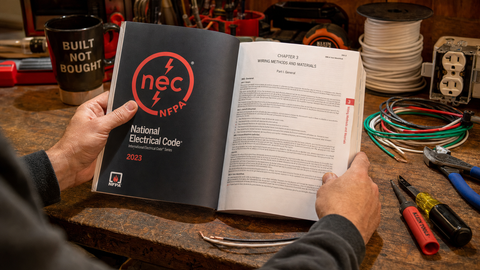
The AC side for common residential inverter classes on 240 V service, per NEC 690.8's 125% continuous rule, NEC 240.6(A) standard breaker ratings, and 75 °C copper ampacities from Table 310.16.
| Inverter Class | Max Continuous @ 240 V | × 1.25 | Breaker (240.6(A)) | Copper, 75 °C (310.16) |
|---|---|---|---|---|
| 3.8 kW | 15.8 A | 19.8 A | 20 A | 12 AWG (240.4(D) cap 20 A) |
| 5.0 kW | 20.8 A | 26.0 A | 30 A | 10 AWG (240.4(D) cap 30 A) |
| 7.7 kW | 32.1 A | 40.1 A | 45 A | 8 AWG (50 A @ 75 °C) |
| 11.4 kW | 47.5 A | 59.4 A | 60 A | 6 AWG (65 A @ 75 °C) |
The two perennial traps: a 7.7 kW inverter's 45 A backfeed exceeds the 40 A the 120% rule allows on a standard 200 A/200 A panel — derate the main or tap the line side — and NEC 240.4(D) caps 12 AWG at a 20 A breaker regardless of the 25 A table value. Our NEC wire sizing guide carries the full conductor charts.
Hot-Roof Output: The Tempco Math
Cell temperature on a dark comp roof runs 30–35 °C above ambient on still summer afternoons. At a 32 °C delta: REC's −0.24%/°C surrenders ~7.7% of nameplate; a −0.35%/°C class panel surrenders ~11.2%. On an 8 kW array, that's roughly 280 W of extra real peak power for REC — the largest tempco gap in any matchup in this series. In Phoenix money, that's a few hundred kWh a year; in Portland money, it's a nice dinner. Know your climate before paying for this row.
25-Year Energy Yield Math
Planning assumptions: 8 kW DC, 1,400 kWh/kWp year one, warranted degradation applied linearly. REC: ≤1% year one, 0.25%/yr after, ≥92% at year 25. Silfab: ~1% year one, ~0.50%/yr class after — interpolated to roughly 87% at year 25, with several series warranting 82.6–89% out at year 30.
| Metric | REC Alpha Pure-RX | Silfab Elite class |
|---|---|---|
| Year-1 production | ~11,200 kWh | ~11,200 kWh |
| Year-25 warranted fraction | ≥92% | ~87% (interpolated; verify per series) |
| Year-25 production | ~10,300 kWh | ~9,740 kWh |
| 25-yr cumulative (approx.) | ~268 MWh | ~259 MWh |
| Cumulative difference | ~9 MWh ≈ $1,350 @ $0.15/kWh, plus REC's hot-climate tempco bonus where applicable | |
Nine megawatt-hours is the biggest yield gap in this batch of comparisons — and it's still only about $1,350 over 25 years at typical retail rates. If Silfab quotes $0.20/W cheaper, that's $1,600 saved on day one and the arithmetic favors the craft panel. If the quotes land within a grand, REC's warranty depth and hot-day output tip it. Prices move weekly: check the 450 W and 400–459 W collections, or get a firm number on the quote page.
Warranty Structures, Read Carefully
REC's standard term is 20-year product / 25-year performance, extended to 25/25/25 — product, performance, and labor — when a certified ProTrust installer registers the system. Labor inclusion is the clause most warranties quietly skip, and it's the one that turns a year-14 panel failure from a $500 annoyance into a phone call. We've processed ProTrust claims; they pay.
Silfab's current North American lines register to a 25-year product term, with linear performance coverage extending to 30 years on several SKUs — the longest performance runway in this matchup. Two cautions from the service desk: register inside the window (miss it and some lines fall back to the shorter product term), and keep the confirmation email. We register every Silfab system at shipping and tell buyers to do the same. Both companies answer warranty phones in this hemisphere, which is more than we can say for the gray-market value brands floating around in 2026.
Climate and Site Fit
Hot climates tilt hard toward REC — the tempco gap in this pairing is the widest we stock, and it compounds with the degradation gap every summer for 25 years straight, and it never takes a season off. Cold and snow country tilts back toward Silfab: panels love cold electrically, so the tempco gap shrinks, while the 5400 Pa mechanical rating and half-cut shade tolerance do real work under snow and tree shadows. Mountain buyers should spend on rail and attachments first regardless of brand; the panel rating is only half the load path.
Coastal and agricultural sites are a draw — REC's build quality handles salt air fine, and Silfab's North American lines carry the corrosion certifications we ask for on oceanfront work. Shade-heavy urban roofs favor Silfab's half-cut layout slightly, or either brand on microinverters, which moots the whole shade question at the module level.
Field Notes: Installs and Claims
I've handled both brands on roofs and in the warranty queue. REC arrives in the best packaging in our warehouse and its frames are the stiffest we stock; the gapless all-black face is the panel homeowners photograph. Silfab arrives clean, registers in four minutes, and its support desk has answered every claim we've filed with photos, serials, and a replacement panel inside three weeks.
One handling note for both: premium glass is still glass. Two-person sets above single-story, no exceptions, and check the corner protectors are intact before the pallet leaves the dock. The most expensive panel damage is the kind nobody notices until the flash test. And a word on microcracks: the cells in both of these panels survive normal handling easily, but a dropped corner or a boot on the glass creates fractures that cost output for decades without ever tripping a warranty claim you can prove. Treat the panels like the 25-year assets they are.
Shade behavior deserves a final field note. On a Beaverton roof with a chimney shadow crawling across the array every winter afternoon, the half-cut Silfab layout held partial output through the shadow band while a neighboring conventional array went near-zero. Split-cell architecture doesn't make shade disappear — nothing does — but it shrinks the penalty, and paired with module-level electronics it shrinks further. If your roof has trees, that's worth more than a half-point of efficiency.
Availability and the 2026 Supply Picture
Silfab is the availability play in this matchup: Washington State to our Portland dock is a short truck ride, restock cycles run 2–5 weeks by series, and replacement panels never see a customs broker. REC runs 4–8 weeks from Singapore with occasional peak-season allocation. Contractors: order REC at contract signing, Silfab at permit approval. Both beat the tariff-snared import lottery that value-tier buyers are playing this year. Commercial buyers chasing Section 48E domestic content should note that both brands publish documentation packets — Silfab's North American content story is the simpler one to defend at audit time, while REC's case depends on the project BOM. Request packets with the PO, not after the design is stamped.
Permitting and Inspection Notes
Both brands carry UL 61730 and current California CEC listings, so the module never stalls a plan check. The failure trio we see at final inspection is always the same: a missing rapid-shutdown declaration under NEC 690.12, absent 690.56(C) placards, and an interconnection that violates 705.12's busbar math. Solve those on paper before the roof date and either panel sails through. Both manufacturers maintain North American engineering support that turns certification letters around in days — a genuinely underrated feature when an AHJ asks for a load-rating document with a specific revision date at 4 PM on a Friday.
Battery Pairing and Future-Proofing
Modules are dumb DC generators and both of these play identically with storage: hybrid inverters or AC-coupled batteries from our battery storage collection and energy storage lineup all work. The sizing math is a separate exercise — the battery sizing guide and backup runtime calculator handle it once the array is set.
The future-proofing nuance in this matchup: REC's slower degradation retains 3–5% more capacity at year 15 than a faster-fading line, which occasionally covers exactly the EV charger or heat pump a homeowner adds in a retrofit. Silfab's answer is simpler — with five more panels in the same 8 kW design, you start with more nameplate and end with roughly similar retained capacity at a lower upfront cost. Two roads, same destination.
How These Two Stack Against the Field
Above REC sits essentially nothing in current US distribution — Aiko's back-contact modules nibble at the efficiency crown but remain scarce and pricey. Beside Silfab sits Qcells, the other North American heavyweight, with slightly better efficiency and a bigger service machine. Below both sit the value TOPCon imports, whose 2026 tariff exposure has made them a paperwork gamble. For buyers who want premium-without-regret or value-without-risk, this pairing is the short list.
Choose REC If / Choose Silfab If
Both of these panels will still be producing power when your mortgage is gone. We've sold, kitted, and serviced both for years, and the wrong choice between them is genuinely rare. The decision is which set of strengths matches your roof, your winters, your summers, and your budget — so here's the framework we use at the counter.
Choose REC if: roof space is tight and 470 W density rescues the layout; you're in a hot climate where −0.24%/°C compounds daily; you want the strongest year-25 guarantee in the business (92%) with labor included via ProTrust; or lead-free construction matters to you. Browse the REC collection and HJT class.
Choose Silfab if: installed $/W rules and the roof has room; you're in snow country and want 5400 Pa without premium pricing; North American manufacturing and short lead times matter; or your installer can lock the 25-year registered product term. See the Silfab collection, Silfab Solar, and the Elite 370 W N-type TOPCon all-black.
Adjacent reading: REC vs Qcells for the premium final, Qcells vs Silfab for the all-North-American fight, and the best panels of 2026 roundup for the full field. Size the system with the system size calculator and build the BOM with the kits buyer's guide.
Frequently Asked Questions
Is REC worth the premium over Silfab?
On tight roofs and hot climates, yes — REC's density, −0.24%/°C tempco, and 92% year-25 guarantee out-produce Silfab by roughly 9 MWh over 25 years on an 8 kW array. On open roofs in mild climates, Silfab's lower $/W usually wins the arithmetic.
Are Silfab panels made in the USA?
Yes — Silfab manufactures in Burlington, Washington and Fort Mill, South Carolina, plus its original Ontario, Canada plant. US-made Silfab modules carry no exposure to the 2026 Section 232 import price floor or SE-Asia duties.
Which warranty is better?
REC: 20-year product / 25-year performance standard, extended to 25/25/25 including labor via certified ProTrust installers. Silfab: up to 25-year product with registration on current lines and up to 30-year linear performance on several SKUs. REC wins labor depth; Silfab wins performance runway. Register either one on time.
Which panel handles snow better?
Silfab's 5400 Pa snow-load rating is the standout mechanical spec in this matchup and a genuine advantage in mountain and northern installs. REC's high-rigidity frame is excellent, but Silfab publishes the bigger load number, and in snow country that's the row that matters.
Which is more efficient?
REC's Alpha Pure-RX reaches ~22.6% module efficiency; Silfab's Elite class runs ~21.4–21.5%. On an 8 kW system the difference is about five panels and roughly 105 ft² of roof.
Can I pair either brand with microinverters or batteries?
Yes. Both use standard MC4-compatible connectors, work with Enphase, Hoymiles, and SolarEdge module-level electronics, and pair with any hybrid inverter or AC-coupled battery. No proprietary hardware required for either.
Sources & Standards
- REC Alpha Pure-RX datasheet and ProTrust warranty terms (recgroup.com)
- Silfab Elite / SIL series datasheets and North America warranty terms (silfabsolar.com)
- NEC 2023 Articles 690.8, 705.12, 240.4(D), 240.6(A) and Table 310.16
- US Section 232 proclamation and MIP program (August 2026)
- Kiwa PVEL PV Module Reliability Scorecard (2026 edition)
- California Energy Commission Solar Equipment Lists