Brand Guide · Solar Modules
Silfab Solar: Premium Mono PERC, AX Series & BOMEX Frames
The contractor's guide to Silfab — US-made 400–410 W mono PERC modules, 30-year power warranties, BOMEX reinforced frames, array sizing math, and NEC 690.8 wire sizing.
Silfab Solar is the North American module maker that contractors reach for when the customer says "I want American-made" and means it. Founded in 2010 with roots in Toronto, Silfab now runs module assembly in Burlington and Bellingham, Washington — real factories, real US workers, real UL listing files you can put in a permit package. While the big Asian brands fight over commodity wattage, Silfab has carved out the premium domestic niche: tight binning, conservative power tolerances, and frames that don't flex when you torque the clamps.
Their product philosophy shows in the details. The BOMEX reinforced frame is heavier-gauge than the industry standard, the junction boxes are potted properly, and flash-test data ships with every pallet. We've uncrated thousands of modules from a dozen brands, and Silfab pallets consistently arrive with the fewest shipping-damage claims — the packaging alone tells you the company is run by people who've installed panels, not just marketed them.
Silfab positions as mid-premium domestic: priced above the high-volume imports, below the boutique American brands, and competitive enough that the domestic-content math under current federal incentives often closes the gap entirely.
One thing we respect about Silfab's channel strategy: they sell through distribution that stocks product and knows the line, rather than chasing every direct-to-installer deal that undercuts the supply chain. That means when you call us for 40 panels on a Friday, the answer is a delivery date, not a callback queue. For a contractor with a crew standing by, that reliability is worth more than the two cents a watt a gray-market broker saves you.
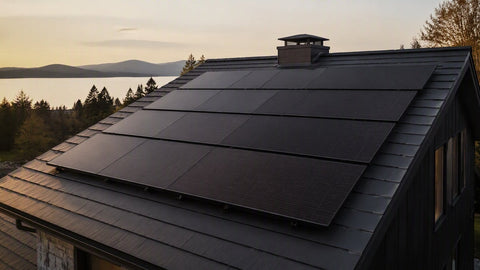
The residential catalog centers on the Prime series (SIL-400 HC+ and SIL-410 HC+): 400–410 W mono PERC half-cut modules in the standard 1762×1037 mm residential footprint, 20.3–21.0% efficiency, black frame with white or black backsheet options. The Elite series (SIL-410 BG) adds the X-pattern aesthetic layout for design-sensitive rooftops. The NX line (SIL-360 NX) covers value-tier residential and light commercial. All carry the 25-year product / 30-year linear power warranty. The current lineup:
| Model | Watts | Cell Tech | Efficiency | Dimensions | Warranty | Price Range |
|---|---|---|---|---|---|---|
| SIL-400 HC+ (Prime) | 400 W | Mono PERC half-cut | 20.3–20.8% | 1762 × 1037 × 35 mm | 25-yr product / 30-yr power | $0.45–$0.55/W |
| SIL-410 HC+ (Prime) | 410 W | Mono PERC half-cut | 20.6–21.0% | 1762 × 1037 × 35 mm | 25-yr product / 30-yr power | $0.46–$0.56/W |
| SIL-410 BG (Elite) | 410 W | Mono PERC (X-pattern) | 19.5–20.5% | 1864 × 1029 × 35 mm | 25-yr product / 30-yr power | $0.50–$0.60/W |
| SIL-360 NX | 360 W | Mono PERC | 19.0–20.0% | 1762 × 1037 × 35 mm | 25-yr product / 30-yr power | $0.48–$0.58/W |
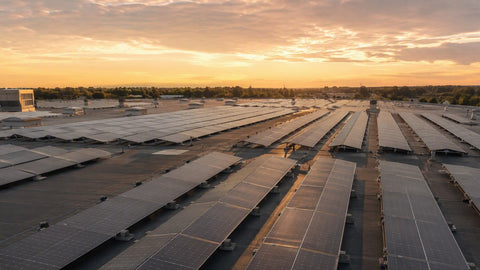
On the commercial side, Silfab's larger-format modules serve carport and ground-mount work, and the BOMEX frame option on AX-series SKUs adds the reinforcement that high-snow regions demand. For racking pairings, our racking systems overview and the IronRidge brand guide cover rail and clamp selection.
Silfab's 2025–2026 roadmap pushed efficiency on the Prime line past the 21% mark on the HC+ variants while holding the price position — no small trick with domestic labor costs. The bigger story is capacity: the Washington facilities expanded output to meet IRA-driven demand, which shortened lead times across the line. We've watched standard order-to-delivery windows drop from the 6–8 week range during the supply crunch to routine 1–2 week fulfillment on stocked SKUs.
The AX-series frame refresh standardized BOMEX reinforcement across more SKUs, and the datasheets now publish clamp-zone load ratings in the format AHJs and structural engineers actually want to see. If you stamped a Silfab structural calc in 2023, pull the current datasheet — the numbers improved.
Silfab modules carry UL 61730 listing, IEC 61215/61730 certification, and California CEC listing for state incentive programs. The BOMEX-framed SKUs are Buy American Act compliant, and US assembly qualifies the modules for domestic-content considerations under current federal incentive rules. Every panel ships with individual flash-test data — keep those serials in your closeout package; they're gold when a warranty question comes up in year nine.
The warranty package is the strongest card Silfab plays: 25-year product workmanship warranty and a 30-year linear performance warranty. Year one is guaranteed at 98% of nameplate, degradation capped at 0.5% annually thereafter. Compare that to the 12–15 year product warranties that were industry standard a few years ago and you see why design-build firms spec Silfab on anything with a long hold period. Claims run through their North American service organization — no overseas email chains.
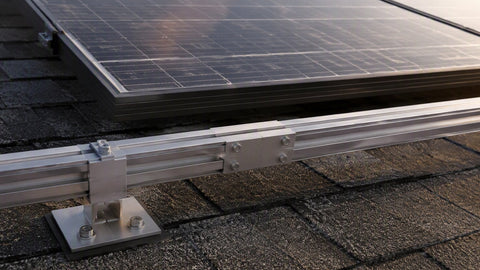
Silfab frames are stiffer than most, which changes handling: you can carry a 410 HC+ by the short rail without the module bowing, and clamps bite without the frame deflecting. Torque the mid-clamps to the racking manufacturer's spec — not the panel's — and respect the clamp zones printed on the frame sticker; the load ratings assume clamps inside those zones.
Two more from the roof. First: the half-cut cell layout means these modules behave better in partial shade than full-cell designs — one shaded row doesn't kill the string the way it does on older tech — but don't let that talk you into sloppy layout. Second: the black-on-black Elite frames show every fingerprint and boot scuff. We've learned to stage them face-down on the foam they ship with and glove up for the final set. Customers paying the Elite premium notice cosmetics.
One more ground-mount note: on fixed-tilt arrays in frost-heave country, the BOMEX frame's torsional stiffness keeps module glass from taking torsion loads when the rack moves a quarter-inch over winter. We lost exactly zero Silfab modules to microcrack failures across three Minnesota winters on a site that ate four modules from another brand in year one. Stiffer frames cost a few dollars more and pay it back the first time the ground moves.
A 400 W-class Silfab module measures 1762×1037 mm — about 19.7 square feet of frame. Real roof layouts need row gaps, ridge and eave setbacks, and fire-path clearances, so we plan on 24–26 square feet per panel all-in. Here's the math contractors run on the truck tailgate:
| Panels | Nameplate (400 W class) | Roof Area Needed* | Est. Annual Yield (4.5 sun-hrs, 80% derate) | Typical Fit |
|---|---|---|---|---|
| 10 | 4.0 kW | ~197 ft² | ~5,250 kWh | Small home, offset partial load |
| 15 | 6.0 kW | ~295 ft² | ~7,880 kWh | Average US home, ~60% offset |
| 20 | 8.0 kW | ~394 ft² | ~10,500 kWh | High-usage home, EV charging |
| 25 | 10.0 kW | ~492 ft² | ~13,130 kWh | Full offset + EV, most homes |
| 40 | 16.0 kW | ~787 ft² | ~21,000 kWh | Large home / small commercial |
Cross-check your target with our solar system size calculator, and for customers asking whether solar can carry the whole house, the honest math lives in can solar panels power a whole house. If storage enters the conversation, size the bank with the home battery bank sizing guide before you finalize panel count — the array and the battery should be designed together.
The 400 W-class HC+ modules run a short-circuit current around 13.7 A. NEC 690.8 wants 125% for continuous operation and another 125% for the irradiance enhancement factor — the famous 1.56 multiplier. Single strings on 12 AWG PV wire are routine; combining strings in parallel is where undersized wire sneaks in:
| String Isc (typ. 400 W mono PERC) | NEC 690.8(A) × 1.25 | NEC 690.8(B) × 1.25 Again (156% total) | Min. Conductor (Cu 90°C, PVW) | OCP (NEC 240.6) |
|---|---|---|---|---|
| 1 string, ~13.7 A Isc | 17.1 A | 21.4 A | 12 AWG (30 A) | 25 A |
| 2 parallel strings, 27.4 A | 34.3 A | 42.7 A | 8 AWG (55 A) | 50 A |
| 3 parallel strings, 41.1 A | 51.4 A | 64.1 A | 6 AWG (75 A) | 70 A |
| 4 parallel strings, 54.8 A | 68.5 A | 85.6 A | 4 AWG (95 A) | 90 A |
For the full derivation and the 310.16 ampacity tables behind these numbers, see our NEC wire sizing guide and the PV wire vs. USE-2 vs. THHN cable guide. Disconnect and OCPD requirements are covered in the NEC 690 disconnect guide.
Silfab's Prime and Elite lines run mono PERC half-cut cells — proven, bankable, and cheap to manufacture well. The industry's bleeding edge has moved to TOPCon and HJT, which push module efficiency into the 22.5–24.8% range. So why does a PERC module still make sense? Three reasons. First, dollars per watt: PERC lines are fully amortized, and Silfab's 20.3–21.0% efficiency at mid-premium pricing beats paying TOPCon premiums on jobs where roof area isn't constrained. Second, degradation character: PERC's long-term field data spans 15+ years, so the 0.5%/yr warranty curve is backed by actual fleet history, not accelerated-lab extrapolation. Third, availability: Silfab's Washington lines ship on short lead times while some TOPCon SKUs queue for months.
Where we'd steer you to newer cell tech instead: space-constrained roofs where every watt per square foot pays, and design-build commercial jobs chasing the highest possible yield per racking dollar. For those, cross-shop the TOPCon lines from Trina, LONGi, and Canadian Solar, or REC's HJT Alpha series.
Warranty percentages are abstract until you multiply them out. Here's Silfab's linear power warranty converted into actual watts on a 410 W panel and an 8 kW residential array:
| Year | Warranted Output (% of nameplate) | 410 W Panel Delivers | 8.0 kW Array Delivers |
|---|---|---|---|
| 1 | 98.0% | 402 W | 7.84 kW |
| 5 | 96.0% | 394 W | 7.68 kW |
| 10 | 93.5% | 383 W | 7.48 kW |
| 15 | 91.0% | 373 W | 7.28 kW |
| 20 | 88.5% | 363 W | 7.08 kW |
| 25 | 86.0% | 353 W | 6.88 kW |
| 30 | 83.5% | 342 W | 6.68 kW |
Run the same math on a budget import with a 0.7%/yr degradation rate and the year-30 gap on that 8 kW array is nearly half a kilowatt — real production, real money, every single month for three decades. On a financed system with a 25-year term, the stronger degradation curve is worth more than the sticker-price difference between Silfab and the cheapest import on the truck. That's the argument that closes domestic-content customers, and it has the virtue of being true.
Under the current federal framework, projects that meet domestic-content requirements qualify for a 10-point adder on the Investment Tax Credit. US module assembly counts toward the manufactured-products portion of that test, and Silfab's Washington production — with BOMEX frames and documented US content — is one of the cleanest ways to get there on the module line item. On a $25,000 residential install, 10 points of ITC is $2,500. That number frequently exceeds the entire premium of Silfab over a value import, which flips the sales conversation: the customer isn't paying more for American-made, they're being paid to take it.
One caution from the paperwork trenches: domestic-content certification requires manufacturer attestations, and rules shift. Pull Silfab's current domestic-content documentation at quote time, not at closeout, and keep it in the job file. We've seen incentive claims delayed months because somebody assumed last year's letter still applied.
Where does Silfab sit against the brands contractors cross-shop? The honest comparison — manufacturing footprint, domestic-content status, efficiency, warranty, and price position:
| Brand | Manufacturing | BAA Compliant | Peak Efficiency | Product Warranty | Price Position |
|---|---|---|---|---|---|
| Silfab | Burlington/Bellingham, WA (USA) | Yes | ~21.0% | 25 yr | Mid-premium (domestic) |
| Mission Solar | San Antonio, TX (USA) | Yes (BABA) | 22.8% | 15 yr | Premium (domestic) |
| JA Solar | China | No | 24.8% (5.0) | 25 yr | Mid-range (value) |
| REC | Singapore | No | 22.6% | 20 yr | Premium |
Our read: if the job needs domestic content, buy-Silfab is the default answer unless the customer demands the absolute highest efficiency — then it's Mission Solar or REC at a real price step. For pure value-tier work, JA Solar and Jinko undercut everyone, but you're giving up the domestic story and the 30-year power warranty. Browse the full field in our most efficient solar panels 2026 buyer's guide.
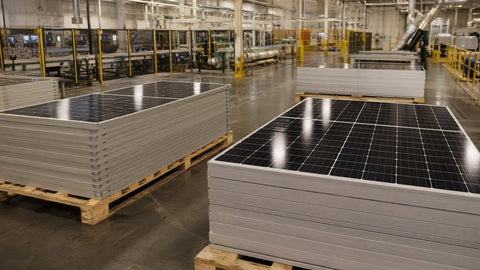
Silfab ships 31–36 modules per pallet depending on SKU, corner-protected, shrink-wrapped, and banded to a heat-treated pallet that survives LTL freight. Order full pallets when you can — the per-panel freight cost drops by half versus broken-pallet orders, and the modules arrive cleaner. Residential liftgate delivery is standard from our warehouses; a pallet of 400 W modules runs roughly 1,500–1,700 lbs, so confirm the delivery site can take a pallet jack across the driveway before you promise curbside.
Freight damage protocol, because it matters: photograph the pallet before the driver leaves, note any damage on the bill of lading, and open the shrink within 48 hours. Silfab's packaging is genuinely better than most — we see maybe one damaged module per several pallets — but the claim clock starts at delivery, and a signature without inspection notes is a claim you'll lose. Flash-test reports ride with each pallet digitally; match serials to the report at receiving and file both with the job paperwork.
We stock the Silfab Prime and Elite lines by the pallet, plus compatible racking, MLPE, and balance-of-system from our solar panel catalog. Pair them with string inverters from SMA or Fronius, or go module-level with microinverters. Full kits bundle the engineering: solar panel kits buyer's guide. Contractor volume pricing via quote request.
Specifications from Silfab Solar published datasheets (SIL-400/410 HC+, SIL-410 BG, SIL-360 NX) and warranty documents current as of mid-2026. Electrical sizing per NFPA 70 (NEC) 2023 Articles 690 and 310.16. Annual yield estimates assume 4.5 peak sun hours and an 80% system derate; your site will differ. Pricing reflects typical US street pricing and varies by volume. Always confirm current datasheets against the exact SKU on your quote before permitting, because Silfab revises nameplate ratings as cell supply improves.
Are Silfab panels really made in the USA?
Yes. Silfab operates module assembly plants in Burlington and Bellingham, Washington, with North American supply chains for frames and junction boxes. The cells themselves are imported — that's true of nearly every 'US-made' module — but the panels are assembled, tested, and warranted from Washington State. For projects chasing domestic-content incentives under the IRA, Silfab's US assembly qualifies for the domestic content adder when paired with qualifying racking, and their BOMEX frames are Buy American Act compliant.
What is the difference between the Prime and Elite series?
Prime (SIL-400/410 HC+) is the mainstream residential line: mono PERC half-cut cells, black frame, 20.3–21.0% efficiency, and the strongest dollar-per-watt value in the Silfab catalog. Elite (SIL-410 BG) uses an X-pattern cell layout with a premium all-black aesthetic and a slightly different electrical character — it costs a few cents more per watt and wins jobs where curb appeal decides the sale. Both carry the same 25-year product / 30-year performance warranty.
What does the 30-year power warranty actually guarantee?
Silfab warrants that modules will produce no less than 98% of nameplate in year one, degrade no more than 0.5% per year after that, and retain at least 85.4% of nameplate at year 25 — with the performance guarantee extending to 30 years at a slightly lower retention floor. In plain terms: a 410 W panel is warranted to still make roughly 350 W in 2051. That's among the strongest linear power warranties in the North American market.
How do Silfab panels handle snow and wind loads?
The AX-series frames with BOMEX reinforcement are rated for 5,400 Pa front (snow) and 4,000 Pa rear (wind) loads on most SKUs — that translates to roughly 113 psf snow load, which covers serious mountain and Great Lakes installs. We've racked Silfabs on 12:12 pitches in heavy snow country; the frames don't oil-can the way light imports do. Always confirm the exact load rating on the datasheet for your specific SKU and racking clamp zones.
Are Silfab panels compatible with Enphase and SolarEdge?
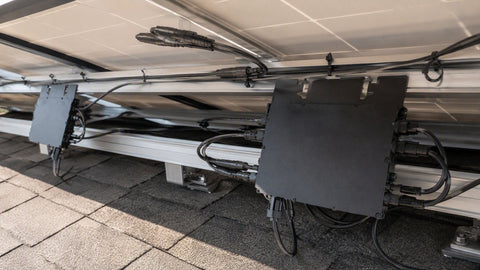
Yes — Silfab modules work with any MLPE. The 400–410 W class panels pair cleanly with IQ8-series microinverters and SolarEdge S440/S500 optimizers. Check the optimizer's max input current against the panel's Imp (around 13 A for the HC+ line); the S440 handles it, and Enphase IQ8AC/HC units are spec'd for this current class. See our Enphase brand guide for pairing details.
Can I mix Silfab panels with another brand on the same roof?
Technically yes, practically no. Mixing modules with different electrical characteristics in one string forces the string to the weakest panel's current, and mixed-nameplate arrays complicate warranty claims, permit drawings, and future service. If you must extend an existing array, put the new modules on their own string or their own MPPT input with matched electricals. On microinverter or optimizer systems, mixing is more forgiving electrically, but we still keep brands separated by array face for serviceability. When a customer's existing array uses discontinued modules, a matched Silfab sub-array on its own inverter input is usually the cleanest answer.
How long does delivery take from PES Supply?
Silfab modules ship from our warehouse network in 1–3 business days on standard pallets of 31–36 panels depending on SKU. Residential liftgate freight typically lands inside a week. Full-pallet contractor orders get volume pricing — request a quote with your panel count and delivery zip and we'll turn it around same-day.
Shop Silfab Solar at PES Supply
US-made Prime and Elite modules by the pallet — contractor pricing, fast freight.
Browse Silfab Panels