Wallbox is the Spanish company that figured out home EV charging is an energy-management problem, not just a plug on the wall. Their Pulsar line is the best-selling smart charger on our shelves for residential jobs, and the Quasar 2 bidirectional unit is the one customers ask about by name after reading about vehicle-to-home. I've hung enough Level 2 chargers to know the hardware is the easy half — the load calculation, the breaker sizing, and the honest conversation about what the panel can spare are where installs succeed or fail. This guide covers the Wallbox lineup, the NEC math behind every circuit, and where Wallbox beats (and loses to) ChargePoint, Tesla, and Grizzl-E. For the broader shopping picture, start with our Level 2 EV charger buyer's guide and the EV charger circuit breaker size chart.
1. Company Overview
Wallbox (Barcelona, founded 2015) sells charging hardware in over a hundred countries and went public on NYSE in 2021. The product philosophy is consistent across the line: compact enclosures, a genuinely good app (myWallbox), OCPP support for networked operation, and energy-management features — solar integration, dynamic load balancing, bidirectional power — that most competitors bolt on later if at all. They build for both the J1772 North American market and the Type 2 European market, and the hardware quality on the residential line has been solid in the field: the Pulsar Plus units we've installed run cool, stay connected, and don't generate support calls. That last point deserves emphasis, because a charger that works is the whole job. The most expensive charger is the one that strands a commuter at 7 a.m., and the cheapest one is the one nobody thinks about for ten years. Wallbox lands much closer to the second category than the first.
2. Current Product Lines
| Model | Type | Max Power | Connector | Key Feature |
|---|---|---|---|---|
| Pulsar Plus | L2 home (AC) | 7.4–22 kW | J1772 / Type 2 | Solar Eco/Full-Green modes; app control |
| Pulsar Max | L2 home (AC) | Up to 22 kW | Type 2 (socket/tethered) | Atlas CPU; OCPP 2.0.1; IP55/IK10; solar 3P optimization |
| Quasar 2 | Bidirectional (AC) | Up to 11.5 kW | J1772 / Type 2 | V2H + V2G; ISO 15118-20; backup power |
| Pulsar Pro | L2 commercial (AC) | Up to 22 kW | Type 2 | Secure auth; metering; energy management |
| Supernova | DC fast (public) | Up to 150+ kW | CCS / CHAdeMO | Public network fast charging |
For North American homes, the story is simpler than the global catalog: the Pulsar Plus at 40A or 48A on a J1772 cable is the volume product, and the Quasar 2 is the bidirectional flagship for buyers planning around vehicle-to-home backup. The Pulsar Max and Pro serve the commercial and European Type 2 markets. Supernova DC fast chargers are public-network equipment — if you're pricing depot or public DCFC, that's a commercial conversation we can have through the shop.
3. Recent Releases (2025–2026)
The headline is Quasar 2 reaching customers: a bidirectional charger speaking ISO 15118-20 that can push power from a compatible EV back into a home panel during an outage — effectively turning the car into a 60–100 kWh battery with wheels. Initial vehicle compatibility is limited (the car must support bidirectional AC discharge), but the direction is unmistakable. Wallbox also expanded the Pulsar Max's OCPP 2.0.1 support and solar-aware charging modes, and the myWallbox app's energy-management features keep absorbing functions that used to require separate hardware. Watch the bidirectional space closely — as utilities approve V2H interconnection in more states, a bidirectional-capable charger purchase today is cheap insurance against buying twice.
4. Certifications & Listings
Wallbox's North American units carry UL 2594 (EV supply equipment) and ENERGY STAR certification on the residential line, with FCC Part 15 for the radios and OCPP conformance for networked operation. Quasar 2's bidirectional operation touches UL 9741 territory, and utility interconnection approval for V2H remains jurisdiction-by-jurisdiction — check with your utility before counting on backup functionality in a permitted design. For the code landscape, our NEC 625 updates and solar integration guide covers what changed and what inspectors are enforcing.
5. Warranty Terms
Two years standard on the residential line — shorter than Grizzl-E's three and ChargePoint's three, which is Wallbox's honest weak point. In practice, failures we see cluster in the first months (DOA units, firmware quirks) rather than year two, so the practical risk is front-loaded. Extended coverage is worth pricing on commercial deployments where a dead charger is a dead revenue stream.
6. Circuit Sizing: The NEC Math Behind Every EV Charger
EV charging is a continuous load under NEC 625, so the circuit must be sized at 125% of the charger's draw. This table is the one we hand to every customer before they choose a charger amperage — conductor sizes per NEC 310.16 (copper, 75°C), breakers per NEC 240.6 standard ratings:
| EVSE Setting | Circuit Required (125%) | Breaker (NEC 240.6) | Min Copper THHN (75°C) | Approx. Miles of Range / Hour |
|---|---|---|---|---|
| 16A | 20A | 20A | 12 AWG (20A) | ~12–14 mi/hr |
| 24A | 30A | 30A | 10 AWG (35A) | ~18–21 mi/hr |
| 32A | 40A | 40A | 8 AWG (50A) | ~25–28 mi/hr |
| 40A | 50A | 50A | 8 AWG (50A) | ~30–33 mi/hr |
| 48A | 60A | 60A | 6 AWG (65A) | ~37–40 mi/hr |
Two things this table teaches. First, the jump from 40A to 48A charging costs you a wire-size jump from 8 AWG to 6 AWG — on a long run from a basement panel to a detached garage, that's real money for ~7 extra miles of range per hour. Second, almost nobody needs 48A. A commuter adding 40 miles of range nightly is fully charged by breakfast on a 24A circuit. Run your own numbers through our EV charger circuit calculator before you commit to a charger rating, and sanity-check the install scope with the EV charger installation requirements article.
7. Will Your Panel Take It? Load Calculation Reality
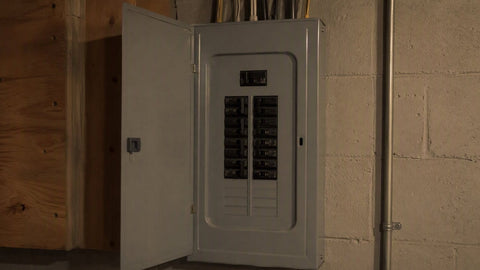
The question that kills more EV charger quotes than price is the service-entrance load calculation. NEC 220.83 (existing dwellings) or 220.82 tells you what the service can spare, and the honest answers on typical American housing stock:
| Service Size | Typical Existing Load | Comfortable EVSE Capacity | Field Note |
|---|---|---|---|
| 100A | Electric range, dryer, water heater, no electric heat | 16–24A EVSE | Load management (Wallbox power meter) often makes 32A possible |
| 100A | All-electric with heat pump | Load-managed only | Dynamic load balancing or service upgrade; don't guess |
| 150A | Mixed gas/electric | 32–40A EVSE | Sweet spot for most suburban homes |
| 200A | All-electric modern build | 48A EVSE | Usually straightforward; verify anyway |
Wallbox's answer to the marginal-panel problem is dynamic load management: a power meter at the service watches total draw, and the charger throttles itself so the house never exceeds its limit. I've commissioned these on 100A services where the homeowner was quoted $4,000 for a service upgrade — the $300 power-meter kit solved it instead. That said, load management is a throttle, not a miracle: if the house regularly runs near capacity, the car charges slowly while dinner cooks. Set customer expectations with the math, not with promises. Our EV charger installation guide walks the whole sequence, and the home-install walkthrough shows a real job.
8. Popular Products at PES Supply
From our Wallbox collection and the wider Level 2 charger catalog: the Pulsar Plus 40A J1772 is the volume mover, with the 48A hardwire variant for new construction and 200A panels. Quasar 2 orders skew toward early-adopter buyers pairing with solar — the EV charging with solar panels article covers that pairing. Accessories that complete jobs: the Wallbox power meter for load management, pedestal mounts for driveway installs away from walls, and holster/cable-management kits. The Wallbox brand page shows current stock.
9. Technical Comparison: Wallbox vs. Competitors
| Criteria | Wallbox | ChargePoint Home Flex | Tesla Wall Connector | Grizzl-E |
|---|---|---|---|---|
| Max L2 power | 22 kW (Pulsar Max) | 12 kW (50 A) | 11.5 kW (48 A) | 10 kW (40 A) |
| Bidirectional (V2H/V2G) | Yes (Quasar 2) | No | Limited (Tesla) | No |
| Solar optimization | Yes (Eco/Full-Green + 3P) | Limited | No | No |
| OCPP 2.0.1 | Yes (Pulsar Max) | Yes (commercial) | No (proprietary) | OCPP 1.6 |
| App quality | Top-rated | Excellent | Tesla app | Basic |
| Warranty | 2 years | 3 years | 1 year | 3 years |
The field summary: Wallbox wins on energy management — solar-aware charging, load balancing, OCPP openness, and the only shipping residential bidirectional option. ChargePoint wins on network polish and reliability pedigree (see our ChargePoint brand guide). Tesla's Wall Connector wins on price-per-amp and NACS-native simplicity. Grizzl-E wins on brute durability and Canadian cold-weather indifference. For a solar-equipped home that wants the car charged from sunshine first, Wallbox is the easy answer. For a garage that wants a dumb-reliable box, Grizzl-E. For a Tesla-only household, the native connector wins on convenience alone.
10. Installation Notes
- Hardwire above 40A. NEC 625 and plain reliability both favor hardwired EVSE at 48A; a NEMA 14-50 receptacle tops out at 40A continuous and the receptacle itself is the most failure-prone part of plug-in installs. If you do install a 14-50, use an industrial-grade EV-rated receptacle, not the $12 range outlet.
- GFCI is built in — don't double it. Listed EVSE includes its own ground-fault protection; feeding it from a GFCI breaker causes nuisance trips and finger-pointing. Standard breaker, EVSE's internal protection.
- Torque the lugs. Charger terminals on the 48A units want proper torque with a real driver — a loose 60A circuit lug at an EV load duty cycle gets hot, and EV loads run for hours, not minutes.
- Mounting height and reach. NEC 625 wants the coupling means 18 inches to 4 feet above grade in most dwelling installs; measure the cable reach to the car's charge port with the car parked badly, not perfectly.
- Permits. Most jurisdictions require a permit and inspection for a new 240V circuit. It's cheap, it's fast, and it protects the homeowner's insurance position. Do it.
11. Charging Speed in Practice
Spec-sheet kW numbers translate to miles through vehicle efficiency, and the spread between a frugal sedan at 3.5 mi/kWh and a truck at 2.2 mi/kWh is bigger than the spread between charger models. A Pulsar Plus at 40A (9.6 kW) adds roughly 25–33 miles per hour depending on the vehicle; overnight, that's 200–330 miles in a 10-hour window — more than any single-driver household uses on a weekday. The real constraint on home charging speed is usually the vehicle's onboard charger, not the EVSE: many popular EVs cap AC charging at 7.7 or 11 kW regardless of what the wall can deliver. Match the charger to the car's onboard limit and the panel's spare capacity, and spend the savings on a longer cable or a better mounting location instead of amperage the car will never draw. Cable length deserves its own sentence: the 25-foot option reaches a second parking spot or a car parked badly on garbage day, and it costs less than the amperage upgrade nobody needs.
12. Smart Features That Actually Earn Their Keep
Every charger claims to be smart; here's what proves useful in the field. Scheduled charging against time-of-use rates is the big one — shifting a 40-mile daily charge into a utility's off-peak window saves $150–$400 a year at typical TOU spreads, which pays for the charger over its life. Solar surplus charging is the second, and Wallbox's implementation is the best we've commissioned: the charger follows array output in near-real-time instead of exporting at 4 cents and importing at 32. Third is charge history with per-session kWh — the data you need for a home office deduction, a rental-property recharge bill, or just settling the household argument about what the car costs. The features that sound exciting and rarely matter: voice assistant integration and RGB light rings. Buy the energy management; ignore the glow.
13. Commercial and Fleet Notes
On the commercial side, Pulsar Pro and Commander units bring RFID authentication, MID-grade metering, and OCPP-managed load sharing across banks of chargers — a four-charger lot can share a single 200A service through dynamic power sharing rather than four 60A circuits. For workplace and multifamily projects, the load-sharing math often halves the electrical scope, which is where the real project money hides. We quote commercial Wallbox deployments through the shop with the utility incentive paperwork included — many states and utilities still cover 50–100% of make-ready costs for networked commercial stations, and the EV charging station incentives article tracks the major programs.
14. Total Cost of Ownership
Installed cost on a residential Pulsar Plus job breaks down roughly as: charger $500–$750, circuit materials $100–$400 depending on run length and wire size, electrician labor $300–$800, permit $50–$200. Call it $1,000–$2,000 all-in for a typical garage install on a healthy panel, more for long runs, service upgrades, or detached structures. Against that, a 12,000-mile driver shifting from gasoline at $3.50/gallon to off-peak electricity saves roughly $1,000–$1,500 a year in fuel. The charger pays for itself before the warranty expires — as long as the panel doesn't need upgrading, which is why the load calculation in section 7 is the whole ballgame. Get that number first, get it in writing from the electrician, and everything downstream of it — charger choice, amperage, solar integration — becomes a simple shopping exercise instead of a gamble. Our cost-benefit breakdown runs the numbers in more detail.
15. Reliability: What Breaks and What Doesn't
After several years of installing and supporting the line, the pattern is clear. The charge electronics themselves are stout — we rarely see a failed Pulsar power stage. What actually generates service calls: Wi-Fi configuration on 5 GHz-only networks (the charger wants 2.4 GHz, and mesh routers that hide the band split cause most "defective unit" returns), holster wear from customers who drop the connector on gravel driveways, and the occasional firmware update that needs a power cycle to settle. Cable jackets stiffen below about −20°F, which matters in Minnesota and not at all in Miami. Mount under an eave or in the garage when you can; the units are outdoor-rated, but a decade of direct afternoon sun ages every plastic enclosure ever made. And register the unit at install — the warranty clock and the support queue both run smoother when the serial number is already in their system. None of this is Wallbox-specific, but a buyer deserves the unvarnished version: modern smart chargers are appliances with radios, and the radio is the fussy part, not the power electronics.
Firmware, Updates, and the Long Game
Wallbox pushes firmware over the air through the myWallbox app, and the update cadence has been steady — new vehicle compatibility profiles, utility-program integrations, and OCPP refinements arrive without a truck roll. That's the upside of buying a connected charger from a company that treats software as the product. The corresponding advice: let updates run overnight, keep the charger on a stable 2.4 GHz network with decent signal, and if an update hiccups, a 30-second breaker cycle resolves nearly every stuck state we've encountered. A charger that improves after purchase is still a novel idea in electrical gear, and it's one of the reasons this category rewards buying a software-serious brand over a hardware-only box.
16. Frequently Asked Questions
What size breaker do I need for a Wallbox Pulsar Plus?
Match the charger setting: the 40A Pulsar Plus needs a 50A breaker and 8 AWG copper; the 48A version needs a 60A breaker and 6 AWG copper, hardwired. EV charging is a continuous load, so circuits are sized at 125% of charger draw under NEC 625 — never put a 40A charger on a 40A breaker.
Can Wallbox charge my car from solar panels only?
Yes — the Eco and Full-Green modes (with the Wallbox power meter or compatible solar inverter integration) throttle charging to match available solar surplus. Eco mode mixes solar with grid to keep a minimum charge rate; Full-Green charges only from surplus solar. On a typical 7–10 kW residential array, expect solar-only charging at 16–32A during peak sun.
Is the Wallbox Quasar 2 worth waiting for over a standard charger?
That depends on your vehicle and your utility. Quasar 2's bidirectional V2H backup only works with EVs supporting ISO 15118-20 AC discharge, and your utility must approve the interconnection. If you drive a compatible vehicle and face regular outages, it's a genuine home-backup solution. Otherwise, a Pulsar Plus today plus a future upgrade path may be the pragmatic play.
Does the Pulsar Plus work with non-Tesla and Tesla vehicles?
The J1772 version charges every North American EV except Teslas without an adapter — Tesla vehicles need the J1772-to-NACS adapter that ships with the car. Wallbox also offers NACS-native variants. One charger serves a mixed household fine with adapters in the glovebox.
Can I install a Wallbox myself?
The bracket and charger, sure — it's four screws and a hang. The 240V circuit is the part that belongs to a licensed electrician in most jurisdictions: panel work, breaker, code-sized conductors, and the permit. A 60A circuit installed wrong is a house-fire risk that runs unattended for hours. Hire the circuit; hang the box yourself if you like.
What is OCPP and why should a home buyer care?
OCPP (Open Charge Point Protocol) is the open standard that lets chargers talk to any compliant network or energy-management system. For homes it matters for utility demand-response programs and future smart-tariff integration; for commercial buyers it's the difference between owning your hardware and renting a vendor's ecosystem. Wallbox's OCPP 2.0.1 support keeps your options open.
Sources & Standards
Specifications from Wallbox published datasheets and myWallbox documentation; NEC Article 625 (EV charging), NEC 220.82/220.83 load calculations, NEC 240.6 standard overcurrent ratings, NEC 310.16 conductor ampacities; UL 2594 and ENERGY STAR listings; ISO 15118-20 for bidirectional communication. Range-per-hour figures are typical values at ~3.0–3.5 mi/kWh vehicle efficiency.
17. Shop Wallbox at PES Supply
Browse the Wallbox collection or the full EV charger catalog, and grab the charging accessories — pedestals, holsters, power meters — in the same order. Tell us your panel size, run length, and vehicle, and we'll spec the circuit and the charger together; that's the conversation that prevents the two most common regrets: undersized wire and a charger the panel can't feed.