A commercial generator purchase is a six-figure reliability decision wearing a five-figure price tag. Size it wrong and you own an expensive machine that either stalls when the walk-in compressors kick, or loafs at 20% load wet-stacking itself into an early overhaul. We quote commercial standby and prime-power units for farms, cold storage, medical offices, and retail — this guide is the full selection workflow: load analysis, fuel strategy, the NEC articles your inspector lives in, and the ownership costs nobody puts in the brochure. Browse the commercial generator catalog alongside this guide for live pricing by kW class.

Step one: standby, prime, or continuous — the rating decides everything
Manufacturers rate commercial gensets to ISO 8528 categories, and buying the wrong rating voids warranties and kills engines:
| Rating | Annual hours | Load profile | Typical application |
|---|---|---|---|
| Standby (ESP) | ≤ 200 h/yr typical | Variable, up to nameplate | Grid backup for businesses — the most common commercial purchase |
| Prime (PRP) | Unlimited | Variable, ~70% average of prime rating | Off-grid sites, construction power, peak shaving |
| Continuous (COP) | Unlimited | Steady 100% of rating | Base-load power, remote facilities, islanded plants |
The classic mistake: buying a standby-rated unit for a site that runs 1,500 hours a year because the nameplate kW was right and the price was lower. Eighteen months later the engine needs work the warranty will not cover. Match the rating to the real duty cycle first; every other decision follows.
Step two: size from measured load, not the panel label
Panel size tells you nothing — a 600A service does not mean a 600A load. Commercial sizing done right uses one of three methods, in descending order of accuracy:
- Power-quality analyzer for 30 days. A logging meter on the service captures real peak kW, demand profile, and motor inrush events. This is the only method we trust for process loads, refrigeration, and anything with VFDs.
- Twelve months of utility bills. Peak demand (kW) from the bill, times a diversity factor of 1.25–1.5, gives a defensible standby size for conventional commercial buildings.
- NEC 220 load calculation. The code-method estimate — acceptable for new construction with no operating history, but conservative enough that you should sanity-check it against comparable buildings.
Motor starting still rules the answer. Across-the-line started compressors and pumps demand 3–6× running kVA at the instant of start, and the genset's alternator must absorb it without voltage dip crashing your controls. Worked example — a grocery cold-storage site:
| Load element | Running kW | Starting kVA demand | Design treatment |
|---|---|---|---|
| 4 × 15 HP rack compressors | 45 | 135 (staggered starts) | Start sequence programmed into controls, 10s stagger |
| Walk-in freezer evaporators + lights | 12 | 12 | — |
| HVAC package units (2 × 10 ton) | 24 | 60 (soft-start retrofitted) | Soft starters cut inrush ~50% |
| Lighting, POS, office | 18 | 18 | LED retrofit already done |
| Total | ≈ 99 kW | peak inrush event ≈ 165 kVA | Select 125–150kW standby |
Target a genset sized so normal operation sits at 60–80% of rating. Chronic light loading below 30% causes wet stacking in diesels — unburned fuel and carbon fouling the exhaust and rings — and we have pulled apart engines ruined by exactly that. If the building load is small but the motor inrush is huge, solve the inrush with soft starters or VFDs instead of buying a generator twice the size you need.
Field note: I've specced replacements for two different diesel gensets that died young from wet stacking — both oversized "for safety" by a rule-of-thumb bidder. A 30-day logging meter costs a few hundred dollars and settles the kW question with data. Measure first, buy once.
Step three: fuel strategy is runtime strategy
| Fuel | Consumption reality | Storage & autonomy | Best commercial fit |
|---|---|---|---|
| Diesel | ≈ 7 gal/hr at half load per 100kW (0.06–0.07 gal/kWh) | On-site tank; size for 48–96 h typical, more for critical sites; polish annually | Prime power, large standby, anywhere diesel is already on site |
| Natural gas | ≈ 1,100–1,300 cu ft/hr per 100kW at half load | Utility-supplied; no storage; verify pressure and meter capacity at full load | Urban standby, emissions-sensitive sites, long-duration outages |
| Propane | ≈ 11–13 gal/hr per 100kW at half load | On-site tankage; practical to 150kW-ish, heavy vaporization demand above that | Rural standby where diesel maintenance is unwanted |
Diesel's edge is energy density and independence: a 500-gallon sub-base tank on a 150kW unit at half load carries roughly two and a half days. Natural gas removes refueling entirely but ties you to utility pressure and removes prime-power eligibility in most air districts. For life-safety and legally required standby, fuel codes (NFPA 110 for emergency systems) dictate onsite supply minimums — know which code class you are in before the tank is sized.
Step four: the NEC articles that govern the install
Commercial generator work lives in four articles, and which ones apply changes the entire design:
| Code | Scope | Design consequence |
|---|---|---|
| NEC 700 (Emergency) | Legally required life-safety loads: egress lighting, fire pumps, alarms | Separate ATS, separate circuits, 10-second transfer, dedicated fuel supply per NFPA 110 |
| NEC 701 (Legally Required Standby) | Loads required by code but not life-safety: elevators, some ventilation | Separate ATS; 60-second transfer |
| NEC 702 (Optional Standby) | Everything else: refrigeration, POS, HVAC, process | May share the generator; own transfer equipment; no separation requirements from normal wiring beyond standard practice |
| NEC 445 / 250 | Generator installation and grounding | Separately derived system question set by ATS pole count; 445.13 conductor sizing at 115% of nameplate |
The 700/701/702 split is where commercial projects go sideways. Emergency loads must be on their own automatic transfer switch with their own circuit segregation — you cannot hang the fire pump on the same ATS as the walk-in freezer. One generator can feed multiple transfer switches across code classes, and that is usually the economical design, but the segregation is absolute. Grounding: a 4-pole ATS switching the neutral makes the generator a separately derived system with its own neutral-ground bond and electrode per NEC 250.30; a 3-pole ATS keeps the bond at the service. Get this wrong and you get nuisance GFCI trips and failed inspections.
Conductor and OCPD sizing run per NEC 445.13 (115% of nameplate continuous) against the NEC 310.16 ampacity tables — worked tables are in our NEC wire sizing guide. Transfer equipment by class: 200A, 400A and above, and the full transfer switch catalog.
Single-phase vs three-phase and voltage selection
Commercial inventory in North America centers on 120/208V three-phase and 277/480V three-phase, with 120/240V single-phase for light commercial. Match the genset to the service voltage — reconfigurable alternator ends exist, but ordering the correct voltage from the factory is cleaner and cheaper. If the site has 480V distribution, generate at 480V and let the existing transformers step down; generating at 208V and stepping up wastes money and adds a failure point.
Ownership costs: the budget beyond the purchase order
| Cost element | Typical range | Notes |
|---|---|---|
| Equipment (100–150kW class, diesel) | $30,000–$55,000 | Weather enclosure and sub-base tank add 10–20% |
| Installation | $15,000–$40,000 | Pad, exhaust, fuel, electrical, ATS; crane picks on rooftop jobs |
| Permits, engineering, commissioning | $3,000–$10,000 | PE-stamped drawings on most commercial permits; load-bank test at startup |
| Annual maintenance contract | $1,500–$4,000/yr | Two inspections, fluids, filters, battery, full service records |
| Fuel system upkeep | $500–$2,000/yr | Diesel polishing and testing; tank integrity checks |
| Load-bank testing (annual, critical sites) | $800–$2,000 | Prevents wet stacking; required by NFPA 110 for emergency systems |
Rule of thumb from our quotes: turnkey installed cost for a commercial standby lands at $450–$700 per kW in the 30–150kW range, dropping per-kW as size climbs. Maintenance is not the place to save money — a skipped service record is also a warranty defense for the manufacturer, and a failed start during an outage makes the entire investment worthless in the only moment it mattered.
Buying checklist for the facility manager
- Log the load for 30 days, or pull 12 months of demand data and apply diversity.
- Fix the rating to the duty cycle: standby vs prime vs continuous.
- Classify every load under NEC 700/701/702 and design transfer switch segregation accordingly.
- Choose fuel from autonomy requirements and existing site infrastructure.
- Solve motor inrush with soft starters/VFDs before upsizing the genset.
- Specify voltage and phase to match the service; order factory configuration.
- Contract maintenance and annual load-bank testing at purchase, not after the first failure.
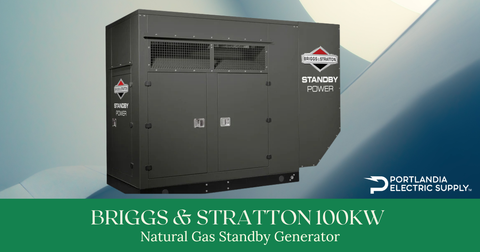
Brands we quote and support: Cummins, Generac Industrial, Kohler, and Briggs & Stratton commercial, across the commercial standby catalog. For contractors and facility teams, a Pro Account puts generator, transfer switches, and balance-of-system on one PO with coordinated freight — and our engineers will review your load study before you commit to a kW class.
Emissions tier and permitting
Stationary diesel engines in the US fall under EPA Tier 4 rules, and the tier depends on use: prime-power units generally need Tier 4 Final certification with aftertreatment (DPF, often SCR/DEF), while true emergency standby units can run under emergency-use provisions with looser certification — but only if annual non-emergency runtime stays within the permitted hours, typically 100 hours including maintenance and testing. Air districts in California and the Northeast add their own registration and hour-logging rules. The paperwork is not optional: hour logs, maintenance records, and permit conditions get inspected, and fines for unpermitted engines are real. Buy the certification for the duty you will actually run, and put the runtime log on a clipboard by the door, not in someone's memory.
Enclosures and sound attenuation
| Enclosure level | Typical sound @ 23 ft | Application |
|---|---|---|
| Open skid | 85–95+ dBA | Inside a dedicated mechanical room only |
| Weather-protective enclosure | 78–85 dBA | Industrial yards, remote sites |
| Level 2 sound-attenuated | 70–76 dBA | Commercial sites with property-line limits |
| Level 3 / hospital-grade | 65–70 dBA | Urban sites, healthcare, campuses |
Ordinances decide this for you — many municipalities cap property-line noise at 60–70 dBA, and a 150kW open unit exceeds that at the fence of most commercial lots. Price the enclosure with the generator; retrofitting attenuation after a noise complaint costs double and starts with a violation letter.
Fuel system design for diesel
Sub-base tanks simplify permitting and keep the fuel under the machine; remote day tanks make sense past about 500 gallons or where the fire marshal wants separation. Either way, diesel is a living system: it grows algae, absorbs water, and degrades. The maintenance trinity is fuel polishing on a schedule, biocide treatment, and water separation checks — plus annual fuel testing on critical sites. NFPA 110 sets onsite fuel minimums for emergency systems (commonly sized for hours of full-load runtime by class); calculate from the engine's full-load consumption, not the half-load brochure number, because emergencies do not arrive at half load.
Paralleling and redundancy
Past roughly 600kW of required capacity, or wherever downtime is genuinely unacceptable, two paralleled generators beat one big one: N+1 redundancy, maintenance without blackout, and better part-load fuel economy. Paralleling switchgear adds cost and complexity — sync check, load sharing, and properly rated breakers — but for cold storage, data-adjacent loads, and healthcare-adjacent facilities it is the correct architecture. Below that threshold, one well-maintained unit with a load-bank program beats two neglected ones.
Commissioning and acceptance testing
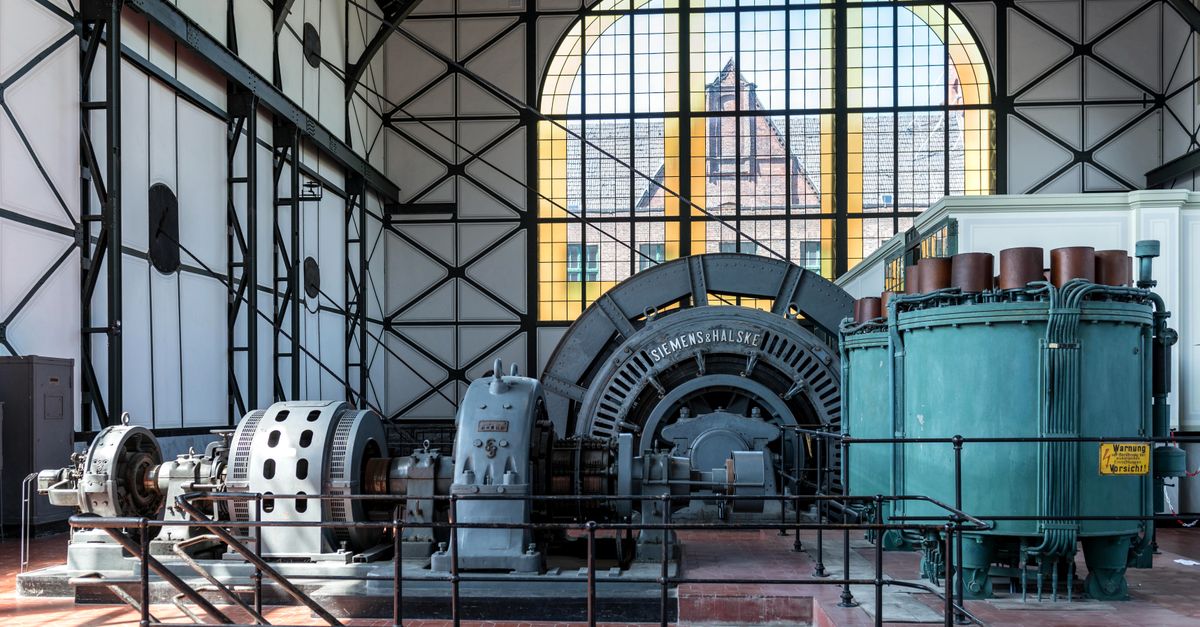
The startup day determines the next decade. A proper commercial commissioning includes: fuel system pressure and leak test, coolant and oil verification, protective-trip function checks (overspeed, low oil pressure, high coolant temp), ATS transfer timing verification against its code class (10 seconds for NEC 700 emergency), a full building-load transfer test, and a load-bank run to rated kW with recorded voltage and frequency stability. Every step gets documented — that dossier is your warranty foundation and your insurance evidence. Witness it in person or send your electrician; do not let it happen unattended.
Remote monitoring: cheap insurance that pays monthly
Modern commercial controllers ship with cellular or Ethernet telemetry — fuel level, battery health, exercise logs, fault alarms — for a few hundred dollars a year. On a single-site small business it is convenience; across a multi-site portfolio it is the difference between learning about a failed block heater on Tuesday afternoon and learning about it during the Friday night outage. Specify monitoring at purchase, assign the alarm list to a named human, and test the alarm path quarterly. A generator with telemetry and nobody watching the inbox is just a generator.
Field note: The best-run commercial sites I supply share one habit: a laminated weekly checklist hung on the enclosure — fuel level, coolant, block heater warmth, battery voltage, exercise log initials. It takes four minutes. The worst-run sites have a generator nobody has opened since the installer left. Guess which ones start during the ice storm.
Siting, exhaust, and structural notes
Commercial units at 100kW+ arrive weighing 4,000–8,000 lb — the pad is a structural element, not a slab afterthought. Poured reinforced concrete sized for the wet weight with anchoring per the seismic requirements of your jurisdiction, elevation above the 100-year flood line, and drainage that never ponds against the enclosure. Exhaust routing deserves a drawing of its own: straight, short, supported, with rain caps and condensate drains, terminating away from air intakes, operable windows, and property lines. Radiator discharge air needs an unobstructed path — a generator boxed in by a parapet wall will overheat and derate or shut down in the first summer heat wave. And post the clearances on the enclosure: the day a landscape crew parks mulch against the intake louvers is the day you learn why.
The service agreement decision
Every manufacturer and most independent service companies sell annual maintenance agreements, and for commercial standby they are the correct default. What a real agreement includes: two scheduled inspections a year, oil and coolant analysis trends, battery replacement on schedule, firmware updates, 24/7 emergency dispatch, and — the part that matters — a paper trail that keeps warranty claims clean and satisfies insurers and auditors. What to negotiate: response-time guarantees in writing, load-bank testing included rather than à la carte, and loaner/rental provisions for extended repairs. The agreement costs 3–5% of installed cost per year; a single failed start during a business outage typically costs more than a decade of agreements.
Rental and contingency planning
Even with a permanent unit, sophisticated facility teams keep a rental contingency: a pre-arranged agreement with a rental house, a cam-lock or tap-box connection point on the building, and a documented hookup procedure. If the permanent unit fails catastrophically — thrown rod, flood damage — the rental rolls in and connects in hours instead of days. The tap box costs under $2,000 during initial install and is ruinously expensive to retrofit. Add it to the project scope; you will feel clever exactly once, and it will be worth it.
Common commercial buying mistakes
- Sizing off the service rating. A 600A panel rarely sees 600A. Measure or use demand data.
- Ignoring power factor and harmonics. VFDs, LED drivers, and UPS systems distort the load profile; oversize the alternator or add filtering on heavily electronic loads.
- Buying standby rating for prime duty. The warranty exclusions will find you.
- Undersizing the fuel system. Full-load consumption, not half-load, sets tank and gas-line sizing.
- One ATS for mixed code classes. NEC 700/701 loads need their own transfer equipment — segregation is not optional.
- No commissioning witness. Unwitnessed startups produce undocumented problems that surface in year two as warranty disputes.
- Skipping the tap box. See the rental contingency above.
The diesel vs gaseous decision, summarized honestly
Pick diesel when: autonomy without utilities matters, the site is rural, prime capability may be needed, or the fleet standard is diesel. Pick natural gas when: the site is urban with reliable gas pressure, runtime expectations are long, emissions permitting is painful, or refueling logistics are genuinely hard. Pick propane when: the site is rural, duty is standby-only, and diesel fuel maintenance is unwanted overhead. All three are defensible; what is not defensible is choosing by equipment price alone, because fuel infrastructure and permitting routinely exceed the generator's price delta between fuel types.
The load study: how to commission one properly
A proper commercial load study is cheaper than a wrong generator by an order of magnitude. The procedure: rent or buy a three-phase power-quality analyzer, clamp every service conductor, and log at 1-minute intervals for 30 days — capturing weekday peaks, weekend valleys, motor start events, and any production cycles. What you extract: true peak kW with timestamp, demand profile shape, power factor, and harmonic content. That last item surprises people; a facility full of VFDs and LED drivers can need an oversized alternator or harmonic mitigation even when the kW is modest. Present the study to two or three suppliers and watch the quotes converge — data is the antidote to the rule-of-thumb markup. Facilities that skip the study and size off the panel label oversize by 40% on average in our experience, then pay twice: once for the iron, and again in wet stacking.
Hurricane and wildfire season: the preparedness calendar
Commercial standby readiness is a calendar, not a panic. Ninety days before season: full PM service, load-bank test, fuel polish and top-off, telemetry alarm path test. Thirty days: spares audit (filters, belts, coolant, batteries), rental contingency contact confirmation, staff drill on manual procedures. Season onset: weekly walk-downs, fuel supplier on notice, keyholder list current. After every event: post-run inspection, oil sample, hours logged, lessons filed. The sites that follow the calendar treat outages as operating conditions; the rest learn about their block heaters on the news crawl.
Buying used commercial generators: the disciplined version
The used market can be rational — low-hour prime-rated units from facility closures occasionally surface at 40–60% of new. The discipline that separates bargains from anchors: verified hour meter against maintenance logs, oil and coolant analysis before purchase, a witnessed load-bank test to rated kW, alternator insulation-resistance test, and a transfer-switch compatibility check. Skip any one and you are buying someone else's problem with new paint. When the documentation is clean, used commercial iron is one of the better deals in the power business; when it is not, the discount is never deep enough.
The procurement timeline
Commercial gensets are not shelf items. Realistic lead times run 8–26 weeks depending on size and options, with switchgear and sound enclosures adding more. Sequence the project accordingly: load study first, then engineering and permits, then the purchase order with the long-lead equipment, then site work while the factory builds. The projects that slip are the ones that ordered late and poured early. Add factory witness testing for critical installations — a day at the plant watching your unit on the load bank is the cheapest acceptance insurance in the industry, and it catches shipping damage and configuration errors before freight, not after.
Documentation the owner should demand
At handover, the folder should contain: as-built drawings, the load study, commissioning and load-bank reports, warranty registrations, the maintenance contract, fuel-system test records, alarm contact list, and the NFPA 110 documentation set where applicable. If any item is missing at handover it will be missing forever. That folder is the difference between a facility that manages its generator and a facility that merely owns one.
The last word belongs to the maintenance log. Every commercial generator we have seen fail in service failed on paper first — missed PMs, stale fuel samples, batteries past their third birthday, alarms acknowledged and forgotten. The hardware is overwhelmingly reliable; the organizations around it are the variable. Build the organization — calendar, contract, telemetry, folder — and the hardware will do its job for decades. That is the entire secret, and it is not a secret.
Frequently asked questions
How do I size a commercial generator?
Measure, don't guess: 30 days on a power-quality analyzer, or 12 months of utility peak-demand data with a 1.25–1.5 diversity factor. Add motor inrush analysis, then size so normal operation runs at 60–80% of rating. Chronic operation below 30% load wet-stacks diesel engines.
What is the difference between standby and prime power ratings?
Standby (ESP) is rated for limited annual hours during grid outages. Prime (PRP) allows unlimited hours at variable load averaging about 70% of rating. Continuous (COP) allows unlimited hours at 100% of rating. Running a standby-rated unit as prime power voids warranties and shortens engine life dramatically.
Diesel or natural gas for commercial standby?
Diesel for independence and prime capability — on-site fuel means days of autonomy regardless of utilities. Natural gas for urban standby where long outages are the concern and refueling logistics are painful; you trade away on-site autonomy and usually some output rating.
What NEC article governs commercial generators?
NEC 700 for emergency life-safety loads, 701 for legally required standby, 702 for optional standby, 445 for generator installation, and 250 for grounding. The 700/701/702 classification of each load determines transfer switch count and circuit segregation.
How much does a 100kW commercial generator cost installed?
Equipment runs $30,000–$55,000 depending on enclosure and tank options, with installation, permits, engineering, and commissioning adding $20,000–$50,000. Turnkey typically lands at $450–$700 per kW, plus $1,500–$4,000 annually for a real maintenance program.
Why does my commercial generator need a load-bank test?
Diesels that never reach 30%+ load wet-stack — unburned fuel and carbon foul the exhaust and rings. Annual load-bank testing burns off deposits, proves the unit makes rated power, and is required by NFPA 110 on emergency systems. It is the cheapest engine insurance available.