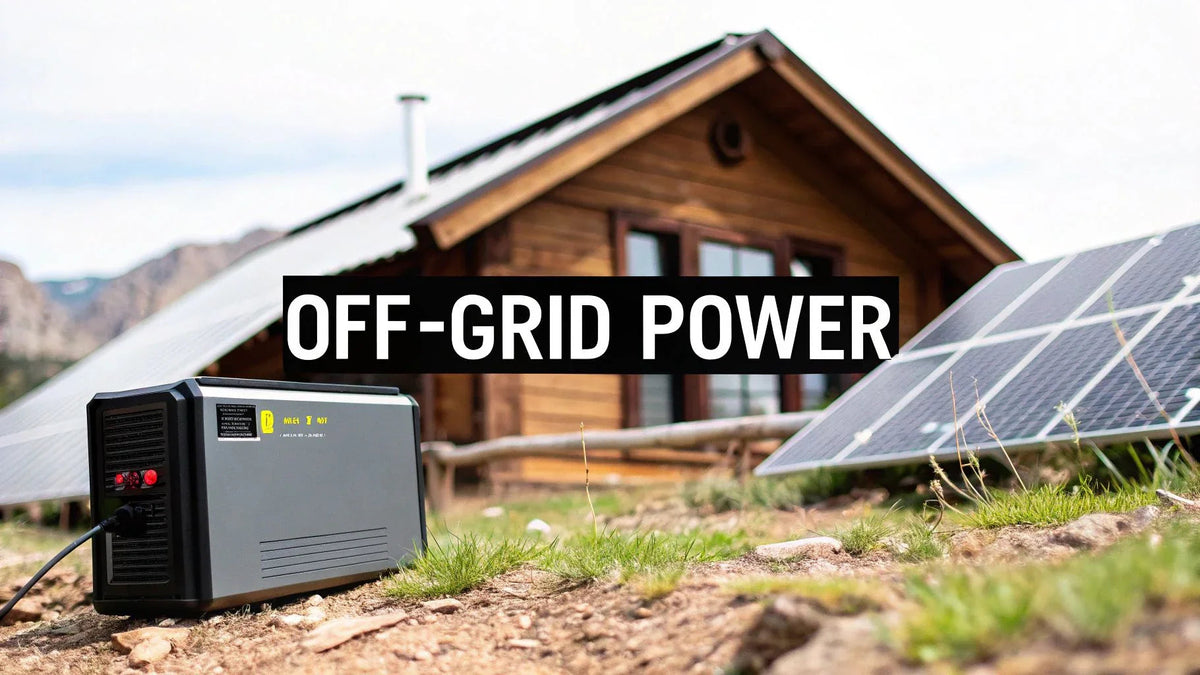
Last October we commissioned a 30 kWh bank in a straw-bale cabin outside Bend, Oregon, and the owner asked the same question every off-grid client asks: which battery actually survives a decade of daily cycling without turning into a warranty claim? The honest answer is that the "best" solar battery is the one whose chemistry, discharge depth, and charge profile match the way you actually live on the system — not the one with the glossiest spec sheet. I've specified flooded lead-acid for budget cabins, lithium iron phosphate for full-time homesteads, and everything between, and the failures I've been called back to fix almost always trace to a sizing or charging mistake, not a bad cell.
This guide is written from the install side of the fence. We'll walk through the chemistries that matter in 2026, the flagship models we stock and service, the math for sizing a bank correctly, and the code issues — NEC 480, 706, and the conductor tables in 310.16 — that separate a clean inspection from a red tag. If you're still building out the rest of the system, pair this with our solar battery buyer's guide and the battery sizing walkthrough before you order anything.
Choosing the Right Battery for Your Off-Grid System
Off-grid is a different animal from grid-tied backup. A grid-tied battery cycles maybe fifty times a year during outages and peak-shaving windows. An off-grid bank cycles every single night, three hundred sixty-five days a year, and it has to absorb everything a week of November rain throws at it. Cycle life and depth of discharge stop being marketing numbers and start being the difference between a ten-year system and a four-year one.
Four chemistries dominate real off-grid builds today:
| Chemistry | Typical Cycle Life (to 80% capacity) | Usable DoD | Round-Trip Efficiency | Installed Cost per Usable kWh | Best Fit |
|---|---|---|---|---|---|
| Lithium Iron Phosphate (LFP) | 4,000–6,000 cycles | 80–95% | 94–98% | $350–$600 | Full-time off-grid homes, daily cycling |
| Nickel Manganese Cobalt (NMC) | 2,000–4,000 cycles | 80–90% | 92–96% | $500–$800 | Grid-tied backup, weight-sensitive mobile |
| Flooded Lead-Acid (FLA) | 1,000–1,500 cycles @ 50% DoD | 50% | 80–85% | $200–$350 | Budget cabins, seasonal use, cold storage sheds |
| Absorbent Glass Mat (AGM) | 600–1,100 cycles @ 50% DoD | 50–60% | 85–90% | $300–$450 | Unventilated spaces, low-maintenance seasonal sites |
LFP owns the full-time off-grid market now, and it's not close. The upfront cost per nameplate kWh is higher than lead-acid, but per usable kWh over the bank's life, LFP wins by a factor of two or three. A 5 kWh LFP module delivering 4,000 cycles at 90% DoD gives you roughly 18,000 kWh of lifetime throughput. An FLA bank of the same nameplate at 50% DoD and 1,200 cycles gives you about 3,000 kWh before it's scrap. Do that arithmetic before you let a lead-acid quote seduce you.
That said, I still spec flooded lead-acid on maybe one job in five. Seasonal hunting cabins that sit at float all winter and cycle lightly for eight weekends a year don't need a $9,000 lithium bank. A pair of Trojan L16s or a Crown industrial string, watered on a schedule, will outlive the cabin roof. Chemistry follows duty cycle.
Understanding Off-Grid Battery Specifications That Matter
Spec sheets are written to flatter. Here's what we actually read when a datasheet lands on the counter:
Usable capacity, not nameplate. A "10 kWh" battery that limits you to 90% DoD through its BMS delivers 9 kWh. Some LFP modules hold 5–10% in reserve you can never touch. Ask for the usable figure in writing.
Continuous and surge discharge current. This is the spec that kills more off-grid builds than any other. A battery that stores plenty of energy but can only release 100 amps continuous will not start a well pump or run a shop compressor. A 5.12 kWh server-rack module rated at 100A continuous is a 5 kW battery, full stop. If your inverter wants 12 kW, you need three of them in parallel — or a different battery. We cover the matching exercise in inverters for solar battery systems.
Round-trip efficiency. Every kWh you push into a battery comes back diminished. LFP returns 94–98 cents on the dollar; flooded lead-acid returns 80–85. On a 10 kWh daily cycle, that gap is 1–1.5 kWh of extra panel and charge controller capacity you have to buy, forever.
Charge acceptance and temperature limits. LFP cells cannot accept charge below freezing without internal heaters — charging a frozen lithium cell plates metallic lithium and permanently damages it. Quality modules like the EG4 wall-mount units ship with self-heating; cheap ones don't, and the BMS just locks you out until the shed warms up. In unheated outbuildings in the Cascades, that detail decides the whole design.
BMS quality. The battery management system is the brain that balances cells, enforces limits, and talks to your inverter. A weak BMS is why two batteries with identical cells behave completely differently in the field. Read our explainer on what a battery management system actually does before you comparison-shop on price alone.
Flagship Models We Install and Stand Behind
These are the units we stock, wire, and answer the phone for. Specs below are manufacturer-published nominal figures — always confirm against the current datasheet before ordering, because firmware and rev changes move numbers.
| Model | Chemistry | Nominal Energy | Continuous Power | Nominal Voltage | Rated Cycles | Notes from the Field |
|---|---|---|---|---|---|---|
| Tesla Powerwall 3 | LFP (PW3) | 13.5 kWh | 11.5 kW | AC-coupled, integrated inverter | ~70% capacity @ 10 yr warranty | Superb for grid-tied whole-home; needs Gateway; not our first pick for true off-grid |
| EG4-LifePower4 (server rack) | LFP | 5.12 kWh | 100A (~5.1 kW) | 51.2 V | ~6,000+ @ 80% DoD | The value king; closed-loop comms with EG4/Sol-Ark inverters; we stack these six-deep routinely |
| SimpliPhi PHI 3.8 | LFP | 3.8 kWh | ~3.6 kW | 48 V (also 24 V) | 10,000 @ 80% DoD claimed | Bomb-proof, no thermal-runaway chemistry story, marine and mil heritage; premium price |
| Fortress Power eVault Max 18.5 | LFP | 18.5 kWh | ~12 kW peak | 51.2 V | 6,000+ | One-box solution for a modest cabin; clean LCD, solid comms |
| Pylontech US5000 | LFP | 4.8 kWh (usable ~4.56) | 100A | 48 V | 6,000+ | Global workhorse, pairs with Victron/Sol-Ark via CAN; solid middle market |
| BYD Battery-Box Premium HVM | LFP | 8.3–22.1 kWh modular | Varies by stack | High-voltage | ~6,000 | Excellent with Fronius/SMA hybrid gear; tower form factor installers either love or curse |
| Crown 6CRV / Trojan L16 (FLA) | Flooded lead-acid | ~2.2–2.6 kWh each @ 6 V | High surge tolerant | 6 V building blocks | 1,000–1,500 @ 50% DoD | Still the honest budget answer; buy a hydrometer and a watering schedule |
Two brand ecosystems deserve a longer look. EG4's LFP lineup has taken over the value tier — the closed-loop communication between their batteries and the 6000XP/18KPV inverters eliminates the guesswork that used to make DIY lithium builds risky. On the premium end, SimpliPhi and Fortress Power justify their price with cycle ratings and support that we can actually reach when a job goes sideways. If you're torn between EG4 and BYD's modular towers, we published a straight EG4 vs BYD comparison with installed pricing.
One caution on NMC: Tesla's Powerwall 3 moved to LFP, but older Powerwall 2s, LG RESU units, and some Generac PWRcell modules are NMC. They're fine batteries — for grid-tied backup. The combination of lower cycle life and thermal sensitivity makes NMC a chemistry we no longer recommend for daily-cycle off-grid duty.
How to Size Your Off-Grid Battery Bank Correctly
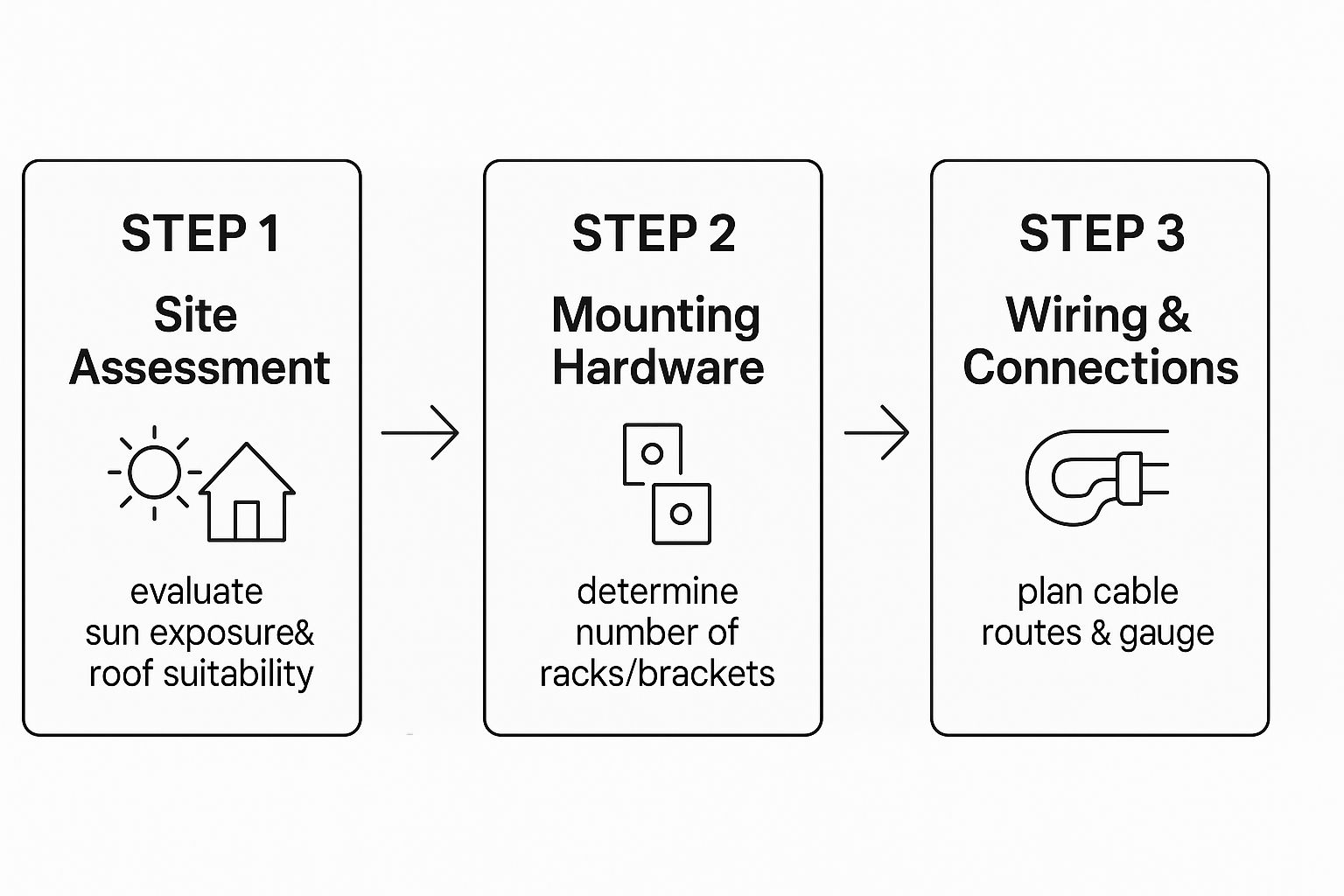
Sizing is where money is made or wasted. I've walked into too many jobs where the previous installer sold a 20 kWh bank for a 6 kWh/day cabin "to be safe" — the owner paid for 14 kWh of shelf decoration. The math is four lines long:
- Daily load (kWh). From a load audit, not a guess. Measure with a Kill-A-Watt on every circuit for a week, or pull it from your existing inverter logs.
- Days of autonomy. How many sunless days must the bank carry? Two days for most of the West with a generator backup; three to four if you refuse to own a generator.
- Divide by usable DoD. 0.9 for LFP, 0.5 for lead-acid.
- Divide by round-trip efficiency and add cold-weather derate. Capacity falls roughly 10–15% near freezing even for heated LFP; FLA loses far more.
| Daily Load | Autonomy | Chemistry (DoD) | Raw Need | With Efficiency (95% LFP / 82% FLA) + 10% Cold Derate | Practical Build |
|---|---|---|---|---|---|
| 5 kWh | 2 days | LFP (90%) | 11.1 kWh | 12.9 kWh | 3× EG4-LifePower4 (15.4 kWh) |
| 5 kWh | 2 days | FLA (50%) | 20 kWh | 26.8 kWh | 16× Trojan L16RE-B (~39 kWh nameplate — oversized to protect cycle life) |
| 10 kWh | 2 days | LFP (90%) | 22.2 kWh | 25.8 kWh | 6× EG4-LifePower4 or 2× eVault Max 18.5 |
| 10 kWh | 3 days | LFP (90%) | 33.3 kWh | 38.7 kWh | 8× server-rack modules (41 kWh) |
| 20 kWh | 2 days | LFP (90%) | 44.4 kWh | 51.6 kWh | 10× server-rack modules or 3× eVault Max |
| 30 kWh (all-electric home) | 2 days | LFP (90%) | 66.7 kWh | 77.4 kWh | 16× modules in 2–3 racks; start thinking about 2 inverters |
Notice the lead-acid row. To match three small lithium modules you need sixteen heavy FLA blocks, a ventilated battery box, a watering routine, and a replacement date seven years sooner. Run your own numbers with the battery backup runtime calculator — it's the same arithmetic we use on the whiteboard in the shop.
Surge sizing is the second half of the check. Add the locked-rotor amps of your biggest motor loads — well pump, mini-split compressor, shop tools — and confirm the bank's aggregate continuous discharge covers it with 25% headroom. Six 100A modules give you 600A at 51.2V, roughly 30 kW of surge headroom. Two modules give you 10 kW and a tripping BMS when the pump and the microwave coincide.
Wiring, Code, and the Inspection You Actually Have to Pass
Battery systems live in NEC Article 480 (storage batteries) and Article 706 (energy storage systems), with conductors sized from 310.16 and overcurrent protection from 240.6. The failures I see on red-tagged jobs are boring: undersized battery cables, missing disconnects, no working-space clearance, and conductors protected by the next breaker size up "because that's what was on the truck."
Here's the conductor math we run on every 48V build, using copper THHN at the 75°C column of NEC 310.16, with the 125% continuous-load factor from NEC 215 and inverter efficiency folded in:
| Inverter Continuous Output | DC Draw @ 48V (85% eff.) | × 1.25 Continuous Factor | NEC 240.6 Breaker | Min. Copper Conductor (75°C) | Ampacity |
|---|---|---|---|---|---|
| 3,000 W | 74 A | 92 A | 100 A | 3 AWG | 100 A |
| 4,000 W | 98 A | 123 A | 125 A | 2 AWG (next-size-up rule applies at ≤800A) | 115 A |
| 6,000 W | 147 A | 184 A | 200 A | 3/0 AWG | 200 A |
| 8,000 W | 196 A | 245 A | 250 A | 250 kcmil | 255 A |
| 12,000 W | 294 A | 368 A | 400 A | 500 kcmil | 380 A |
| 15,000 W | 368 A | 460 A | 500 A | Parallel 4/0 or 700 kcmil | 460 A (2×230) |
A few field notes on that table. Voltage drop on a 48V system eats you alive at distance — keep battery-to-inverter runs under 10 feet or upsize the cable, because 3% of 48V is 1.4 volts and your inverter will low-voltage cutout under surge load long before the wire gets warm. Torque every lug to the manufacturer's spec with a calibrated wrench; we've pulled thousands of feet of 4/0 through EMT and the callbacks are never the wire, they're the loose lug that heat-cycled itself into a meltdown. And per NEC 706.15 and 690.71, label everything — disconnect means, system voltage, and the arc-flash warning — before the inspector asks.
Ventilation and location matter too. FLA banks off-gas hydrogen during bulk/absorb charging and belong in a vented enclosure per NEC 480.10. LFP doesn't off-gas in normal operation, which is one more reason the chemistry has taken over residential work. If you're still weighing batteries against a genset for long-duration backup, our battery vs generator breakdown prices both honestly.
Installation, Commissioning, and Living With the Bank
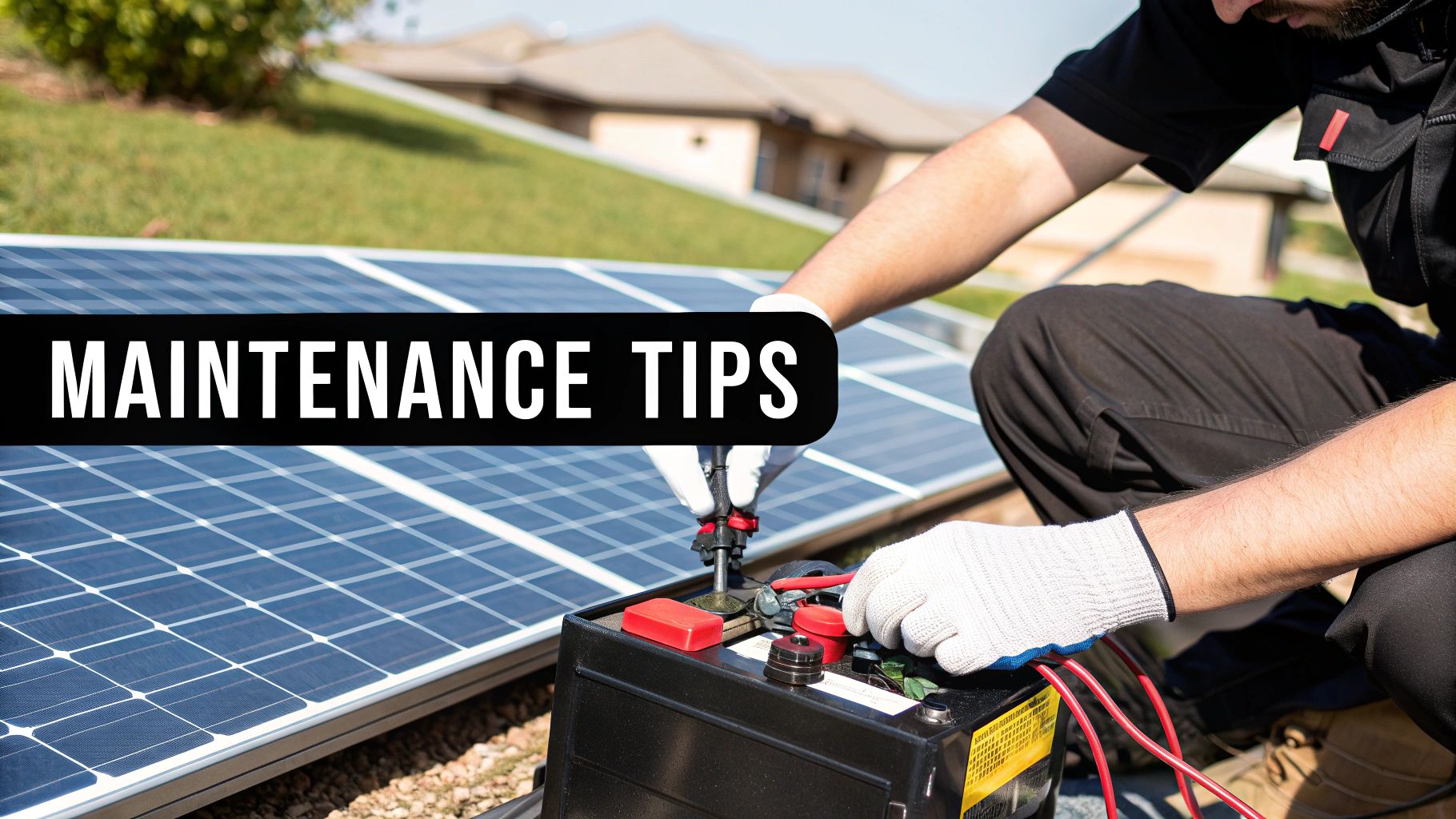
The install sequence that avoids 90% of callbacks: mount and ground the rack, torque all inter-module links, land the battery conductors on the disconnect last, verify polarity with a meter (never by eyeball), then bring the system up at 50% state of charge and run a full charge-discharge cycle before you load the house. Closed-loop systems — EG4 to Sol-Ark, Pylontech to Victron — handle charge parameters automatically over CAN; open-loop systems need you to program bulk, absorb, and float manually, and a wrong absorb voltage on an LFP bank is a silent capacity killer.
Maintenance splits cleanly by chemistry. FLA wants monthly specific-gravity checks, distilled water, and an equalize charge quarterly. AGM wants terminal inspections and a yearly capacity test. LFP wants nothing but firmware updates and an occasional glance at cell-balance deltas in the monitoring app — when the delta between highest and lowest cell creeps past ~50mV at rest, schedule a top-balance before it becomes a capacity complaint. Our battery life extension guide has the full schedule.
Budget honestly. A quality 15 kWh LFP build with rack, disconnect, and cabling runs $7,500–$11,000 in equipment in 2026; the equivalent usable capacity in FLA is $5,000–$6,500 upfront plus a replacement in year six or seven. Spread over lifetime throughput, lithium is half the cost per delivered kWh. For whole-home grid-tied pricing on the same hardware, see what whole-home battery backup actually costs.
Charge Profiles: The Settings That Decide Lifespan
More batteries die from bad charge parameters than from bad cells. On open-loop systems — anything where the inverter or charge controller can't talk to the BMS over CAN — you are the BMS's last line of defense, and the setpoints have to come from the battery manufacturer's document, not from the inverter's defaults. I've replaced a five-figure FLA bank that was boiled to death in eighteen months because someone left the absorb timer at four hours "like the old system." The battery did exactly what it was told.
| Setpoint (48V nominal bank) | Flooded Lead-Acid | AGM | LFP (16-cell LiFePO4) | Why It Matters |
|---|---|---|---|---|
| Bulk / Absorb voltage | 57.6–59.2 V | 57.6 V | 56.0–56.8 V | Overvolting LFP stresses cells; undervolting FLA sulfates plates |
| Absorb time | 2–4 hours (current-terminate preferred) | 2–3 hours | 15–30 minutes (or none) | LFP is full long before absorb ends; long absorbs just heat cells |
| Float voltage | 52.8–54.4 V | 54.0 V | 54.0–54.4 V (or disabled) | Float keeps FLA healthy; LFP prefers to rest at partial charge |
| Equalize | 60–62 V, monthly/quarterly, controlled | Per mfr only — many forbid it | Never — top-balance via BMS instead | Equalizing AGM or LFP the FLA way is a warranty-voiding event |
| Low-voltage disconnect | ~46–48 V under load | ~46–48 V | 48–50 V (hold 10–20% reserve) | Deep discharge is the #1 lead-acid killer and pointless on LFP |
| Charge rate limit | C/8 to C/5 typical max | C/5 | 0.5C–1C per module | Exceeding acceptance rate wastes PV and cooks plates |
Where closed-loop communication exists, use it. EG4-to-Sol-Ark and Pylontech-to-Victron links push the manufacturer's own profile into the inverter and update it with firmware — that alone is worth real money compared to hand-programming. For a deeper walk through the gear that executes these profiles, see our guides on Sol-Ark hybrid inverters and Victron's off-grid ecosystem.
Degradation, Warranties, and the Fine Print That Bites
Every lithium warranty in this industry promises "70% capacity at 10 years" — and every one of them is gated by throughput caps, cycle caps, and operating-condition clauses that void coverage faster than you'd think. Read the energy-throughput figure: a 5 kWh module warrantied to 70% at 10 years but capped at 15 MWh of lifetime throughput hits its cap at roughly 4.1 kWh/day of cycling — about eight years of light daily use. That's still a good warranty. It's just not the one the headline implies.
| Brand / Line | Warranty Term | Capacity Guarantee | Throughput / Cycle Gate | Field Reality Check |
|---|---|---|---|---|
| Tesla Powerwall 3 | 10 years | 70% retained | Unlimited cycles (grid-tied self-consumption) | Strong on paper; off-grid use requires careful review of terms |
| EG4 LifePower4 / LL-S | 5–10 years by line | 70–80% retained | Throughput caps by model | Best value-tier support we've dealt with; RMAs actually ship |
| SimpliPhi PHI | 10 years | 80% retained | 10,000 cycles | The gold standard for cycle count; priced like it |
| Fortress eVault | 10 years | 70% retained | 6,000 cycles | Solid; confirm installer registration to activate full term |
| Pylontech US series | 10 years | 60–70% retained | Throughput-based | Read the regional warranty — terms differ by market |
| Trojan / Crown FLA | 1–3 years typical | Pro-rated | Maintenance records required | Keep your watering and SG logs; claims live or die on them |
Two clauses to hunt for in any warranty PDF. First, the temperature clause: most lithium warranties exclude cells cycled outside 32–113°F ambient — an unheated Arizona container or a Minnesota shed can void coverage even though the battery "worked." Second, the inverter-pairing clause: several brands only honor full terms with listed compatible inverters. Register the install, keep commissioning screenshots, and store the monitoring data. When a bank fades in year six, documentation is the difference between a replacement pallet and a shrug.
Buying Smart: Channels, Freight, and Timing
Batteries are the one solar component where the channel matters as much as the product. A pallet of server-rack modules is Class 9 hazmat freight — expect $300–$900 in liftgate LTL shipping, a delivery appointment, and an inspection at the dock before the driver leaves. Photograph the packaging before you sign. Carriers deny concealed-damage claims filed after a clean signature, and a cracked module case discovered a week later becomes your problem instead of theirs.
On pricing: the value tier has collapsed beautifully in the last two years. Quality 5 kWh LFP modules that ran $1,800 in 2023 trade at $1,100–$1,400 now, and our EG4 battery inventory turns over fast enough that you're never buying shelf-aged stock. Premium lines — sonnen, SimpliPhi, BYD's Battery-Box towers — hold steadier pricing but bundle integration and support that can pay for themselves on a complicated hybrid build. If your project also needs panels, the 2026 panel lineup and our 10 kW solar-plus-storage kits are priced as matched systems, which is usually cheaper than assembling line items one at a time.
Timing matters too. Battery lead times stretch in late summer as off-grid and hurricane-season demand peaks; order a spring build in February, not May. And if your project is large enough — a microgrid, a multi-cabin compound, a small commercial site — ask for project pricing. At pallet quantity, distributors have room they never advertise, and a five-minute call beats a checkout cart every time.
One last piece of counter wisdom, earned the expensive way: buy the monitoring. Whether it's the inverter vendor's app, a Victron VRM portal, or a battery-native dashboard, the systems that fail quietly are the ones nobody watches. A weekly five-minute glance at state-of-charge trends, cell deltas, and charge-source hours catches a failing charge controller or a shading problem months before it shows up as a dead bank and a spoiled freezer. Every callback I've run on a "mystery" battery failure showed the problem in the data weeks before the customer noticed it in the lights.
Common Questions About Off-Grid Solar Batteries
How long do off-grid solar batteries actually last?
Quality LFP banks deliver 4,000–6,000 cycles to 80% capacity — 11 to 16 years of daily cycling. Flooded lead-acid at 50% depth of discharge manages 1,000–1,500 cycles, roughly 3–5 years of daily use. Real-world lifespan depends more on charge settings and temperature than the chemistry on the label: a well-programmed FLA bank in a cool shed can outlive a mismanaged lithium bank in a hot container.
Can I mix old and new batteries in one bank?
Don't. Mixing ages, brands, or chemistries in a parallel bank forces the weaker units to dictate charge and discharge behavior, accelerating degradation across the whole string. Even with identical LFP modules, add capacity within the first year or two of the original install — a three-year-old module and a fresh one have measurably different internal resistance and will never share current evenly.
What size battery bank do I need for a 2,000 sq ft off-grid home?
Square footage is the wrong unit — daily kilowatt-hours is the right one. A conservative all-electric 2,000 sq ft home typically burns 20–30 kWh/day; an efficient home with propane heat and cooking can run on 8–12 kWh/day. For two days of autonomy on LFP, that means 26–39 kWh of bank for the efficient home and 52–78 kWh for the all-electric one. Do a real load audit before you buy anything.
Is lithium worth the extra money over lead-acid for off-grid?
For daily-cycling full-time systems, yes, decisively: LFP costs roughly half as much per lifetime kWh delivered, needs no watering or venting, and tolerates deeper discharge. Lead-acid still makes sense for seasonal cabins with light, infrequent cycling where the lower upfront cost and cold-weather charge tolerance outweigh the shorter cycle life.
Can lithium batteries charge in freezing temperatures?
Not without heaters. Charging LFP cells below 32°F (0°C) causes lithium plating that permanently reduces capacity. Quality modules include self-heating pads and BMS lockout that blocks charge until cells reach safe temperature. Install batteries in conditioned or insulated space wherever possible, and confirm the heater spec before buying value-tier modules for cold climates.
Do I need a generator if I have a big battery bank?
Almost always, yes. Batteries bridge nights and short storms; they do not fix a week of December overcast at 45°N. A small propane or diesel genset sized to recharge the bank in 2–4 hours of run time is the cheapest insurance in the whole system — typically $3,000–$6,000 for a unit that extends a three-day bank into indefinite autonomy.