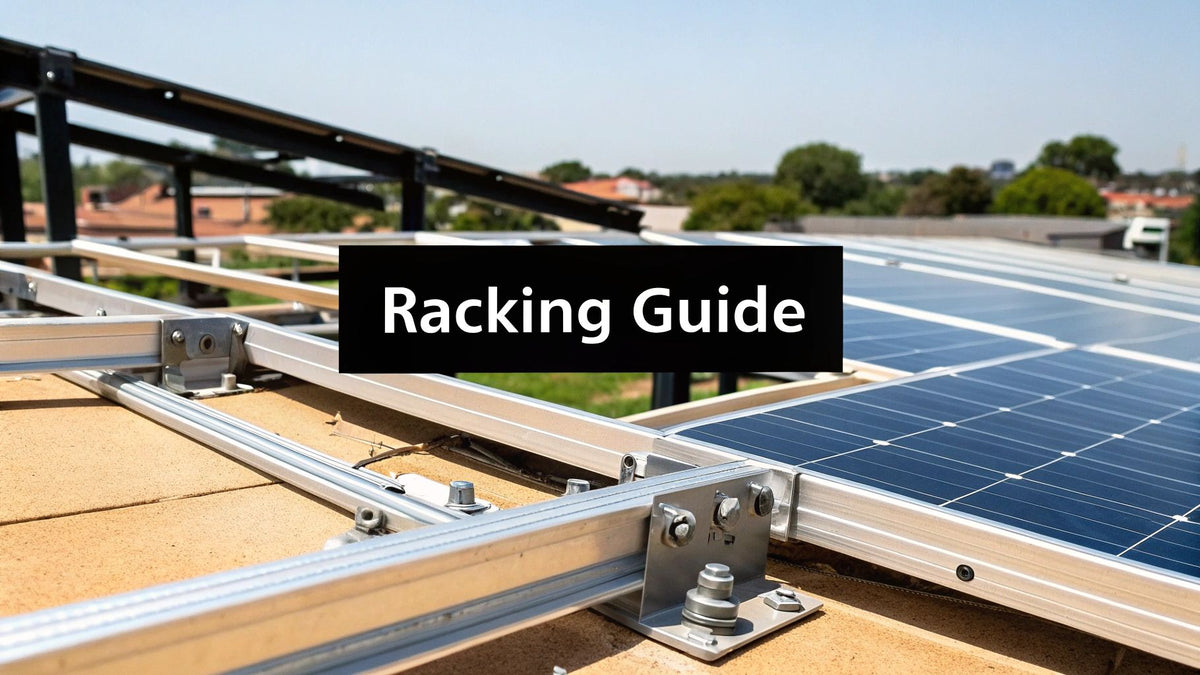
Nobody falls in love with racking. Customers obsess over panel wattage and inverter brands, then treat the mounting system as an afterthought — right up until a wind event, a failed attachment, or a leaking roof teaches them otherwise. Racking is the structural system that holds a five-figure asset on your roof or in your field for 25–30 years, through every storm, freeze-thaw cycle, and summer heat load in between. This guide covers how the major racking types compare, how to choose materials that outlast the panels they carry, what proper engineering and installation look like, and where the technology is heading.
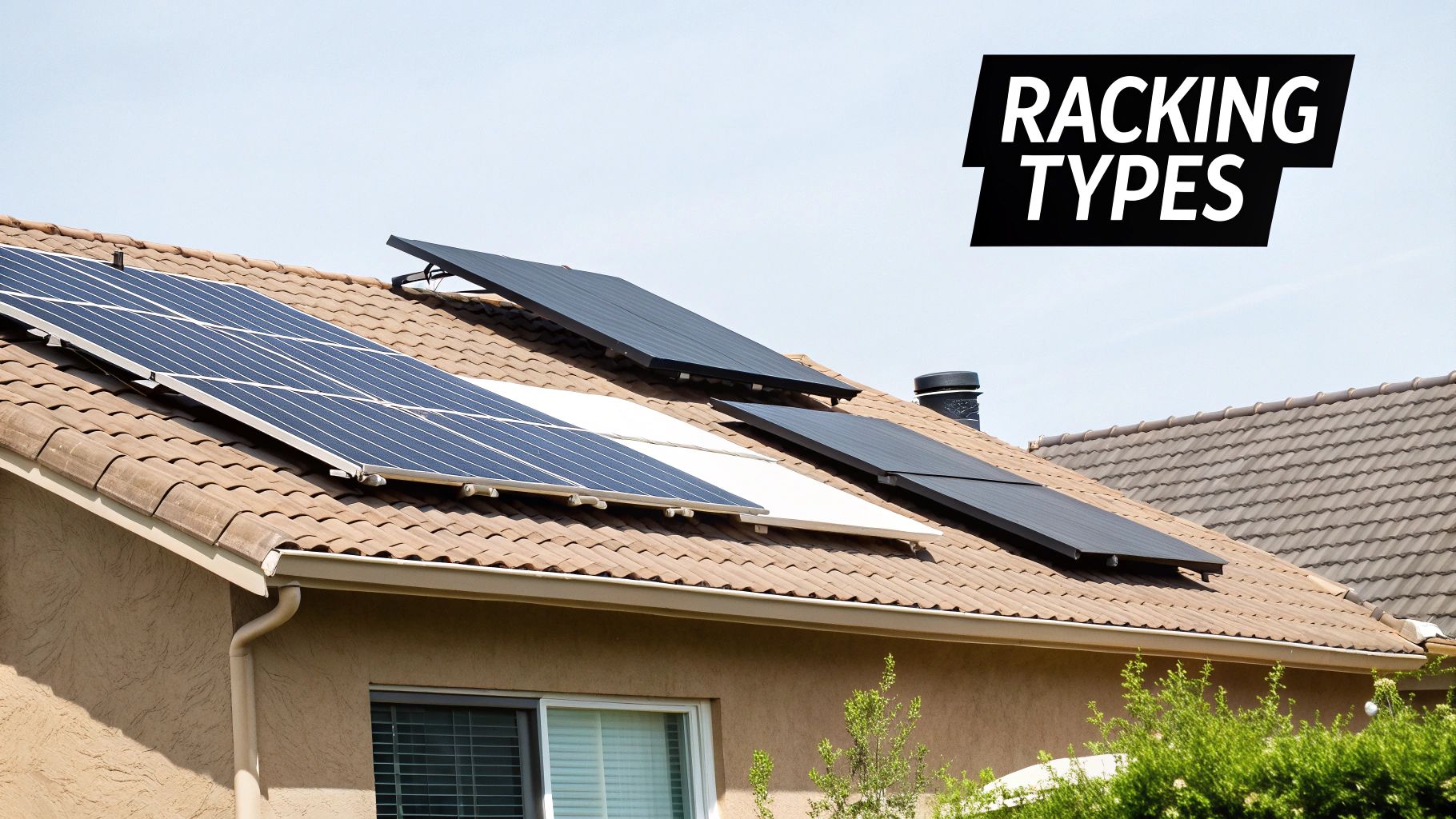
Why Racking Is the Foundation of Project Success
A racking system does five jobs at once, and each one maps to a real failure mode when it's done cheaply or wrong:
| Function | Impact on Project Success | Key Standard/Metric |
|---|---|---|
| Structural Foundation | Provides the secure mounting base that withstands wind, snow, and seismic forces, ensuring array safety and longevity. | ASCE 7, Local Building Codes |
| Energy Optimization | Sets the ideal panel tilt and azimuth to maximize solar irradiance, directly increasing kilowatt-hour production and ROI. | kWh/kWp (Annual Yield) |
| Asset Protection | Protects expensive solar modules from physical damage and environmental stress over a 25+ year lifespan. | 25-Year Racking Warranty |
| Labor Efficiency | A well-designed system with fewer parts and pre-assembled components can drastically reduce installation time and labor costs. | Man-hours per kW |
| Code Compliance | Ensures the installation meets all local building, electrical (UL 2703), and fire codes, preventing costly delays and rework. | NEC, UL, Local AHJ |
That last function gets underestimated constantly. UL 2703 listing isn't decoration — it's the certification that the racking system's mechanical and electrical bonding path has been tested as an assembly. Mixing unlisted components, or field-modifying listed ones, can void the listing and fail inspection. I've seen jobs red-tagged because a crew substituted hardware-store bolts for the specified stainless fasteners. The AHJ doesn't care that it "looks fine."
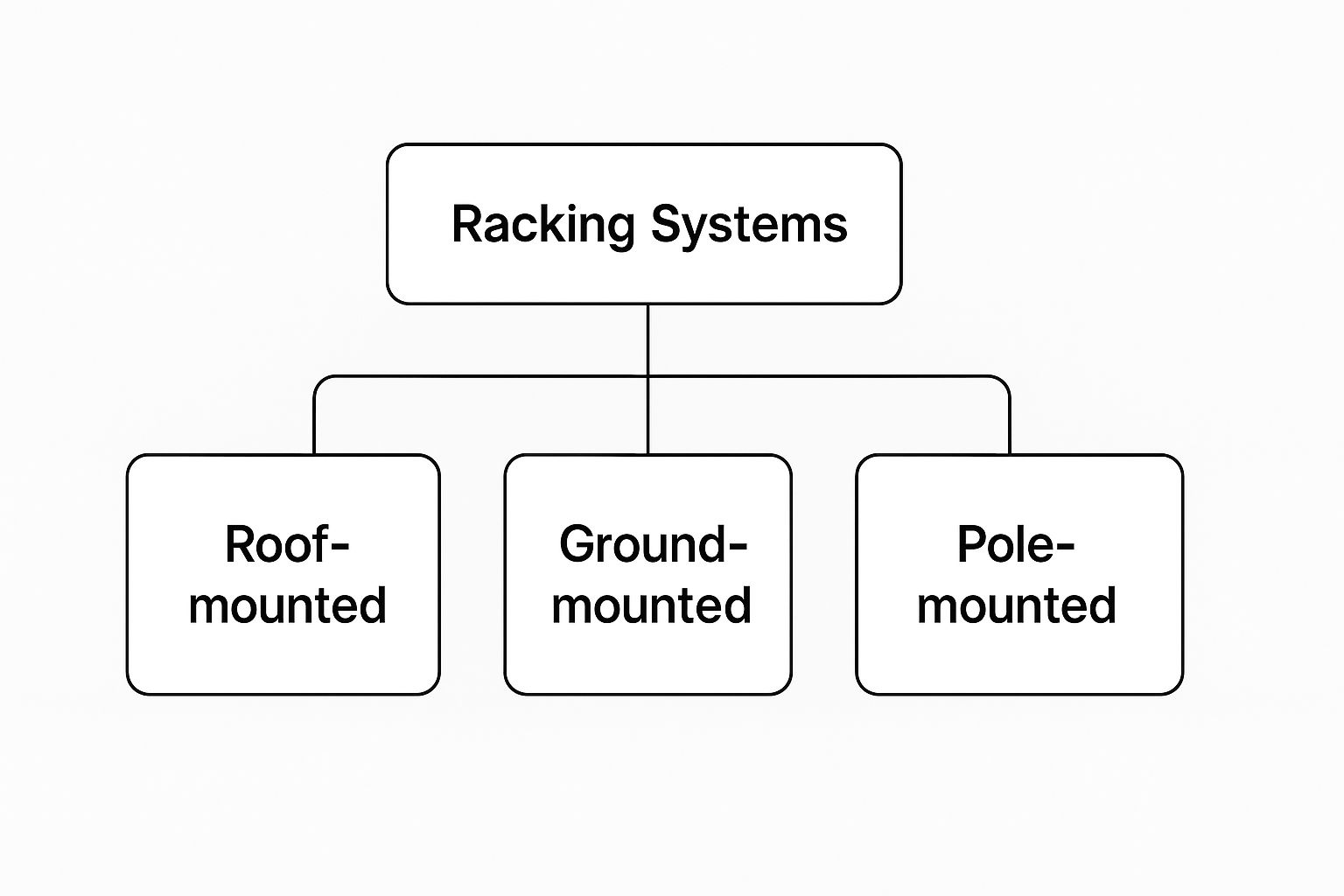
Comparing Major Types of Solar Racking Systems
Roof-Mount Racking Systems
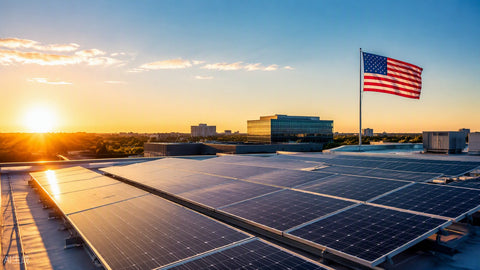
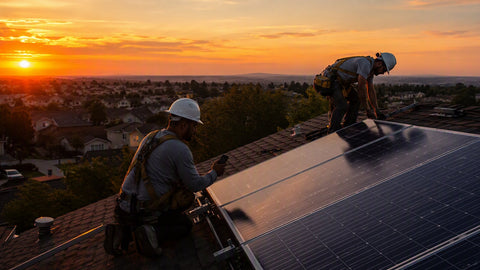
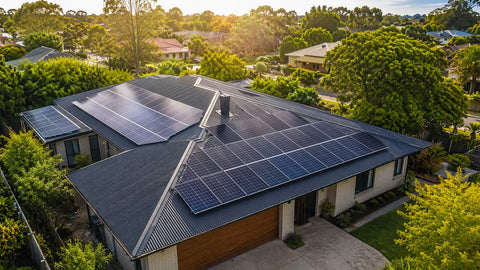
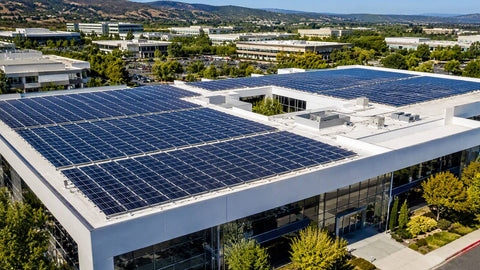
Flush-mounted roof racking — rails, clamps, and attachments holding panels a few inches above the roofing — dominates residential and small commercial. The air gap matters: it cools the modules, and every degree of panel temperature costs roughly 0.3–0.4% of output via the temperature coefficient. Attachment hardware varies by roof type: flashed lag-bolt attachments for composition shingle, clamp-on seam mounts for standing-seam metal (the best case — zero penetrations), and specialty hooks for tile. On flat commercial roofs, ballasted systems use concrete weight instead of penetrations, which protects the membrane but adds 4–6 psf of dead load that the structure must carry — a structural engineer's question, not a salesperson's.
Ground-Mount Racking Systems
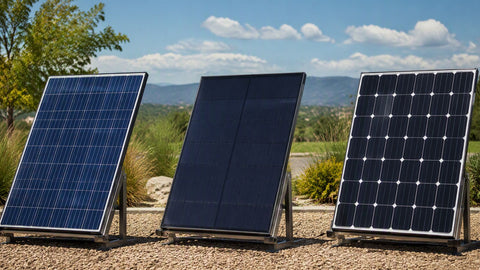
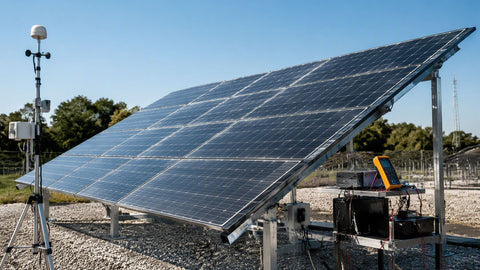
Ground mounts trade roof constraints for land and civil work: driven piles or ground screws in good soil, concrete piers where refusal or frost heave demands them. The payoff is design freedom — optimal tilt, perfect azimuth, easy maintenance access, and no roof penetrations anywhere. Cost runs $0.10–$0.25/W above roof mounts once trenching and foundations are counted, which is why ground mounts make most sense at larger residential scale and up. Our 7 kW ground-mount walkthrough and the pole-mount guide show real configurations.
Solar Trackers
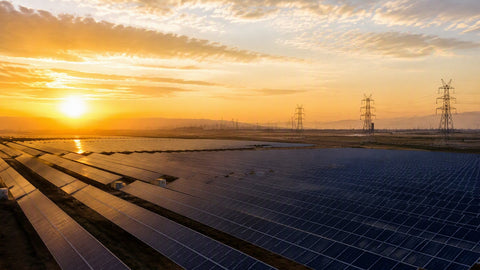
Single-axis trackers follow the sun east to west and add 15–25% annual energy on utility-scale sites — enough that the majority of new U.S. utility capacity now uses them. The trade-offs are moving parts (motors, bearings, controllers), higher O&M, and structural demands that multiply wind loads. Residential trackers exist but rarely pencil; the value case lives at commercial and utility scale.
| Project Factor | Roof-Mount (Flush) | Ground-Mount (Fixed) | Solar Tracker (Single-Axis) |
|---|---|---|---|
| Available Space | Limited to roof area | Requires open land | Requires significant open land |
| Initial Cost | Low to Moderate | Moderate | High |
| Installation Speed | Fast | Moderate | Slow |
| Best for Soil Type | N/A (Roof dependent) | All (with proper foundation) | Stable, non-rocky soils |
| Energy Output | Good | Better | Best (+15-25%) |
| Maintenance | Low (access can be difficult) | Low (easy access) | Moderate (moving parts) |
| Ideal Application | Residential, small commercial | Large residential, commercial, utility | Utility-scale, large commercial |
Choosing the Right Racking Materials for Durability
Aluminum: The Lightweight Standard
Anodized 6000-series aluminum dominates residential racking for good reasons: it doesn't rust, it's light enough for one installer to carry up a ladder, and it extrudes into precise rail profiles. Its weakness is galvanic corrosion — aluminum in direct contact with dissimilar metals (copper flashing, bare steel) in the presence of moisture corrodes, which is why listed systems specify isolation where needed. Rated life comfortably exceeds 30 years in normal environments; coastal salt air shortens the margin and argues for upgraded finishes.
Galvanized Steel: The Utility-Scale Workhorse
Hot-dip galvanized steel carries ground mounts and trackers because strength per dollar wins at scale. Pile-driven steel foundations resist the uplift and lateral loads that trackers generate. The zinc coating is the lifespan: standard G90 coatings last decades inland, while coastal or agricultural (ammonia) environments eat coatings faster and justify heavier galvanization or paint-over-galvanize systems.
Stainless Steel: For the Harshest Conditions
Stainless appears mostly as fasteners and hardware rather than structure — 300-series stainless bolts, nuts, and clamps are the industry norm for critical connections. Full stainless structures are coastal and specialty territory. Never substitute zinc-plated hardware-store fasteners for specified stainless; the corrosion cell you create at the connection point will find you in year five.
| Material | Typical Use | Expected Service Life | Cost Relative | Watch-Outs |
|---|---|---|---|---|
| Anodized aluminum (6005-T5) | Roof-mount rails and clamps | 30+ years inland; 20–25 coastal | $$ | Galvanic isolation at dissimilar-metal contacts |
| Hot-dip galvanized steel | Ground-mount posts, tracker structures | 25–35 years by coating weight and soil chemistry | $ | Soil corrosivity testing; coating damage at cut ends |
| Stainless steel (304/316) | Fasteners, hardware, coastal components | 30+ years | $$$ | Never downgrade to zinc-plated substitutes |
| UV-rated polymers (wire management) | Cable clips, edge trims | 10–25 years by grade | $ | Cheap clips become brittle; specify UV-stabilized grades |
Engineering Loads: Wind, Snow, and the Numbers Inspectors Check
Racking engineering is load-path engineering, and ASCE 7 sets the vocabulary. Three numbers define most residential designs:
| Load Type | Typical Design Range | Where It Bites |
|---|---|---|
| Wind uplift | 20–50+ psf depending on wind speed, exposure category, and roof zone | Corner and edge roof zones see the highest pressures; attachment spacing tightens there |
| Snow load | 20–70+ psf ground snow by region | Northern climates; sliding snow loads on steep metal roofs can double local pressures |
| Dead load | ~3–4 psf for flush-mount arrays; +4–6 psf for ballasted flat-roof systems | Older or light-framed roofs; verify rafter capacity before ballasting |
Two practical consequences. First, attachment spacing is engineered, not vibes: a system rated for 6-foot rail spans at 90 mph exposure B may require 4-foot spans at 130 mph exposure C. The manufacturer's engineering letters spell it out, and inspectors increasingly ask for them. Second, roof zones matter: perimeter and corner attachments work much harder than field attachments, which is why layout drawings show tightened spacing at edges. Racking from serious manufacturers — the kind stocked in our racking and mounting catalog and brands like DPW Solar and EZ Solar — ships with zone-by-zone span tables. Also worth reading: K2 Systems' mounting technology overview for how engineered attachment systems handle these loads.
How to Pick the Right Racking System
Start with the Site Itself
Roof type dictates attachment: composition shingle wants flashed lag attachments, standing-seam metal wants clamps, tile wants replacement or hook systems, and flat membranes want ballast or attached hybrid systems chosen with a roofer's input. Ground sites need a geotechnical read — sandy soils drive piles easily, rock refuses them, expansive clays heave frost. A $500 soil probe on a large ground mount has saved more projects than any other single line item I can name.
Account for Mother Nature
Pull the design wind speed and ground snow load for the exact site from ASCE 7 hazard tools, not from memory. Exposure category — how open the terrain is upwind — moves pressures by 30%+. Coastal salt, agricultural ammonia, and industrial atmospheres all change material selection. Hail ratings matter in hail country: panels carry the rating, but racking geometry determines whether hailstones hit glass or frame.
Nail the Hardware and Labor Details
Module compatibility: clamp zones vary by panel frame design, and clamping outside the manufacturer's specified zone voids the panel warranty. Bifacial panels need rails that don't shade the rear — a detail that costs nothing to plan and real production to botch. Wire management: integrated channels beat zip ties, and every dollar spent on proper clips saves ten in service calls when rodents or UV take down exposed conductors. Pre-assembly: systems that let crews pre-build on the ground cut roof time by 20–30%, which at current labor rates is the difference between profit and loss on competitive bids.
| Project Type | Recommended Racking Approach | Key Hardware Choices |
|---|---|---|
| Residential comp shingle | Flush rail-mount with flashed attachments | Aluminum rails, stainless fasteners, integrated bonding clamps (UL 2703) |
| Standing-seam metal | Clamp-on seam mounts, rail-less where rated | S-5!-style seam clamps matched to seam profile |
| Flat commercial membrane | Ballasted or hybrid attached, engineered per roof | Aerodynamic ballast trays, membrane protection pads |
| Residential ground-mount | Fixed-tilt pipe or pile structure | Galvanized steel posts, aluminum rails |
| Utility-scale | Single-axis tracker or fixed-tilt by economics | Driven pile foundations, torsion tubes, dampers in wind-critical sites |
Installation Best Practices and Common Pitfalls
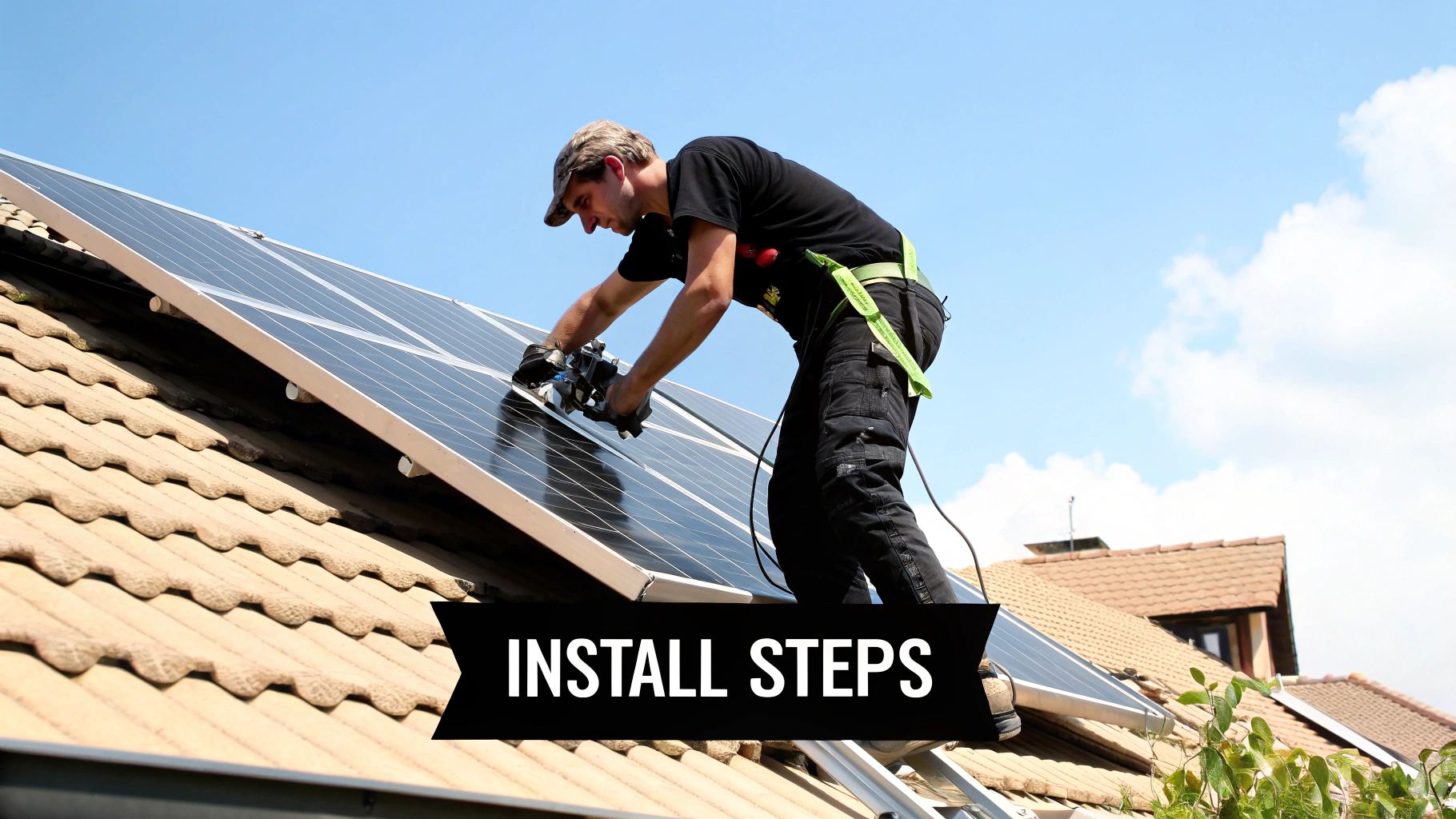
Critical Procedures for a Flawless Install
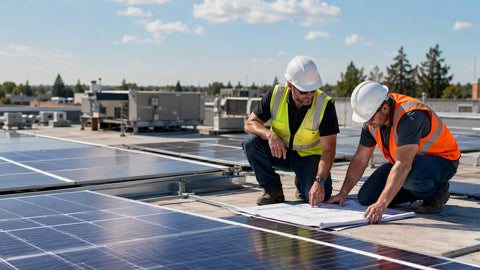
Torque is a specification, not a suggestion. Racking manufacturers publish torque values for every connection — typically 10–20 ft-lbs for module clamps and roof attachments — and both under-torquing (connections loosen under thermal cycling) and over-torquing (crushed extrusions, stripped threads, cracked module frames) cause failures. Calibrated torque wrenches on every crew, every day. Layout before drilling: snap lines, verify rafter locations with a proper stud finder or pilot holes, and dry-fit the first two rails before committing — a layout error discovered at rail one is free; discovered at panel fifteen is a day of rework. Flashing done right: under the up-slope shingle course, sealed per manufacturer instructions, never face-caulked over the top. Bonding and grounding per the listing: the UL 2703 bonding path relies on the specified clamps and hardware doing double duty as electrical bonds; substituting hardware breaks both the listing and the safety path. And document everything: photos of attachments before panels go on have settled more warranty and insurance disputes than any affidavit.
Critical Mistakes to Avoid
The failure modes we see repeatedly from the supply side: attachments lagged into sheathing instead of rafters (they hold for a while, then they don't); mixed metals without isolation; rails cantilevered beyond rated overhang; zip-tied conductors dangling against sharp rail edges; missing expansion gaps on long rail runs, which buckle rails in summer heat; and ballasted flat-roof systems placed without a structural review. Every one of these is cheap to prevent and expensive to fix after panels are on.
Racking Cost: What to Budget
Racking typically runs 8–12% of total system cost — on an 8 kW residential job, $1,800–$2,800 for a flush roof mount. Ground mounts add foundation and trenching costs that push the premium to $0.10–$0.25/W over roof work. Trackers add far more but repay it in production at utility scale. Where buyers get into trouble is value-engineering racking last: swapping a listed attachment system for a cheaper unlisted one saves perhaps $300 on a residential job and risks a failed inspection, a voided module warranty, or a roof leak. That is the worst trade on the entire bill of materials.
The Future of Solar Racking Technology
Smart Racking and Integrated Technology
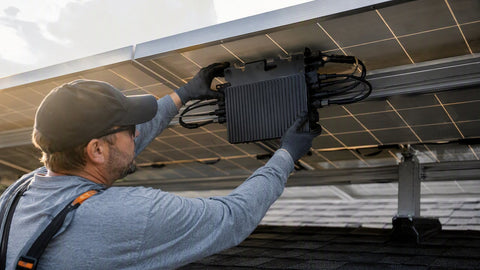
Racking is absorbing electronics: integrated rapid shutdown devices, module-level monitoring built into mounting hardware, and plug-and-play trunk cabling that turns the array's mechanical backbone into its electrical one. The direction of travel is fewer separate parts on the roof, more function per component.
Advancements in Rail-Less Systems
Rail-less and shared-rail designs keep cutting part counts and roof time. The catch: rail-less systems tie you to specific module frames and clamping zones, so panel substitution mid-project becomes painful. Spec the modules first, commit to them, and then rail-less works beautifully.
Agrivoltaics and Dual-Use Land Solutions
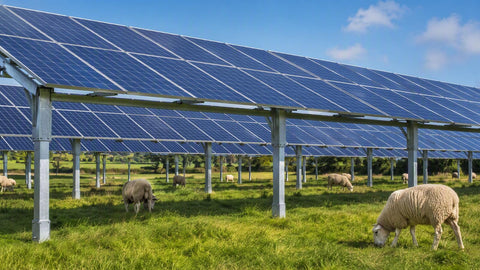
Elevated racking that shares land with crops or grazing is moving from pilot to product — structures tall enough for equipment and livestock, with row spacing tuned to shade tolerance. Our coverage of agrivoltaics in practice and the 2025 agrivoltaics momentum piece track where the dual-use economics actually close.
Roof Attachments: Where Racking Meets Roofing
The attachment is the highest-consequence component in the whole system — it's the part that can leak. On composition shingle, the standard is a flashed attachment: an L-foot or standoff mounted with a lag bolt into the rafter, sealed under a metal flashing that slides beneath the up-slope shingle course. The failure modes are lagging into sheathing (no holding power), skipping the flashing (caulk is not flashing), and over-driving the lag (crushed shingles, split rafters). On standing-seam metal, seam clamps grip the folded seam with set-screws and penetrate nothing — the fastest, cleanest attachment in the industry, and one reason metal roofs and solar pair so well. On tile, the honest options are tile-replacement mounts (swap tiles for flashed mounts) or standoff hooks under lifted tiles; both add labor, and both are worth it compared to the shortcut of drilling through tile and hoping. Flat membranes get ballasted trays with protection pads, or attached systems only after the roofer and the structural engineer have both signed off.
Ground-Mount Foundations: Piles, Screws, and Piers
Foundation choice follows soil, and soil is local. Driven piles — galvanized I-beams or pipes driven by a pile driver — are the utility standard: fast, cheap, no concrete, no curing. Ground screws twist in like giant augers and work where driven piles meet cobble or shallow refusal. Concrete piers handle frost-heave country and rocky sites where neither piles nor screws bite, at the cost of excavation, forming, and cure time. Before committing, test: a geotechnical probe or a few test piles costs hundreds and settles the question. Pull-out testing on questionable soils is the cheapest insurance in the entire ground-mount budget. Frost depth also sets pier and post depth — in northern climates, frost heave will slowly push a shallow foundation out of the ground and take your array's alignment with it.
Wire Management: The Unglamorous Detail That Fails Inspections
Wire management is where good installs and sloppy installs diverge visibly, and where NEC 690.31 methods get enforced. Conductors must be secured, protected from sharp edges and abrasion, UV-rated where exposed (PV wire or USE-2, never bare THHN in sunlight), and routed so they don't touch the roof surface. Integrated rail channels are the cleanest solution; UV-stabilized clips are the affordable one; zip ties alone are a service call in year four. Keep homeruns in metallic conduit where required by local amendment, label DC strings at both ends, and leave service loops where thermal movement demands slack. Inspectors notice wire management first because it's what they can see from the ladder — treat it accordingly. Our panel wiring basics and connector guide cover the electrical side of the racking interface.
Maintenance and Inspection: The 25-Year Schedule
Racking needs little, but "little" is not "nothing." A defensible inspection schedule:
| Interval | What to Check | Why |
|---|---|---|
| Post-install / year 1 | Torque spot-checks, flashing condition, wire management | Catch installation defects while the installer warranty is fresh |
| Every 2–3 years | Visual: corrosion at dissimilar-metal contacts, clamp seating, rail alignment | Thermal cycling loosens connections over time |
| After major storms | Uplift damage, shifted modules, debris under array, ballast displacement | Storm damage is cheapest to fix before the next storm |
| Years 10–15 | Polymer components (clips, trims), sealant condition, grounding continuity test | UV-aged polymers and dried sealants reach end of life before metal does |
| At reroof time | Full removal/reinstall with new flashing kits | Never re-use old flashings; budget R&R into any reroof on a solar home |
Two notes from experience. First, the removal-and-reinstall row: a quality racking system survives R&R fine, but the flashing and sealant kits are single-use — order new ones, they're cheap. Second, grounding continuity testing catches the slow failures: bonding connections corrode, and a broken bond path is invisible until a fault makes it visible.
Brand Landscape: Who Makes What
The racking market splits into camps. Residential rail systems: IronRidge and Unirac are the entrenched names, with EZ Solar covering value-oriented residential hardware and specialty mounts. Ground-mount: DPW Solar pipe-mount systems are the small-scale standard. Commercial flat-roof and utility trackers are their own world of engineered systems, typically spec'd per project. Attachment hardware for metal roofs is dominated by seam-clamp specialists. Whatever you choose, the non-negotiables are UL 2703 listing, published engineering span tables, and a warranty with a company standing behind it — the same discipline you'd apply to panels, applied to the thing that holds them.
Flat-Roof Ballast: The Engineering Nobody Should Eyeball
Ballasted racking asks a simple question with an engineered answer: how much weight keeps this array on this roof in this wind? ASCE 7 wind tunnel data and system-specific aerodynamics set the ballast map — and it's a map, not a number. Perimeter and corner zones need more ballast or mechanical attachment than the field; parapets change airflow and pressure; roof height and exposure category move everything. Typical ballasted systems add 4–6 psf dead load, but high-wind configurations can push past 10 psf in edge zones. Two rules follow. First, never add ballast to a roof without a structural review of the existing framing — older big-box roofs were often built to minimum live loads with no margin. Second, never reduce the specified ballast because the pallets are heavy — the weight is the design. Seismic zones add another layer: ballasted arrays in California must address sliding and overturning, which is why hybrid attached-ballasted systems dominate there.
Tracker Engineering: Why Moving Parts Change Everything
A fixed-tilt structure is a table; a tracker is a machine. The engineering consequences cascade. Wind: trackers must stow — rotate to a survivable angle — when gusts exceed thresholds, and the stow strategy (angle, speed, anemometer logic) is a genuine engineering choice with production and survival trade-offs. Foundations: torsional and lateral loads from a moving structure demand more pile capacity and deeper embedment than fixed rows; refusal and weak soils kill tracker economics first. Damping: long torsion tubes can gallop in crosswinds, and modern designs add dampers or staggered stow to break up aeroelastic resonance — a failure mode the industry learned expensively. Row spacing: trackers need wider inter-row spacing than fixed tilt to avoid backtracking losses, which is why trackers want big, flat, cheap land. The 15–25% energy gain is real; so is everything you spend to earn it.
Racking for Bifacial Modules
Bifacial panels harvest light on the rear side, and the racking either helps or steals that gain. Rail placement matters: a rail running directly under the module's centerline shades the rear cells right where they generate — bifacial-rated racking moves rails toward the edges or uses narrow profiles. Height matters more: rear-side gain scales with ground clearance, from a few percent on a low flush roof to 10%+ on elevated ground mounts over bright surfaces. Surface albedo underneath matters most: white membrane roofs, light gravel, and snow return far more light than dark soil or asphalt. If you're paying for bifacial modules, spec the racking to match — the modules and the mount are one system.
Snow Retention and the Avalanche Problem
On metal roofs in snow country, an array acts as a slick slab: accumulated snow releases in sheets that tear gutters off, crush landscaping, and occasionally find people. Snow retention — fence-style guards mounted to the racking or roof at the array's down-slope edge — breaks the slab into managed pieces. The engineering question is whether the roof structure and the retention system share the sliding load path correctly; retention clamped to seams transfers load to the same structure the clamps rely on. Northern installers treat snow guards as standard scope on metal-roof solar. If your quote for a standing-seam job in Vermont or Minnesota doesn't mention snow retention, ask why.
Racking Procurement Checklist

Before you order racking for any job, confirm six things:
| Check | What You're Verifying |
|---|---|
| UL 2703 listing | The specific racking assembly — rails, clamps, attachments — is listed as a system, and your exact module model is on its compatibility list |
| Engineering letters | Span tables and load ratings match the site's ASCE 7 wind speed, exposure, and snow load |
| Attachment match | Hardware specified for the actual roof type and rafter structure — flashing kits included |
| Module clamp zones | Clamp locations fall inside the panel manufacturer's specified zones, preserving the module warranty |
| Bifacial clearance | If applicable, rail placement avoids rear-cell shading |
| Complete BOM | Splices, end caps, bonding hardware, wire clips, and fasteners counted — the small parts are what stall crews |
That last row saves more schedule than any other. Racking systems are kits of dozens of part numbers, and a missing box of mid-clamps stops a crew as completely as missing rails. Order against the manufacturer's BOM tool, then add 2% spare hardware — the cheapest insurance in the whole category.
Corrosion Environments: Matching Materials to Air and Soil
Corrosion is the slow failure mode, and environment classification belongs in every racking spec. Coastal salt air attacks aluminum finishes, steel coatings, and fasteners simultaneously — within a mile of salt water, upgrade to enhanced anodizing or stainless-adjacent hardware and accept the cost. Agricultural sites bring ammonia from livestock operations, which eats standard galvanized coatings at several times the inland rate; heavy galvanization or paint-over-galv systems exist precisely for barns and dairies. Industrial atmospheres with sulfur or particulates age everything faster. Underground, soil chemistry decides ground-mount foundation life: resistivity, pH, moisture, and chlorides determine whether standard galvanizing lasts 35 years or 15, which is why serious ground-mount specs include soil corrosivity data. None of this is exotic — it's a line in the environmental section of the site assessment, and skipping it is how five-year-old racking ends up looking twenty years old.
The Crew's Toolkit: What Good Installation Actually Requires
Racking installation quality correlates with tooling more than intention. The kit that produces consistent results: calibrated torque wrenches (not impact drivers on finish torque — impacts are for running bolts down, torque wrenches are for setting them), a quality stud finder plus pilot-wire verification for rafter location, chalk lines and a laser for layout, proper flashing tools and manufacturer-specified sealants, clamp gauges where the system specifies them, and a camera — photo documentation of every attachment before modules cover it. Crews that skip the calibration habit drift: torque tools fall out of spec with use, and a quarterly check against a reference keeps the whole fleet honest. It's the same discipline electricians apply to their meters, applied to the structure.
Three Racking Myths That Refuse to Die
"More attachments are always better." No — attachments are penetrations and labor. The engineered span tables exist precisely to avoid both under- and over-attachment; an attachment every two feet on a system rated for six isn't stronger in any way that matters, and every extra lag is another leak path. "Ballast is just weight, any weight." Ballast is engineered mass in engineered locations; shifting blocks to make walking easier has caused real wind losses. "Racking is racking — buy the cheapest rails." The rails are cheap either way; what you're buying is the engineering, the listing, the span tables, and the company that answers the phone when the AHJ asks a question. Save money on panel wattage tiers if you must. Don't save it on the thing holding the array to the building.
When Racking Choice Decides the Project
Some projects are racking projects with panels attached. The carport array that's really a steel structure with a PV roof. The landfill cap where penetrations are forbidden and ballast is the only legal answer. The historic district where visibility rules dictate low-profile flush mounts and all-black hardware. The agricultural site where the array must clear irrigation equipment and the racking height is the whole design. The leased commercial roof where the landlord's warranty dictates attachment method. In each case, the racking constraint arrives first and the module count arrives last. Experienced designers learn to start with the mounting question on any nonstandard site — the array layout is the easy part once the structure is solved, and unsolvable structure kills projects that perfect panel selection can never, ever hope to save on their own.
Final Word: The Boring Component That Earns Its Keep
Racking will never be the exciting line on the quote. It doesn't generate a watt, it doesn't appear in the monitoring app, and customers never ask about its efficiency. It simply holds the entire investment against wind, snow, heat, and time for three decades. The projects that age well — the ones still producing at nameplate-adjusted output in year twenty, the ones that survive the hundred-year storm, the ones whose roofs never leaked — are the ones where somebody treated the mounting system as engineering instead of hardware. Be that somebody. Spec the loads, follow the span tables, torque the fasteners to the number, and document the attachments. The panels will get the credit. The racking will have earned it.
Racking and Resale: The Inspection-Ready Array
Home inspectors and appraisers increasingly look at solar installations, and the racking tells them the story. Attachment flashings that are properly lapped, rails that are aligned and capped, wire management that's clipped and dressed, and documented engineering letters in the permit file read as a professional installation worth paying for. Mismatched hardware, surface caulk blobs, and dangling conductors read as a liability to be negotiated off the price. The array's structure is the only part of the system a buyer can fully see from the ground — it does more selling, for better or worse, than any production graph. Build it like the next owner is watching, because they are.
A Note on Standards Evolution
The standards underpinning racking keep tightening, and specs written five years ago may not satisfy today's AHJ. UL 2703 editions have progressively raised mechanical and bonding test bars; ASCE 7-22 adjusted wind maps and introduced new provisions that changed pressures in many jurisdictions; and NEC 2023 and 2026 cycles refined the wiring methods and rapid-shutdown interfaces that racking systems must accommodate. Buy currently-listed systems and current engineering letters, not leftover stock with legacy documentation — the letter from 2019 may not match the code cycle your permit is reviewed under.
For deeper dives on adjacent topics, see our coverage of solar technology trends and the full installation process that racking anchors.
Frequently Asked Questions
How long does a solar racking system actually last?
Properly specified aluminum and galvanized steel systems carry 25-year warranties and routinely exceed them. The weak links are fasteners, flashings, and polymer components — which is why material grade and installation quality matter more than the rail itself.
Is a structural engineer's stamp really necessary?
For standard flush-mounts on sound, code-built roofs, manufacturer engineering letters usually suffice. For ballasted flat roofs, older structures, tile roofs, high snow or wind zones, and all ground mounts of consequence, get the stamp. It costs a few hundred dollars and transfers the liability to a professional.
How much more power do you get with solar trackers?
Single-axis trackers add 15–25% annual energy versus fixed tilt at the same site. Whether that beats the added capex, land, and O&M depends on scale and power prices — the answer is usually yes at utility scale and rarely on a residence.
Can I use any racking with any solar panel?
No. Clamp zones, frame heights, and load ratings are panel-specific, and bifacial panels need rear-shade-aware rail layouts. Verify the racking manufacturer's compatibility list against your exact module model before ordering.
What's the difference between ballasted and attached flat-roof racking?
Ballasted systems hold arrays down with weight — no penetrations, but 4–6 psf of added dead load. Attached systems anchor to the structure — lighter, but every penetration is a potential leak. Hybrid systems split the difference. The right answer comes from the roof's structural capacity and warranty terms, not preference.
Do I need special racking for high wind or snow areas?
Yes — tighter attachment spacing, heavier rails, and sometimes specific high-load product lines. Design wind speed and ground snow load for the site determine the requirement; ASCE 7 hazard data plus manufacturer span tables give you the spec.
Racking questions are engineering questions wearing a purchasing disguise. If you're speccing a project and want the mounting matched correctly to the roof, the modules, and the loads, browse the racking and mounting catalog or talk to our team — we'd rather spend ten minutes on your attachment plan than watch you redrill a roof.