Choosing The Right 80kW Generator For Your Needs
Load calculations, fuel planning, NEC Article 445 sizing, and real-world applications for 80kW standby and prime power systems.

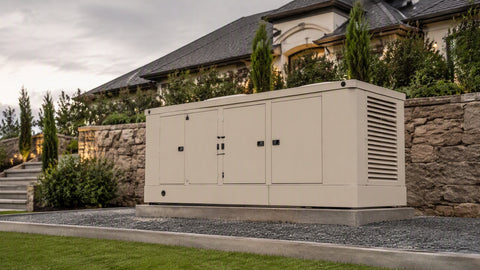
Eighty kilowatts is a sweet spot in the generator market. It's large enough to power a 15,000-square-foot commercial building, a small manufacturing line, or a 40-home subdivision pump station. It's small enough to run on a single natural gas meter, fit on a concrete pad behind a building, and not require a dedicated substation. I've sold 80kW units to vineyards, dairy farms, auto shops, and rural clinics. Each application sizes differently, fuels differently, and triggers different code requirements. This guide is the calculation sheet I use when a customer calls asking for "something around 80kW."
Eighty kilowatts is 80,000 watts of continuous three-phase power at 480V, or roughly 96 amps per phase. At 208V three-phase, it's 222 amps per phase. The voltage matters: most 80kW generators are configurable for 208V, 240V, or 480V, and the amperage changes accordingly. Before you pick a voltage, you need to know what you're feeding.
| Application | Typical Loads | Running kW | Starting kW | 80kW Fit? |
|---|---|---|---|---|
| Small medical clinic | HVAC, lights, imaging, refrigeration | 55–65 | 75–85 | Yes, with load priority |
| Restaurant (full kitchen) | Walk-in coolers, exhaust, cooking | 45–60 | 65–80 | Yes |
| Auto repair shop | Welders, lifts, compressor, HVAC | 50–70 | 90–110 | Marginal; check LRA |
| Small data center (1 rack) | Servers, cooling, UPS | 35–45 | 50–60 | Yes, with growth margin |
| Dairy farm (milking parlor) | Vacuum pump, coolers, ventilation | 40–55 | 70–90 | Yes |
| 40-home subdivision well pump | 75 HP pump, controls, lighting | 60–70 | 100–120 | No; size to 100kW |
| Vineyard winery | Crush equipment, refrigeration, tasting room | 35–50 | 55–75 | Yes, with margin |
Starting kW includes locked-rotor amperage (LRA) on motors. NEC 430.251A provides LRA multipliers. Always verify against nameplate data.
The auto shop example is where I see the most mistakes. A 7.5 HP air compressor has an LRA of 120A at 230V — that's 27.6kW at startup alone. Add a 5 HP lift (18kW LRA), a MIG welder (8kW), and HVAC (15kW), and your starting demand peaks at 68.6kW before you've turned on the lights. If all three motor loads start simultaneously during a transfer, the 80kW generator hits 85%+ of rating instantly. That's why we spec either a 100kW unit, or an 80kW with a soft-start package on the compressor and a sequenced load controller that brings the lift online 10 seconds after transfer.
NEC 445.13 is the governing rule: "The ampacity of the conductors from the generator terminals to the first distribution device shall not be less than 115 percent of the nameplate current rating." This applies to the feeder conductors. For the generator itself, the sizing logic follows Article 220 and Article 430.
Calculating Your Power Requirements
Here's the calculation method I use for commercial standby systems:
Step 1: List all continuous loads (HVAC, refrigeration, data equipment) at 100% of nameplate.
Step 2: List all non-continuous loads (lighting, general receptacles) at 100% of nameplate.
Step 3: Apply NEC 220.60 non-coincident load factor if loads are unlikely to run simultaneously.
Step 4: Add motor starting demand using LRA, not FLA (full-load amps).
Step 5: Size the generator to 100% of the maximum calculated demand for automatic standby, or 115% for manual transfer.
| Load Category | Nameplate (kW) | NEC Factor | Calculated Demand (kW) |
|---|---|---|---|
| RTU HVAC (20 ton) | 28 | 100% | 28.0 |
| Walk-in freezer | 8 | 100% | 8.0 |
| General lighting | 12 | 100% | 12.0 |
| Receptacles (180VA each) | 15 | 100% | 15.0 |
| Fire alarm / security | 3 | 100% | 3.0 |
| Air compressor (7.5 HP, LRA) | 28 (starting) | 100% | 28.0 |
| Total demand | 94.0 |
In this example, an 80kW generator is undersized. The continuous load is 66kW (HVAC + freezer + lighting + receptacles + alarm), and the starting surge from the compressor adds 28kW. Even with a soft starter reducing compressor LRA by 40%, the starting demand is 77.2kW — right at the generator's continuous limit with no margin. The correct size is 100kW, or an 80kW with a VFD soft-start on the compressor and a sequenced transfer switch.
That's the lesson: 80kW is not a default size. It's the answer to a specific load calculation. Start with the loads, end with the kW.
Eighty-kilowatt generators are available in diesel, natural gas, and propane. The fuel choice drives installation cost, operating cost, emissions compliance, and runtime during an outage. Here's the breakdown:
How Much Fuel Does an 80kW Generator Use?
| Fuel | Consumption @ 80kW (gal/hr or ft³/hr) | Consumption @ 50% load | Storage requirement (24 hrs) | Unit cost (fuel only, 24 hrs) |
|---|---|---|---|---|
| Diesel (#2) | 6.2 gal/hr | 3.5 gal/hr | 149 gal | $522 (@ $3.50/gal) |
| Natural gas | 8,200 ft³/hr | 4,600 ft³/hr | Pipeline (unlimited) | $328 (@ $4.00/therm) |
| Propane (LPG) | 7.8 gal/hr | 4.4 gal/hr | 187 gal | $561 (@ $3.00/gal) |
Source: Caterpillar C4.4, Cummins QSB5.9, and Kohler 80REOZJ datasheets, interpolated for 80kW continuous. Fuel costs are Pacific Northwest averages, August 2026.
Natural gas is cheapest per hour and requires no on-site storage, but it's vulnerable to pipeline disruption. During the 2021 Texas freeze, natural gas pressure dropped below what many generators needed to run, and facilities with diesel backup kept power. I keep that in mind for critical infrastructure: hospitals, 911 centers, water treatment. For a restaurant or retail store, natural gas is usually fine.
Diesel generators require a bulk tank. NEC and NFPA 110 require enough fuel for the class of service: Class 48 (48 hours of runtime) for essential facilities, Class 8 (8 hours) for non-essential commercial. An 80kW diesel at full load burns 6.2 gal/hr. Class 48 requires a 298-gallon tank. We typically install a 500-gallon double-wall tank with a sub-base tank option if space is tight.
Propane sits in the middle: cleaner than diesel, storable on-site like diesel, but more expensive per kWh. It's popular in rural areas without natural gas service. An 80kW propane generator needs a 1,000-gallon tank for 5-day runtime at 50% load.
80kW Generator Models: A Contractor's Comparison

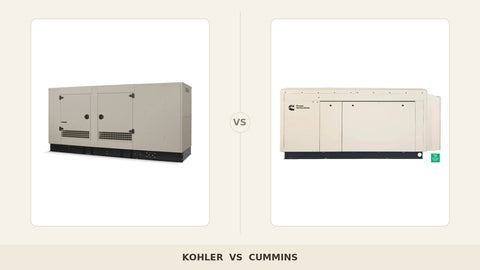
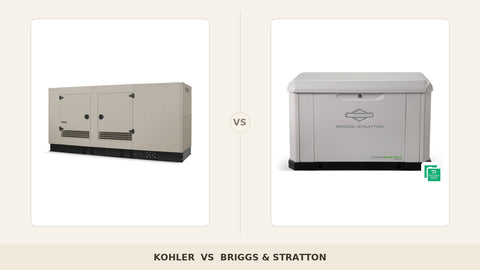
At Portlandia Electric Supply, we stock and source 80kW units from Cummins, Kohler, Generac, and CAT. Here's how they compare for commercial standby applications:
| Model | Engine | Fuel | Sound (dB @ 23 ft) | Enclosure | Emissions | Price (equip only) |
|---|---|---|---|---|---|---|
| Cummins C80D6 | QSB5.9 (diesel) | Diesel | 72 | Steel, weather | EPA Tier 4i | $24,500 |
| Kohler 80REOZJ | John Deere 4045 | Diesel | 71 | Aluminum, sound-attenuated | EPA Tier 4f | $27,800 |
| Generac SG080 | 4.5L (NG) / 6.8L (diesel) | NG / Diesel | 68 | Aluminum, sound-attenuated | EPA certified | $22,400 (NG) / $26,200 (D) |
| CAT D80 GC | C4.4 | Diesel | 74 | Steel, weather | EPA Tier 4f | $29,500 |
| Cummins C80N6 | QSJ5.9 (gas) | Natural gas | 69 | Aluminum | EPA certified | $21,200 |
Pricing is Portlandia Electric Supply commercial distributor pricing, Q3 2026. Installation, transfer switch, and fuel system are additional.
For most commercial jobs, I steer customers toward the Cummins C80N6 (natural gas) or the Generac SG080. Cummins has the densest service network in North America; if the unit throws a fault at 2 a.m., a Cummins tech is usually within an hour. Generac wins on price and lead time — we can get an SG080 in two weeks versus six weeks for Cummins.
How Quiet Is an 80kW Generator?
The Kohler 80REOZJ is the premium option: John Deere engine, best sound attenuation, longest warranty (5 years / 2,000 hours). I spec it for wineries, event venues, and any place where noise is a concern. The aluminum enclosure won't rust in coastal Oregon.
An 80kW generator needs a transfer switch matched to the amperage and voltage. At 480V three-phase, 80kW is 96A. At 208V, it's 222A. The switch must be rated for the voltage, the continuous current, and the fault current available at the generator terminals.
| Voltage | Phase | 80kW Amps | Switch Minimum Rating | Typical Switch Model |
|---|---|---|---|---|
| 208V | 3Ø | 222A | 400A (225A + 125% NEC margin) | ASCO 400A, 3Ø |
| 240V | 3Ø | 192A | 400A | ASCO 400A, 3Ø |
| 480V | 3Ø | 96A | 150A | ASCO 150A, 3Ø |
| 240V | 1Ø | 333A | 600A | ASCO 600A, 1Ø |
ASCO Power Technologies automatic transfer switches. Manual transfer switches can be derated per manufacturer spec but must still meet NEC 445.18.
For commercial jobs, I always specify a bypass-isolation transfer switch. If the ATS fails — and they do, especially after 10 years — the bypass switch lets you maintain power to the building while repairing the ATS. The added cost ($3,000–$5,000) is trivial compared to a day of lost revenue for a restaurant or clinic.
Closed-transition switching is another upgrade worth considering. Standard open-transition ATS breaks the load from utility before connecting to generator. Closed-transition briefly parallels utility and generator (under 100ms) before transferring, eliminating the power interruption. It's required for some data center applications and reduces wear on motor loads.
Here's a real-world cost breakdown for an 80kW natural gas standby system installed at a commercial building in Portland, Oregon:
| Item | Cost | Notes |
|---|---|---|
| Generac SG080 (NG, sound-attenuated) | $22,400 | Equipment only |
| ASCO 400A automatic transfer switch | $4,200 | 3-phase, 480V |
| Concrete pad (6" reinforced, 8' × 4') | $1,800 | Includes rebar and forms |
| Electrical: conduit, wire, disconnect | $3,500 | 100A feeder, 75 ft run |
| Gas line: meter upgrade, regulator, pipe | $4,200 | 2" pipe, 50 ft run |
| Permits: electrical, mechanical, fire | $1,200 | City of Portland fees |
| Installation labor (3 days, 2 electricians) | $6,000 | @ $125/hr |
| Start-up, commissioning, load test | $1,500 | Includes factory rep |
| Total installed cost | $44,800 |
At 80kW, you're in commercial territory for permits. The electrical permit requires a single-line diagram, load calculation per NEC 220, and arc-flash study if the fault current exceeds 10kA. The fire marshal reviews fuel storage (even for natural gas, they want to see the meter capacity and pipe sizing). The mechanical inspector checks ventilation if the generator is in an enclosure or building. Budget 4–6 weeks for permits in major metro areas.
Financing is available through most distributors, including Portlandia Electric Supply, for qualified commercial customers. Terms range from 24 to 84 months at competitive rates. For businesses, the full installed cost is depreciable under MACRS (5-year property), and bonus depreciation may apply.
Step 1: Perform a load survey per NEC Article 220. List all continuous and non-continuous loads. Apply NEC demand factors. Record full-load amps (FLA) and locked-rotor amps (LRA) for every motor. Sum the calculated demand.
Step 2: Add motor starting surge. Identify the largest motor and its LRA. Add the LRA-based starting watts to the running load total. If the sum exceeds 80kW, specify a soft starter or size up to 100kW.
Step 3: Select fuel type based on runtime and infrastructure. Choose natural gas for lowest operating cost and unlimited runtime. Choose diesel for critical facilities requiring on-site fuel independence. Choose propane for rural sites without natural gas.
Step 4: Size the transfer switch and specify features. Match transfer switch amperage to the generator output voltage. Specify bypass-isolation for commercial jobs. Specify closed-transition for zero-interruption loads.
Step 5: Plan installation per NEC 445 and local codes. Site the generator with proper clearances, working space, and ventilation. Size conductors per 445.13 (125% of rating). Install grounding per 250.34. Submit single-line diagram and load calc for permit.
Need an 80kW generator for your project? Browse our generator catalog or contact our commercial design desk for load calculations, specification assistance, and bulk pricing. We stock Cummins, Generac, and Kohler units with same-week availability.
Related reading: Cummins brand guide, Generac brand guide, Kohler brand guide, Whole-house generator guide, Generator protection guide, Standby generator buyer's guide, 18kW generator guide, 13kW generator guide, Liquid-cooled generators, Furnace electrical guide, AC condenser guide, AC unit electrical guide, 100kW Cummins generator.