JA Solar and JinkoSolar are two of the four largest module makers on earth, and their current N-type lines are closer than most buyers assume. JA Solar DeepBlue wins on warranty structure: 25-year product / 30-year performance class on the residential DeepBlue series. JinkoSolar Tiger Neo wins on efficiency ceiling: up to ~24.0% on Tiger Neo 3.0 — the volume-efficiency leader — but its standard product warranty is 12 years, with 25-year terms only on select newer and US-market series. If warranty length is the decision, JA Solar. If watts per square foot at massive scale is the decision, Jinko.
We've unloaded containers of both brands at our dock, and the honest truth is the panels themselves rarely decide these jobs. The paperwork does. Warranty documents, degradation schedules, and whether your distributor actually stocks the SKU on your quote — that's where JA vs Jinko bids get won and lost. This guide walks both platforms the way we'd walk a contractor through it across the counter: spec sheet first, then the math, then the buying decision.
Spec Sheet — JA Solar vs JinkoSolar at a Glance
- Cell Technology: N-type TOPCon (DeepBlue family) · N-type TOPCon (Tiger Neo family)
- Wattage Class: ~430–460W residential class; C&I/utility siblings higher · ~440–520W residential/C&I class (Tiger Neo 3.0 to 520W; utility to ~670W)
- Module Efficiency: ~21.8–22.8% by series · Up to ~24.0% (Tiger Neo 3.0) — volume efficiency leader
- Degradation: Standard N-type class · 87.4% minimum at year 30 (Tiger Neo class)
- Warranty: 25 yr product / 30 yr performance class (DeepBlue residential; verify per series) · 12 yr product standard, 25 yr on select US/newer series; 30 yr performance
Start with what doesn't separate them, because it's a long list. Both are Chinese-headquartered, vertically integrated manufacturers that sit permanently on the BloombergNEF Tier-1 list — check the current Tier-1 solar panel list and both names are on it, year after year. Both build their current flagships on N-type TOPCon cells. Both earned PVEL Top Performer recognition on their flagship residential series — DeepBlue 4.0 Pro for JA Solar, Tiger Neo for Jinko — in the 2025 Module Reliability Scorecard. And both ship in the ~430–520W residential/C&I class at budget-to-mid Tier-1 pricing.
Neither is a premium-priced panel. If you want the premium shelf, that's a different conversation — our most efficient solar panels buyer's guide covers that tier. JA and Jinko are engineered to a cost-performance point, and that cost-performance point is exactly why they dominate distributor volume. When a contractor calls us for a 500-panel commercial order and the bid is tight, one of these two names is on it nine times out of ten.
Vertical integration matters more than buyers realize. Both companies grow their own ingots, slice their own wafers, and make their own cells, which is why their pricing weathers polysilicon swings better than assembled-from-parts brands. It's also why both can hold direct-from-manufacturer style pricing even through distribution — when poly dropped and module spot prices followed, these two moved first and fastest.
Bankability is the other shared trait. Both names appear on essentially every lender's approved equipment list we've submitted to, which keeps financed projects from stalling at the equipment-review stage. A no-name panel that's two cents cheaper per watt stops being cheap the day the financing company kicks the equipment schedule back.
| Specification | JA Solar | JinkoSolar |
|---|---|---|
| Cell Technology | N-type TOPCon (DeepBlue family) | N-type TOPCon (Tiger Neo family) |
| Wattage Class | ~430–460W residential class; C&I/utility siblings higher | ~440–520W residential/C&I class (Tiger Neo 3.0 to 520W; utility to ~670W) |
| Module Efficiency | ~21.8–22.8% by series | Up to ~24.0% (Tiger Neo 3.0) — volume efficiency leader |
| Power Density (from efficiency) | ~20.3–21.2 W/ft² | Up to ~22.3 W/ft² |
| Temp Coefficient (Pmax) | ~−0.30%/°C class (TOPCon typical) | ~−0.29%/°C class (TOPCon typical) |
| Degradation | Standard N-type class (~1% first year, ~0.40%/yr after) | 87.4% minimum at year 30 (Tiger Neo class) |
| Warranty | 25 yr product / 30 yr performance class (DeepBlue residential; verify per series) | 12 yr product standard, 25 yr on select US/newer series; 30 yr performance |
| Origin & Scale | China; Q1 2026 #4 global shipper (~9.8 GW) | China; Q1 2026 #1 global shipper (~13.7 GW) |
| PVEL Reliability Testing | DeepBlue 4.0 Pro = PVEL Top Performer (2025 Scorecard) | Tiger Neo = PVEL Top Performer (2025 Scorecard) |
| Price Class | Budget Tier-1 (~$2.60–3.00/W installed class) | Budget-to-mid Tier-1 (~$2.55–2.95/W installed class) |
For series-level depth on each platform, we maintain separate dealer references: the JA Solar brand guide covers the DeepBlue series lineup, and the JinkoSolar brand guide covers the Tiger Neo family SKU by SKU. Cross-shopping a third volume brand? The Canadian Solar brand guide is the most common third bid we see on the same jobs.
Jinko's Tiger Neo 3.0 reaches ~24.0% module efficiency — among the highest in mass production anywhere. JA Solar's DeepBlue family runs ~21.8–22.8% depending on series. That gap sounds abstract until you convert it to power density, which is the number that actually lays out a roof. Module efficiency times 1,000 W/m² of standard test irradiance gives you watts per square meter; divide by 10.764 to get watts per square foot:
| Module Class | Efficiency | W/m² (STC) | W/ft² | Array on 400 ft² usable roof |
|---|---|---|---|---|
| Jinko Tiger Neo 3.0 (ceiling) | ~24.0% | 240 | ~22.3 | ~8.9 kW |
| JA DeepBlue (top of range) | ~22.8% | 228 | ~21.2 | ~8.5 kW |
| JA DeepBlue (bottom of range) | ~21.8% | 218 | ~20.3 | ~8.1 kW |
| Legacy PERC reference class | ~21.0% | 210 | ~19.5 | ~7.8 kW |
Read the last column carefully. On a space-constrained commercial roof, Jinko's ceiling buys real capacity — roughly 0.8–1.1 kW extra per 400 square feet of usable area versus the DeepBlue range. On an open residential roof with room to spare, the difference is a panel or two, not a system design change. I had a 42 kW commercial job last spring where the roof maxed out at 96 modules either way; we quoted both, and the Jinko layout only won because the extra watts per panel cleared the customer's demand-charge target without expanding onto the second roof plane.
Temperature behavior is a wash. Both families carry TOPCon-class temperature coefficients around −0.29 to −0.30 %/°C, noticeably better than the ~−0.35 %/°C of older PERC stock, which is why both hold production well on hot dark-shingle roofs. If you're validating production claims on an existing array, our guide on how to test solar panel output walks the field procedure.
This is the sharpest spec-sheet difference between the two brands, and it's where we see the most quoting mistakes. JA Solar's DeepBlue residential line carries a 25-year product / 30-year performance-class warranty as standard. JinkoSolar's standard product warranty is 12 years — a legacy structure — with 25-year product coverage available only on select series, including newer US-market SKUs. Both carry 30-year performance coverage.
| Warranty Term | JA Solar DeepBlue (residential) | JinkoSolar Tiger Neo |
|---|---|---|
| Product (workmanship) warranty | 25 years, standard on DeepBlue residential | 12 years standard; 25 years on select newer/US SKUs |
| Performance warranty | 30-year class | 30 years (87.4% minimum at year 30, Tiger Neo class) |
| First-year degradation | ~1% (N-type class) | ~1% (N-type class) |
| Annual degradation after year 1 | ~0.40%/yr (N-type class) | ~0.40%/yr (Tiger Neo class) |
| What to verify on a quote | That the SKU is a DeepBlue residential series, not an older P-type sibling | That the exact SKU carries the 25-year product variant — get the warranty PDF |
On a 25-year financed residential system, that product-warranty gap is material. A panel that fails in year 14 under a 12-year product warranty is a conversation nobody wants to have with a homeowner. Confirm the exact warranty document attached to the SKU on your quote — not the brand-level marketing number. I tell every contractor the same thing: pull the warranty PDF before you sign the proposal, not after the homeowner asks. Our solar panel warranty guide explains how product and performance warranties actually pay out when claims happen.
Watch for mixed pallets on Jinko quotes
Because the 12-year and 25-year product-warranty SKUs coexist in the Tiger Neo line, two "Tiger Neo" quotes can carry different coverage. The datasheet header and the warranty document must name the same model code. If the quote just says "Tiger Neo 470W," ask for the full SKU and match it yourself.
Both brands' N-type TOPCon lines share roughly the same degradation schedule: about 1% in year one, then about 0.40% per year. That lands at 87.4% of nameplate at year 30 — which is exactly the floor Jinko guarantees on the Tiger Neo class. Here's the full schedule against the legacy PERC class (2% first year, 0.55%/yr) that many retrofit jobs are replacing:
| Year | N-type TOPCon (% of nameplate) | Legacy PERC class (% of nameplate) |
|---|---|---|
| 1 | 99.0% | 98.0% |
| 5 | 97.4% | 95.8% |
| 10 | 95.4% | 93.0% |
| 15 | 93.4% | 90.3% |
| 20 | 91.4% | 87.6% |
| 25 | 89.4% | 84.8% |
| 30 | 87.4% | 82.1% |
Now run that through a real system. Take a 10 kW array in a 1,400 kWh/kWp/yr resource — decent but not desert Southwest. Year-one energy at 99% of nameplate is 13,860 kWh for the N-type modules. Average output across 30 years is the mean of the year-1 and year-30 endpoints: (99.0 + 87.4) / 2 = 93.2%, giving roughly 391,000 kWh lifetime. The PERC class averages (98.0 + 82.1) / 2 = 90.05%, or roughly 378,000 kWh. The N-type schedule is worth about 13,000 kWh over the life of the system — at $0.16/kWh, around $2,100 of production per 10 kW array, before you count the efficiency difference that put more nameplate watts on the same rails in the first place.
That's why we push both of these lines hard for commercial solar panel jobs with 25-year pro formas. The degradation schedule is a finance document as much as a spec-sheet line, and both JA and Jinko's current N-type families beat the legacy fleet by a wide margin on lifetime kilowatt-hours.
Both flagships — DeepBlue 4.0 Pro and Tiger Neo — carry PVEL Top Performer recognition from the 2025 Module Reliability Scorecard. That badge gets waved around in marketing, but the testing behind it is genuinely brutal: 2,000 hours of damp heat at 85°C and 85% humidity, 600 thermal cycles from −40°C to +85°C, mechanical load sequences that simulate snow and wind stacking, and potential-induced degradation runs at full system voltage. Panels that pass with low degradation across those categories tend to survive real rooftops. Panels that don't get weeded out before they reach your bid.
We pay attention to the scorecard because warranty paper only matters if the module survives long enough to claim on it. Both of these families did. That's part of why we're comfortable stocking both deep — we've seen the failure rates on our own RMA desk, and warranty claims on current JA and Jinko N-type stock are rare enough that each one gets personal attention rather than a queue number.
One reliability note that separates the platforms in the field rather than in the lab: glass-glass bifacial SKUs in both families handle mechanical load and backsheet degradation better than glass-backsheet variants, at a small weight penalty. For ground mounts and flat-roof ballast, we steer crews to the bifacial frames; for steep residential shingle work where every pound matters on the ladder, the glass-backsheet residential SKUs are fine and easier to handle.
Both brands sell three distinct frame classes, and mixing them up is the most common quoting error we correct. The residential lines (JA DeepBlue ~430–460W, Tiger Neo ~440–520W) use 108/120-half-cell formats sized for two-person rooftop handling. The C&I frames step up in dimensions and current. Jinko's utility siblings reach ~670W — panels that size need three crew members and wide-format racking, and they have no business on a pitched shingle roof. When a competitor's bid looks suspiciously cheap per watt, check whether they quoted a C&I frame against your residential design. It happens more than it should.
Match the frame class to the job, match the SKU to the warranty document, and either of these brands will perform. Get sloppy on either check and the spec-sheet advantage evaporates.
Installed price classes run close: JA Solar at roughly $2.60–3.00/W installed class, Jinko at roughly $2.55–2.95/W installed class. At the module level, the two trade blows within a few cents per watt depending on quarter, region, and container timing — our commercial solar panel cost guide tracks where those ranges sit this quarter. Neither brand's module price should decide the bid by itself; freight class, pallet counts, and warranty terms move the total more.
| Procurement Factor | JA Solar | JinkoSolar |
|---|---|---|
| Installed price class | ~$2.60–3.00/W | ~$2.55–2.95/W |
| Typical order profile | Residential pallets through distribution; C&I by the container | Same, plus utility-scale frames to ~670W |
| US availability | Broad distributor stock, including our JA Solar inventory | Broad distributor stock, including our JinkoSolar inventory |
| Bulk buying | Both qualify for bulk solar panel pallet and container pricing through distribution | |
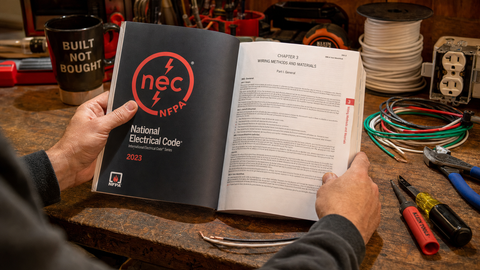
A practical note from the warehouse side: both brands pack well and survive LTL better than most, but check pallet counts against your racking plan before the truck shows up. Rail splice and clamp compatibility is universal across both — standard 35mm and 40mm frames drop into any of the racking systems for solar panels we stock without adapter drama. On the electrical side, both families' residential SKUs sit comfortably inside the string windows of every major string inverter we sell; just respect the 1500V max system voltage on the utility siblings and size strings for your record low temperature per NEC 690.7.
If the decision is budget-first on a residential job, also price the affordable solar panels category as a sanity check — but honestly, at current spreads, JA and Jinko usually land within striking distance of the budget shelf while carrying Tier-1 bankability the budget shelf can't match. The high-efficiency solar panel category is the other direction: worth it when roof area is the constraint, overkill when it isn't.
Choose JA Solar if warranty length drives the decision
25-year product coverage on the standard residential line, plus a PVEL Top Performer badge at a budget price. For financed residential systems and any job where the homeowner's first question is "how long is it covered," DeepBlue is the simpler, safer spec. It's also the easier conversation when the financing company reviews the equipment schedule.
Choose JinkoSolar if efficiency ceiling and scale matter most
The job is large, roof or ground area is constrained, and you've confirmed the specific SKU carries the 25-year product warranty variant. Tiger Neo 3.0's ~24.0% ceiling and the ~670W utility frames give Jinko a layout advantage nothing else at this price class matches. For utility-scale procurement, #1 global shipper scale also means allocation is rarely the bottleneck.
Choose either — and verify the paperwork — for standard C&I volume
For a routine 100–500 kW commercial rooftop with a competent design, both platforms perform within a rounding error of each other. Quote both, take the better pallet price that month, and spend your saved margin on the balance of system where failures actually happen.
Field takeaway: JA Solar is the warranty play, Jinko is the efficiency play. Both are PVEL-tested volume leaders — verify the warranty document on the exact SKU being quoted, and let roof geometry, not brand loyalty, make the final call.
Quoting this job? We stock JA Solar products and JinkoSolar products at contractor pricing — or get a system quote with both options priced side by side.
Is JA Solar or JinkoSolar bigger?
JinkoSolar was the #1 global module shipper in Q1 2026 (~13.7 GW); JA Solar was #4 (~9.8 GW). Both are Tier-1 bankable at any project scale, and both have the factory depth to honor multi-decade warranties.
Which panel is more efficient?
Jinko's Tiger Neo 3.0 leads at up to ~24.0% module efficiency; JA Solar's DeepBlue family runs ~21.8–22.8% depending on series. In power-density terms, that's roughly 22.3 W/ft² versus 20.3–21.2 W/ft² under standard test conditions.
Why does Jinko have a shorter warranty?
Jinko's standard product warranty is 12 years — a legacy structure — but select newer and US-market series carry 25-year product coverage. Always check the warranty PDF for the exact SKU on your quote, because two Tiger Neo quotes can carry different product coverage.
Are both panels PVEL tested?
Yes — JA Solar DeepBlue 4.0 Pro and Jinko Tiger Neo both earned Top Performer recognition in the 2025 PVEL Module Reliability Scorecard, which independently stress-tests modules for thermal cycling, damp heat, mechanical load, and PID.
Which is better for a home system?
Both work well. JA Solar's longer standard product warranty makes it the simpler recommendation for financed residential systems; Jinko makes sense when roof space is tight and the 25-year-warranty SKU is confirmed on the quote.
How much more energy do N-type modules produce over 30 years?
On a 10 kW array in a 1,400 kWh/kWp/yr resource, the N-type degradation schedule (~1% first year, ~0.40%/yr) yields roughly 391,000 kWh lifetime versus roughly 378,000 kWh for a legacy PERC schedule — about 13,000 kWh more, before counting the higher nameplate watts that fit on the same roof.
- JA Solar DeepBlue datasheets (jasolar.com)
- JinkoSolar Tiger Neo datasheets (jinkosolar.com)
- PVEL Module Reliability Scorecard 2025 (pvel.com)
- NEC 690.7 — maximum system voltage and temperature-corrected string sizing (NFPA 70)
Ready to price your project? Get a free system quote from PES Supply — both options, contractor pricing.
Related Resources: