Sol-Ark vs Generac PWRcell 2026: Open Hybrid vs Ecosystem Storage
One is an open-architecture hybrid inverter that takes any sane 48 V battery. The other is a closed, dealer-installed ecosystem with its own batteries, its own inverter, and its own app. Choose based on who you want owning your service calls for the next 15 years.
This comparison comes up differently than most. Nobody cross-shops Sol-Ark and PWRcell on price per watt — the installed gap is too large for that conversation. The real question a customer is asking is: do I want to own a system, or do I want to own a subscription to an ecosystem? We sell Sol-Ark hardware over the counter to installers and advanced DIYers, and we've designed around Generac PWRcell systems that arrive as a turnkey dealer package. Both keep the lights on. They are philosophically opposite products.
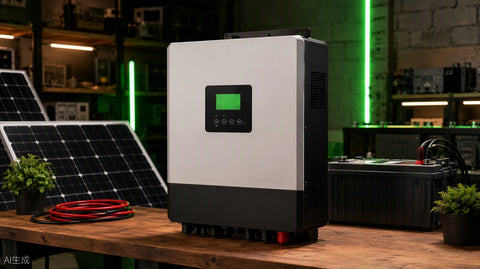
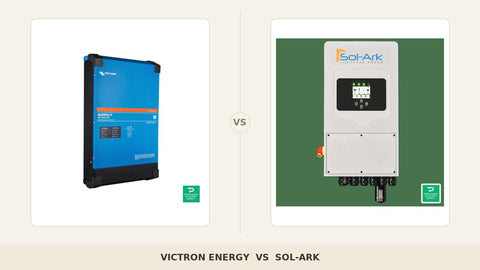
Here's the architecture in one breath: Sol-Ark is a battery-agnostic 48 V hybrid inverter — you bring the battery bank you want, in the size you want, from EG4, Pytes, Fortress, or a dozen others, and you can expand it later with whatever is on the market that year. PWRcell is Generac's closed stack: their inverter, their lithium battery modules in 3 kWh increments inside their cabinet, their load-management hardware, their monitoring, serviced through their dealer network. Open versus closed. Wrench versus concierge.
| Dimension | Sol-Ark 15K + open 48 V bank | Generac PWRcell system |
|---|---|---|
| Continuous output | 12 kW (15 kVA class) | ~7.6–11.4 kW depending on inverter/battery configuration |
| Battery chemistry | Any 48 V lithium or lead-acid | Generac lithium modules, 3 kWh each, 9–36 kWh per cabinet |
| Battery expansion | Add any compatible bank anytime | Add Generac modules only, through dealer |
| Install model | Installer or advanced DIY | Dealer-installed only |
| Installed cost, ~15 kWh usable | ~$14k–$19k (inverter + 3 rack batteries + labor) | ~$22k–$30k turnkey |
| Whole-home pass-through | 200 A | 200 A (with PWRcell ATS/Generac transfer gear) |
| Generator integration | Native gen input, any brand | Seamless with Generac standby units (its home turf) |
| Monitoring | Sol-Ark portal + open data | PWRview app, polished, closed |
| Service model | You, your installer, or us | Generac dealer network |
Costs above are installed street ranges we've quoted and seen quoted in the Pacific Northwest; your market will differ. The PWRcell premium is real and it buys something specific: one throat to choke, a dealer who shows up, and an app your mother can use. Whether that's worth $8,000–$11,000 on a 15 kWh system is the entire decision.
Let's build both systems to the same job spec: whole-home backup for an all-electric 2,400 sq ft home, one day of autonomy for essential loads (call it 15 kWh usable), 12 kW-class inverter, 200 A pass-through, grid-tied with export.
| Line item | Sol-Ark open build | PWRcell ecosystem |
|---|---|---|
| Inverter / power electronics | Sol-Ark 15K, ~$7,500 | PWRcell inverter, bundled in package |
| Battery, 15 kWh usable | 3 × 5.12 kWh rack batteries, ~$4,500–$5,500 | 5–6 PWRcell modules (15–18 kWh), bundled |
| Transfer / load management | 200 A pass-through included; smart loads native | Generac ATS + Smart Management Modules, bundled |
| Hardware subtotal | ~$12,000–$13,000 | ~$18,000–$24,000 (package) |
| Install labor (typical) | ~$2,500–$5,000 | ~$4,000–$6,000 (in turnkey quote) |
| Installed total | ~$14,500–$18,000 | ~$22,000–$30,000 |
| Cost per usable kWh installed | ~$970–$1,200 | ~$1,450–$2,000 |
After the 30% federal residential clean energy credit (check current IRS rules and your state incentives on our incentives page), both numbers drop meaningfully, but the ratio holds: open architecture lands around 60–70 cents on the ecosystem dollar. That delta buys a lot of service calls, which is the counter-argument every Generac dealer makes — fairly.
PWRcell's 3 kWh module granularity is genuinely nice design — you can start at 9 kWh and grow to 36 kWh in a cabinet without rewiring anything. What you cannot do is buy those modules from anyone but Generac, at Generac's price, when Generac decides to stock them. We watched customers wait months for expansion modules during supply crunches while generic 48 V rack batteries sat on shelves at a third of the price per kWh. Open banks expand same-week: another EG4 or Pytes rack lands on the bus, you update the battery count in settings, done. If staged expansion is in your plan, run the five-year total cost both ways — the battery bank sizing guide and battery sizing calculator make the capacity side easy.
Round-trip efficiency is a wash in practice: both stacks post ~90–94% AC-coupled round-trip in real homes. PWRcell's DC-coupled PV option edges ahead on paper for new solar-plus-storage builds; Sol-Ark's native PV input does the same trick, so on new builds both are DC-coupled and the efficiency argument disappears. Where PWRcell's architecture is genuinely elegant is its solar-plus-storage integration in one cabinet footprint with one app. Where it hurts is the same place: one vendor, one price list, one roadmap.
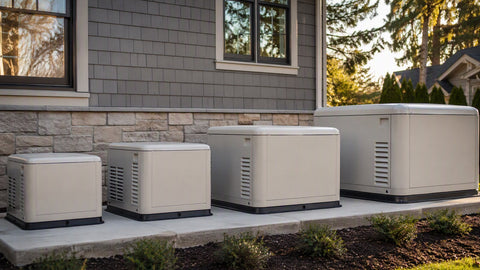
Credit where due — if you already own a Generac standby generator, or plan to, PWRcell's integration with it is the smoothest in the business. The systems are designed to cooperate: solar and battery carry the short outages, the generator wakes for the long ones, and the whole dance is automatic with clean load management through Generac's Smart Management Modules. For storm-belt customers who want zero involvement, it's a legitimately excellent answer.
Sol-Ark does the same job with any generator brand — natively, with adjustable charge rates and auto-start on state of charge — but you (or your installer) own the integration. We've paired Sol-Arks with Generac, Kohler, Champion, and jobsite-grade portables; our Champion generator and 22 kW Champion pairings are common in rural builds where the customer already owns the genny. The capability matches; the polish requires a competent installer. If that installer is you, that's a feature. If it's a stranger you found on a Tuesday, Generac's closed loop starts to look cheap.
The load math is identical regardless of logo. Work it before you talk to any dealer, so you know when a quote is padded:
| Load group | Typical draw | Runs during outage? | Notes |
|---|---|---|---|
| Refrigerator + freezer | 150–400 W cycling | Yes | Surge 3× on compressor start; trivial for either system |
| Furnace blower / hydronic pump | 300–800 W | Yes, in heating season | Gas heat keeps electric load small — big design lever |
| Well pump, 1/2–1 hp | 1,000–2,500 W run, 3–4× surge | Yes | The load that sizes the surge rating; verify with clamp meter |
| Central AC / heat pump, 3–4 ton | 3,500–5,000 W run | Managed — smart load or soft start | LRA 60–100 A without soft start; budget $300 for one |
| Electric water heater | 4,500 W | Smart-load shed first | Both platforms shed it automatically at low state of charge |
| EV charging | 7.7–11.5 kW at Level 2 | No — grid only | Size it out of the backup budget; see our EV charger shelf for grid-side options |
Sum the "yes" column honestly and most efficient homes land at 8–20 kWh per outage-day — which is why 15 kWh usable is the sweet spot in the money table above, and why dealers quoting 36 kWh to a gas-heated household with no well pump should be asked what they know that you don't.
Both systems interconnect under NEC 705, both need the 120%-rule or supply-side math on your service (see our bus bar guide), and both need listed disconnects per NEC 690 — details in the NEC 690 disconnect guide. Conductor sizing for a 12 kW Sol-Ark build: 50 A continuous × 1.25 = 62.5 A, so 4 AWG copper on a 70 A breaker per Tables 310.16 and 240.6. PWRcell's conductors are dealer-handled but the math doesn't change: an 11.4 kW configuration is 47.5 A × 1.25 ≈ 59.4 A — 6 AWG on a 60 A breaker, verify against the install manual. Either way, our NEC ampacity chart is the cross-check, and grounding follows the grounding and bonding guide.
Permitting is a real difference worth naming: PWRcell arrives with a full dealer engineering package that sails through most AHJs untouched. Open builds need a line diagram and cut sheets assembled by whoever designs it — trivial for a licensed installer, a genuine hurdle for DIY in strict jurisdictions. Know your AHJ before you choose your architecture.
Year 3, battery degrades or a module faults: PWRcell — dealer visit, module swap under warranty, invoice zero-ish, wait time depends on dealer backlog. Sol-Ark open bank — you or your installer pull one $1,500 rack battery, RMA it, and the other two carry the house meanwhile. Year 7, you want more capacity: PWRcell — call the dealer, buy Generac modules at then-current pricing. Sol-Ark — buy whatever the best-value 48 V rack battery is in 2033 and bolt it in. Year 10, inverter dies out of warranty: PWRcell — dealer quotes a PWRcell inverter; Sol-Ark — any 48 V hybrid on the market bolts to your existing battery bus, which is the single strongest long-term argument for open architecture. I've personally migrated a customer's decade-old battery bank onto its second inverter platform already; the batteries didn't care what logo was on the wall.
None of this makes PWRcell wrong. It makes it a service contract you pay for upfront. Customers who want that contract should buy it confidently — Generac's dealer network is the deepest in residential backup, full stop. Customers who turn their own wrenches, or who simply refuse single-vendor roadmaps, should buy the open build and pocket the difference. Our PWRcell cost guide has the ecosystem deep-dive if you're leaning that way, and Sol-Ark vs EG4 covers the open-architecture horse race. For runtime planning before you commit, the backup runtime calculator is five minutes well spent.
PWRcell can take PV directly through its own DC-coupled solar input or AC-couple existing solar through the inverter — Generac engineered both paths because the retrofit market demanded it. Sol-Ark does the same trick: three to four native MPPTs on the 15K for new arrays, plus AC-coupling of any legacy string inverter that follows frequency-shift curtailment rules. Where they differ is array size headroom. The 15K swallows ~19.5 kW of PV natively, which covers any residential roof we've ever measured, including the 40-module shop builds. PWRcell's solar input ceiling depends on configuration and is generally sized for the battery it ships with; oversized arrays for future expansion should be discussed with the dealer at design time, not discovered at expansion time.
| Solar pairing scenario | Sol-Ark 15K | PWRcell |
|---|---|---|
| New 10 kW rooftop array, same project | Native MPPTs, DC-coupled, one efficiency loss | DC-coupled through PWRcell solar input |
| Existing 8 kW string-inverter system, add storage | AC-couple; legacy array produces through outages | AC-couple; same behavior |
| 15 kW+ ground mount with expansion plans | Native, with headroom to ~19.5 kW | Confirm solar input ceiling with dealer at design |
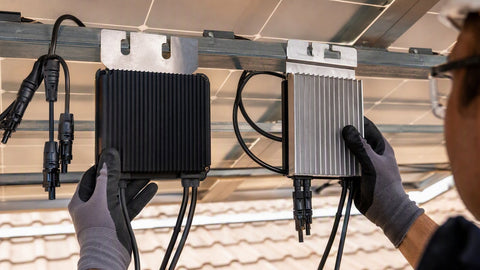
| Mixed old + new modules | Separate MPPTs or Tigo on the mismatched section | Dealer engineering required |
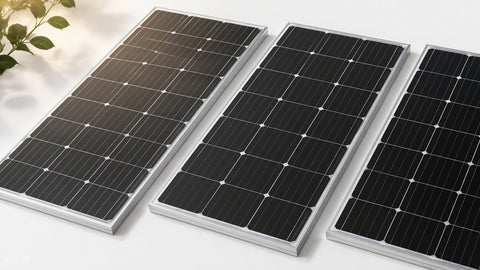
For module selection on the new-array side, our 2026 panel roundup and the 460–549 W class are where whole-home customers land most often, and the system size calculator translates your bill into an array size before anyone quotes you anything.
PWRview is the better app. It's not close, and it matters more than spec-sheet people admit: Generac's monitoring was built for homeowners first, with clean outage history, bill tracking, and a "what's running right now" view that my least technical customers navigate without a phone call to me. Sol-Ark's portal is built for installers — deeper data, denser screens, every parameter exposed, and a learning curve that rewards the curious and frustrates everyone else. Both send alerts. Both log grid events. The open-architecture bonus: Sol-Ark systems can also be read by third-party monitoring stacks and home automation, which the home-assistant crowd exploits heavily and which a closed ecosystem will never permit. If your household includes someone who wants graphs and someone who wants simplicity, that household has a decision to make before the hardware does.
- PWRcell is for the homeowner who wants backup the way they want a car: one brand, one dealer, one warranty, an app that explains itself, and zero interest in what's under the hood. Also the obvious call when a Generac standby generator is already on the pad.
- Sol-Ark open build is for the homeowner or installer who treats the system as owned infrastructure: pick the batteries at today's best $/kWh, expand with tomorrow's best, swap the inverter in year 12 without touching the battery bank, and read every watt the system moves.
- Neither is for the bargain hunter with no backup requirement at all — if outages aren't part of your life, grid-tied solar without storage beats both on ROI, and our ROI calculator will prove it to you in five minutes.
We land customers on both sides of this line every month, and the happiest ones — five years out, verified by the service log — are the ones who answered the ownership question honestly on day one.
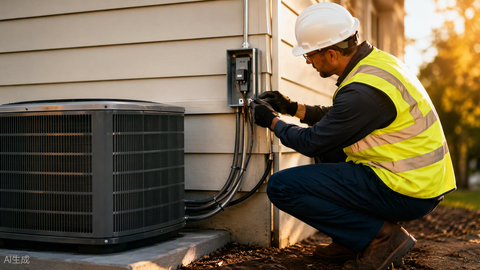
A PWRcell install is a choreographed dealer event: pad or wall mount for the battery cabinet, inverter beside it, transfer gear at the service, Smart Management Modules on the big loads, commissioning through Generac's app, and a scheduled walkthrough where the dealer explains the system to you. Two days, typically, with a crew that's done the same dance fifty times. A Sol-Ark open build is a conventional electrical project — inverter on the wall, battery rack beside it (leave working clearance per NEC 110.26, 36 inches in front, always), PV and generator conductors in separated raceways, and a commissioning checklist your installer should hand you a copy of. We insist on one live test before sign-off on either platform: kill the grid at the main, watch the transfer, start the well pump, run the microwave, and confirm the smart loads shed in the right order as the battery drains. The first outage is not the time to learn your system's personality.
Document everything at install — serial numbers, firmware versions, torque values on the battery lugs, photos of every label. Ten years from now, the service tech (who might be you) will thank the installer who left a paper trail. The ones who didn't are why we keep a camera on the truck.
| Draw profile during outage | Average load | Runtime on 15 kWh usable |
|---|---|---|
| Essentials only (fridge, lights, internet, blower) | ~600 W | ~25 hours |
| Essentials + well pump cycling + microwave | ~1.0 kW | ~15 hours |
| Normal life, no AC, no water heater | ~1.5 kW | ~10 hours |
| Normal life + managed AC with soft start | ~2.5 kW | ~6 hours |
| Unmanaged all-electric, water heater left on | ~4 kW | Under 4 hours — the cautionary tale |
That bottom row is why both platforms ship load management and why we configure it before we leave: a 4,500 W water heater left on the backup side eats a 15 kWh bank for breakfast. Managed correctly, the same battery carries a household overnight and recharges from solar the next morning — indefinitely, in summer. The runtime calculator lets you replay this table with your own numbers, and the 20/80 battery rule explainer covers the state-of-charge habits that make either chemistry live longer.
Is Generac PWRcell worth the premium over a Sol-Ark build?
It depends on who will own your service. PWRcell's premium — typically $8,000–$11,000 on a 15 kWh system — buys a closed ecosystem, a single warranty path, and dealer service. If you want zero involvement and one phone number for 15 years, that's a fair price. If you or your installer can own the system, an open Sol-Ark build delivers the same kWh for 60–70% of the money and stays expandable with any 48 V battery on the market.
Can I expand a PWRcell system later?
Yes, within the ecosystem: PWRcell cabinets accept additional 3 kWh Generac modules up to 36 kWh per cabinet, installed by a dealer. You cannot add third-party batteries. An open Sol-Ark system expands with any compatible 48 V bank — EG4, Pytes, Fortress, or whatever leads the market when you're ready to buy.
Which system works better with a standby generator?
Generac PWRcell integrates most smoothly with Generac standby generators — they're designed as one product family with automatic load management. Sol-Ark accepts any generator brand on its native gen input with adjustable charge rates and automatic start on state of charge, but the integration is configured by your installer rather than pre-engineered.
How much battery do I need to back up a whole house?
Sum the loads that must run during an outage and multiply by hours of autonomy. A gas-heated home without a well pump typically needs 8–15 kWh per outage-day; a well pump and electric heat push that to 20–30 kWh. Most whole-home builds land at 15 kWh usable plus generator support for multi-day events — cheaper and more resilient than a giant battery alone.
Does Sol-Ark qualify for the federal tax credit like PWRcell?
Yes — battery storage over 3 kWh qualifies for the residential clean energy credit regardless of brand, installed with or without solar, under current IRS rules. Both systems qualify. Verify current credit percentages and any state stacking on our incentives page or with your tax professional, since the rules have changed more than once in recent years.
What happens to each system if the company has a bad decade?
This is the open-vs-closed question in its purest form. An open Sol-Ark plus generic 48 V batteries has no single corporate dependency — inverters, batteries, and service are all replaceable from multiple vendors. A PWRcell system's batteries, expansion modules, monitoring, and warranty all depend on Generac's continued support of the product line. Generac is a large, stable company, but the dependency is structural, and it should be priced into the decision consciously.