Furnaces are the bread-and-butter of HVAC replacement work, but the electrical side of a furnace swap is where I see contractors lose money, fail inspections, and — worst case — leave a hazard behind in a mechanical room. The heating equipment gets all the attention; the circuit that feeds it gets sized from memory. This guide is the electrical checklist we run on every furnace job in 2026: circuit sizing with the NEC math shown, the disconnect and overcurrent rules that trip up even experienced crews, the differences between gas and electric furnace installations, and how the heat-pump transition is changing what a "furnace job" even means.
I've personally red-tagged more furnace electrical work than I care to count — not because the installers were careless, but because the code details around motor loads, continuous-duty ratings, and disconnect locations are genuinely tricky. A 15A circuit for a gas furnace feels like overkill until you understand why a tripped shared breaker in January means frozen pipes and water damage. A 20kW electric furnace "works" on 3 AWG copper until you do the 125% math and discover the conductor is undersized by a full gauge. This guide prevents those mistakes before they happen.
Gas Furnace Electrical: Small Circuit, Big Rules
A gas furnace is a modest electrical load — the only meaningful draw is the blower motor, plus the induced-draft motor, igniter, and control board. Even so, the rules are strict, because this circuit feeds a fuel-burning appliance in an often-damp mechanical space.
The core requirements, distilled from NEC 422.12 and 430 (motors):
- Dedicated branch circuit. The furnace gets its own circuit. No sharing with lighting, receptacles, or the condensate pump's cousin — a tripped shared breaker in January means frozen pipes.
- 125% sizing. The blower is a continuous-duty motor load. Size the circuit at 125% of the blower's full-load amps (FLA) from the nameplate, not the marketing brochure.
- Disconnect within sight. NEC 422.31 and 430.102 require a disconnecting means within sight of the furnace. A lockable breaker in a panel in the same room can satisfy this; a panel in the garage cannot.
- GFCI context. In basements and crawl spaces, NEC 210.8 GFCI requirements now reach 240V receptacles and many hardwired loads in 2023-code jurisdictions — but most inspectors exempt the furnace itself, since a nuisance trip kills the heat. Verify your local amendments before rough-in.
Here's the practical circuit table, with the math checked against NEC 310.16 (75°C copper column) and NEC 240.6(A) standard overcurrent ratings:
| Furnace Type | Blower FLA (typical) | 125% of FLA | Min. Breaker (NEC 240.6) | Min. Wire (Cu, 75°C) |
|---|---|---|---|---|
| Standard gas furnace (80% AFUE, PSC blower) | 6–9 A | 7.5–11.3 A | 15 A | 14 AWG (20 A ampacity) |
| High-efficiency gas (95%+ AFUE, ECM blower) | 9–12 A | 11.3–15 A | 15–20 A | 14–12 AWG (20–25 A) |
| Electric furnace, 10 kW | 41.7 A (10,000 W ÷ 240 V) | 52.1 A | 60 A | 6 AWG (65 A) |
| Electric furnace, 15 kW | 62.5 A | 78.1 A | 80 A | 4 AWG (85 A) |
| Electric furnace, 20 kW | 83.3 A | 104.2 A | 110 A | 2 AWG (115 A) |
Two notes on this table. First, electric furnaces are continuous loads under NEC 424.3(B), which is why the 125% factor applies to the heating elements, not just the blower. Second, watch the 20kW row: 83.3A × 1.25 = 104.2A, which exceeds a 100A breaker and the 100A ampacity of 3 AWG copper. The correct answer is a 110A breaker on 2 AWG — and I've personally flagged that exact mistake on a competitor's install during a service call. The furnace "worked," but it was running its conductors above their rating on every cold night.
Many larger electric furnaces ship with internal circuit splitters — the factory divides the elements into two or three field-supplied circuits (for example, a 20kW unit on two 60A circuits). Follow the manufacturer's installation instructions exactly here; NEC 110.3(B) makes those instructions enforceable code, and the label on the air handler door trumps any generic table, including this one.
The Details Contractors Miss on Gas Furnaces
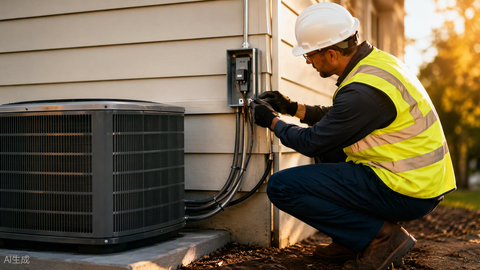
The disconnect location. "Within sight" means visible and not more than 50 feet away (NEC Article 100). A switch on the furnace cabinet, a cord-and-plug connection to a nearby receptacle, or a breaker in a panel in the same room all qualify. A breaker two floors up does not. Failing this is the number-one furnace electrical correction notice I see.
Condensate on high-efficiency units. A 95%+ furnace produces gallons of acidic condensate daily. The condensate pump needs power — and if you feed it from the furnace's own circuit downstream of the furnace switch, killing the furnace disconnect also kills the pump, which overflows onto the control board. Feed the pump from a separate receptacle circuit, or use a pump with a safety switch wired into the furnace's low-voltage circuit. Ten minutes of wiring saves a $400 board.
Door switches and float switches. Wire the condensate float switch in series with the thermostat's Y call (cooling) and the furnace's safety chain per the manufacturer diagram. I've seen float switches wired to kill only the AC while the furnace keeps making condensate in heat mode — that defeats the entire purpose.
Voltage drop on long runs. A furnace in a detached shop 150 feet from the panel changes the math. At 12A and 150 feet one-way, 14 AWG drops about 4.5% — past the 3% NEC informational-note target for branch circuits. Upsize to 12 AWG and the drop falls to roughly 2.8%. ECM blowers are especially intolerant of low voltage; they'll fault or cook their modules years early.
Electric Furnace Considerations
Electric furnaces are simple machines — resistance elements, sequencers, a blower — but they're the heaviest continuous load in most homes that have them. Three field realities:
1. Panel capacity comes first. A 20kW furnace needs 104A of panel capacity on a continuous basis. On a 200A service running a full NEC 220 load calculation, that furnace alone consumes over half the service. If the home also has electric water heating, a range, and a dryer, the load calc may say no — and the answer is a service upgrade or a heat pump, not a bigger main breaker.
2. Sequencer staging protects the grid and the bill. Elements should stage on in sequence, not slam on together. A 20kW furnace with all elements energizing simultaneously is an 83A step load; staged across 15-second intervals, the inrush is gentle. Verify sequencer timing during commissioning with a clamp meter — you should see the amperage step up in distinct increments.
3. The wire is expensive; price it honestly. A 2 AWG copper run of 60 feet is a meaningful material line item in 2026. Aluminum (with AA-8000 alloy, proper terminations, and antioxidant) at 1/0 for a 110A circuit is a legitimate cost saver permitted by NEC 310.16, but many jurisdictions and some manufacturers restrict aluminum branch circuits — check both before quoting. Our NEC wire sizing guide and ampacity chart have the full 75°C tables for both metals.
The 2026 Context: Heat Pumps vs. Furnaces
The electrification push and cold-climate heat pump improvements have changed what lands on the truck. In 2026, a growing share of "furnace replacements" are actually dual-fuel or full heat-pump conversions, and the electrical scope expands accordingly: an outdoor-unit circuit (typically 30–60A at 240V, sized per NEC 440 to the unit's MCA/MOCP nameplate values), often a new air-handler circuit, and frequently an aux-heat strip circuit sized exactly like an electric furnace.
| System Type | Typical Electrical Scope | Circuits Required | Panel Impact |
|---|---|---|---|
| Gas furnace replacement (like-for-like) | Reuse or refresh 15–20A 120V circuit | 1 | Negligible |
| Electric furnace, 15–20 kW | 80–110A 240V circuit(s), heavy wire | 1–2 | Major; load calc mandatory |
| Cold-climate heat pump, no strips | 240V outdoor circuit (MCA per nameplate) | 1–2 | Moderate |
| Heat pump + 10 kW aux strips | Outdoor circuit + 60A strip circuit | 2–3 | Major; often triggers service upgrade |
The efficiency math is why homeowners ask for this: a gas furnace converts fuel to heat at 80–96% efficiency, while a heat pump delivers a coefficient of performance (COP) of 2.0–4.0 — 200–400% "efficiency" in delivered heat per unit of electricity. At 3,412 BTU per kWh, a heat pump at COP 3.0 delivers about 10,236 BTU per kWh consumed. Whether that beats gas depends entirely on local utility rates, which is why we run the numbers per job rather than per brochure. Homes keeping a gas furnace as backup in dual-fuel setups need both circuits right — the heat pump's MCA/MOCP values and the furnace's 125% blower circuit — and a panel with room for all of it.
Disconnects, Whips, and Overcurrent Protection
For outdoor heat-pump and AC units, NEC 440.14 requires the disconnect within sight and readily accessible. For indoor furnaces, the "within sight" rule of 422.31/430.102 applies as covered above. A few stocking notes for the service truck:
- 60A non-fused pullout disconnects cover most residential condensers and heat pumps.
- Fused disconnects are required when the nameplate MOCP says "max fuse" rather than "max breaker or fuse" — read the label; HACR-rated breakers and fuses are not always interchangeable.
- Keep 15A and 20A single-pole breakers, furnace switches in covers, and ¾-inch flex whips on the truck. A failed inspection over a $6 switch is a profit killer.
Browse our circuit breakers for the panel side, and if the job includes surge protection — increasingly recommended with ECM blowers and inverter-driven heat pumps that die ugly deaths from transients — our SPD sizing guide applies the same logic to HVAC equipment.
Commissioning Checklist: Prove It Before You Leave
Every furnace electrical install gets the same five-minute verification before we leave the driveway:
| Check | Tool | Pass Criteria |
|---|---|---|
| Blower amp draw in heat mode | Clamp meter | ≤ nameplate FLA; circuit at ≤ 80% of breaker rating |
| Voltage at furnace under load | Multimeter | Within ±5% of nominal (114–126V on 120V circuits) |
| Disconnect operation | Physical test | Kills all ungrounded conductors; within sight of unit |
| Breaker-to-wire match | Visual + label | Conductor ampacity ≥ load × 1.25; breaker per NEC 240.6 |
| Condensate safety circuit | Bucket test on float | Float switch interrupts heat and cool calls |
The clamp-meter check catches more problems than everything else combined: an over-amping blower tells you about a dirty wheel, a mis-wired speed tap, or a failing ECM module before the customer calls back in February. I write the measured amperage and voltage on the inside of the furnace door with a paint pen — the next tech (often me, a year later) gets a baseline for free. On electric furnaces, add one more step: measure each element circuit individually with the strips staged on. An open sequencer or a dead element shows up immediately as a missing step in the amperage climb, and finding it at commissioning is a ten-minute fix instead of a no-heat callback at the first cold snap.
Code Cycle Reality: Which NEC Your Inspector Is Using
The "2026" in this guide's title is about the market, not the codebook. As of this writing, states are split across the 2017, 2020, and 2023 NEC, with a handful of jurisdictions on local amendments that predate all three. The furnace-relevant differences worth knowing:
- GFCI expansion (2020/2023). The 2020 NEC expanded GFCI protection to 250V receptacles in garages and basements, and the 2023 cycle widened it further. Most furnace circuits are hardwired and exempt, but the condensate pump's receptacle in a basement may now require GFCI — and a nuisance trip there overflows the pump. Know your cycle before you wire it.
- Surge protection (2020, 230.67). Dwelling-unit services now require a Type 1 or Type 2 SPD at service replacement or upgrade. If your furnace job triggers a panel change, the SPD is part of the scope — quote it, don't absorb it.
- Emergency disconnects (2020, 230.85). New and replaced services on one- and two-family homes need an outdoor emergency disconnect. Again: service-upgrade-triggering furnace jobs inherit this requirement.
I keep the AHJ's adopted-code one-pager taped inside the truck's permit folder, because the answer to "does this need GFCI?" changes at the county line around here. Five minutes on the building department's website beats a failed inspection every time.
Related Systems Worth Understanding
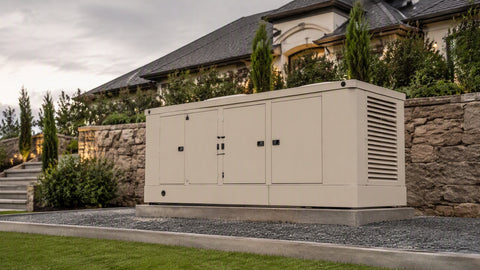
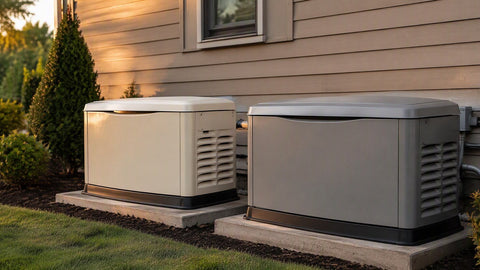
Furnace work rarely stays in its lane. The same panel that feeds the furnace feeds the water heater, the well pump, the EV charger, and increasingly a battery system or standby generator — and every one of those loads shows up in the same load calculation. Contractors who understand the whole stack win the bigger jobs: a customer replacing a furnace is often twelve months away from asking about standby generator backup or generator sizing for the outage that finally convinced them. Being the contractor who already knows their panel capacity, their gas meter size, and their load profile is worth more than any advertising.
The same NEC 220 load calculation that determines whether a 20kW electric furnace fits also tells you whether there's room for a Level 2 EV charger on the same service. I can't count the number of furnace swaps that turned into panel upgrades because the homeowner bought a Tesla three months after we finished the heat. Running the full load calc during the furnace estimate — not as an afterthought — positions you for the upsell and prevents the callback.
The Five Inspection Failures I See Every Season
After fifteen years of walking into other people's furnace installs, the failure list is remarkably stable. Learn it and you'll pass first inspection nearly every time:
| Failure | Why It Fails | The Fix |
|---|---|---|
| No disconnect within sight | NEC 422.31/430.102 — panel in another room doesn't count | Install a furnace switch or cord-and-plug at the unit |
| Shared branch circuit | Furnace requires a dedicated circuit | Pull a new home run; don't tap the laundry circuit |
| Undersized wire on electric furnace | 125% continuous-load rule ignored (NEC 424.3(B)) | Recalculate; 20kW needs 2 AWG Cu, not 3 AWG |
| Missing condensate safety | Float switch absent or wired to cool only | Wire float into the heat call chain per manufacturer diagram |
| Wrong overcurrent type on outdoor unit | Nameplate says "max fuse," installer used a breaker | Match the protection type to the nameplate MOCP |
The 20kW wire-size error deserves one more mention, because it's the only item on this list that's a genuine fire risk rather than a paperwork problem. The difference between 100A and 110A protection looks trivial on paper; at 104A of continuous load on a January night, it's the difference between a conductor running at 90% of its rating and one running over it, for hours at a time. I've replaced exactly one scorched air-handler whip in my career, and it was on a job where someone rounded the wrong direction. Round up. Always round up.
Service-Upgrade Decision Math
When the load calculation says the panel can't take the electric furnace or the heat-pump-plus-strips package, the conversation pivots to money. A residential service upgrade (200A to 200A with more spaces, or 100A/150A to 200A) typically runs $2,500–$5,500 in our market including the utility coordination, permit, and inspection. Against that, compare the alternative paths:
- Downsize the aux heat. Dropping from 15kW strips to 10kW in a dual-fuel design saves 26A of calculated load — often enough to pass the load calc. In a climate where strips run a handful of hours per year, this is usually the smart trade.
- Load-manage the strips. Listed load-management devices can interlock strip heat against the water heater or dryer, crediting the NEC 220.60-style diversity. More parts, more labor, but no new service.
- Keep the gas furnace. A like-for-like gas replacement adds essentially zero panel load. When the panel is full and the budget is real, high-efficiency gas is still a legitimate answer — I install them without apology where the numbers point that way.
The mistake is discovering the panel problem after the equipment is on site. Run the NEC 220 load calculation during the estimate, not during rough-in. It takes twenty minutes with a spreadsheet, and it's the difference between a profitable job and a change-order fight.
One more line item that belongs in every 2026 furnace quote: labor for coordination. Utility meter releases, inspection scheduling, and the gas-fitters' timeline all touch the electrical scope, and the contractor who prices only the wire and the breaker ends up donating the coordination hours. Our standard furnace-replacement electrical package carries a flat coordination line — customers see it, understand it, and stop being surprised when the inspector wants the disconnect moved six inches to the left.
Understanding AFUE and Electrical Impact
Annual Fuel Utilization Efficiency (AFUE) measures how much fuel becomes useful heat. An 80% AFUE furnace sends 20% of your gas money up the flue; a 96% AFUE unit wastes only 4%. The electrical impact of this efficiency jump is counterintuitive: high-efficiency furnaces often draw more electrical power than standard units because the ECM blower and draft inducer run longer and harder to extract every BTU.
A standard 80% furnace with a PSC blower might draw 6A total. A 96% modulating furnace with a variable-speed ECM blower can draw 10–12A — and that blower runs at lower speed for longer periods, making the circuit load more continuous. The circuit still lands on 15A or 20A, but the wire and breaker are working closer to their limit for more hours per day. This is why I never assume a replacement furnace reuses the old circuit without verification.
| Furnace Efficiency Class | Typical AFUE | Blower Type | Typical Circuit | Annual Electrical Use (est.) |
|---|---|---|---|---|
| Standard gas (80%) | 78–82% | PSC | 15A, 120V | 400–600 kWh |
| Mid-efficiency gas (90–93%) | 90–93% | PSC or ECM | 15A, 120V | 500–750 kWh |
| High-efficiency gas (95–98.5%) | 95–98.5% | ECM (variable) | 15–20A, 120V | 600–900 kWh |
| Electric resistance | 100% | ECM or PSC | 60–110A, 240V | 5,000–15,000 kWh |
| Cold-climate heat pump | 200–400% (COP) | ECM | 30–50A, 240V | 2,500–5,000 kWh |
Frequently Asked Questions
What size breaker does a gas furnace need?
Most gas furnaces need only a 15A or 20A 120V circuit — the real load is the blower motor. Size the circuit at 125% of the blower's nameplate full-load amps. A PSC blower drawing 8A lands on a 15A breaker; a large ECM blower at 11–12A belongs on a 20A circuit.
What size wire and breaker does a 20kW electric furnace need?
20,000W ÷ 240V = 83.3A; as a continuous load, NEC 424.3(B) requires 125% sizing: 83.3 × 1.25 = 104.2A. That means a 110A breaker (the next NEC 240.6 standard size above 104.2A) on 2 AWG copper (115A ampacity at 75°C). Many 20kW units split this into two factory-listed circuits — follow the unit's installation label.
Does a furnace need a disconnect?
Yes. NEC 422.31 and 430.102 require a disconnecting means within sight of the furnace — visible from the unit and within 50 feet. A furnace switch on the cabinet, a cord-and-plug connection, or a breaker in a panel in the same room can all satisfy this.
Can a furnace share a circuit with other outlets?
No. The furnace requires a dedicated branch circuit so a tripped shared breaker can't kill the heat — a frozen-pipe scenario in cold climates. Condensate pumps and humidifiers should be on their own receptacle circuits or wired with safeties into the low-voltage control circuit.
Is a heat pump cheaper to run than a gas furnace in 2026?
It depends on your utility rates. A heat pump at COP 3.0 delivers roughly 10,236 BTU per kWh. Compare your cost per kWh against your cost per therm of gas (100,000 BTU) times furnace efficiency. At typical 2026 rates, heat pumps win in mild climates and dual-fuel setups win in cold ones.
Do I need a panel upgrade for an electric furnace?
Often, yes. A 20kW furnace consumes 104A of continuous panel capacity. On a 200A service with other electric appliances, an NEC 220 load calculation frequently shows insufficient headroom, pushing the job toward a service upgrade — or toward a heat pump that delivers the same heat on a third of the amperage.
What is the difference between a PSC and ECM blower motor?
PSC (Permanent Split Capacitor) motors are single-speed, less efficient, and draw consistent amperage. ECM (Electronically Commutated Motor) motors are variable-speed, more efficient, and modulate airflow — but they draw more total power over time and are sensitive to voltage quality. ECM motors require clean power and benefit from whole-home surge protection.
Should I install a surge protector with a new furnace?
Yes — especially with ECM blowers and inverter-driven heat pumps, which are vulnerable to voltage transients. NEC 2020 requires a Type 1 or Type 2 SPD at service replacement or upgrade. Even on a like-for-like swap, adding an SPD at the panel protects the furnace's control board and blower module.
Furnace Electrical Supplies In Stock
- Circuit breakers — 15A through 200A, all major panels
- 4 AWG wire and 6 AWG wire for electric furnace circuits
- EV chargers — the other big 240V load competing for panel capacity
- EV charging installation costs — useful context when the load calc has to fit a furnace and a charger
- Conduit fill chart — for EMT runs to the mechanical room
- Conduit types compared — PVC vs. EMT vs. RMC for furnace and mechanical-room runs
- NEC wire sizing guide — full ampacity tables for Cu and Al
- SPD sizing guide — surge protection for ECM blowers and control boards
- Home battery backup systems — when the furnace needs power during an outage
- Standby generators for home — backup power for gas furnaces during outages