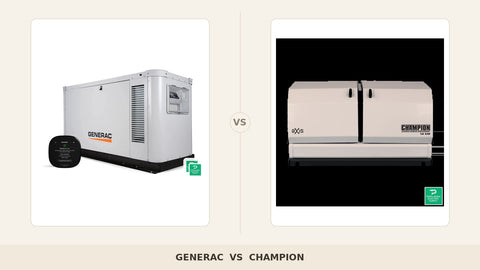
Sol-Ark vs Sungrow 2026: Hybrid Inverter Philosophies Compared
American off-grid-native 48 V architecture against the world's highest-volume hybrid platform. The spec sheets overlap; the design philosophies barely speak the same language.
We carry both lines — Sol-Ark and Sungrow — and the customers who ask for each arrive from different directions. The Sol-Ark buyer is usually building backup or off-grid: whole-home resilience, generator integration, a battery bank they chose themselves. The Sungrow buyer is usually building grid-tied solar-plus-storage: utility-scale pedigree, polished European-style engineering, and a price-per-watt that makes commercial developers pay attention. Both make excellent hybrids. They were raised in different markets and it shows in every menu screen.
The frame for this whole article: Sol-Ark optimizes for autonomy; Sungrow optimizes for efficiency and scale. Everything below is that sentence with numbers attached. If you're still at the "what is a hybrid inverter" stage, read our hybrid inverter explainer and the inverter buyer's guide first — this comparison assumes you know the topology.
| Dimension | Sol-Ark 12K / 15K | Sungrow SH-RS / SH-T residential hybrid series |
|---|---|---|
| Design heritage | Off-grid-first American hybrid | Global utility + residential giant (top-2 global inverter shipments) |
| Continuous output (flagship residential) | 9.6–12 kW | ~6–10 kW class in US residential; larger in three-phase |
| Battery voltage | 48 V low-voltage, brand-agnostic | High-voltage battery stacks (SBR series), proprietary pairing |
| Whole-home pass-through | 200 A native | Backup-box architecture; critical-loads or whole-home via backup box |
| Generator input | Native, any brand, tunable charge rate | Supported on newer revisions; verify per SKU |
| Parallel / stacking | Up to 12 units, split-phase native | Three-phase strengths; parallel residential options vary by market |
| Monitoring | Sol-Ark portal, installer-grade depth | iSolarCloud, polished, utility-grade fleet tools |
| Street price position | Premium 48 V hybrid | Typically 15–30% below Sol-Ark at comparable AC rating |
The battery-voltage row is the structural fork: 48 V low-voltage architecture (Sol-Ark) versus high-voltage stack architecture (Sungrow). It dictates battery choice, wiring practice, expansion cost, and service safety for the life of the system, so let's open it up properly.
A 48 V system pushes current. Twelve kilowatts at 48 V is 250 A DC before losses — 4/0 copper, class-T fusing, and lugs torqued to spec with a calibrated wrench, not enthusiasm. A high-voltage stack at 200–400 V moves the same power at 30–60 A, which means thinner wire, lower resistive loss, and higher round-trip efficiency — Sungrow's SBR-stack systems post charge/discharge path efficiencies a couple of points better than the best 48 V builds, and at utility scale that couple of points is a business model.
So why does 48 V refuse to die? Three reasons, all learned in the field. First, safety and service: 48 V is touch-safe territory for a trained homeowner; 400 V DC is not, full stop. Second, openness: the 48 V ecosystem — EG4, Pytes, Fortress, Trojan, Rolls — is the deepest, cheapest, most competitive battery market in solar. Third, expandability: adding 5 kWh to a 48 V bus is a rack battery and a settings change. Adding capacity to a high-voltage stack means buying the same vendor's modules, in their increments, at their price. I've watched a customer's generic 48 V bank survive two inverter platforms; I've never watched a proprietary HV stack survive anything but its own ecosystem.
| Attribute | 48 V low-voltage (Sol-Ark) | High-voltage stack (Sungrow SBR) |
|---|---|---|
| Battery current at 10 kW | ~210–230 A | ~25–50 A |
| DC cable for 10 kW, 10 ft run | 4/0 Cu or parallel 2/0 | 10–8 AWG |
| Round-trip efficiency (real-world) | ~90–93% | ~94–97% |
| Battery vendor choice | Open — dozens of brands | Proprietary stack modules |
| Expansion increment | ~5 kWh rack batteries, any time | Vendor stack modules only |
| Service safety | Low-voltage; trained-DIY serviceable | HV DC; licensed-tech territory |
| Best-fit project | Off-grid, backup, owner-maintained | Grid-tied solar+storage, commercial, fleet |
Sol-Ark's 200 A pass-through makes the inverter the front door of the house: meter feeds inverter, inverter feeds main panel, everything backs up, transfer in under 20 ms. One box, no subpanel, and smart-load outputs that shed the water heater automatically. It is the simplest whole-home architecture in the industry, and it's why Sol-Ark owns the rural-backup market.
Sungrow's residential approach routes backup through a dedicated backup box / changeover device. Done as a critical-loads design, it's clean and cheaper — you back up the fridge, the furnace blower, the well pump, and the internet, and let the grid own the water heater and the range. Done as whole-home, it requires the right backup-box configuration and should be specced carefully with your installer against your service size. Neither is wrong; they're different answers to "what must never go dark?" Our counter rule: if the honest answer is "the whole house," the 200 A pass-through architecture saves real install labor. If the honest answer is a 12-circuit critical list, Sungrow's box does it elegantly. The whole-home wattage guide helps you write that critical-load list with real numbers.
| Project profile | Continuous need | Surge events | Platform fit |
|---|---|---|---|
| Grid-tied solar + storage, city home, rare outages | Export-limited; 5–8 kW typical | Rarely exercised | Sungrow hybrid — efficiency and price win |
| Suburban backup, gas heat, well pump | 6–9 kW | Well pump LRA 3–4× | Either; Sol-Ark if whole-home, Sungrow if critical-loads |
| Rural whole-home, all-electric, 4-ton heat pump | 10–12 kW | Compressor LRA 60–100 A (fit a soft start) | Sol-Ark 15K, soft starter on the compressor |
| True off-grid homestead + shop | 12 kW+ with shop tools | Motors, welder, compressor | Two stacked Sol-Ark 15Ks; generator input mandatory |
| Small commercial, three-phase service | 20–50 kW | Site-specific | Sungrow three-phase hybrid / commercial line — its home turf |
The last row deserves emphasis: Sungrow's three-phase and commercial inverter depth is something Sol-Ark simply doesn't field. If your project has a three-phase service, the comparison is over before it starts. Conversely, if your project is a 48 V off-grid homestead with a generator and a welder, Sungrow's residential line isn't built for that life. Most arguments between these brands at trade shows are two people describing different projects.
The capacity math doesn't care about voltage class. Average load × hours of autonomy = usable kWh, then divide by your depth-of-discharge policy:
| Autonomy target | 1.0 kW avg load | 1.5 kW avg load | Usable bank needed |
|---|---|---|---|
| Overnight (12 h) | 12 kWh | 18 kWh | 12–18 kWh |
| One full day | 24 kWh | 36 kWh | 24–36 kWh |
| Two days (storm margin) | 48 kWh | 72 kWh | 48–72 kWh — pair with generator |
| Off-grid, 3-day design | 72 kWh | 108 kWh | Add generator; bank alone is uneconomic |
On a 48 V bus, 30 kWh is six rack batteries — a wall of value-priced iron. On an HV stack, it's roughly three SBR towers, at a meaningfully higher $/kWh with a cleaner footprint. Both work. The bank sizing guide, battery calculator, and off-grid storage math run the numbers for your specific loads.
On the AC side, both platforms follow the same arithmetic: continuous output × 1.25, then Tables 310.16 and 240.6. A 12 kW Sol-Ark: 50 A × 1.25 = 62.5 A → 4 AWG Cu on a 70 A breaker. A 10 kW-class Sungrow: 41.7 A × 1.25 ≈ 52.1 A → 6 AWG Cu on a 60 A breaker. Battery-side DC differs as tabulated above — 4/0 class-T territory versus 10 AWG — and the rapid-shutdown, disconnect, and grounding requirements land the same per NEC 690: our disconnect guide, grounding guide, ampacity chart, and conduit fill chart cover the whole layer. Interconnection limits — the 120% rule on your bus bar — are architecture-blind; check the bus bar guide before sizing either inverter for export.
Sol-Ark support is American, installer-channel, and answers with humans who commission the gear — we've had firmware questions resolved same-day. Sungrow is a global giant with the deepest supply chain in inverters, period; their US support has matured substantially, and their gear is what half the world's utility projects run on, which means replacement hardware will exist in 2035. The failure modes we've seen: Sol-Ark — fans and display boards, cheap and field-replaceable; Sungrow — very few field failures at all, but when an HV stack module faults, it's a vendor RMA, not a shelf part. Warranty terms on both have evolved; confirm the term on the exact SKU at purchase and register the gear the day it lands — unregistered hardware is the most common self-inflicted warranty wound we see.
Bottom line from the design desk: grid-tied solar-plus-storage with a critical-loads list and an eye on $/watt — Sungrow makes a strong, efficient case. Whole-home backup, off-grid, generator in the picture, batteries you want to own and expand on your own terms — Sol-Ark, and it isn't close. Cross-shoppers should also read Sol-Ark vs EG4 for the 48 V value horse race and Victron vs Sol-Ark for the component-built alternative. Live inventory sits in our hybrid inverter collection.
Sol-Ark's 15K takes ~19.5 kW of PV across its MPPTs — enough for any residential roof and most small ground mounts, with per-input current ratings that accept paralleled modern strings. Sungrow's residential hybrids run smaller PV ceilings matched to their battery pairing, which is correct sizing for grid-tied solar+storage but a real constraint if you're planning array expansion later. Both platforms need cold-weather Voc math done honestly — module Voc climbs ~0.3%/°C as temperature drops, and NEC 690.7 holds you to the site's record low. In our territory that means designing to -10°C on the coast and -25°C in the high desert; a 14-module string of 50 V-class modules that fits in October can overvolt in January. Run the math per string, keep a printed copy in the permit package, and don't let design software defaults from California spec your Oregon array.
A few scars worth sharing. On Sol-Ark jobs, the single most common callback in year one is Wi-Fi — the monitoring dongle dies behind a metal panel or the customer changes routers and assumes the inverter broke. Hardwire Ethernet where you can. On Sungrow jobs, the recurring lesson is battery-stack firmware pairing: stack and inverter firmware must match the compatibility matrix, and updates should be sequenced per the manual, not ad-libbed on a Friday afternoon. On both platforms, the commission-ending move is the same: pull the grid, watch the transfer, run the big loads, and photograph the settings screens. The five minutes that test costs has saved us more February service calls than any other habit we have. And torque the battery lugs with a calibrated wrench — we re-check every install at the one-year visit, and the ones that drifted were the ones done by feel.
One more counter observation: customers who read their monitoring weekly catch problems months early on either platform. The ones who never open the app find out from the power bill. Pick the system you'll actually watch — engagement is the cheapest reliability upgrade either brand sells.
Same job spec as we always use: all-electric 2,400 sq ft home, 10 kW array, 15 kWh usable storage, whole-home or critical-loads backup, grid-tied with export. Street pricing at writing — verify against live listings, because both brands move with the market.
| Line item | Sol-Ark open build | Sungrow hybrid + SBR stack |
|---|---|---|
| Inverter | Sol-Ark 15K, ~$7,500 | Sungrow residential hybrid, ~$3,500–$4,500 |
| Battery, ~15 kWh usable | 3 × 5.12 kWh 48 V racks, ~$4,800 | SBR stack ~16 kWh, ~$7,000–$9,000 |
| Backup / transfer hardware | Native 200 A pass-through, $0 | Backup box / changeover, ~$800–$1,500 |
| Install labor | ~$2,500–$4,500 | ~$3,000–$5,000 |
| Installed subtotal (pre-incentive) | ~$14,800–$16,800 | ~$14,300–$20,000 |
| Ownership style | Owner-expandable, multi-vendor | Vendor-stack, distributor service |
Notice the totals overlap — the internet's "Sungrow is always cheaper" claim dies at the battery line, because proprietary HV stack modules carry ecosystem pricing while generic 48 V racks ride the most competitive battery market in solar. Sungrow's real cost edge shows up when the critical-loads design lets you buy a smaller stack, and when commercial three-phase volume pricing enters the picture. Sol-Ark's cost edge shows up at expansion time and at the ten-year inverter swap. Price the five-year system, not the day-one invoice.
- Pick Sungrow for grid-tied solar-plus-storage with a defined critical-loads list, three-phase or commercial services, and any project where $/watt and round-trip efficiency drive the pro forma.
- Pick Sol-Ark for whole-home backup with 200 A pass-through, true off-grid, generator-integrated designs, 48 V battery freedom, and owners who intend to expand or service the system themselves.
- Look elsewhere entirely if you only want grid-tied solar with no storage — a plain string inverter beats both on ROI, and the ROI calculator will show you why.
Whichever platform you land on, size the storage honestly with the runtime calculator, keep the array math inside NEC 690.7, and commission with a live transfer test. The logo on the wall decides less than the quality of those three steps — we've serviced enough of both to say it plainly.
iSolarCloud is what a fleet-management platform looks like when a company with utility-scale DNA builds residential software: clean dashboards, portfolio views for installers with dozens of sites, alert routing, and polish that homeowners navigate without training. Sol-Ark's portal is the opposite school — every parameter exposed, dense data screens, remote configuration depth that our service techs genuinely use at 9 p.m. to talk a customer through a settings fix without a truck roll. For a single home, iSolarCloud is friendlier. For a service business managing a fleet, both work, and Sol-Ark's remote-parameter access has saved us more trips than any competitor's. The deeper divide is data ownership: Sol-Ark's ecosystem plays well with third-party monitoring and home-automation scrapers the DIY community maintains, while Sungrow's data lives in their cloud on their terms. Neither approach is wrong — but know which one you're buying, because you'll live with it as long as you own the roof.
A last word on where each platform is heading. Sungrow's R&D budget is one of the largest in power electronics, and their residential line inherits features — grid-forming modes, virtual-power-plant participation, EV-charger integration — from the commercial side on a fast cadence. Sol-Ark's roadmap moves slower but deeper into the autonomy niche: generator logic, load management, and stacking behaviors that matter precisely when the grid is gone. Buy for the project in front of you, not the roadmap — but if your project is a VPP-participating grid-tied home, Sungrow's trajectory aligns, and if it's a storm-hardened rural homestead, Sol-Ark's does. Check current inventory on the inverter catalog and price both builds before you commit; the numbers usually settle the argument faster than the forums do.
If you take one table from this article to the quote table, take the battery-architecture one. Every other difference between these brands can be worked around with good design — the 48 V versus high-voltage fork cannot. It decides your battery vendors, your expansion path, your service model, and your ten-year options in a single stroke, and it's reversible only with a forklift. Choose it consciously, write down why you chose it, and tape that note inside the equipment door. The next owner of your house will thank you.
And if you're still torn after the math, bring us the quote sheets. We sell both lines at the same counter, our margin doesn't change with the logo, and the only thing we're protective of is your February. The system that runs your house through an ice storm is the right system — everything else is brochure talk.
Is Sungrow as reliable as Sol-Ark?
Sungrow is one of the two largest inverter manufacturers on earth with utility-scale field data measured in gigawatt-years; their residential hybrids carry that engineering lineage. Sol-Ark has a decade-deep track record in American off-grid and backup installations specifically. Both are reliable. The difference is service model: Sol-Ark's US installer-channel support versus Sungrow's global distributor support, and proprietary HV stack modules versus open 48 V parts availability.
Can I use third-party batteries with a Sungrow hybrid?
Sungrow's residential hybrids are designed around their high-voltage SBR battery stack; that pairing is the product. Some regions and SKUs support additional approved HV batteries — confirm against the current compatibility list for your market. If battery-brand freedom matters, a 48 V platform like Sol-Ark accepts dozens of lithium and lead-acid banks natively.
Which is better for true off-grid living?
Sol-Ark, decisively. Native generator input with tunable charge rates, 48 V batteries you can source and service yourself, 200 A whole-home pass-through, smart-load shedding, and parallel stacking up to 12 units are all off-grid-first features. Sungrow's residential line is built for grid-interactive solar-plus-storage; it expects the grid to exist most of the time.
Why is high-voltage battery architecture more efficient?
Power loss scales with the square of current. A 10 kW draw at 48 V moves ~220 A through the DC path; at 350 V it moves ~30 A. Lower current means less resistive loss in cables, contacts, and conversion stages, which is why HV stacks post round-trip efficiencies several points higher than 48 V systems. The tradeoffs are proprietary battery lock-in and HV DC service requirements.
Can either system run my whole house during an outage?
Sol-Ark's 200 A pass-through makes whole-home backup the default architecture. Sungrow accomplishes whole-home backup through its backup-box changeover gear — capable, but it must be specced against your service size, and many Sungrow installs are cleaner as critical-loads designs. Write the honest list of what must stay on, then let that list choose the architecture.
What does the price difference actually buy?
Sungrow typically lands 15–30% below Sol-Ark at comparable AC ratings, with higher round-trip efficiency and polished fleet-grade monitoring. Sol-Ark's premium buys generator integration depth, 48 V battery openness, 200 A pass-through simplicity, stacking headroom, and US installer-channel support. On a grid-tied solar+storage project, Sungrow's value is real; on a backup-first project, Sol-Ark's features are worth more than the delta.