Q3 2026 finds the solar industry in one of its periodic phase transitions: module technology generations are turning over, storage attachment has flipped from option to default, and the policy scaffolding built over the last four years is now visible in actual factory output and interconnection queues. We watch these shifts from the distributor's seat — purchase orders, container bookings, and installer feedback tell us what's real months before the conference circuit catches up. Here are the ten trends actually moving hardware and money this quarter, with the numbers that back each one.
1. TOPCon and Back-Contact Modules Complete the PERC Succession
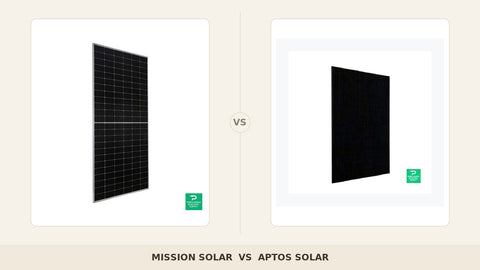
PERC's decade-long reign is over in every meaningful segment. TOPCon now dominates utility and C&I shipments, and back-contact (BC) architectures are taking the premium residential tier. Current grade-1 benchmarks tell the story:
| Technology | Grade 1 Min. Efficiency | Min. Power Output |
|---|---|---|
| TOPCon | 24.0% | 650 W |
| HJT (Heterojunction) | 23.8% | 645 W |
| BC (Back-Contact) | 24.2% | 655 W |
For buyers, the practical consequence is power density: 440–470W residential modules and 650W+ utility formats are now standard catalog items — see what's actually shipping in our 550W and 600W+ module categories and the current best solar panels of 2026 roundup. Every watt of module density trims racking, labor, and wiring cost per installed watt, which is why installers have stopped speccing last-generation formats even at clearance pricing.
The succession also changed what "degradation" means in a warranty. TOPCon's n-type architecture largely eliminates light-induced degradation (LID) and cuts first-year degradation to about 1%, with 0.4% per year thereafter — versus 2% first-year and 0.55% annually on the PERC modules they replaced. Over a 30-year life that difference compounds to roughly 4 percentage points of retained output, which is real money on a financed system. Back-contact modules add a different edge: no front-side metallization means higher active area and better low-light response, which is why BC commands the premium residential tier. We still get clearance inquiries for PERC stock; unless the discount is extreme and the project is cash-tight, the current generation wins on lifetime economics every time we run the numbers.
2. Perovskite Tandems Cross the Commercialization Threshold
Plan Procurement for the New Reality
After a decade of lab headlines, perovskite-silicon tandem cells entered pilot production in late 2025, with the first commercial tandem modules shipping in evaluation quantities this quarter. Certified tandem cell efficiencies above 33% — versus a ~24.5% ceiling for the best mass-market silicon — justify the hype; the remaining questions are field durability and encapsulation longevity, and the 25-year warranty question won't be answered until the data exists. Our read: tandems matter for 2027–2028 procurement planning, not for projects being built this year. Buy proven TOPCon or BC today, and let the early adopters fund the tandem learning curve.
For context on why the industry is so cautious: solar has watched promising cell technologies fail at the encapsulation and lamination stage before. Perovskite layers are moisture- and UV-sensitive, and the industry consensus is that first-generation tandem modules will carry 15-year product warranties rather than the 25–30 years standard on silicon. That warranty gap matters enormously for financed projects — a residential loan underwritten over 25 years can't carry a module warranted for 15. Expect the first tandem volumes to flow into space-constrained premium rooftops and specialty applications where watts per square foot justify the risk premium, exactly as happened with early HJT and early TOPCon. The technology will be transformative; it simply doesn't need to be on your roof this year.
3. Storage Attachment Becomes the Default, Not the Option
The defining residential statistic of 2026: storage attachment rates on new solar installs have crossed 60% in high-rate markets and sit near 40% nationally, up from under 15% three years ago. Net-metering erosion (NEM 3.0 in California led; other states followed), time-of-use rate spreads, and falling LFP cell prices all push the same direction. Hybrid inverters and AC-coupled batteries are absorbing the demand — browse the battery storage category and the battery sizing guide for how the sizing math works. Distributor view: we now stock roughly one battery kWh for every module kW in residential channels, a ratio that was 1:5 in 2023.
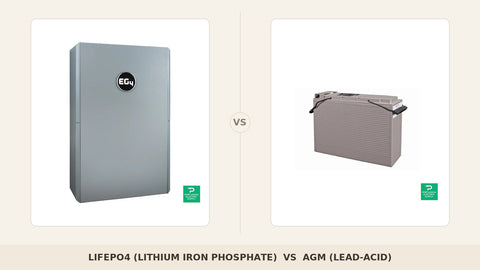
The chemistry story underneath the attachment rate is LFP's total victory in stationary storage. Lithium iron phosphate's cycle life (6,000+ cycles at 80% depth of discharge), thermal stability, and cobalt-free supply chain have made it the default for everything from 5kWh wall units to 100–200kWh commercial cabinets. NMC survives only where energy density is critical. Cell prices under $55/kWh at the pack level in Q3 contracts have pulled installed residential battery costs down roughly 20% year-over-year, which is the real engine behind the attachment rate — every dollar of battery cost decline converts another slice of solar-only quotes into solar-plus-storage. Homeowners comparing options should look at the 10kWh and 15kWh class units that currently dominate residential installs, and the home battery bank sizing guide for the capacity math.
4. Virtual Power Plants Start Paying Real Money
Enroll Every Eligible Battery in a VPP
VPP enrollment turned the home battery from a resilience purchase into a revenue asset. Program payouts have become concrete enough to underwrite:
VPP Earnings by State (2026)
| State / Program | Annual VPP Earnings | Program Type |
|---|---|---|
| California (DSGS / SGIP) | $500–$1,500+ | Cash or bill credit |
| Massachusetts (ConnectedSolutions) | $750–$1,500 | Seasonal summer dispatch |
| New York | $500–$1,200 | Utility-managed |
| Minnesota (new $430M program) | $600–$1,200 | Launched Q1 2026 |
| Texas (ERCOT pilot) | $400–$900 | Wholesale market participation |
Stacked against typical battery installed costs of $9,000–$14,000, annual VPP revenue of $500–$1,500 meaningfully shortens payback — and utilities get dispatchable capacity cheaper than peaker plants. Expect enrollment caps and program waitlists to be the Q4 story; the economics are good enough that demand is outrunning program budgets. Pair this trend with smart charge discipline — our 20–80 battery rule explainer covers how daily cycling depth interacts with VPP dispatch.
The structural shift behind the payouts is worth naming: grid operators have stopped treating distributed batteries as rounding errors. Aggregated residential fleets in California now deliver several hundred megawatts of evening dispatch during heat events — capacity that displaces gas peakers at a fraction of their fixed cost, which is precisely why the programs can pay what they pay. Enrollment friction has collapsed too: what required a paper application and an engineering review in 2023 is now an in-app toggle on the major battery platforms, with the aggregator handling telemetry and settlement. For battery owners, the due-diligence questions are dispatch depth (how hard will they cycle your pack?), reserve floors (what charge level is protected for your own backup?), and exit terms. Read those three clauses and a VPP enrollment is the closest thing to free money in residential energy right now.
5. AI-Driven O&M Moves From Pilot to Standard Practice
On the operations side, machine-learning fault detection has matured from vendor demos into contract-standard tooling for commercial portfolios. Documented portfolio-level results:
| Metric | Improvement |
|---|---|
| Unplanned downtime (inverters/transformers) | Up to 18% reduction |
| Maintenance costs | 12–20% reduction |
| Repair speed | Up to 24% faster |
| Compliance reporting | Strengthened through AI-driven documentation |
The distributable insight for smaller installers: the same fault-detection capability is being bundled into residential monitoring platforms at no added cost, and it's quietly becoming a competitive requirement. An installer offering fleet-wide AI diagnostics closes maintenance contracts that a truck-roll operator can't match.
The mechanics are worth understanding. These platforms ingest per-inverter telemetry at one-to-five-minute intervals, build a normalized performance model per array against weather-adjusted expectations, and flag deviations — a string clipping 8% below its siblings, a tracker row lagging at a specific sun angle, an inverter whose insulation-resistance readings are drifting. Two years ago this required a data-science team; today it's a per-site subscription bundled with monitoring. The labor arbitrage is the point: one remote analyst now effectively watches what used to require quarterly site walks, and truck rolls get dispatched against diagnosed faults with parts already pulled. We've watched partner installers cut their cost-per-watt of O&M by a third in eighteen months, and the savings show up in their maintenance-contract win rates.
6. Domestic Manufacturing Capacity Finally Shows Up in the Supply Chain
The factory announcements of 2023–2024 are producing modules in 2026. US module nameplate assembly capacity passed 60 GW annually, with cell capacity — the real bottleneck — climbing past 20 GW. Domestic-content bonus compliance (the 10% ITC adder) is now routinely achievable with mainstream Jinko, Trina, LONGi, JA Solar, and Canadian Solar product lines assembled or manufactured stateside. Tariff and AD/CVD uncertainty persists at the cell level, so procurement teams are qualifying dual supply chains — domestic first, Southeast Asia second — on every multi-megawatt buy.
Bonus Trend: Domestic Manufacturing Expansion
The underappreciated part of this trend is component depth. Module assembly gets the headlines, but the domestic chain now extends to racking, trackers, and — critically for installers — balance-of-system items like wire and rapid-shutdown devices. The remaining import dependencies are cells (improving), glass, and backsheets. For projects chasing the 10% domestic-content ITC adder, the 2026 guidance's adjusted percentage requirements are now achievable with careful BOM selection, and we're seeing the bonus decide module sourcing on roughly a third of the commercial quotes that cross our counter. The policy risk cuts both ways: any change to ITC bonus rules or tariff schedules re-prices these decisions overnight, which is why dual qualification is the professional standard rather than a luxury.
7. Module Prices Find a Floor — and Stay There
The brutal module price deflation of 2023–2025 (TOPCon utility modules fell below $0.10/W FOB at the trough) has ended. Consolidation among second-tier Chinese manufacturers, polysilicon price stabilization, and capacity discipline have put a floor under prices; Q3 contract pricing for utility TOPCon sits 15–25% above the 2025 trough. For project economics this is background noise — modules are 15–20% of installed cost — but for procurement timing it matters: the "wait six months and buy cheaper" strategy that worked for three straight years no longer pays. If your pipeline needs modules, book them.
Two procurement practices are emerging from the price-floor era. First, shorter quote validity: distributors and installers alike have moved from 30-day to 7–14-day pricing windows, because nobody wants to eat a reprice on a booked container. Second, return of forward-buying: developers with Q4 and Q1 projects are locking allocations now at fixed prices rather than playing the spot market, a behavior that disappeared during three years of relentless deflation and has returned with the floor. For residential buyers the impact is gentler — module costs are a modest share of a home system's price — but the era of delaying a project in hopes of cheaper panels is over, and quotes deserve a fresh look if yours is more than a month old.
8. Agrivoltaics Scales Into a Real Segment
Dual-use solar on farmland has graduated from pilot to pipeline, with project economics now supported by crop-yield data showing partial-shade benefits for certain crops and grazing revenue stacking under elevated arrays. Segment structure as of mid-2026:
| Dimension | Dominant Segment | Market Share |
|---|---|---|
| System type | Overhead/elevated PV systems | >68% |
| Application | Crop farming | ~56% |
| Tracking | Fixed-tilt systems | ~69-70% |
| Module type | Bifacial modules | ~52-75% |
| End user | Farmers & agribusiness | >55% |
| Region | North America | ~34.8% |
Hardware implications we see directly: elevated racking systems, wider row spacing for equipment access, and higher-bifaciality modules are all growing order lines. Watch permitting — agrivoltaic projects thread agricultural land-use rules that vary county by county, and early engagement with the county planning office remains the schedule-saver.
The financing angle is what converted skeptics this year. Farm operators aren't choosing between agriculture and solar; they're stacking land-lease income or direct generation revenue on top of farm income, and lenders have developed underwriting templates for the combination. Sheep grazing under arrays is the proven model — vegetation management contracts replace mowing costs on the solar side while the rancher gets paid pasture — and shade-tolerant specialty crops are demonstrating yield parity or better under 30–40% array coverage in peer-reviewed trials. For equipment buyers, note that agrivoltaic racking carries different structural loads (taller piles, wind exposure on elevated structures) and wire-management requirements; it isn't just standard racking on longer legs.
9. Interconnection Reform Starts to Unclog the Queue
The interconnection backlog — over 2,600 GW of generation and storage waiting in US queues entering this year — is finally being attacked with structural reforms: cluster studies replacing serial processing, financial readiness requirements clearing speculative entries, and transmission providers publishing hosting-capacity maps. Queue withdrawal rates have climbed (a feature, not a bug — speculative projects are dying early), and median time-to-study is falling in the reformed ISO territories. For developers, the actionable trend is simple: projects in reformed territories with completed site control are moving; projects banking on queue position in unreformed territories are not. Allocate your development capital accordingly.
10. Solar + EV + Home Energy Converges Into One Sale
The single biggest go-to-market shift of 2026: the residential sale is no longer "solar" but an integrated energy package — panels, hybrid inverter, battery, EV charger, and a home energy manager — quoted in one visit. Average residential ticket sizes are up 35–50% where installers have made the transition, attachment economics improve for every component, and the customer's payback argument strengthens with each stacked load. The installers struggling this year are the ones still selling panels alone into time-of-use markets; the ones thriving have retrained their sales teams around whole-home energy. Our solar kit buyer's guide shows how the component stack fits together for the DIY and contractor segments.
The convergence runs deeper than bundling. Bidirectional EV charging pilots are turning trucks into 100+ kWh mobile batteries; home energy managers are arbitraging time-of-use spreads across solar, battery, EV, and heat-pump water heaters simultaneously; and utilities are beginning to offer integrated tariffs that reward the whole orchestrated package. The technical enabler is the hybrid inverter plus energy manager stack — the same box that backs up the house now dispatches every electron in it. For homeowners, the practical advice is to buy the architecture that keeps options open: a hybrid inverter with a battery-ready port and an EV-charger circuit roughed in today costs marginally more and preserves every upgrade path. For the industry, the convergence explains why inverter manufacturers increasingly describe themselves as energy-management companies — the silicon content of the sale keeps shifting from panels to power electronics and software.
What the Ten Trends Add Up To
Implications for the Supply Chain
Read together, these trends describe an industry maturing out of its subsidy-adolescence into infrastructure adulthood: technology generations turning over on schedule, storage as standard equipment, software extracting more value from the same hardware, and supply chains regionalizing. The winners this quarter — manufacturers, installers, and buyers alike — are the ones treating solar as an energy system rather than a panel transaction.
What It Means for Buyers Right Now
Trend-watching is only useful if it changes a decision, so here's the Q3 buyer translation. If you're procuring modules: book now — the price floor is in, TOPCon and BC availability is strong, and domestic-content options are real. If you're a residential customer: quote solar-plus-storage as one system, enroll in your utility's VPP if offered, and choose an installer fluent in whole-home energy rather than panels alone. If you're a commercial developer: prioritize territories with reformed interconnection queues, qualify dual module supply chains, and spec AI-driven O&M into your operating budget from day one — the 12–20% maintenance reduction documented above pays for the monitoring platform several times over. And if you're a distributor watching the same signals we are: stock depth matters more than spot price in a rising market.
Trend-by-Trend Quick Reference
| # | Trend | Status (Q3 2026) | Who Should Act Now |
|---|---|---|---|
| 1 | TOPCon/BC module succession | Complete in mainstream catalogs | All buyers — spec current-gen only |
| 2 | Perovskite tandems | Pilot shipments, evaluation stage | 2027+ planners, not 2026 projects |
| 3 | Storage attachment default | ~60% in high-rate markets | Every residential quote |
| 4 | VPP monetization | $400–$1,500+/yr documented | Battery owners in program states |
| 5 | AI-driven O&M | Contract-standard on portfolios | Commercial owners; installers |
| 6 | US manufacturing ramp | 60 GW module / 20 GW cell capacity | ITC-bonus-driven procurement |
| 7 | Module price floor | +15–25% off 2025 trough | Anyone with a pipeline — book now |
| 8 | Agrivoltaics scaling | Segment maturity, NA ~35% share | Ag landowners, rural developers |
| 9 | Interconnection reform | Queue times falling in reformed ISOs | Utility-scale developers |
| 10 | Whole-home energy convergence | Ticket sizes +35–50% | Installers and residential buyers |
Frequently Asked Questions
7. BESS Attachment Becomes the Default
What is the biggest solar industry trend in Q3 2026? Storage attachment reaching default status — roughly 60% of new residential installs in high-rate markets now include batteries — combined with TOPCon and back-contact modules completing the industry's transition away from PERC technology.
Are perovskite tandem solar panels available to buy in 2026? Only in pilot and evaluation quantities. Commercial tandem modules exceeding 33% cell efficiency are shipping for testing, but mainstream procurement should stay with proven TOPCon or back-contact modules until field durability data matures.
How much can a home battery earn in a virtual power plant? Documented 2026 programs pay $400–$1,500+ annually depending on state and program structure, with California, Massachusetts, and New York programs at the top of the range.
Are solar panel prices going up or down in Q3 2026? Up modestly. Utility TOPCon contract pricing sits 15–25% above the 2025 trough as manufacturer consolidation and capacity discipline put a floor under module prices.
What is agrivoltaics? Dual-use solar installations that share land between PV generation and agriculture — elevated arrays over crops or grazing. It has become a distinct market segment, with North America holding roughly a third of global capacity.
Is US-made solar equipment actually available now? Yes. US module assembly capacity exceeds 60 GW annually and domestic cell capacity has passed 20 GW, making domestic-content ITC bonus compliance routinely achievable with mainstream brands.
Tracking these shifts is literally our day job at Portlandia Electric Supply — the container bookings and installer orders behind this article are the same signals we use to stock the warehouse every week. If any of these ten trends touch a project you're planning, our team can translate the trend line into a bill of materials, a delivery schedule, and a firm quote.