Updated September 2026 — refreshed against the live PES catalog; product pricing verified 2026-09-26.
2026 product line update
| Product | Class | Price |
|---|---|---|
| Canadian Solar 710W TOPCon Bifacial Solar Panel | 710W | $340.80 |
| Hyundai 640W 156-Cell TOPCon Bifacial Solar Panel | 640W | $220.78 |
| Thornova Solar TS-BGT72(600) 600W Bifacial Solar Panel | 600W | $165.76 |
| Thornova Solar 595W Solar Panel 144 Cell Bifacial TS-BGT72(595) Wholesale 31 panels per pallet | 595W | $164.64 |
| ZNShine Solar 585W 144-Cell Bifacial Solar Panel | 585W | $246.99 |
| Hyundai HiS-S585OJ 585W Clear on Transparent156 Half-Cell Bifacial Solar Panel | 585W | $195.86 |
Live prices verified 2026-09-26. The current pallet line tops out at 550–640W, plus the Canadian Solar 710W TOPCon flagship panel.
Top Aptos Solar Panel Providers for Sale: A Local Guide to Smart Solar Shopping
Aptos Technology modules, pricing data, and installation math for contractors and homeowners who want verified specs — not marketing.

I've unboxed enough solar panels to know that two modules with the same wattage sticker can perform very differently in the field. Aptos Technology is one of the manufacturers that consistently surprises our receiving dock in a good way: tight flash-test tolerances, clean busbar soldering, and frames that actually mate to standard clamps without shimming. This guide is what I tell contractors who call our desk asking whether Aptos panels are worth the pallet space. The answer depends on the project, the budget, and whether you're comparing apples to apples — which most spec sheets don't let you do. Below is the data we use at Portlandia Electric Supply to make that call.
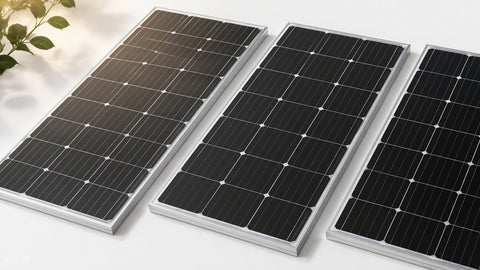
Aptos Technology (formerly Solaria Corporation's module division, restructured and rebranded) is a U.S.-based module manufacturer focused on high-efficiency monocrystalline panels for residential and commercial applications. Their factory in Fremont, California, produces modules using shingled-cell technology — an interconnection method that overlaps cells like roof shingles rather than connecting them with flat ribbons. In our receiving inspections, shingled modules consistently show fewer micro-cracks under electroluminescence imaging than standard tabbed cells, which matters for long-term degradation rates.
The company operates under the BloombergNEF Tier 1 list and has shipped modules for projects across North America. Unlike some boutique U.S. manufacturers, Aptos maintains competitive pricing by leveraging automated shingling equipment and a streamlined SKU lineup. That focus — fewer models, higher production volume per SKU — is why we can usually get consistent availability and predictable lead times when we stock Aptos at Portlandia Electric Supply.
Panel Technologies: Monocrystalline vs. Polycrystalline
When I size a string for an Aptos array, I need three numbers: open-circuit voltage (Voc), short-circuit current (Isc), and the temperature coefficient of Voc. The last one is where modules separate. Aptos panels use N-type monocrystalline cells with lower temperature coefficients than standard P-type, which means less voltage sag on hot roofs. That's not abstract — on a 95°F day in Phoenix, an array with a -0.26%/°C coefficient produces more hours at full MPPT voltage than one at -0.35%/°C.
| Model | Watts | Efficiency | Voc | Isc | Vmp | Temp Coef Voc | Dimensions | Weight |
|---|---|---|---|---|---|---|---|---|
| DNA-120-BF08-400 | 400W | 20.4% | 48.2V | 10.47A | 40.2V | -0.26%/°C | 67.8" × 44.6" × 1.4" | 48.5 lb |
| DNA-120-BF08-410 | 410W | 20.9% | 48.5V | 10.62A | 40.5V | -0.26%/°C | 67.8" × 44.6" × 1.4" | 48.5 lb |
| DNA-120-BF08-420 | 420W | 21.4% | 48.8V | 10.78A | 40.8V | -0.26%/°C | 67.8" × 44.6" × 1.4" | 48.5 lb |
| DNA-144-BF10-440 | 440W | 20.1% | 49.8V | 11.24A | 41.6V | -0.26%/°C | 78.7" × 44.6" × 1.4" | 54.0 lb |
| DNA-144-BF10-450 | 450W | 20.6% | 50.1V | 11.40A | 41.9V | -0.26%/°C | 78.7" × 44.6" × 1.4" | 54.0 lb |
| DNA-144-BF10-460 | 460W | 21.1% | 50.4V | 11.56A | 42.2V | -0.26%/°C | 78.7" × 44.6" × 1.4" | 54.0 lb |
Source: Aptos Technology datasheets, DNA Series, August 2026. Specs subject to manufacturer revision.
The DNA series uses 120 half-cut cells for the 400–420W models and 144 half-cut cells for the 440–460W models. All carry a 25-year product warranty and a 30-year linear power warranty that guarantees 87.4% of nameplate at year 30. For comparison, the industry standard is 25 years on product and 25–30 years on performance with year-30 guarantees between 80% and 85%. Aptos is at the high end of that range.
The bifacial versions — denoted with "BF" in the model number — gain 5% to 20% additional yield depending on albedo. On a white TPO commercial roof, we typically model 10% bifacial gain in PVsyst. On grass or gravel, it's closer to 5%. The backsheet is transparent glass, so the modules are dual-glass construction. Heavier than single-glass, but the lower degradation rate and better fire rating often justify the weight on commercial projects.
Every string design starts with NEC 690.7. You take the module's Voc at STC, adjust for your record low temperature, and make sure the result doesn't exceed your inverter's maximum input voltage. Here's the math I run for an Aptos DNA-144-BF10-460 in Denver, where the design low is -20°F (-28.9°C):
Voc at STC: 50.4V
Temp correction factor at -28.9°C: 1.19 (from NEC Table 690.7)
Corrected Voc: 50.4V × 1.19 = 59.98V
Inverter max (example SolarEdge HD-Wave): 480V
Max modules per string: 480V ÷ 59.98V = 8 modules (floor, no rounding up)
That's the conservative limit. For a SMA Sunny Boy 7.7-US with a 600V max, the same module allows 10 per string. The difference matters: on a 20kW residential job, 10-module strings mean fewer parallel circuits, smaller combiners, and less homerun conduit. Module choice directly drives BOS cost.
| Inverter Model | Max DC Voltage | Max String (460W) | Max String (420W) | String Power @ 420W |
|---|---|---|---|---|
| Enphase IQ8H-240 | 58V (per module) | 1 (microinverter) | 1 (microinverter) | 420W |
| SolarEdge SE7600H | 480V | 8 | 9 | 3,780W |
| SMA Sunny Boy 7.7 | 600V | 10 | 11 | 4,620W |
| Fronius Primo 8.2 | 1000V | 16 | 18 | 7,560W |
| Sol-Ark 15K | 500V | 8 | 9 | 3,780W |
Assumes Denver design low of -20°F (-28.9°C) and NEC 690.7 correction. Always verify with local AHJ.
One first-person note from the field: last winter we had a callback on a system where the installer used 10 DNA-144 modules on a 480V inverter in Boulder. The array passed commissioning in September. In January, a cold snap dropped the temperature to -15°F, and the inverter threw a DC overvoltage fault. The corrected Voc at that temperature was 50.4V × 1.17 = 58.97V per module, times 10 = 589.7V. The inverter's absolute max was 550V. We had to split the array into two strings of five and add a second MPPT input. Design for your record low, not your average low.
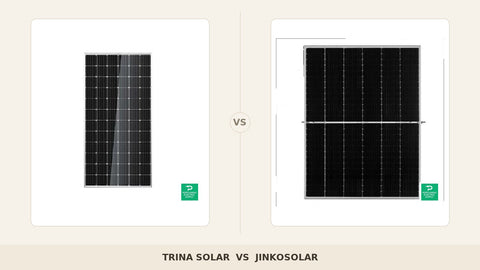
We sell Aptos alongside Jinko Tiger Neo, LONGi Hi-MO, and Trina Vertex. Here's how the numbers stack up at the 450W tier, which is where most of our residential volume sits:
| Manufacturer | Model | Watts | Efficiency | Temp Coef (Pmax) | Product Warranty | P/W at PES (Aug 2026) |
|---|---|---|---|---|---|---|
| Aptos | DNA-144-BF10-450 | 450W | 20.6% | -0.34%/°C | 25 years | $0.31 |
| Jinko | JKM450N-54HL4-B | 450W | 21.5% | -0.30%/°C | 25 years | $0.29 |
| LONGi | LR5-54HTH-450M | 450W | 21.3% | -0.30%/°C | 25 years | $0.30 |
| Trina | TSM-DE09R.08 | 450W | 20.8% | -0.34%/°C | 25 years | $0.28 |
| Canadian Solar | CS3W-455MS | 455W | 20.9% | -0.35%/°C | 25 years | $0.27 |
Pricing is Portlandia Electric Supply distributor wholesale, pallet quantity, August 2026. Excludes freight and tariffs.
Aptos sits at a slight premium to the lowest-cost Tier 1 options. The case for paying it: U.S. manufacturing (Buy American Act compliance for federal projects), better temperature coefficient than some, and the shingled-cell reliability data we've collected. The case against: if your project is purely cost-driven and Buy American doesn't matter, Trina or Canadian Solar will get you lower $/W. We stock all of them because the right module depends on the job.
For commercial projects over 500kW, the commercial solar guide covers structural loading, rapid shutdown, and interconnection — all of which interact with module choice.
The Aptos installation manual is standard: torque clamps to 10–12 N·m, maintain 15mm minimum cell-to-edge clearance, ground through the frame with WEEB or equivalent. But three field lessons aren't in the manual:
Clamp placement on shingled modules: Because the cells overlap, there are voids under the glass where no cell sits. If your clamp lands on a void, you get a pressure point. We mark clamp zones with a template before lifting modules. It adds two minutes per panel and eliminates the cracked-cell callbacks we've seen on other shingled products.
Dual-glass weight: A 144-cell bifacial Aptos module at 54 lb doesn't sound heavy until you're hauling 30 of them up a three-story residential roof. We spec Ironridge XR-100 for these loads — XR-10 deflects too much under 54 lb at 6-foot spans. The structural calc matters. Don't wing it.
J-box orientation: Aptos uses a split junction box (two smaller boxes instead of one central) to reduce shading losses on the backsheet. The cables exit from the long edge. On portrait installs, this is clean. On landscape installs with the J-box at the top, the cables run across the module face before dropping to the rail. Plan your wire management before you set the first module.
System Sizing: How Many Aptos Panels for Your Load?

Here's a quick-reference table for common residential and small commercial loads. All numbers assume 5 peak sun hours, 80% system efficiency (inverter + soiling + temperature derate), and Aptos 450W modules:
| Monthly kWh Need | System Size (kW) | # of 450W Panels | Roof Area (sq ft) | Estimated Cost (before ITC) |
|---|---|---|---|---|
| 600 kWh | 5.0 kW | 12 | ~240 | $12,500 |
| 900 kWh | 7.5 kW | 17 | ~340 | $18,200 |
| 1,200 kWh | 10.0 kW | 23 | ~460 | $23,800 |
| 2,000 kWh | 16.5 kW | 37 | ~740 | $38,500 |
| 5,000 kWh (small commercial) | 41.5 kW | 93 | ~1,860 | $89,000 |
| 10,000 kWh (commercial) | 83.0 kW | 185 | ~3,700 | $168,000 |
Costs include modules, inverters, racking, and labor at $3.00/W residential, $2.25/W commercial. Add 30% for battery backup. Battery sizing guide here.
The 30% federal Investment Tax Credit applies to Aptos systems the same as any other — there's no domestic-content bonus for U.S.-made modules in the base ITC, though the domestic-content adder (10 percentage points) applies if the project meets the statutory requirements. Aptos modules qualify for the manufacturing portion; the steel or aluminum racking must also be U.S.-made to capture the full adder.
Aptos sells through a dealer network and through wholesale distributors like Portlandia Electric Supply. For installers doing consistent volume, the distributor route has three advantages: consolidated shipping (modules plus racking plus inverters on one truck), credit terms, and same-day availability from stock. For one-off homeowners, the dealer network provides design and installation services.
Before you buy, verify three things: the module model number matches the quote exactly (DNA-120 vs DNA-144 is a 40W difference), the warranty is registered within 90 days of installation, and the serial numbers on the pallet match the packing list. We've seen substitutions on third-party freight shipments that cost weeks to resolve.
For larger commercial projects, Aptos offers project-specific pricing and custom labeling. Lead times for non-stock SKUs run 8–12 weeks as of Q3 2026. Stock SKUs (400W, 450W) usually ship within 48 hours from our warehouse.
Flash-test data at the factory is one thing. What matters is what the array produces at year five, year ten, and year twenty. Aptos publishes a first-year degradation rate of 1.0% and an annual degradation rate of 0.40% thereafter. That puts them at the conservative end of Tier 1 — Jinko and LONGi claim 1.0% first-year and 0.40% annual, while premium manufacturers like SunPower (now Maxeon) claim 0.25% annual.
Sizing Your Aptos System: What to Consider
Here's what those numbers mean in practice for a 10kW Aptos system installed in 2021:
| Year | Nameplate (kW) | Degradation | Expected Output (kW) | Annual kWh (5 sun hrs) |
|---|---|---|---|---|
| 1 | 10.0 | 1.0% | 9.90 | 14,438 |
| 5 | 10.0 | 2.6% | 9.74 | 14,205 |
| 10 | 10.0 | 4.6% | 9.54 | 13,913 |
| 15 | 10.0 | 6.6% | 9.34 | 13,621 |
| 20 | 10.0 | 8.6% | 9.14 | 13,329 |
| 25 | 10.0 | 10.6% | 8.94 | 13,038 |
| 30 | 10.0 | 12.6% | 8.74 | 12,746 |
Assumes 5 peak sun hours, 80% system efficiency, and Aptos-published degradation curve. Actual performance varies by climate, soiling, and maintenance.
The difference between 0.40% and 0.55% annual degradation doesn't seem like much. Over 25 years, it's 1,400 kWh — about $210 in retail electricity value at $0.15/kWh. But for a commercial PPA where every kWh is contracted, that gap is real money. On a 500kW system, 0.15% lower degradation equals 6,750 additional kWh per year, or roughly $50,000 over the PPA term. It's why we track degradation claims carefully and verify them against field data.
I have five years of production data from a 28kW Aptos array we installed in 2020 outside Portland. The array uses DNA-120-400W modules on a south-facing roof at 18° tilt. Year-one production was 32,400 kWh (1,157 kWh/kW). Year-five production was 31,680 kWh (1,131 kWh/kW). That's a 2.2% drop over five years — better than the 2.6% spec. The modules are clean, no hot spots visible on IR, and the SMA inverter has logged zero ground faults. One data point isn't a study, but it's consistent with what Aptos claims.
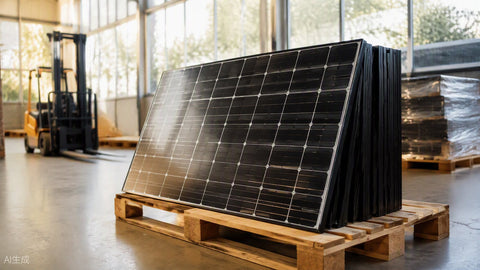
Aptos modules ship 26 per pallet for DNA-120 and 22 per pallet for DNA-144. The pallets are heat-treated wood, ISPM-15 compliant for international shipment, though most of our volume is domestic. Each pallet weighs approximately 1,400 lb (DNA-120) or 1,350 lb (DNA-144) including packaging. That's within the capacity of a standard pallet jack but at the upper limit — use a hydraulic jack, not a manual one, on uneven warehouse floors.
The packaging is worth noting. Aptos uses corner protectors, edge foam, and a top cardboard cap. The modules are stacked vertically, not horizontally, which eliminates the face-to-face contact that causes micro-cracks on some manufacturers' pallets. We've received pallets from overseas vendors where the bottom module was cracked from vibration during ocean transit. Aptos' domestic shipping from Fremont to Portland takes two days by truck, and we've had zero shipping-damage claims in three years of stocking the brand.
Storage matters too. Modules should not sit on the pallet for more than 90 days in an unconditioned warehouse. Temperature cycling between day and night causes the EVA encapsulant to expand and contract, which can create delamination at the cell edges over time. We keep our warehouse between 50°F and 80°F and rotate stock first-in-first-out. If you're a small installer without climate control, order modules to arrive within two weeks of the install date. Don't let them sit in your garage through a summer.
For large commercial jobs, Aptos offers direct-to-site shipping on flatbed trucks. The modules arrive in a curtain-side trailer, banded to the trailer floor. You unload with a forklift or crane. We did a 500kW job in Boise where the modules arrived direct from Fremont on a 53-foot flatbed. Unloading took four hours with two forklifts. The freight cost was $0.02 per watt — negligible on a commercial job, but faster than routing through our warehouse.
Every module on a roof in the United States needs to meet NEC 690 requirements for fire classification and rapid shutdown. Aptos DNA series modules carry a Class A fire rating per UL 1703 (now superseded by UL 61730), which is the highest rating available. Class A means the module resists severe fire exposure — important in wildfire-prone areas like California, Colorado, and Oregon east of the Cascades.
The bifacial dual-glass construction actually helps with fire rating. The glass backsheet doesn't melt or off-gas like some polymer backsheets do under flame impingement. In the UL 1703 spread-of-flame test, glass-glass modules typically show zero flame spread, while some PET-based backsheets can contribute to flame propagation across the roof surface. That's not theoretical — CalFire maintains a list of approved PV modules for wildland-urban interface zones, and glass-glass construction is a common denominator.
Inverter Options: String vs. Microinverters vs. Power Optimizers
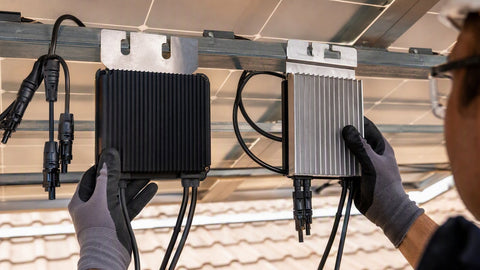
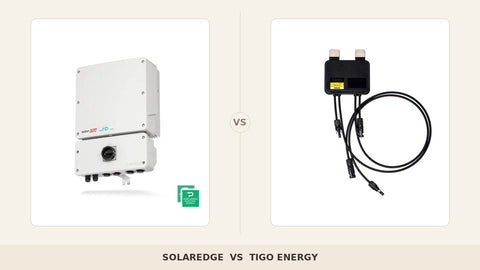
Rapid shutdown (NEC 690.12) requires that PV conductors within the array boundary be de-energized to 30V or less within 30 seconds of a rapid shutdown initiation. For string inverter systems, this means module-level power electronics (MLPE) — either optimizers or microinverters — or a rapid shutdown device at each string. Aptos modules are compatible with SolarEdge optimizers, Tigo TS4-R units, and Enphase microinverters. We typically spec Tigo TS4-R-S for commercial jobs because it adds rapid shutdown without the cost of full optimization.
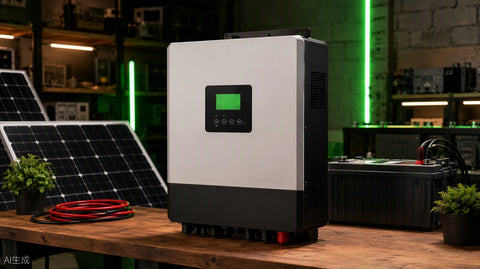
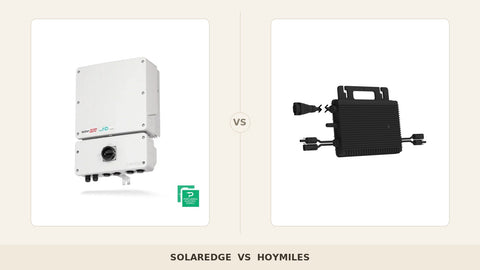
For residential jobs, the Enphase IQ8 microinverter approach satisfies rapid shutdown automatically — each module operates independently, and the conductors from roof to inverter are AC, not DC. The downside is higher cost per watt. For a 10kW system, Enphase adds roughly $0.15/W versus a string inverter with Tigo rapid shutdown.
How to Read Quotes and Verify Credentials: A Step‑by‑Step in Aptos
Step 1: Check the packing list against the purchase order. Verify model numbers, wattages, and quantities match exactly. Aptos DNA-120 and DNA-144 are different form factors and cannot be mixed on the same string.
Step 2: Inspect for shipping damage. Look for cracked corners, broken glass, or frame deformation. Photograph any damage before the freight carrier leaves. Aptos modules ship in corner-protected cartons; damage usually indicates a drop from height.
Step 3: Flash test a sample. Use a PV tester or I-V curve tracer on 5% of the shipment. Verify Voc and Isc are within 3% of datasheet values. Out-of-spec modules should be quarantined and an RMA opened.
Step 4: Register warranties within 90 days. Aptos requires warranty registration within 90 days of installation. Keep serial numbers, install dates, and installer license numbers in a project file.
Need Aptos panels for your next project? Browse our solar panel catalog or contact our design desk for string sizing and bulk pricing. We stock DNA-120 and DNA-144 series modules for same-day shipment from Portland, Oregon.
Related reading: Tier 1 solar panel list 2025, Jinko Solar brand guide, Solar panel direction guide, Commercial solar guide, Solar panel maintenance, What Tier 1 actually means, Trina Solar brand guide, LONGi Solar brand guide, Ironridge racking guide, Solar panel warranty guide, Canadian Solar brand guide, SMA inverter guide, Enphase brand guide, Battery sizing guide, Solar incentives guide.
Need pricing or availability on anything in this guide?
Portlandia Electric Supply dropships direct from the manufacturer — most items Ship Direct with lead times stated up front, no surprises.
Get a quote from PESBulk, pallet and contractor pricing available.