Propane + Solar Hybrid System for Off-Grid Cabin
Solar powers the electricity, propane powers the heat, water, and cooking — a distributor's guide to the hybrid stack that keeps a rural cabin comfortable in cold country without over-buying either fuel.

An all-electric off-grid cabin is a beautiful idea and an expensive reality. Space heating is where the math breaks. A 1,200 sqft cabin in northern Minnesota needs roughly 40,000 BTU/hr on a design day (-20°F outdoor). Twenty-four hours of that heat is 960,000 BTU/day, or 281 kWh/day electrically. Even with a cold-climate air-source heat pump at COP 2.5, you still need 112 kWh/day of electrical input just for heat. That is a $180,000 solar-plus-battery system — for one cabin, one season.
The propane-plus-solar hybrid delivers the same cabin comfort for $32,000-$45,000 all-in. Propane handles space heat, water heat, and cooking — the loads that eat kWh mercilessly if electrified. Solar handles lights, refrigeration, well pump, small pumps, laptops, and appliances. Each fuel carries the load it is best at, and neither is oversized to cover the other's weakness.
PES Supply ships propane-plus-solar hybrid cabin systems weekly. This article is the sizing method, the parts list, and the cost breakdown. It uses actual PES SKUs: Sol-Ark 12K or EG4 12kPV hybrid inverters, Fortress Power eFlex or SimpliPhi PHI 3.8 batteries, Iota DLS chargers for backup, Rinnai and Rheem tankless propane water heaters, Empire Comfort and Rinnai direct-vent propane heaters, and dual-fuel appliances from Unique Off-Grid, Blue Star, and Verona.
-
1
Split every load: propane-appropriate vs electric-appropriate
Propane wins for: space heat (30-90k BTU/hr), water heat (150-200k BTU/hr tankless), cooking (18-25k BTU/hr range), clothes drying (22-30k BTU/hr), refrigeration for seasonal cabins (thermoelectric or absorption). Electric wins for: lighting, water pumping (except propane-driven Slant/Fin boilers), laptops, TV, small appliances, refrigeration for year-round cabins (compressor is 90% more efficient), forced-air blower motors even if the furnace burns propane.
-
2
Size the propane side by BTU/hr peak, not kWh
Space heat: use Manual J or the quick 10 BTU/sqft × ΔT / 65 method. A 1,200 sqft cabin at 70°F indoor / -10°F outdoor design = 1,200 × 10 × 80/65 = 14,800 BTU/hr. Water heat: tankless propane at 150,000-199,000 BTU/hr peak but very short duty cycle. Cooking: 60,000 BTU/hr range peak. Total peak demand determines tank vapor draw capacity.
-
3
Size the solar-electric side by kWh/day, not peak kW
With space and water heat off the electric bus, cabin daily load drops to 3-8 kWh/day. Lights (0.4 kWh), fridge (1.5 kWh), well pump (0.5 kWh), laptop (0.3 kWh), forced-air blower on furnace (0.4 kWh), pumps and appliances (0.5-3 kWh). This is a 2-4 kW PV / 10-20 kWh battery / 6-8 kW inverter system, not a 10 kW / 40 kWh / 15 kW system.
-
4
Size the propane tank for winter autonomy
Propane consumption at peak winter: space heat 14,800 BTU/hr × 12 hrs/day duty = 178k BTU/day space heat, plus water 100k BTU/day, plus cooking 40k BTU/day, plus appliances 20k BTU/day. Total: 338k BTU/day peak winter. Propane is 91,500 BTU/gal, so 3.7 gal/day peak. A 500-gallon tank runs 135 days at peak — one full winter with margin.
-
5
Pick the inverter that handles well pump surge
With space heat on propane, the biggest electric surge is the well pump (40 A LRA at 240V = 9.6 kVA momentary) plus fridge start. A Sol-Ark 12K (12 kW / 18 kVA peak) handles this comfortably. An EG4 12kPV or Growatt SPF 5000ES 5kW Off-Grid Solar Inverter ($1,500) also work at the smaller end. Choose based on future load additions.
-
6
Confirm propane appliance compatibility for elevation and cold
Above 4,500 ft elevation, propane appliances need altitude jets or altitude-derated BTU ratings. Below -10°F, propane vapor pressure drops enough that a 500-gallon tank at 30% fill cannot deliver peak vapor draw. Use two tanks manifolded, or set the tank on a heated pad. Rinnai, Rheem, Empire Comfort, and Peerless Premier all publish altitude and cold-weather specs.
Propane appliances for off-grid cabins fall into two categories: fully off-grid appliances that need no electricity at all, and propane-fired appliances with electric controls that use small amounts of electricity for ignition, thermostats, and blowers.
Fully off-grid (no-electric) propane appliances:
- Direct-vent wall furnaces (Empire Comfort DV215, Rinnai EX22, Williams Comfort): gravity-vented through the wall, thermostatic control needs no electricity (or a millivolt system that self-powers from the pilot). 15,000-30,000 BTU/hr, perfect for cabin space heat. $1,200-$2,400.
- Wall-mount blue-flame heaters (Mr. Heater Big Buddy, Rinnai Energysaver 431FA): ventless (indoor combustion) for occasional use only, direct-vent for continuous use. $500-$1,800.
- Standing-pilot tankless water heaters: older models like the Bosch AquaStar 125BS work without electricity. Rare and hard to source new. Most modern tankless requires 120V for ignition.
- Servel/Danby propane absorption refrigerators: silent, no moving parts, 1 gallon of propane per week. Perfect for seasonal cabins. 8-10 cu ft models $1,800-$2,600.
- Propane cook ranges without electric ignition (Verona VEFSGE365, Peerless-Premier off-grid): match-lit burners, no 120V required. 4-burner models $1,500-$3,000.
Propane appliances with small electric controls (still cabin-friendly):
- Rinnai V65iP tankless water heater ($1,100-$1,400): 150,000 BTU/hr, needs 120V for ignition and controls (12W idle, 60W peak). Runs happily on the solar-electric bus.
- Rheem RTGH-95 tankless ($1,300-$1,800): similar profile, condensing efficiency 96%.
- Propane forced-air furnaces (Coleman EB series, Empire FA95): 60,000-90,000 BTU/hr with 400-800 W blower motor. Blower is the electric load; heat is propane. Total electric: 0.6-1.5 kWh/day in winter.
- Rinnai EX35 direct-vent wall furnace ($1,900-$2,400): 34,000 BTU/hr, needs 25W of electric for ignition and thermostat. Best-in-class for cabin space heat.
With space heat and water heat and cooking on propane, the electric side gets small. That is the whole point. A hybrid cabin design typically has these electric loads:
- LED lighting (whole cabin): 30-80 W × 4 hrs = 0.2-0.4 kWh/day
- DC compressor refrigerator (SunDanzer, or a 120V Energy Star fridge on the inverter): 0.8-1.6 kWh/day
- Well pump (submersible AC, running on inverter): 0.3-0.8 kWh/day
- Furnace blower motor (if forced-air propane): 0.3-1.2 kWh/day winter
- Tankless water heater controls: 0.1 kWh/day
- Small appliances (coffee, microwave, laptop, TV): 0.5-2 kWh/day
- Cellphone charging + Starlink internet (if installed): 2 kWh/day
Total daily kWh: 4-8 kWh average, 6-11 kWh peak-day. This is what your solar-plus-battery is sized to. Compare with the pure-electric alternative at 100-280 kWh/day and you see why hybrid wins.
Recommended solar-side stack for a 1,200 sqft hybrid cabin:
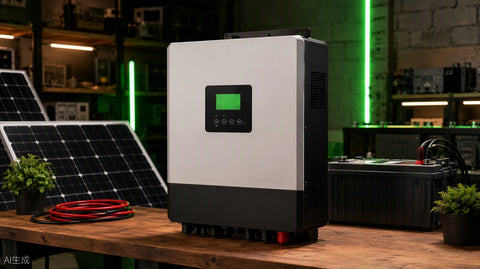
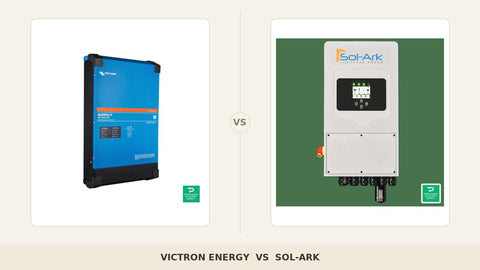
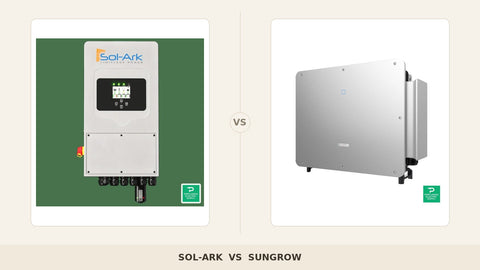
- Sol-Ark 12K hybrid inverter ($4,500-$5,000) — 12 kW continuous, 18 kVA peak, two MPPTs, 150A gen input, cellular monitoring. Overkill on kW terms but delivers the well-pump-start margin.
- 2× SimpliPhi PHI 3.8 batteries (7.6 kWh usable) or 1× Fortress eFlex 5.4 (5.4 kWh) — $6,000-$9,500. 12-24 hours autonomy at 6 kWh/day load, extended by generator.
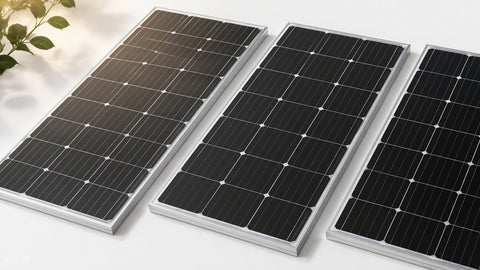
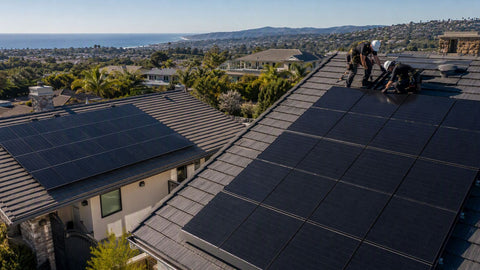
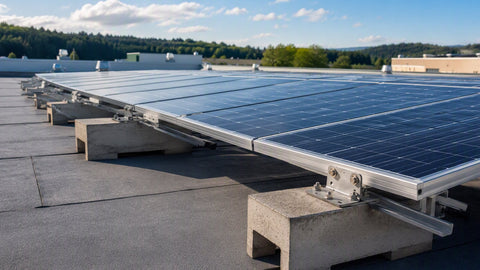
- 2 kW PV array — 5× 400W bifacial modules, IronRidge ground mount, string of 5 into one MPPT — $1,700 modules + $800 racking + $400 BOS.
- Optional: Cummins RS13A 13 kW propane standby generator ($4,286) — the backup-to-the-backup for multi-week cloud stretches. Runs off the same propane tank as the cabin heat.
- MidNite E-Panel Micro or Iota DLS-54V-13A backup charger ($250-$500) — small AC-to-DC charger for shore power or genset input.
Total solar side: $13,000-$21,000. Plus $5,000-$8,000 of propane appliances (heater, water heater, range) plus $1,500-$3,000 of propane tank and lines. Full cabin: $22,000-$32,000 all-in for a comfortable 1,200 sqft off-grid cabin that stays 70°F at -20°F outdoor and runs internet if desired.
| Load | Propane-appropriate (BTU or gal/day) | Electric-appropriate (kWh/day) | Design choice |
|---|---|---|---|
| Space heat | 178,000 BTU/day = 1.9 gal | 281 kWh (resistance) / 112 kWh (heat pump) | Propane |
| Water heat | 100,000 BTU/day = 1.1 gal | 13 kWh (elec resistance) | Propane |
| Cooking | 40,000 BTU/day = 0.4 gal | 5 kWh (induction) / 4 kWh (elec resistance) | Propane |
| Refrigeration (seasonal) | 10,000 BTU/day = 0.1 gal (absorption) | 0 kWh | Propane |
| Refrigeration (year-round) | N/A | 1.2 kWh (efficient compressor) | Electric |
| Well pump | N/A | 0.5 kWh | Electric |
| Lighting | N/A | 0.4 kWh | Electric |
| Furnace blower | N/A | 0.4-1.2 kWh winter | Electric (propane heats) |
| Laundry (washer) | N/A | 1-2 kWh | Electric |
| Clothes dryer | 22,000 BTU/hr peak | 3-5 kWh (electric) | Propane |
| Internet (Starlink) | N/A | 2.4 kWh | Electric |
The propane tank is the single largest infrastructure decision on the propane side. Get the size right and you refill twice a year at $1.80-$2.20/gal delivered. Get it wrong and you refill every three weeks with the small-delivery penalty ($3-$5/gal).
Size for 6-month autonomy at winter peak. A 1,200 sqft hybrid cabin uses roughly 3.7 gal/day at winter peak (space + water + cooking + generator exercise). Six months × 30 days × 3.7 gal = 665 gal winter total. Round up to a 1,000-gallon tank if seasonally-used, or a 500-gallon tank refilled every 3-4 months if year-round.
Placement options:
- Aboveground 500 or 1000 gal: lowest install cost ($800-$1,500 tank set), highest visual impact. Painted white for solar reflection.
- Underground 500 or 1000 gal: best visual, $2,500-$4,500 tank set with excavation. Faster winter fill and no cold-weather vapor issues.
- Two 500-gal tanks manifolded: redundant, doubles vapor-draw capacity at cold temperatures, allows one to be filled while the other runs.
Vapor draw at cold temperatures. At -20°F ambient, a 500-gallon tank at 30% fill can deliver only about 200,000 BTU/hr of vapor. Peak demand for a hybrid cabin (space furnace + tankless water + generator all running simultaneously): 200,000 + 200,000 + 200,000 = 600,000 BTU/hr. That is beyond a single 500-gallon tank's cold-weather capacity. Solutions: two tanks manifolded, or a larger 1,000-gallon tank, or a "hot-box" enclosure that keeps the tank pad above freezing.
PES ships hybrid cabin systems across the northern tier: Minnesota, Wisconsin, Michigan UP, upstate NY, Maine, Vermont, plus the western mountain west. Every one of these installs is defined by winter cold — how to keep the cabin at 68°F when the outdoor temp is -25°F for a week, and how to leave the cabin unheated for the shoulder seasons without freezing pipes.
Setback heating. When you leave a cabin for the week, drop the thermostat to 45°F rather than turning it off. That draft-proofs the plumbing and lets the cabin recover to 68°F in a couple hours when you return. Propane consumption at 45°F setback: about 30% of comfort-mode consumption. Solar consumption at setback: near zero, since blower duty drops.
Water system winterization. For cabins used weekends-only in deep winter, drain the pressure tank and water heater between visits. Or use an air compressor to blow the lines. For year-round cabins, insulate every pipe and add heat-trace cable (self-regulating, 5W/ft, 120V) on any exposed runs. The heat-trace pulls another 0.5-1 kWh/day from your solar system in deep winter.
Emergency electric heat. Even in a fully propane-heated cabin, add a 5,000-8,000 W electric baseboard or plug-in space heater on the inverter as a "propane failed" backup. In a genuine emergency (propane tank empty, weather blocks refill truck), a portable Cadet or Rinnai propane-portable heater with a 20-lb tank gets you through 2-3 days at low setback.
Fuel infrastructure planning. Meet your propane supplier before install. Get the auto-fill schedule set up (they monitor the tank via wireless K-Rain, DigiTank, or Anova gauge and refill on 30% remaining). Confirm road access for the delivery truck in winter (14-ton truck needs 10-ft plowed access to tank). This is not a home-electrical decision — it is a fuel-logistics decision.
Complete parts list for a real off-grid hybrid cabin, engineered for -25°F design day, 4-person occupancy, weekend-plus-holiday use pattern:
Propane side:
- Rinnai EX35 direct-vent wall furnace, 34,000 BTU/hr — $2,200
- Rinnai V65iP tankless water heater, 150,000 BTU/hr — $1,300
- Peerless-Premier 4-burner range with electronic ignition — $2,400
- 1,000-gallon underground propane tank + regulator + line — $3,800 installed
- Servel by Danby 10 cu ft propane refrigerator (backup for shoulder seasons) — $2,400
Solar-electric side:
- Sol-Ark 12K hybrid inverter — $4,500
- 2× SimpliPhi PHI 3.8-M battery (7.6 kWh usable) — $6,800
- 2 kW PV array: 5× 400W REC modules + IronRidge XR-100 ground mount + BOS — $2,900
- MidNite Solar E-Panel Micro with DC/AC disconnects and MRBF fuse — $650
- Cummins RS13A 13 kW propane standby genset — $4,286
- Miscellaneous: wire, conduit, grounding, permits — $1,800
All-in cost: $32,800. Compare to the pure-electric equivalent at $95,000+ (larger PV, huge battery, resistance heat + heat pump backup, huge inverter) — hybrid saves 65% of capital while delivering equal or better comfort.
Is propane really more economical than solar-electric for cabin heat?
Can I run everything on propane and skip the solar system?
What size PV array do I need for a propane-heated cabin?
Which propane fridge is best for off-grid?
Do I need a permit for propane appliances?
How long does a propane tank of gas last?
What if propane prices spike?
Can I use natural gas instead of propane?
What about wood heat in place of propane?
How do I keep pipes from freezing in unheated shoulder seasons?
The wiring interface between the propane and electric sides is where installer mistakes concentrate. Propane appliances that need 120V (tankless water heaters, forced-air furnaces, ranges with electronic ignition) have to be on the inverter's critical-load bus, not on a genset-only bus, because the propane appliances have to work during solar-battery-only operation.
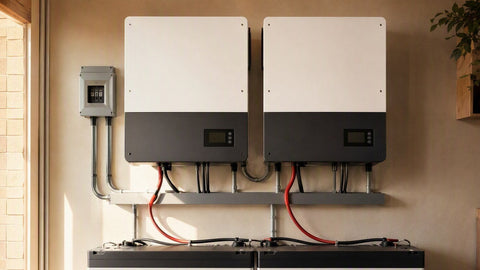
Load panel arrangement: the Sol-Ark 12K (or EG4 12kPV) inverter drives a single load center that carries all cabin AC loads. Propane-appliance electrical loads (tankless controls, blower motor, range ignition) land on breakers in that panel just like any other load. No separate genset-only or propane-only subpanel is needed. This simplifies wiring, permits, and troubleshooting.
Thermostat wiring: a propane forced-air furnace has a low-voltage (24 VAC) thermostat circuit powered by the furnace's transformer. Standard 18/5 or 18/8 T-stat wire runs from furnace to thermostat. If you want smart-thermostat control (Ecobee, Nest, Honeywell T6), the thermostat needs a "C" wire for continuous power. Most propane furnaces have a C-wire terminal at the control board — use it. Battery-powered smart thermostats work for a while then die at the worst time.
Combustion-air and venting: direct-vent propane appliances pull combustion air from outside through a concentric or two-pipe vent. This is required for tight, well-insulated cabins because a naturally-vented appliance in a 3·ACH50 airtight envelope will backdraft. Rinnai EX35, Rheem RTGH tankless, and any "sealed combustion" range or furnace uses direct-vent. Do not use ventless propane heaters in a tight cabin — CO and moisture accumulate.
Generator interconnect: the propane standby generator (Cummins RS13A, Kohler 14RCA, Generac Guardian 14 kW) connects to the inverter's Gen input, not to a separate ATS. The inverter is the ATS. Wire the generator output through a manual-transfer bypass switch for service isolation, then to the inverter. Configure the inverter to auto-start the genset at battery SOC 30% and stop at SOC 90%. Propane consumption during a genset-charge cycle: about 1.1-1.4 gal/hour at 65% load on the RS13A, so a 2-hour charge cycle burns 2.5-2.8 gallons and refills 15 kWh of battery.
The strongest argument for the hybrid architecture is total cost of ownership over the life of the cabin. Here is a fully-loaded 20-year comparison for a 1,200 sqft northern-tier cabin at 1,600 heating degree days.
Pure-electric off-grid (all-solar + heat pump + resistance backup):
- Capital: PV 12 kW ($13,000) + battery 60 kWh ($42,000) + inverter 15 kW ($6,500) + heat pump ($9,000) + resistance backup ($1,500) + install + BOS ($18,000) = $90,000
- Battery replacement year 12: $28,000 (lithium prices projected down but not free)
- Annual O&M: $600
- Fuel: $0
- 20-year TCO: $130,000
Propane-solar hybrid:
- Capital: solar 2 kW / 15 kWh battery / 12 kW inverter ($15,000) + propane appliances ($8,300) + tank & lines ($3,800) + genset ($4,286) + install ($5,000) = $36,400
- Battery replacement year 12: $8,000
- Annual O&M: $400 (mostly genset service and propane tank inspection)
- Fuel: 700 gal/year × $2.20 = $1,540/year × 20 = $30,800
- 20-year TCO: $83,200
Pure propane (older cabin architecture):
- Capital: propane appliances ($8,300) + tank ($3,800) + genset ($6,500) + wiring/install ($4,000) = $22,600
- Genset replacement year 10 and year 20: $13,000
- Annual O&M: $700 (genset runs more hours)
- Fuel: 1,200 gal/year × $2.20 = $2,640/year × 20 = $52,800
- 20-year TCO: $102,400
Winner: hybrid, by $19,200 over pure-propane and $46,800 over pure-electric. The hybrid also produces the best user experience: silent battery ops for 95% of hours, genset only for exceptional stretches, propane heat that just works, real-time monitoring via Sol-Ark cellular, and the ability to add loads (a second small cabin, an EV charger, a workshop) without redesigning the fuel side.
The single biggest design fork in hybrid cabin planning is whether the cabin is used year-round or seasonally. The two use patterns want different equipment.
Year-round cabin (primary residence or full-time seasonal home): compressor refrigerator, tankless water heater, forced-air propane furnace with electric blower, standby genset with cellular monitoring, 15–25 kWh battery to cover cloudy winter stretches, 3–5 kW PV to keep the battery topped. All the appliances that need 120V continuously (fridge, well pump, tankless controls, blower) run happily on the inverter. The genset auto-starts during multi-day storm events. Owner receives a text if genset runs, fuel drops, or battery low. This is the “living-there” design.
Seasonal cabin (weekend/holiday use, closed in deep winter): propane absorption refrigerator that can be turned off between visits without spoiling food (there is none stored), tank-style propane water heater that can be drained on close-up, direct-vent wall heater that runs on setback for freeze protection, smaller solar system (1–2 kW PV, 5–8 kWh battery) sized for weekend use rather than continuous, portable dual-fuel generator ($1,500) instead of standby. Total install: $18,000–$24,000 vs $32,000–$40,000 for year-round.
The closeout ritual for seasonal cabins: drain the water lines and heater, dump the RV antifreeze into the P-traps, close the propane at the tank, disconnect the inverter from the battery (lithium wants to sit at 40–60% SOC through storage), and pull the well pump fuse. Ten-minute checklist saves a $5,000 spring-thaw plumbing repair. Some cabins add a $250 cellular water-leak sensor that pings the owner if pipes burst in the shoulder season.
Insurance implications: most cabin-insurance policies now require either continuous heat above 55°F or a documented winterization procedure. A hybrid cabin with propane heat on setback + cellular thermostat + cellular water sensor satisfies the “heat continuously” requirement at low cost. A cabin that is fully drained and closed satisfies the “winterize” exception. Either works for insurance — the failure mode insurers punish is “heat off and pipes full of water.”
Register for the Axis Distributor Portal
Trade pricing on Sol-Ark, EG4, SimpliPhi, Fortress Power, and propane-appliance lines. Freight quotes on solar-plus-propane bundles for cold-climate cabins.
Register Now