Rural Generator Sizing for Whole-Home Backup — kW, Fuel, Transfer
A distributor's guide to sizing propane and diesel standby generators for rural homes — Generac Guardian, Kohler RCA, Cummins RS, Onan, and Winco — with the transfer-switch and fuel-tank math.

A suburban whole-home generator is a status product. A rural generator is life-safety infrastructure. That single distinction changes every design choice.
In a suburb, the utility crew arrives within four hours because there are 400 customers on the affected feeder. In rural country, the utility crew arrives within four days because there are 12 customers on a 40-mile feeder and the road is closed for a downed tree. In a suburb, the generator carries you through an evening. In rural country, the generator carries you through four days of below-zero cold, well pump duty, and enough electric heat to keep the pipes from freezing. Sizing the same 22 kW Guardian for both applications yields two very different outcomes.
PES Supply ships more than 1,700 rural-grade generator SKUs — 989 Generac, 550 Cummins Onan, 111 Kohler, 144 DuroMax portable, plus Winco PTO gensets and Champion dual-fuel inverter units. This guide is the sizing method we walk contractors and rural homeowners through, and the parts list of what fits which house and which fuel infrastructure.
Three things drive rural generator sizing: peak simultaneous kW load, runtime autonomy (how long between refueling), and starting duty (well pumps, furnace fans, and refrigeration compressors that surge on start). Get these three right and the generator runs for 20 years. Miss any of them and you replace it in 8.
-
1
Complete a whole-home load audit in running kW and starting kVA
List every load that MUST run during an outage: well pump, refrigerator, freezer, furnace blower or boiler pump, sump pump, one lighting circuit per room, one outlet per bedroom, kitchen basics (microwave, coffee), and any medical equipment (oxygen concentrator, CPAP). Record running watts AND starting watts (typically 3-7x for motors). Motor starting kVA is the peak the generator sees; running kW is the average it burns fuel to sustain.
-
2
Decide 'whole-home' vs 'managed loads'
Whole-home = generator carries every circuit in the house without any user intervention. Requires roughly 20-30 kW for a rural 2,500 sqft home. Managed loads = a smart transfer switch (Generac PWRcell, Kohler PowerSync) sheds non-essential loads dynamically. Reduces generator size to 12-17 kW for the same home at the cost of a $2,000-$3,500 smart switch. For rural, managed loads is often the smart play — smaller generator, less fuel, but same experience.
-
3
Choose the fuel source
Natural gas (pipeline): first choice if you have it, unlimited runtime, cleanest emissions. Rare in rural areas. LP/propane: rural standard, indefinite fuel life, no storage tank gelling, shares tank with water heater and range. 500-gallon tank runs a 20 kW generator ~90 hours at 50% load. Diesel: highest energy density, longest runtime per gallon, but 6-month fuel storage life without additives, cold-weather gelling below +15°F. Gasoline: portable-generator only, 4-6 month storage life, do not choose for standby.
-
4
Match generator kW to peak and running loads
Peak kVA (starting surge) determines the generator's momentary rating. Running kW determines steady-state size. Rule: generator continuous kW ≥ largest running load + 30% margin, and generator surge kVA ≥ sum of the two largest simultaneous starting loads. A 2,500 sqft rural home with a 1 HP well pump (10 kVA start), fridge (2.5 kVA start), and furnace blower (2.5 kVA start) needs 15 kVA surge minimum, 12-14 kW continuous. That is a Generac 14 kW, Kohler 14RESAL, or Cummins RS17A.
-
5
Size the fuel tank for autonomy
Fuel consumption at 50% load: 14 kW generator ~1.2 gal/hr propane, ~1.6 gal/hr diesel. For 4-day rural outage autonomy: 4 days × 24 hours × 50% duty = 48 running hours × 1.2 = 58 gal propane. So a 120-gallon tank gives 100 hours (4+ days). Most rural installs use 500-gallon buried propane tanks shared with the water heater and range — that gives 200+ hours (8+ days) of generator autonomy plus normal domestic use.
-
6
Specify the transfer switch
Automatic transfer switch (ATS) sits between utility and house panel. On utility loss, ATS disconnects utility, starts generator (2-wire auto-start), waits 60s for stable output, transfers house to generator, then reverses on utility return. Options: whole-panel ATS (200A, 400A service ratings), smart-managed ATS with load shedding (Generac PWRcell, Kohler PowerSync 200 SE), critical-loads-only ATS (subpanel-mounted, typical 60-100A). Match the ATS amperage to your service (200A for most modern homes).
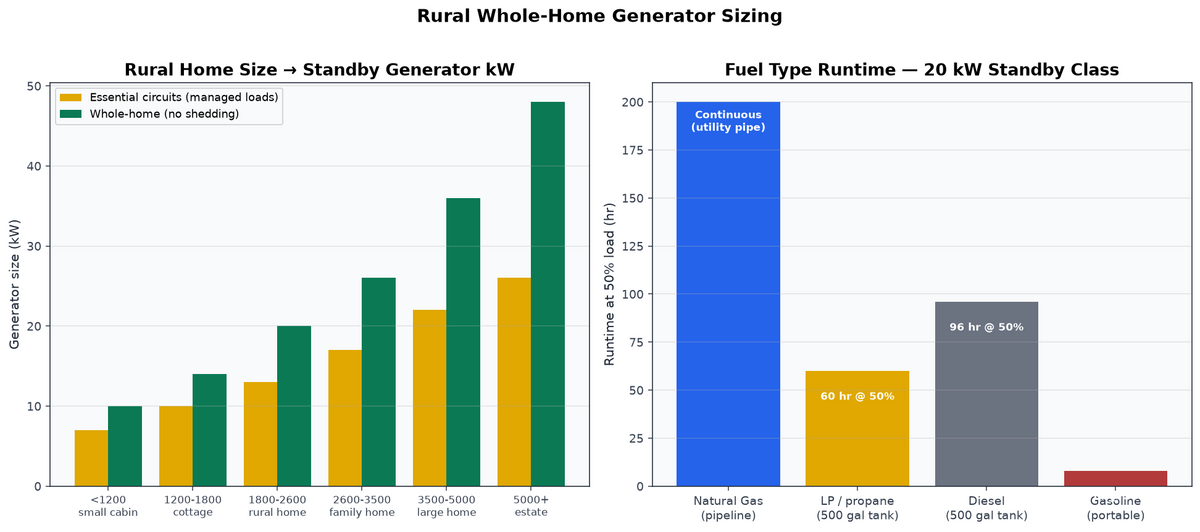
The chart at the top of this page shows the rural sizing curve for typical Canadian and northern US homes with well pumps, HVAC, and a full electrical load center. Two lines: essential-circuits (managed loads) vs whole-home (unmanaged). For each home-size range, here is the specific generator model recommendation:
Small cabin (<1,200 sqft): Essential 7 kW, whole 10 kW. Generac Guardian 7500EFI or 10 kW class. Or Cummins RS13A at $4,286 for the durability upgrade. Fuel: shared 250-gallon propane tank.
Cottage / small rural home (1,200–1,800 sqft): Essential 10 kW, whole 14 kW. Generac Guardian 14 kW, Kohler 14RESAL, or Cummins RS17A ($5,167 at PES pricing). Fuel: 250–500 gallon propane.
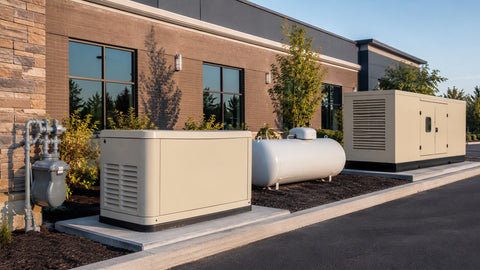
Rural 2-BR home (1,800–2,600 sqft): Essential 13 kW, whole 20 kW. Cummins RS20A ($5,747), Kohler 20RCA, or Generac 22 kW Guardian. Fuel: 500-gallon propane. This is the most-shipped rural generator class at PES.
Family home (2,600–3,500 sqft): Essential 17 kW, whole 26 kW. Generac Guardian 26 kW, Kohler 26RCA. Fuel: 500- or 1000-gallon propane.
Large home / lodge / small ranch (3,500–5,000 sqft): Essential 22 kW, whole 36 kW. Generac Protector 36 kW ($13,944), Kohler 38RCLA. Fuel: 1000-gallon buried propane, or diesel with a 500-gallon aboveground tank.
Estate / commercial rural (5,000+ sqft): Essential 26 kW, whole 48 kW+. Generac Protector 48 kW ($24,906–$25,116), Kohler 48RCLB ($25,485), or Cummins C60 D6. Fuel: 1000+ gallon diesel or dual 500-gallon propane manifold.
Fuel choice is arguably more important than brand choice. Wrong fuel = generator fails during the outage that matters. Right fuel = generator runs for 20 years.
Natural gas (piped). Unlimited runtime, cleanest emissions, lowest fuel cost per kWh delivered. Available in maybe 15% of rural installs (mostly along pipeline corridors). Every Generac Guardian, Kohler RCA, and Cummins RS is dual-fuel NG/LP switchable at commissioning. Choose this if you have a pipe.
LP / propane. The rural standard. Advantages: indefinite fuel life (no additives, no gelling, no bacteria growth), clean burn, dual-use tank (water heater, range, dryer, generator all off one tank), quiet operation vs diesel, easy cold-weather starting to -40°F, low maintenance intervals. Disadvantages: lower BTU/gal than diesel (91,500 vs 138,700 BTU/gal), so slightly more fuel volume for same runtime. Tank sizing: 250 gal domestic + 500 gal generator dedicated is a common split. A single 500-gal shared tank works up to about 22 kW generators; larger units want their own supply.
Diesel. Highest energy density (138,700 BTU/gal), longest runtime per gallon, most efficient at 50–75% load. Used in commercial rural (dairy farms, hunting lodges, remote lodges) where 30-day+ autonomy matters. Disadvantages: fuel storage life 6–18 months without stabilizer, gelling at temperatures below +15°F without treated fuel, algae/bacteria growth in tanks, monthly exercise cycle recommended, noisier than propane, EPA Tier 4 Final compliance for new units requires DEF fluid (adds complexity and cost). Choose diesel only if you already have on-site diesel infrastructure (farm equipment, tractors) or you need 30+ days of unattended autonomy.
Gasoline. Portable generators only. Do not select for standby. Fuel life is 4–6 months, ethanol content in modern pump gas separates and phases in storage, and small-engine carburetors fail from stale fuel. If you already own a Champion 201319 4,500W dual-fuel portable ($739) or Westinghouse WGen9500DF, use it for occasional non-standby duty and add a real standby unit separately.
| Model | Continuous kW | Fuel | Runtime @ 50% (500g LP) | Approx PES price |
|---|---|---|---|---|
| Cummins RS13A | 13 kW LP / 11 kW NG | LP or NG | 112 hrs (4.7 days) | $4,286 |
| Cummins RS17A | 17 kW LP / 15 kW NG | LP or NG | 86 hrs (3.6 days) | $5,167 |
| Cummins RS20A | 20 kW LP / 18 kW NG | LP or NG | 73 hrs (3 days) | $5,747 |
| Generac Guardian 14 kW | 14 kW | LP or NG | 104 hrs | $3,900–$4,400 |
| Generac Guardian 22 kW | 22 kW LP / 19.5 kW NG | LP or NG | 68 hrs | $5,500–$6,200 |
| Generac Protector 36 kW | 36 kW LP / 32 kW NG | LP or NG | 45 hrs | $13,944 |
| Generac Protector 48 kW | 48 kW LP / 43 kW NG | LP or NG | 35 hrs | $24,906 |
| Kohler 20RCA | 20 kW LP / 18 kW NG | LP or NG | 73 hrs | $5,900–$6,400 |
| Kohler 48RCLB | 48 kW | LP or NG | 35 hrs | $25,485 |
The ATS is 30% of the standby system's value and gets 5% of the buyer attention. That is a mistake.
An ATS is a listed, purpose-built switching device that watches utility power, decides when it has failed, initiates generator start, waits for stable generator output, transfers house loads from utility to generator, and reverses on utility return. It is life-safety equipment because it prevents backfeed to the utility (which kills line workers) and prevents generator paralleling to utility (which destroys the generator). Do not use a manual transfer switch on a rural whole-home setup unless you have specific reasons to.
ATS types:
1. Service-entrance ATS. Mounted at the meter or immediately downstream, rated for full service amperage (200A residential typical), switches ALL house loads. Simplest wiring, highest cost ($1,200–$2,800). Choose for whole-home coverage. Generac RTSN and Kohler RXT are the residential standards.
2. Subpanel/critical-loads ATS. Mounted at a critical-loads subpanel, typical 60–100A rating, switches only the pre-selected essential circuits. Cheaper ($400–$900) but requires re-wiring critical circuits into the subpanel. Reliance Controls and Generac 100A load-center switches.
3. Smart-managed ATS. Load-shedding controller that dynamically sheds the biggest loads (HVAC, water heater, EV charger) to keep total demand below generator capacity. Lets a 14 kW generator handle a house that would normally need 22 kW. Generac PWRcell smart management, Kohler PowerSync 200 SE, Cummins Load-Manager. Adds $1,500–$3,500 but saves $2,000–$5,000 on generator size.
Rural recommendation: Service-entrance ATS with load-shed capability. Best of both — every circuit is on the generator's transfer list, but the smart controller keeps you under total kW during peak simultaneous demand (well pump + range + dryer + heat all firing at once).
Rural generators live outside. In Idaho, Wyoming, Alaska, and much of the interior west, they see -30°F winter starts. Three cold-weather features matter:
Battery warmer / heater blanket. Every propane/NG standby generator has a 12 V lead-acid starter battery. Below +15°F, that battery loses 40% of its cranking amps. A thermostatic battery warmer ($60–$150 factory option) keeps the battery at +50°F. Every rural Generac, Kohler, and Cummins install should have this. It is a $100 line item that saves a $2,500 no-start call.
Oil pan heater. Below -10°F, engine oil turns to molasses. Cummins RS, Kohler RCA, and Generac Protector series all offer factory oil-pan heaters (400 W thermostatic pad, $150–$300 option). Below 0°F ambient, mandatory. It draws about 4 kWh/day from utility during the winter to keep the engine warm. In propane installs below -30°F, add a small propane-fired thermosiphon heat exchanger to keep the engine block warm from tank flame.
Fuel line and regulator freezing. LP-vapor draw from a 500-gal tank at -20°F is limited by vapor pressure. A generator drawing 60,000 BTU/hr at -20°F needs a larger tank or two-stage regulation. Consult the tank sizing chart — undersized vapor draw causes generator flame-out mid-cycle. Diesel installs need heated fuel filter (Racor R60T, $100) and treated fuel.
Snow enclosures. Some rural climates get 3–4 feet of accumulated snow. Snow buildup on the generator enclosure exhaust can cause CO backup into the cabinet. Either use a manufacturer snow shed accessory, or plan seasonal path-clearing to keep exhaust free.
Traditional rural generator design assumes the generator carries the load during outages. Modern rural design uses a smaller generator plus solar-plus-battery to carry the load, and treats the generator as a battery charger for extended events.
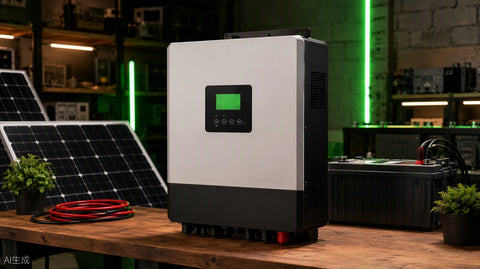
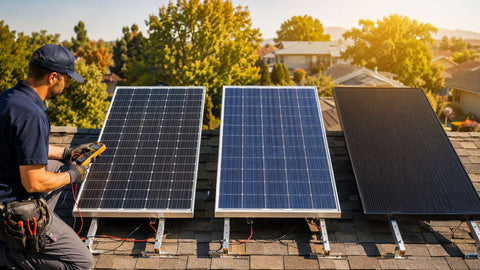
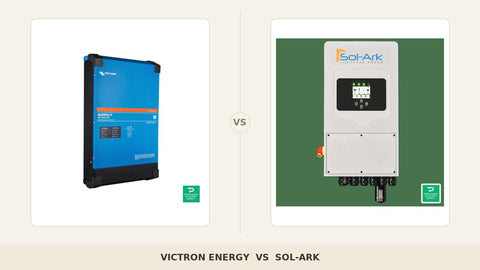
The hybrid architecture is: Sol-Ark 15K, EG4 18kPV, or OutBack Radian hybrid inverter, 15–40 kWh of LFP battery, 5–10 kW of PV, plus a 10–14 kW propane standby generator. During normal outages under 12 hours, the battery carries the entire house without the generator ever starting. For outages that exhaust the battery (multi-day cloudy weather), the inverter auto-starts the generator, runs it 2–4 hours at 65% load to refill the battery, then shuts it off. The generator runs about 40 hours per year total instead of 200 hours — fuel savings alone pays for the solar-battery differential in 8 years.
Sizing the generator in a hybrid system is different from sizing it in a standalone. You do not need to match peak simultaneous load — the inverter and battery handle that. You need to match the battery's max charge current. A Sol-Ark 15K accepting 100A DC charge at 48V draws 5–6 kW AC from the generator. That is comfortably within a 10 kW propane genset like the Cummins RS13A ($4,286) running at 55–65% load — the sweet spot for engine longevity and fuel efficiency.
Result: a $12,000 generator install becomes a $5,000 generator install (smaller unit, no whole-home ATS — the inverter is the transfer switch), and adds $22,000 for the battery-and-solar side. Net-net for a rural home with 4 outage-days/year, the hybrid pays back within 12 years and delivers a dramatically better outage experience (silent battery ops for 90% of events, generator noise only during long stretches).
Not every rural home needs a $10,000 standby unit. For weekend cabins, seasonal residences, and rural properties with mild outage frequency, a large portable dual-fuel inverter generator delivers 80% of the outcome at 20% of the cost.
Champion 201319 4,500W Dual Fuel Inverter Generator ($739): PES's most-shipped portable. Dual-fuel (gasoline or propane), inverter clean sine output, 22-hour runtime on 20-lb LP tank at 25% load. Enough to run a fridge, freezer, well pump on demand, and one heater. Perfect for a cabin or as a backup-to-the-backup.
Westinghouse WGen9500DF ($1,200–$1,600): 9,500W dual-fuel portable, electric start, remote start fob, transfer-switch-ready twist-lock outlets. Powers a small rural home managed-load setup during 12–48 hour outages.
DuroMax XP12000EH ($1,400–$1,800): 12,000W dual-fuel portable, wheel kit, electric start, twist-lock 240V. Rural-farm workhorse; carries a 2,500 sqft home on managed loads.
The portable + manual transfer switch combo: A $200 Reliance Controls 30-amp 6-circuit manual transfer switch installed at the main panel plus a DuroMax XP12000EH costs $1,600 total — vs a $10,000 automatic standby. Tradeoff: you have to be present to fire the portable manually and roll it into position. For a rural property that is not primary residence, this is often the right economic answer. PES ships portable-plus-transfer-switch bundles as a standard SKU.
Farm properties have an option most homeowners forget: the PTO (power take-off) generator. A Winco PTO generator ($3,500–$9,000 range at PES) attaches to any tractor with a 540 or 1000 RPM PTO shaft, and delivers 15–75 kW from the tractor's diesel engine. Advantages: no dedicated engine to maintain, uses your existing farm diesel supply, dual-purpose (also powers grain bins, sawmills, and welders), lower total cost than a standalone standby. Disadvantages: requires manual startup and tractor commitment during the outage, tractor is not available for other duties, and needs an operator-attended transfer switch.
For a farm with 200+ hp tractors already on-site (John Deere 6M, Case IH Maxxum, Kubota MX), a Winco 25 or 45 kW PTO generator is $3,500–$7,000 vs $6,000–$14,000 for a dedicated standby. It is the smart play if your outages are rare but you need real capacity when they happen, and the tractor is not committed to critical hay/silage work at outage time.
What size generator do I need for a rural 2,000 sqft home?
Do I need propane or diesel for a rural generator?
How much fuel does a rural generator consume?
Do I have to run the generator every week?
Generac vs Kohler vs Cummins — which is best for rural?
How do I install a generator myself?
Do I need a permit for a rural generator?
How long do standby generators last?
A 20-item install checklist for rural standby generators, developed from PES service call data and warranty claim analysis:
- Concrete pad: minimum 4 inches thick, extending 3 inches beyond generator footprint on all sides, reinforced with #4 rebar at 12 inches OC. Level within 1/4 inch across the pad.
- Setback distance: minimum 5 ft from any structure opening (window, door, dryer vent), 3 ft from combustibles, per NFPA 37. Some manufacturers require more — check nameplate.
- Air intake and exhaust clearance: minimum 12 inches of clear air-intake space on all vented sides. Blocked airflow causes overheat shutdown at 60% load.
- Fuel line sizing: propane vapor line to a 20 kW generator needs 3/4 inch flex minimum with two-stage regulation. Underspec line causes low-pressure fault mid-run.
- Fuel line materials: outdoor propane line must be UL-listed for outdoor use — CSST or copper. Buried line must be poly with tracer wire.
- Grounding: generator frame bonded to a dedicated ground rod, tied to service ground bar. Do not skip — stray voltage kills sensitive loads.
- Battery placement: factory battery box, ventilated, secured. Add battery warmer in Zone 4+ climates.
- Neutral bonding: in a service-entrance ATS install, the generator's neutral is bonded at the service. In a subpanel install, the ATS handles the bond. Get this wrong and GFCIs trip incorrectly.
- Load-side wiring: from ATS to generator, use SO cord or listed cable rated for the amperage and outdoor use. 4 AWG minimum for 100A generator output.
- Exercise programming: set weekly exercise time to a low-usage window and enable it. Verify on the controller.
- Cellular monitoring: connect Generac Mobile Link, Kohler OnCue Plus, or Cummins Connect. Rural installs benefit from remote alerts — do not skip.
- Load bank test: a proper commissioning includes a 30-minute load bank test at 75–100% of nameplate to verify no overheat or voltage regulation issues.
- Oil analysis baseline: at commissioning, pull an oil sample and send to Blackstone Labs for baseline wear-metal readings. Repeat at 100 hours. Cheap insurance.
- Fuel gauge check: verify the propane tank gauge is readable from the house and the auto-fill schedule is set with the propane supplier.
- Snow-clearance path: plan the winter access route from house to generator. Do not rely on "I will shovel it when I need it."
- Documentation: photograph the nameplate, ATS wiring, and permit inspection sign-offs. Save in a home file with warranty registration.
- Warranty registration: most warranties require registration within 30 days of install. Missing this cuts warranty from 5 years to 2.
- Neighbor notification: the weekly exercise cycle is 10–15 minutes at nominal load. Neighbors within 200 ft will hear it. Introduce yourself before install; some jurisdictions have quiet-hours rules.
- CO detectors: add hard-wired CO detectors near any wall the exhaust plume could reach.
- Service contract: for critical installs, purchase an annual service contract with the local Generac/Kohler/Cummins dealer at $250–$450/year. They inspect, oil-change, and load-test.
Register for the Axis Distributor Portal
Trade pricing on Generac Guardian and Protector, Kohler RCA and RCL, Cummins RS and QuietConnect, plus Winco PTO gensets. Freight and permit-support on request.
Register Now