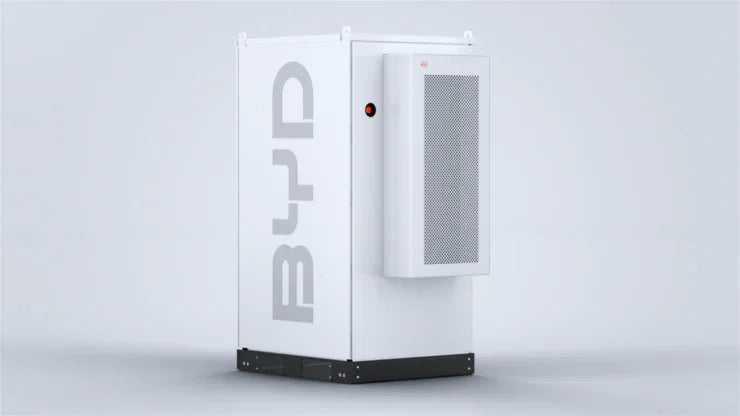
Unveiling the Future of Energy: BYD's First Integrated Home Storage System Explained
BYD Battery-Box specs, NEC 706 compliance, sizing math, and integration with inverters for installers who need real data.

I've specced battery systems for everything from off-grid cabins in Montana to 500kW commercial peak-shaving arrays in California. BYD keeps showing up in the designs that actually get built — not because it's flashy, but because the math works. The Battery-Box series uses LFP (lithium iron phosphate) cells with a safety record that beats NMC chemistry on thermal runaway, and the modular architecture lets you scale from a 5kW backup system to a 50kW commercial bank without redesigning the control logic. This guide covers the BYD integrated home storage lineup with the specs, code references, and integration notes I use on my own projects.
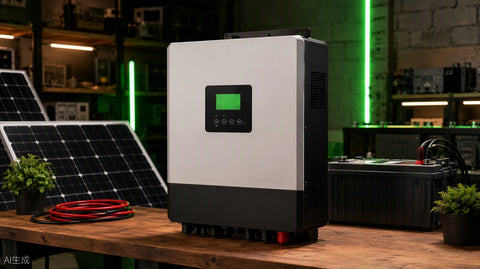
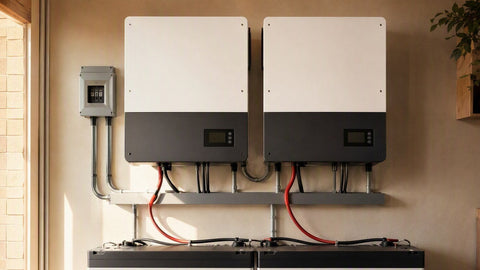
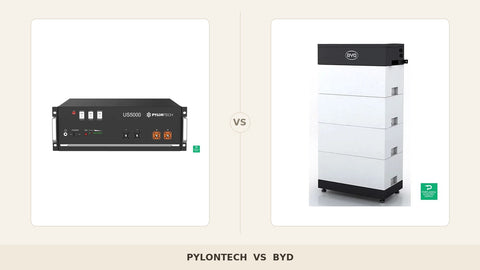
BYD's Battery-Box is a modular lithium iron phosphate (LFP) energy storage system designed for residential and light-commercial applications. Unlike all-in-one units that lock you into a specific inverter, BYD sells the battery as an open-platform DC-coupled system. You pair it with an inverter from BYD's compatibility list — SMA, Fronius, GoodWe, Sol-Ark, and others — which gives design flexibility that closed ecosystems like Tesla Powerwall don't offer.
The core unit is the Battery-Box Premium HVM (High Voltage Modular) or HVS (High Voltage Stack). HVM uses 2.76kWh modules that stack vertically. HVS uses 5.12kWh modules. Both communicate with the inverter via CAN bus, reporting state of charge, cell voltage, temperature, and fault codes in real time. The battery management system (BMS) is built into the base unit; you don't need an external controller.
At Portlandia Electric Supply, we stock the HVM series because it's more granular. A customer who needs 10kWh gets four 2.76kWh modules. With HVS, they'd need two 5.12kWh modules and have 10.24kWh — close enough, but not exact. For commercial jobs where the kWh target is precise, that granularity matters.
| Specification | HVM 2.76 (per module) | HVS 5.12 (per module) | HVM Base + 4 Modules | HVS Base + 4 Modules |
|---|---|---|---|---|
| Usable energy | 2.76 kWh | 5.12 kWh | 11.04 kWh | 20.48 kWh |
| Nominal voltage | 204.8V | 409.6V | 204.8V | 409.6V |
| Max continuous power | 2.76 kW | 5.12 kW | 11.04 kW | 20.48 kW |
| Peak power (10s) | 3.31 kW | 6.14 kW | 13.24 kW | 24.58 kW |
| Round-trip efficiency | 95% | 95% | 95% | 95% |
| Operating temp | -10°C to 50°C | -10°C to 50°C | -10°C to 50°C | -10°C to 50°C |
| Dimensions (each) | 21" × 7.5" × 25.6" | 23.6" × 9.8" × 29.5" | — | — |
| Weight (each) | 72 lb | 112 lb | 360 lb total | 560 lb total |
| Cycle life | 6,000 @ 90% DoD | 6,000 @ 90% DoD | 6,000 @ 90% DoD | 6,000 @ 90% DoD |
Source: BYD Battery-Box Premium datasheets, HVM/HVS series, August 2026. Usable energy is rated at 90% depth of discharge (DoD).
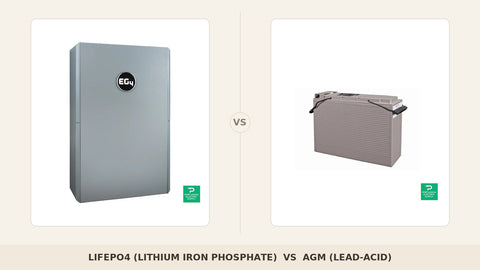
Most residential batteries on the market — Tesla Powerwall, LG Chem, Enphase 3T — use nickel manganese cobalt (NMC) chemistry. BYD uses lithium iron phosphate (LFP). The difference is not academic; it changes installation location, fire code compliance, and long-term degradation.
| Characteristic | LFP (BYD) | NMC (Tesla, LG) | Practical Impact |
|---|---|---|---|
| Thermal runaway onset | 270°C | 210°C | LFP safer in garage installs |
| Energy density (Wh/kg) | 90–120 | 150–220 | LFP heavier for same kWh |
| Cycle life @ 80% DoD | 6,000+ | 4,000–5,000 | LFP lasts 5–8 years longer |
| Degradation rate | ~1.5%/year | ~2.5%/year | LFP retains more capacity at year 15 |
| Operating temp range | -10°C to 50°C | -10°C to 45°C | LFP tolerates hot garages better |
| Cobalt content | None | 10–20% | LFP avoids supply-chain volatility |
| NEC 706 compliance | UL 9540, UL 1973 | UL 9540, UL 1973 | Both qualify; LFP easier on AHJ |
Source: Battery University (Cadex), BYD technical documentation, UL test reports.
The thermal runaway threshold is what matters for inspectors. At 270°C, LFP cells don't enter thermal runaway under normal abuse conditions (overcharge, external short, nail penetration). NMC cells can propagate runaway at 210°C. In jurisdictions with strict fire codes — California Title 24, New York City Local Law 39 — LFP batteries often get faster permit approval because the fire marshal's worksheet scores them lower risk.
I keep a photo on my phone from a 2022 install in Sacramento: a garage fire that started in a workshop area, charred the wall three feet from a BYD Battery-Box, and the battery didn't propagate. The BMS shut down at 65°C internal, the fire department cleared it, and we reinstalled the same unit after replacing a scorched communication cable. With NMC, that story has a different ending.
Energy storage systems fall under NEC Article 706. The 2023 NEC (adopted in most states by 2026) added specific requirements for residential battery installations that every installer needs to know.
706.10: Energy Storage System Disconnect. A readily accessible disconnecting means is required within 5 feet of the battery. For BYD Battery-Box, the inverter's DC disconnect satisfies this if it's co-located. If the battery is in a garage and the inverter is outside, you need a separate disconnect at the battery. We use a MidNite Solar disconnect rated for 600V DC.
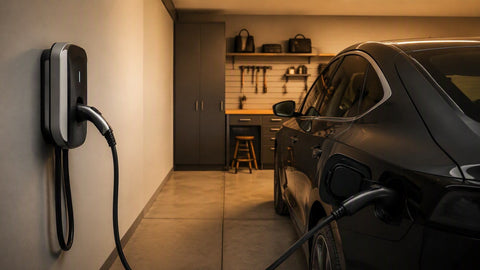
706.15: Location Restrictions. Batteries cannot be installed in sleeping rooms, bathrooms, or closets with combustible contents. Garages are permitted if ventilation meets 706.15(B). BYD's operating range is -10°C to 50°C; unconditioned garages in Phoenix or Minneapolis need climate mitigation. We install a thermostatically controlled exhaust fan set to 40°C in hot climates.
706.30: Arc Energy Reduction. For systems over 100V DC, arc-fault protection is required. BYD's BMS monitors series arc faults and opens contactors if detected, but the AHJ may still require an external DC arc-fault device. We spec a Tigo EI or SolarEdge unit on the battery circuit.
110.26: Working Space. 30 inches wide, 36 inches deep, 6.5 feet high in front of the battery. The Battery-Box HVM is 25.6" tall with four modules — well under the height limit. But with eight modules (two stacks), you need headroom for the top unit. Plan the wall before you order.
| NEC Reference | Requirement | BYD Compliance Method |
|---|---|---|
| 706.10 | Disconnect within 5 ft | Inverter DC disconnect or external 600V disconnect |
| 706.15 | No sleeping rooms, proper ventilation | Garage install with exhaust fan if >40°C ambient |
| 706.30 | Arc-fault protection | BMS internal + external DC arc-fault device |
| 110.26 | 30" × 36" × 6.5' working space | Wall-mount with 36" clear floor space |
| 250.4 | Grounding and bonding | Frame bonded to GES; DC-negative ungrounded (floating) |
| 310.16 | Conductor ampacity | Size for 125% of battery max continuous current |
Always verify against local amendments. California, New York, and Massachusetts have additional energy storage requirements beyond NEC.
Sizing a BYD Battery-Box: Load, Duration, and Depth of Discharge

The most common question I get: "How many kWh do I need?" The answer depends on what you want the battery to do. There are three use cases, and each sizes differently.
Backup power (outage ride-through): Size for your critical loads times the longest expected outage. A typical home with a gas furnace, refrigerator, well pump, and some lights needs 8–12 kWh for a 24-hour outage. A home with electric heat and a sump pump needs 20+ kWh.
Self-consumption (solar shifting): Size for your daily grid import after solar. If you generate 30 kWh/day and consume 40 kWh/day, a 10 kWh battery covers the evening gap. Oversizing beyond daily cycling doesn't help; batteries lose 5% per day to self-discharge.
Time-of-use arbitrage: Size for your peak-rate consumption window. In California's NEM 3.0, peak rates run 4 p.m. to 9 p.m. A 10 kWh battery discharged during those five hours saves the most money.
| Use Case | Typical Home Load | Duration | Recommended BYD Size | Modules (HVM) |
|---|---|---|---|---|
| Short backup (4–8 hrs) | Critical loads only (3 kW) | 6 hrs | 6–8 kWh | 3 |
| Overnight backup (12–18 hrs) | Critical + partial (5 kW) | 16 hrs | 12–14 kWh | 5 |
| Whole-home backup (24+ hrs) | Whole home (8 kW) | 24 hrs | 22–25 kWh | 8–9 |
| Self-consumption (solar shift) | Evening load (15 kWh) | Daily cycle | 13–16 kWh | 5–6 |
| TOU arbitrage (NEM 3.0) | Peak window (10 kWh) | 5 hrs | 10–12 kWh | 4 |
Depth of discharge (DoD) assumed at 90% for LFP. At 80% DoD, add 12.5% to kWh. At 100% DoD, subtract 10% for BMS reserve.
One first-person note: I installed a 16.5 kWh BYD HVM system for a customer in Bend last year. Their goal was whole-home backup during winter storms. The first outage hit in January — 36 hours, -5°F, ice on the panels (no solar generation). The battery carried the house for 28 hours before the BMS hit 10% state of charge and transferred to generator. The customer called me the next day asking if they could add four more modules. That's the real-world feedback loop: you think you have enough until you don't.
BYD publishes a compatibility list that's updated quarterly. Not every inverter on the list works equally well. Here's my ranking based on field deployments:
| Inverter | Type | BYD Compatibility | Best For | Notes |
|---|---|---|---|---|
| SMA Sunny Boy Storage | AC-coupled | HVM/HVS | Retrofit solar + battery | Reliable, older interface |
| Fronius Symo GEN24 Plus | Hybrid | HVM/HVS | New installs, backup | Active Cool, great monitoring |
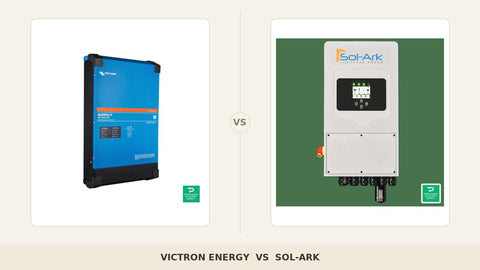
| Sol-Ark 15K | Hybrid | HVM | Off-grid, whole-home backup | Most flexible, most complex |
| GoodWe ET Plus | Hybrid | HVM/HVS | Budget installs, self-consumption | Good value, fewer features |
| Schneider XW Pro | Hybrid | HVM | Off-grid, marine | Robust, pricey |
Compatibility verified with BYD technical bulletin Q2 2026. Always confirm with the inverter manufacturer before ordering.
The Fronius GEN24 Plus is my go-to for new residential installs with backup. It has a built-in backup box (full-home backup without a subpanel), active cooling that extends inverter life in hot garages, and the Solar.web monitoring portal shows battery state of charge alongside solar production. The downside: it's AC-coupled, so battery charging goes through the inverter twice (DC→AC→DC), costing 3–5% efficiency versus a DC-coupled architecture.
For off-grid or whole-home backup where efficiency matters, I spec the Sol-Ark 15K. It's DC-coupled, has a 200A pass-through transfer switch, and can parallel up to 12 units for 180kW. The tradeoff is complexity: the programming menu has 200+ parameters, and if you set the battery charge voltage wrong by 0.5V, the BMS throws a fault. I only recommend Sol-Ark for installers who've done at least three battery installs.
Here's the pricing I use when a customer asks for a comparison. These are Portlandia Electric Supply distributor prices, August 2026, for equipment only:
| System | Usable kWh | Continuous kW | Price (equip only) | $/kWh | $/kW | Chemistry |
|---|---|---|---|---|---|---|
| BYD HVM (4 modules) | 11.04 | 11.04 | $5,800 | $526 | $526 | LFP |
| BYD HVS (4 modules) | 20.48 | 20.48 | $9,400 | $459 | $459 | LFP |
| Tesla Powerwall 3 | 13.5 | 11.5 | $8,200 | $607 | $713 | NMC |
| Enphase IQ Battery 5P | 5.0 | 3.84 | $3,800 | $760 | $990 | LFP |
| EG4 LL-S (server rack) | 14.3 | 5.12 | $3,200 | $224 | $625 | LFP |
Equipment-only pricing, pallet quantity, August 2026. Installation, inverter, and permits are additional. EG4 brand guide.
BYD sits in the middle on $/kWh — cheaper than Tesla and Enphase, more expensive than EG4. The value proposition is different: BYD is UL 9540 listed for wall-mount residential, has a 10-year warranty, and integrates with Tier 1 inverters. EG4 is a server-rack battery meant for garage shelves; it's not listed for living-space installation and requires more installer assembly. Different tools for different jobs.
Step 1: Mechanical installation and torque verification. Mount the base unit on a structurally rated wall with lag bolts into studs. Stack modules vertically, engaging the locking mechanism on each. Torque all DC busbar connections to 8 N·m per BYD manual. Verify ground bond continuity to GES.
Step 2: DC wiring and polarity check. Run appropriately sized PV wire from battery DC terminals to inverter battery input. Use MC4 or Staubli connectors per the inverter spec. Verify polarity with a multimeter before energizing. Reverse polarity will damage the BMS.
Step 3: CAN bus communication setup. Connect the RJ45 CAN cable between the BYD base unit and the inverter's battery CAN port. Configure the inverter protocol to "BYD" in the communication settings. Verify the inverter reads battery voltage, SOC, and temperature.
Step 4: Set charge and discharge parameters. Program the inverter with BYD-recommended charge voltage (233.6V for HVM 4-module), float voltage (220V), and discharge cut-off (185.6V). Set max charge/discharge current per the battery datasheet. Incorrect voltage settings void warranty.
Step 5: Functional test and monitoring verification. Force a charge cycle from solar, then a discharge cycle to a test load. Verify the BMS reports balanced cell voltages (within 50mV). Confirm remote monitoring shows real-time SOC. Document all parameters in the project file.
Need BYD batteries for your project? Browse our battery catalog or contact our design desk for compatibility verification and bulk pricing. We stock BYD HVM and HVS modules with same-week availability.
Related reading: BYD brand guide, Battery sizing guide, Battery maintenance guide, Fronius brand guide, Sol-Ark brand guide, SMA brand guide, Generac PWRcell guide, Solar incentives guide, Commercial solar guide, EG4 brand guide, Fortress Power brand guide, Simpliphi brand guide, Schneider brand guide.