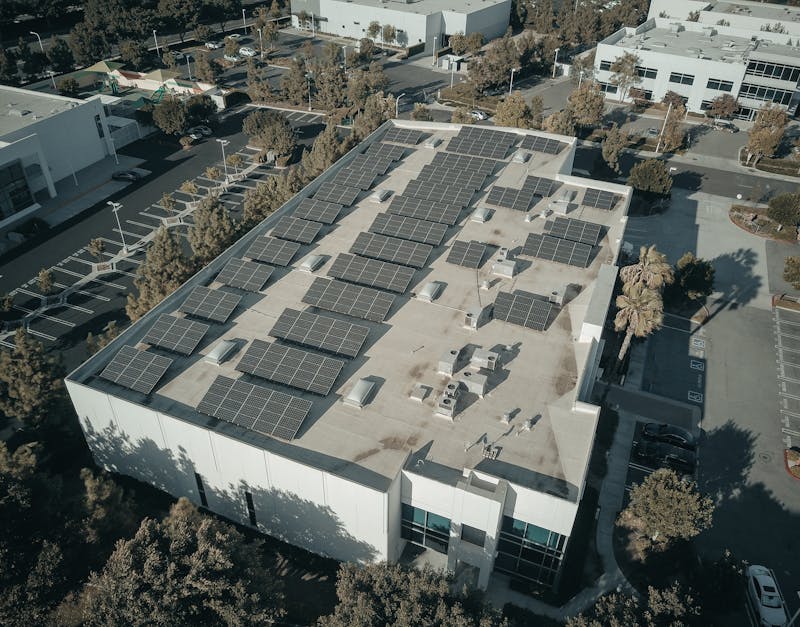
Commercial solar is a different discipline from residential work. The roofs are bigger and flatter, the loads are measured in demand peaks as much as kilowatt-hours, the interconnection queues are longer, and the financial case is won or lost in a spreadsheet before the first module ships. I've walked distribution-center roofs where a 400 kW array was an obvious yes, and office buildings where a 60 kW system never penciled because the rate schedule was wrong. This guide covers what separates a good commercial project from a stranded one: technology selection, sizing against your actual load, interconnection reality, incentives, and the procurement process that keeps a project on budget.

Why commercial solar economics differ from residential
A residential system sells against a retail kWh rate. A commercial system sells against two things at once: the energy charge (per kWh) and the demand charge (per kW of peak draw). Many commercial rate schedules put 30–50% of the bill on the demand side, and solar alone doesn't reliably clip peaks — a cloud bank at 2:14 PM on the billing peak day wipes out the month's demand savings. That's why commercial design starts with the utility bill, not the roof. Twelve months of interval data tells you when peaks occur, how spiky they are, and whether storage belongs in the design from day one.
The second difference is scale economics. Soft costs — engineering, permitting, interconnection studies, project management — spread across more watts as systems grow, which is why cost per watt falls with system size. The third is financing: businesses bring tax appetite, depreciation, and creditworthiness into the equation, which opens structures (PPAs, leases, C-PACE) that don't exist in the residential world.
Technology selection for commercial rooftops
Commercial modules run bigger and heavier than residential product — typically 550–720 W in large-format frames — because labor is the scarce resource on a big roof and every extra module is another clamp, another wire management run, another potential leak path.
| Module Class | Typical Wattage | Typical Efficiency | Format | Best Commercial Fit |
|---|---|---|---|---|
| Large-format TOPCon | 600 – 720 W | 22.5% – 23.5% | ~2.4 m × 1.1 m, 30–35 kg | New standard for warehouses and big-box roofs |
| Mid-format TOPCon/PERC | 540 – 590 W | 21.0% – 22.5% | ~2.3 m × 1.1 m | Older racking compatibility, value buys |
| Residential-format (400 – 470 W) | 400 – 470 W | 21.0% – 23.0% | ~1.9 m × 1.0 m | Carports, complex roofs, high-wind zones |
| Bifacial glass-glass | 570 – 700 W | 22.0% – 23.0% (front) | Dual-glass, heavier | Ground mounts and high-albedo roofs |
On the inverter side, commercial projects choose between string inverters (typically 100–350 kW per unit, mounted at ground level) and central inverters for very large arrays. String architecture has won most of the market under a few megawatts because a single failure takes out one unit instead of the plant, and replacements are a two-person job. Brand selection matters more at commercial scale because bankability and service networks drive the financing conversation — see our dealer guides for SMA, Sungrow, Fronius, and SolarEdge commercial lines. The 100 kW inverter guide and string inverter explainer go deeper on architecture choices.
Sizing the system: load first, roof second
The sizing sequence for commercial runs in this order, and skipping steps is how systems get stranded:
- Pull 12 months of utility bills plus interval data. You need annual kWh, monthly peak kW, and the rate schedule code. Utilities provide interval data on request; it takes two weeks, so ask on day one.
- Check utility caps. Many utilities cap net-metered systems at 100–110% of historical consumption. Oversizing past the cap strands production value.
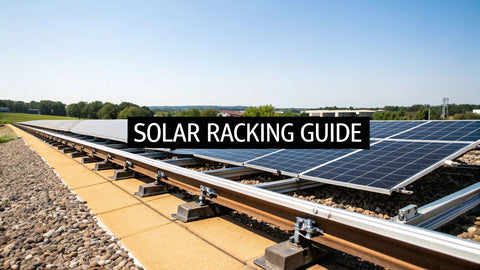
- Confirm the roof's structural capacity and remaining life. A ballasted system adds roughly 4–6 psf. If the roof has five years of life left, re-roof first or use a penetrating system on a new membrane — lifting a 300 kW array to re-roof under it costs $60,000–$100,000 you'll never recover.
- Size to the constraint that binds first: roof area, electrical service capacity, or the consumption cap.
The electrical math that sizes the interconnection
Service capacity often binds before the roof does. The governing math comes from NEC 705.12 (the 120% rule for load-side connections) and NEC 690.8 (continuous-duty sizing at 125%). Here's a worked example at the most common commercial service:
| Design Step | Calculation | Result |
|---|---|---|
| Inverter AC output current (125 kW at 480 V, 3-phase) | 125,000 W ÷ (480 V × 1.732) | 150.4 A |
| Continuous-duty sizing (NEC 690.8, ×1.25) | 150.4 A × 1.25 | 188.0 A |
| Breaker selection (NEC 240.6 standard sizes) | Next standard size above 188 A | 200 A |
| 120% rule check on a 1,000 A bus (705.12) | 1,000 A × 1.20 − 1,000 A main | 200 A available — fits exactly |
| Same check on an 800 A bus | 800 A × 1.20 − 800 A | 160 A available — 125 kW does NOT fit load-side |
That last row kills projects. On an 800 A service, a 125 kW inverter needs a supply-side tap or a service upgrade — either one adds five figures to the budget. I check the bus rating on the first site walk, before the proposal, because discovering it during engineering review is how schedules slip a quarter. For background on the service side, our guides to three-phase power and electrical load calculation cover the fundamentals.
Interconnection: the schedule you don't control
Residential interconnection is a form. Commercial interconnection is a process: application, utility engineering review, possibly a distribution study, an agreement, inspection, and permission to operate. Realistic timelines run 3–9 months depending on the utility and system size, and transformers with high existing solar penetration can trigger upgrade costs the utility assigns to you. Two habits protect the schedule: file the interconnection application the day the design is 80% stable (not after construction documents are finished), and order long-lead equipment — switchgear, transformers, some inverters — as soon as the utility's preliminary review confirms no major upgrades. A 26-week switchgear lead time is the single most common cause of commercial solar schedule slips I've seen, and it's entirely avoidable.
Incentives: the stack that makes the project
Commercial solar economics are built on a stack of incentives. The exact numbers move with federal and state law, so treat this table as a framework and verify current percentages with your tax counsel before modeling:
| Incentive | Mechanism | Typical Value | Key Conditions |
|---|---|---|---|
| Federal Investment Tax Credit (ITC) | Dollar-for-dollar credit against tax liability | 30% of eligible basis (base rate) | Prevailing wage & apprenticeship rules for full rate; adders for domestic content and energy communities |
| MACRS depreciation | Accelerated 5-year schedule | ~20–26% of basis in present value (tax-rate dependent) | Basis reduced by half the ITC; requires tax appetite |
| Bonus depreciation | First-year expensing of eligible basis | Percentage phase-down per current law | Confirm the current-year percentage |
| State/local incentives | Varies: rebates, SRECs, tax exemptions | 0–30%+ of project cost | Highly state-specific; SREC markets reward early movers |
| C-PACE financing | Property-tax-assessed financing | Up to 100% of project cost, 20–30 yr terms | Available in ~30+ states; survives property sale |
Stack a 30% ITC with MACRS at a 21% corporate rate and the federal government is functionally paying for roughly half the system. That's why the tax-equity market exists — businesses without appetite sell the value to those who have it. For the full cost picture, our commercial solar cost guide breaks down project budgets line by line.
Financing structures: who owns the roof asset
| Structure | Ownership | Upfront Cost | Captures ITC/MACRS? | Best For |
|---|---|---|---|---|
| Cash purchase | You | 100% | Yes, fully | Strong balance sheets; maximum lifetime ROI |
| Bank/C-PACE loan | You | 0–20% | Yes, fully | Ownership economics with preserved capital |
| Operating lease | Lessor | $0 | No — lessor captures them | No tax appetite; want off-balance-sheet |
| PPA | Developer | $0 | No — baked into your kWh rate | Long-term price certainty; nonprofits and municipalities |
The decision rule I give CFOs: if you have consistent tax appetite and plan to own the building 15+ years, own the system — nothing beats cash or low-cost debt. If you can't use the credits, or the building's ownership horizon is uncertain, a PPA at a rate 20–40% below your utility tariff is a fine outcome. The worst structure is the one chosen to close the deal fast rather than the one that matches your tax and real-estate position.
Storage and demand management
Commercial storage earns its keep three ways: demand-charge management (discharging during your peak 15-minute window), TOU arbitrage (charging cheap, discharging expensive), and resilience. The sizing logic differs from residential — you're sizing against your peak-shaving target, not overnight autonomy. A warehouse with a 400 kW afternoon peak and a $25/kW demand charge can justify a 200 kW / 400 kWh battery purely on demand savings if the peaks are predictable: 200 kW of shaved peak × $25/kW × 12 months = $60,000 per year. Storage also pairs naturally with on-site generation and EV fleet charging — see our commercial EV charging installation guide for how the loads interact, and the BESS design guide for sizing methodology.
Procurement: EPC selection and contract protections
Commercial projects live or die in the contract. Non-negotiables I insist on for clients:
- A production guarantee with teeth. Guaranteed kWh in year one with a liquidated-damages or make-whole clause, not a vague "estimated output."
- Payment milestones tied to objective events. Mobilization, racking complete, substantial completion, PTO. Never pay ahead of physical progress.
- Roof warranty coordination. The roofer and the solar EPC must acknowledge each other in writing, or the membrane warranty evaporates at the first leak.
- Interconnection cost cap. Utility-assigned upgrade costs above an agreed threshold should be a walk-away trigger for both parties.
- O&M pricing locked for five years. Commercial arrays need annual inspections, IV-curve testing on a sample basis, and vegetation/pest management. Know the cost before you sign.
On the equipment side, buying power matters. Distributors who stock commercial-format modules and three-phase inverters domestically — which is most of what we do at Portlandia — compress schedules and simplify warranty logistics. Browse the commercial & industrial catalog and our commercial energy solutions page for how we structure project supply.
Sector notes: what works where

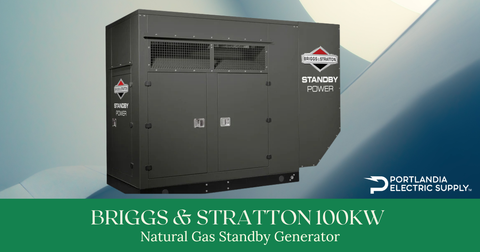
Warehouse and distribution: the ideal commercial host — big flat roofs, daytime-7-day loads, and demand charges storage can shave. Manufacturing: high consumption makes net-metering caps bind early; size to the cap and consider storage for the rest. Office: check the rate schedule first; some office tariffs are so demand-light that solar-only economics stretch past 10 years. Retail and big-box: excellent roofs, but watch lease structures — if you don't own the building, the landlord conversation comes before the engineering. Agriculture: grants (including REAP at the federal level) can cover a quarter to half of project cost for qualifying rural businesses; the application cycle is annual and competitive, so start early. Our overview of solar on commercial buildings covers roof-specific engineering, and the commercial generator guide covers the resilience side that pairs with PV for outage-critical facilities.
Site assessment: what a real feasibility study covers
A credible feasibility study is a document, not a site visit. Before an EPC quotes your project, expect these work items: a structural review of the roof (or a geotechnical review for ground mounts), a shading analysis using on-site measurement or satellite-derived horizon data, electrical as-builts for the service equipment, the utility bill history with interval data, and a preliminary production model. On the roof itself, the details that change designs are parapet heights (they shade low-tilt arrays in winter), rooftop unit density (HVAC condensate and service clearances carve up usable area), and membrane type (ballasted systems on some single-ply membranes need slip sheets; others don't). I've watched a $40,000 design get value-engineered down $18,000 because someone measured the parapet shadows before ordering racking instead of after. Measure twice, model once.
For ground-mount candidates, the screening questions are soil class and frost depth (which drive foundation cost), wetland and setback overlays, and the distance from array to service — every hundred feet of trenching at commercial scale carries real money in conductor and labor. Brownfield and landfill-cap sites qualify for incentive adders in current federal policy, but they also require non-penetrating foundations and sometimes long-term land-use agreements with the environmental regulator.
Operations, monitoring, and the cybersecurity question
Commercial monitoring is not a homeowner app. At 100 kW and above, expect revenue-grade metering where incentives require it, string-level or module-level current monitoring on larger arrays, automated alerting with defined response SLAs, and a data-retention policy that outlives the warranty. The operational value is real: fleets with active monitoring catch soiling events, string outages, and inverter derates weeks or months before a quarterly report would, and every week of an undetected 10% production loss at commercial scale is measurable money.
The newer conversation is cybersecurity. Networked inverters and trackers are industrial control equipment on your LAN, and more than a few utilities and corporate IT departments now treat them that way. Minimum practices worth writing into the O&M contract: segmented VLANs for generation equipment, no default credentials, firmware update schedules with rollback plans, and vendor documentation of their security-update policy. A 500 kW array bricked by a bad actor is a five-figure-per-month problem; the segmentation work is a few hundred dollars of switch configuration.
ROI metrics, defined honestly
Commercial proposals drown in acronyms, so here are the four that matter and what each one hides:
- Simple payback. Net cost ÷ annual savings. Easy to grasp; ignores everything after the payback year and the time value of money. Useful as a sanity check, dangerous as a decision tool.
- Internal rate of return (IRR). The discount rate that zeroes the project's NPV over its life. Commercial solar projects in good rate territories commonly model in the low-to-mid teens. Beware IRRs quoted on pre-incentive costs.
- Levelized cost of energy (LCOE). Lifetime cost ÷ lifetime kWh. Compare it against your blended utility rate, including demand charges converted to an effective $/kWh — that conversion is where most proposals quietly go wrong.
- Net present value (NPV). The single number I trust. It forces every assumption — degradation, rate escalation, O&M cost, discount rate — onto the table where it can be argued with.
On the escalation assumption in particular: a 25-year model at 3% utility escalation versus 2% differs by roughly 20% in lifetime savings. Ask your EPC to show the NPV at 0%, 2%, and 4% escalation. If the project only works at 4%, it doesn't work.
One more metric deserves its own line: demand savings confidence. Any proposal claiming demand-charge savings should state the probability basis — a battery controls demand reliably because it responds in seconds, but PV-only demand savings depend on weather luck at billing-peak moments. A proposal that books 100% of theoretical demand savings from solar alone is telling you its author hasn't watched a cloud cross a warehouse roof at 2 PM on the wrong Tuesday. I have. The bill doesn't care about your annual production average.
Benchmarks by sector: what good projects look like
Patterns from the field, stated as ranges because honest numbers always are. Warehouse/distribution: 150 kW–1 MW rooftops, simple paybacks of 4–7 years in high-rate states with demand charges, the best risk-adjusted economics in commercial solar. Manufacturing: larger systems capped by consumption rules; paybacks of 5–8 years; storage increasingly standard where shift changes create predictable peaks. Retail/big-box: excellent physical hosts; economics hinge on lease structure more than sunshine. Schools and municipalities: PPAs dominate because tax appetite is zero; savings of 20–35% against tariff rates are typical for well-negotiated agreements. Agriculture: with federal rural-energy grants stacked on the ITC, effective project costs can drop 60–70%, producing paybacks under four years — the catch is the application calendar. Across all sectors, the universal warning is the same: the projects that disappoint are the ones where someone modeled the utility escalation or the demand savings optimistically to close a deal.
Future trends worth designing for now
Three shifts are changing commercial design practice. First, module formats keep growing — 700 W+ large-format product is now standard, which reduces racking and labor per watt but concentrates risk in each handling step. Second, storage attachment rates on new commercial projects keep climbing as demand charges and TOU spreads widen; even if you don't buy batteries today, reserving electrical space, breaker positions, and transformer capacity for a future BESS costs almost nothing at design time and five figures as a retrofit. Third, interconnection reform is slowly moving toward hosting-capacity transparency — utilities in leading states now publish feeder-level capacity maps, which lets developers screen sites before signing leases. A project team that designs for storage-ready electrical and checks hosting capacity up front is building for the grid that will exist at year five, not the one that existed at design.
Permitting and the AHJ: the unglamorous critical path
Commercial permits pull in departments residential never meets: structural engineering review, fire marshal (roof access, smoke-vent clearances, rapid shutdown), planning or zoning for ground mounts and carports, and sometimes environmental review for larger sites. Fire-marshal requirements deserve special attention because they reshape layouts: pathway clearances along roof edges and around skylights routinely consume 10–20% of an otherwise usable roof, and smoke-vent setbacks are enforced with zero sympathy at inspection. The fix is early — a fifteen-minute pre-application meeting with the fire marshal saves weeks of redesign. Budget permitting timelines of 4–12 weeks depending on jurisdiction, and add review cycles to that number in any city where commercial solar is still rare. The EPC's permit track record in your specific jurisdiction is a legitimate selection criterion; ask for their last three permit timelines locally, not nationally.
What a commercial O&M visit actually includes
A professional annual O&M scope runs deeper than a visual walk. Expect torque-check sampling on racking connections, thermal imaging of modules and electrical terminations under load, IV-curve tracing on a rotating sample of strings, inverter log review and firmware status, roof-condition documentation around penetrations, and vegetation or pest remediation where needed. Deliverables should be a written report with flagged items and photographic evidence — a contractor who emails "all good" after a site visit is billing you for a walk, not an inspection. At 250 kW, a full-scope annual visit typically runs $2,500–$5,000, and it's the cheapest insurance the asset has: thermal imaging catches failing connections while they're still a $200 repair instead of a fire-marshal conversation.
Getting started: the first 30 days
The right opening sequence: gather twelve months of bills and request interval data from the utility in week one; commission a structural roof review in week two; issue a short RFP to two or three EPCs with local permit history in week three; and hold a pre-application call with the fire marshal and utility interconnection desk in week four. None of that costs real money, and it compresses the total project timeline by months compared to the more common sequence of falling in love with a proposal first and discovering the constraints later. The businesses that get the best solar outcomes treat month one as discovery, not procurement. Every successful commercial array I have seen started exactly this way, and every troubled one skipped it.
Frequently asked questions
How much does a commercial solar system cost per watt?
Installed commercial systems typically run $1.50–$2.50 per watt before incentives, depending on size, roof type, and region — with larger systems landing at the low end. After a 30% ITC and MACRS, net effective cost for a tax-paying owner often falls to $0.75–$1.30 per watt.
How big can a commercial rooftop system be?
Physically, roughly 8–12 watts per square foot of usable roof. A clear 20,000 sq ft warehouse roof section supports about 160–240 kW. The binding constraints are usually the utility's consumption cap, the electrical service size under NEC 705.12, and structural capacity — not the roof itself.
How long does a commercial solar project take?
From signed contract to permission to operate, plan on 6–12 months. Permitting and interconnection consume most of it; physical construction on a 250 kW rooftop typically runs 3–6 weeks. File interconnection paperwork early and order long-lead electrical gear as soon as the utility's preliminary review is clean.
Is solar worth it for a leased building?
It can be, through a landlord-owned system, a PPA with the developer taking roof rights, or a tenant-landlord cost-sharing agreement. The lease's remaining term must exceed the financing horizon, and roof restoration responsibilities need to be written down. Get the landlord in the conversation before engineering starts.
Do commercial solar panels require much maintenance?
Minimal but not zero. Budget for annual inspection, monitoring review, and cleaning where soiling justifies it — typically $10–$20 per kW per year for a professional O&M contract. Inverters are the wear item: expect string-inverter replacements or refurbishments around year 12–15.
How do I choose between roof, carport, and ground mounting?
Roof first when the structure is sound and has 15+ years of membrane life — it is the cheapest real estate you own. Carports make sense when parking lot space is abundant and the roof is constrained or leased; expect roughly 30 to 60 percent higher installed cost per watt for the steel. Ground mounts fit when land is cheap and interconnection distance is short. Model all three against the same utility bill before committing.
What is the difference between a PPA and a lease for commercial solar?
In a lease you pay a fixed monthly amount regardless of production; in a PPA you pay per kWh actually generated, so performance risk sits with the developer. Both keep the system off your balance sheet and both leave the tax incentives with the system owner. PPAs generally suit energy-price hedgers; leases suit organizations that want payment certainty.
Can solar eliminate my demand charges?
Solar alone reduces demand charges only when your peaks reliably coincide with sunshine — retail and office profiles sometimes qualify, evening-peaking manufacturers rarely do. Battery storage is the reliable demand-charge tool: it discharges into the peak window regardless of weather, which is why hybrid designs dominate new commercial proposals.
Related resources
- The Cost of Commercial Solar Panels, Broken Down
- Solar Panels for Commercial Buildings
- Understanding Three-Phase Power
- Choosing a 100 kW Inverter
- Commercial EV Charging Station Installation
- Battery Energy Storage System Design
- Commercial & Industrial Equipment
- Commercial Energy Solutions
The pattern across every successful commercial project I've touched is the same: the bill drives the design, the interconnection drives the schedule, and the tax position drives the financing structure. Get those three right in the first month and construction is the easy part. Get any of them wrong and no module price will save the spreadsheet.