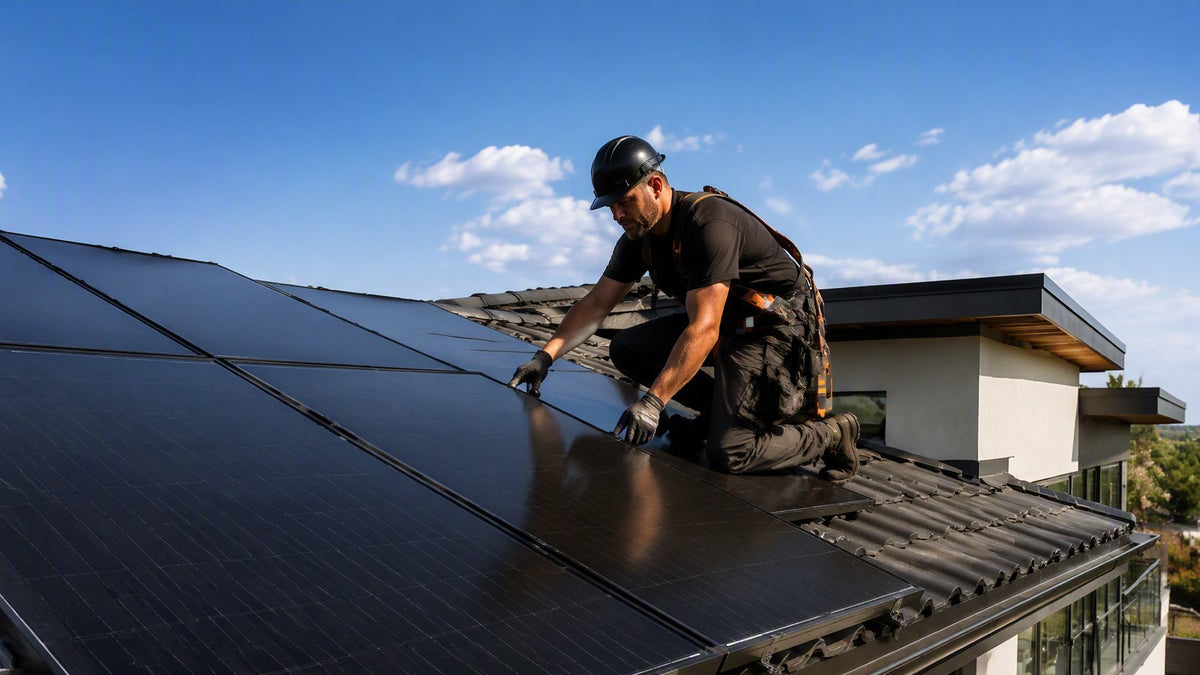
I've specced, hauled, and warranty-claimed solar modules for a living for years, and the question I get at the counter more than any other is some version of "which panel brand should I actually buy?" The honest answer is that there are maybe ten manufacturers whose panels I'd bolt to my own roof without a second thought — and the gap between them is smaller than the marketing wants you to believe. This guide ranks the best solar panel brands and companies for 2025–2026 using the numbers that matter on a roof: module efficiency, degradation rate, warranty terms, temperature coefficient, and whether the company will still answer the phone in year 19.

One thing before the rankings. If you've read our breakdown of the Tier 1 solar panel list, you already know that "Tier 1" is a BloombergNEF bankability label, not a quality score. It measures the manufacturer's balance sheet, not the module on your roof. Some of the best-built panels we've ever sold come from companies that bounce on and off that list. Keep that straight and the rest of this gets easy.
How we judge a solar panel brand
Every brand below is scored on five things I can verify with a datasheet, a watt-meter, or a warranty claim:
- Module efficiency. The percentage of sunlight hitting the glass that comes out the MC4 leads as DC power. Residential flagships now run 21% to 24%. Anything under 20% in 2026 had better be cheap.
- Annual degradation. All panels lose output every year. The best N-type and back-contact modules are warranted at 0.25%–0.40% per year; commodity P-type PERC sits at 0.55%. Over 25 years that's the difference between 89% and 87.5% of nameplate — real kilowatt-hours.
- Warranty pairing. Product (workmanship) warranty and performance warranty are two separate documents. A 25/25 or 40/25 pairing tells you the manufacturer expects to be around. A 12/25 pairing tells you something else.
- Temperature coefficient. Panels lose power as they heat up. On a dark shingle roof in August, cell temperature runs 25–35°C above ambient. A coefficient of −0.29%/°C beats −0.41%/°C by roughly 2–3% of real-world summer output.
- Support and supply. I've been on hold with panel warranty departments so you don't have to be. US-based claims handling and a track record of honoring RMAs count for a lot when a $400 module dies in year 12.
Quick comparison: the 10 best solar panel brands for 2025–2026
| Brand | Flagship residential line | Max efficiency | Product / performance warranty | Warranted degradation | Cell tech |
|---|---|---|---|---|---|
| SunPower (Maxeon) | Maxeon 7 | ~24.1% | 40 yr / 25 yr (registration) | 0.25%/yr | IBC back-contact |
| REC Group | Alpha Pure-RX | ~22.6% | 25 yr / 25 yr | 0.25%/yr | HJT heterojunction |
| Panasonic | EverVolt H Series | ~22.2% | 25 yr / 25 yr (with registered installer) | 0.25%/yr | HJT heterojunction |
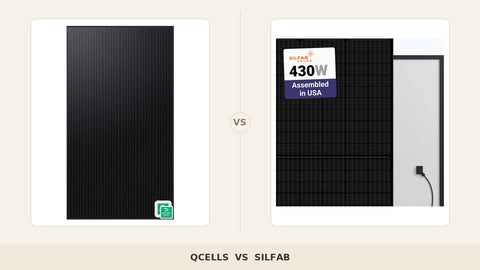
| Silfab | Silfab Elite / Prime NTC | ~21.4% | 25 yr / 30 yr | 0.5%/yr first, then ~0.4% | N-type back-contact / TOPCon |
| Qcells | Q.TRON G2 | ~22.5% | 25 yr / 25 yr | 0.33%/yr | N-type TOPCon |
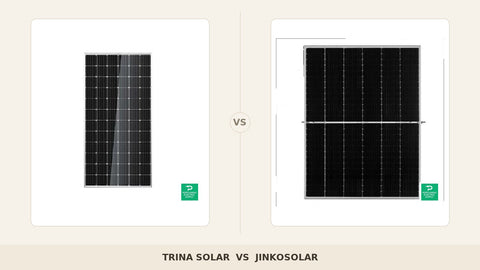
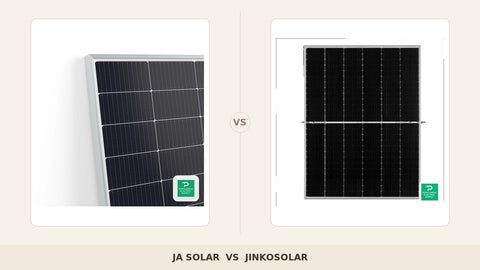
| Jinko Solar | Tiger Neo | ~22.3% | 25 yr / 30 yr | 0.40%/yr | N-type TOPCon |
| Trina Solar | Vertex S+ | ~22.0% | 25 yr / 30 yr | 0.40%/yr | N-type TOPCon |
| LONGi | Hi-MO X6 / Hi-MO 9 | ~22.8% | 25 yr / 30 yr | 0.40%/yr | HPBC back-contact |
| Canadian Solar | TOPHiKu6 | ~22.5% | 25 yr / 30 yr | 0.40%/yr | N-type TOPCon |
| JA Solar | DeepBlue 4.0 | ~22.0% | 25 yr / 30 yr | 0.40%/yr | N-type Bycium |
Efficiency and degradation figures are manufacturer-published nameplate values for current flagship residential modules — always confirm against the exact datasheet for the SKU you're buying, because a brand's 54-cell residential panel and its 72-cell commercial panel are different animals.
The brands, one at a time
1. SunPower / Maxeon — the efficiency king, with an asterisk
Maxeon's interdigitated back-contact (IBC) cells have held the residential efficiency crown for a decade, and the Maxeon 7 line pushes past 24% module efficiency — numbers nobody else touches at retail. The metal-grid foundation under the cell makes these panels absurdly resistant to microcracking, which is the failure mode I see kill more modules than anything else on reroofs and hail claims. The 40-year product warranty (with registration) is the longest in the business.
The asterisk: Maxeon's corporate structure has been through a rough stretch, and SunPower's US dealer business was sold off in 2024, so verify who holds your warranty paper before signing. The panel itself? Still the one I put on customers who say "I never want to think about this roof again."
2. REC Group — the installer's sleeper pick
REC's Alpha Pure-RX uses heterojunction (HJT) cells — N-type silicon sandwiched with amorphous layers — which gives it a temperature coefficient around −0.24%/°C, the best on this list. On hot roofs that coefficient is worth real money. REC's lead-free, low-solder construction also survives handling abuse better than most; my crew has muscled these onto two-story comp roofs in August without a single cracked-cell callback. The 25/25 warranty through a REC-certified installer includes labor, which almost nobody else covers.
3. Panasonic EverVolt — the safe pair of hands
Panasonic has been building HJT cells since the 1990s under the old HIT brand, and the EverVolt line inherits all of it. Expect ~22% efficiency, a −0.26%/°C coefficient, and a 25/25 warranty when installed by an authorized installer. Panasonic's warranty department is genuinely one of the better ones — I've had exactly two EverVolt claims and both resolved with a replacement module in under six weeks. These are not the cheapest panels on the truck and they're not trying to be.
4. Qcells — the volume leader that earns it
Qcells assembles residential modules in Dalton, Georgia and Cartersville, Georgia — the largest solar factory in the Western Hemisphere — which matters for lead times and for the domestic-content adder on some projects. The Q.TRON G2 N-type TOPCon line runs about 22.5% efficiency with 0.33%/yr degradation, backed by a 25/25 warranty. If you're buying panels direct or in volume, Qcells' supply chain is the most predictable in the US market right now.
5. Silfab — the North American dark horse
Silfab builds panels in Washington State and South Carolina, and their N-type back-contact Elite line is a legit 21%+ module with a 25-year product and 30-year performance warranty. What sells me is the build: thicker frames, generous junction boxes, and MC4-Evo 2 connectors that don't feel like toys. For customers in Canada and the northern US who want a cold-weather-proven, North-American-made panel, Silfab is usually my first quote.
6. Jinko Solar — the global volume king
Jinko ships more gigawatts than anyone on earth, and the Tiger Neo N-type TOPCon line is why: ~22% efficiency, 0.40%/yr degradation, 25/30 warranty, at pricing that makes installers' margins work. I've put thousands of Tiger Neo panels on residential and light-commercial roofs. The panel is honest. The one caution is that Jinko's US warranty support runs leaner than REC or Panasonic, so buy from a distributor who will champion your claim — which, full disclosure, is a big part of what we do at Portlandia.
7. Trina Solar — the smart-money value
Trina's Vertex S+ is a dual-glass N-type module, and dual-glass matters more than most buyers realize: no polymer backsheet to embrittle, better fire rating, and a 30-year performance warranty that reflects real confidence. Efficiency around 22% with 0.40%/yr warranted degradation. Trina also makes some of the best-documented datasheets in the industry — every derate, every mechanical load rating, printed plainly. Engineers love them for a reason.
8. LONGi — the back-contact disruptor
LONGi's Hi-MO X6 uses hybrid passivated back-contact (HPBC) cells, moving the busbars off the front of the cell the same way Maxeon does — at commodity-adjacent pricing. Efficiency pushes 22.8%. LONGi is the world's largest mono-wafer producer, so their silicon quality is genuinely elite; the open question for US buyers is tariff exposure and long-term support infrastructure. On price-per-watt for a premium cell architecture, nothing else is close right now.
9. Canadian Solar — the workhorse
Canadian Solar's TOPHiKu6 N-type line does everything well and nothing spectacularly: ~22.5% efficiency, 0.40%/yr degradation, 25/30 warranty, and massive US distribution. Their real strength is breadth — residential 54-cell, commercial 72-cell, and utility formats all sharing cell architecture, so mixed projects stay consistent. If you're speccing a commercial rooftop alongside a house, Canadian keeps it simple.
10. JA Solar — the budget pick that isn't junk
JA Solar's DeepBlue 4.0 N-type panels land at roughly 22% efficiency with a 25/30 warranty at some of the lowest dollars-per-watt among bankable brands. Are they a Maxeon? No. Are they a perfectly good panel for a budget-sensitive install with a 25-year horizon? Yes. I've spec'd JA on rental properties and farm shops where the payback math matters more than bragging rights, and the failure rate has been boring — which is the highest compliment in this business.
The degradation math that actually decides this
Here's the part the brochures skip. A 0.25%/yr panel and a 0.55%/yr panel look identical on install day. Run the warranty math over 25 years:
| Warranted degradation | Year 1 warranted output | Year 25 warranted output | Cumulative production vs 0.55% baseline (10 kW array, 1,400 kWh/kW/yr) |
|---|---|---|---|
| 0.25%/yr (Maxeon, REC, Panasonic) | ≥98.0% | ≥92.0% | +~4,900 kWh over 25 yrs |
| 0.33%/yr (Qcells) | ≥98.0% | ≥90.1% | +~3,500 kWh over 25 yrs |
| 0.40%/yr (Jinko, Trina, LONGi, Canadian, JA) | ≥99.0% (N-type typical) | ≥87.4% | +~2,400 kWh over 25 yrs |
| 0.55%/yr (commodity P-type PERC) | ≥97.5% (incl. LID) | ≥84.8% | baseline |
NREL's long-running field studies put median real-world degradation for modern mono modules around 0.5%/yr, with premium N-type and back-contact fleets measuring closer to 0.3%/yr. At $0.15/kWh, the spread between a 0.25% panel and a 0.55% panel on a 10 kW system is roughly $700–$750 of electricity over the warranty life — usually more than the price premium for the better panel. That's why I push customers toward the top of the table when the roof is small and every watt counts, and toward the middle when there's racking space to spare.
Electrical design notes: wire and protection sizing for string systems
Brand choice doesn't change the code work. Source circuits still get sized at 156% of Isc (125% continuous × 125% irradiance, NEC 690.8), and conductors land on NEC 310.16 ampacities. The table we keep laminated in the shop for typical residential strings (copper THWN-2, 75°C terminations):
| Conductor (Cu THHN/THWN-2) | 75°C ampacity (NEC 310.16) | Max OCPD (NEC 240.6(A)) | Typical solar use |
|---|---|---|---|
| 12 AWG | 25 A | 20 A | Single string up to ~12.5 A Isc |
| 10 AWG | 35 A | 30 A | Single string up to ~19 A Isc / long runs |
| 8 AWG | 50 A | 50 A | Two paralleled strings |
| 6 AWG | 65 A | 60 A | Inverter AC output, 7.6–10 kW |
| 4 AWG | 85 A | 80 A | Inverter AC output, 11.5–15 kW class |
Get the wire right and the panel brand debate stops mattering real fast — a 2% efficiency edge evaporates against a 3% voltage-drop loss on an undersized 200-foot run. For series/parallel string math, our guides on connecting panels in series and series wiring practice walk the voltage stacking, and how to test panel output covers the clamp-meter commissioning check I run on every job.
Warranty terms, side by side
| Brand | Product warranty | Performance warranty | Labor covered? | US claims support |
|---|---|---|---|---|
| SunPower/Maxeon | 40 yr (registered) | 25 yr @ 88–92% | Yes, via dealer network | Strong (verify current holder) |
| REC | 25 yr | 25 yr @ 92% | Yes, certified installer | Strong |
| Panasonic | 25 yr | 25 yr @ 92% | Partial, authorized installer | Strong |
| Qcells | 25 yr | 25 yr @ 90.6% | No | Good |
| Silfab | 25 yr | 30 yr @ 85.1% | No | Good (US/CA offices) |
| Jinko / Trina / Canadian / JA / LONGi | 25 yr | 30 yr @ 87.4% | No | Distributor-led |
Read the performance line, not just the years. A 30-year warranty that bottoms out at 87.4% can be worth less than a 25-year warranty holding 92%. Our deeper explainer on solar panel warranties breaks down how claims actually get paid.
Which brand for which job — my counter answers
- Small roof, max production: Maxeon 7 or REC Alpha Pure-RX. Pay the premium, harvest the watts.
- Best balance of price and warranty: Qcells Q.TRON or Panasonic EverVolt.
- North American content: Silfab or Qcells (Georgia-built).
- Tight budget, still bankable: JA Solar or Trina Vertex S+.
- Commercial / mixed-format project: Canadian Solar.
- Off-grid or battery-first build: panel brand matters less than charge control and storage — see our off-grid panel buyer's guide and the battery sizing walkthrough.
And whatever you pick: keep them clean and check them yearly. Ten minutes with the maintenance checklist catches the shading, soiling, and connector issues that cost more production than the difference between any two brands on this page. If you're still mapping brand to inverter, pair this with our solar inverter picks and the Tier 1 rankings for the bankability angle. Curious how panel sizes translate to real roofs? 400W vs 500W panels and 450W vs 550W panels run the side-by-side math. For pure efficiency chasers, the most efficient panels of 2026 guide goes deeper, and high-efficiency panel options covers the value tier.
N-type vs P-type: the cell chemistry behind the rankings
Every panel in the top half of this list is built on N-type silicon — TOPCon, HJT, or back-contact — and that's not an accident. P-type PERC cells, the industry standard from roughly 2016 to 2023, suffer light-induced degradation (LID) from boron-oxygen pairs in the wafer: a brand-new PERC panel loses 1.5–2% of its output in its first weeks in the sun before stabilizing. N-type wafers are doped with phosphorus instead of boron, which kills the LID mechanism almost entirely and pushes carrier lifetimes up. That's why N-type datasheets can warrant 99% first-year output where P-type warranted 97.5%, and why N-type degradation warranties tightened from 0.55% to 0.40%/yr or better.
There are three N-type flavors worth knowing by name:
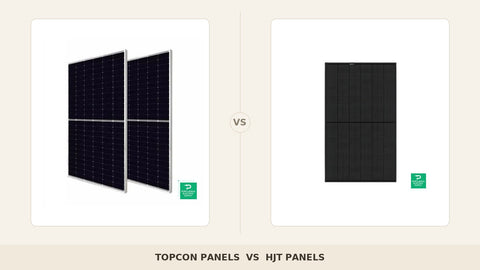
- TOPCon (tunnel oxide passivated contact): the volume leader — Qcells, Jinko, Trina, Canadian, JA all build it. Efficient (22–22.5% module level), cheap to manufacture on converted PERC lines, and proven at gigawatt scale. This is the sensible default for most roofs in 2026.
- HJT (heterojunction): REC and Panasonic. Best temperature coefficients in the business (−0.24 to −0.26%/°C), excellent low-light behavior, but more expensive cells and more delicate metallization. Hot-climate roofs get the most out of HJT.
- Back-contact (IBC/HPBC): Maxeon and LONGi. All the electrical contacts move to the back of the cell, so zero front-side shading from busbars — that's where the 23–24% efficiencies come from. Premium pricing, premium look (no visible gridlines), and the best microcrack tolerance.
I stopped quoting P-type PERC on new residential jobs about eighteen months ago. The price gap collapsed and the warranty math doesn't lie.
Temperature coefficient: the spec desert and southern roofs live or die on
Standard Test Conditions rate panels at a 25°C cell temperature. Real roofs don't cooperate. On a 95°F (35°C) afternoon, a dark-shingle roof pushes cell temperatures to 60–70°C. Every degree above 25 costs you the coefficient:
| Brand / line | Temp coefficient (Pmax) | Output loss at 65°C cell temp (40°C above STC) | Real 400W-class panel output at 65°C |
|---|---|---|---|
| REC Alpha Pure-RX (HJT) | −0.24%/°C | −9.6% | ~362 W |
| Panasonic EverVolt (HJT) | −0.26%/°C | −10.4% | ~358 W |
| Maxeon 7 (IBC) | −0.27%/°C | −10.8% | ~357 W |
| Qcells Q.TRON (TOPCon) | −0.30%/°C | −12.0% | ~352 W |
| Jinko Tiger Neo (TOPCon) | −0.30%/°C | −12.0% | ~352 W |
| Commodity P-type PERC | −0.35 to −0.41%/°C | −14.0 to −16.4% | ~336–344 W |
In Phoenix, Las Vegas, or the San Joaquin Valley, that table is worth 3–5% of annual production — hundreds of kilowatt-hours a year on a typical 8–12 kW system. In Seattle or Portland (where I do most of my work) it matters less and racking-space efficiency matters more. Match the spec to the climate, not the brochure.
What panels cost in 2025–2026, per watt

Module-only pricing moves monthly with tariffs and polysilicon markets, but here's the ladder we've been quoting at the counter, per DC watt for the module alone, volume-dependent:
| Tier | Brands | Module-only $/W (typical range) | Installed system $/W context |
|---|---|---|---|
| Premium flagship | Maxeon, REC, Panasonic | $0.45–$0.65 | $3.10–$3.60 |
| Premium value | Qcells, Silfab, LONGi HPBC | $0.35–$0.50 | $2.85–$3.30 |
| Bankable volume | Jinko, Trina, Canadian, JA | $0.28–$0.42 | $2.60–$3.10 |
The panel is only 12–18% of an installed system's cost — labor, racking, inverter, permitting, and overhead eat the rest. That's the strongest argument for buying a better module: upgrading from a $0.32/W panel to a $0.50/W panel on a 10 kW job adds about $1,800 to a $30,000 project while improving 25-year production by several thousand kilowatt-hours. Cheap panels on an expensive roof are false economy. Expensive panels on a barn? Run the math both ways.
Mistakes I watch buyers make
First, chasing the highest efficiency number when the roof has space to spare. Efficiency is watts per square foot — if you have the square feet, a mid-efficiency TOPCon panel at $0.10/W less wins on pure economics. Second, ignoring the warranty holder. I've had customers come in with dead panels from defunct brands — the module is a 25-year product, so the company's staying power is a spec. Third, buying on panel brand while letting the installer cheap out on racking and flashings. A Maxeon panel on a leaky L-foot is still a leaky roof. Fourth, mixing old and new modules on a string. Mismatched Imp pulls the whole string down — if you're expanding an array, put the new panels on their own MPPT or their own microinverters.
How to actually buy — the five questions to ask any supplier
- What's the exact model number, and can I see the current datasheet? (Not the marketing one-pager — the IEC datasheet.)
- Who holds the warranty, and is labor included? Get the claims process in writing.
- What's the warranted year-1 and year-25 output? If they can't answer, they haven't read the warranty either.
- What's the temperature coefficient? If you're in a hot climate, this is the question that separates pros from order-takers.
- What's the lead time and what's the tariff exposure on this batch? 2025–2026 trade policy has moved landed costs by double digits in a single quarter; a good supplier tells you upfront.
If you want a second set of eyes on a quote — brand choice, string design, storage pairing — that's literally our day job. We stock and ship panels from most of the brands above, and our inverter guide covers the other half of the system decision.
Build quality you can feel: frames, glass, and load ratings
Datasheets list mechanical load ratings most buyers never read. Front (snow) load and rear (wind uplift) load are tested per IEC 61215, and the numbers vary more than efficiency does. Here's what the current flagships publish:
| Brand / line | Glass format | Rated front load (Pa) | Rated rear load (Pa) | Frame notes |
|---|---|---|---|---|
| Maxeon 7 | 3.2 mm tempered, glass-backsheet | 5,400 Pa | 2,400 Pa | Heavy anodized frame, copper backing on cells |
| REC Alpha Pure-RX | 3.2 mm tempered, glass-backsheet | 5,400 Pa | 4,000 Pa | Twin-support frame design |
| Trina Vertex S+ | Dual-glass 1.6+1.6 mm | 5,400 Pa | 2,400 Pa | Glass-glass, no backsheet to age |
| Qcells Q.TRON G2 | 3.2 mm tempered, glass-backsheet | 5,400 Pa | 2,400 Pa | Standard 30 mm frame |
| Canadian TOPHiKu6 | 3.2 mm tempered, glass-backsheet | 5,400 Pa | 2,400 Pa | Standard 30–35 mm frame |
Convert it: 5,400 Pa is about 113 psf — roughly a 4-foot wet snow drift. If you live under lake-effect snow or on a coastal ridge with 140 mph design winds, those rear-load numbers belong in your permitting package, and the brand conversation narrows fast. Dual-glass modules like the Vertex S+ also carry a better fire rating (Class A without argument) and zero backsheet-embrittlement risk, which is why I've started spec'ing them on every ag building and every customer's "forever house."
Bifacial: when the back of the panel earns its keep
Most residential rooftop installs are monofacial — the panel sits 4 inches off shingles and sees no rear-side light, so bifacial gain is a rounding error. Bifacial earns its premium on ground mounts, carports, and flat commercial roofs over light-colored membrane, where rear-side albedo adds 5–12% real production. Trina, Canadian, JA, and LONGi all publish bifacial TOPCon lines with bifaciality factors of 75–85%. If you're planning a ground-mount racking build, bifacial is worth pricing; on a flush shingle roof, skip it and buy efficiency instead.
The 2025–2026 supply landscape, in plain terms
Three things moved the market in the last eighteen months. First, tariffs: antidumping and countervailing duties on Southeast Asian cell and module imports raised landed costs on some channels, which is part of why Georgia-built Qcells and US-assembled Silfab have quote advantages that didn't exist two years ago. Second, the N-type transition finished — P-type PERC is now the discount bin, not the default. Third, domestic manufacturing incentives under the 45X credit pulled real factory capacity online, which stabilized lead times: we went from 14-week quotes on some lines in 2023 to 2–4 week availability on mainstream SKUs now. What that means for you: brand availability in 2026 is genuinely good, pricing is competitive, and the risk has shifted from "can I get panels" to "will this company honor a claim in 2045." Buy the warranty holder, not the panel.
Our scoring, on the record
Every brand above was scored 1–10 on each criterion and weighted the way I'd weight it spending my own money: efficiency 20%, degradation 25%, warranty depth 20%, temperature coefficient 15%, support and supply 20%. Maxeon wins on points, REC wins on balance, Qcells wins on value-weighted score. If your roof, climate, or budget shifts the weights, your winner shifts too — that's the honest version of every "best brands" list ever written.
I've sold most of these brands, warranty-claimed several of them, and pulled dead examples of two off roofs. What I haven't seen in fifteen years is a customer regret buying the better panel once the system was on and the monitoring app was live. Buy once, cry once, harvest for thirty years.
Regional picks: matching the panel to the zip code
Pacific Northwest and upper Midwest: prioritize low-light behavior and racking-space efficiency. HJT and back-contact panels (REC, Maxeon, LONGi HPBC) squeeze the most out of diffuse-light winters, and partial shade from tall firs makes every watt per square foot count. Southwest desert: temperature coefficient is king — REC and Panasonic's −0.24 to −0.26%/°C coefficients are worth a full panel's output across a 20-module array over the year. Gulf Coast and hurricane country: read the rear-load rating first (4,000 Pa rear on REC's twin-frame design is the number to beat), and confirm the module is on your insurer's approved list before the install, not after the claim. Northern snow country: 5,400 Pa front load is table stakes, and a dual-glass Trina Vertex S+ shrugs off the freeze-thaw cycling that embrittles cheap backsheets by year eight.
One more field note before you buy
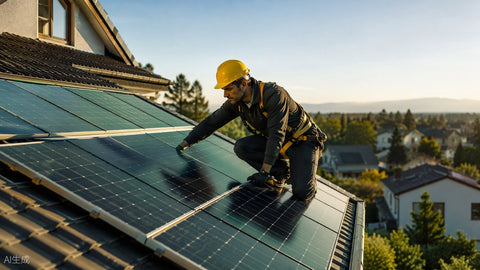
The single best predictor of a happy solar customer I've seen isn't the panel brand — it's whether the installer torqued the mid-clamps to spec, flashed the penetrations like a roofer, and left the customer a printed as-built with string maps. A Jinko system installed by a craftsman will outproduce and outlast a Maxeon system slapped on by a storm-chasing crew, every time. Vet the installer as hard as you vet the brand: ask for their NABCEP cert number, three references older than five years, and who answers the service line at 7 a.m. on a Tuesday. The brands on this page will all do their job for three decades. Make sure the humans on your roof do theirs.
The bottom line
Buy Maxeon or REC when the roof is small and the budget allows, Qcells or Panasonic for the balance most homes need, Silfab for North American content, and Jinko, Trina, Canadian, JA, or LONGi when watts-per-dollar leads. Then spend the money you saved — or didn't — on good racking, a quality inverter, and an installer who answers the phone. The panels are the easy part. They've been the easy part for years, and every brand on this list has earned its place on a roof.
A note on monitoring and commissioning
Whichever brand lands on your roof, insist on module-level or at least string-level monitoring from day one, and keep the commissioning report. The day-one production numbers are your baseline for every future warranty conversation — a degradation claim without a clean baseline dies in the first email. I photograph every array's nameplate stickers, save the IV curve traces when the commissioning tech runs them, and file the permit sign-off with the warranty PDFs. Fifteen minutes of paperwork on install day is the difference between a two-email RMA and a six-month fight in year fourteen. Do it once, file it, forget it.
Last thing. Prices and models in this guide reflect the 2025–2026 product cycle, and manufacturers refresh lines every 12–18 months. Before you sign, pull the current datasheet for the exact SKU on your quote and compare it against the tables here — efficiency, degradation, and both warranty terms. If the numbers match or beat what we published, buy with confidence. If they don't, ask why.
Frequently asked questions
What is the best solar panel brand in 2025?
For maximum efficiency and warranty depth, SunPower/Maxeon (up to ~24.1% efficiency, 40-year product warranty) leads. For the best balance of performance, warranty, and installer support, REC and Panasonic EverVolt are the top alternatives. For value at scale, Qcells, Jinko, and Canadian Solar deliver bankable N-type modules at lower cost per watt.
Does Tier 1 mean a solar panel is high quality?
No. Tier 1 is a BloombergNEF bankability classification based on the manufacturer's financials and bank-financed project volume — not module quality, efficiency, or warranty strength. Use it as a financial-stability screen, then compare efficiency, degradation, and warranty terms to judge the panel itself.
How much does panel degradation matter over 25 years?
Substantially. A panel warranted at 0.25%/yr degradation retains about 92% of nameplate at year 25, versus about 84.8% for a 0.55%/yr panel. On a 10 kW array producing 1,400 kWh per kW annually, that gap is roughly 4,900 kWh over the warranty life — several hundred dollars of electricity at typical retail rates.
Are Chinese-made solar panels reliable?
The major Chinese manufacturers — Jinko, Trina, LONGi, Canadian Solar, JA Solar — build bankable N-type modules with 25-year product and 30-year performance warranties, and their field failure rates are low. The practical differences versus premium brands are slightly higher warranted degradation (0.40% vs 0.25%/yr) and warranty support that runs through your distributor rather than a US claims office.
What efficiency should I look for in a residential solar panel?
Current flagship residential modules run 21% to 24%. Below 20% only makes sense at a steep discount. Efficiency matters most when roof space is limited — a 22.5% panel packs roughly 8–10% more watts into the same racking footprint as a 20.5% panel, which can decide whether you offset 100% of your usage or 90%.
How long do solar panels from the top brands actually last?
Warranties run 25–40 years, but modules routinely produce past 30–35 years. NREL field data shows modern mono modules degrading around 0.3–0.5% annually, so a quality panel at year 30 is typically still making 85–90% of its original output. The weak links over that horizon are usually connectors, backsheets on older P-type modules, and installation workmanship — not the cells.