Updated September 2026 — refreshed against the live PES catalog; product pricing verified 2026-09-26.
2026 product line update
| Product | Class | Price |
|---|---|---|
| Canadian Solar 710W TOPCon Bifacial Solar Panel | 710W | $340.80 |
| Hyundai 640W 156-Cell TOPCon Bifacial Solar Panel | 640W | $220.78 |
| Thornova Solar TS-BGT72(600) 600W Bifacial Solar Panel | 600W | $165.76 |
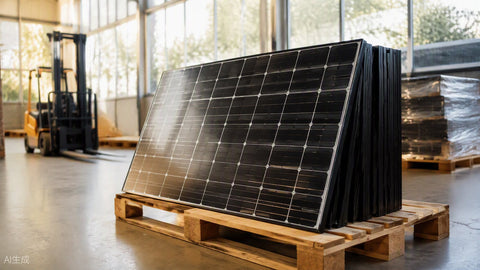
| Thornova Solar 595W Solar Panel 144 Cell Bifacial TS-BGT72(595) Wholesale 31 panels per pallet | 595W | $164.64 |
| ZNShine Solar 585W 144-Cell Bifacial Solar Panel | 585W | $246.99 |
| Hyundai HiS-S585OJ 585W Clear on Transparent156 Half-Cell Bifacial Solar Panel | 585W | $195.86 |
Live prices verified 2026-09-26. The current pallet line tops out at 550–640W, plus the Canadian Solar 710W TOPCon flagship panel.
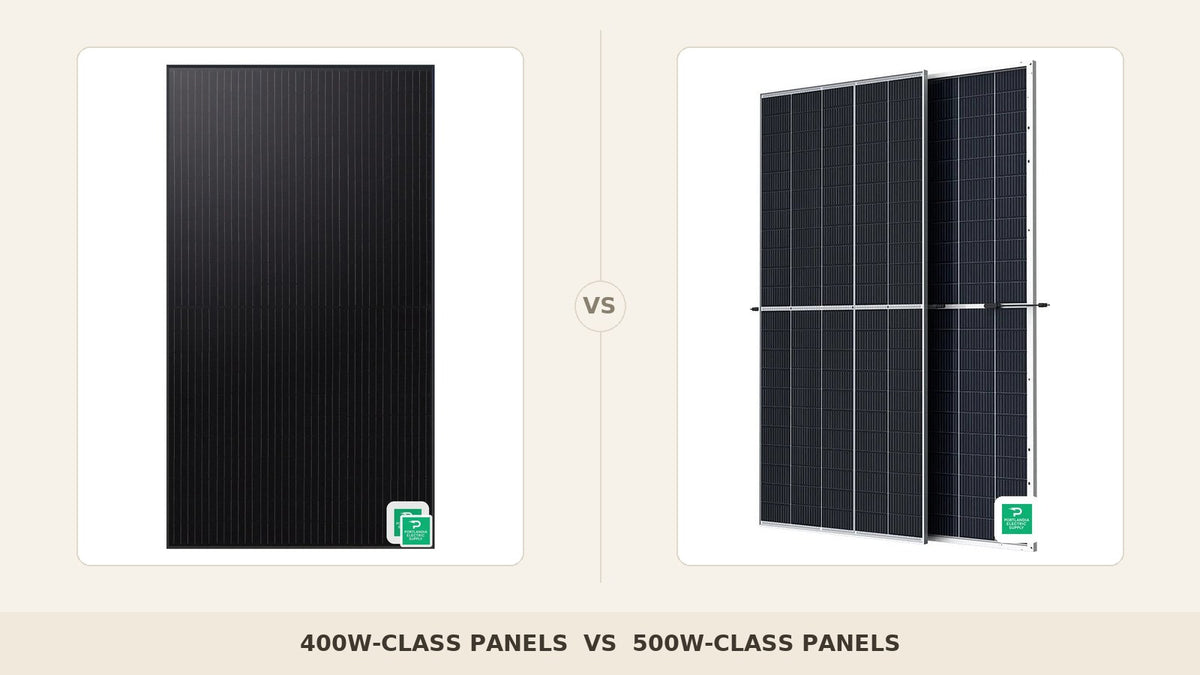
Pick any distributor price sheet in 2026 and you will see the same pattern: 400W-class residential modules on clearance, 500W-class modules at the volume sweet spot, and contractors asking whether the jump is worth it. The honest answer is that wattage class is a logistics and roof-geometry decision more than a technology decision. Both classes use the same half-cut cell architecture, both carry 25-year-class warranties from Tier 1 makers, and both will outproduce their datasheets on a cool March morning. The differences that matter are panel count per kW, weight per panel, price per installed watt, and what physically fits your roof.
We move both classes through the warehouse every week, and the crews who install them have strong opinions — mostly about the 500W class saving their backs on rail and clamps, and occasionally about a 27 kg panel on a windy two-story roof. Both opinions are correct.
The Shared Platform: What Both Have in Common
Before the differences, the common ground. Both classes in 2026 are built on 182mm-class half-cut monocrystalline cells, almost entirely N-type TOPCon at the 500W level and a PERC/TOPCon mix at 400W. Both run 30–35mm frames, MC4-EVO2-class connectors, 1,500V system ratings, and IP68 junction boxes. Both degrade at roughly 0.4–0.55% per year after a 1–2% first-year drop. If someone tells you a 500W panel is "better technology," ask them which specific datasheet line they mean — the honest answer is usually just cell generation and format size.
Side-by-Side Comparison
| Specification | 400W-Class Panels | 500W-Class Panels |
|---|---|---|
| Typical Wattage Range | ~395–445W (established residential class) | ~480–520W (current residential/large-format class) |
| Cell Generation | Mix of PERC and N-type, half-cut ~108-cell | Predominantly N-type TOPCon, half-cut ~108–120 cell |
| Module Efficiency | ~20.0–21.5% class | ~21.0–23.0% class |
| Physical Size | ~1.9m × 1.1m class (verify per model) | ~2.1m × 1.1m class (verify per model) |
| Weight | ~21–23 kg class — easy two-person handling | ~24–28 kg class — heavier per panel, fewer panels |
| Panels per 8 kW System | ~18–20 panels | ~15–17 panels |
| BOS Impact | More rails, clamps, and roof attachments per kW | Fewer attachments and less rail per kW — labor savings |
| Market Position (2026) | Mature/clearance pricing as market moves up-class | Current volume sweet spot with newest cell tech |
The full spec and pricing deep-dive on the 500W side lives in our 500-watt panel buyer's guide, and the technology roadmap behind both classes is covered in the 2026 panel technology report.
The Real Math: Cost per Installed Watt
Module price is only the first line. Balance-of-system scales with panel count, not wattage — rails, clamps, attachments, and labor all price per panel position. Here is the math for a typical 8 kW residential job:
| Line Item | 400W Class (20 × 400W) | 500W Class (16 × 500W) | Delta |
|---|---|---|---|
| Modules | 20 × $120 = $2,400 | 16 × $140 = $2,240 | −$160 |
| Roof attachments | 40 × $18 = $720 | 32 × $18 = $576 | −$144 |
| Rail + clamps | ~$540 | ~$450 | −$90 |
| MLPE (if used) | 20 × $65 = $1,300 | 16 × $65 = $1,040 | −$260 |
| Install labor (per-position) | 20 × $45 = $900 | 16 × $50 = $800 | −$100 |
| Array-level total | $5,900 | $5,106 | −$794 (≈ 13%) |
The 500W class wins on installed cost per watt in most residential configurations — fewer positions, less hardware, less labor, and per-watt module pricing that has converged with the 400W class. The 400W class still wins when its clearance pricing drops module cost 20%+ below the newer class, which happens regularly as distributors flush PERC inventory. Check live pricing on our 400W and 500W collections — the spread moves monthly.
Roof Constraints Cut Both Ways
| Roof Scenario | Better Class | Why |
|---|---|---|
| Large, open rectangular faces | 500W | Fewer attachments, fastest install, best $/W |
| Chopped-up roof with vents, skylights, dormers | 400W | Shorter panels (~15 cm less length) solve layouts a 2.1m panel cannot |
| Weight-limited or older rafters | 400W | Same load per m², but lower per-lift weight on ladders and steep pitches |
| Small roof chasing maximum kW | 500W high-efficiency | Higher watts per m² wins when area is the constraint |
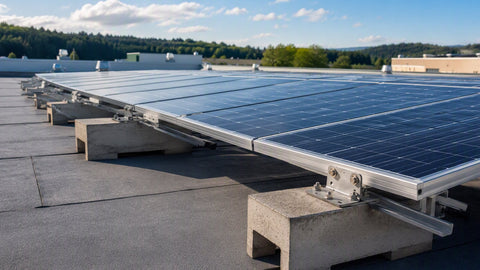
| Ground mount / commercial flat roof | 500W | Handling constraints vanish; BOS savings dominate |
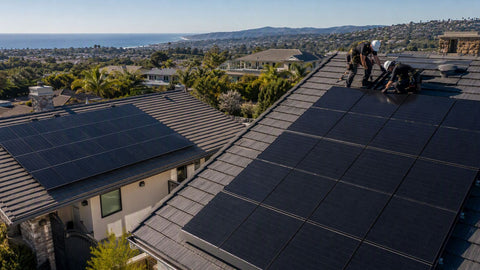
Layout geometry matters more than most quotes admit. A roof face that fits 14 × 400W panels but only 11 × 500W panels produces more energy with the smaller class. Our panel angle guide covers the tilt side, and the rooftop installation walkthrough covers layout discipline. For shading-prone roofs, pair either class with the right electronics — our high-efficiency panel roundup and the most efficient panels of 2026 rank what is actually available.
Electrical Design Differences Worth Checking
- Voc and string length: 500W-class modules run ~49–52V Voc vs ~45–48V on 400W class. Fewer modules per string at 500W can simplify string design, but check cold-weather Voc against your inverter's 1,000V/1,500V limit with the coldest design temperature for your zip code.
- Current: 500W-class Imp of 12–13.5A stays within standard 20A fuse/30A wire rules for single strings; paralleled strings need the usual NEC 690.8 multiplier treatment either way.
- Inverter pairing: both classes pair cleanly with modern string inverters and microinverters — verify the micro's continuous output against a 500W module's STC rating to avoid chronic clipping. Our string inverter sizing guide and the inverter sizing calculator handle the matching math.
- System sizing: run your kWh target through the solar system calculator before picking a class — the target system size determines which panel count lands cleanly.
Choose 400W-Class Panels If / Choose 500W-Class Panels If
Choose 400W class if: your roof is chopped up with obstructions; you self-install and want lighter lifts; you found clearance pricing 20%+ under the 500W class; or you are matching an existing array's form factor for an expansion.
Choose 500W class if: you have open roof area and want maximum kW per square meter; labor and BOS savings matter (most paid installs); you want current-generation N-type TOPCon cells with the lowest degradation; or you are building commercial or ground-mount where handling constraints disappear.
Degradation and 25-Year Production Math
Both classes carry similar degradation specs, but the 2026 500W class is almost entirely N-type TOPCon, and N-type's first-year degradation (~1%) beats legacy PERC (~2%). Over a 25-year model the difference compounds:
| Year | 400W Class (PERC, 2%/0.55% path) | 500W Class (N-type TOPCon, 1%/0.40% path) |
|---|---|---|
| Year 1 | 98.0% | 99.0% |
| Year 5 | 95.8% | 97.4% |
| Year 10 | 93.1% | 95.4% |
| Year 15 | 90.3% | 93.4% |
| Year 20 | 87.6% | 91.4% |
| Year 25 | 84.8% | 89.4% |
On an 8 kW system producing 12,000 kWh in year one, that 4.6-point gap at year 25 is roughly 550 kWh per year — real money at any retail rate. Degradation paths are warranty-backed numbers, not marketing: check the power-warranty table on the exact datasheet before buying.
Electronics Pairing: Clipping, MLPE, and String Design
The one pairing mistake we still see weekly: a 500W module on a 300–350W microinverter. The micro clips everything above its continuous rating, and on a spring day that throws away 10–15% of production for hours. Either step up to a micro rated for the module class or use a string inverter. On string design, the 500W class's higher Voc (~49–52V) shortens maximum string length slightly versus the 400W class at the same inverter limit — run the cold-weather Voc correction per NEC 690.7 with your design temperature, not the STC number. Crews that skip the correction are the ones calling us in January asking why the inverter logged an overvoltage fault.
Pallet Economics and Buying Strategy
| Factor | 400W Class | 500W Class |
|---|---|---|
| Panels per pallet (typical) | 31–36 | 31–36 |
| kW per pallet | ~12.4–14.4 kW | ~15.5–18 kW |
| Freight cost per watt | Higher (fewer watts per pallet) | Lower — the format wins on logistics |
| Price trend 2026 | Clearance-driven, volatile by SKU | Stable volume pricing; newest cell supply |
| Best buy window | When a distributor flushes PERC inventory | Quarter-end volume programs |
We watch both sides of this market daily, and the honest buying rule is: quote both classes on the same roof layout, compare array-level installed cost, and take the winner. Brand loyalty to a wattage class is how you overpay.
Temperature, Heat, and Why N-Type Wins Summers
Panel wattage is rated at a 25°C cell temperature that roofs never see in July. A dark module on a roof at 40°C ambient runs cells at 60–70°C, and every degree above 25 costs output per the temperature coefficient:
| Class | Typical Pmax Temp Coefficient | Output at 65°C Cell Temp (relative) |
|---|---|---|
| 400W class (PERC-heavy mix) | −0.34 to −0.38 %/°C | −13.6 to −15.2% vs STC |
| 500W class (N-type TOPCon) | −0.29 to −0.34 %/°C | −11.6 to −13.6% vs STC |
The 1.5–2-point gap sounds small until you annualize it: in hot climates it is worth roughly 1.5–2% of yearly production, every year, for 25+ years. I've compared monitoring data from adjacent PERC and TOPCon roofs in the same neighborhood — the TOPCon roof pulls ahead every hot afternoon, and the gap widens exactly when the AC load peaks. Production that arrives at 3 p.m. in August is the most valuable production there is.
Warranty Terms by Tier
| Warranty Element | Value Brands (either class) | Tier 1 (either class) |
|---|---|---|
| Product / workmanship | 12–15 years typical | 25 years on flagship lines |
| Power output endpoint | ~80–84% at year 25 | ~87.4% at year 30 on current N-type lines |
| Claim channel | Through seller; buyer carries documentation burden | Established manufacturer RMA network |
| Financeability | Not bankable for most commercial debt | Tier 1 listing supports project financing |
We've processed claims from both columns of that table. The Tier 1 claim with serial numbers and commissioning photos closes in weeks. The value-brand claim on a company that has exited the market does not close at all. On a financed 25-year asset, that difference is the whole premium — the wattage class matters less than who stands behind the panel.
Three Jobs Where the 400W Class Won the Bid
From our recent quote history, anonymized but real:
| Project | Constraint | Winning Class | Deciding Factor |
|---|---|---|---|
| Craftsman bungalow, dormers both faces | No rectangle longer than 1.9m | 400W | Geometry — the 2.1m module physically did not fit |
| DIY owner-install, 6/12 pitch, walk-up | Solo owner plus one helper | 400W | 22 kg panels two people can safely ladder all day |
| Budget cabin system, clearance PERC stock | Module budget under $0.20/W | 400W | Clearance pricing beat the 500W class by 24% per watt |
| New-build subdivision, 40 roofs, open rectangles | Volume and speed | 500W | Fewer positions per kW; crews finished a roof a day faster |
I've sold the winner in each of those rows. The class question has no universal answer — it has a roof-by-roof answer, and the roof usually answers it within five minutes of looking at the layout.
Mounting Hardware: What Changes Between Classes
- Rail spans and clamps: identical systems fit both — verify the clamp zone on the longer 500W format, since the extra ~15 cm of length shifts the approved clamping region slightly.
- Attachment count: ~2 per panel either way on typical residential spacing; the 500W class simply needs fewer panels and thus fewer attachments per kW.
- Ground mount: the 500W class reduces post count per kW by ~20% — on a 100-panel ground mount that is real steel and real labor.
- Skylights and setbacks: the shorter 400W format threads between obstructions that force a 500W layout to sacrifice a whole panel position.
String Inverter vs Microinverter Economics by Class
| Architecture | Cost Impact per kW (8 kW example) | Best Fit by Class |
|---|---|---|
| String inverter | One unit either way; ~$1,800–2,500 | 500W class shines — long clean strings, lowest $/W |
| Microinverters | Per-panel cost: 20 units at 400W vs 16 at 500W | 400W class saves 4 units (~$260); shaded roofs still favor MLPE |
| Optimizers + string | Per-panel optimizer count follows the same math | 500W saves on device count; verify optimizer rating vs module watts |
Shade drives the electronics choice more than wattage class does. An open roof wants a string inverter at either wattage; a shaded roof wants MLPE — and then panel count starts to matter in the electronics budget too.
Resale and Second-Owner Value
Panel class shows up at resale in two ways. Owned systems transfer with the home, and appraisers increasingly count owned solar at a contributory value — the cleaner the documentation (permits, warranties, production history), the better it counts. The 25/30-year warranties on current Tier 1 product transfer to second owners under the manufacturers' standard terms, usually with a simple registration update. A clearance 400W array with a defunct brand behind it transfers as a question mark; a Tier 1 500W array with paperwork transfers as an asset. I've watched both conversations happen at kitchen tables, and only one of them is pleasant.
Decision Summary
Pull the decision back to one page. Open roof, paid install, current technology: 500W class. Obstructed roof, self-install, clearance pricing, or array expansion matching: 400W class. Both classes carry Tier 1 availability, real warranties, and proven field life — the wrong answer is not picking a class; it is picking a class without looking at your roof layout and the current price spread first.
The 2026 Verdict
The market has already voted: volume sits at 500W, and the 400W class lives on as the geometry and clearance-value play. Neither is a compromise when matched to the right roof. Get the layout, get both prices, and let the math pick.
Either way, buy with the paperwork: exact model, datasheet, warranty documents, and serials recorded at install. The wattage class debate ends at the quote table; the ownership experience is decided by documentation.
Measure the roof, price both classes on the same week, and the right answer will be obvious within one spreadsheet.
One last field note from the quote desk: the customers who end up happiest are the ones who priced both classes against their actual roof layout in the same week. Prices move monthly, clearance stock rotates, and the spread that favors one class today can flip next quarter — so run the comparison fresh, on real numbers, every time.
That is the whole discipline: real layout, real prices, real decision — in that order, every single time.
Both classes remain excellent products from serious manufacturers; the difference is fit, not virtue, and fit is measured on your roof with your quote in hand.
Frequently Asked Questions
Is a 500W panel better quality than a 400W panel?
Not inherently. Wattage reflects panel size and cell generation, not build quality. Both classes are available from Tier 1 makers with 25-year-class warranties. Check the datasheet's efficiency, temperature coefficient, and degradation rate — those lines tell you about quality; the nameplate wattage tells you about format.
How many 400W vs 500W panels do I need for a typical home?
An 8 kW system — roughly a 1,200–1,500 kWh/month home at good sun — takes about 20 × 400W panels or 16 × 500W panels. A 10 kW system takes 25 vs 20. The 500W class reduces panel count by about 20% at equal system size.
Do 500W panels fit on residential roofs?
Usually. Current 500W-class residential modules measure roughly 2.0–2.1m × 1.1m — about 15 cm longer than the 400W class — and weigh 24–28 kg. Two installers handle them routinely. The exception is chopped-up roofs where the shorter 400W format solves tight layouts, and steep walk-ups where the lighter panel is safer to handle.
Are 400W panels being discontinued?
The class is shrinking, not disappearing. Major manufacturers have shifted new production to 440–500W residential formats, but 400W-class modules remain in distribution through 2026 — often at clearance prices that make them the value buy for the right roof.
Which is cheaper per watt installed?
The 500W class wins on installed cost in most paid installations — roughly 10–13% lower array-level cost per watt because BOS and labor scale with panel count. The 400W class wins when clearance module pricing drops far enough below 500W module pricing to overwhelm the BOS difference, which happens on specific SKUs throughout the year.
Will a 500W panel work with my existing inverter or microinverters?
For string inverters, almost always — verify string Voc and current against the inverter's limits. For microinverters, check the unit's continuous AC output against the module's output; a 300–350W micro under a 500W module clips production on peak hours. Match MLPE to module wattage deliberately.
Sources & Standards
Efficiency and format ranges reflect current manufacturer datasheets across Tier 1 and value brands stocked in 2026; verify per-model specs before purchase. Electrical design references NEC 690.8 for circuit sizing. Installed-cost math reflects typical U.S. residential labor and hardware rates; regional variation applies.
Browse live inventory and pricing: 400W-class panels, 500W-class panels, or request a pallet quote for volume orders. New to sizing? Start with the 5 kW kit reference and scale from there.