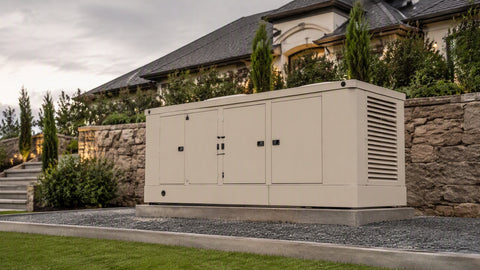
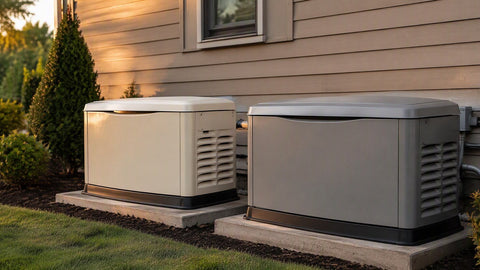
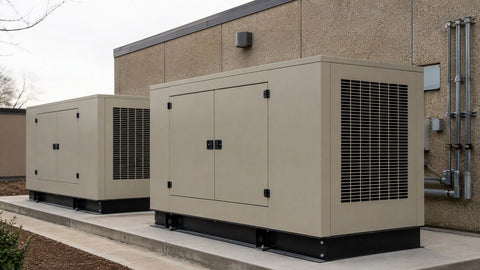
When the grid fails, a whole house generator is the difference between an inconvenience and a crisis. Refrigerators stay cold, sump pumps keep basements dry, furnaces keep pipes from freezing, and medical equipment keeps the people who depend on it safe. Unlike portable units that power a few extension-cord circuits, a standby generator is permanently installed, wired through an automatic transfer switch, and starts itself within seconds of an outage — whether you are home or a thousand miles away.

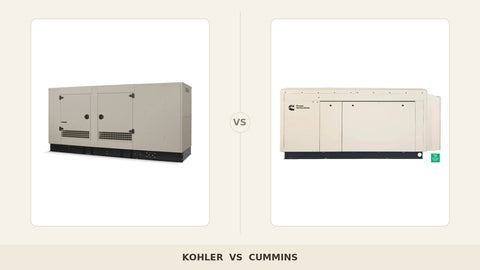
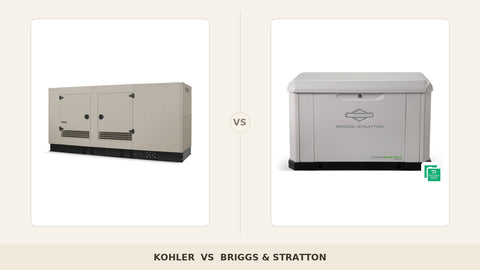
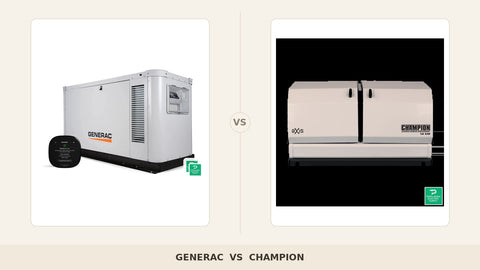
We supply standby generators from Generac, Kohler, Briggs & Stratton, and Cummins, and we field the same questions every storm season: what size do I need, what fuel should it burn, what will it cost, and what does installation involve. This guide answers those questions with the same math our team uses when we help customers spec systems.
How a Whole House Standby Generator Works
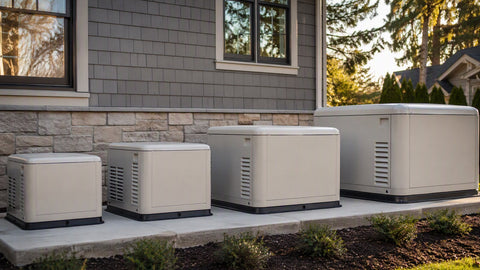
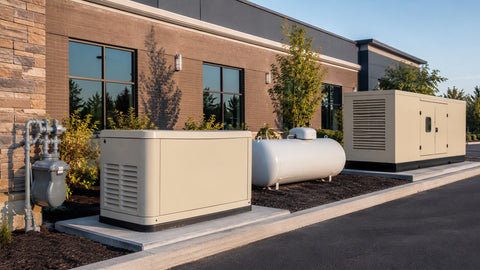
A standby system has three parts: the generator itself (an engine driving an alternator), the automatic transfer switch (ATS) that isolates your home from the grid and swaps the load, and the fuel supply — natural gas from the utility meter or liquid propane from an on-site tank. When utility power drops, the ATS senses the loss, signals the generator to start, and transfers the house onto generator power, typically within 10 to 30 seconds. When the grid returns and stabilizes, the system transfers back and the engine cools down and stops. Weekly self-tests keep the engine exercised and ready.
The fuel question matters more than most buyers expect. Natural gas delivers effectively unlimited runtime — the generator runs as long as the gas utility stays pressurized — while propane runtime is bounded by tank size. Diesel dominates commercial and industrial units. For portable and smaller backup options, see our standby generator collection and the standby generator overview.
Sizing: The Most Important Decision
Undersizing is the expensive mistake; oversizing wastes money on purchase price and fuel and causes wet-stacking in diesel engines. The right size comes from your actual loads, not your square footage. The three tiers that cover most homes:
| Generator Size | Running Watts | What It Covers | Typical Home | Installed Cost Range |
|---|---|---|---|---|
| 10–14 kW | 10,000–14,000 W | Essentials: fridge, furnace, lights, some outlets, well pump | Small homes, partial backup | $6,000–$9,000 |
| 17–20 kW | 17,000–20,000 W | Essentials + one central AC (with load management) | Average 2,000–2,500 sq ft | $8,000–$12,000 |
| 22–26 kW | 22,000–26,000 W | True whole-house including AC, electric range, dryer | Larger homes, full backup | $10,000–$15,000 |
The load math behind the tiers: a refrigerator draws 600–800 W running (2,200 W starting), a furnace blower 600–900 W, a well pump 1,000–2,500 W, and a 3-ton central air conditioner roughly 3,500 W running with starting surges two to three times higher unless it has a soft starter. Add the loads that must run simultaneously, then add 20 to 25 percent headroom. Our generator sizing guide and the 2026 whole-home sizing guide walk through the full worksheet, and the 22 kW guide and 26 kW guide cover the two most popular sizes in depth.
Fuel Consumption: What It Actually Burns
Fuel consumption is the number that surprises first-time owners, so here are the manufacturer-published figures for the most common air-cooled standby units, at half and full load:
| Unit Class | Fuel | Consumption @ 50% Load | Consumption @ 100% Load | Runtime Implication |
|---|---|---|---|---|
| 22 kW air-cooled (e.g., Guardian class) | Natural gas | ~195 ft³/hr | ~281 ft³/hr | Unlimited while utility gas flows |
| 22 kW air-cooled | Propane | ~2.1 gal/hr | ~3.6 gal/hr | 500-gal tank (400 gal usable): ~5 days at half load |
| 26 kW air-cooled | Natural gas | ~228 ft³/hr | ~306 ft³/hr | Unlimited while utility gas flows |
| 26 kW air-cooled | Propane | ~2.5 gal/hr | ~4.1 gal/hr | 500-gal tank: ~4 days at half load |
Two practical notes. First, natural gas service requires adequate meter capacity — a 22 kW unit at full load draws roughly 281 cubic feet per hour, and many residential meters need a utility upgrade to feed the generator plus the furnace simultaneously. Second, propane owners should size tanks for the longest realistic outage in their region, not the average one; I have talked customers through week-long ice-storm outages where the 250-gallon tank they almost bought would have left them dark on day three. The Generac 26 kW Guardian with 200A ATS and Champion 22 kW product pages list full published fuel curves.
Transfer Switches and the Electrical Side
The transfer switch is not optional — backfeeding a panel through a dryer outlet is illegal, dangerous, and a reliable way to kill a line worker. A service-rated ATS installs between the meter and your main panel and handles the whole house; a sub-panel style switch covers selected circuits only. Sizing follows the service:
| Home Service | ATS Rating | Generator Max (Continuous) | Notes |
|---|---|---|---|
| 100 A | 100 A service-rated | ~14–18 kW practical | Load management often required |
| 200 A | 200 A service-rated | 22–26 kW | Most common residential pairing |
| 400 A | Dual 200 A or 400 A | 36–48 kW+ | Large homes; liquid-cooled units |
Browse automatic transfer switches and 200A-class switches for the hardware. If your home's service is undersized for modern loads generally, our service upgrade guide explains that side of the project.
Installation and Total Cost Reality
A complete turnkey installation includes the generator, the ATS, a concrete or composite pad, gas plumbing by a licensed fitter, electrical work by a licensed electrician, permits, and startup. The equipment is usually 45 to 60 percent of the invoice; the rest is labor, materials, and permitting. Regional labor rates move the total significantly, but these ranges hold across most of the country:
| Cost Component | 10–14 kW System | 22–26 kW System |
|---|---|---|
| Generator + ATS equipment | $3,500–$5,000 | $6,000–$8,500 |
| Electrical installation | $1,500–$2,500 | $2,000–$3,500 |
| Gas plumbing | $800–$1,500 | $1,000–$2,000 |
| Pad, permits, misc. | $400–$800 | $500–$1,000 |
| Turnkey total | $6,200–$9,800 | $9,500–$15,000 |
Annual maintenance — oil, filters, plugs, battery — runs $200 to $400 professionally or less DIY, and the exercise cycle handles the rest. Cold-climate buyers should budget for a cold-weather kit; below freezing, battery warmers and oil warmers are what separate a generator that starts from one that cranks and dies.
Generator vs. Battery Backup: The Honest Comparison
Batteries and generators solve different problems. A battery is silent, instant, maintenance-free, and earns daily value through solar shifting and rate arbitrage — but it is bounded by stored energy. A generator is loud, needs fuel and maintenance, and does nothing until the outage — but it runs indefinitely. Many of our customers install both: batteries for the 95 percent of outages measured in minutes and hours, and a generator for the rare multi-day event. If you are weighing the two, our battery bank sizing guide and home backup generator collection frame the decision. I have installed both on the same house more times than I can count, and the owners never describe it as redundant after the first week-long storm.
Air-Cooled vs. Liquid-Cooled: Know Which Class You Are Buying
Residential standby generators split into two engineering classes. Air-cooled units (up to about 26 kW) use engine-mounted fans, run at 3,600 RPM, and are the affordable mainstream choice — but they are designed for outages measured in days, not weeks, and need oil attention during extended runs. Liquid-cooled units (22 kW and up in commercial frames) run at 1,800 RPM with automotive-style cooling, tolerate continuous multi-week duty, and cost roughly twice as much per kW.
| Attribute | Air-Cooled (10–26 kW) | Liquid-Cooled (22–150 kW) |
|---|---|---|
| Engine speed | 3,600 RPM | 1,800 RPM |
| Continuous duty | Days (oil checks every 24–48 hrs) | Weeks+ without attention |
| Noise | ~65–70 dB at 23 ft | Quieter under load |
| Equipment cost | $3,500–$8,500 | $12,000–$60,000+ |
| Best fit | Most homes | Large homes, estates, small commercial |
Most homes are correctly served by air-cooled units in the 20–28 kW standby class; liquid-cooled makes sense when outage history or home size genuinely demands it. Larger commercial needs are served by our commercial standby and 60 kW+ lines.
Placement, Permits, and the Rules Inspectors Enforce
Generator placement is regulated at three levels, and failing any of them fails the inspection. The manufacturer specifies minimum clearances — typically 18 inches from the structure and 5 feet from openings, though specs vary by model and override everything else. NFPA 37 governs proximity to combustible walls and openings into the building: exhaust and carbon monoxide drive the 5-foot window rule. Local code adds setbacks from property lines and, in some jurisdictions, noise limits at the lot line. Flood-prone lots need elevated pads; snow-belt lots need placement that drifting will not bury.
Permits typically cover electrical, gas/plumbing, and sometimes mechanical or zoning. The sequence that avoids rework: site plan approved first, pad poured second, unit set third, then gas and electrical rough-in, then startup and inspection. Skipping the pre-approval is how generators end up relocated at the owner's expense — a $1,500 mistake I have watched customers make when they set the unit where it "looked right" before the permit drawing was stamped.
Maintenance: The Schedule That Protects the Investment

A standby generator is an engine, and engines live or die on maintenance. The published schedules are nearly identical across brands:
| Interval | Task | DIY or Pro |
|---|---|---|
| Weekly (automatic) | Self-exercise cycle, 5–12 minutes | Automatic |
| Monthly | Visual check: oil level, leaks, enclosure clear of debris | DIY |
| Annually / 100–200 hrs | Oil and filter, air filter inspection, spark plugs, battery test | Pro recommended |
| Every 3–4 years | Battery replacement | DIY or pro |
| Every 2–3 years | Valve lash check (most air-cooled models) | Pro |
Skimping here is false economy: the failure mode is a generator that does not start during the only outage that matters. Our maintenance kits and monitoring accessories make staying on schedule straightforward, and cellular monitoring modules report exercise failures before they become outage failures.
Noise, Neighbors, and Enclosures
Air-cooled standby units run at roughly 65 to 70 dB measured at 23 feet under exercise — comparable to a central air conditioner — and louder under full load. Placement relative to bedrooms and property lines matters more than the spec sheet suggests: a unit tucked against a side wall facing your neighbor's patio will generate complaints even at legal levels. Factory sound enclosures, strategic landscaping, and orienting the exhaust away from living spaces all help. Some municipalities enforce decibel limits at the property line, which is one more reason the site plan belongs in the permit package from day one.
The Gas Meter Question Nobody Asks Until Install Week
Natural gas standby generators are the biggest gas appliance most homes will ever own. A 22 to 26 kW unit at full load consumes 280 to 310 cubic feet per hour — often more than the furnace, water heater, and range combined. Many residential meters and service lines were sized before anyone imagined that load, and the utility must verify capacity or upgrade the meter and possibly the service regulator. This is a free utility engineering review in most territories, but it takes two to six weeks, and it should be the first call after choosing a unit size — not the last. Undersized gas supply shows up as a generator that starts, sags, and trips offline under load: a frustrating diagnosis that a two-week-early phone call prevents entirely.
Standby vs. Portable: Where Each Wins
Portable and inverter generators remain the right tool for specific jobs: job sites, RVs, occasional outage coverage of a few circuits via a manual transfer switch, and budgets under $2,000. Our portable generator and inverter generator categories serve exactly those needs, paired with a manual transfer switch for safe home connection. But the moment the requirement includes "works when we are not home," "runs the central AC," or "no one here can wheel a unit out in a storm," standby is the only honest answer. The crossover point we use when advising customers: if the outage risk involves sump pumps, medical devices, or a house that sits empty for stretches, buy the automatic system — the portable unit's lower price is not savings if it is sitting in the garage when the power fails at 2 AM on a vacation week.
Exercise Cycles, Monitoring, and Knowing It Works Before You Need It
The defining feature of a standby system is that it must perform perfectly after months of inactivity. The weekly exercise cycle — an automatic 5 to 12 minute self-test run, usually at a quiet low-load setting — keeps oil distributed, seals conditioned, and the battery charged. Modern units report every exercise result to a phone app or dealer dashboard, and cellular monitoring modules alert both the owner and the service company the moment a self-test fails. That alert channel is worth the modest subscription: the difference between discovering a dead starting battery on a calm Tuesday and discovering it during a hurricane warning is the entire value proposition of the monitoring module. Units in our monitoring accessories category support exactly this. Set the exercise schedule for mid-morning midweek — quiet hours respected, and a human is usually awake to hear an anomaly.
Resale Value and Insurance: The Financial Side Beyond Outages
A standby generator is one of the few home improvements that speaks for itself in a listing. In outage-prone markets — the Gulf Coast, Florida, the ice-storm belt, wildfire PSPS regions of California — agents report standby systems returning 50 percent or more of installed cost at resale, and some insurers offer premium discounts where automatic backup demonstrably reduces claims risk from frozen pipes, spoiled contents, or sump-pump failures. The financial case is strongest where buyers have lived through outages: anyone who has thrown away a freezer of food or pumped a basement does not need the value explained. We have customers who bought their second generator the week they moved — the first one sold the house, and they refused to own a home without the next one.
Buying Checklist: Ten Questions Before You Sign
Whether you buy from us or anyone else, these ten questions separate solid proposals from expensive regrets. What is the total installed price, itemized? What size unit, and what load calculation supports it? Which transfer switch, service-rated or sub-panel? Who pulls permits and schedules inspections? Has gas meter capacity been confirmed with the utility? What are the clearances on the site plan? What warranty covers parts, labor, and travel? Who performs startup and the first-year service? What monitoring is included, and what does the subscription cost after year one? And finally: what is the realistic install timeline, from deposit to permission to operate? Proposals that answer all ten in writing are the ones that install smoothly. Proposals that dodge any of them tend to surface the answer later, at invoice time.
Storm Season Prep: The Annual Ritual That Matters
Owners of standby generators should run one short ritual before each storm season. Confirm the exercise log shows consistent weekly passes. Check the oil level and change it if the interval is near. Test the starting battery under load — batteries die quietly between storms and are the single most common no-start cause. Verify the propane tank level or natural gas valve positions. Clear vegetation and stored items back to the specified clearances. And run one manual full transfer test: kill the main breaker, watch the generator start and the ATS carry the house, then restore. Fifteen minutes, once a year, converts "we have a generator" into "we know our generator works." Every technician in this trade has a story about the family that skipped the test and discovered a failed starter relay during an ice storm; none of them skip their own.
A last note on timing: generator lead times spike after every major storm, when everyone calls at once. The buyers who fare best purchase in calm weather, install in the off-season, and ride out the next event while their neighbors wait eight weeks for equipment. Backup power is the rare purchase whose value is highest precisely when it is hardest to buy — plan accordingly, and keep the installer relationship warm with annual service so your name is at the top of the list when the regional phones light up.
FAQs
What size generator do I need to run my whole house?
Most homes between 2,000 and 3,000 square feet need 20 to 26 kW for true whole-house coverage including central air. Smaller homes or essentials-only backup can work with 10 to 14 kW plus load management. Calculate from your actual appliance list, not square footage alone.
How long can a whole house generator run continuously?
On natural gas, effectively indefinitely — air-cooled units should get an oil check every 24 to 48 hours of continuous running, but outages measured in weeks are within their capability. On propane, runtime equals usable tank gallons divided by consumption: a 500-gallon tank gives roughly four to five days at half load.
Is a whole house generator worth the cost?
If your area sees multi-day outages, you have a basement with a sump pump, anyone in the home depends on powered medical equipment, or you work from home, the answer is usually yes. Realtors also report standby generators returning a meaningful share of their cost at resale in outage-prone regions.
Natural gas or propane — which is better?
Natural gas wins on runtime and convenience if your meter capacity supports it. Propane wins where gas service does not exist, at the cost of tank sizing and refill logistics. Most air-cooled units are field-convertible between the two.
Can I install a standby generator myself?
The electrical and gas work requires licensed trades and permits in virtually every jurisdiction, and manufacturers can void warranties on non-compliant installs. DIY-friendly buyers can save money by handling the pad and trenching themselves while leaving the connections licensed.
How often does a standby generator need service?
Annually or every 100 to 200 run hours: oil and filter, spark plugs on schedule, battery every three to four years. The weekly self-exercise cycle is automatic and needs no attention.
Get Backup Power That Actually Shows Up
Browse our standby home generators, compare popular sizes in 22 kW and 26 kW, pair with an ATS kit, and reach out through portlandiaelectric.supply — sizing help is free, and it beats guessing.