The call came at 6 a.m. on the coldest morning of that February — a customer with a brand-new portable generator, a frozen fuel line, a dead battery, and house pipes four hours from bursting. The generator was fine. The plan was missing. Winter is when the portable-versus-standby question stops being a shopping decision and becomes a physics problem, because cold attacks every link in the backup-power chain: batteries lose a third of their cranking power, gasoline evaporates its light ends, propane tanks stop boiling off vapor, and your furnace — the load that matters most — won't wait for you to troubleshoot any of it.

This guide compares portable and standby generators specifically through the winter lens: cold-start behavior, fuel physics, realistic runtime math, safety in ice-storm conditions, and total cost. If you want the general year-round comparison first, our portable vs whole-house generator guide covers it; this article assumes the temperature is below freezing and the stakes are your plumbing.
Why Winter Power Outages Require Special Planning
Summer outages are inconveniences. Winter outages are clock races. A modern home loses about 1°F per hour in single-digit weather once the heat dies, which puts interior pipes at risk inside 24–36 hours. The furnace that prevents this is not a huge load — a gas furnace's blower and controls draw 600–1,200W — but it's an unforgiving one: it needs power within hours, it cycles day and night, and it usually sits on a hardwired circuit that a portable generator can't legally or safely feed without a transfer means. Meanwhile the cold is actively sabotaging your backup equipment. That's the frame for everything below.
Portable vs Standby: The Winter Reality Table
| Factor | Portable Generator | Standby Generator |
|---|---|---|
| Typical output | 2,000–9,500W (inverter or open-frame) | 10,000–26,000W (air-cooled); to 150kW liquid-cooled |
| Start method in a storm | You, outside, in the dark, pulling a cord or pushing a button | Automatic transfer in ~10 seconds, no human involved |
| Cold-start reliability | Battery −30–35% cranking power at 0°F; carburetor icing on small engines; recoil start stiffens | Block/battery warmers available; exercised weekly; designed for unattended cold starts |
| Fuel | Gasoline (stale in 3–6 months), dual-fuel propane common | Natural gas (unlimited) or propane from large tank |
| Runtime before refuel | 6–14 hr per tank at half load | Unlimited (NG) or days to weeks (large LP tank) |
| Refueling in a blizzard | Every 8–12 hr, engine hot, fuel vapor near ignition — the dangerous part | Never |
| Furnace connection | Needs transfer switch or interlock to feed hardwired circuits legally (NEC 702) | Automatic transfer switch built into the system |
| CO risk | High if sited wrong — kills people every winter storm | Low — permanently sited per code, away from openings |
| Installed cost | $500–2,500 plus $800–1,500 for inlet box + interlock/transfer work | $9,000–15,000 turnkey for 20–22kW |
| Best winter role | Short outages, mild climates, budget backup, portability | Multi-day events, cold climates, medical loads, unattended properties |
The Load Math That Decides the Question
Forget nameplate shopping. Add up the loads that actually matter in a January outage:
| Load | Running Watts | Starting Watts | Winter Duty Notes |
|---|---|---|---|
| Gas furnace blower (1/2 hp) + controls | 700–1,000W | 1,800–2,300W | The critical load — cycles all night |
| Refrigerator | 150–250W | 900–1,200W | Runs less in a cold house; keep it anyway |
| Sump pump (1/3 hp) | 800W | 1,500–2,900W | Melt events flood basements mid-storm |
| Well pump (1/2 hp, 240V) | 1,000–1,100W | 2,000–2,500W | Rural homes — no pump, no water, no flush |
| Space heater (one room) | 1,500W | 1,500W | Portable-generator fallback heating strategy |
| Heat strips / electric furnace | 5,000–15,000W | — | Kills most portables outright; standby territory |
| Internet + lights + chargers | 200–400W | — | Sanity loads; cheap to carry |
Add it honestly. A gas-heated home with a well and a sump needs a solid 6,500–7,500W of well-managed portable capacity — feasible with a 9,500W-class portable and disciplined load rotation. An all-electric home with heat strips needs 20kW+, full stop; no portable answers that call. Our standby sizing guide walks the full worksheet, and the 22kW guide shows what the most common whole-house class covers.
Cold-Start Physics: What Winter Does to Each Type
Batteries. Lead-acid cranking power falls roughly 30–35% at 0°F and half at −20°F, while cold-thickened oil raises the torque the starter must produce. A portable generator battery that was "fine in October" fails in January. Standby units solve this with battery warmers and weekly self-exercise; portable owners solve it by keeping the battery on a maintainer indoors — if they remember.
Gasoline. Carbureted small engines hate cold, dense air and stale fuel. Gasoline's light ends evaporate in storage, and what's left varnishes jets; three-to-six-month-old pump gas is the number-one reason portables won't start. Fuel stabilizer buys you to a year. Cold-start procedure matters too: full choke, throttle set, two pulls, half choke — and a magnetic dipstick heater or 5W-30 synthetic oil makes a visible difference below 20°F.
Propane. Dual-fuel portables dodge the stale-gas problem but inherit vaporization limits: a 20-lb cylinder can only boil off roughly 30,000–40,000 BTU/hr in freezing weather, and frost on the tank shell means it's already struggling. A 5kW load wants about 65,000+ BTU/hr. Winter propane portable users should run 30- or 40-lb cylinders, keep them upright and full, and never in an enclosure. Standby systems sidestep this with 500+ gallon tanks, though even those have limits we detail in our fuel comparison guide.
Runtime and Refueling: The 2 a.m. Problem
| Scenario | Fuel Capacity | Consumption @ 50% Load | Realistic Stretch |
|---|---|---|---|
| 4,000W portable, gasoline | ~4 gal | ~0.5 gal/hr | 8 hr — refuel twice a day |
| 9,500W dual-fuel portable on gasoline | ~6.6 gal | ~0.85 gal/hr | ~8 hr; keep 15+ stabilized gallons on hand |
| Same unit on propane (2× 40-lb cylinders) | ~18 gal LP | ~1.3 gal/hr | ~13 hr; cylinders frost below 20°F |
| 22kW standby on natural gas | Unlimited | ~2.1 therms/hr | Weeks; utility pressure permitting |
| 22kW standby on 500-gal LP tank | 400 gal usable | ~2.1 gal/hr | ~8 days continuous |

| Step | Portable | Standby |
|---|---|---|
| 1. Oil | Change to 5W-30 synthetic; check dipstick heater option | Annual service; confirm cold-weather oil grade per manual |
| 2. Battery | Load-test; put on maintainer; store warm | Test; install/verify battery warmer pad |
| 3. Fuel | Drain or stabilize all gasoline; fill propane cylinders | Confirm LP tank level ≥60%; verify NG meter capacity |
| 4. Test run | 15 min under 50% load — use a space heater | Verify weekly exercise log; force a full transfer test |
| 5. Cold kit | Funnel, headlamp, stabilized fuel, spare plug, cover | Clear snow path to unit; check louvers/vents |
| 6. Electrical | Test inlet box and interlock with an electrician | Verify ATS signals; test a simulated outage |
| 7. House side | CO detectors, pipe insulation, know your main water shutoff | Same — standby doesn't exempt you |
Understanding the Generator Types Before You Shop
"Portable" and "standby" are umbrella terms that hide important sub-species, and winter exposes the differences:
| Type | Power Range | Winter Strengths | Winter Weaknesses |
|---|---|---|---|
| Open-frame portable (conventional) | 3,500–9,500W | Cheap watts, simple to service, huge parts availability | Loud (70–78 dB), dirty power for sensitive electronics, carburetor icing |
| Inverter portable | 1,800–4,500W | Clean sine power, quiet, fuel-sipping eco mode, easier cold starts | Too small for whole-house; premium price per watt |
| Dual-fuel portable | 4,000–9,500W | Propane option dodges stale-gas failures; gasoline for deep cold | Slight power derate on LP (~8–10%) |
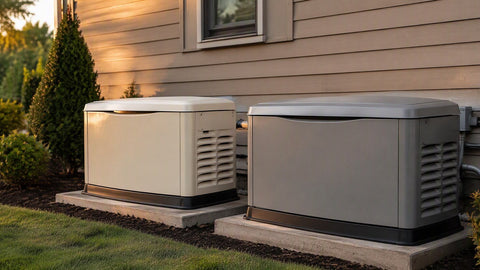
| Air-cooled standby | 10–26kW | Automatic, fast, matched ATS, weekly self-test | 3,600 rpm engines aren't built for week-long continuous runs |
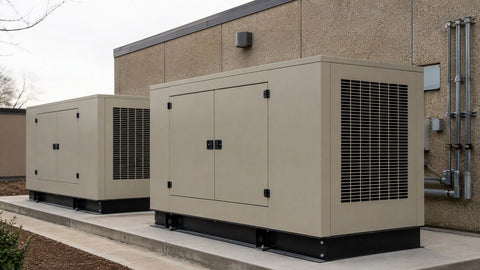
| Liquid-cooled standby | 22–150kW | 1,800 rpm continuous-duty engines, quieter, longest life | Commercial pricing; overkill for most homes |
The inverter row deserves attention from winter buyers with modest needs. A 2,200–4,500W inverter generator in eco mode sips fuel at a quarter load all night — a gallon of gas can run a furnace blower circuit and a refrigerator for 8–10 hours. That fuel economy matters when the gas stations are dark too. The trade-off is capacity: no inverter portable starts a well pump, and two units in parallel (a supported configuration on many models) still top out around 7kW. Honest assessment of your load list from the table above settles which sub-type belongs in your garage.
What a Ten-Day Ice-Storm Outage Actually Looks Like
War-story time, because the sequence matters. Day one: the portable owner wheels the unit out, it starts on the third pull because they stabilized the fuel, and the house settles into a rhythm — furnace, fridge, lamps. Day three: the first fatigue point. Twice-daily refueling has become a chore, oil needs checking, and the novelty is gone. Day five: the stabilized fuel reserve runs low, and every gas station with power has a line. Day seven: a fouled plug or a tired battery shows up, because small engines under continuous duty accumulate problems on a schedule measured in tens of hours, not months. Days eight through ten: the owner is managing a machine, full-time, in the cold.
The standby owner's ten days: the unit started itself on day one, sent a phone notification, and requested nothing except an oil check at the hundred-hour mark. The LP gauge dropped from 72% to 41%. That's the entire story. Neither outcome is wrong — the portable owner spent $1,400 total and the standby owner spent $12,000 — but buyers should choose that ten-day experience with eyes open, because the storm chooses the duration, not you.
Cost of Ownership: Five Winters of Math
| Line Item (5 winters) | Portable + Interlock | 22kW Standby (LP) |
|---|---|---|
| Equipment installed | $1,300–4,000 | $9,000–15,000 |
| Fuel storage | $100 (cans + stabilizer) | $1,500–3,500 (500-gal tank if not owned) |
| Fuel (assume 60 outage-hr/yr @ 50% load) | ~$750 (gasoline @ $3.50/gal) | ~$1,575 (LP @ $2.50/gal) |
| Maintenance | ~$250 (oil, plugs, filters DIY) | ~$1,250 (annual pro service) |
| Expected service life | 1,000–2,000 hr (air-cooled small engine) | 3,000–5,000 hr; 20+ yr seasonal duty |
| Five-winter total | ~$2,400–5,000 | ~$12,000–21,000 |
Four to five times the cost — that's the honest spread, and no amount of marketing closes it. What the standby premium buys is not watts; it's absence. Absence of refueling, absence of CO risk choreography, absence of your own labor at 2 a.m. in sleet. For households with medical equipment, elderly residents, or unattended properties, that absence is worth every dollar. For a healthy household with gas heat and short historical outages, the portable's five-winter ledger is a genuinely rational choice — provided the safety discipline is non-negotiable.
Fuel Storage Safety and Rotation
Gasoline for portables: store in approved cans, in a detached structure if possible, never in the basement near a water heater's ignition source. Treat every gallon with stabilizer the day you buy it, rotate stock every six months (pour it into the car, refill fresh), and keep at least 15 gallons for a 9,500W-class unit — that's roughly two days of half-load running. Propane: cylinders upright, outdoors, off bare ground, valves closed and capped; check OPD valves and hose dates. And the rule that trumps all storage planning: no fuel of any kind gets handled near a running or hot engine. Shut down, wait, fuel, restart — the ten-minute cooldown is the cheapest safety device ever invented.
Standby Installation in Cold Climates: What the Quote Should Include
A standby quote in snow country should list three line items beyond the box and the ATS. First, a cold-weather kit — battery warmer and, for liquid-cooled units, an oil or block heater. Most manufacturers treat these as options, and many installers omit them to sharpen the bid; in any county that sees single digits, they're mandatory. Second, siting above the snow line: the composite or concrete pad should place intake and exhaust louvers clear of your area's typical drift depth, with the NFPA 37 five-foot clearance from windows and doors measured after landscaping, not before. Third, gas plumbing sized for coincidence — a 22kW unit drawing 300+ ft³/hr on a night when the furnace, water heater, and range are also firing needs meter and lateral capacity that older services often lack. Get the utility's meter confirmation in writing before install day.
Permits and inspection apply in most jurisdictions for the electrical (NEC 702 covers optional standby systems) and the gas work alike. A permitted install isn't bureaucracy for its own sake — the inspector's transfer-switch check is what stands between your generator and a backfed line crew. Budget two inspections, a day of trenching for gas, and an electrician's half-day for the ATS, and no reputable quote will surprise you.
Making the Right Winter Power Choice
Choose a portable when: your outages historically last under 24 hours, you heat with gas (small electrical load), your budget is under $3,000 all-in, you're physically able and willing to run outside twice a day in a storm, and you accept the discipline — stabilized fuel, CO siting, cooldown refueling. A 7,500–9,500W dual-fuel unit plus an inlet box and interlock is an honest winter system. The Champion lineup dominates the value end, and our portable roundup ranks the field.
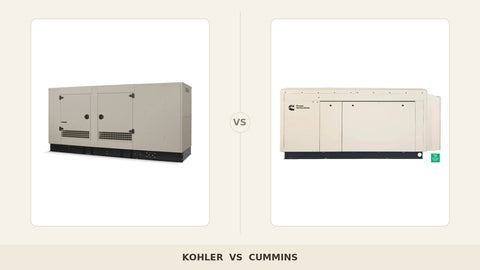
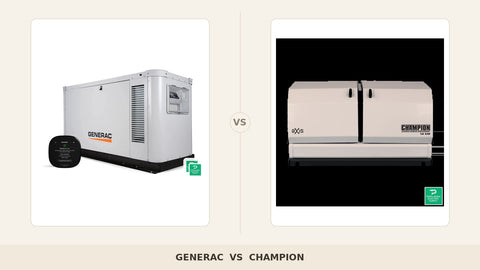
Choose a standby when: outages run multi-day, anyone in the home depends on powered medical equipment, the property sits unattended part of winter, you have electric heat or a well plus sump, or you're simply done with the 2 a.m. fuel shuffle. Natural gas if the pipe exists, propane otherwise. Compare the majors in Generac vs Kohler, Kohler vs Cummins, and the Briggs & Stratton value line; the liquid-cooled guide covers the heavy end.
One more option worth the paragraph: a modest battery system carrying overnight loads while a portable runs a few evening hours is a legitimate hybrid — our battery backup vs generator analysis runs those numbers. Batteries don't freeze-crank, don't make CO, and don't care what month it is. Whichever route you take, make the decision in the fall, buy the fuel and the warmers before the first watch is issued, and run the full dress-rehearsal test while the weather is still pleasant. The storm will not grade your preparation on a curve — it will simply read the result.
Frequently Asked Questions
Will a portable generator start in below-freezing weather?
Yes, if prepared: fresh stabilized fuel, 5W-30 synthetic oil, a healthy battery kept on a maintainer, and proper choke procedure. Below 0°F add a magnetic dipstick or block heater and expect longer cranking. Most "won't start" failures we see trace to stale fuel or a weak battery, not the cold itself.
How far should a generator be from the house in winter?
Twenty feet minimum, exhaust directed away from the building, never in a garage, breezeway, or under a deck. Snow changes nothing about the rule — drifted snow around a running unit also blocks cooling air, so keep the unit clear and elevated on a pad.
Can I run my furnace off a portable generator?
Yes, through a proper transfer means. A gas furnace draws only 700–1,000W running, so even a 4,000W portable handles it — but the furnace is hardwired, so you need a transfer switch or a listed interlock kit with a generator inlet box per NEC 702. Never use a double-male "suicide cord."
Is propane or gasoline better for a portable generator in winter?
Propane stores indefinitely and avoids carburetor varnish, which is the top cold-start failure cause. But small LP cylinders lose vaporization capacity in the cold — below 20°F, a 20-lb cylinder can't feed a heavily loaded generator. Use 30- or 40-lb cylinders, or keep stabilized gasoline as the cold-snap fuel.
How long can a standby generator run continuously in a winter storm?
Natural gas units run indefinitely subject to utility pressure; air-cooled units still need oil checks every 24–48 hours of continuous running and a cooldown for oil service around the 100–200-hour mark. Propane units run until the tank empties — about eight days at half load on a 500-gallon tank. Liquid-cooled diesels handle continuous duty best of all.
What size generator do I need to survive a winter outage?
Gas-heated homes with typical loads need 6,500–9,500W (managed portable) or a 14–22kW standby. All-electric homes with heat strips need 20kW minimum — portable is off the table. Total your furnace blower, well pump, sump, refrigerator, and one comfort circuit, apply motor starting surges, and add 20% headroom.
Do standby generators work in extreme cold?
Yes — they're engineered for unattended cold starts with block heaters, battery warmers, and governed exercise cycles. The failure points are deferred maintenance (old battery, skipped service) and, for propane, undersized tanks that can't vaporize enough fuel at low temperature. Verify tank sizing and warmers in October, not during the storm.