What a 22kW Generator Actually Powers in a Real House


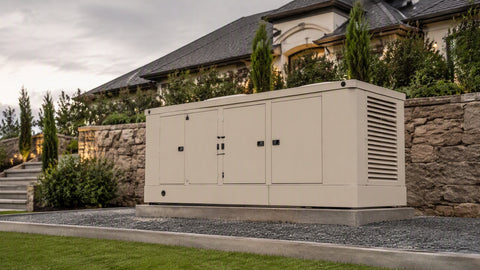
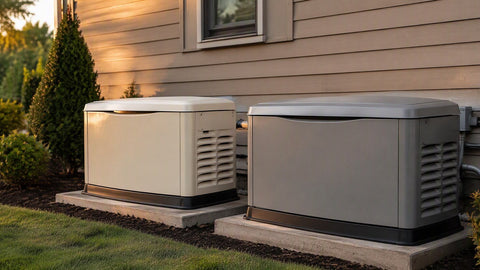
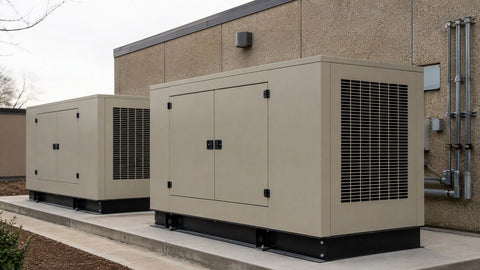
A 22kW standby generator sits in the sweet spot of the air-cooled market. It is the largest class you can buy before stepping up to liquid-cooled units, and it covers the full panel of most American homes without forcing you to pick circuits. We have specced, sold, and helped install hundreds of these units, and the question is never really "will it run my house" — it is "will it run my house the way I live in it."

Start with the number that matters: on liquid propane a 22kW unit delivers its full 22,000 watts. On natural gas the same machine is rated around 19.5kW, because NG carries fewer BTUs per cubic foot than propane. That 2.5kW gap decides whether your second air conditioner starts cleanly on a 95-degree outage day. Plan around the fuel you actually have, not the number on the brochure.
Here is what a realistic whole-home load looks like against that capacity. These are field-observed running and starting draws, not marketing figures:
| Load | Running Watts (typical) | Starting Surge | Notes from the field |
|---|---|---|---|
| 3-ton central A/C | 3,000–3,500 W | 9,000–12,000 W | Soft-start kit cuts the surge roughly in half |
| 5-ton central A/C | 5,000–6,000 W | 15,000+ W | The load that breaks undersized generators |
| Electric water heater | 4,000–4,500 W | None (resistive) | First candidate for a load-shed module |
| Electric range / oven | 3,000–5,000 W | None | Rarely all burners at once — manageable |
| Refrigerator + freezer | 700–1,200 W combined | 2,000–2,500 W | Compressors start at different times, luckily |
| Well pump (½–1 HP) | 1,000–2,500 W | 3,000–5,000 W | Rural homes: this is non-negotiable load |
| Furnace blower (gas heat) | 600–900 W | 1,500–2,000 W | Winter outages live or die on this motor |
| Electric dryer | 4,500–5,500 W | None (resistive + small motor) | Second load-shed candidate |
| Lighting, outlets, electronics | 500–1,500 W | Minimal | LED retrofits made this nearly trivial |
Add the running column honestly and most homes land between 6,000 and 12,000 watts of simultaneous demand. The starting surges are what load management exists for — a 22kW unit cannot start two big compressors at the same instant, but it never has to if the transfer equipment staggers them by thirty seconds.
Room-by-room reality check
Kitchens are the hungriest rooms in the house. Refrigerator, freezer, microwave, coffee maker, dishwasher — figure 2,000 to 3,000 watts when everything is active, and a 22kW unit shrugs it off. Laundry is similar: washer motors are small, but an electric dryer pulls 5,000 watts while it heats. Gas dryer? The problem disappears.
Lighting used to matter. A house full of incandescent cans could burn 2,000 watts on light alone; the same house on LEDs pulls maybe 300. Temperature-maintaining appliances — the fridge, the chest freezer, the heat pump water heater — cycle rather than run continuously, so their daily energy is modest even though their startup draw is real. HVAC remains the only load that genuinely sizes the generator. Everything else fits around it.
Will a 22kW Generator Run Your Whole House? The Honest Answer
For most homes up to about 2,200 square feet, yes — full panel, one central air conditioner, no compromises. Between 2,200 and roughly 3,000 square feet the answer is still yes, but only with smart load management modules on the water heater, dryer, and second HVAC zone. Past 3,000 square feet, all-electric, with two or more big compressors, we steer people to a 24kW or 26kW unit instead.
| Home Profile | 22kW Verdict |
|---|---|
| Under 1,500 sq ft, gas heat | Comfortably whole-home, headroom to spare |
| 1,500–2,200 sq ft, one central A/C | Whole-home coverage — the classic 22kW use case |
| 2,200–3,000 sq ft, one or two A/Cs | Yes — with load management modules |
| 3,000+ sq ft, all-electric, two+ A/Cs | Step up to 24–26kW or plan staged loads carefully |
I've walked plenty of 2,800 sq ft homes where the owner swore they needed 26kW, and the load calc said otherwise — gas range, gas dryer, gas heat, one 3.5-ton A/C. The 22kW ran that house through a four-day ice-storm outage without breaking a sweat. Square footage is a proxy, not a load calculation. Count the big motors and the resistive heating elements; everything else is rounding error.
If you want a structured walkthrough of that math, our whole-home generator sizing guide lays out the full worksheet, and the 22kW generator collection shows what this class looks like across brands.
Generac 22kW Guardian: The Benchmark Unit
When people say "22kW generator" they usually mean the Generac Guardian, and for good reason — it is the highest-volume air-cooled standby in North America, which means parts, service techs, and install experience exist everywhere. It is one of the most powerful air-cooled generators on the residential market, and the feature set is genuinely useful rather than decorative: Mobile Link remote monitoring lets you check status from your phone, the G-Force engine is purpose-built for standby duty rather than adapted from lawn equipment, and the aluminum enclosure is built to live outdoors through decades of weather.
Core specifications
| Specification | Generac Guardian 22kW |
|---|---|
| Rated output — LP (propane) | 22,000 W |
| Rated output — Natural Gas | ~19,500 W |
| Amps at 240V (LP) | 91.7 A |
| Dimensions (L × W × H) | 48″ × 25″ × 29″ |
| Enclosure | Aluminum, corrosion-resistant |
| Starting battery (not included) | Group 26R, 12V, 540 CCA minimum |
| Unit price (equipment only) | ~$6,379 |
| Standard ATS pairing | 200A service-entrance automatic transfer switch |
| Warranty | 5-year limited (standard on Guardian series) |
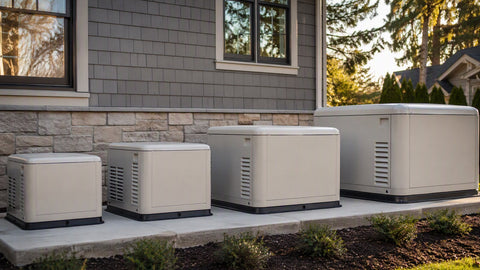
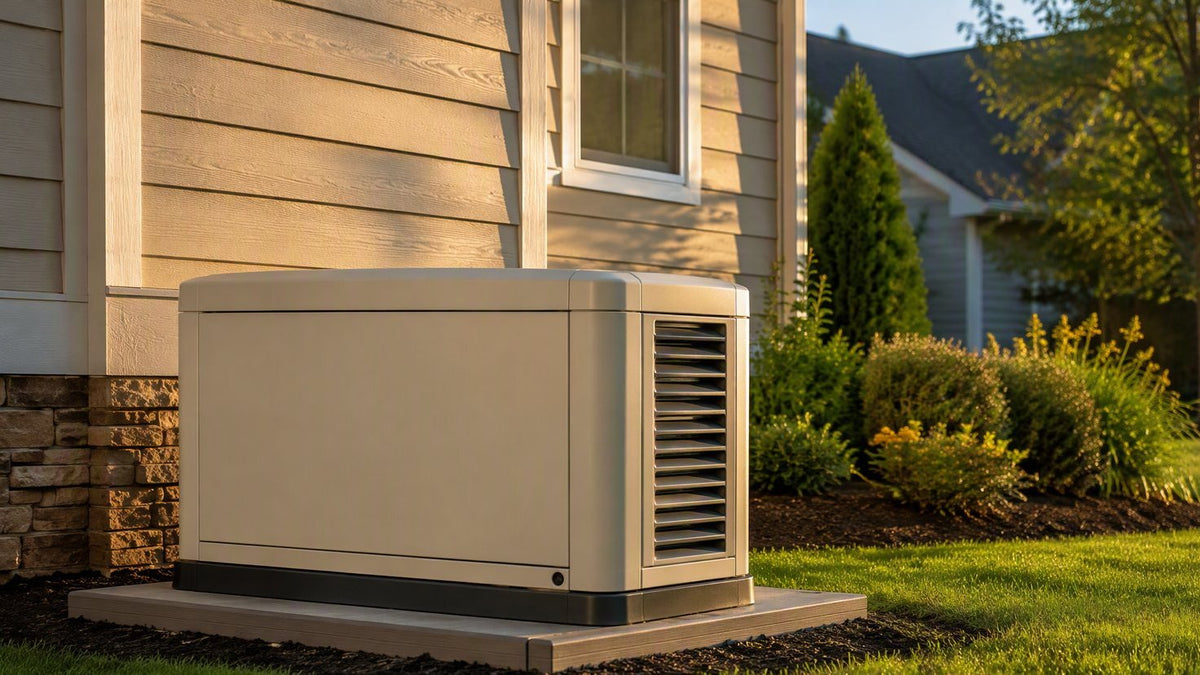
The 48 × 25 × 29-inch footprint matters more than people expect. That is the same pad envelope as the 24kW and 26kW Guardians, so upgrading later does not mean re-pouring concrete. Clearances: 18 inches minimum from the structure, 5 feet from doors, windows, and combustion-air intakes, 3 feet in front of the access panel for service. We've seen installs red-tagged at inspection because someone set the unit 14 inches off the siding to make the gas line reach — measure the clearances before the pad goes down, not after.
Fuel Consumption: What a 22kW Actually Burns
Fuel planning is where generator projects succeed or fail during long outages. A 22kW Guardian is genuinely fuel-efficient for its class, but "efficient" at 22,000 watts still moves a lot of fuel:
| Load Level | Propane (gal/hr) | Runtime on 250-gal tank* | Natural Gas (ft³/hr, approx.) |
|---|---|---|---|
| 25% load | ~1.8 | ~139 hrs | ~160 |
| 50% load | 2.53 | ~99 hrs | ~207 |
| 75% load | ~3.2 | ~78 hrs | ~260 |
| 100% load | 3.9 | ~64 hrs | ~306 |
*Usable capacity of a 250-gal propane tank is roughly 200 gallons (tanks fill to 80%), so real-world runtime is about 80% of the idealized figure. Budget accordingly.
Two practical takeaways. First, a 250-gallon propane tank gives you about four days at half load — and most real outages average well under half load, because the A/C cycles and nobody runs the oven at 3 a.m. Second, natural gas removes the tank question entirely but introduces the meter question: at full load the generator wants roughly 306 cubic feet per hour on top of your furnace and water heater. Have your gas utility confirm meter capacity before installation. I have personally seen a generator starve a furnace pilot on a cold night because the meter was never upsized — the generator ran fine, the house got cold anyway.
Propane vs. natural gas: the real decision
Choose natural gas if you have it. Unlimited runtime, no deliveries, no tank lease, lower cost per BTU in most markets. The 19.5kW derate is the price of convenience, and for most 22kW-class homes it changes nothing. Choose propane when NG is not on the street: you get the full 22,000 watts, fuel that stores indefinitely without degrading, and independence from utility infrastructure. The catch is logistics — a 250-gallon tank is the practical minimum for a 22kW, 500 gallons if you want week-plus autonomy, and your supplier needs to know you exist before the storm does.
Load Management: The Technology That Makes 22kW Whole-Home

Load management modules are small relays that sit on your biggest discretionary circuits — water heater, dryer, second A/C zone, pool pump. When generator output approaches its ceiling, the transfer equipment sheds those circuits in priority order and restores them as capacity frees up. The homeowner notices nothing except, occasionally, the water heater taking an extra twenty minutes to recover.
Without load management, sizing is arithmetic against worst case: everything that could run simultaneously must fit under the generator's rating. With it, sizing is arithmetic against realistic case: everything that will run simultaneously, which is a much smaller number. This is why we say a 22kW covers a 3,000 sq ft house "with load management" — the generator isn't bigger, the demand is smarter. Modules are cheap relative to stepping up a generator class, and they live in the transfer equipment, so adding them later means opening the ATS, not replacing it.
ATS Pairing: Why the 200A Service-Entrance Switch Matters
A 22kW generator on a typical 200-amp residential service pairs with a 200A service-entrance-rated automatic transfer switch. That switch installs between the meter and your main panel, which makes the entire panel backup-ready — no choosing circuits, no sub-panel rewiring, no explaining to your family which outlets work during an outage. Generac's 22kW Guardian units are commonly bundled with exactly this switch, and you can browse compatible gear in our transfer switch collection.
Smaller sub-panel ATS options exist if you only want to back up selected circuits, but at 22kW that wastes the generator's capacity. The load-management modules that make whole-home coverage work in bigger houses live inside the transfer equipment — this is where the intelligence is, not in the generator itself. The generator makes power; the ATS decides who gets it and in what order.
What Installation Day Actually Looks Like
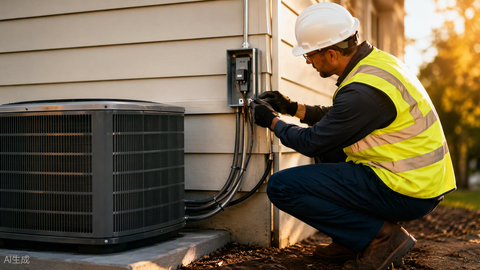
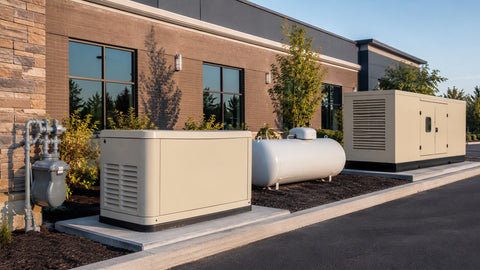
A competent crew finishes a straightforward 22kW install in one long day, two if the gas run is ugly. The sequence never changes. Site survey first: the crew confirms clearances, plans the gas route, and locates the transfer switch as close to the meter and main panel as physics allows. Then the pad — pre-cast composite pads have mostly replaced poured concrete for air-cooled units, and they cut hours off the job. The generator sets on the pad and gets anchored.
Gas and electric happen in parallel. The plumber runs the fuel line with a shutoff at the unit; the electrician mounts the ATS, pulls the feeders, and lands the control wiring. Conductor sizing for a 22kW at 240V typically means 1 AWG copper for the generator feeders. Then commissioning: the installer fires the unit, verifies voltage and frequency under load, simulates an outage to watch the transfer, and programs the exercise schedule. Inspection closes it out. The permit is not optional — unpermitted generator installs void homeowner's insurance claims in many states, and they surface painfully at resale.
What the whole project costs
| Line Item | Typical Range |
|---|---|
| Generac Guardian 22kW unit | ~$6,379 |
| 200A service-entrance ATS | Included in bundle or ~$700–$1,000 |
| Pad, anchors, misc. materials | $300–$600 |
| Electrical labor + feeders | $1,800–$3,000 |
| Gas plumbing | $800–$2,000 (long runs cost more) |
| Permits and inspection | $150–$500 |
| Turnkey total | ~$11,000–$14,000 |
Regional labor swings these numbers hard, and a 60-foot gas trench through tree roots is a different job than a 10-foot run along the foundation. Get two itemized quotes and compare line by line, not total to total.
Noise, Placement, and Living With the Thing
Modern air-cooled standbys run in the mid-60s decibels at 23 feet — conversation volume, not lawnmower volume. Still, placement matters for domestic peace. Don't put the exhaust side facing the neighbor's bedroom window; don't put it under your own. Corner-of-house placements on the utility side work best in practice: short gas run, short electrical run, sound deflected away from living spaces. The weekly exercise cycle runs at whatever time you program it — set it for midday, not 6 a.m. Saturday, and your household will forget the machine exists until the day it saves them.
What Size Battery Does a Generac 22kW Need?
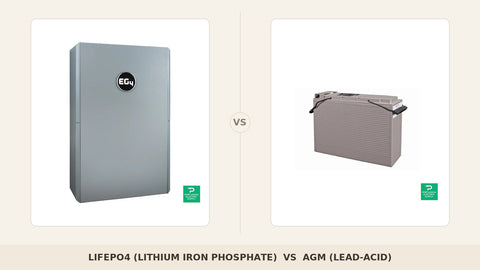
The Guardian series ships expecting a Group 26R 12-volt battery, minimum 540 cold-cranking amps — and the battery is not included with the unit, which surprises a lot of buyers at install time. Buy a quality AGM unit from the start. The battery lives outdoors next to a running engine, it self-discharges between exercise cycles, and the one time you need it is the one time it has to work. We replace more dead generator batteries than any other single component, and almost all of them were bargain batteries that cooked through three summers of heat cycles next to a warm engine.
22kW vs 26kW: The Decision Points

The 26kW class exists because the 22kW has one hard ceiling: two large motor loads starting back to back. Here is the comparison we walk customers through, and you can read the full companion piece in our 26kW generator guide:
| Decision Point | Choose 22kW | Choose 26kW |
|---|---|---|
| Home size | Up to ~2,200 sq ft (3,000 w/ load mgmt) | 2,200–3,500 sq ft |
| Air conditioning | One central A/C | Two central A/Cs or a 5-ton unit |
| Fuel supply | Adequate NG meter or 250+ gal LP tank | Same, but verify NG meter capacity at full load |
| NG output (real) | 19.5 kW on natural gas | 24 kW on natural gas |
| Budget | Lower unit + install cost | ~$800–$1,200 more installed |
Same footprint, same pad, same 200A ATS class — the 26kW buys you 4kW of LP headroom and 4.5kW on natural gas for roughly a thousand dollars more installed. If your load calc lands within 15% of the 22kW ceiling, spend the money. Headroom you never use costs less than capacity you needed once.
How Long Can a 22kW Run Continuously?
Mechanically, indefinitely with fuel and oil service — these engines are built for extended standby duty. The practical limit is fuel storage and maintenance intervals. Work the math from the consumption table: a 100-gallon propane reserve at 50% load (2.53 gal/hr) runs about 39.5 hours; at full load (3.9 gal/hr) about 25.6 hours. On natural gas, runtime is unlimited but oil checks still apply — plan to check oil every 24 hours of continuous run during a long outage, and follow the manufacturer's service interval, typically 200 hours or annually for full oil and filter service.
Heat is the hidden runtime constraint. In sustained summer outages the unit works harder to cool itself; keep the enclosure vents clear, don't stack anything against the louvers, and hose the grass clippings off after mowing. An air-cooled engine that can't breathe derates itself or shuts down on high temperature — usually during the exact heat wave that caused the outage.
Maintenance Requirements That Actually Matter
Standby generators fail from neglect, not from running. The maintenance calendar that keeps a Guardian alive is short:
- Weekly: the unit self-exercises automatically — confirm the exercise cycle completes (Mobile Link tells you).
- Every 6 months: inspect battery terminals, check enclosure for nests and debris, verify the area clearances are still clear.
- Annually or 200 hours: oil and filter change, air filter, spark plugs, valve inspection per the manual.
- Every 2–3 years: replace the battery proactively, before it strands you.
- After any long outage: full service check — that is when small issues reveal themselves.
We tell every customer the same thing: the cheapest generator maintenance is the kind you schedule. The expensive kind happens during an ice storm when every service truck in the county is booked. A service contract with a local dealer typically runs a few hundred dollars a year and buys you priority response when regional outages fill everyone's queue — worth it in storm country, optional elsewhere.
Warranty, Service, and What Actually Breaks
The Guardian line carries a 5-year limited warranty, and in our experience Generac honors it without much argument — provided the unit was installed to spec and serviced on schedule. Keep your maintenance records. What breaks, in order of frequency: batteries (heat and age), starter contactors and trickle chargers (the cheap electricals), rodents chewing control wiring (the enclosure is warm in winter), and very rarely the engine itself. Oil leaks on older units usually trace to valve-cover gaskets, a cheap fix. The catastrophic failures almost always involve a unit that sat unserviced for years and then got asked to run for a week straight. Exercise cycles exist precisely so problems announce themselves on a quiet Tuesday instead of during a blackout.
Alternatives Worth Knowing
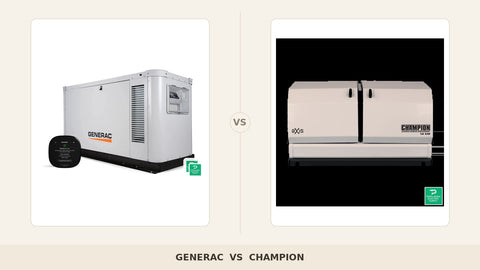
Generac dominates the conversation, but the 22kW class has real competition. The Champion 22kW aXis generator pairs with Champion's own ATS ecosystem, and Briggs & Stratton's PowerProtect line competes on engine platform and warranty structure. You can compare the field in our standby generator collection and the broader generator catalog. For brand-specific depth, the Generac collection covers Guardian units, transfer switches, and accessories in one place.
Frequently Asked Questions
Is a 22kW generator big enough for a whole house?
For most homes up to about 2,200 square feet, yes — a 22kW standby generator covers the whole panel including one central air conditioner, especially with load management. Larger homes up to ~3,000 sq ft can also work with smart load shedding; beyond that, consider a 24–26kW unit.
Is a 22kW generator big enough for a 3,000 sq ft house?
Usually yes with load management — the generator runs everything except simultaneous peaks (for example, both A/C compressors starting at once). Without load management, a 3,000 sq ft all-electric home is better matched to a 26kW.
What is the difference between a 22kW and 26kW generator?
About 4kW of capacity — roughly the headroom to run a second large appliance or a bigger A/C without load shedding. On natural gas the gap is wider: 19.5kW (22kW class) versus 24kW (26kW class). Both share the same physical footprint and 200A ATS pairing.
What size transfer switch does a Generac 22kW need?
A 200-amp service-entrance automatic transfer switch (ATS) is the standard pairing for a Generac 22kW on a typical 200A residential service. Smaller sub-panel ATS options exist if you only want to back up selected circuits.
Can a 22kW generator run two air conditioners?
Often yes with load management modules that stagger compressor starts. Without load management, two large A/C units starting simultaneously can exceed a 22kW unit's motor-starting capacity — especially on natural gas, where output drops to about 19.5kW.
How much does a Generac 22kW generator cost installed?
The equipment runs about $6,379 for the unit; a typical turnkey installation with pad, transfer switch, gas plumbing, and electrical work lands in the $11,000–$14,000 range depending on site conditions and local labor rates.
How long will a 22kW generator run on a 250-gallon propane tank?
At half load the unit burns about 2.53 gallons per hour; with roughly 200 usable gallons in a 250-gallon tank, expect about 79 hours — over three days of continuous run. Real outages with cycling loads stretch that considerably.
Sources & Standards
Output figures, fuel consumption, and dimensional data reflect published Generac Guardian series specifications and Portlandia Electric Supply field experience. Installation clearances follow manufacturer instructions and NFPA 37 (Standard for the Installation and Use of Stationary Combustion Engines and Gas Turbines); electrical work follows NEC Article 702 (Optional Standby Systems) and Article 250 grounding requirements. Local codes and the installation manual always take precedence.