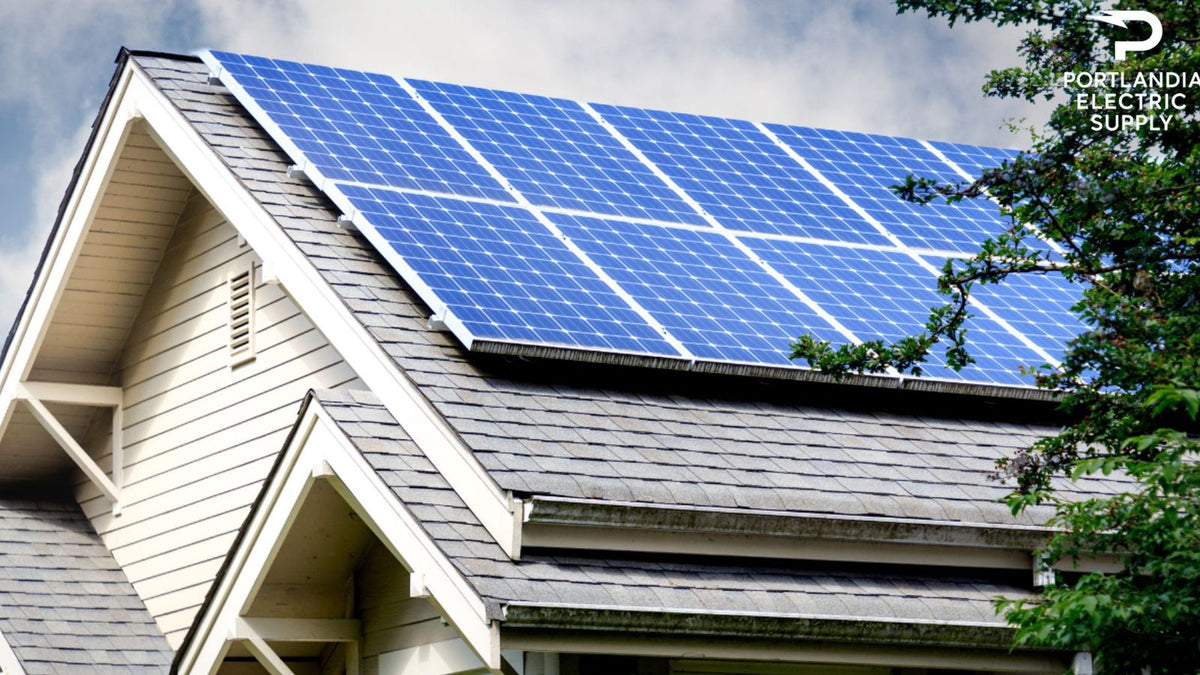
Start With the Utility Bill, Not the Roof
Sunlight Hours And Solar System Size
Every week someone calls us and asks what size solar system their house needs, and every week we give the same answer: the roof doesn't decide, the utility bill does. Pull the last twelve months of bills, find the kilowatt-hours, and write down the annual total. That single number drives everything else in this guide.
The average American home burns through roughly 10,500 kWh a year — about 875 kWh a month, or 29 kWh a day. But averages are dangerous in this trade. A 1,400-square-foot ranch in Portland with gas heat might sip 600 kWh a month. A 3,000-square-foot two-story in Phoenix with two air conditioners can blow past 2,200 kWh in July alone. I've seen two houses on the same street differ by a factor of three, simply because one family runs a pool pump and an EV and the other doesn't.
Here's the shorthand we use at the counter before any design work starts:
| Annual Usage (kWh) | Monthly Average | Typical Home Profile | Ballpark System Size* |
|---|---|---|---|
| 4,000–6,000 | 330–500 kWh | Small home, gas heat, no EV | 3–4.5 kW |
| 6,000–9,000 | 500–750 kWh | Average home, mixed gas/electric | 4.5–7 kW |
| 9,000–12,000 | 750–1,000 kWh | All-electric or larger family home | 7–9.5 kW |
| 12,000–16,000 | 1,000–1,330 kWh | All-electric + EV or pool | 9.5–13 kW |
| 16,000–24,000 | 1,330–2,000 kWh | Large home, 2 EVs, electric everything | 13–19 kW |
*Ballpark assumes roughly 4.5 peak sun hours and a standard 78% system derate — both explained below. Your number will move with your climate.
Factors Influencing Solar System Size
If you want to skip the arithmetic entirely, our solar system size calculator and the interactive sizing tool do the same math we're about to walk through by hand.
The Sizing Formula That Actually Works
Solar sizing is one line of arithmetic with three inputs:
System size (kW) = Daily kWh usage ÷ Peak sun hours ÷ System derate factor
Daily usage comes from your bills. Peak sun hours come from your location — that's the number of hours per day the sun effectively delivers 1,000 watts per square meter, which is how panels are rated. The derate factor accounts for everything that eats production between the panel face and your meter: inverter losses (3–5%), wiring losses (1–2%), soiling (2–5%), temperature losses (5–12% on hot roofs), and shading. We use 0.78 as a field-honest default. NREL's PVWatts model uses a similar figure for a typical residential install.
Worked example, the way I'd do it on the back of a spec sheet:
- Annual usage: 10,950 kWh → 30 kWh per day
- Location: Willamette Valley, Oregon → 4.0 peak sun hours annual average
- Raw array needed: 30 ÷ 4.0 = 7.5 kW
- Apply the 0.78 derate: 7.5 ÷ 0.78 = 9.6 kW
That 9.6 kW is the DC nameplate size of the array you'd actually buy — not the 7.5 kW the naive math suggests. Skip the derate and you'll come up about 22% short on annual production, which is the difference between a net-zero year and a surprise true-up bill from the utility every spring.
How many panels is that? Divide by the panel wattage you're buying:
| Panel Choice | Wattage | Panels for a 9.6 kW Array | Approx. Roof Area Needed |
|---|---|---|---|
| Solar4America S4A-US330B | 330 W | 30 panels | ~560 sq ft |
| Silfab Elite 370 W N-Type TOPCon | 370 W | 26 panels | ~500 sq ft |
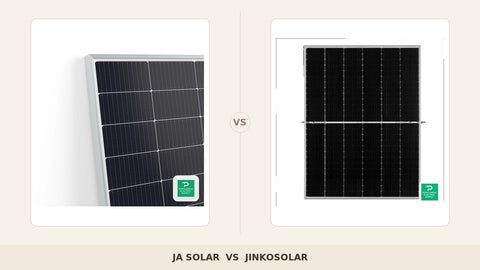
| JA Solar 400 W (144-cell) | 400 W | 24 panels | ~510 sq ft |
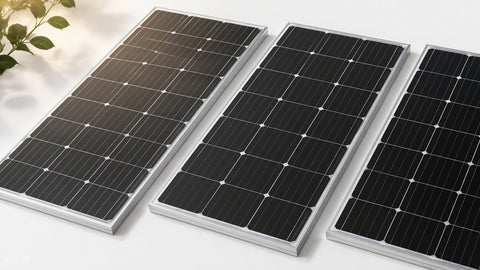
| SunEvo SE5-54H | 450 W | 22 panels | ~470 sq ft |
Roof area assumes roughly 19–21.5 square feet per panel depending on format. Higher-wattage panels buy you the same array on less roof — which matters the moment you add a dormer, a vent stack, or a north-facing section you can't use.
Sun Hours by Region: The Same House Needs a Different Array
A house using 30 kWh a day is not one size of system. In Phoenix it's a 5.3 kW array; in Seattle it's a 10.7 kW array. Same bill, double the hardware. This table preserves the regional guidance from the original version of this guide, now with the math shown:
Average Sunlight Hours By Region
| Region | Average Peak Sun Hours/Day | Array for 30 kWh/Day (with 0.78 derate) | Recommended System Size Range |
|---|---|---|---|
| Southwest desert (AZ, NV, NM, SoCal) | 6.0–7.5 | 5.1–6.4 kW | Smaller system (3–5 kW for modest homes) |
| Central & Southeast (TX, FL, GA, CO) | 4.5–5.5 | 7.0–8.5 kW | Medium system (5–7 kW typical) |
| Temperate zones (Mid-Atlantic, Midwest, N. CA) | 4.0–4.5 | 8.5–9.6 kW | Medium-large (5–7 kW for average use) |
| Pacific Northwest & Northeast | 3.0–4.0 | 9.6–12.8 kW | Larger system (7–10 kW typical) |
| Cloudy/coastal microclimates | 2.5–3.0 | 12.8–15.4 kW | Largest residential arrays (10 kW+) |
Adjusting System Size For Seasonal Changes
One nuance the sun-hour tables never capture: seasonal shape. Oregon's annual average of 4.0 sun hours hides a swing from about 5.5 hours in July to barely 1.2 in December. If your utility offers annual net-metering true-up, size to the annual average. If you're on monthly netting or a battery-based grid-tied system with self-consumption goals, the winter month sets your real-world shortfall.
What's Actually Using Your Power
Before you size the array, audit the loads. The original version of this guide included a sample appliance table; here's the upgraded version with the numbers we use when we walk a customer's bill:
Calculating Household Energy Needs
Sample Energy Use Table
| Appliance | Power (Watts) | Hours per Day | Energy Use (Wh) | Field Note |
|---|---|---|---|---|
| Refrigerator | 150 | 24 (cycles ~8 hrs actual) | 1,200–3,600 | Nameplate watts × 24 overstates it; compressors cycle |
| LED lighting (5 bulbs) | 50 | 5 | 250 | Old incandescent equivalent: 1,500 Wh — LED retrofits pay for themselves |
| TV + streaming | 100 | 4 | 400 | — |
| Electric fan / ceiling fans | 75 | 6 | 450 | — |
| Electric water heater | 4,500 | 2.5 (recovery hours) | 11,250 | Often the #2 load in all-electric homes |
| Central A/C (3-ton) | 3,500 | 6 (summer) | 21,000 | The reason July bills double |
| EV charging (Level 2) | 7,200 | 2 | 14,400 | ~40 miles of driving; see EV chargers |
| Baseline total (no A/C, EV, water heat) | — | — | 4,700 Wh (4.7 kWh) | Matches the original sample household |
That 4.7 kWh baseline is real, but it's also why "average" sizing advice fails: the big three — water heat, cooling, and EV charging — are 5–8× the baseline combined. If you're planning to add any of them in the next five years, size for the house you're going to have, not the one you're standing in. Our guide on how many panels cover 1,500 kWh per month runs the same exercise at the high end of residential usage.
Roof Space, Orientation, and Tilt
Once the kW target exists, the roof gets its vote. Three checks, in order:
Usable square footage
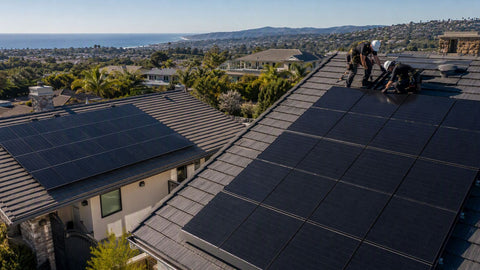
Measure the south-, west-, and east-facing planes, then subtract everything that isn't roof: setbacks required by fire code (typically 3 feet at ridges and 18 inches at edges, per IFC and local amendments), vents, skylights, chimneys, and shade shadows. A 9.6 kW array of modern 400W panels needs roughly 500 square feet of usable roof — not gross roof. On complex roofs we regularly lose 30% of the gross area to obstructions.
Orientation
South-facing at latitude tilt is the reference case: 100%. West-facing arrays produce about 85–90% of south's annual energy but shift production into the afternoon, which actually matches air-conditioning load and many utilities' peak pricing windows. East mirrors west. North-facing roof planes run 55–70% of south in the northern U.S. — workable on low-slope roofs in the South, rarely worth it in Oregon. Mixing orientations on one string inverter used to be a design sin; with module-level electronics or dual-MPPT string inverters, it's routine. Our panel mounting guide covers racking layout in more detail.
Tilt and shading
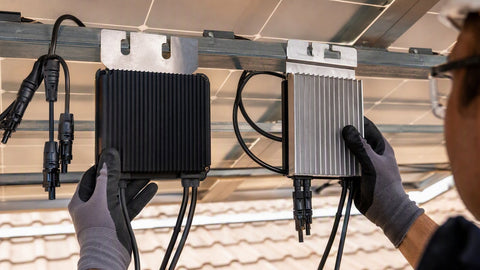
Tilt within about ±15° of latitude costs you less than 5% annually — don't redesign a roof over it. Shade is the real killer: a single vent-pipe shadow tracking across a string can clip 20–30% of that string's output on winter afternoons. Microinverters or optimizers isolate the damage to the shaded module instead of letting it drag the whole string down.
Panel Types and Efficiency: What Actually Matters
The original guide's panel-type comparison still holds, with updated numbers for what's actually shipping:
| Panel Type | Efficiency Range | Best Use | Examples We Stock |
|---|---|---|---|
| Monocrystalline (incl. N-type TOPCon / HJT) | 19%–23% | Limited roof space, high power needs | Qcells XL G11S, Silfab Elite N-Type, REC |
| Standard mono PERC | 17%–20% | Balanced cost/performance — the volume seller | Canadian Solar CS3N-395MS, Trina, JA Solar |
| Polycrystalline (legacy) | 13%–17% | Budget projects where space is free | Largely phased out of new production |
| Thin-film | 10%–12% | Large commercial areas, lightweight/curved surfaces | Not typical for residential |
| Bifacial mono | 19%–22% + rear gain | Ground mounts, carports, bright-roof surfaces | Bifacial panel collection |
Honest advice from the warehouse side: efficiency percentages matter less than the datasheet warranty terms and the temperature coefficient. A panel that loses 0.35%/°C will outproduce a "more efficient" panel at 0.40%/°C on every hot afternoon of its 25-year life. On dark shingle roofs in Texas, that coefficient is the spec I read first.
Budget: What the Sizes Actually Cost
The original guide's cost ranges still track with what we see quoted, updated here with current dollar figures and monthly production at 4.5 sun hours with a 0.78 derate:
| System Size | Approx. Installed Cost (before incentives) | Energy/Month (kWh) | Best For |
|---|---|---|---|
| 3 kW | $5,000–$7,000 | 315–400 | Small homes, low energy use, offsetting a baseline |
| 5 kW | $7,000–$10,000 | 525–675 | Average homes, typical energy use |
| 7 kW | $10,000–$14,000 | 735–945 | Larger homes, growing families |
| 10 kW | $14,000–$20,000 | 1,050–1,350 | All-electric homes, one EV |
| 13 kW | $18,000–$26,000 | 1,365–1,755 | High-use homes, EV + pool or heat pump |
Production math, so you can check me: 5 kW × 4.5 sun hours × 30 days × 0.78 = 526 kWh per month. The 30% federal Investment Tax Credit still applies to residential systems placed in service under current rules — on a $20,000 install that's $6,000 back — and state programs stack on top. Our solar incentives by state page tracks them, and the ROI calculator turns the production math into payback years.
How To Choose The Best Size For Your Budget
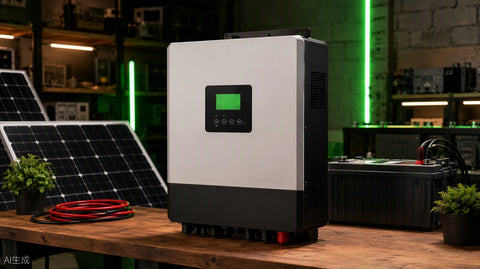
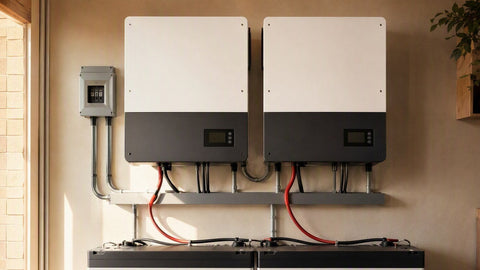
Adding storage changes the budget conversation, not the sizing formula. A battery doesn't make your array bigger; it makes the array's output usable after dark. If backup is the goal, size the array for your annual kWh first, then size the battery for the loads you refuse to lose — the battery sizing calculator and our storage sizing guide handle that second half.
Future-Proofing: Size for the House You're Becoming
I've rebuilt more than one system where the owner sized perfectly for 2021 and then bought an EV in 2023. Adding 4 kW to an existing array costs substantially more per watt than building 4 kW bigger on day one — second mobilization, second permit, second inspection, and often a second inverter because the first one is maxed. The three loads that ambush people:
- EV charging: add 3,000–5,000 kWh per year per EV (12,000–15,000 miles at ~0.3 kWh/mile). That's 2–4 kW of array per car depending on your sun hours.
- Heat pump conversion: replacing gas heat with a cold-climate heat pump adds 4,000–8,000 kWh/year in heating-dominated climates. See our mini-split installation cost guide for what the HVAC side of that project looks like.
- Hot tub / pool / workshop: 2,000–6,000 kWh/year each, and nobody ever believes it until the first bill.
Practical move: even if you build smaller today, install the racking and conduit paths with expansion in mind, and pick an inverter with headroom or a second MPPT input. Our solar installation guide walks through expansion-friendly layouts, and the permitting guide explains why your permit should describe the final system, not phase one.
The Verdict: Which Size Is "Best"
The best size is the one that covers 90–105% of your annual kWh at your site's real sun hours, fits your usable roof with fire setbacks, and leaves headroom for the loads you already know are coming. For the mythical average house that means 7–10 kW; for your house it means running your own bills through the formula. Undersizing to save money upfront usually costs more in true-up bills than it saves in hardware; oversizing past your utility's net-metering cap turns extra panels into a donation to the grid at wholesale rates.
Ready to run your numbers with real hardware pricing? Browse residential panels, price a complete grid-tied system, check whether solar can power your whole house, or request a quote with your last twelve months of kWh in hand — that's the first thing we'll ask for anyway.
Seasonal Reality: Winter vs. Summer Production
Annual sun hours flatten a curve that is anything but flat. A 9.6 kW array in Oregon produces roughly three times more energy in July than in December. If your goal is offsetting an air-conditioning-heavy summer bill, that shape works in your favor. If your goal is running an all-electric house with a heat pump through January, the winter month is the honest design constraint.
| Month | Est. Sun Hours/Day (Willamette Valley) | 9.6 kW Array Monthly Output (kWh) | Typical All-Electric Home Usage (kWh) | Surplus / Deficit |
|---|---|---|---|---|
| January | 1.5 | ~335 | 1,100 | −765 |
| April | 4.0 | ~900 | 800 | +100 |
| July | 5.8 | ~1,400 | 950 | +450 |
| October | 2.8 | ~675 | 850 | −175 |
Math: 9.6 kW × sun hours × days × 0.78. The annual totals net out near zero — that is exactly what annual net metering is for. But watch the winter rows: this is why pairing the array with battery storage changes the shape of your bill more than the size of it, and why winter production — not annual averages — should be on your mind before you commit to a size.
Grid-Tied vs. Off-Grid: Two Different Definitions of "Right Size"
Everything above assumes grid-tied with net metering, where the grid is your battery. Off-grid flips the logic: there is no annual averaging, no true-up, no mercy. An off-grid array must carry the house through the worst stretch of the year, not the average one.
| Design Factor | Grid-Tied Sizing | Off-Grid Sizing |
|---|---|---|
| Design basis | Annual kWh vs. annual production | Worst-month daily kWh vs. worst-month daily production |
| Oversizing cushion | 0–10% (cap set by utility rules) | 25–50% array oversize to survive dark stretches |
| Storage role | Optional — backup or rate arbitrage | Mandatory — 2–3 days of autonomy minimum |
| Backup | Grid | Generator, sized for the gap weeks |
| Typical result for the same house | 8–10 kW | 12–16 kW + 20–40 kWh battery |
The same 30 kWh/day house that needs 9.6 kW grid-tied wants roughly 15 kW off-grid in the Northwest: 30 kWh ÷ 1.5 December sun hours ÷ 0.78 ≈ 25.6 kW before you even apply the common-sense cushion — which is why most off-grid designers attack consumption first (propane water heat, propane range, mini-split instead of resistance heat) before they attack panel count. Our off-grid system design guide goes deep on that workflow, and the off-grid cabin kit page shows what a pre-engineered small system looks like.
Five Sizing Mistakes We See Every Month
1. Sizing off one summer bill. A July bill in a cooling climate is the peak, not the average. Twelve months or nothing — utilities will print the annual summary on request.
2. Ignoring the derate. Panel nameplate watts are laboratory numbers at 25°C cell temperature. Roof-mounted cells run 20–35°C hotter than ambient on summer afternoons, and every degree costs you the temperature coefficient. The 0.78 factor isn't pessimism; it's physics.
3. Forgetting the utility cap. Many utilities limit net-metered systems to 100–110% of historical usage. Oversize past the cap and your excess earns wholesale credits — often a third of retail. Check interconnection rules before you fall in love with a 15 kW layout.
4. Designing around today's roof without tomorrow's loads. Covered above, but worth repeating because it's the most expensive mistake on this list. Adding panels later means a second crew, a second permit, and frequently a second inverter.
5. Trusting the salesman's satellite measurement over a ladder. Remote roof-measurement tools are good for estimates and bad for setbacks, vents, and the oak tree on the southwest corner. We quote from satellite data and we verify on site — I've watched a "perfect 28-panel roof" turn into 22 panels the morning someone actually climbed it.
Three Real Houses, Three Real Answers
Abstract formulas only go so far, so here are three sizing jobs from our own order history — anonymized, but the numbers are real:
| Home Profile | Annual Usage | Location / Sun Hours | System We Built | Why That Size |
|---|---|---|---|---|
| 1,600 sq ft bungalow, gas heat, no EV, two occupants | 6,800 kWh | Portland, OR / 4.0 | 5.4 kW — 13 × 415 W panels | Covers ~100% of annual use with nothing wasted past the net-meter cap |
| 2,800 sq ft two-story, heat pump, one EV, family of five | 14,200 kWh | Boise, ID / 5.2 | 9.9 kW — 24 × 415 W panels | High sun hours kept the array under 10 kW despite heavy usage |
| 3,400 sq ft all-electric, two EVs, pool, workshop | 22,500 kWh | Dallas, TX / 5.3 | 14.8 kW — 33 × 450 W panels + 20 kWh battery | Capped at 110% of usage by the utility; battery shifted pool-pump runtime into solar hours |
Notice what changed and what didn't: usage ranged over a factor of 3.3, but system size only ranged over a factor of 2.7 — because Boise and Dallas sun hours did real work. Location is half the equation, every time.
Frequently Asked Questions
What size solar system powers an average house?
Around 7–10 kW covers the typical American home using 10,000–12,000 kWh per year, depending on local sun hours. In the sunny Southwest the same bill might need only 5–6 kW; in the Pacific Northwest it can take 11–13 kW. Always size from your own utility bills, not a national average.
How do I choose the right solar system size?
Divide your daily kWh usage by your local peak sun hours, then divide again by a 0.78 derate factor. Convert the resulting kW into panels (array kW ÷ panel wattage), then verify the panel count fits your usable roof area after setbacks and obstructions.
Does roof size limit my solar system size?
Types Of Solar Panels And Efficiency
Yes — a 400W panel needs roughly 20–21.5 square feet including row spacing, and fire-code setbacks consume 15–30% of gross roof area. If usable roof is the constraint, higher-efficiency N-type panels squeeze more kW onto the same footprint.
Should I oversize my solar system for the future?
Only up to your utility's net-metering cap. Planned EV purchases and heat-pump conversions justify 2–5 kW of headroom; production beyond the cap is typically credited at low wholesale rates and rarely pays back.
How many solar panels do I need for 2,000 kWh per month?
At 4.5 peak sun hours and a 0.78 derate, 2,000 kWh/month needs about 19 kW of array — roughly 47 panels at 400 W each. See our dedicated breakdown of what a 25 kW array looks like for the physical scale of systems in that class.
Is a bigger inverter better than a bigger array?
No. Array size sets annual energy; inverter size sets peak power. DC-to-AC ratios of 1.2–1.35 are standard practice — slightly "oversizing" the array relative to the inverter harvests more morning and afternoon energy at minimal clipping cost.