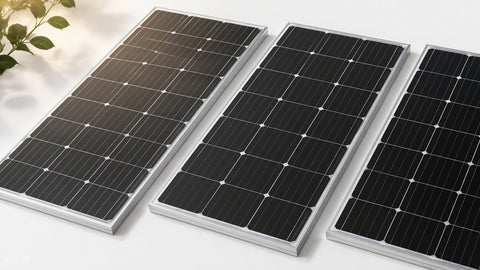
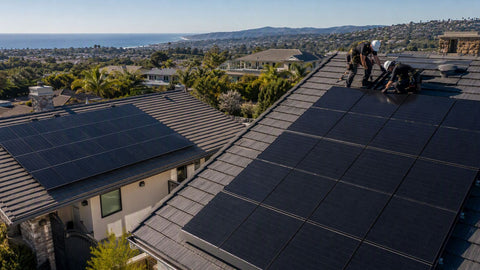
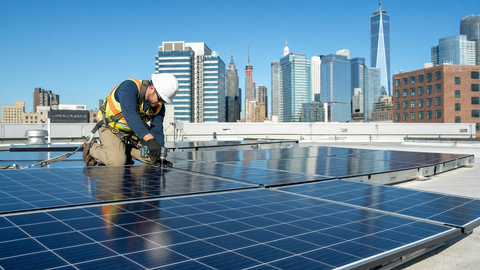
Ask a room full of homeowners why they went solar and you will hear the same five answers in different orders: the bill, the backup, the environment, the home value, and the independence from rate hikes. These are not marketing lines — they are measurable effects that show up in utility statements, appraisal reports, and production monitoring data. We have supplied thousands of residential systems at Portlandia Electric Supply, and the customers who understand these five advantages before they buy are the ones who size their systems correctly and never regret the purchase.

This guide explains each of the five core advantages of solar energy with the real numbers behind them — what an 8 kW system actually produces, what it actually saves, and where the limits are. No hype, just the math we use when customers call our desk.
Advantage 1: Drastically Lower Electricity Bills
The average American household uses roughly 10,500 to 12,000 kWh per year and pays an average retail rate above $0.17 per kWh — over $2,000 annually, and climbing. A properly sized solar array offsets most or all of that consumption at a levelized cost of $0.06 to $0.11 per kWh, a 40 to 60 percent discount that lasts 25 years or more. The savings are front-loaded in high-rate states: a California customer paying $0.32 per kWh saves roughly three times what a customer in a $0.11 market saves on identical hardware.
| Utility Rate | Annual Use (kWh) | Annual Bill (No Solar) | 8 kW Solar Offset (95%) | Annual Savings | 25-Year Savings (3% escalation) |
|---|---|---|---|---|---|
| $0.12 | 11,000 | $1,320 | 10,450 kWh | ~$1,254 | ~$45,700 |
| $0.17 | 11,000 | $1,870 | 10,450 kWh | ~$1,777 | ~$64,800 |
| $0.25 | 11,000 | $2,750 | 10,450 kWh | ~$2,613 | ~$95,200 |
| $0.32 | 11,000 | $3,520 | 10,450 kWh | ~$3,344 | ~$121,900 |
Those 25-year figures assume a conservative 3 percent annual utility escalation; the national average has run close to that for two decades, and several states have exceeded it. Estimate your own scenario with our solar ROI calculator, and first find your real consumption with the power consumption guide.
Advantage 2: Energy Independence and Backup Power
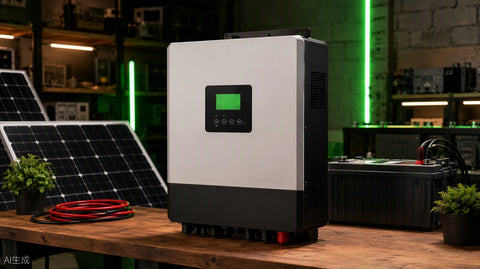
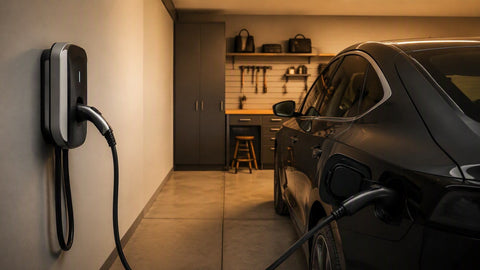
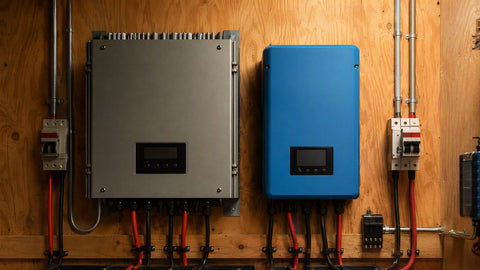
Grid dependence is a service agreement you cannot negotiate. Outages are lengthening in much of the country, rate structures change at the utility's discretion, and time-of-use plans increasingly punish evening consumption. Solar with storage flips that relationship: you generate on your roof, store in your battery, and buy from the grid only when the math favors you. Grid-forming hybrid inverters can island a home entirely during an outage — refrigerators, well pumps, medical equipment, and internet all stay up.
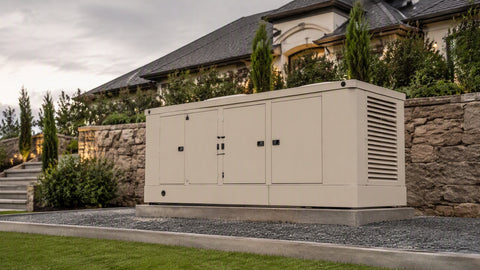
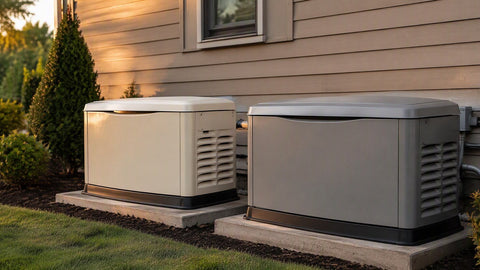
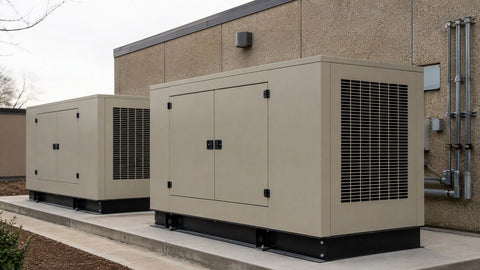
Even without a battery, solar reduces exposure: every kWh self-consumed is a kWh immune to the next rate case. For households that want guaranteed whole-home backup, pairing solar with a standby generator or a right-sized battery system covers the long gray stretches. Our whole-house solar analysis and the battery bank sizing guide cover the specifics.
Advantage 3: Environmental Impact You Can Measure
A residential 8 kW system in average US sun produces about 11,000 to 12,000 kWh per year. Against the average grid mix, that avoids roughly 5 to 6 metric tons of CO₂ annually — comparable to taking a gasoline car off the road. Over 25 years, accounting for panel degradation, one such system avoids on the order of 130 tons of CO₂. The air-quality co-benefits (reduced NOx, SO₂, and particulates) carry public-health value that economists put at several additional cents per kWh.
Panels themselves are increasingly recyclable, and their energy payback — the time to generate the energy used to manufacture them — runs one to three years depending on technology and location, leaving 22+ years of net-positive production.
Advantage 4: Higher Home Value and Faster Sales
Owned solar is a capital improvement that appraisers and buyers increasingly price correctly. Large-sample research from Lawrence Berkeley National Laboratory found buyers paying roughly $4 per installed watt — $24,000 to $32,000 for a typical system — and homes with owned systems sell faster than comparable homes without. The key word is owned: leased systems and power-purchase agreements transfer poorly and can complicate closings, while owned systems with transferable warranties are a clean selling point.
| Year | Solar Industry Jobs (in thousands) | Percentage Growth |
|---|---|---|
| 2015 | 260 | — |
| 2018 | 335 | +28.8% |
| 2021 | 410 | +22.4% |
| 2024 | 520 | +26.8% |
The jobs table above is worth including here because the same industry growth that employs hundreds of thousands of Americans is what drives the installer networks, parts availability, and warranty support that protect your investment. Solar's labor market has roughly doubled in under a decade — a sign of durable infrastructure, not a passing fad.
Advantage 5: Low Maintenance and 25+ Year Durability
Grid-tie solar has no moving parts. The maintenance regimen is rain, an occasional rinse in dusty climates, and a monthly glance at the monitoring app. Panels carry 25 to 30-year performance warranties guaranteeing 84 to 92 percent of original output at year 25, because degradation runs only about 0.4 to 0.6 percent per year on modern n-type modules.
| Component | Typical Warranty | Expected Service Life | 0.5%/yr Degradation: Year-25 Output |
|---|---|---|---|
| N-type mono panels | 25–30 yr performance | 30–40 yr | ~88% of original |
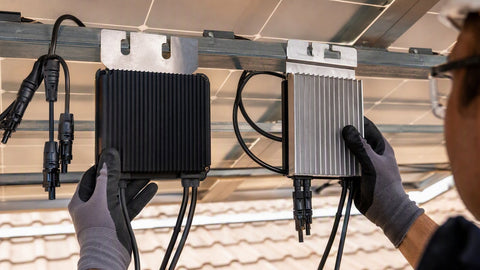
| Microinverters | 25 yr | 25+ yr | n/a |
| String inverter | 10–12 yr (extendable) | 12–18 yr | n/a |
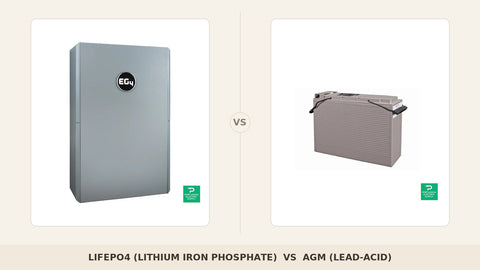
| LiFePO4 battery | 10 yr / 6,000+ cycles | 15–20 yr | 70–80% capacity at yr 10 |
The one component you should expect to replace is a string inverter around year 12 to 15 — which is why we steer buyers toward either 25-year-warrantied microinverters or extended-warranty string units from the inverter collection. I have 2011-vintage arrays on customer roofs still producing within spec; the "solar wears out" myth dies the first time you read a decade-old monitoring log.
The Trade-Offs, Honestly Stated
Solar is not free money, and we tell customers so. Upfront cost runs $2.50 to $3.50 per watt installed before incentives. Production varies with roof orientation, shade, and latitude — a west-facing array in Seattle is a different investment than a south-facing array in Phoenix. And net-metering policy is state law, not physics: export compensation ranges from full retail to near wholesale, which changes payback by years. None of this argues against solar; all of it argues for sizing and designing from your actual bills and roof, which is exactly what our system size calculator is for.
Putting the Five Advantages Together
3. Solar Energy Is Renewable
Bill savings, independence, measurable environmental benefit, home value, and durability compound into one outcome: a fixed, low, predictable energy cost for a quarter-century while your neighbors' rates float. I have yet to meet a customer whose honest regret was buying solar; the consistent regret is buying too small. If you take one thing from this article, take that.
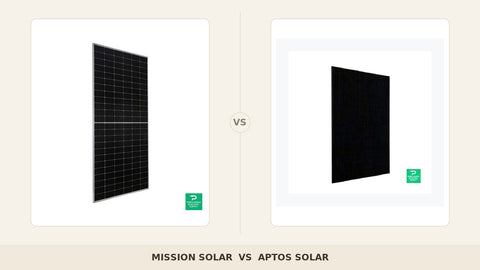
Ready to look at hardware? Start with solar panels, compare complete kits, and read our installation guide and state incentives page before you buy. For a deeper technology primer, the solar inverter explainer covers the component that matters most after the panels.
How Solar Actually Works on Your Roof
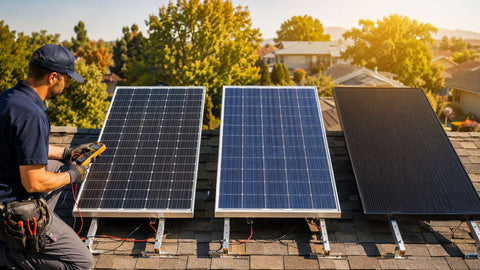
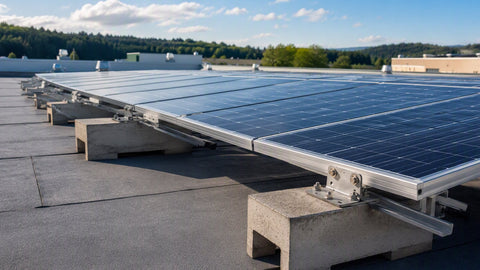
Sunlight strikes silicon cells and knocks electrons loose, producing direct current. Strings of panels feed that DC to an inverter, which converts it to the 120/240V AC your home uses, synchronized to the grid. Your home consumes solar first; surplus flows to the grid for credit; shortfalls pull from the grid automatically. The whole transaction is silent, automatic, and invisible until the utility bill arrives.
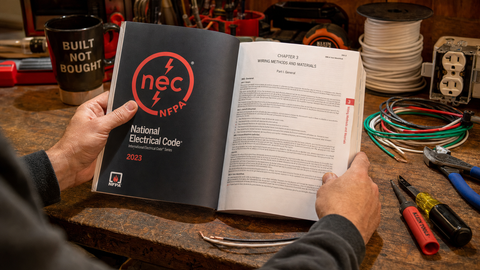
The design details matter more than the concept. Roof azimuth and tilt set your production ceiling: south-facing at a pitch near your latitude is optimal, but east and west roofs lose only 15 to 20 percent and often align better with afternoon rate peaks. Shade is the real killer — a shadow covering 10 percent of an unmanaged string can cost 30 percent of its output, which is why panel-level electronics exist. System voltage must also survive winter: NEC 690.7 requires correcting open-circuit voltage for record-low temperatures, because cold panels produce higher voltage and an over-voltage string can destroy an inverter input. The correction math for a typical 400W residential module:
| Ambient Low Temp | Voc Correction Factor (NEC 690.7 Table) | Module Voc 49.8V Corrected | Max Modules on 500V String |
|---|---|---|---|
| 0°C / 32°F | 1.10 | 54.8 V | 9 |
| -10°C / 14°F | 1.14 | 56.8 V | 8 |
| -20°C / -4°F | 1.18 | 58.8 V | 8 |
| -30°C / -22°F | 1.21 | 60.3 V | 8 |
| -40°C / -40°F | 1.25 | 62.3 V | 8 |
In Miami this check is a formality; in Minneapolis it is the difference between a working system and a smoked inverter. Our solar wire and cable guide and NEC wire sizing guide cover the conductor side of the same code exercise.
Net Metering and Rate Design: Where the Savings Actually Come From
Solar economics live or die on how your utility credits exported power. Full retail net metering — one kWh exported cancels one kWh imported — makes the grid a free battery and maximizes savings from a solar-only system. Reduced export rates, as in California's current structure, push value toward self-consumption and storage: every kWh you use directly is worth the full retail rate, while exports may earn only a few cents. The design consequence is real — in full-net-metering states, the optimal system is often the biggest the roof allows; in reduced-export states, the optimal system is sized to daytime loads plus battery charging.
Time-of-use rates add a second lever. Peak windows in the early evening rarely align with solar production, which is precisely the gap a battery fills. Customers who understand their rate plan before designing the system routinely outperform customers who design first and read the tariff later.
Common Myths, Debunked With Field Data
"Solar doesn't work in cold or cloudy climates." Panels run more efficiently cold — voltage rises as temperature falls — and annual production in places like New Jersey and Massachusetts comfortably supports payback, which is why those states rank among the highest residential adoption rates nationally.
"Panels damage the roof." Properly flashed mounts protect the penetration points, and the array actually shades and preserves the roofing beneath it. The correct sequence is roof-first if the roof is near end-of-life; the panels themselves extend shingle life where they sit.
"Solar requires constant cleaning." Rain handles most of it. Soiling losses average a few percent annually in dusty regions; cleaning once or twice a year recovers nearly all of it. Monitoring data — not a ladder and a hose — should drive the decision.
"The technology will be cheaper next year." Hardware has indeed fallen for decades, but installed cost is now dominated by labor and soft costs, which do not follow the silicon learning curve. Every year of waiting is a year of paying full retail rates — the wait has rarely paid.
Solar for Different Home Situations
The five advantages scale differently depending on the property. Suburban single-family homes with unobstructed roofs capture all five fully. Homes with complex roofs — dormers, shade trees, multiple faces — still capture them, but panel-level electronics become essential to protect the production math. Condos and townhomes with HOA constraints need the association approval path mapped early; many states now have solar-access laws limiting HOA prohibitions. Rural properties add a sixth advantage: where grid extension costs $15,000 to $50,000 per quarter-mile, an off-grid solar-plus-storage system can undercut the cost of being connected at all — our off-grid cabin kits exist precisely for that scenario.
Renters and shaded-lot owners are not excluded either: community solar subscriptions deliver bill credits without rooftop hardware in states that enable them, and portable systems from the portable solar category cover RVs, workshops, and incremental needs.
Incentives That Stack on the Five Advantages
The 30 percent federal tax credit is the headline, but the stacking order matters for the real net cost. Federal ITC first: 30 percent of the full installed cost including electrical upgrades needed for the system. State rebates second where they exist. Utility rebates third. Property-tax exemptions mean the added home value from Advantage 4 does not raise your tax bill in most states, and sales-tax exemptions cut the equipment cost at purchase in many. A $24,000 system commonly nets to $15,000 to $17,000 after stacking — at which point the Advantage 1 savings deliver payback in six to nine years in mid-rate markets. Check current programs on our state incentives page before finalizing a budget.
What a Proper Site Assessment Checks
Before any equipment list, a competent assessment verifies: roof condition and remaining life, structural capacity (modern panels add roughly 3 pounds per square foot — well within code for sound roofs, but worth confirming), azimuth and tilt of each usable roof face, shade mapping across seasons (a December shadow is longer than a June one), main panel capacity and breaker space per NEC 705.12, and the utility's interconnection requirements. Skipping any of these is how projects get change orders. When customers call us for equipment, these are the questions we ask first — the hardware conversation goes much better after the site conversation.
Year-One Ownership: What Actually Happens After Install
The five advantages are theoretical until the system is on the roof, so here is what the first year actually looks like. Weeks one to four: installation and inspection, then permission to operate from the utility — the wait that tests everyone's patience. Month one: the first monitoring-app habit forms; owners check production obsessively, then settle into a monthly rhythm. The first true-up or net-metering statement is the moment the advantage becomes concrete — watching a summer bill drop to the minimum connection charge converts skeptics faster than any brochure. Seasons reveal the production curve: June output runs roughly double December output in northern states, which surprises first-year owners until the annual total lands on target. And the first storm outage — for storage-equipped homes — delivers the advantage no spreadsheet captures. By month twelve, the system is simply part of the house, and the annual savings statement is the summary: typically $1,500 to $3,500 not paid to the utility, 5 to 6 tons of CO₂ not emitted, and a house worth more than it was.
Choosing Equipment That Protects the Advantages
Every advantage depends on hardware that lasts and is supported. Panels: modern n-type modules from established manufacturers — browse our n-type panel selection — carry the degradation rates and 25 to 30-year warranties the long-term math assumes. Inverters: the component most likely to need service, so warranty length and supplier support matter more than a tenth of an efficiency point. Racking: engineered systems from brands like IronRidge and Unirac protect both the roof and the array through decades of weather. And the supplier: equipment is only as good as the company that answers the phone when something needs warranty service. Those four choices, made carefully on day one, are what turn five advantages on a page into twenty-five years of delivered results.
Financing Options and How They Change the Math
How you pay shapes which advantage dominates. Cash purchase maximizes lifetime savings and home-value capture — the full 30 percent credit is yours and there is no interest drag. Solar loans spread cost over 10 to 20 years; monthly payments frequently land near the old utility bill, so the budget feels flat while equity builds. Leases and power-purchase agreements minimize upfront cost but trade away the tax credit, much of the home-value premium, and complicate future sales — we generally steer buyers toward ownership unless cash flow truly demands otherwise. Whatever the vehicle, insist on a production guarantee in writing and confirm the warranty obligations survive the installer — manufacturer warranties on panels and inverters live with the equipment, which is one more reason component brands matter.
Solar and the Grid: Why Your Rooftop Matters Beyond Your Meter
The five advantages start at the household, but they aggregate into system-level value. Distributed rooftop solar reduces peak transmission loading on hot afternoons, defers distribution infrastructure upgrades in growing neighborhoods, and adds generation exactly where the load is — eliminating the line losses of delivering power across hundreds of miles. With storage attached, distributed systems become grid assets: aggregated home batteries dispatched during emergencies have already carried grids through peak events that would otherwise have triggered outages. Utilities increasingly design programs around this reality, from bring-your-own-battery incentives to virtual power plant enrollment. The homeowner capturing Advantage 2 — independence — is simultaneously making the grid more reliable for everyone else. That alignment of private benefit and public value is rare in infrastructure, and it is one reason solar's policy support has proven durable across administrations.
One last consideration before the FAQs: timing. Equipment pricing, incentive levels, and utility rate structures all change, but the physics of the five advantages does not — every month of production is a month of savings banked. Owners who installed five years ago have five years of compounding returns; the best day to start was always yesterday, and the second-best is the day the assessment gets scheduled.
Frequently Asked Questions
What are the five main advantages of solar energy?
Increased Property Value
4. Solar Energy Lowers Electricity Bills
Lower electricity bills, energy independence and backup capability, measurable emissions reductions, increased home value, and low-maintenance durability spanning 25 years or more.
How long does solar take to pay for itself?
Typically 6 to 12 years depending on local rates, incentives, and roof conditions. High-rate states with strong sun see payback near the short end; after payback, production is effectively free for the remaining 15+ years of system life.
Do solar panels work on cloudy days?
Yes, at reduced output — typically 10 to 25 percent of rated production under heavy overcast. Annual production estimates for your region already account for average cloud cover, so cloudy climates simply need more panels to hit the same kWh target.
What happens to solar panels at the end of their life?
Panels are roughly 80 percent recyclable by weight (glass and aluminum), and dedicated PV recycling capacity is scaling up in the US. Most panels, though, never reach "end of life" in 25 years — they are still producing at 85+ percent of original rating.
Is my roof suitable for solar?
South, east, and west-facing roofs with minimal shade and reasonable condition work well. As a rule of thumb, if your roof needs replacement within ten years, do the roof first — removing and reinstalling an array costs $1,500 to $3,000.
Shop Related Products
Explore monocrystalline panels, hybrid inverters, and LiFePO4 batteries, or contact us through portlandiaelectric.supply for a sizing conversation with a real human.
From the field: I have walked more than a few customers through their first true-up bill, and the look on their face when the number comes in near zero never gets old. I once sized a system for a ranch outside Bend where the well pump alone pulled 4 kW, and I still tell that story when people ask whether solar can handle real loads. I have also seen the flip side — a roof so shaded by fir trees that I talked the homeowner out of the sale, because the math only works when the sun actually shows up.