An off-grid solar kit bundles the four things a stand-alone power system cannot work without — panels, charge control, battery storage, and inversion — into one matched package. Done right, a kit removes the most expensive mistake in off-grid builds: pairing a 48V inverter with a 12V battery bank, or a charge controller that clips half your array's output. This guide walks through what the components do, how to size the system from your actual loads, the battery chemistry decision, and the code and maintenance realities nobody puts in the brochure.

We've commissioned enough cabins and ranch systems to say this plainly: the kit is the easy purchase. The sizing math beforehand and the maintenance discipline afterward decide whether the system works in year eight or dies in year three.
What Is an Off-Grid Solar Kit? (Scope and Uses)
An off-grid kit is a complete power plant scaled to a building or vehicle, with no utility connection. It generates DC power from solar modules, stores it in a battery bank, and delivers it as 120/240V AC through an inverter. Typical uses:
- Cabins and remote homes where a utility line extension quote starts at $30,000 per mile.
- RVs, vans, and boats — 12V or 24V systems from 200W to 800W of array.
- Barns, well pumps, and gate operators — dedicated loads that justify a small dedicated system.
- Emergency backup for grid-tied homes that want islanded power when the utility fails.
- Telecom, ranch water, and monitoring sites — the original off-grid market, still the most demanding.
Key Components of an Off-Grid Solar Kit
| Component | What It Does | Sizing Rule of Thumb | Common Failure to Avoid |
|---|---|---|---|
| Solar array | Converts sunlight to DC power | Daily kWh ÷ peak sun hours × 1.3 (loss factor) | Undersizing for winter sun hours; shading from a single tree limb |
| Charge controller (MPPT) | Regulates array output into the battery bank | Array watts ÷ battery voltage × 1.25 = minimum controller amps | PWM controllers on 60/72-cell modules — you lose 25–30% of the array |
| Battery bank | Stores energy for nights and cloudy days | Daily kWh × days of autonomy ÷ usable DoD | Mixing old and new batteries; undersized bank cycling past 50% DoD daily |
| Inverter | Converts battery DC to household AC | Rated ≥ 125% of largest simultaneous load; surge ≥ motor starting kVA | Modified sine wave on motors and electronics — buys replacement appliances |
| Balance of system | Racking, wire, overcurrent protection, disconnects, monitoring | Size wire for ≤2% voltage drop on DC runs | Skipping the Class-T fuse on a lithium bank; no disconnect between controller and battery |
For controller selection, our MPPT vs PWM comparison and the controller sizing guide go deep on the math. For the inverter decision, the pure sine wave inverter guide is the companion read.
Battery Chemistries in 2026: Safety, Life, and Cost
| Chemistry | Usable Depth of Discharge | Cycle Life (to 80% capacity) | Round-Trip Efficiency | Installed Cost per Usable kWh | Best Fit |
|---|---|---|---|---|---|
| Flooded lead-acid (FLA) | 50% | 400–800 cycles | 75–80% | $150–$250 | Budget builds with committed maintenance; cold barns where lithium can't charge below freezing |
| AGM | 50% | 500–1,000 cycles | 80–85% | $250–$400 | Sealed, no watering; RVs and occasional-use cabins |
| LiFePO4 (LFP) | 80–90% | 3,000–6,000 cycles | 95–98% | $350–$550 | Daily-cycling homes; 10–15 year life makes it cheapest per cycle despite sticker price |
The math that matters: an LFP battery at $0.09–0.12 per cycle-kWh over its life beats FLA at $0.25+ per cycle-kWh every time the system cycles daily. Our battery life and maintenance guide and off-grid battery picks cover specific models including EG4 server-rack LFP options. For premium off-grid ecosystems, the Victron brand guide and MidNite Solar guide cover the two controller/inverter families we see most in professional builds, and the Sol-Ark guide covers the hybrid path for homes that keep a generator in the loop.
System Configurations: Portable vs Fixed vs Hybrid
- Portable kits (200–600W): folding or suitcase panels, a single LFP power station. Good for camping and short outages; not a house system.
- Fixed off-grid (1–15 kW array): roof- or ground-mounted array, MPPT, 24V or 48V battery bank, split-phase inverter. This is the cabin and remote-home standard.
- Hybrid with generator: solar plus a generator that carries the load through multi-day storms and bulk-charges the bank. Realistic for full-time living at northern latitudes — see the EG4 18KPV all-in-one writeup for a common hybrid inverter approach, and our best off-grid system roundup for complete package comparisons.
Sizing Your Kit: Loads, Daily Energy, and Sun Hours
Everything starts with a load list. Write down every appliance, its watts, and its hours per day. Then:
| Step | Worked Example (Efficient Cabin) | Result |
|---|---|---|
| 1. Sum daily energy | Fridge 1.2 kWh + lights 0.4 + well pump 0.8 + electronics 0.6 + misc 0.5 | 3.5 kWh/day |
| 2. Add inverter/system losses | 3.5 × 1.25 | 4.4 kWh/day needed from array |
| 3. Size array with winter sun hours | 4.4 kWh ÷ 3.2 peak sun hours (Dec, Zone 6) × 1.3 | ≈ 1.8 kW array → six 300W-class or four 450W-class modules |
| 4. Size battery bank (2 days autonomy, LFP at 90% DoD) | 3.5 kWh × 2 ÷ 0.9 | ≈ 7.8 kWh usable → e.g., 48V 160Ah or two 5 kWh rack modules |
| 5. Size inverter | Largest combined load 2.4 kW × 1.25; pump surge 3× | ≥3 kW continuous, ≥6 kW surge → 4–6 kW low-frequency inverter |
| 6. Size MPPT controller | 1,800W ÷ 48V × 1.25 | ≥47A → one 60A MPPT |
Use the off-grid system calculator and solar system calculator to run your own numbers, and the battery sizing guide for the autonomy math in detail. Wire runs matter too — our panel-to-battery wiring guide covers gauge selection and the voltage-drop tables.
Installation, Safety, and Code Basics
Off-grid does not mean code-free. NEC Article 690 still governs the PV system, Article 706 covers energy storage, and Article 705 applies if you ever interconnect. Practical checkpoints we enforce on every build:
- Class-T fuse within 7 inches of the battery positive on lithium banks — LFP fault current will vaporize a lesser fuse.
- DC-rated disconnects between array and controller, and controller and battery. AC-rated switches fail silently on DC arcs.
- Ground the array frames and one point of the DC system per NEC 250; bond all metal enclosures.
- PV wire (USE-2 or PV wire per 690.31) for exposed array runs — not THHN in sunlight.
- Label everything: "PV SYSTEM DC DISCONNECT," battery room warnings, and the rapid-shutdown placard where required.
I have opened battery compartments that were one loose lug away from a fire, and every single one skipped the fuse. Spend the $80.
Permitting, Warranties, and Financing
Cabins in unincorporated counties often escape permitting; anything with a certificate of occupancy does not. Check the AHJ before you build — retroactive permits are painful. Warranties: panels carry 25-year product/power coverage from Tier 1 makers, LFP batteries 10 years or 6,000 cycles at quality brands, inverters 2–5 years standard with extensions available. Keep your commissioning photos and torque records; warranty claims without them stall. Financing for true off-grid properties is limited — most buyers use HELOC or cash, though some USDA and state rural-energy programs fund off-grid electrification.
Maintenance, Monitoring, and Common Pitfalls
- Quarterly: check torque on battery lugs, clean array, verify controller float/absorb setpoints match the battery datasheet.
- Annually: full capacity test on the bank; inspect rodent damage on array wiring; re-torque racking.
- Monitoring: a $150 shunt monitor pays for itself the first time it catches a failing string before a winter trip.
- The classic pitfall: growing loads. The hot tub arrives in year two and the 1.8 kW array can't carry it. Size the bus and conduit for a second array the day you build.
Market Trends and Pricing in 2026

Component pricing in 2026 favors the buyer: quality 400–500W modules run $0.25–0.35/W, rack-mount LFP has crossed under $300/kWh at the pack level, and 6 kW hybrid inverters cluster at $1,200–$2,000. A complete professionally-installed cabin system lands at $3.50–$5.50 per watt; DIY kits run $1.80–$3.00 per watt before wire and racking. The supply side keeps consolidating around 48V LFP and all-in-one hybrid inverters — the days of hand-built 12V FLA systems for full-time homes are over.
Quick-Start Kit Ideas by Use Case
| Use Case | Array | Battery | Inverter | Budget (equipment) |
|---|---|---|---|---|
| Weekend cabin, gas fridge | 800W | 2.5 kWh LFP (12V 200Ah or 24V 100Ah) | 2 kW pure sine | $2,500–$4,000 |
| Full-time efficient cabin | 1.8–2.4 kW | 8–10 kWh LFP (48V) | 4–6 kW split-phase | $8,000–$13,000 |
| RV / van | 400–800W | 2–5 kWh LFP (12V) | 2–3 kW inverter-charger | $2,000–$6,000 |
| Well pump + barn | 1.2 kW dedicated | 5 kWh LFP | 3 kW with 6 kW surge | $4,000–$6,500 |
| Whole off-grid home | 8–12 kW | 20–30 kWh LFP | 8–12 kW hybrid + generator | $30,000–$55,000 |
Wire Sizing and Voltage Drop on DC Runs
Voltage drop is the silent production killer in off-grid systems, because low-voltage DC runs carry serious current. A 1,200W load on a 12V bank pulls 100A — at that current, undersized wire wastes power as heat and starves the inverter. The 2%-drop sizing table we use in the shop (copper, one-way run shown):
| Current | 10 ft run | 20 ft run | 30 ft run | 50 ft run |
|---|---|---|---|---|
| 15A (12V) | 10 AWG | 8 AWG | 6 AWG | 4 AWG |
| 30A (12V) | 6 AWG | 4 AWG | 2 AWG | 1/0 |
| 60A (24V) | 6 AWG | 4 AWG | 2 AWG | 1/0 |
| 100A (48V) | 4 AWG | 2 AWG | 1/0 | 3/0 |
| 200A (48V, inverter feed) | 2/0 | 4/0 | 2 × 2/0 parallel | 2 × 4/0 parallel |
This is the real argument for 48V banks: quadrupling system voltage quarters the current, and the same run drops two or three wire sizes. Any system over about 2 kW of inverter belongs at 48V. I have torn out more overheated 12V inverter feeds than I care to count — the lugs tell the story every time.
Pairing a Generator Without Wrecking the Batteries
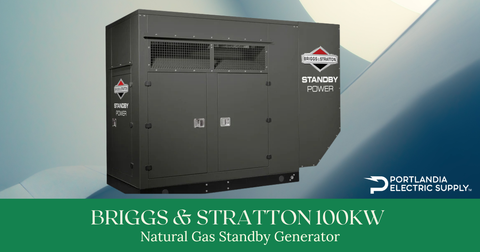
A generator is the insurance policy for multi-day storms, but it must charge through equipment that respects the battery. Key rules: the generator's AC output feeds the inverter-charger or a dedicated charger — never backfeed the system; set charge current to the battery manufacturer's maximum (typically 0.2–0.5C for LFP, 0.1–0.2C for lead-acid); and size the generator at 125% of the charger's draw plus any passthrough loads, because generators hate running unloaded almost as much as overloaded. A 3,500W-class inverter generator covers most cabin charging duty; whole-home hybrids step up to 8–12 kW standby units on propane.
Winter Reality: Derating Your Expectations
Off-grid systems live or die in December. Two effects stack against you: peak sun hours drop 40–60% versus June at most U.S. latitudes, and cold batteries accept charge reluctantly — LiFePO4 cells cannot be charged below freezing without heating, and lead-acid loses effective capacity in the cold. The seasonal budget for the example 3.5 kWh/day cabin at 40°N:
| Month | Peak Sun Hours (approx.) | 1.8 kW Array Output (kWh/day) | Surplus / Deficit vs 4.4 kWh Need |
|---|---|---|---|
| June | 6.5 | ~8.4 | +4.0 (abundant) |
| September | 5.0 | ~6.5 | +2.1 |
| December | 3.2 | ~4.2 | −0.2 (break-even) |
| January | 3.0 | ~3.9 | −0.5 (deficit) |
That January deficit is why real off-grid homes either oversize the array by 20–30%, tilt steeper for winter (latitude +10–15°), or keep a generator for the deep-winter weeks. We've sized dozens of these systems, and the ones that never run the generator are the ones sized on December sun hours, not annual averages. The annual-average number is a brochure number; the winter number is the one your batteries experience.
Charge Settings: The Quiet Battery Killer
Most premature battery deaths we investigate trace to charge settings, not hardware. Flooded lead-acid needs its absorb voltage and time matched to the datasheet and temperature-compensated; chronic undercharging sulfates plates in months. LFP needs no equalization — ever — and its absorb/float voltages come from the battery manufacturer, not the controller's defaults. I have opened banks where a lead-acid profile ran on lithium for a year: the BMS survived, the warranty did not. Ten minutes with both datasheets at commissioning is the whole fix.
AC vs DC Coupling for Off-Grid Storage
| Architecture | How It Works | Round-Trip Efficiency | Best Fit |
|---|---|---|---|
| DC-coupled (charge controller → battery) | Array feeds battery through MPPT; inverter draws from battery | ~95–98% | New off-grid builds — one conversion between sun and storage |
| AC-coupled (PV inverter + battery inverter) | Array inverts to AC; battery inverter rectifies to charge | ~90–94% | Retrofits adding storage to existing grid-tie arrays |
For a new cabin, DC coupling is simpler and more efficient. For adding storage to an existing AC array, AC coupling avoids rewiring the roof. We've built both; the wrong choice is picking AC coupling for a new build because a brochure made it sound modern.
Monitoring: The Cheapest Reliability Upgrade
A battery monitor with a shunt (Victron BMV-class and peers) plus the controller's own logging gives you state-of-charge truth instead of voltage guessing. Voltage-based SOC on LFP is nearly useless — the discharge curve is flat for 80% of its range. We consider the monitor mandatory on any bank over 5 kWh; the first time it catches a dying string or a phantom load before a weekend trip, it has paid for itself twice.
First-Year Mistakes We See Most
- Sizing on summer sun: the array that felt oversized in August runs the generator daily in January. Size on winter hours.
- Buying the inverter before the load list: the load list sizes everything; the brochure sizes nothing.
- Undersized battery cables: 100A through light gauge heats lugs and drops voltage exactly when the pump starts. Use the table above and torque every lug.
- Skipping the Class-T fuse: still the most dangerous omission on lithium banks, still $80.
- No monitoring: the first sign of most failures is a production dip, and without a monitor you find out from a dead battery instead.
A Word on Warranties Across the Kit
Panel warranties run 25–30 years, LFP batteries 10 years or a cycle count (whichever first), inverters 2–5 years standard, and charge controllers 2–5 years. The weak link in most kits is the inverter warranty, so buy the brand that answers the phone. Register everything at commissioning and keep one folder with receipts, serials, and the as-built diagram. Off-grid systems are owner-maintained by definition — the documentation is your service department.
Frequently Asked Questions
How many solar panels do I need to live off-grid?
Divide your daily kWh by your winter peak sun hours, multiply by 1.3 for losses, and divide by panel wattage. An efficient cabin using 3.5 kWh/day in a 3.2-sun-hour climate needs about 1.8 kW of array — six 300W or four 450W modules. Full-time homes typically land between 8 and 12 kW.
Is lithium worth it over lead-acid for off-grid?
For daily cycling, yes. LiFePO4 delivers 3,000–6,000 cycles at 80–90% depth of discharge versus 400–800 cycles at 50% for flooded lead-acid. Cost per cycle-kWh is less than half, and the bank is maintenance-free. Lead-acid still wins for sub-freezing unheated installs without battery heating and for very tight upfront budgets.
Can an off-grid kit run air conditioning?
Yes, with honest sizing. A high-efficiency mini-split drawing 900W running needs roughly 3–4 kW of array and 10+ kWh of battery to carry it through an evening. Size the inverter surge for compressor starts, and favor inverter-driven (variable speed) compressors over single-stage units.
Do off-grid systems need permits?
It depends on the jurisdiction and the building. Structures with certificates of occupancy almost always require electrical permits regardless of grid connection. NEC 690/706 apply to the PV and battery work. Call the county before you build, not after the inspection notice arrives.
How long do off-grid batteries last?
Flooded lead-acid: 3–5 years with diligent maintenance. AGM: 4–7 years. LiFePO4: 10–15 years or 3,000–6,000 cycles, whichever comes first. The killers are chronic undercharging (sulfation in lead, low-voltage disconnect damage in lithium) and heat — keep the bank between 50°F and 85°F for best life.
Portlandia Electric Supply stocks complete off-grid component lines — modules, inverters, charge controllers, and LFP battery banks — and we spec matched kits for cabins and ranch systems every week. Get a kit quote with your load list attached.